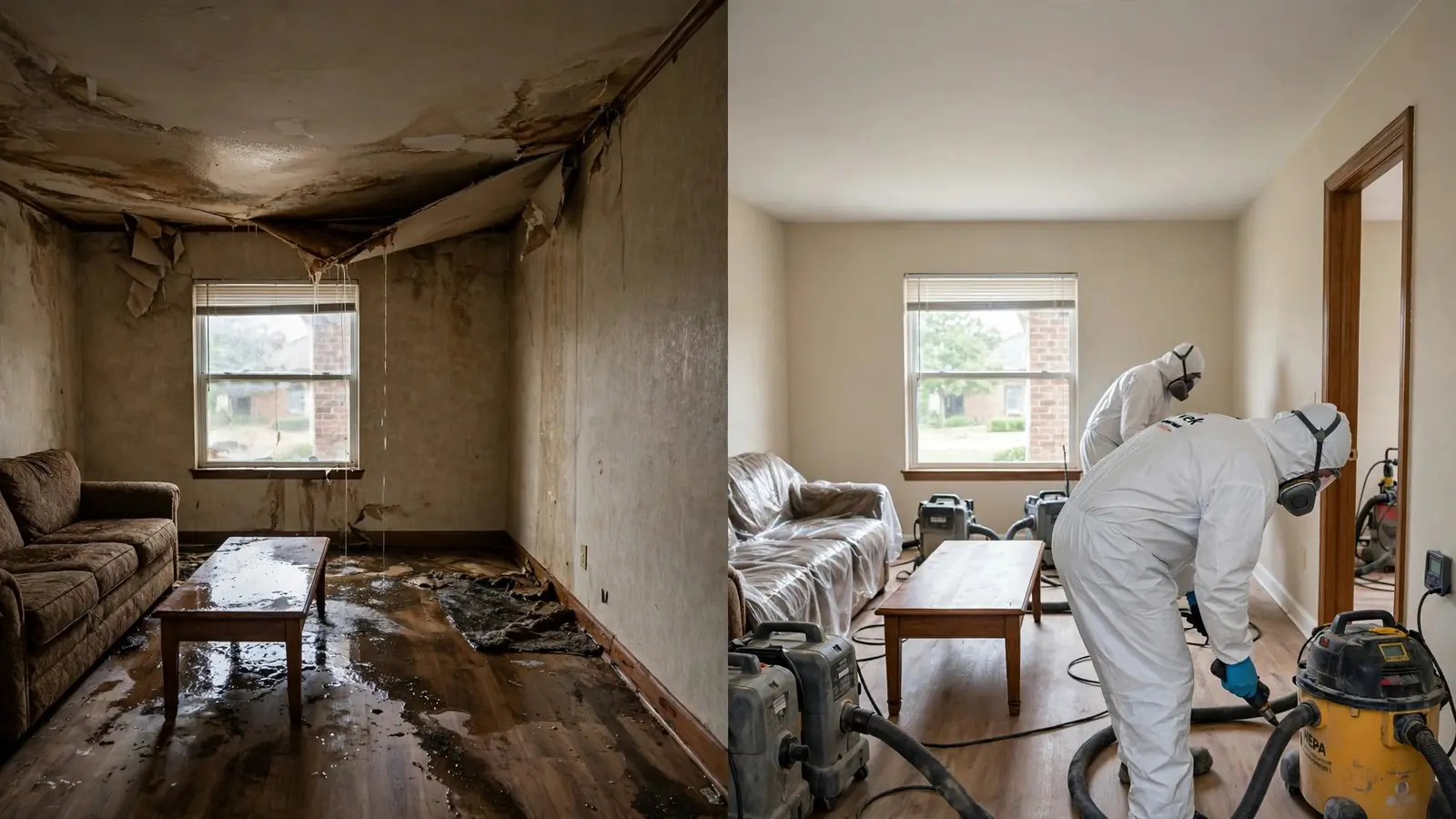
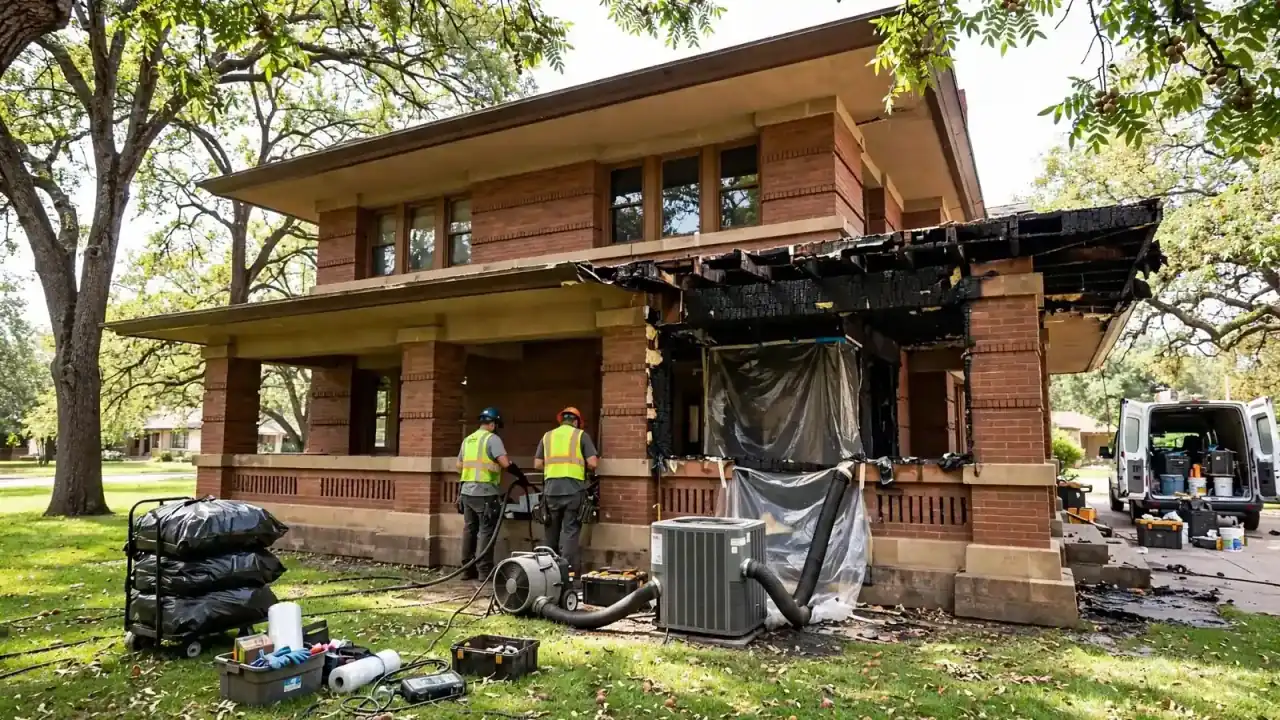
Key facts: Firefighting Water Damage in Ryan Place
- The EPA advises drying water-damaged materials within 24 to 48 hours to limit mold growth [1].
- Drying follows the IICRC S500 standard for professional water damage restoration [2].
- Water used on an upper floor runs down through ceilings and walls, so lower floors and basements in large homes often need drying too [6].
Water moving down through a tall house
When firefighters spray water on the second or third floor, it soaks through carpet and floorboards, saturates the plaster ceiling below and keeps moving down. Wall cavities carry it to lower floors, and eventually it reaches the basement or crawl space. In a large house, that means wet materials on every level.
Mapping the water's path with moisture meters, floor by floor, shows where to open ceilings, place equipment and focus drying.
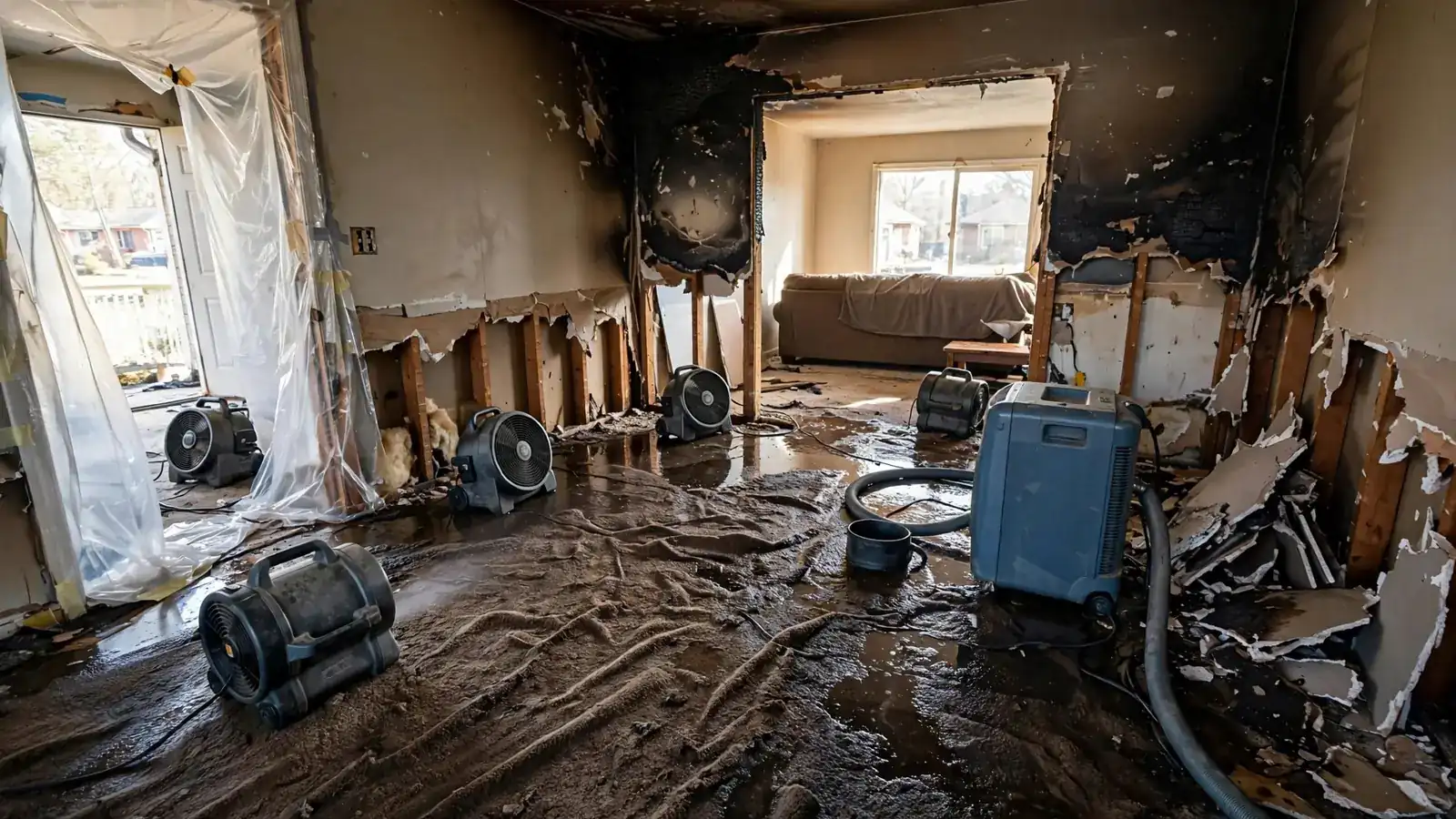
Plaster ceilings holding water
Plaster ceilings can hold a surprising amount of water before they sag. A bulging ceiling is a sign of trapped water and a risk of collapse. Keep people out of rooms with bulging or dripping ceilings and tell the contractor right away.
Some plaster can be dried in place if it stays bonded to the lath. Plaster that has separated or sags badly is usually taken down for safety.
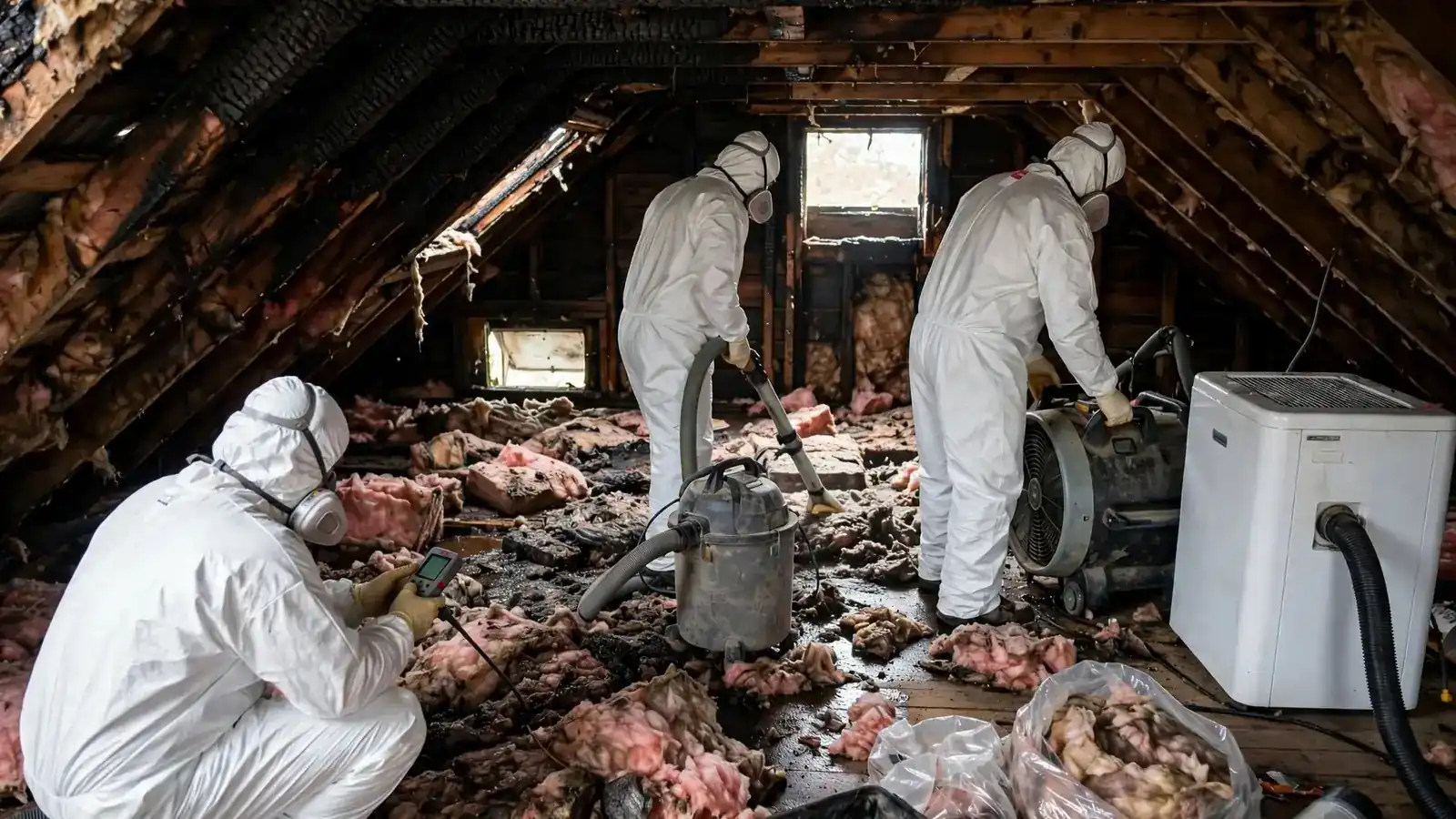
Drying a multi-story Ryan Place home
A floor-by-floor approach.
- 1
Remove standing water on every level
Extract water from floors, carpets and the basement.
- 2
Find wet ceilings and walls with meters
Map moisture from the top floor to the basement.
- 3
Open trapped water and set equipment
Release water held above ceilings and place dryers on each floor.
- 4
Monitor until every floor is dry
Daily readings until materials reach normal levels.
Hardwood floors on several levels
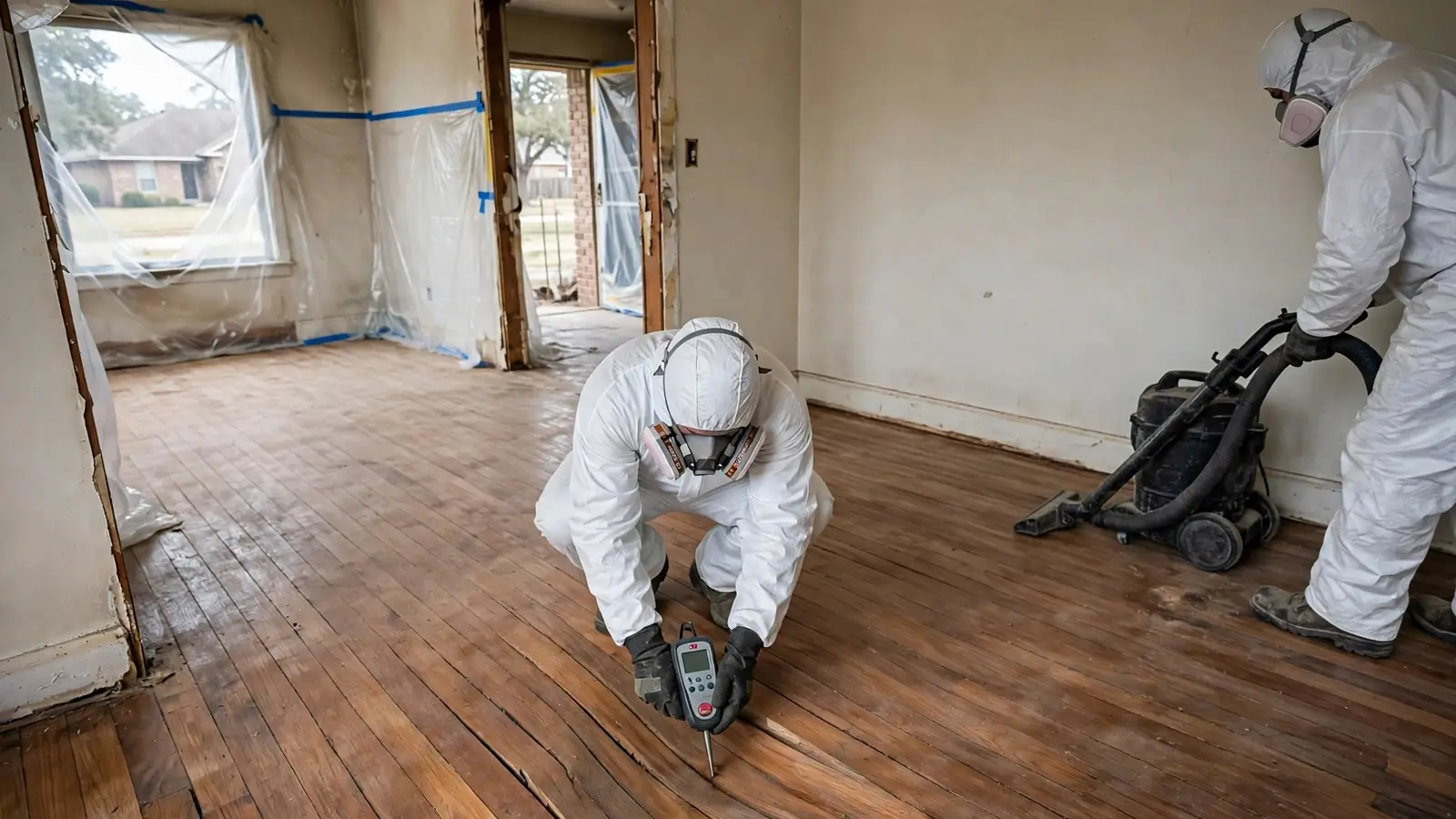
Oak and pine floors are common throughout these houses. They swell and cup when soaked. Dried slowly and evenly, many return close to flat and can be refinished. Floors over wet ceilings below dry from both sides, which helps.
Waiting for moisture readings to reach normal before sanding prevents refinishing a floor that is still moving.
Water below the house in Ryan Place
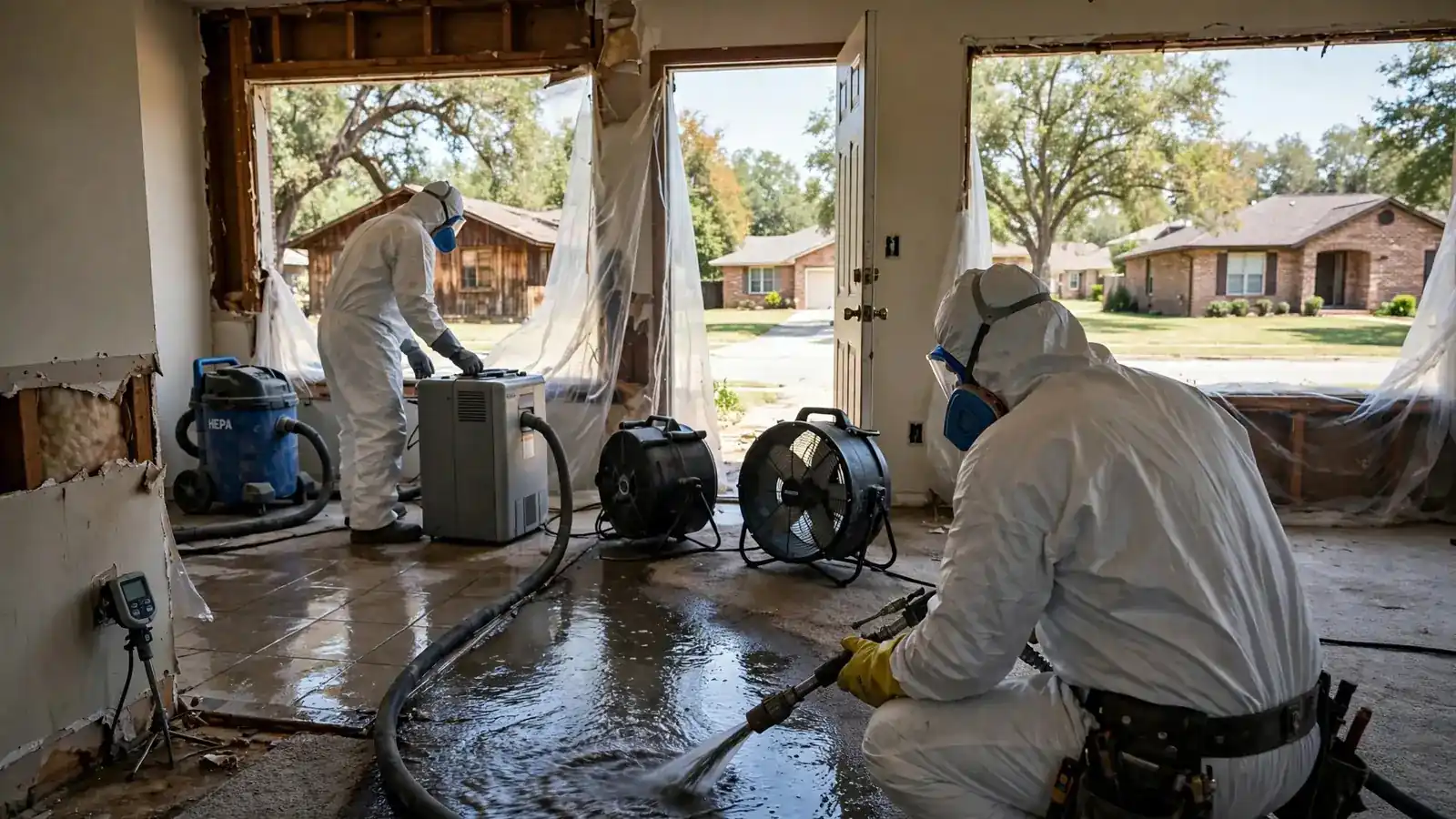
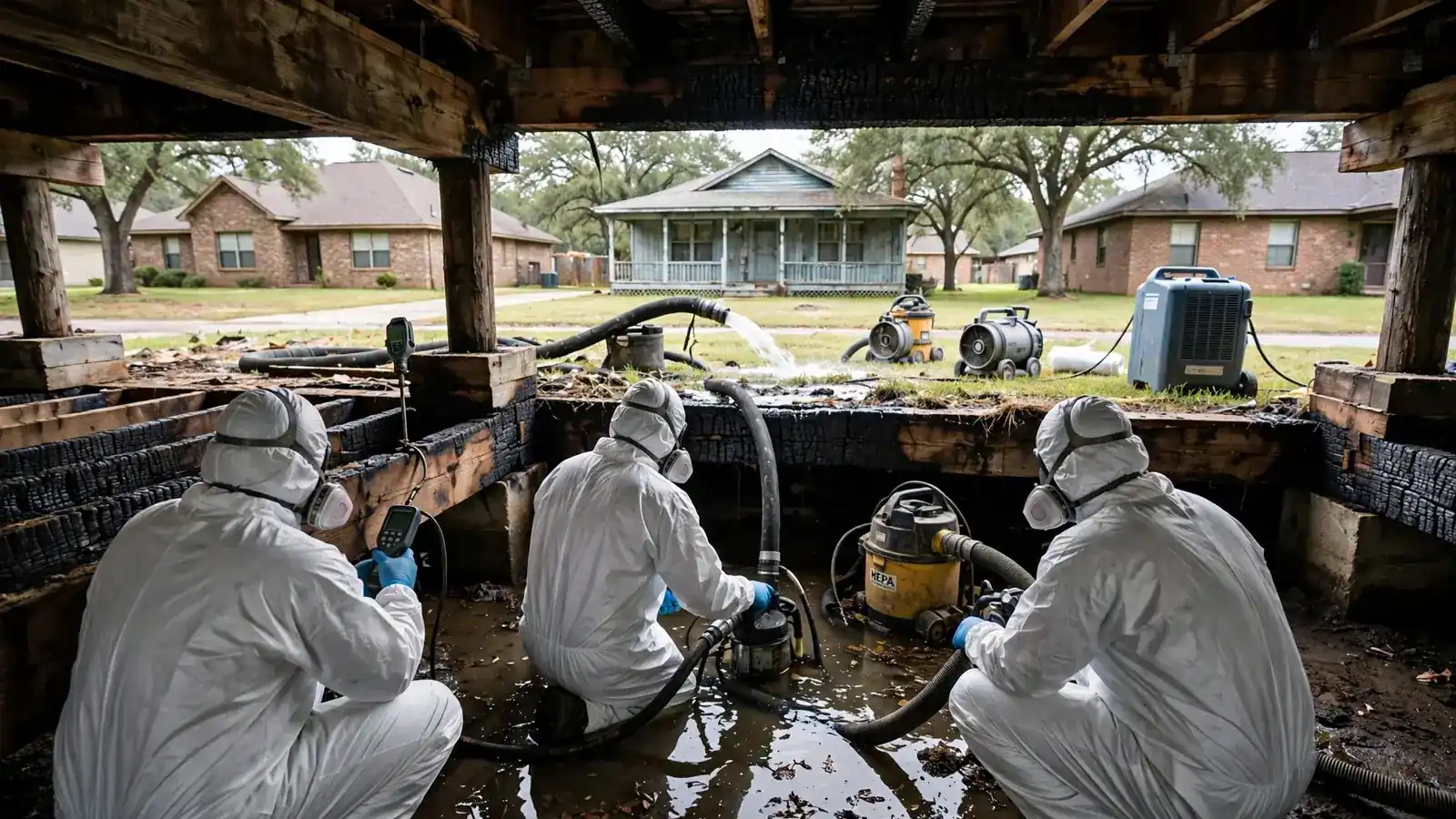
Water that reaches a basement or crawl space can stand for days. Pumping it out, removing wet stored items and running dehumidifiers below the house speed drying and keep humidity from rising into the rooms above.
The Ryan Place page describes the basements and deep crawl spaces in some older houses here.
Signs water is still trapped in a large house
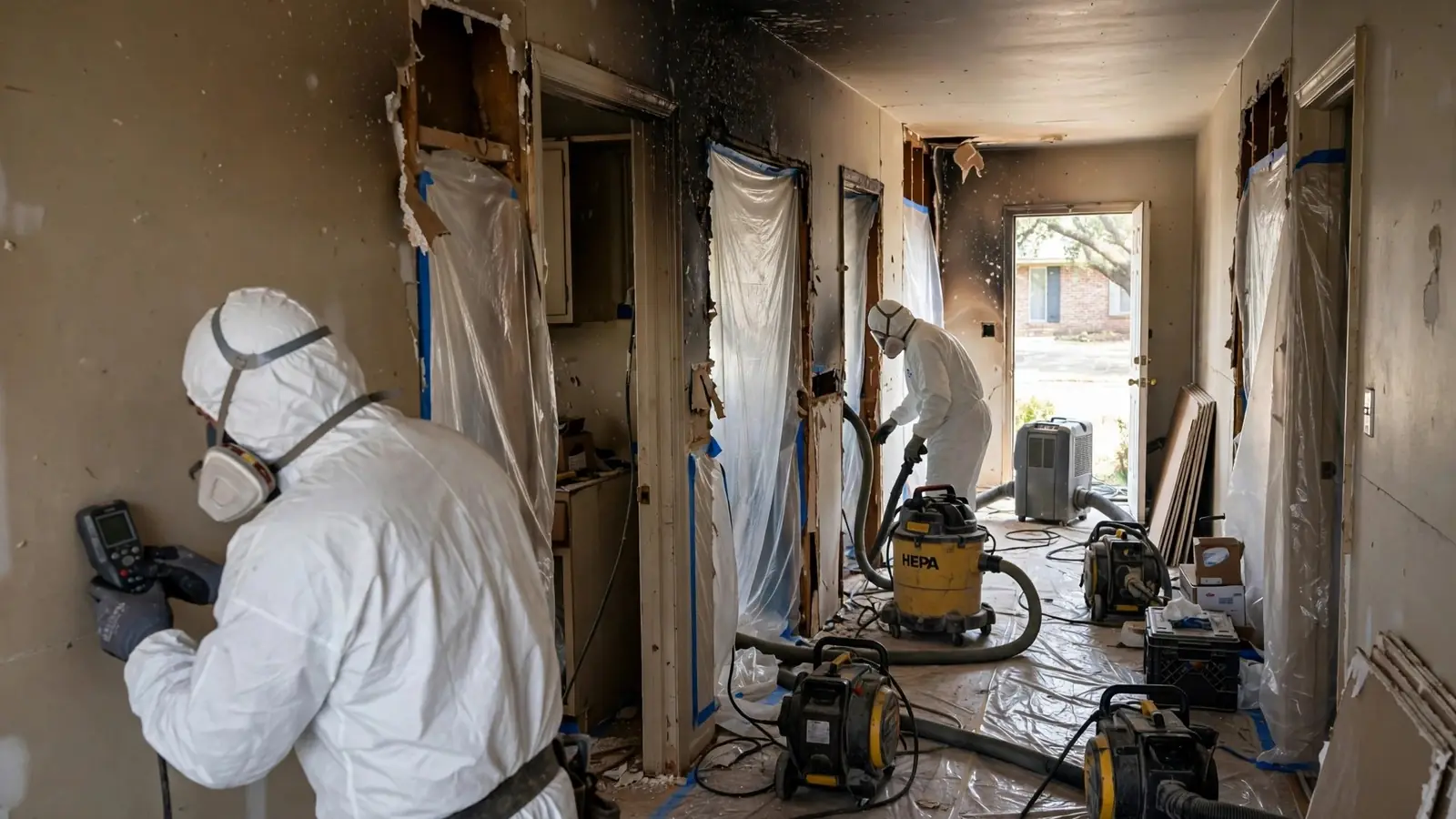
Watch for these after firefighting.
- Bulging or stained plaster ceilingsWater held above.
- Floors that cup or feel softWater in boards or subfloor.
- Damp basement smellWater standing below the house.
- Peeling paint on lower wallsWater moving down through cavities.
Contents across several floors
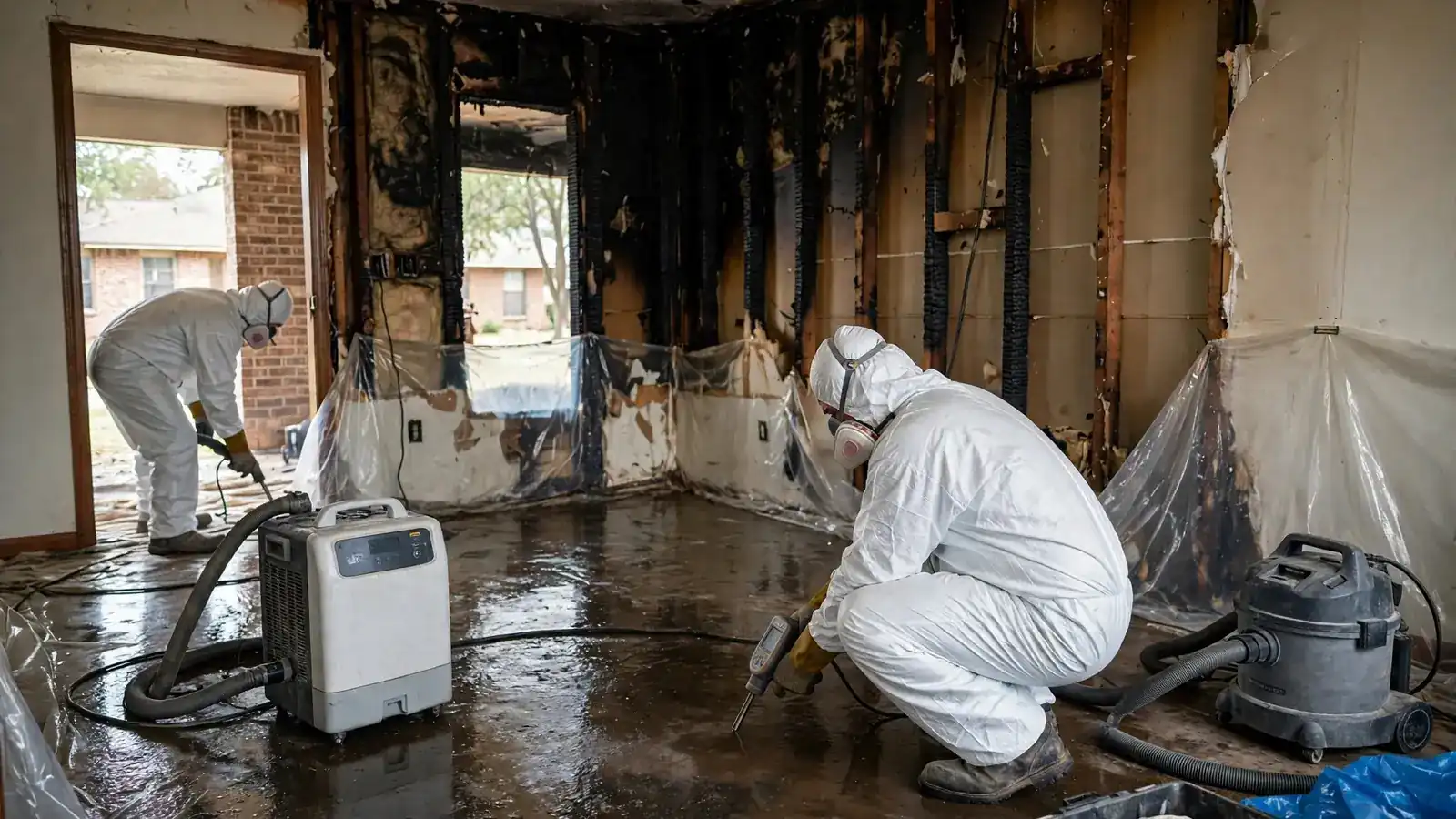
In a large home, soaked contents may be spread across several rooms and floors. Rugs, furniture, books and boxes in the basement are often the wettest. Moving them out quickly and sorting them gives the most items a chance. The U.S. Fire Administration notes that unburned items can still be ruined by water [3].
Photograph and list each item before it is moved.
From drying to smoke cleanup
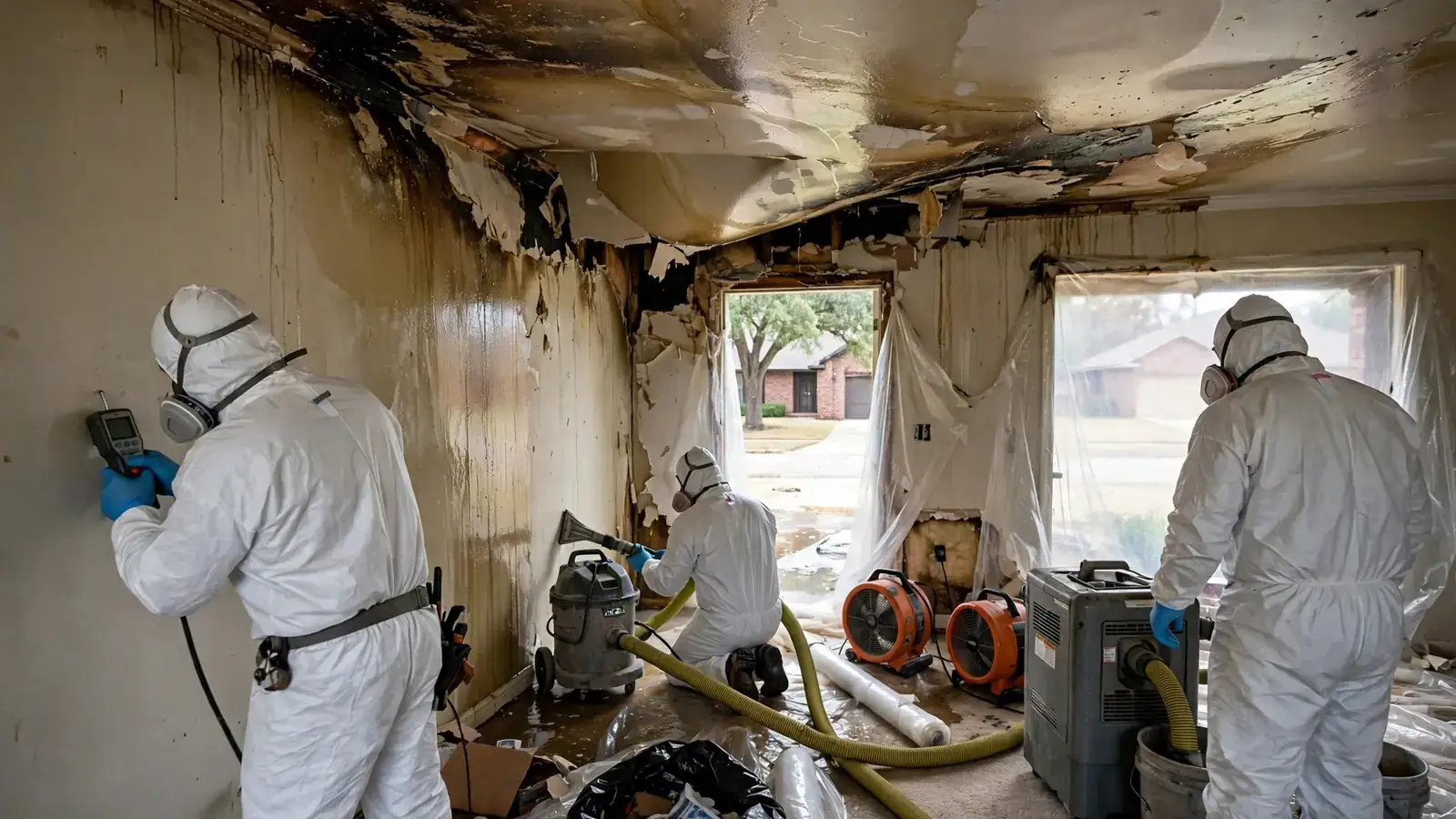
Once each floor is dry, smoke damage cleanup and repairs can follow. Painting over wet plaster traps moisture and leads to peeling and mold.
Drying several floors can take time, and the Texas Department of Insurance explains how additional living expense coverage generally works while you are out [4].
Stairwells as water channels
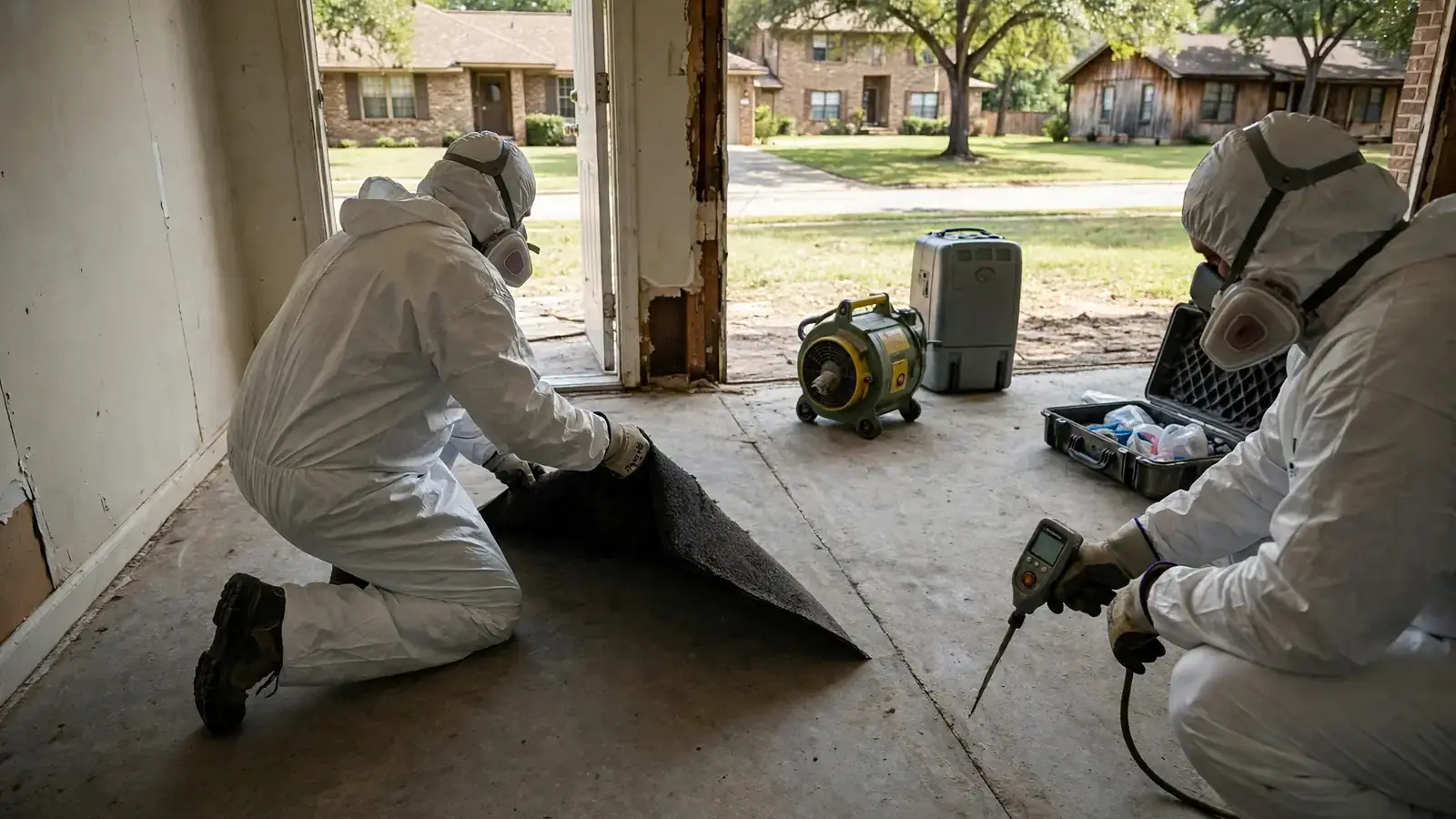
In multi-story houses, the stairwell can act as a channel for water as well as smoke. Water used upstairs runs down the stair treads, soaks the stringers and collects at the foot of the stairs. Wood stairs can swell and creak once they dry, and carpet runners hold water against the treads.
Removing runners and drying the stairs evenly helps them settle back. The contractor will check the walls of the stairwell for water inside them.
Wiring and fixtures after water came through ceilings
When water comes through a ceiling, it often runs along wiring and into light fixtures. Fixtures may fill with water, and junction boxes above the ceiling can get wet. Power to affected circuits should stay off until an electrician has checked them.
Older houses may have wiring from several eras. An electrician familiar with older homes can tell you which parts need replacing after water exposure.
FAQ
Firefighting Water Damage in Ryan Place: questions
Why is my ground floor wet when the fire was upstairs?
Water used upstairs runs down through floors, ceilings and wall cavities to every level below.
Is a bulging plaster ceiling dangerous?
It can be. It may be holding water and could fall. Keep people out of the room and tell the contractor.
Can wet hardwood floors be saved?
Often, if dried slowly and evenly. Many can then be refinished.
Sources and citations
- [1]U.S. EPA: A brief guide to mold, moisture and your home
- [2]IICRC: S500 Standard for Professional Water Damage Restoration
- [3]U.S. Fire Administration: After a fire
- [4]Texas Department of Insurance: Additional living expenses
- [5]U.S. EPA: Protect your family from sources of lead
- [6]U.S. EPA: A brief guide to mold, moisture and your home
- [7]U.S. EPA: Protect your family from exposures to asbestos