Key facts: Arlington Heights
- Arlington Heights began as a late nineteenth-century development west of downtown, and it grew after World War I brought military personnel to nearby Camp Bowie [1][2].
- Most homes in the area predate 1978, so lead-based paint may be present in original finishes [3].
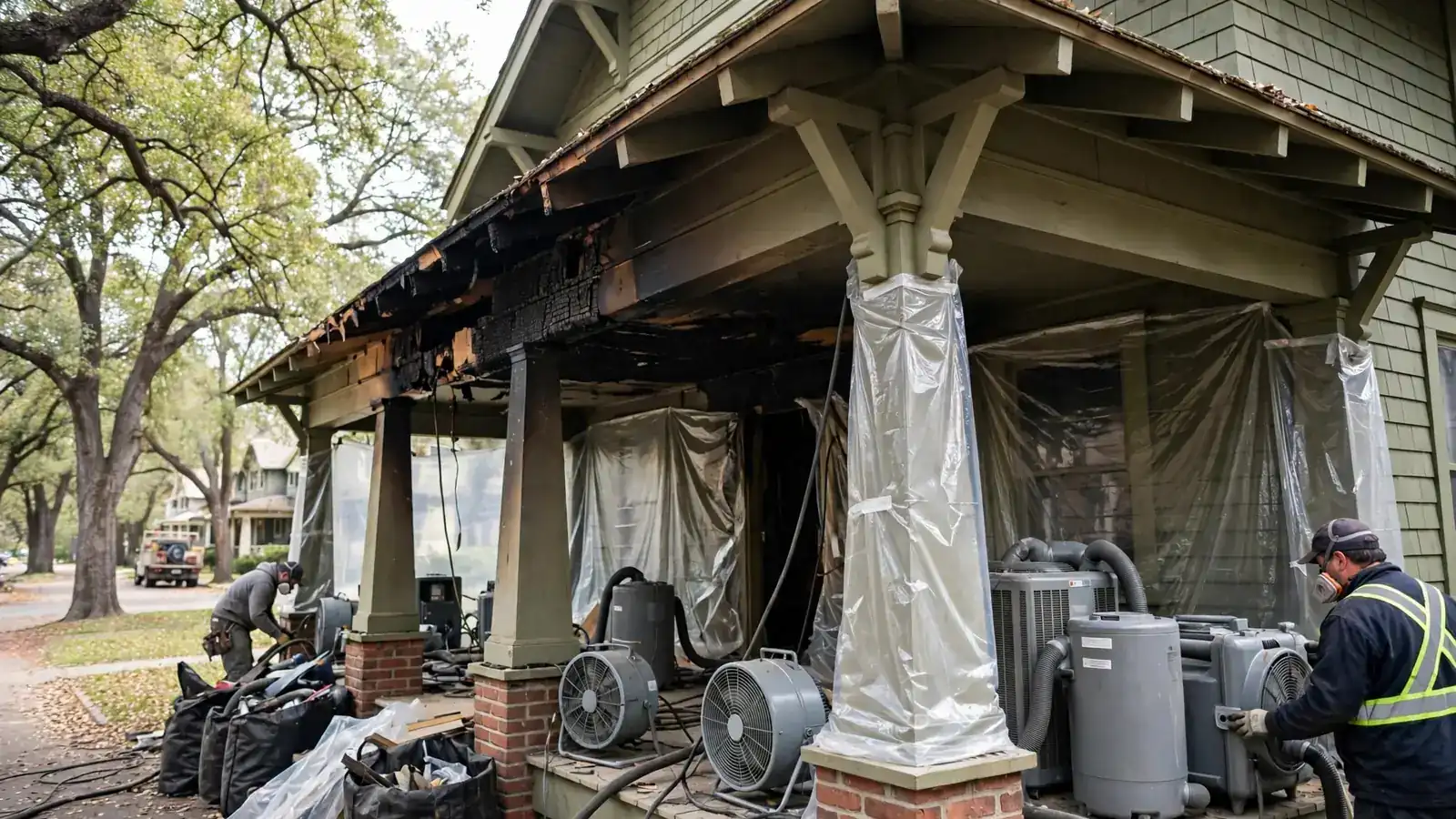
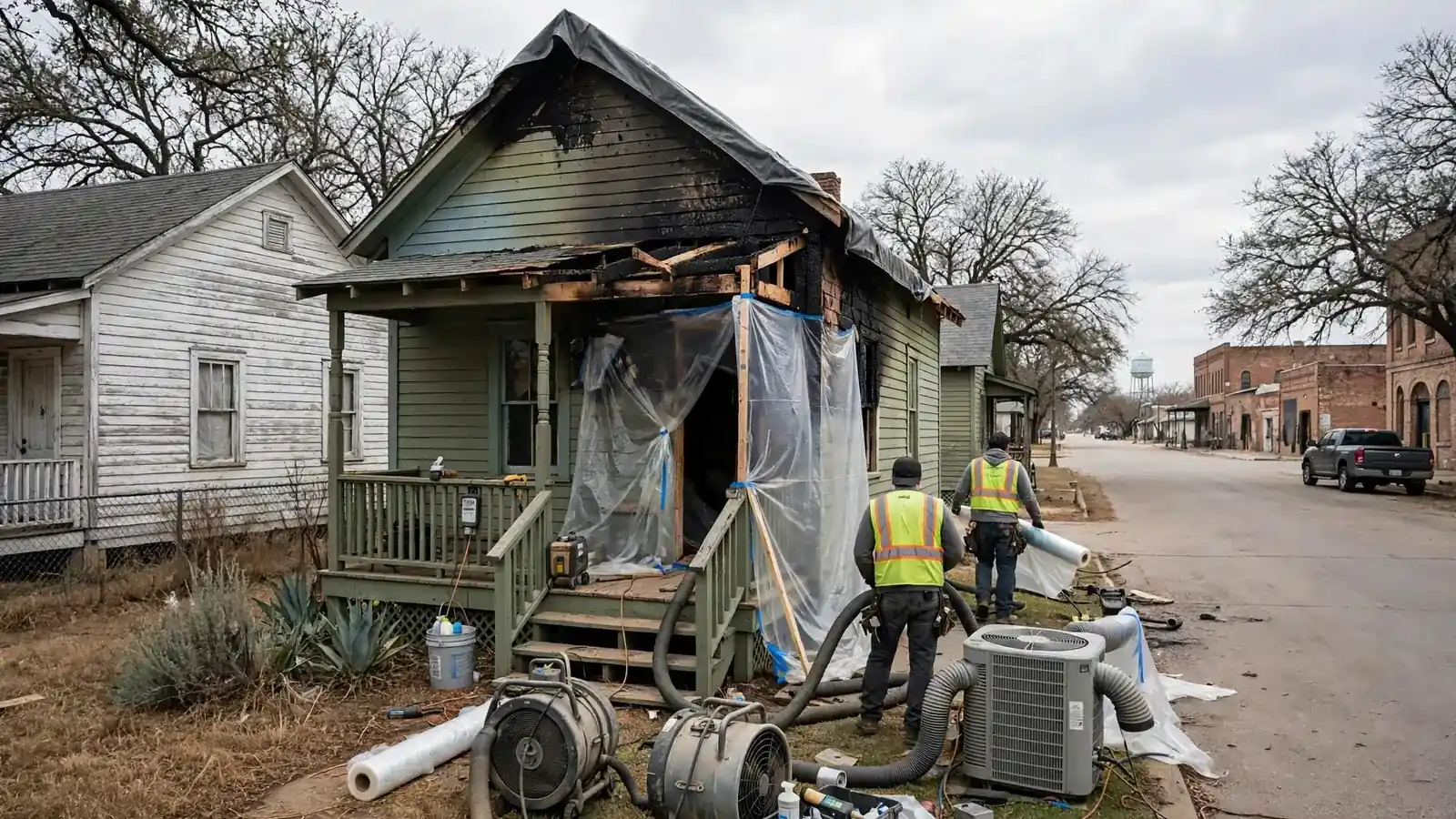
- Fire jobs in older homes often reveal smoke inside wall cavities and attics far from the room where the fire started [4].
- Arlington Heights is inside the City of Fort Worth, so building permits go through the city's Development Services department [5].
Covered here
Arlington Heights coverage at a glance
This page is about homes in Arlington Heights on Fort Worth's west side. Calls from this ZIP code are in the coverage area for this service:
- ZIP 76107Arlington Heights, the Cultural District, Monticello and the neighborhoods along Camp Bowie Boulevard west of downtown.
- Outside 76107?If your address is in a different ZIP code, mention it on the call; the contractor will tell you plainly whether they can help.
The neighborhood
How Arlington Heights grew and what its houses are made of
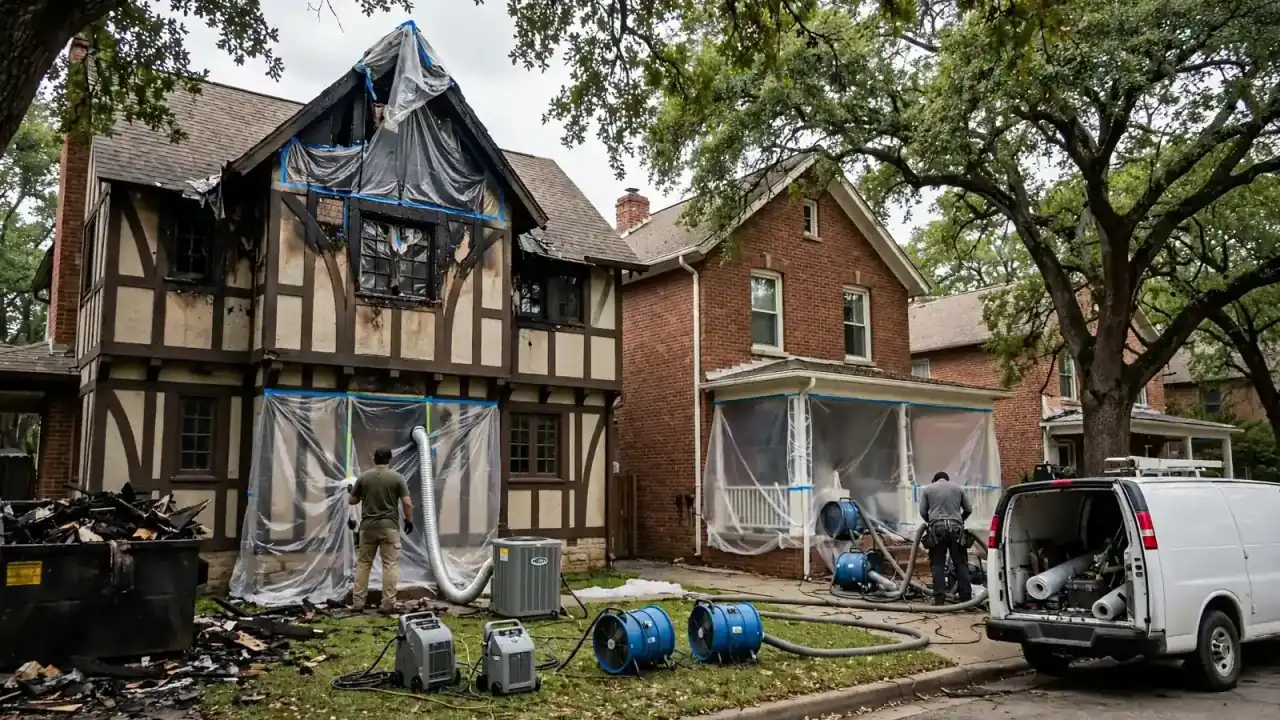
Arlington Heights traces back to an 1890s land venture west of downtown Fort Worth. A Denver promoter bought a large tract and built a hotel there, Ye Arlington Inn, which burned in 1894 [1]. The area grew in earnest after World War I, when the Army's Camp Bowie brought thousands of people to the west side, and the old camp land turned into neighborhoods in the years after [1][2].
Many of the houses standing today date from the 1920s and 1930s: brick and frame bungalows, Tudor Revival homes with steep gables, Colonial and Spanish-influenced designs, and a good number of later replacements and additions. Streets are lined with large trees, and many lots have a detached garage or garage apartment off an alley.
Construction from this era differs from today's in ways that matter after a fire. Walls are often plaster over wood or metal lath. Floors may be oak over wood subfloors, sometimes on pier-and-beam foundations, sometimes on early slabs. Attics are typically ventilated and contain older insulation along with ductwork added when central air was installed. Original windows are often wood double-hung units.
Arlington Heights has also seen many renovations and some teardowns, so a single block can hold a nearly original 1920s house next to a fully modern rebuild. Before planning any fire restoration, a contractor needs to understand which kind of house they are dealing with.
What turns up
Problems that come up after fires in Arlington Heights homes
Soot drawn into attic ductwork
Central air added to older houses often runs through attic ducts, which pull smoke through the whole home if the system ran.
Read moreSmoke stains on plaster ceilings
Plaster ceilings with coved edges show soot lines clearly, but often clean well when soot is lifted dry first.
Read moreFires starting in alley garages
Detached garages with old wiring, tools and stored fuel are common fire origins that send smoke toward the house.
Read moreWater through oak floors
Firefighting water soaks oak floors and the subfloor below, and needs drying before cupping sets in.
Read more
Updates and additions
Where old house meets new addition
A typical Arlington Heights house has been expanded at least once. A kitchen moved to the back, a family room added, a second story built over the garage, or a sunroom enclosed. Each addition creates a seam where old and new construction meet. Those seams often have gaps in the framing and attic that let smoke move between the original house and the addition.
After a fire, contractors check those transitions carefully. An addition with drywall, modern insulation and a newer roof will clean and dry differently from the plaster walls and old attic of the original house. Odor problems often linger at the joint between the two, because the attic space over the old section and the new section may connect in ways that are not obvious from below.
Mechanical systems in these houses also tend to be layered. The original house may have had a floor furnace or wall heater replaced with central air; the addition may have its own system. Each system needs inspection after a fire, and ductwork that served smoky rooms needs cleaning or replacement.
Original finishes
Plaster, oak and wood windows in Arlington Heights
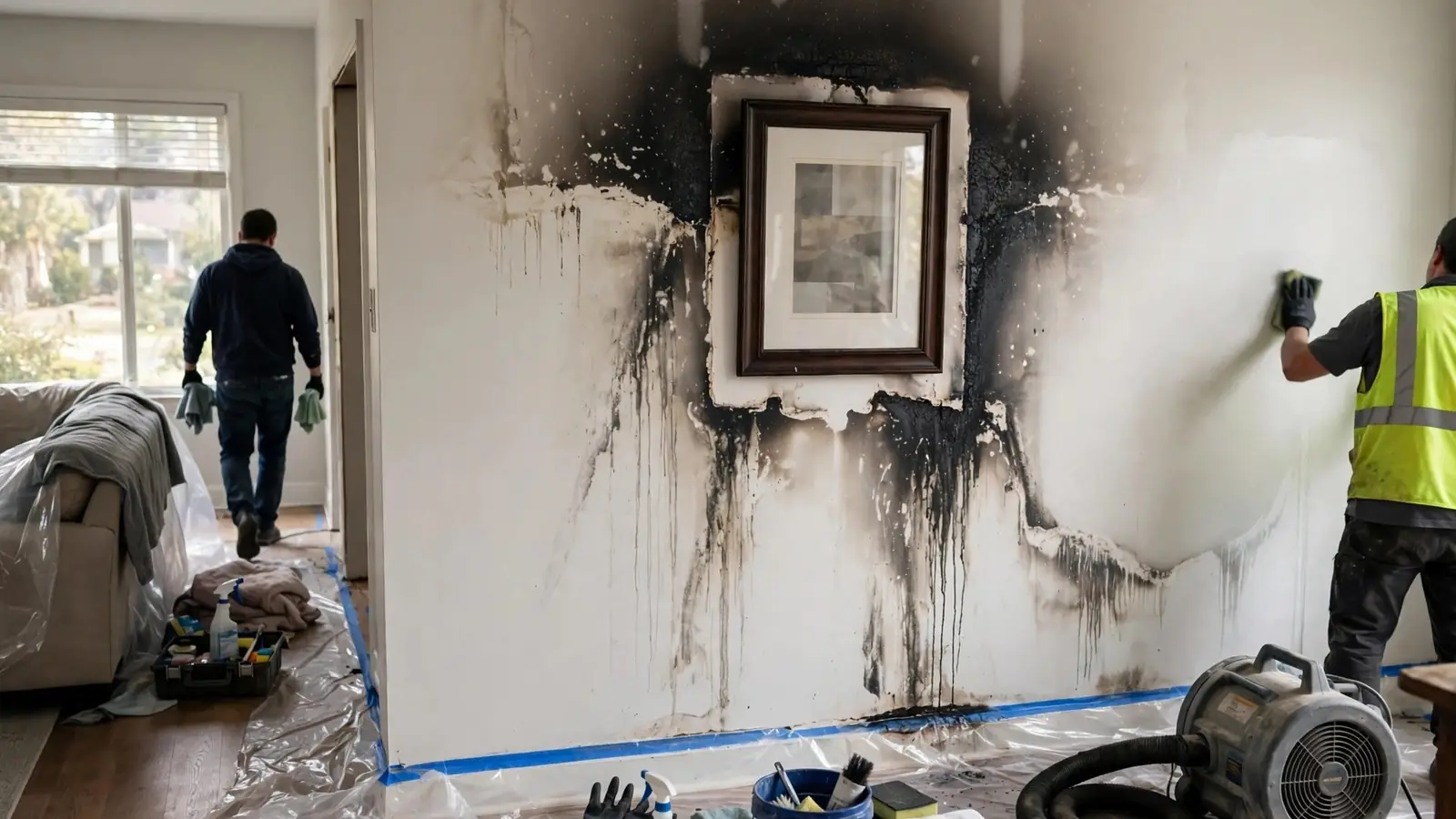
Plaster walls and ceilings are durable, and they often handle smoke better than drywall because their surface is harder. The key is removing soot dry before any liquid touches it. HEPA vacuuming and dry chemical sponges come first, followed by cleaning matched to the residue. After cleaning, sealing with a stain-blocking primer helps prevent any remaining residue from bleeding through new paint.
Oak floors are common in these houses. If smoke only coated the surface, cleaning and a fresh topcoat may be enough. If firefighting water soaked them, they need drying, and some cupping is common. Floors that dry well can usually be sanded and refinished. Wood windows with old glass can be cleaned, and broken panes replaced, though replacing whole windows may change how the house looks from the street.
Paint is the complication. Most houses in Arlington Heights were built well before 1978, and their original painted surfaces may contain lead [3]. Heat from a fire can blister paint, and cleanup can disturb it. Ask the contractor how they will handle older painted surfaces, including the use of containment and HEPA vacuums.
Garages
Detached garages and garage apartments
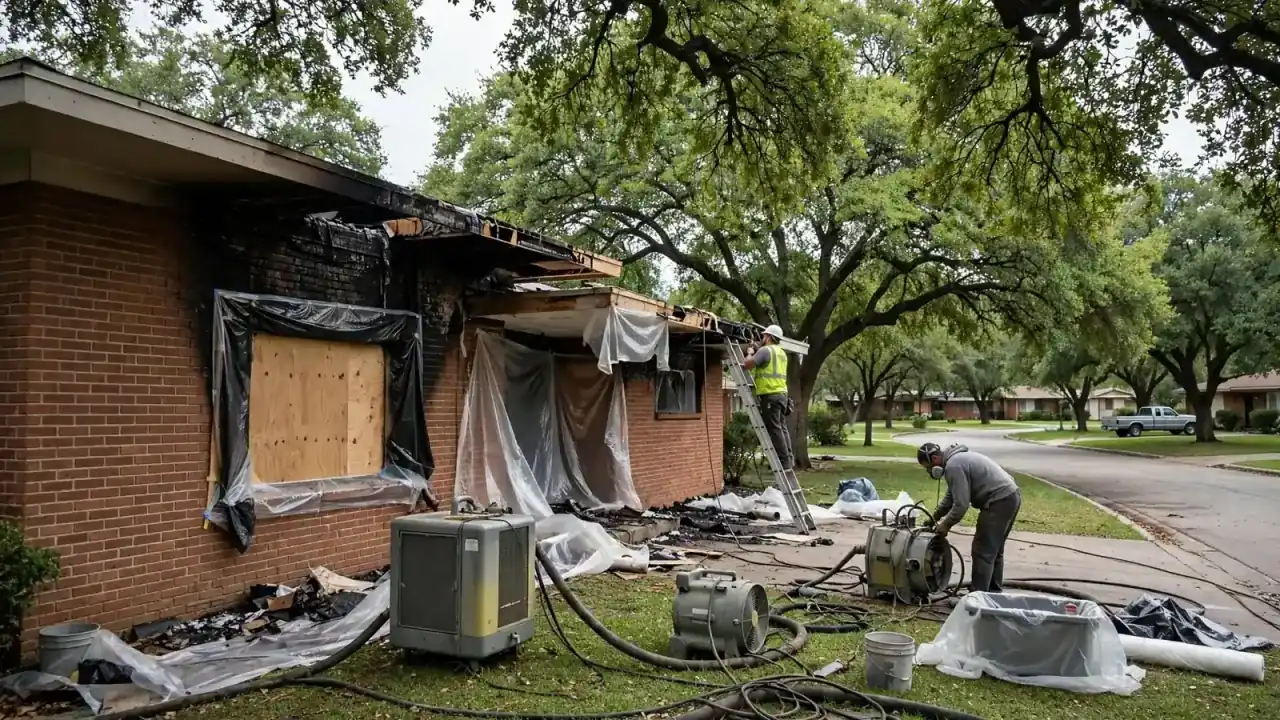
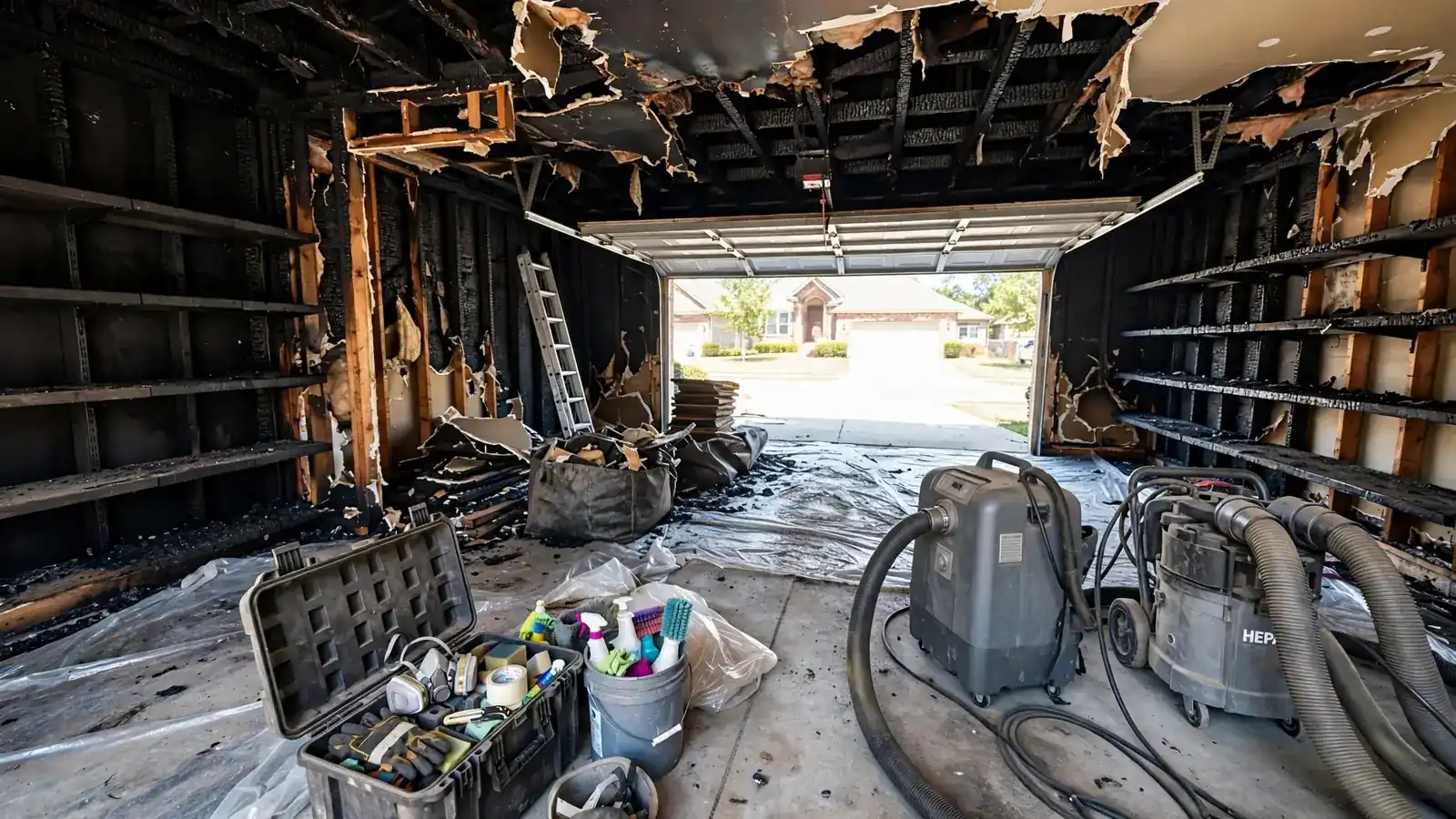
Many Arlington Heights lots have a detached garage near the alley, and some have an apartment above it. These outbuildings are common fire starting points, with old wiring, power tools, lawn equipment, stored gasoline and paint. A garage fire can scorch the alley side of the main house, send smoke through open windows and attic vents, and damage fences and neighbors' property.
Restoration of a garage fire covers the garage itself, debris removal and the smoke path into the main house. If the garage has an apartment, it is treated as living space, with the same smoke, soot and odor work as the main house. Rebuilding a garage generally needs a city permit.
- Garage fires often start with wiring or stored fuel
- Smoke reaches the main house through vents and windows
- Garage apartments treated as living space
- Rebuilds need City of Fort Worth permits
Weather
Storms, trees and keeping a damaged roof covered
Arlington Heights is known for big trees, which shade houses beautifully and also drop limbs in storms. After a fire, a damaged roof covered with a tarp is vulnerable, both to wind and to falling branches. North Texas spring storms can bring heavy rain, strong wind and hail, and the National Weather Service office for the region issues local warnings [6].
If your roof was opened during the fire, ask the contractor about trimming any limbs hanging over the tarped area and checking the tarp after every storm. A tarp torn by a falling branch can let in enough rain to soak rooms that were dry. Leaves and twigs also block the drainage path that a tarp relies on, so clearing debris from the roof and gutters matters too.
Permits
Permits and who to call in Arlington Heights
Arlington Heights is inside the City of Fort Worth, so permits for rebuilding, electrical, plumbing and mechanical work go through the city's Development Services department [5]. Some parts of the west side have specific zoning or overlay rules; the city can confirm whether any apply to your address. Cleaning, drying and temporary protection do not usually need permits.
Because so many homes here have been renovated over the years, the existing condition of wiring and plumbing can vary widely. If a fire exposed old wiring or plumbing that does not meet current code, repairs may need to bring those sections up to date. Ask your insurer whether your policy includes coverage for required code upgrades, sometimes called ordinance or law coverage.
Planning
Planning the work on an Arlington Heights street
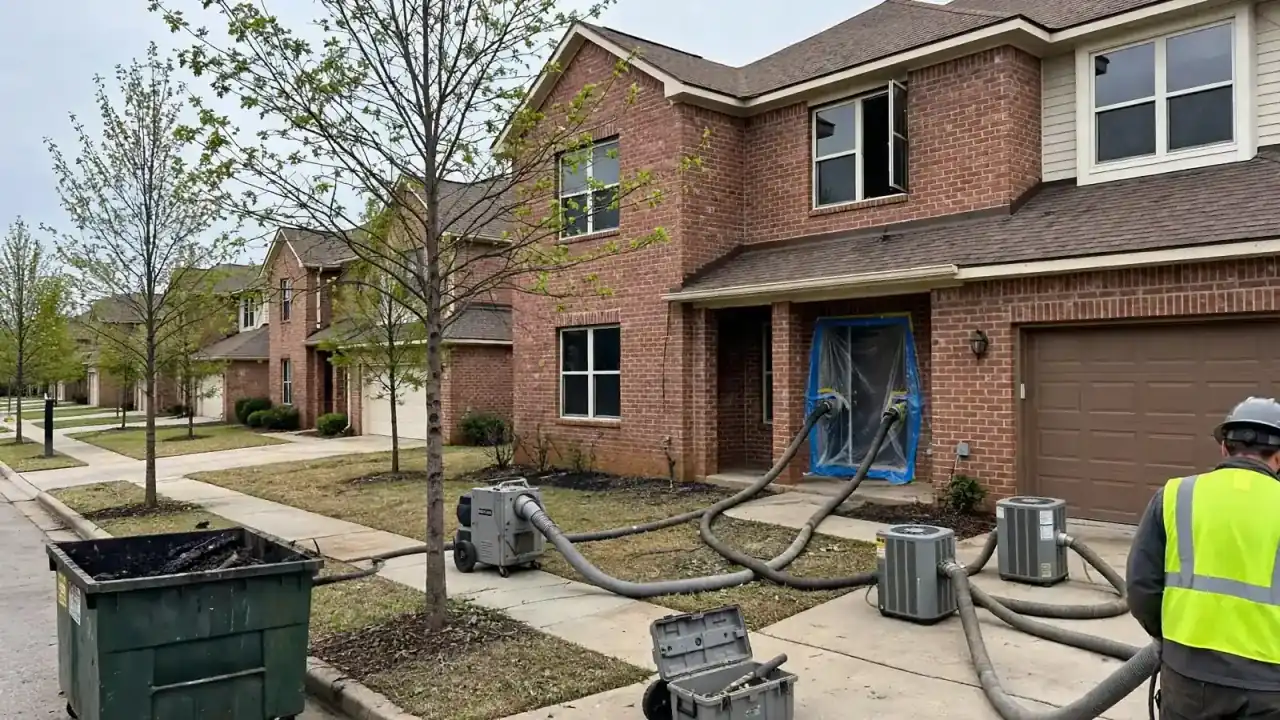
Streets in Arlington Heights are residential, with on-street parking and alleys behind many homes. Dumpsters and equipment trailers are often best placed in the alley or driveway, if there is room, rather than on the street. If a dumpster has to go on the street, the contractor should know whether the city requires a permit for it.
Neighbors are close and many have lived on their blocks for years. A short note or conversation explaining the work and how long it might take helps keep relations good, especially if trucks will be in the alley.
Large trees also affect access. Low branches can block trucks in narrow alleys, and roots can make driveways uneven. Mention any access issues on the call so equipment deliveries go smoothly.
Contents
Antiques, art and collections in older homes
Older neighborhoods often have homes full of antiques, family heirlooms and art. After a fire, these items need careful handling. Fine wood furniture with original finishes can often be cleaned by specialists. Oil paintings and works on paper may need conservators. Rugs and textiles can be cleaned by specialists who handle smoke damage.
Ask the contractor whether they work with specialists for valuable contents, or whether you should find your own. Either way, photograph and list valuable items before they leave the house, and ask for written receipts from anyone who takes them for cleaning.
Do not try to clean valuable items yourself in the first days. Soot and smoke residue can be smeared into delicate surfaces, and some cleaning products damage old finishes. It is better to let items sit protected until the right specialist can see them.
Insurance
Documenting an older home for your claim
Insurers handle older homes the same way as newer ones in principle, but in practice the questions are different. Matching plaster, oak floors and wood trim can mean more specialized work. Photograph original details before cleanup starts, including moldings, mantels, built-ins and floors. If you have older photos of the house, keep them handy.
Keep a log of contractor visits and decisions, and keep receipts for any expenses while you are out of the house. The Texas Department of Insurance advises checking whether your policy includes additional living expenses and keeping receipts [7]. Ask the contractor to provide room-by-room photos and moisture readings for the file.
Fireplaces
Fireplaces, chimneys and mantels in Arlington Heights
Fireplaces are a familiar feature in houses of this era, often with brick or tile surrounds and wood mantels. A fire that starts in or near a fireplace, from a cracked flue, a stray ember or combustible items placed too close, can damage the chimney and the framing around it as well as the room. Smoke from a chimney fire can also back up into the house.
After any fire involving the fireplace, the chimney should be inspected before it is used again. Cracked flue liners, damaged mortar and charred framing next to the chimney can create a risk of another fire. The masonry face and mantel usually need cleaning; brick holds soot in its pores and may keep a shadow after cleaning, while painted or tiled surrounds often clean up well.
If the fire did not involve the fireplace, it is still worth having the chimney checked. Smoke and soot from a room fire can enter an open damper and coat the inside of the firebox and smoke chamber, and that residue can give off odor when the weather warms.
Kitchens
Remodeled kitchens inside older houses
Kitchens are where home fires most often start, and Arlington Heights kitchens have usually been remodeled at least once, sometimes several times. A modern kitchen may have newer cabinets, stone counters, recessed lighting and a range hood vented through an old wall or attic. Recessed lights and hood ducts create openings into the ceiling cavity and attic that let smoke out of the kitchen and into the rest of the structure.
After a kitchen fire, the contractor should look above the kitchen ceiling as well as at the visible damage. Grease and protein residue from burned food is light in color but carries a strong odor, and it often coats the inside of cabinets, the underside of upper cabinets and the ceiling well beyond the stove.
Stone counters and tile usually clean well. Cabinet boxes made of particleboard may swell if firefighting water reached them. Painted cabinets can often be cleaned and repainted; stained wood cabinets may need refinishing if smoke darkened the finish.
Attics
What happens in an Arlington Heights attic after a fire
Attics in these homes are often a mix of old and new: original framing and roof boards, newer roof decking from a replacement, layers of insulation added over the decades, and ductwork from one or more air conditioning systems. Smoke rising through the ceiling settles on all of it.
Blown-in insulation that absorbed smoke is typically vacuumed out. Framing and decking are cleaned, and sealed if odor remains. Duct runs are cleaned or replaced, and the air handler is inspected. These steps are invisible from the living space but are often the difference between a house that smells normal and one that smells of smoke every summer afternoon.
While the attic is open and empty, it is also a good time for an electrician to look at any wiring that runs through it, since old circuits in attics can be affected by heat even if no flames reached them.
Rentals
Rental houses and garage apartments in Arlington Heights
Arlington Heights is close to the Cultural District, the medical district and several colleges, and a number of houses and garage apartments are rented. When a fire affects a rental, the owner and the tenant usually have separate responsibilities: the owner's policy typically covers the building, while the tenant's own renters policy, if they have one, covers their belongings and sometimes temporary housing.
For owners, that means coordinating access with tenants, keeping them informed and deciding when the unit can be lived in again. For tenants, it means documenting personal belongings and checking whether renters insurance applies. A restoration contractor works for whoever hires them; make sure everyone knows who that is before work begins.
Timing
Why the first few days matter in an older house
Original materials respond best when cleanup starts promptly. Plaster dries more slowly than drywall, oak floors cup more the longer they stay wet, and soot keeps working on metal and glass. An older house left wet and sooty for weeks tends to need more replacement than one where water extraction and soot removal started within days.
If the claim process is slow, ask your insurer about starting emergency mitigation, such as water extraction, drying and board-up, while the larger scope is worked out. Many policies treat those steps as reasonable efforts to prevent further damage.
Write down the date and time of each step, from the fire department's release to the first contractor visit. A clear timeline helps explain later why certain materials could be dried and others had to be replaced.
FAQ
Arlington Heights fire damage questions
Can smoke-stained plaster be cleaned in an Arlington Heights house?
Usually, if the plaster is sound and dry. Soot is vacuumed and dry-sponged first, then the surface is cleaned and sealed before painting. Plaster that is cracked, loose or soaked may need repair.
Why does the smoke smell come back when the air conditioning runs?
Older homes often have central air added later with ducts in the attic. If the system ran during or after the fire, ducts and the air handler likely hold residue that needs cleaning or replacement.
Our detached garage burned. Does the house need cleaning too?
Often. Smoke from a garage fire enters the house through open windows, attic vents and gaps. A contractor should inspect the attic and the rooms facing the garage even if they look fine.
Do I need permits to rebuild after a fire in Arlington Heights?
Structural, electrical, plumbing and mechanical repairs inside the City of Fort Worth usually require permits from Development Services. Cleaning, drying and temporary protection generally do not.
Is lead paint a concern in Arlington Heights homes?
Many homes here were built before 1978, so original paint may contain lead. Fire and cleanup can disturb it. Ask the contractor about lead-safe work practices, especially if children live in the home.
Will a contractor take my call from Arlington Heights?
Calls from ZIP 76107 are within this service's coverage. You talk with an independent local contractor on the call itself, and any next steps are agreed between you and them.
Can old oak floors survive firefighting water?
Many do. Solid oak usually flattens as it dries if drying starts promptly, and it can then be sanded and refinished. Boards that are charred or stay cupped after drying may be replaced.
Should the chimney be inspected after a house fire?
Yes, especially if the fire involved the fireplace or smoke entered an open damper. Cracked flue liners and residue in the smoke chamber can cause problems later, so have it checked before using it again.
Who is responsible when a rented house in Arlington Heights has a fire?
Usually the owner's policy covers the building and the tenant's renters policy, if any, covers their belongings. Owners and tenants should each contact their own insurer and agree on access for the restoration work.
Can work start before the insurance claim is settled?
Emergency steps such as board-up, water extraction and drying often can, because they prevent further damage. Ask your insurer how they want those steps documented, and keep receipts and photos.
Sources and citations
- [1]Wikipedia: Arlington Heights, Fort Worth, Texas
- [2]Wikipedia: Camp Bowie
- [3]U.S. EPA: Protect your family from sources of lead
- [4]U.S. Fire Administration: After a fire
- [5]City of Fort Worth: Development Services
- [6]National Weather Service: Dallas/Fort Worth forecast office
- [7]Texas Department of Insurance: Additional living expenses