Key facts: Ryan Place
- A Texas House resolution recognizing Ryan Place states the neighborhood was founded in 1911 as an upscale enclave and saw another building boom after World War II [1].
- In multi-story houses, smoke rises through stairwells and open floor cavities, so upper floors are often more smoke-damaged than the room of origin [2].
- Homes built before 1978 can contain lead in their paint; cleaning or removing old painted surfaces calls for lead-safe methods [3].
- Ryan Place lies inside the City of Fort Worth, where repair permits go through Development Services and exterior changes in historic districts can need review [4][5].
Coverage
Ryan Place addresses this page covers
This page is for homes in Ryan Place, south of downtown and west of Interstate 35W. Calls from this ZIP code are within this service's coverage:
- ZIP 76110Ryan Place and nearby south-side neighborhoods including parts of Berkeley Place, Mistletoe Heights and Fairmount's southern blocks.
- Close to a boundary?If you are unsure whether your street is covered, say so when you call. The contractor will tell you straight away.
The neighborhood
Ryan Place: grand houses and postwar infill
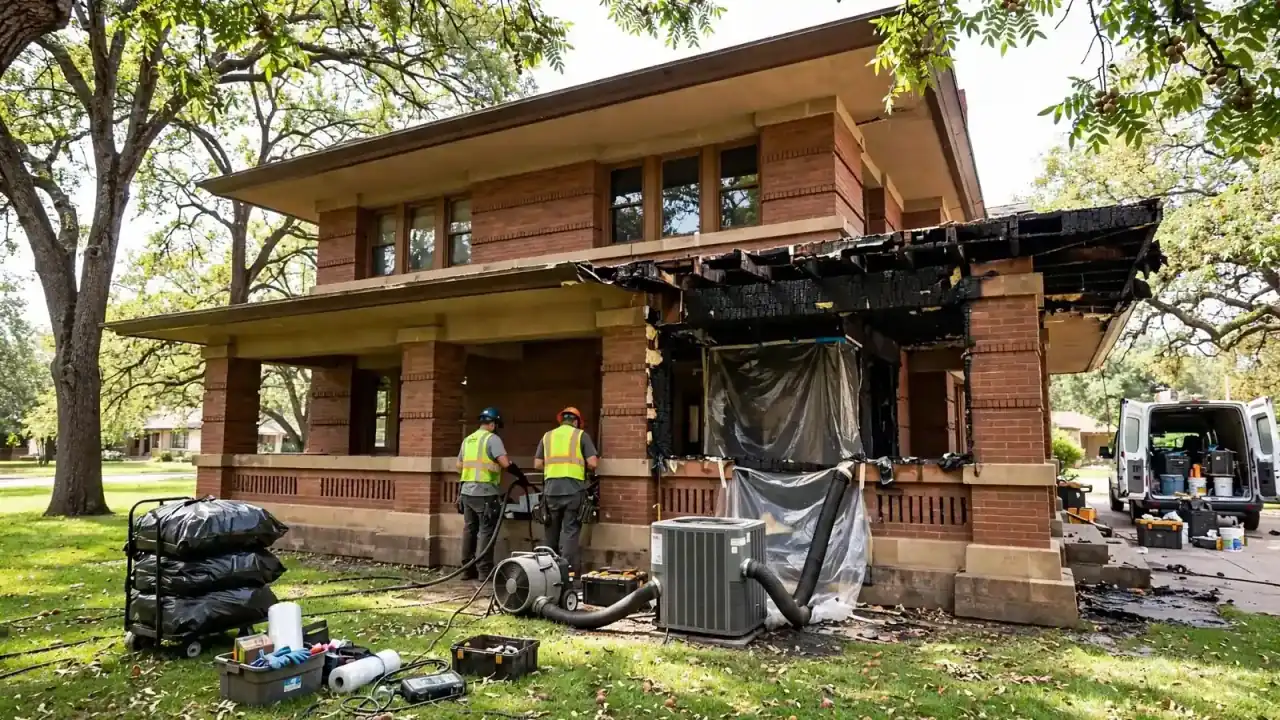
Ryan Place was established in 1911 and planned as an exclusive residential enclave south of downtown Fort Worth, according to a resolution of the Texas House of Representatives honoring the neighborhood [1]. Its most prominent street is lined with large homes in Prairie, Colonial Revival, Mediterranean and other period styles, many on generous lots with mature pecan and oak trees.
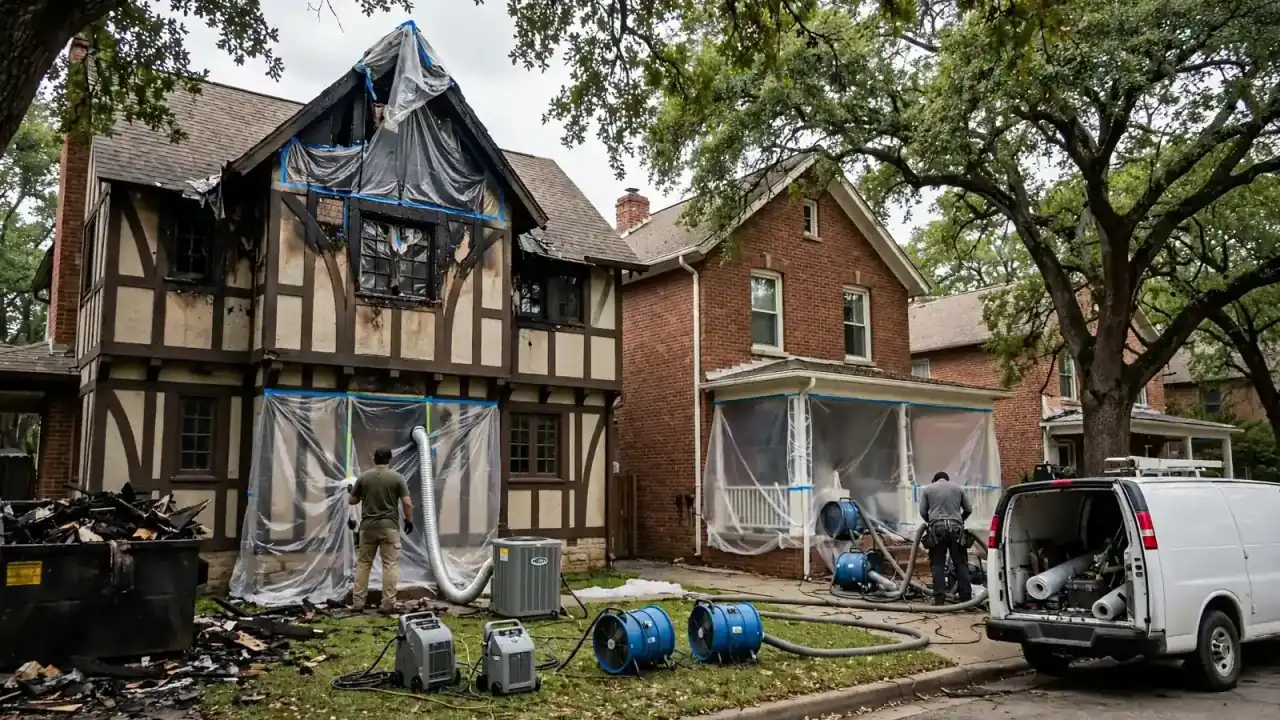
The same resolution notes a second building boom in the years following World War II [1]. That is visible on many side streets, where smaller brick homes of the 1940s and 1950s sit among the older houses. A fire restoration in Ryan Place can therefore mean anything from a two-and-a-half-story house with a full attic and servants' stair to a compact single-story postwar cottage.
Large historic houses here often have features that change how fire and smoke behave: tall ceilings, multiple staircases, attic rooms, sleeping porches that were later enclosed, basements or deep crawl spaces, and many additions over the decades. Many have been restored with care, so owners tend to want original materials preserved where possible.
Smaller postwar homes bring their own patterns: slab or shallow pier foundations, simpler attics, early drywall or plaster, and kitchens and baths updated over time. They are restored in a more standard way, but they sit in the same historic setting, so exterior changes can still draw attention.
Patterns
What Ryan Place fire jobs commonly involve
Smoke on upper floors
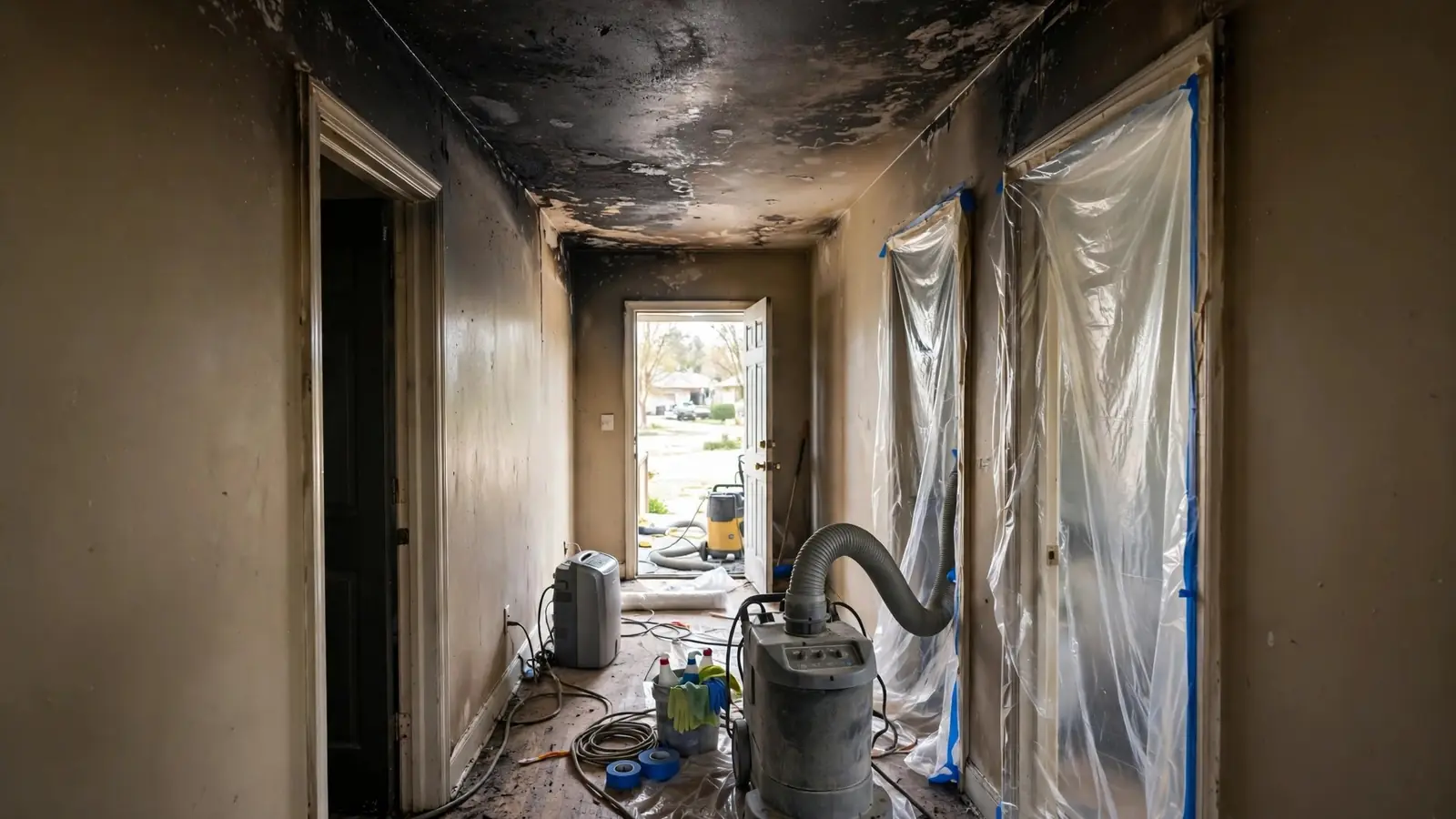
Smoke rises through open staircases into second floors and attic rooms, often leaving heavier residue upstairs than near the fire.
Read moreLarge attics full of residue
Big roofs mean big attics, with old framing, insulation and ductwork that all collect soot and odor.
Read moreWater cascading through floors
Water used upstairs flows down through floors and ceilings, so lower floors often need drying even when the fire was above.
Read moreFine woodwork and built-ins
Paneled rooms, staircases and built-in cabinets need careful soot removal and sometimes refinishing rather than replacement.
Read more
How smoke moves
Stairwells, stack effect and smoke in tall houses
Warm air rises, and in a multi-story house that creates a natural upward draft, often called the stack effect. During a fire, the open staircase becomes a chimney. Smoke and hot gases climb it quickly, fill the upper hallway and spread into every bedroom with an open door. Residue is often heaviest on upper-floor ceilings and walls, even if the fire started in a ground-floor room.
Older houses add more paths: laundry chutes, back stairs, dumbwaiter shafts, open chases for plumbing and heating pipes, and wall cavities that run between floors. Each can carry smoke into spaces that seem disconnected from the fire. The U.S. Fire Administration notes that smoke odor comes from tiny particles that cling to surfaces throughout a home [2], and in a large house there are more surfaces in more places.
A good inspection in Ryan Place goes room by room on every floor, including closets, the attic, the basement or crawl space and any enclosed porches. Inspection holes or removed trim panels may be needed to look inside walls and chases. The result is a map of where residue went, which guides the cleanup.
Water
Firefighting water in a multi-story home
When firefighters attack a fire on an upper floor or in an attic, water flows down through the house. It soaks the floor of the fire room, fills the ceiling cavity below, runs down inside walls and can reach the ground floor and the crawl space or basement. In a large house with plaster ceilings, water can hide above a ceiling that looks intact until it cracks or sags.
Moisture meters and thermal cameras help find where water went. Plaster ceilings that hold water may need to be opened to drain and dry; plaster that has been soaked often separates from its lath and has to be repaired or replaced. Hardwood floors on lower levels may cup as they absorb water dripping from above.
The EPA advises drying wet materials within 24 to 48 hours to prevent mold [6]. In a large, older house with many layers of material, that is a challenge, which is why drying plans with daily moisture readings matter. Ask the contractor to share their readings as the house dries.
Original details
Paneling, staircases and built-ins in Ryan Place homes
Many larger Ryan Place homes have wood paneling, carved stair rails, built-in bookcases and sideboards, beamed ceilings and decorative plaster. These details are part of the value of the house and are often impossible to replace exactly. After a fire, they collect soot on every ledge and in every carving.
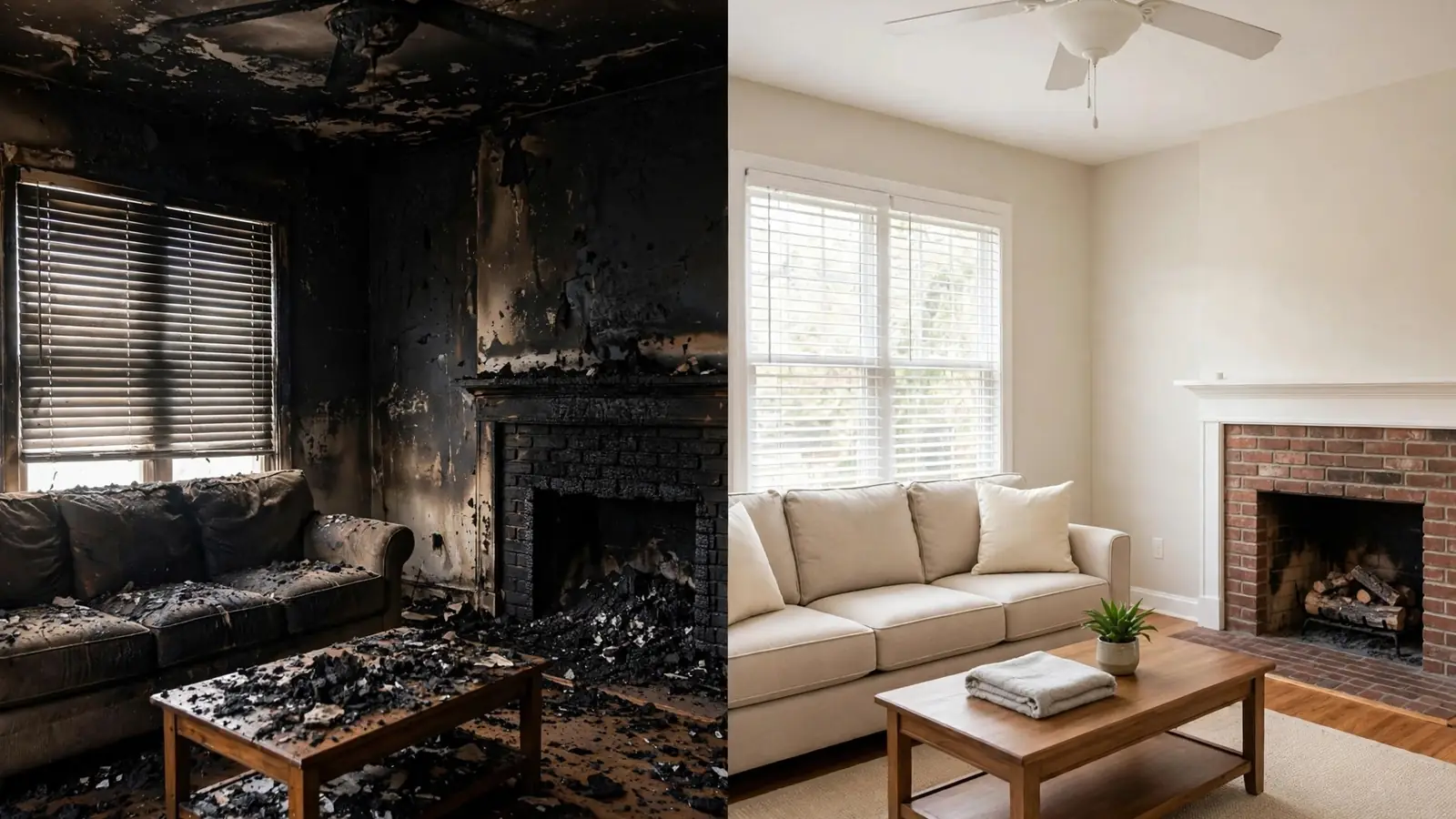
Careful restoration starts with dry soot removal, using HEPA vacuums with soft brushes and dry sponges. Finishes are then cleaned with products that will not strip them. Heavily smoke-darkened finishes may be refinished by specialists. Before anything original is removed, photograph it and ask whether it can be cleaned, repaired or rebuilt from surviving pieces.
- Dry soot removal from carvings
- Finish-safe cleaning products
- Specialist refinishing when needed
- Photograph before removing anything
Historic rules
Historic designation and exterior repairs
Parts of Ryan Place have historic recognition, and the City of Fort Worth maintains local historic districts in which exterior changes can require design review [5]. Whether your property is inside a local district determines whether replacing windows, doors, roofing materials, siding or porch elements needs approval. The city's historic preservation staff can confirm the status of your address.
Interior cleaning, drying and odor work usually proceed without historic review. Exterior work is where questions arise. If the fire damaged the front of the house, identify those items early so any review can run alongside interior work. Keep damaged original pieces when possible to help match replacements.
Even outside a local district, many Ryan Place owners choose to match original materials because it protects the character and value of the house. Mention your preferences on the call so the contractor can plan for them.
Old materials
Lead, asbestos and older building materials
Most Ryan Place homes were built before 1978 and can contain lead in their paint on original trim, windows, doors and walls [3]. Heat from a fire can blister and loosen paint, and cleanup can disturb it. Lead-safe practices, including containment, HEPA vacuuming and careful waste handling, protect your family and the crew.
Mid-century updates and postwar homes may include materials that can contain asbestos, such as some older floor tiles, textured ceiling coatings, pipe and duct insulation, and siding products. The EPA advises having suspect materials tested before disturbing them [7]. If the fire damaged anything that could contain asbestos, testing should come before demolition.
None of this has to stop a restoration. It adds steps, and a responsible contractor builds them into the plan rather than discovering them halfway through.
Permits
Permits for rebuilding in Ryan Place
Ryan Place is inside the City of Fort Worth, so permits for structural repair, electrical, plumbing and mechanical work go through the city's Development Services department [4]. A fire that damaged framing, wiring or HVAC usually leads to permitted repairs and inspections before walls and ceilings are closed up.
Large older homes sometimes have a mix of old and newer wiring, plumbing and heating systems. Repairs after a fire may require bringing the affected portions up to current code. Ask your insurer whether your policy includes ordinance or law coverage for code-required upgrades, and ask the contractor to note any code issues they find.
Contents
Pack-outs for large homes and valuable contents
Larger homes hold more contents, and many Ryan Place houses contain antiques, art, rugs and collections. After a fire with widespread smoke, a pack-out is often the best approach: contents are inventoried room by room, packed and moved to a facility where they are cleaned while the house is restored.
Ask for a detailed inventory with photos, and for written handling notes on valuable or fragile items. Specialists may be needed for fine art, antiques, textiles and documents. Keep your own list of items that matter most, so you can confirm they come back.
If only part of the house was affected, contents in clean rooms may stay in place, protected with plastic and with the room sealed off from the work area.
Access
Planning work on a Ryan Place property
Ryan Place lots are often large, with long driveways, rear garages and mature trees. That can make it easier to stage equipment and dumpsters off the street, but tree canopies and narrow side yards can limit where trucks and lifts can go. Talk with the contractor about protecting lawns, trees and landscaping during the work.
Large houses often need lifts or scaffolding to clean high ceilings and stairwells and to reach roof areas for tarping. Plan for that equipment in the schedule and in the layout of the property. Neighbors will notice a long project, so a friendly word about the timeline helps.
If the house has an alley entrance or a separate garage apartment, mention it so the contractor can decide on the best access point for debris and equipment.
Insurance
Keeping the claim clear for a larger home
Larger homes tend to have larger claims with more line items, more rooms and more contents. Organization makes a real difference. Keep photos by room and floor, the contractor's scope by room, moisture logs, contents inventories and every receipt in one place.
Talk with your adjuster early about original materials and how matching will be handled. The Texas Department of Insurance advises keeping receipts and checking whether your policy includes additional living expenses if you cannot stay in the home [8]. For a large house, time out of the home can be significant, so knowing your coverage helps you plan.
Enclosed porches
Sleeping porches, sunrooms and later enclosures
Many Ryan Place houses once had open sleeping porches or sunrooms that were later enclosed with windows and drywall. These enclosures often have their own roof framing, separate insulation and sometimes a separate heating or cooling unit. They also tend to connect to the main house through former exterior walls with old windows still in place inside.
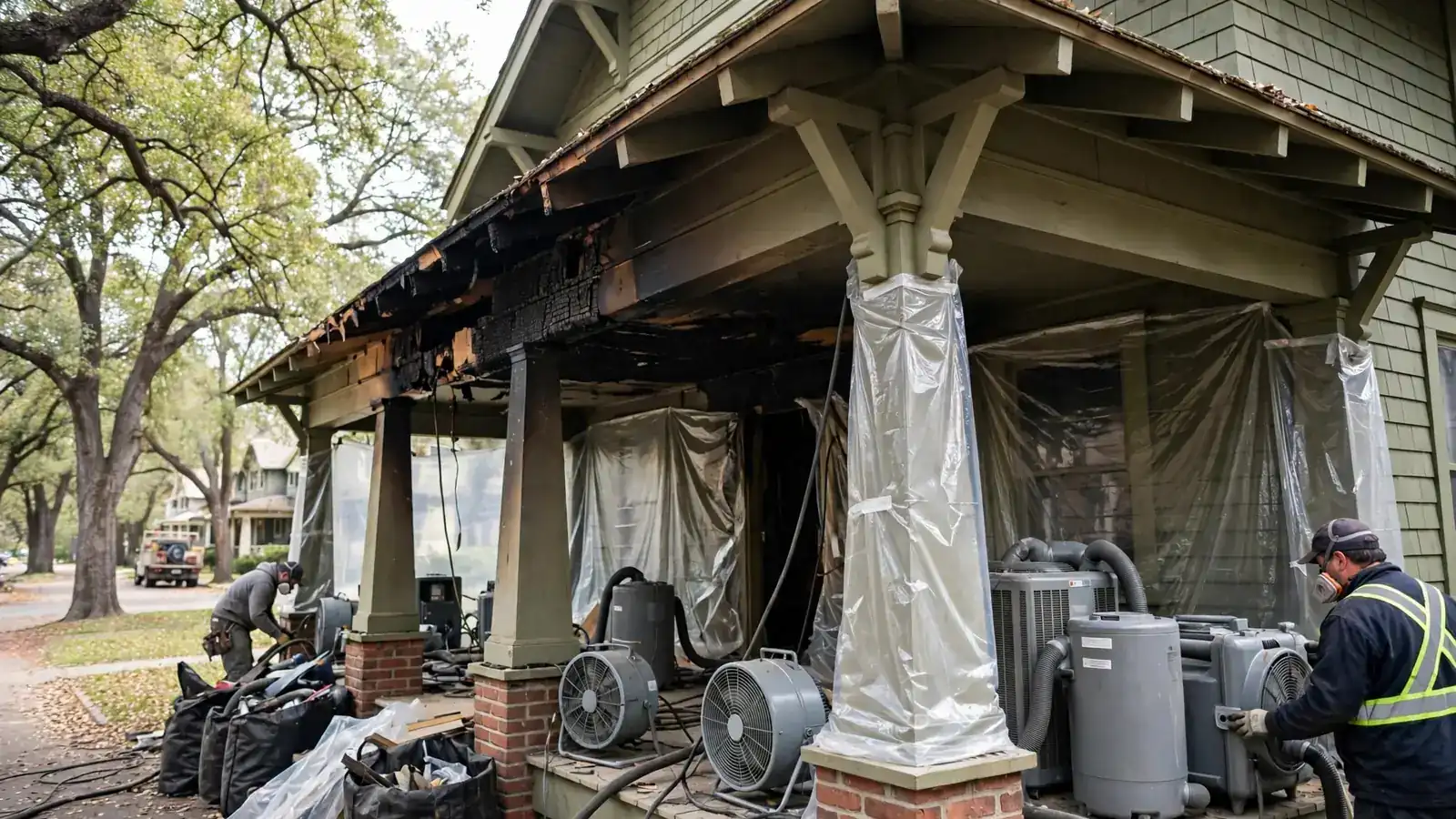
After a fire, enclosed porches can trap smoke behind those old windows and inside their separate roof cavities. Because they were added later, their framing and materials may not match the rest of the house, so cleanup and drying are planned separately. If you have an enclosed porch, ask the contractor to inspect its ceiling cavity and the wall where it meets the original house.
Basements
Basements and deep crawl spaces in older Ryan Place houses
Basements are unusual in Fort Worth, but some older and larger homes have a partial basement or a deep crawl space with mechanical equipment. Firefighting water drains into these low spaces, where it can sit on floors and soil and raise humidity throughout the house. Smoke also settles in them.
If your home has a basement or deep crawl space, have it checked for standing water, wet framing and residue. Equipment located there, such as a furnace, water heater or ductwork, should be inspected before use. Drying a basement can take longer than drying upper floors because there is less air movement and often higher humidity.
Postwar homes
Restoring the smaller postwar houses on Ryan Place side streets
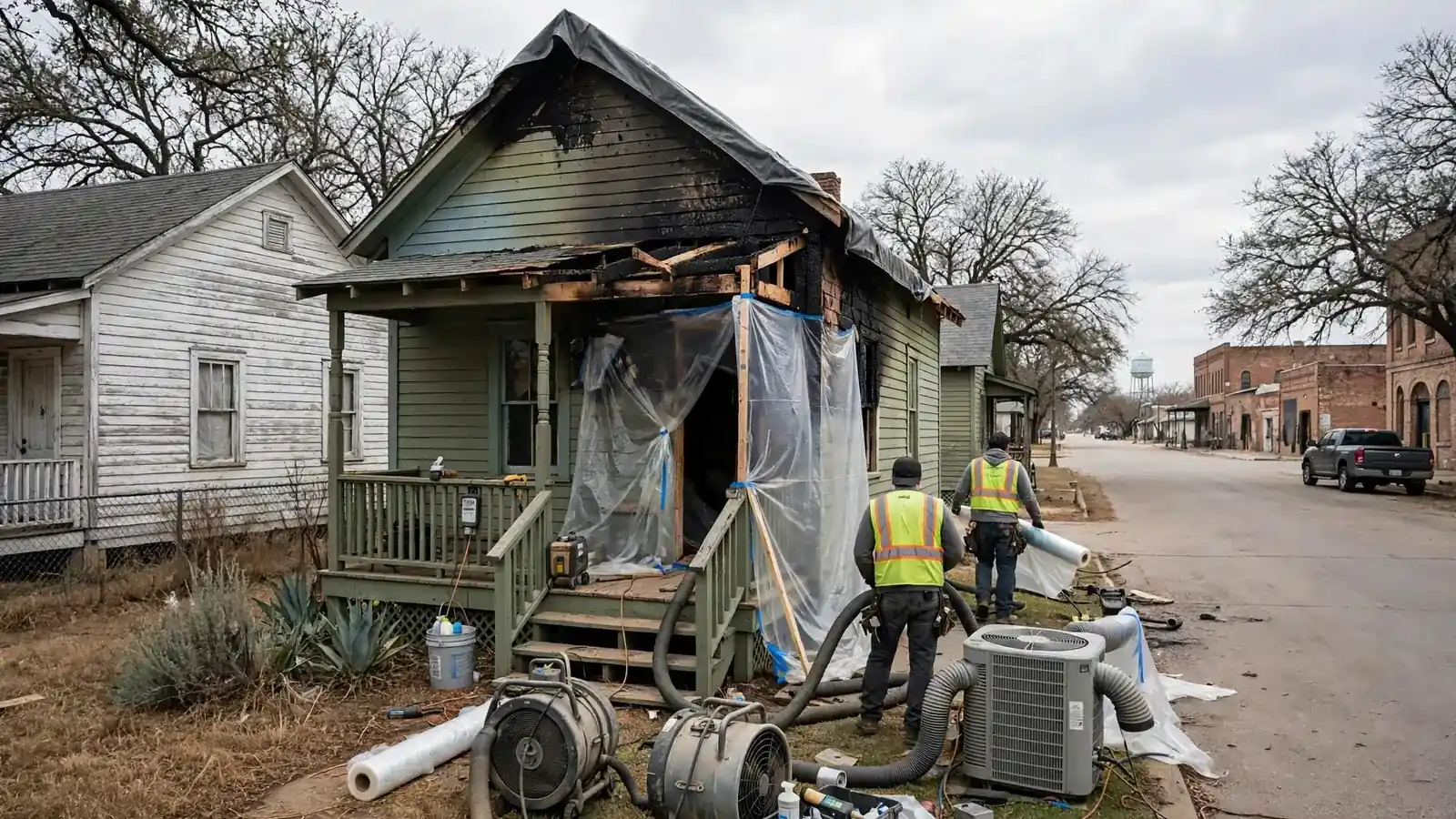
Not every Ryan Place home is a mansion. Side streets include compact brick houses from the 1940s and 1950s, many with two or three bedrooms, a single bath, a small attic and an attached or detached one-car garage. Fires in these homes behave more like fires in other mid-century houses across the city: smoke fills the small footprint quickly, the attic collects residue, and the kitchen or garage is a common starting point.
Postwar materials include early drywall or gypsum lath with plaster, hardwood floors over wood subfloors, and steel or wood windows. Some have asbestos-containing materials from that era in floor tile, textured coatings or duct insulation, so testing before demolition is wise. These homes usually restore well because they have fewer layers and simpler layouts, but their location in a historic setting means exterior choices still matter to neighbors and sometimes to the city.
If you own one of these homes, ask the contractor to scale the plan to the house. Not every Ryan Place job needs the specialist approach of a large historic home; some need a straightforward, efficient cleanup.
Living arrangements
Staying close while a big house is restored
Restoring a large house can take a while, and many families want to stay nearby for school, work and to keep an eye on the property. If part of the house is unaffected, the contractor may be able to seal off the work area so you can stay in the clean section. That depends on where the fire was, how smoke traveled and whether utilities can safely stay on in your part of the house.
If you need to move out, check your policy's additional living expenses coverage and keep receipts. Ask the contractor for a realistic timeline by phase so you can plan the length of a temporary rental.
Trees and roofs
Large roofs, old trees and temporary protection
Big houses have big roofs, often steep and complex, with dormers, valleys and several levels. If firefighters opened the roof or the fire burned through, covering it safely may take more than a simple tarp. Contractors may need lifts or roof anchors to work safely on steep slopes, and large openings may need plywood under the tarp.
Ryan Place's old pecans and oaks overhang many roofs. Branches can damage temporary covers in a storm, and leaves block the drainage paths that tarps depend on. Ask about trimming limbs over the damaged area and clearing gutters, and check the covers after strong wind. A failed tarp on a large roof can let water into many rooms at once.
FAQ
Ryan Place fire restoration questions
Why is there more smoke damage upstairs than where the fire started?
Smoke rises. In multi-story homes, open stairwells and wall chases carry smoke and heat upward, so upper hallways and bedrooms often collect heavy residue even when the fire started on the ground floor.
Can paneling and carved woodwork be cleaned after a fire?
Usually. Soot is removed dry from carvings with soft brushes and HEPA vacuums, then finishes are cleaned with gentle products. Heavily darkened finishes may need specialist refinishing rather than replacement.
Do Ryan Place fire repairs need historic approval?
Interior work usually does not. Exterior changes may, depending on whether your address is in a local historic district. The City of Fort Worth's historic preservation staff can confirm your property's status.
Should contents be packed out after a fire in a large home?
If smoke spread widely, a pack-out often protects belongings and speeds the work. Ask for an itemized inventory with photos and use specialists for art, antiques and documents.
Is the call answered by a contractor?
Yes. Calls from ZIP 76110 connect to an independent local restoration contractor who speaks with you on that call. This site does not perform the work or collect your details for later contact.
How long does it take to dry a large older house?
It varies with how much water was used and how many layers of material got wet. Plaster and old wood dry more slowly than modern materials. Daily moisture readings show progress until dry targets are met.
Can we stay in part of the house during restoration?
Sometimes. If the fire was confined and smoke did not reach part of the home, the work area can be sealed off with plastic and air filtration. The contractor decides based on safety, utilities and how smoke traveled.
Our enclosed sunroom smells of smoke. Why?
Enclosed porches often have their own roof cavity and old windows on the shared wall, which trap smoke. Ask the contractor to inspect the porch ceiling cavity and the wall it shares with the original house.
What should I tell the contractor about my Ryan Place house?
Say how many floors it has, where the fire started, whether there is a basement, crawl space or enclosed porch, which original features matter most to you, and whether the roof was opened. That helps them plan equipment and crew.
Sources and citations
- [1]Texas Legislature: House Resolution 660 (82R) recognizing Ryan Place
- [2]U.S. Fire Administration: After a fire
- [3]U.S. EPA: Protect your family from sources of lead
- [4]City of Fort Worth: Development Services
- [5]City of Fort Worth: Historic districts
- [6]U.S. EPA: A brief guide to mold, moisture and your home
- [7]U.S. EPA: Protect your family from exposures to asbestos
- [8]Texas Department of Insurance: Additional living expenses