Key facts: Ridglea
- Many Ridglea homes were built in the 1940s and 1950s, before 1978, so original paint may contain lead [1].
- Postwar homes may contain asbestos in materials such as floor tile, textured coatings or duct wrap, which should be tested before being disturbed [2].
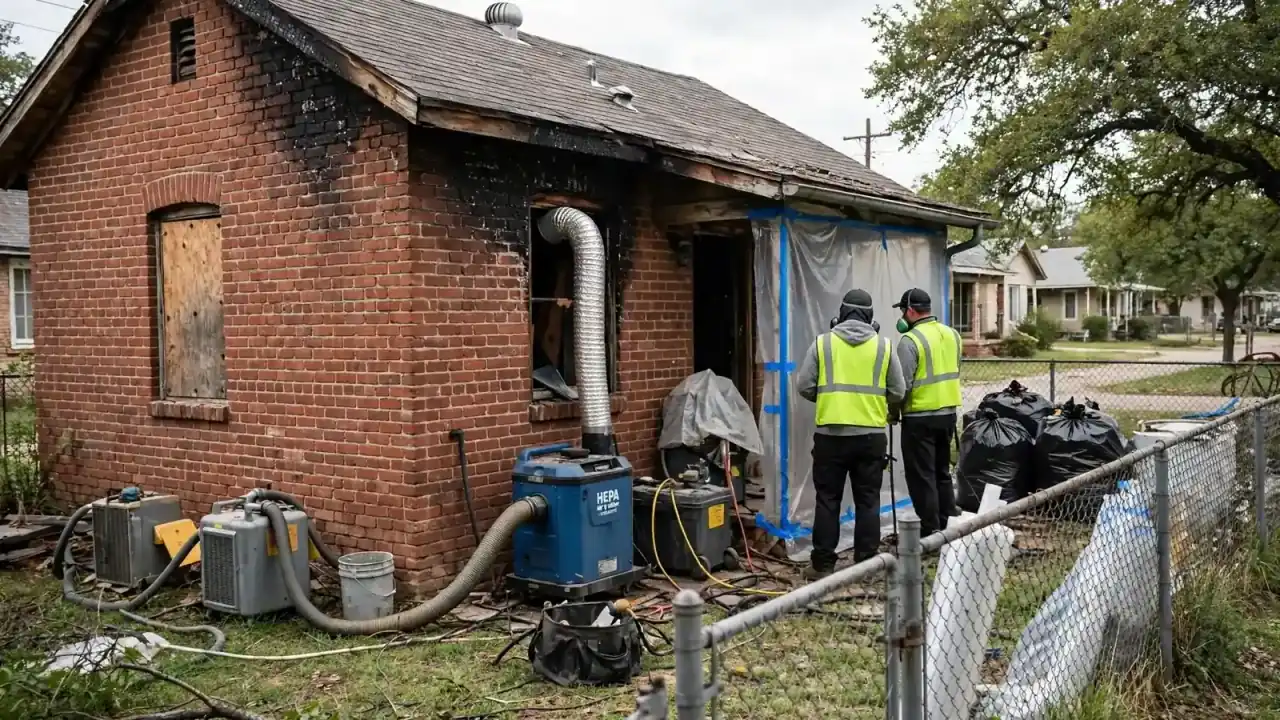
- In small houses, smoke reaches every room within minutes, so even a contained fire usually means whole-house cleaning [3].
- Ridglea is inside the City of Fort Worth; repair permits go through the city's Development Services department [4].
Coverage
Ridglea homes within the 76116 ZIP code
This page covers homes in the Ridglea area on Fort Worth's west side. Calls from this ZIP code are inside this service's coverage area:
- ZIP 76116Ridglea, Ridglea Hills, Ridglea North, Ridgmar and nearby west side neighborhoods along Camp Bowie Boulevard West.
- Unsure of your boundary?Give your address on the call; the contractor will tell you whether they serve it.
The homes
Ridglea's postwar housing and why it matters after a fire
Ridglea grew west of Arlington Heights along what became Camp Bowie Boulevard West, much of it in the years after World War II when Fort Worth expanded rapidly. The typical house is a modest single-story brick home, sometimes called a minimal traditional or early ranch, with two or three bedrooms, one or two baths, hardwood floors and a small attic. Later sections and nearby areas such as Ridglea Hills added larger ranch homes on bigger lots.
These houses were built quickly and solidly, but with materials and systems of their time. Original electrical service was sized for a much smaller load than modern households use, and many homes have had panels replaced or circuits added piecemeal. Original ductwork may be old or replaced. Walls may be plaster over gypsum lath or early drywall. Ceilings are often low, and attics are shallow.
Many Ridglea homes have been updated: kitchens opened, baths remodeled, additions built at the back. Some have been torn down and replaced with larger houses. A fire restoration needs to account for which parts of the house are original and which are newer, because they clean, dry and rebuild differently.
Lots often have a detached garage or carport off an alley, and backyard sheds are common. These outbuildings are frequent fire starting points, and their fires can reach the house.
Patterns
What Ridglea fire restorations commonly involve
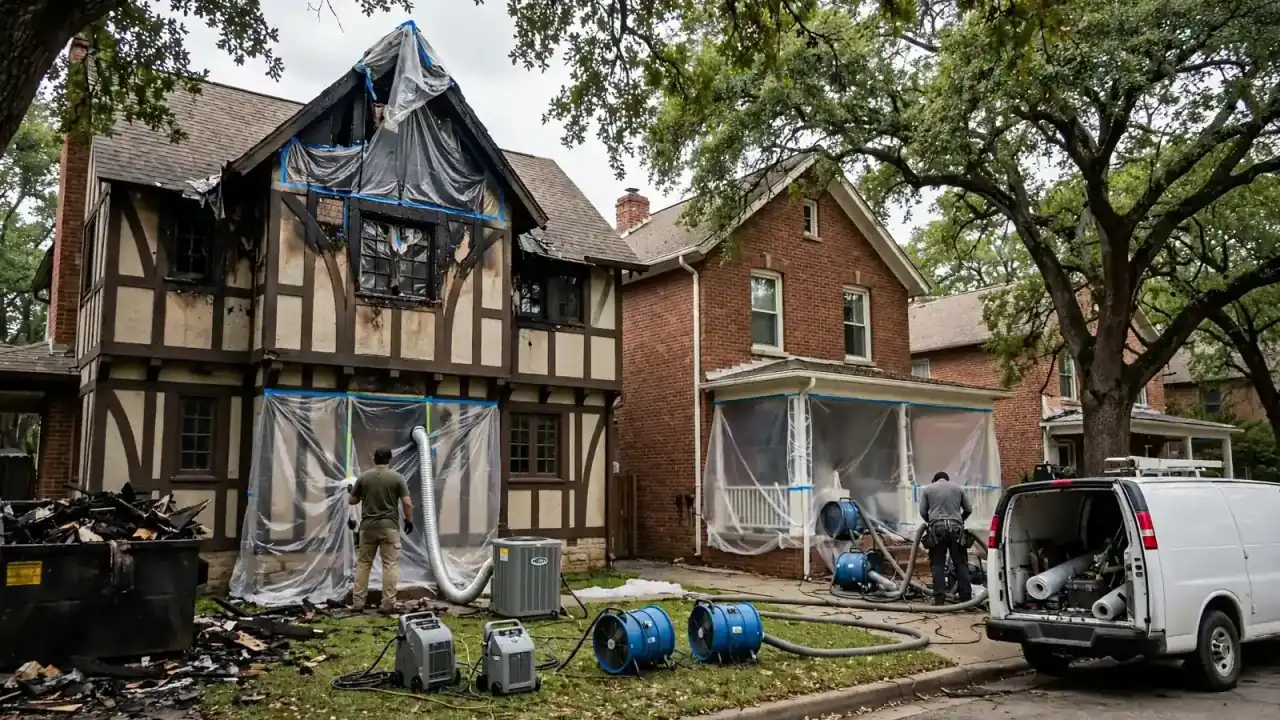
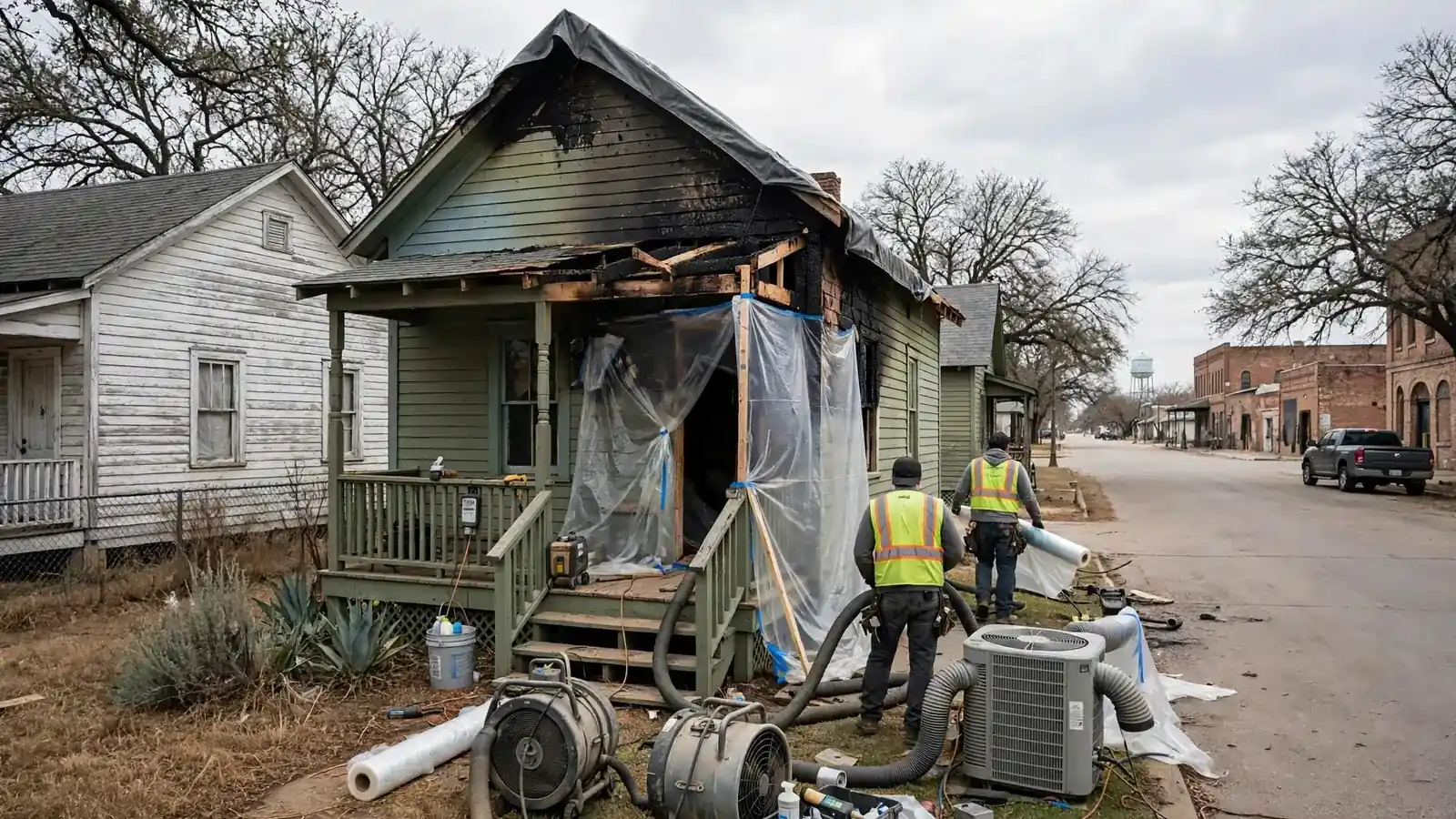
Smoke reaching every room of a compact house
In a compact house, smoke from a kitchen fire reaches every bedroom quickly, so cleanup usually covers the whole home.
Read moreFires from overloaded postwar wiring
Older wiring and overloaded circuits are a known fire cause in houses of this age; an electrician should inspect afterward.
Read moreShallow attics full of residue
Low attics trap smoke against the roof deck and insulation, and are cramped to clean.
Read moreAlley garage and shed fires
Detached garages and sheds store fuel and tools; their fires can scorch the house and send smoke inside.
Read more
Small houses
Why a small fire still means a whole-house cleanup
In a house of a thousand or so square feet with low ceilings, there is not much air volume for smoke to spread into. A pot left on a burner or a small electrical fire in one room produces enough smoke to coat every room in the house. Doors left open let it move freely; even closed doors let some through at the gaps.
That surprises many homeowners. The fire itself may have been confined to the stove, and the firefighters may have been in and out quickly, yet every closet holds smoke-smelling clothes and every ceiling has a grey film. The U.S. Fire Administration notes that even items that did not burn may be ruined by smoke [3]. In a small house, that applies to nearly everything.
A sensible plan in a small home is to clean everything at once rather than room by room. Contents can be packed out or protected while walls, ceilings, floors, the attic and the HVAC system are cleaned. Trying to save time by cleaning only the kitchen usually leaves odor behind in bedrooms and closets.
Electrical
Older electrical systems after a fire
Postwar homes were wired for far fewer appliances than modern families use. Over the years, many Ridglea houses have had their service upgraded, but some still have older panels, ungrounded circuits or wiring that has been extended in ways that would not meet current code. Overloaded or damaged circuits are a recognized cause of house fires.
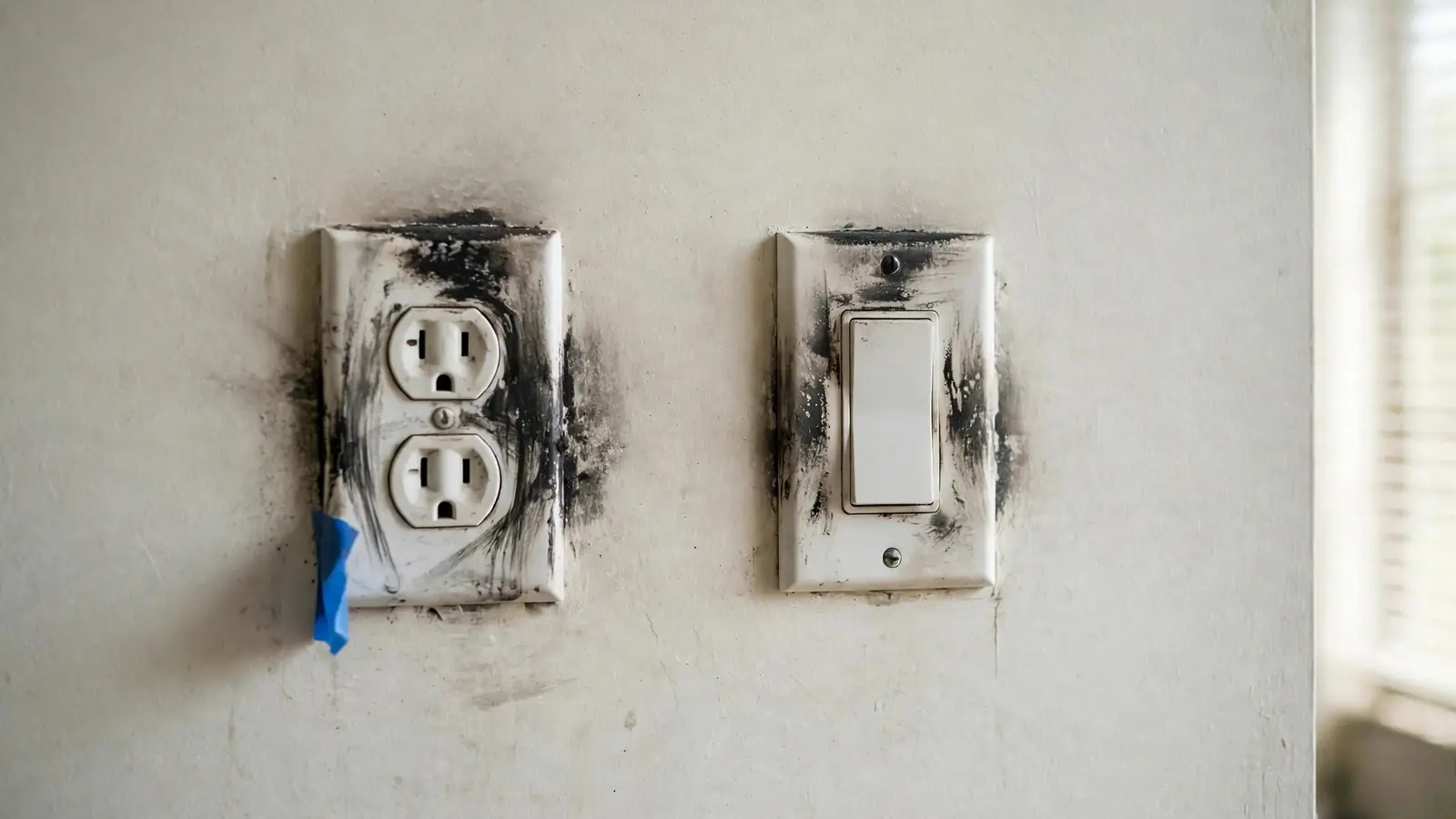
After a fire, power to the affected part of the house should stay off until an electrician inspects it. Heat can damage wiring inside walls and in the attic without any visible sign at outlets or switches. If the fire started at an outlet, appliance or panel, the electrician may need to trace that circuit and others nearby.
Repairs may involve replacing damaged circuits, and sometimes upgrading the panel or service if the existing equipment is damaged or does not meet current requirements. Those repairs typically need a permit and inspection from the City of Fort Worth [4]. It is much easier to do this work while walls and ceilings are open.
Attics
Cleaning shallow attics in Ridglea homes
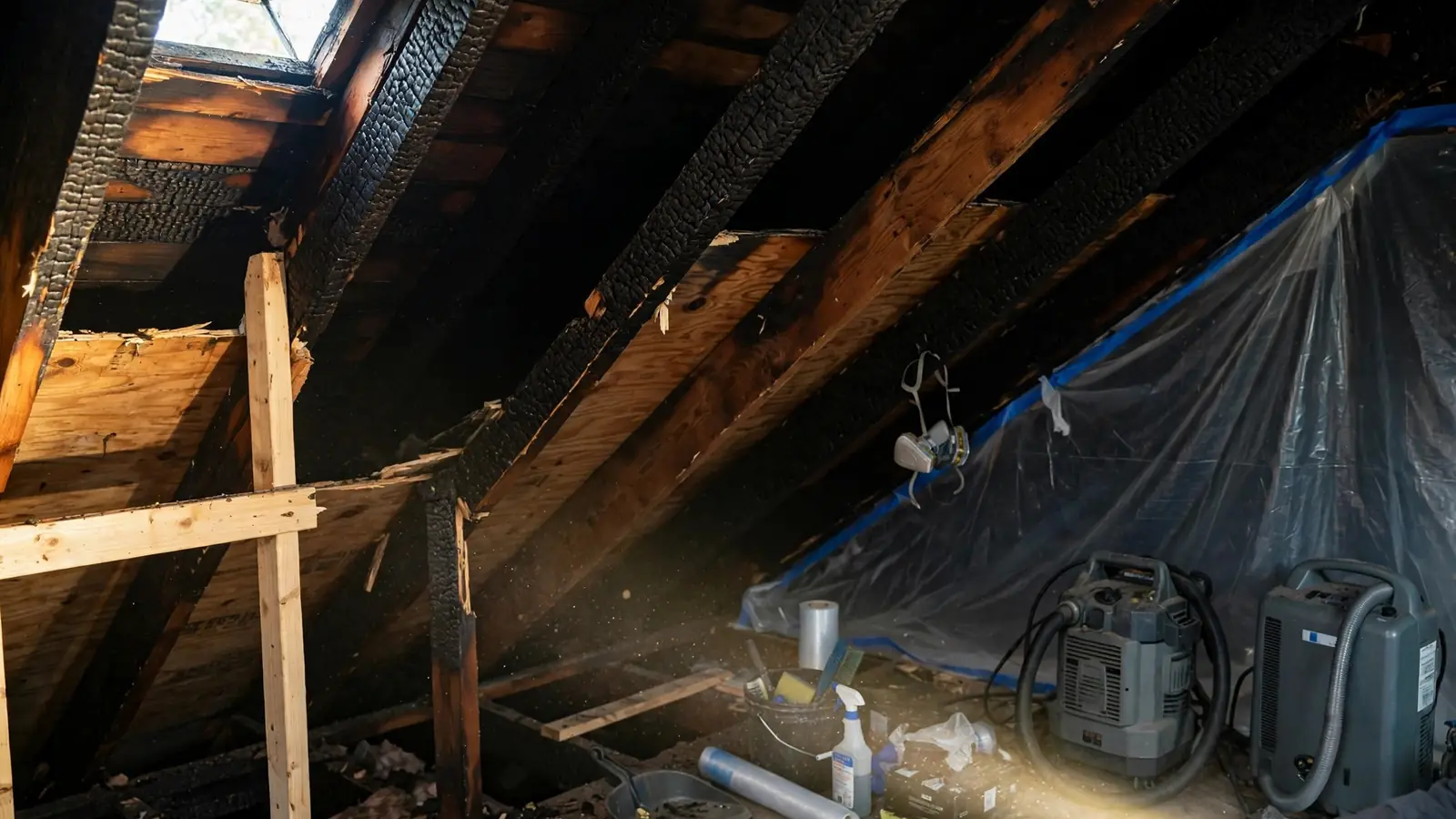
Ridglea attics are often low, with limited room to move. Smoke that enters through ceiling fixtures, the attic hatch or open framing settles on roof boards, rafters and insulation. In a Fort Worth summer, that attic heats up dramatically, and smoky insulation gives off odor that travels into the house through every opening.
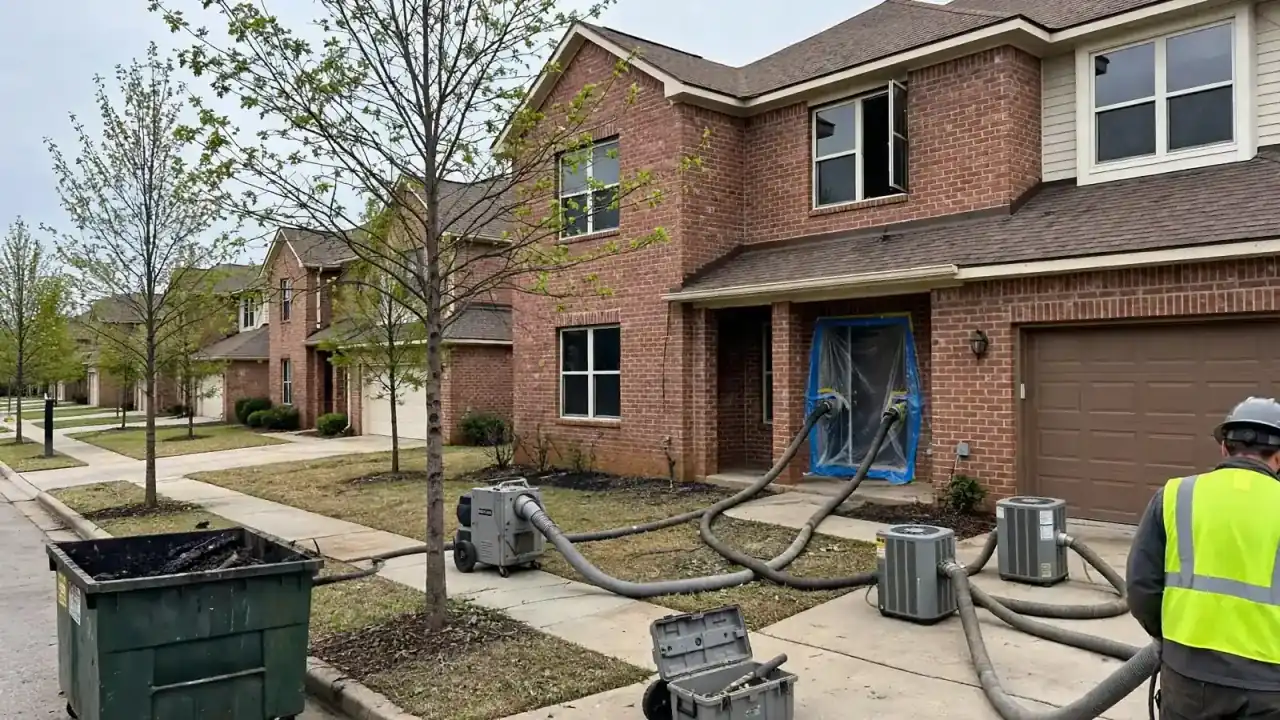
Removing smoky insulation is usually the most effective step. In a shallow attic, crews may use vacuum equipment to pull insulation out through a hose rather than bagging it by hand. Framing is then cleaned and sealed if odor persists, and new insulation is installed once the attic is clean.
- Insulation vacuumed out
- Framing cleaned and sealed
- Ducts cleaned or replaced
- New insulation after cleanup
Materials
Asbestos, lead and postwar building materials
Postwar construction used several materials that may contain asbestos, including some vinyl and asphalt floor tiles and their adhesive, textured wall and ceiling finishes, joint compound, duct wrap and siding. The EPA advises against disturbing suspect materials and recommends testing when they may be affected [2]. A fire often means removing or cutting into these materials, so testing should come first.
Paint in these homes, especially on original trim, doors and windows, may contain lead, since most were built well before 1978 [1]. Lead-safe work practices protect your family and the crew during cleaning and demolition. Ask the contractor how they handle both on older homes; a clear answer is a good sign.
Floors
Hardwood floors and firefighting water
Many Ridglea homes have original oak floors, sometimes under carpet. If firefighting water soaked them, they need prompt drying. Solid oak often flattens as it dries and can then be sanded and refinished. If the floor sat wet for days, or if sooty water stained it deeply, some boards may need replacing.
Carpet installed over hardwood is usually removed after a fire, both because the pad absorbs smoke and water and because it keeps the wood underneath wet. Some homeowners discover good original floors this way.
If your house has a slab with tile or vinyl, water can spread underneath. Moisture readings at baseboards and thresholds show how far it went.
Outbuildings
Detached garages, carports and sheds
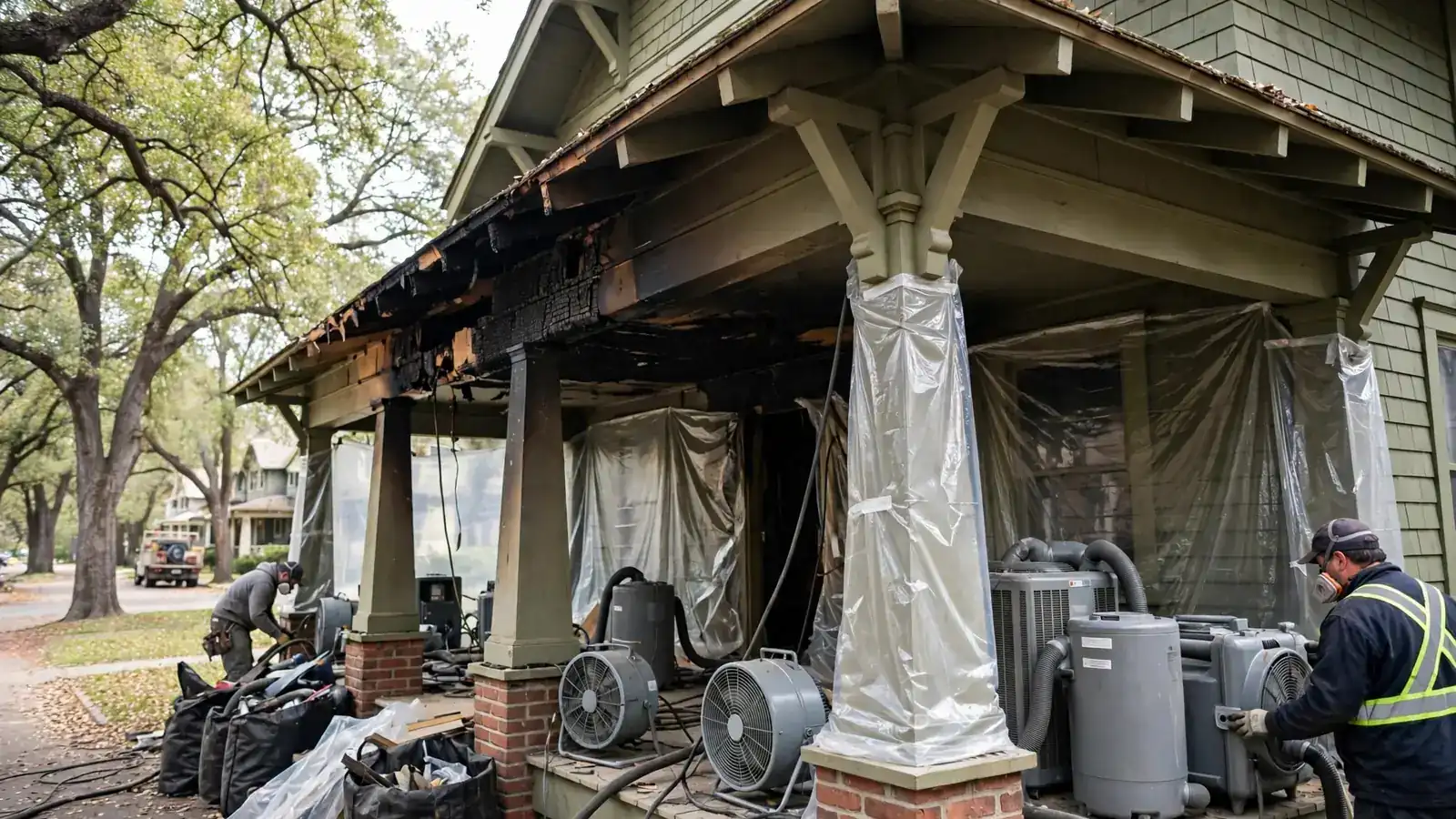
Detached garages and backyard sheds in Ridglea often store lawn mowers, gasoline, paint, tools and old furniture. Fires in these buildings can be intense. The house may be affected through radiant heat on the nearest wall, smoke drawn into open windows or attic vents, and embers landing on the roof.
Restoration after an outbuilding fire covers debris removal and the parts of the house exposed to heat and smoke. The side of the house facing the fire may need brick cleaning, window replacement and attic cleaning. Neighboring properties across the alley may also be affected, so coordination with neighbors may be needed.
Rebuilding a garage or shed may require a city permit depending on its size and use. Ask the contractor what applies.
Permits
Permits and city rules for Ridglea repairs
Ridglea is within the City of Fort Worth. Permits for structural, electrical, plumbing and mechanical repairs go through Development Services [4]. Temporary protection, water extraction and cleaning usually do not need permits; rebuilding usually does.
If your home is subject to deed restrictions or a neighborhood association, check whether exterior repairs need approval. Matching brick on a postwar house can be a challenge, since original brick may no longer be made. Contractors often salvage brick from damaged sections to patch visible areas.
Planning
Getting a crew in and out on a Ridglea street
Ridglea streets are residential with modest lots, driveways and alleys. Driveways are often narrow and short, so dumpsters may need to go on the street or in the alley. If a dumpster goes on the street, ask the contractor whether a city permit is needed and how long it will stay.
Small houses mean less room to stage equipment inside. Crews may set up air scrubbers and dehumidifiers in tight spaces, and contents may need to be packed out to make room for work. Agree on a plan for where contents go and how they are protected.
Talk with neighbors, especially across the alley, if work will involve trucks or debris removal from the back of the property.
Contents
Clothing, closets and contents in small homes
Smaller homes have smaller closets that are packed full. After a fire, every closet tends to smell of smoke, and the clothing, shoes and stored items inside need cleaning or replacement. Restoration cleaners have processes for smoke-damaged textiles that work better than home laundering.
Keep a list of what you send out and what comes back. Discard food, medicine and cosmetics exposed to heat, smoke or water, as the U.S. Fire Administration advises [3]. Photograph items before discarding them and keep the list for your insurer.
Insurance
Organizing your claim after a Ridglea fire
Even a small fire in a small house can lead to a full claim: cleaning every room, the attic, the HVAC system, contents, and repairs to the area that burned. Photograph every room, closet and the attic hatch area before work begins. Keep receipts for anything you buy while displaced.
The Texas Department of Insurance advises homeowners to check whether their policy includes additional living expenses and to keep receipts [5]. If electrical repairs require code upgrades, ask whether your policy includes ordinance or law coverage.
Heating
Floor furnaces, wall heaters and older heating equipment
Some postwar homes in Fort Worth were originally heated by floor furnaces or gas wall heaters before central systems were added. In many Ridglea houses those have been removed, but a few remain, and others were abandoned in place under carpet or behind paneling. Old gas heating equipment, and clutter stored too close to it, can be a fire source.
After a fire, all gas appliances should stay off until the gas lines and equipment are checked by a qualified professional. If an old floor furnace or wall heater was involved, it may be removed during the restoration and the opening closed in. The gas line to it should be capped properly.
Water heaters in these homes are often in a closet, garage or utility room. If smoke or water reached the water heater, have it inspected before relighting. Soot on the burner or in the flue can affect how it operates.
Windows
Steel and wood windows on postwar brick homes
Postwar Fort Worth homes often had steel casement windows or wood double-hung windows, many since replaced with vinyl or aluminum units. Heat from a fire can crack glass, warp frames and melt vinyl, and firefighters may break windows to ventilate the house.
Steel casements, where they survive, can often be cleaned, repainted and reglazed. Vinyl windows that warped from heat are usually replaced. Matching the look of the remaining windows matters, especially on the street side. Ask the contractor what will be replaced and what style the replacements will be.
Until permanent windows are installed, broken openings should be boarded up to keep weather and intruders out.
Additions
Back additions and converted garages
Many Ridglea homes have a family room or master suite added at the back, and some have converted an attached garage into living space. These additions often have different framing, ceiling heights, insulation and roof lines from the original house, and the joint between old and new is a common place for smoke to hide.
Converted garages in particular can have a slab that sits lower than the house, a separate attic space and wiring added later. After a fire, inspect the converted space and its connection to the original house carefully. Odor lingering in one area after cleaning often traces back to one of these seams.
Neighbors
When smoke drifts to the house next door
Ridglea lots are close together, and a serious fire can send smoke into neighbors' homes through open windows and attic vents. Radiant heat can crack windows and damage siding on the next house. If your fire affected a neighbor, their own insurance policy usually handles their home, but it helps to share information about the restoration contractor and the timeline.
If a neighbor's fire affected your home, document the damage with photos and contact your insurer. Even light smoke can leave residue in attics and closets that is worth cleaning before it sets.
Kitchens
Small kitchens and the fires that start there
Kitchen fires are the most common type of home fire nationally, according to the National Fire Protection Association [6]. In a postwar Ridglea kitchen, the range often sits close to upper cabinets and a window with curtains, which gives a stovetop fire a quick path upward. Many kitchens have been remodeled, but the footprint is usually small, so heat and smoke concentrate.
After a kitchen fire, the cabinets above and beside the range usually need replacement or refinishing, the ceiling needs cleaning and sealing, and the vent hood and its duct need inspection. Protein residue from burned food spreads well beyond the kitchen and carries a strong odor even when it is hard to see.
Appliances that were close to the fire, or that sat in heavy smoke, should be checked before use. Refrigerators and freezers that lost power during the fire should be emptied and cleaned; food exposed to heat or smoke should be thrown out.
Air system
Ductwork in older Ridglea homes
Central air in many Ridglea homes was added after the house was built, with ductwork run through the attic and an air handler in a closet, the attic or the garage. Some systems have been replaced several times; others still have older duct runs. After a fire, the whole system needs inspection.
Older metal ducts can often be cleaned. Insulated flex duct and duct board, common in later replacements, hold odor in their insulation and are usually replaced. Return grilles in hallways often show dark fans of soot and are a quick sign that the system carried smoke.
Change the filter several times in the first weeks after the system is restarted. A filter that turns grey or smells of smoke after a few days means residue is still moving through the ducts.
FAQ
Ridglea fire damage questions
The fire was only on the stove. Why does the whole house need cleaning?
In a small house, smoke from even a contained fire reaches every room, closet and the attic within minutes. Residue on walls, ceilings, contents and ductwork keeps releasing odor until it is cleaned.
Do I need an electrician after a fire in an older Ridglea home?
Yes. Heat can damage wiring inside walls and the attic without visible signs. Keep power off to affected areas until an electrician inspects, especially if the fire involved an outlet, appliance or panel.
Should my postwar house be tested for asbestos before repairs?
If materials such as old floor tile, textured finishes, duct wrap or siding may be disturbed, testing is wise. The EPA advises not disturbing suspect materials until they are tested.
Can original oak floors survive firefighting water?
Often. Solid oak usually flattens as it dries if drying starts promptly, and it can then be refinished. Carpet over the oak is usually removed so the wood can dry.
Our alley garage burned. Does the house need work?
Usually the wall facing the garage, nearby windows and the attic need inspection and cleaning. Smoke enters through vents and open windows even when the house itself did not catch fire.
Will a contractor take my call from Ridglea?
Calls from ZIP 76116 are within this service's coverage. You speak with an independent local restoration contractor on that call and agree any next steps with them.
Can our steel casement windows be saved after a fire?
Often. Steel frames that are not warped can be cleaned, repainted and reglazed. Badly distorted frames or melted vinyl replacements are usually replaced. Board up broken openings until permanent windows go in.
Is it safe to relight the water heater after a fire?
Not until gas lines and the appliance have been checked by a qualified professional. Soot on the burner or in the flue, or water damage to controls, can affect safe operation.
Why is there odor where our addition meets the original house?
The joint between old and new construction often has framing gaps and separate attic spaces that trap smoke. Ask the contractor to inspect that seam, including the attic above it.