Key facts: Odor Removal
- The U.S. Fire Administration explains that smoke odor comes from tiny particles that cling to walls, furniture, floors and clothing [1].
- IICRC S700 treats odor control as part of fire restoration that follows residue removal, not a substitute for it [2].
- The EPA states that ozone generators sold as air cleaners can harm health, and occupied spaces should not be treated with high ozone levels [3].
- Wet materials that stay damp for more than 24 to 48 hours can grow mold, which adds its own musty odor [4].
Why it lingers
Where smoke odor really comes from
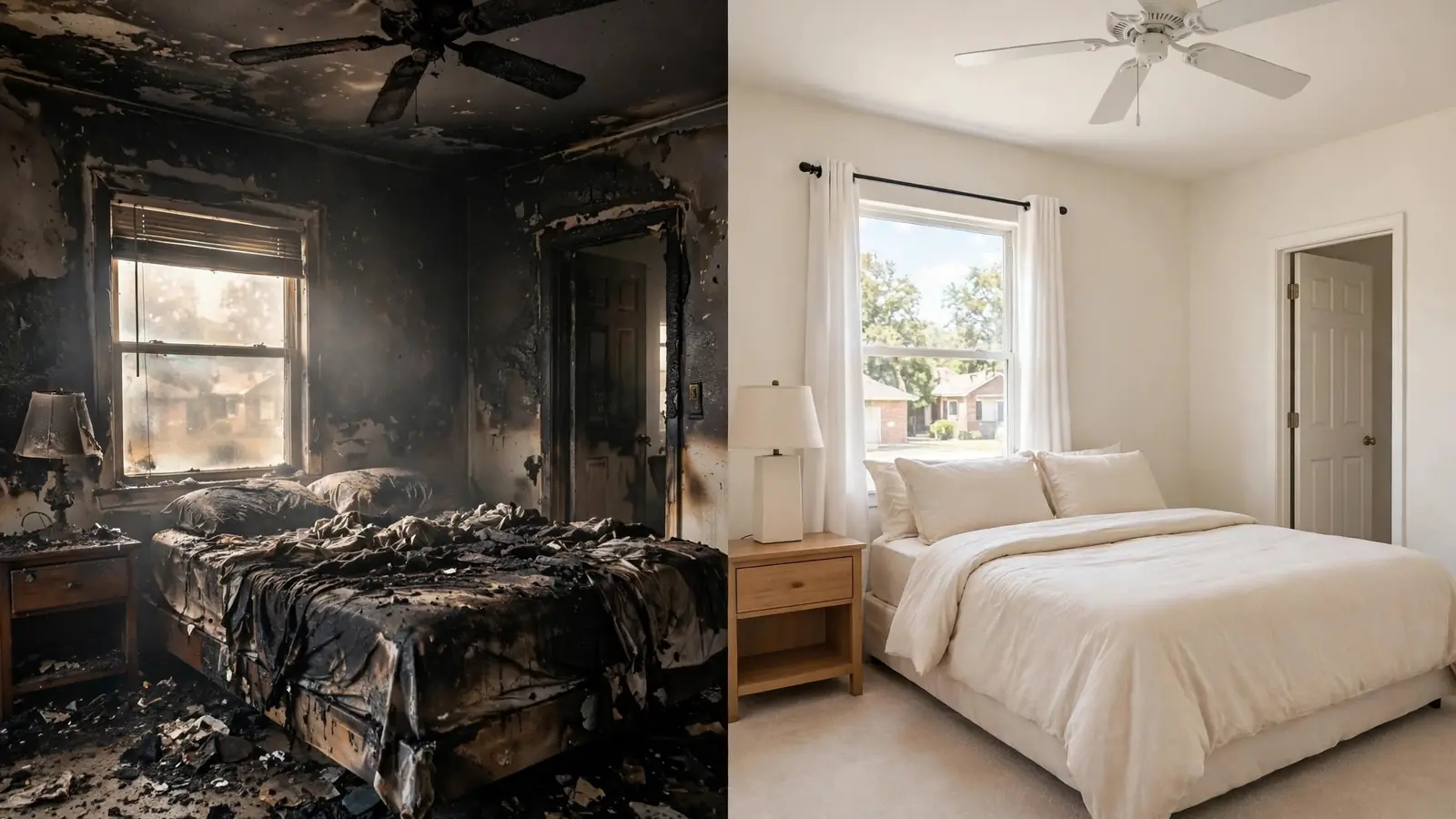
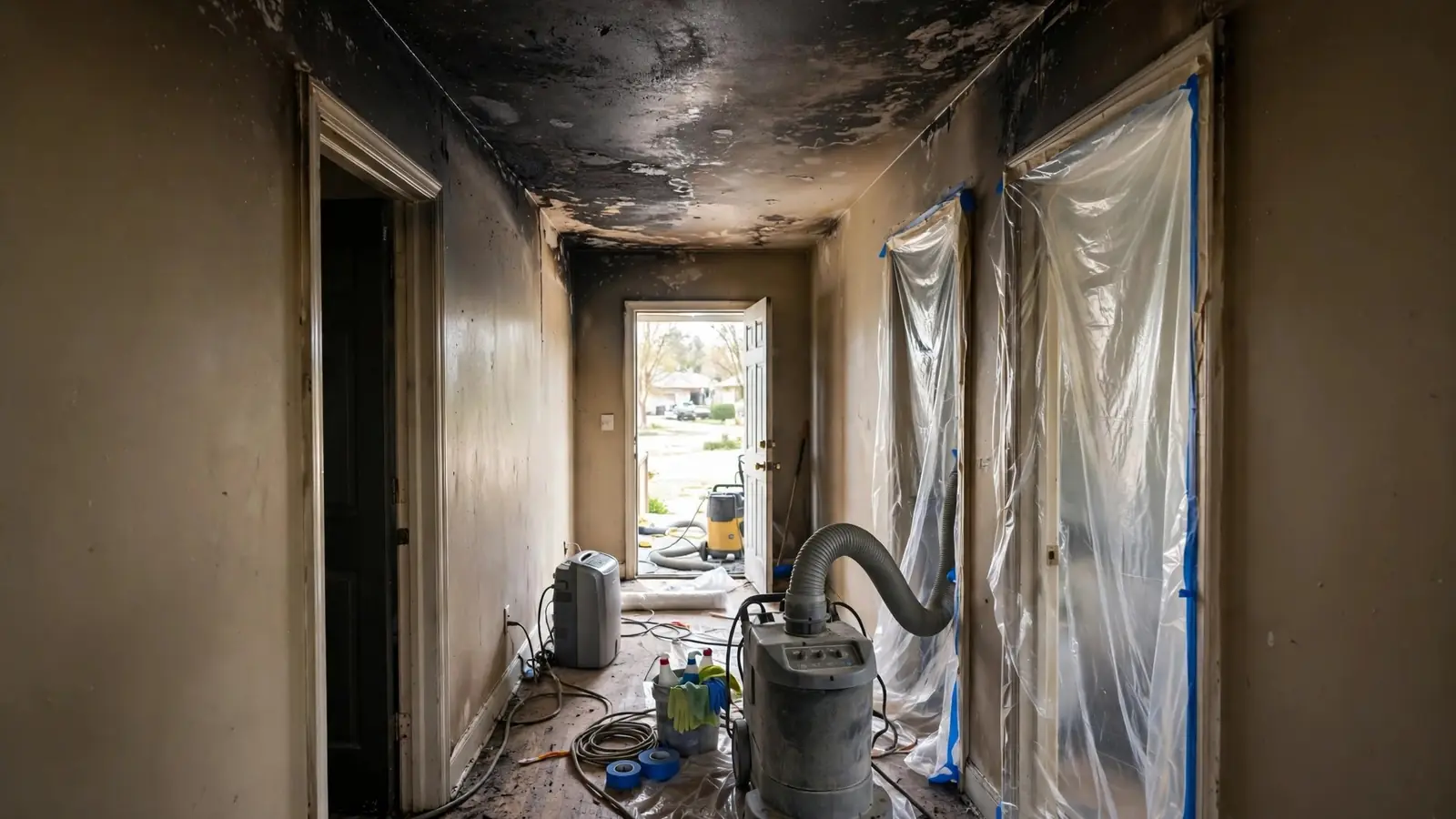
After a fire, the smell you notice is not hanging in the air on its own. It comes from residue: microscopic particles and gases that settled into walls, ceilings, insulation, carpet, upholstery, clothing and the inside of the air system. The U.S. Fire Administration describes smoke odor as coming from tiny particles that cling to these surfaces [1]. As long as that residue is there, it keeps releasing odor.
Different fires leave different smells. Burned food leaves a sharp, sour odor from protein residue that can be strong even when you can barely see a film. Burned plastics and synthetics leave a heavy, chemical smell. Wood and paper fires smell like a campfire that never goes out. Knowing which you have helps the contractor pick cleaning products and odor treatments that work on that residue.
Heat and humidity drive odor out of materials. That is why many homeowners notice the smell is worse on hot afternoons, after rain, or when the air conditioning cycles. In Fort Worth, where summer heat lasts for months and attics get extremely hot, residue in attic insulation and framing can make a house smell like smoke long after the visible cleanup is done.
Professional odor work follows a clear logic set out in the IICRC S700 standard for fire and smoke restoration: remove the residue, clean what can be cleaned, remove what cannot, and only then treat the remaining odor and seal surfaces [2]. Skipping straight to deodorizing is the main reason odor comes back.
Clues
What the odor pattern tells you
Worse when the AC runs
Residue in ducts, the air handler or the return plenum. The system needs cleaning, and filters need changing more than once.
Read moreStrongest in one closet or room
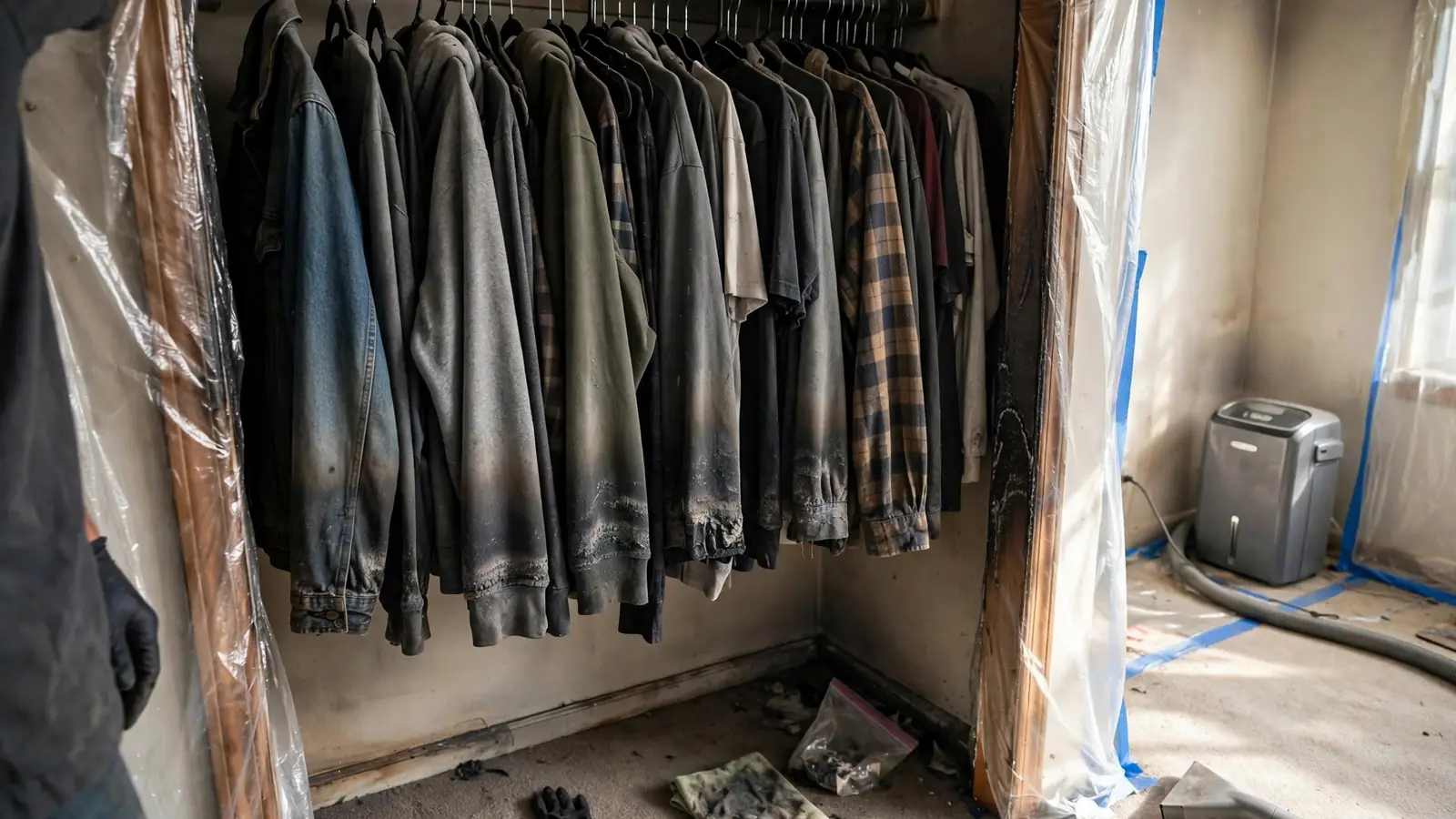
Contents or materials in that space absorbed residue. Clothes, linens and boxes are common sources that are easy to overlook.
Read moreWorse on hot afternoons
Residue in attic insulation, framing or wall cavities releasing odor as temperatures rise.
Read moreMusty as well as smoky
Firefighting water left materials wet, and mold or mildew may be starting. Drying and possibly removal are needed.
Read moreSour, sharp smell after a kitchen fire
Protein residue from burned food. Light in color, strong in smell, and found far from the stove.
Read moreReturns after painting
Paint went on over residue without a sealing primer. The odor is coming through from the wall.
Read more
The process
How smoke odor removal is done properly
- 1
Trace where the smell is strongest
The contractor walks every room, closet, the attic and the crawl space if there is one, noting where odor is strongest and where residue is visible. This map guides every later step.
- 2
Remove what cannot be cleaned
Charred materials, soaked insulation, smoke-saturated carpet pad and ruined contents are removed and documented. This step does more for odor than any machine.
- 3
Clean every surface and belonging
Walls, ceilings, cabinets, floors, fixtures and salvageable contents are cleaned with methods matched to the residue, including inside cabinets and closets.
- 4
Clean the air conditioning and ducts
The air handler, coil, blower, returns, registers and accessible ducts are cleaned or replaced. Damaged flex duct is often replaced rather than cleaned.
- 5
Treat remaining odor
With the source removed, the air and surfaces are treated with methods such as thermal fogging, hydroxyl generators or, in unoccupied spaces only, ozone.
- 6
Seal porous surfaces
Framing, drywall and subfloors that held residue are primed with an odor-blocking sealer before insulation, drywall or paint goes back.
- 7
Ventilate and test
The home is ventilated and checked again, ideally on a warm day with the AC running, because that is when lingering odor shows itself.
Methods
Odor treatment methods compared
| Method | How it works | Good for | Limits |
|---|---|---|---|
| Cleaning and removal | Takes residue out of the house | Every job; the foundation | Labor-intensive; some materials cannot be cleaned |
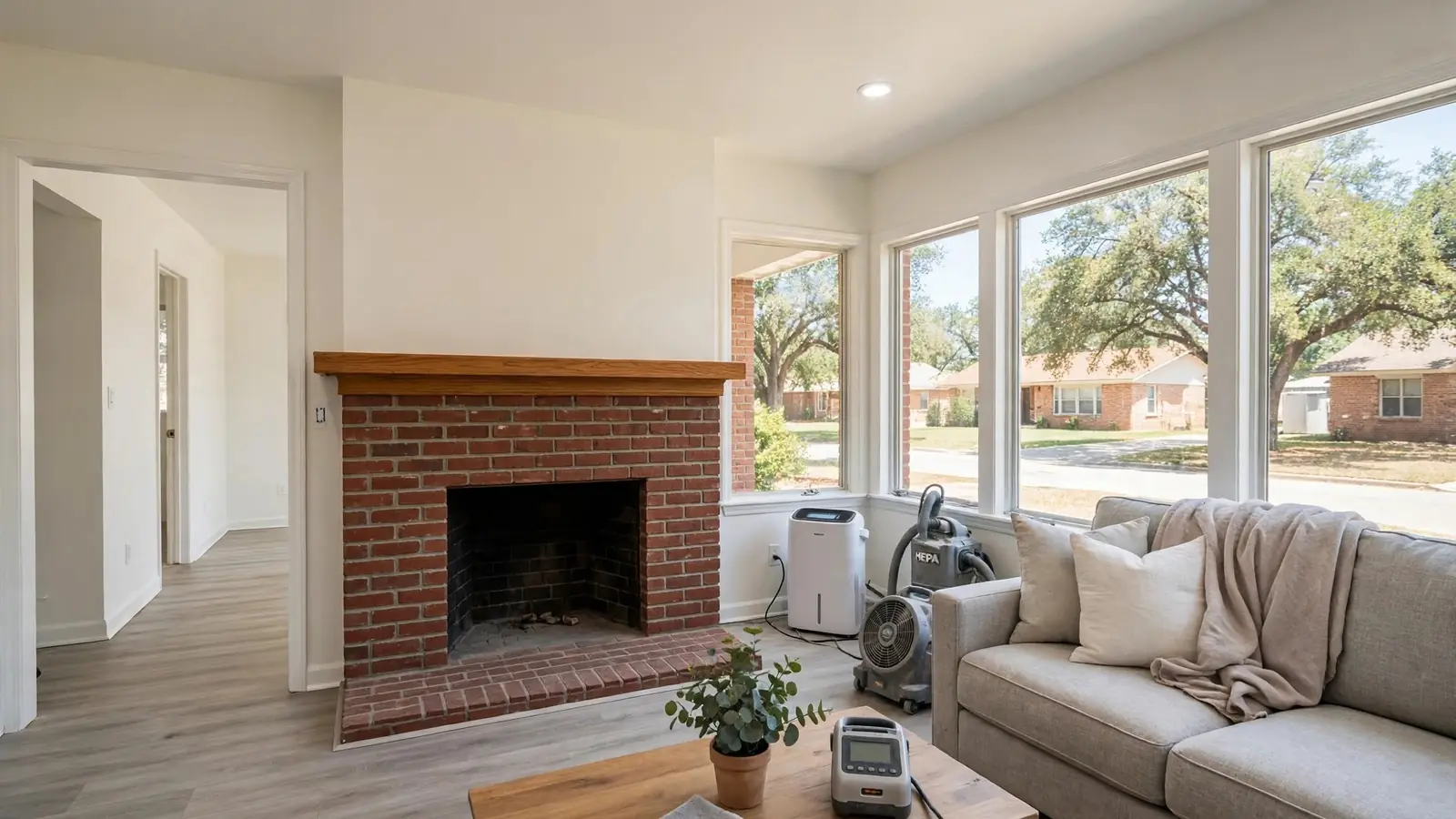
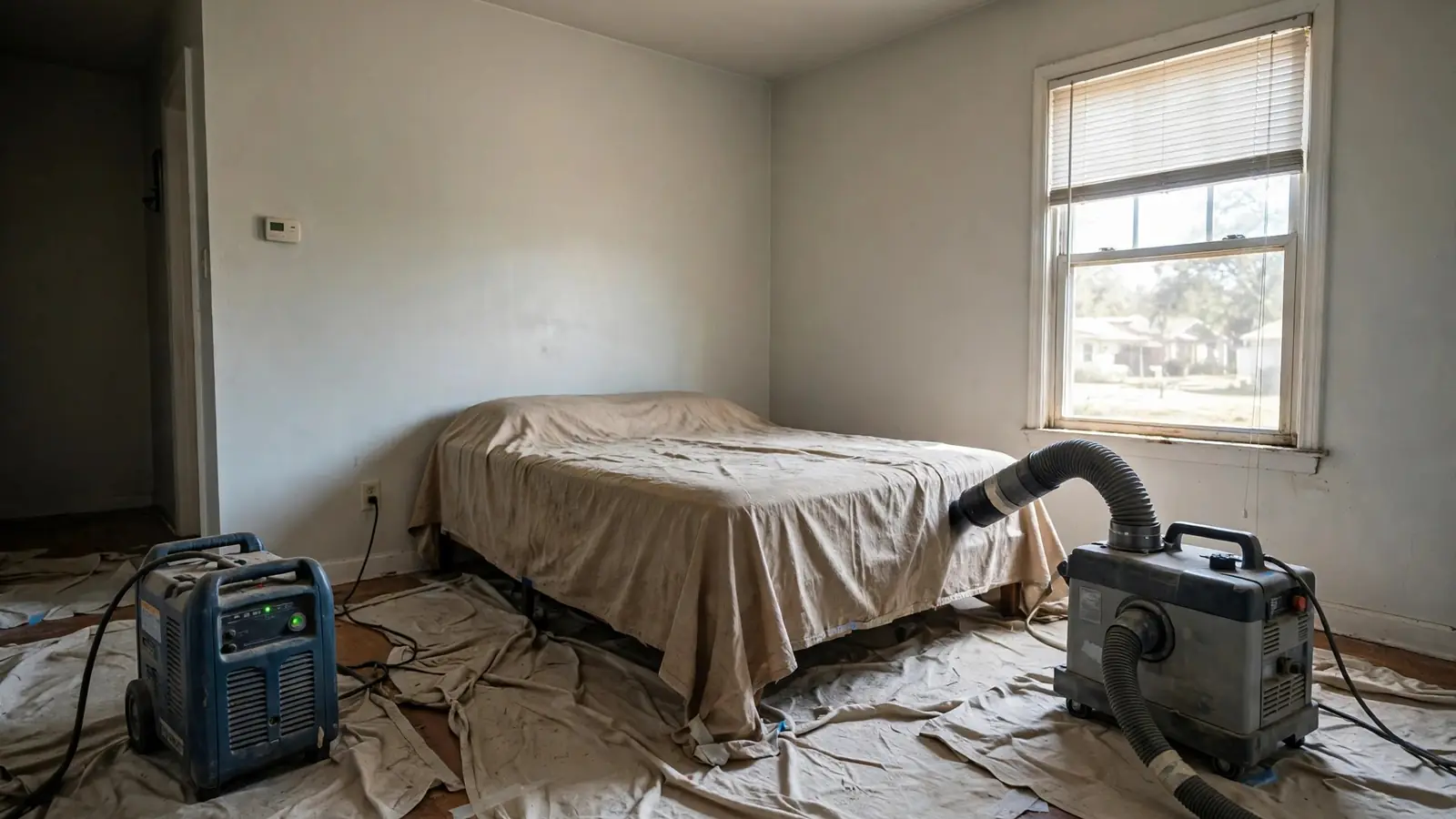
| HEPA air filtration | Captures airborne particles | During and after cleaning | Does not remove residue on surfaces |
| Thermal fogging | Heated deodorant penetrates like smoke did | Wall cavities, contents, hard-to-reach areas | Unoccupied space; ventilation needed after |
| Hydroxyl generators | Produce hydroxyl radicals that break down odor compounds | Gradual treatment, often used with people nearby | Slower than ozone |
| Ozone | Strong oxidizer reacts with odor compounds | Severe odor in unoccupied, sealed spaces | Harmful to people, pets and plants; can damage rubber |
| Sealing primer | Locks remaining residue under a barrier | Framing, drywall, subfloors after cleaning | Only after cleaning; not a replacement for it |
The EPA warns against using ozone around people [3]. Your contractor decides what suits your home and explains why.
On your own
Odor steps you can take and ones to avoid
- Ventilate when it is safeOpen windows and run box fans pointing out to move air through, as long as the home is secure and weather allows.
- Remove smoky textiles from living areasBag clothes, curtains and bedding that smell of smoke and set them aside for proper cleaning. They are a large odor source.
- Change the HVAC filterIf the system has been inspected and cleared to run, change the filter often in the first weeks. A smoky filter keeps feeding odor.
- Avoid masking productsAir fresheners, candles and plug-ins only mix their scent with smoke odor and can make the house harder to assess.
- Do not buy an ozone machineOzone can harm lungs at the concentrations used for odor work, and the EPA warns against using ozone generators in occupied spaces [3].
- Do not repaint yetPainting over residue without cleaning and sealing traps the odor in the wall, and it will come back.
Fort Worth homes
Why Fort Worth heat makes odor removal harder
Fort Worth summers are long and hot, and most homes rely on central air for months. Many have the air handler and ductwork in the attic, where temperatures can be far higher than outside. After a fire, residue in the attic and in duct insulation releases odor every time the attic heats up and the system cycles. A house that seemed fine in October can smell strongly in June.
That is why attic work matters so much here. Blown-in insulation that absorbed smoke usually has to be removed. Rafters and decking with residue are cleaned and sealed. Flex duct, which has an insulated jacket that holds odor, is often replaced rather than cleaned. These steps are not visible from inside the house, so ask the contractor to describe what they plan for the attic.
Humidity matters too. North Texas can swing from dry heat to humid storms, and moisture can reactivate odor in materials that were dried but not properly cleaned. If firefighting water soaked part of the home, drying must be complete before odor treatment, or musty smells will mix with smoke.
Older Fort Worth homes with pier-and-beam floors have a crawl space that can hold smoke and water. Odor from the crawl space rises into the house through floor gaps and plumbing penetrations. If your home sits on piers, ask whether the crawl space is part of the plan.
Ozone
The truth about ozone for smoke smell
Ozone is effective at breaking down odor compounds, which is why it is used in some restoration work. It is also a lung irritant, and the EPA warns that ozone generators sold as air cleaners can harm health [3]. When restorers use it, the space must be empty of people, pets and plants, and it must be ventilated before anyone returns.
Ozone also does not remove residue. If soot is still on surfaces or in insulation, ozone treatment fades the smell for a while and then the odor returns. It can also degrade rubber, some plastics and certain fabrics with repeated use. A careful contractor treats ozone as one possible tool after cleaning, not as the main fix.
- Only in unoccupied spaces
- After cleaning, never instead
- Ventilate before re-entry
- Hydroxyl as a gentler alternative
Air system
Getting smoke out of the air conditioning system
If the air conditioning or heat ran during or after a fire, it pulled smoky air into the return, through the filter and coil, and pushed residue out through every supply register. Even if the system was off, smoke can drift into ducts through registers and returns. The result is a hidden reservoir of residue that releases odor every time air moves.
A thorough cleanup covers the return grilles and plenum, the blower and its housing, the evaporator coil, the supply plenum, and the duct runs. Sheet metal ducts can often be cleaned. Fiberglass duct board and insulated flex duct, both common in North Texas attics, absorb odor into their insulation and are often replaced. Registers and grilles are removed and cleaned or replaced.
Filters should be changed several times in the first weeks after the system restarts. A filter that smells of smoke after a few days is a sign that residue is still moving through the system.
Contents
Removing odor from clothing, furniture and stored items
Contents are often the last odor source left in a home. Clothing in closets, linens, curtains, rugs, upholstered furniture, mattresses, books and stored boxes all absorb smoke. The house can be clean while a closet full of winter coats keeps the smell alive.
Restoration cleaners use processes designed for smoke-affected textiles, including deodorizing washes and ozone or hydroxyl chambers for items that cannot be washed. Furniture may be cleaned on site or taken to a facility. Mattresses and pillows that sat in heavy smoke are often discarded for health and comfort reasons.
Ask for an itemized list of what is being cleaned, what is being replaced and why. It keeps your insurance file clear and helps you track what comes back.
Water and odor
When firefighting water adds a second smell
Firefighters may use a great deal of water, and that water soaks drywall, insulation, carpet, subfloors and anything stored low. If it is not dried quickly, mold can start growing within 24 to 48 hours [4]. Mold adds a musty smell that combines with smoke odor and can be mistaken for it.
That is why odor removal often starts with water. The contractor checks moisture with meters, removes materials that cannot be dried, and sets up dehumidifiers and air movers. Only when materials are dry does odor treatment make sense. Treating smoke odor in a damp house tends to fail, because moisture keeps releasing odor and feeding mold.
Expectations
How long it takes for the smell to go
There is no single timeline. A small kitchen fire with light protein residue may be resolved within days of cleaning. A house with heavy synthetic smoke through the attic and ducts may need demolition, cleaning, sealing and treatment over a longer period before it smells normal.
What should not happen is a smell that goes away and returns. If odor comes back after treatment, residue is still somewhere in the house: a closet, the attic, the ducts, or under a fresh coat of paint. A good contractor will go back to the source rather than repeat the same deodorizing.
Plan a test day. After work is done, close the house up on a warm afternoon, run the air conditioning for a few hours, then walk through each room and the closets. If you smell smoke, note where, and share it with the contractor.
Fire types
Matching the odor treatment to what burned
A kitchen fire that burned a pot of food is one of the hardest odors to clear relative to how little it shows. Protein residue is thin, pale and greasy, and it settles along ceilings and in cabinets throughout the house. It needs cleaners designed to break down proteins, and it often needs a sealer on cabinet interiors and ceiling paint. Generic all-purpose cleaners tend to leave the smell behind.
Fires that burned furniture, carpet, electronics or stored plastics leave a heavy, chemical odor that clings to fabrics and the inside of walls. These jobs often involve more removal: insulation, carpet pad and soft furnishings that sat near the fire. Thermal fogging is commonly used afterward to reach the same cavities the hot smoke reached.
Wood fires, including fireplace accidents and fires that started in framing, leave a smoky campfire smell. The residue is often drier and easier to remove from surfaces, but charred framing holds odor strongly and needs blasting or replacement plus sealing.
Exterior fires, such as a grill against siding or a fence fire, can push odor indoors through attic vents and windows without leaving much residue inside. The attic and HVAC are usually the priority in these cases, and a good inspection may show that the living areas need only light cleaning.
Living at home
Staying in the house while odor work is done
Whether you can stay home depends on how much of the house is affected and which methods are used. Thermal fogging and ozone require the space to be empty during treatment and ventilated afterward. Hydroxyl generators can sometimes run with people nearby, though the contractor will explain any limits.
If only part of the house is affected, the contractor may isolate the work area with plastic sheeting and negative air pressure, so that air flows from clean areas into the work zone and out through filtration, not the other way around. That setup lets some families stay in bedrooms on the far side of the house during cleaning.
If you do need to stay elsewhere, check your homeowners policy for additional living expenses coverage and keep receipts, as the Texas Department of Insurance advises [5]. Ask the contractor for a realistic idea of how many days the treatment phases need the house empty, so you can plan around them.
Sealing
Odor-blocking primers and when they belong
Sealing is the last line of defense, not the first. Once framing, drywall or subfloor has been cleaned as far as practical, a stain- and odor-blocking primer forms a barrier that keeps any remaining residue from releasing odor into the room. Restorers commonly use shellac-based or specialty sealers for this because ordinary latex primers let some odor through.
Sealing works best on surfaces that will be covered again: studs and decking before drywall and insulation go back, subfloor before new flooring, and cleaned drywall before finish paint. It is not a fix for residue that was never cleaned. A thick layer of soot under a sealer can still bleed through or fail to bond.
Ask the contractor which surfaces they plan to seal and with what product. If you are reinstalling cabinets or built-ins, ask whether the backs and the wall behind them will be cleaned and sealed too. Those hidden spots are where odor often survives a remodel.
Records
Keeping track of odor work for your claim
Odor is hard to photograph, so written notes matter more than usual. Keep a simple list of rooms and closets with a note on how strong the smell is, and update it after each phase of work. Note any items you set aside because of odor, and keep them until the adjuster has seen them or approved disposal.
Ask the contractor to describe the odor treatments in writing: what method was used, in which areas, and for how long. If a treatment needs repeating, a clear record helps explain why. When odor persists after the work is complete, the notes help everyone find the source instead of starting over.
FAQ
Smoke odor questions from Fort Worth homeowners
Why does my house still smell like smoke after cleaning?
Residue remains somewhere: attic insulation, ducts, wall cavities, closets or under new paint. Odor treatments only work fully after the residue causing the smell is removed or sealed.
Is it safe to use an ozone machine myself?
No. The EPA warns that ozone can harm health. Ozone is only used by restorers in empty, sealed spaces, with ventilation before anyone returns, and it does not replace cleaning.
Can smoke smell come out of clothes?
Often, with laundering or dry cleaning designed for smoke damage. Washing heavily sooted clothes at home can spread residue. Items that sat close to the fire may not be worth restoring.
Do the air ducts need replacing?
Sheet metal ducts can often be cleaned. Insulated flex duct and duct board, common in North Texas attics, tend to hold odor and are often replaced. The contractor decides after inspection.
How do I know the odor is really gone?
Test on a warm day with the house closed and the air conditioning running, then check rooms and closets. If odor returns in a specific area, that area still holds residue.
Is the call really with a contractor?
Yes. Your call connects to an independent local restoration contractor who talks with you on that call. This site does not do the work or collect your details for later contact.
Will painting the walls get rid of the smell?
Not on its own. Paint over smoke residue lets odor bleed back through, especially in hot weather. Walls need cleaning first, then an odor-blocking primer, and then the finish coat.
Does the attic need treatment if the fire was downstairs?
Often yes. Smoke rises through ceiling penetrations, light fixtures and attic hatches, and many Fort Worth homes have ductwork in the attic. The contractor should inspect it either way.