Key facts: Tanglewood
- Tanglewood sits about five miles southwest of downtown Fort Worth, just west of Texas Christian University and next to a branch of the Trinity River [1].
- Early land-use rules in Tanglewood required brick or stone construction and attached two-car garages, so many homes share these features [1].
- Historic Fort Worth placed Tanglewood on its Most Endangered Places list in 2013 because of teardowns of mid-century homes [2].
- Homes from the 1950s through the 1970s may contain asbestos in materials such as textured ceilings, floor tile or duct insulation, which should be tested before disturbing [3].
Coverage
Tanglewood and the 76109 ZIP code
This page is for homes in Tanglewood, west of TCU in southwest Fort Worth. Calls from this ZIP code are inside this service's coverage:
- ZIP 76109Tanglewood, the TCU area, Westcliff, Bluebonnet Hills and nearby neighborhoods along the Trinity.
- Not certain about your street?Mention your address on the call and the contractor will say whether they can help.
The homes
Mid-century ranches, rebuilds and how they are built
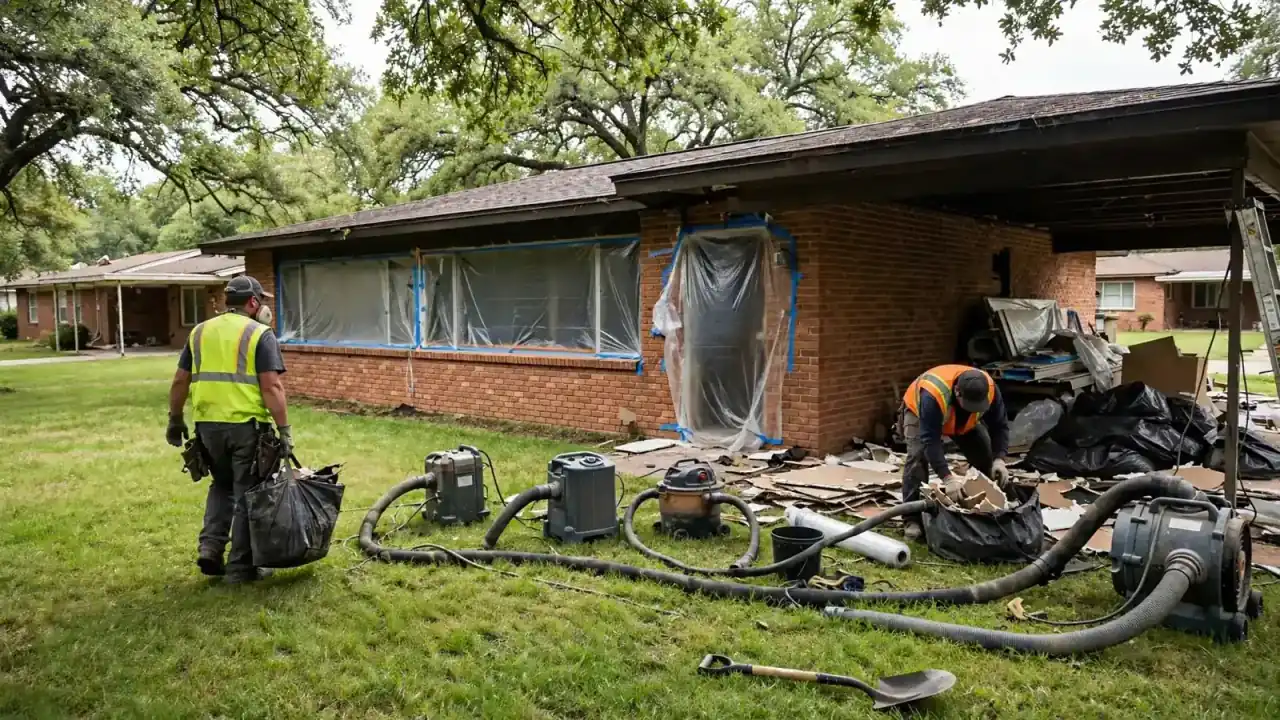
Tanglewood was developed on former ranch and dairy land southwest of downtown, with streets that follow the curves of a branch of the Trinity River [1]. Many of its original houses date from the 1950s and 1960s, and local sources describe it as one of Fort Worth's notable mid-century neighborhoods [2]. Early land-use restrictions required brick or stone exteriors and at least a two-car attached garage [1], so even today most homes share those features.
A typical original Tanglewood house is a long, low single-story ranch on a concrete slab, with a low-pitched roof, wide eaves, large windows, a brick or stone fireplace and a garage attached at one end. Inside, many have drywall or plaster walls, wood or terrazzo floors, and ceiling textures added during later updates. The attic runs the full length of the house and usually holds the air handler and ductwork.
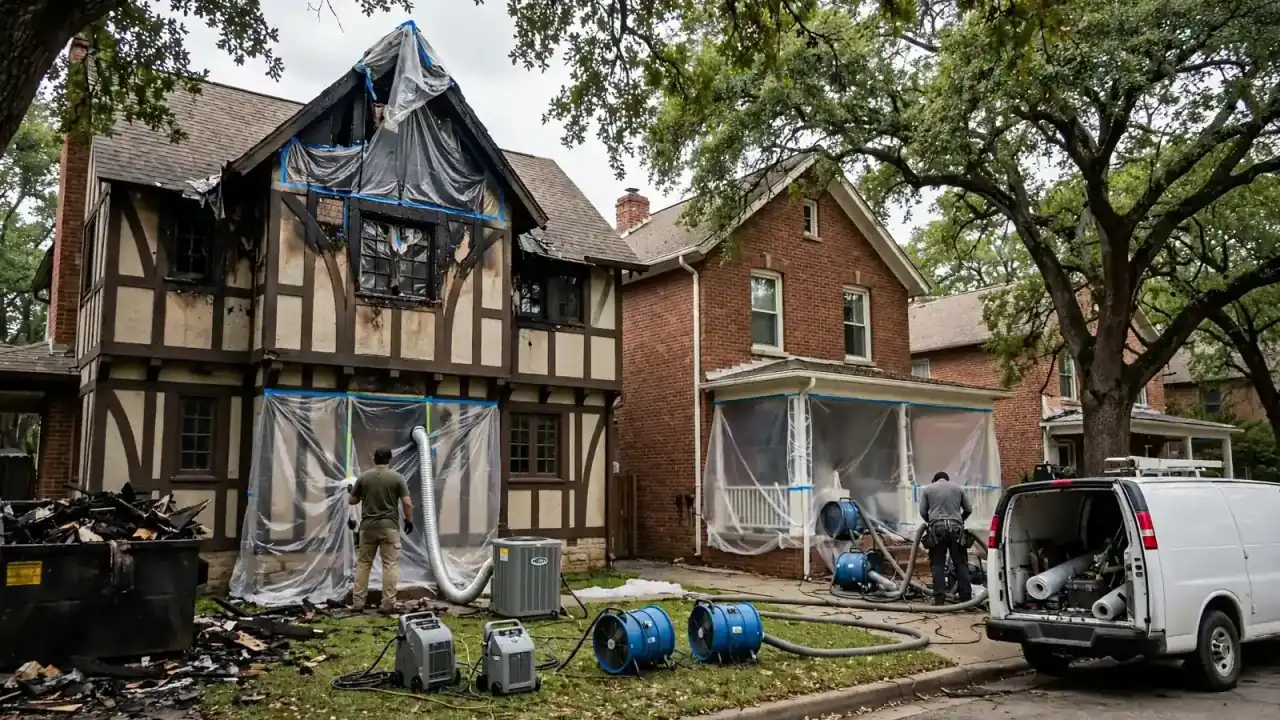
Since the 1990s, many original homes have been renovated heavily or replaced with much larger houses, some two stories. Historic Fort Worth placed the neighborhood on its endangered list in 2013 because of these teardowns [2]. So a Tanglewood fire job can involve a carefully kept mid-century original, a mid-century house with a modern addition, or a new home built in the last twenty years.
Each type handles fire differently, and the contractor's first job is to understand which one they are working in and how its attic, garage and HVAC are arranged.
Common findings
What Tanglewood fire jobs often turn up
Smoke traveling the length of the attic
Ranch attics are long, open spaces. Smoke entering at one end spreads across the whole house and into the ductwork.
Read moreGarage fires reaching the house
Attached garages share a wall and often an attic with living space, so garage fires push smoke into nearby rooms.
Read moreSoot on stone and brick fireplaces
Large masonry fireplace walls absorb soot and can keep a shadow without careful masonry cleaning.
Read moreTextured ceilings needing tests
Ceiling textures added in the 1960s and 1970s may contain asbestos and should be tested before cleaning or removal.
Read more
Garages
Attached garages: the most common route into the house
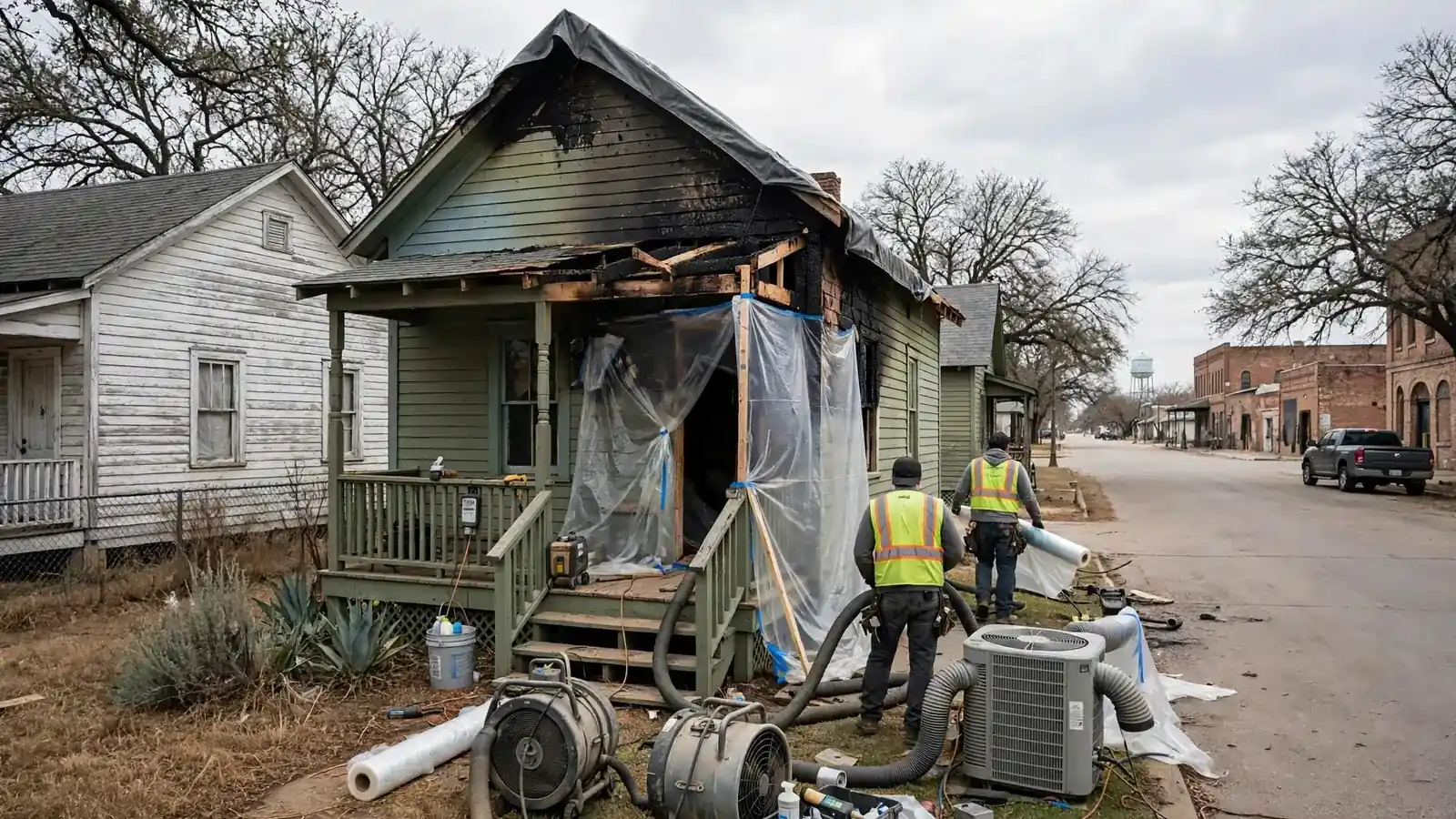
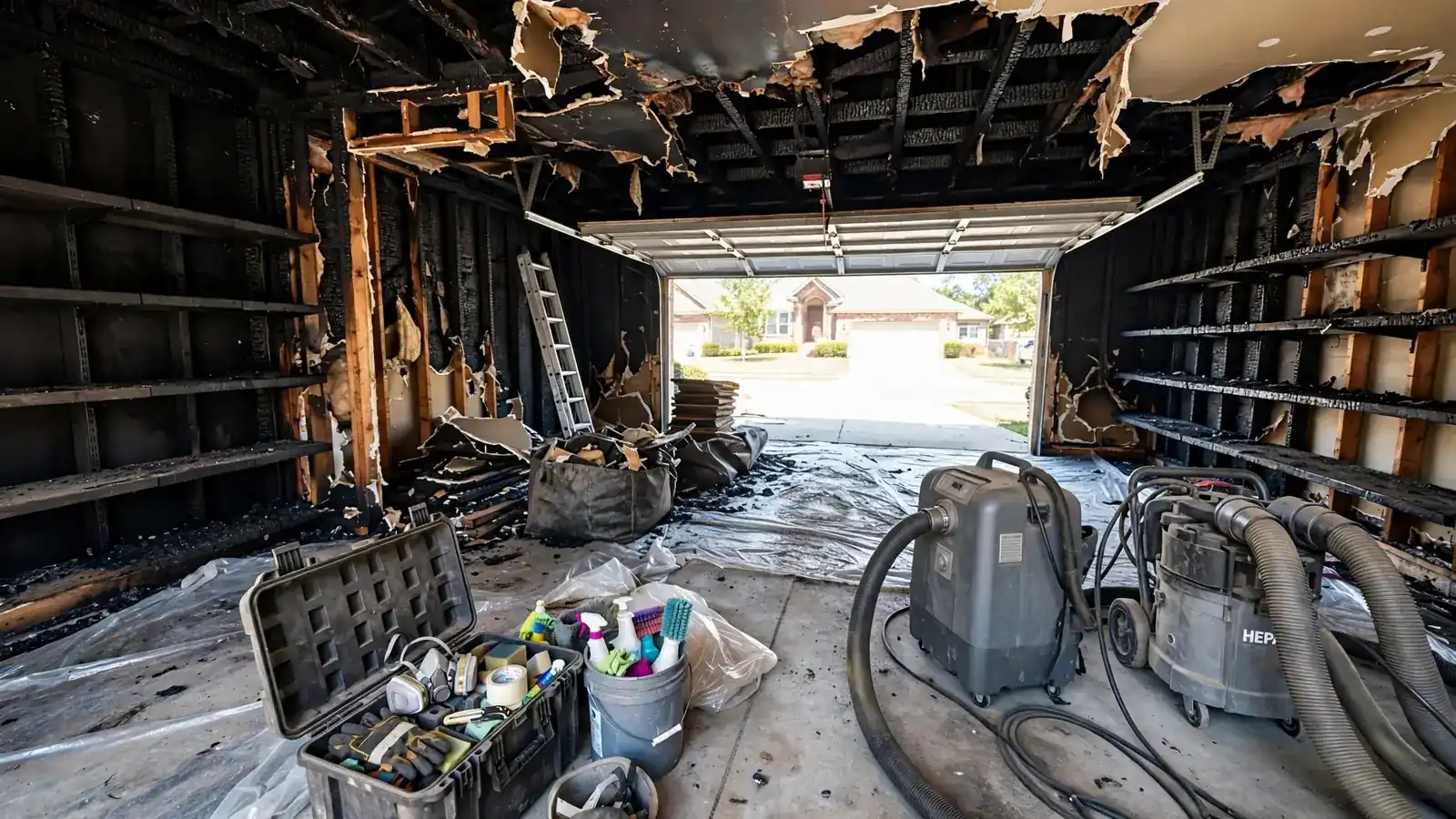
Because Tanglewood homes were built with attached two-car garages, the garage is one of the most likely places for a fire to start and one of the most likely routes for smoke into the house. Garages hold vehicles, fuel, paint, cleaning products, tools, freezers and stored boxes, and they often have older wiring than the rest of the house.
Smoke from a garage fire enters the house through the door between garage and house, through gaps around that door, through the shared wall and through the attic. In many ranch houses, the garage attic and house attic are separated only partially or not at all. Smoke and heat can then spread across the whole roof space and into the HVAC system.
Restoration after a garage fire includes the garage itself, the shared wall, the attic above both spaces and any rooms the smoke reached. Burned synthetic materials leave oily soot that is aggressive on metals and electronics, so a home office or laundry room on the other side of the garage wall may need attention even if it looks fine.
Ask the contractor to inspect the fire separation between garage and house. If it was weak or missing, repairs may be required to meet current code, which is worth knowing early.
Attic and HVAC
Long attics, low roofs and the air conditioning system
A ranch house's attic is usually low and long, with limited headroom near the eaves. It holds the air handler, supply ducts running to every room, the return plenum, insulation and often wiring for lights and fans. When smoke gets into this space, it settles on everything and becomes a long-term odor source, especially in Fort Worth's hot summers when attic temperatures soar.
If the air conditioning ran during or after the fire, it pulled smoky air through the return, coated the coil and blower, and pushed residue out to every register. Even if it was off, smoke can drift into ducts. Cleanup usually includes cleaning or replacing ducts, cleaning the air handler and coil, replacing filters several times and checking the return plenum.
Insulation that absorbed smoke is generally removed. Low attics make this work harder, because crews have to crawl through tight spaces near the eaves. Ask the contractor how they plan to reach the whole attic, and whether they will use equipment to vacuum out insulation rather than relying on hand work.
Mid-century materials
Terrazzo, stone, wood paneling and original features
Original mid-century homes in Tanglewood may have terrazzo or wood floors, stone or brick fireplace walls, wood paneling in dens, built-in cabinetry and large single-pane or early double-pane windows. Many owners value these features and want them kept.
Terrazzo and stone often clean well, though porous stone may hold soot in its surface. Wood paneling can usually be cleaned and refinished. Original windows can be cleaned, and broken panes replaced. Before anything original is removed, photograph it and ask whether cleaning or repair is possible. Owners who are restoring a mid-century house often prefer repair to replacement even when replacement is simpler.
- Terrazzo and stone: careful cleaning
- Paneling: clean and refinish
- Windows: clean and reglaze
- Photograph originals before removal
Testing
Asbestos and other mid-century materials
Houses built in the 1950s through the 1970s often used materials that could contain asbestos, including some textured ceiling and wall finishes, vinyl floor tiles and their adhesive, joint compound, duct wrap and pipe insulation. The EPA advises against disturbing material that may contain asbestos and recommends testing by an accredited professional when it might be disturbed [3].
After a fire, damaged materials may need to be removed, and cleanup can disturb finishes. If your house is original or partly original, testing suspect materials before demolition protects your family and the crew. It also avoids delays later, because finding asbestos halfway through a project can stop work until abatement is done.
Original painted surfaces in homes built before 1978 may also contain lead [4]. Lead-safe practices, such as containment and HEPA cleanup, should be part of the plan.
The river
Trinity River humidity, trees and drying
Tanglewood's streets follow a branch of the Trinity River, and the neighborhood has parks and trails along the water [1]. The area has a history of flooding that was reduced by later flood-control work [1]. For a fire restoration, the river matters mainly through humidity and drainage. Low-lying lots near the water can stay damp longer, and drying a house after firefighting water may take longer during humid stretches.
Large trees shade many lots. Shade helps keep houses cool but slows evaporation. Dehumidifiers become more important than heat when drying a shaded house. The contractor should monitor moisture and adjust equipment rather than following a fixed schedule.
Mature trees also overhang roofs. If the roof was opened during the fire, branches over the tarped area can tear it in a storm. Consider trimming overhanging limbs and clearing gutters so tarps drain properly.
Newer homes
Fire restoration in Tanglewood's newer, larger houses
Newer Tanglewood homes are often much larger than the originals, with two stories, vaulted ceilings, open floor plans, multiple HVAC systems and large attics. Smoke in these homes rises into high ceilings and second-floor rooms, and open plans let it spread quickly across living areas.
Restoration of a newer home usually involves drywall, engineered floors, modern cabinetry and multiple air systems. These materials have their own behavior: engineered flooring may not survive soaking, particleboard cabinets swell when wet, and high ceilings need lifts or scaffolding for cleaning. Each HVAC zone needs separate inspection.
Even in a newer home, the neighborhood's mature trees, river humidity and attached garages still shape the job.
Permits
Permits and city services for Tanglewood repairs
Tanglewood is inside the City of Fort Worth, and permits for structural, electrical, plumbing and mechanical work go through the city's Development Services department [5]. Fire repairs that involve framing, wiring or HVAC will usually need permits and inspections before the house is closed up.
Neighborhood associations in some areas have their own guidelines for exterior appearance. If your house is subject to deed restrictions or an association, check whether exterior repairs need approval. The contractor can advise on matching brick and stone, which is often the main exterior concern in Tanglewood.
Access
Planning the work on a Tanglewood street
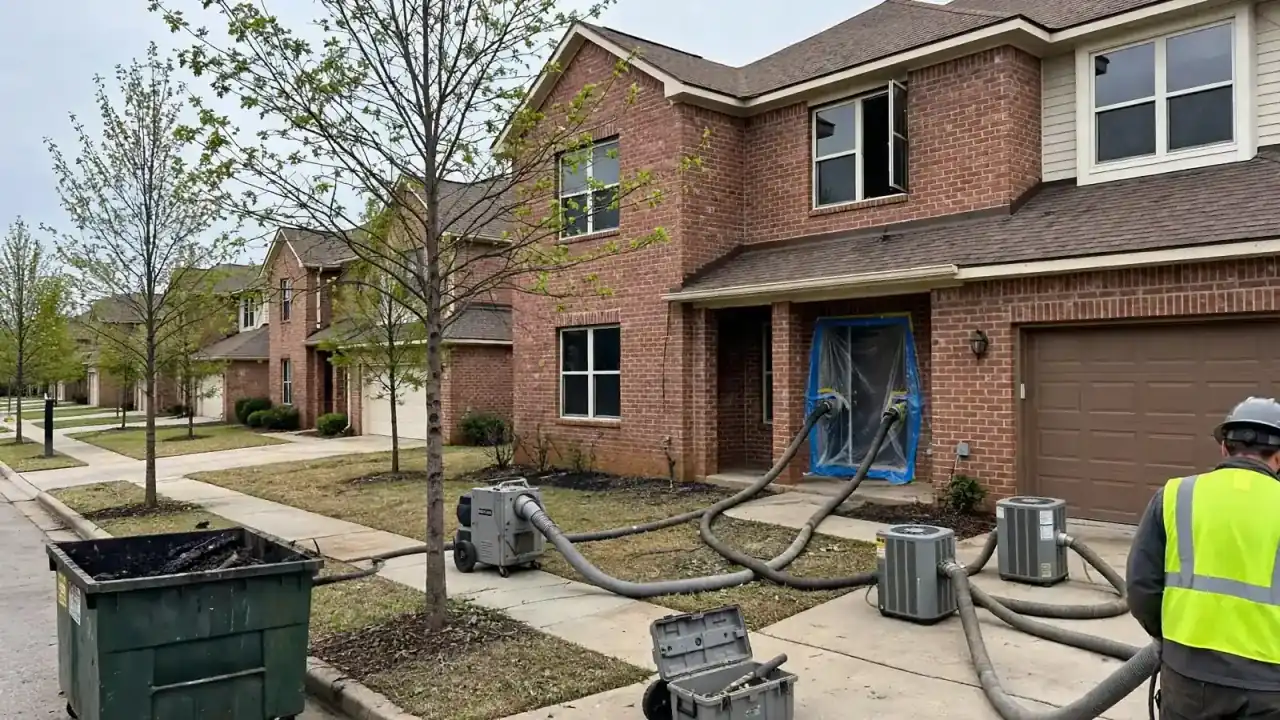
Tanglewood's winding streets and wide lots usually allow trucks and dumpsters to park in driveways, which keeps the street clear. Large trees and landscaped yards can limit where equipment can go, so talk with the contractor about protecting lawns, beds and irrigation lines.
Many houses have long driveways leading to side-entry garages. If the garage was the fire origin, debris removal may happen through the garage and driveway, and a dumpster may sit there for some time. Let neighbors know how long equipment is likely to be on site, especially near the trails and parks where people walk.
Fireplaces
Large masonry fireplaces and chimneys
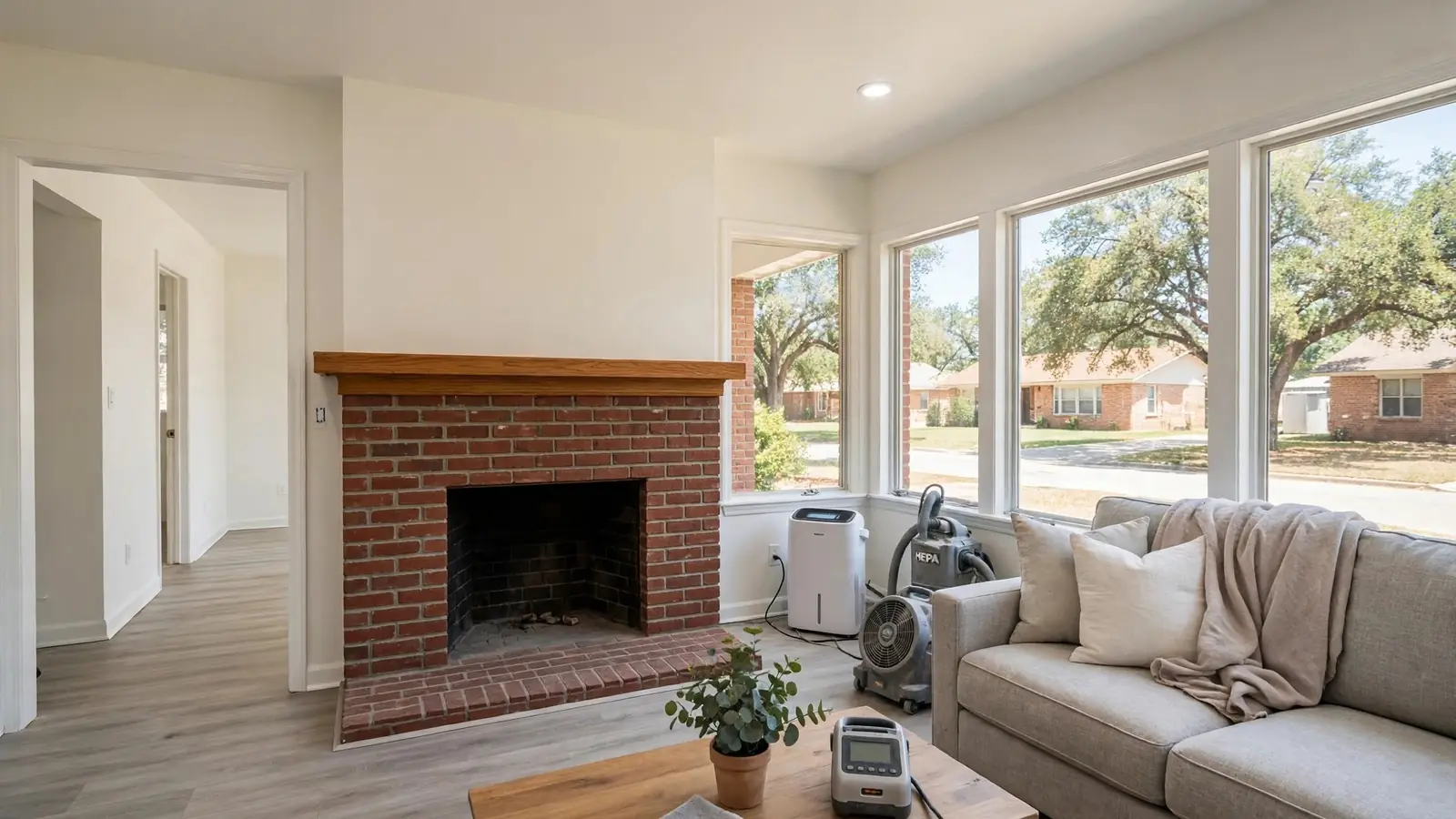
Many original Tanglewood homes were built around a substantial brick or stone fireplace, often a full wall in the living room or den. These walls collect soot from a house fire, and their rough surfaces hold it. Masonry cleaning methods suited to the material can remove most residue, though very porous stone may keep a faint shadow.
If the fire involved the fireplace, or if smoke entered an open damper, the chimney should be inspected before it is used again. Heat can crack flue liners, and residue in the smoke chamber can cause odor and fire risk later.
Outdoors
Patios, outdoor kitchens and fires that start outside
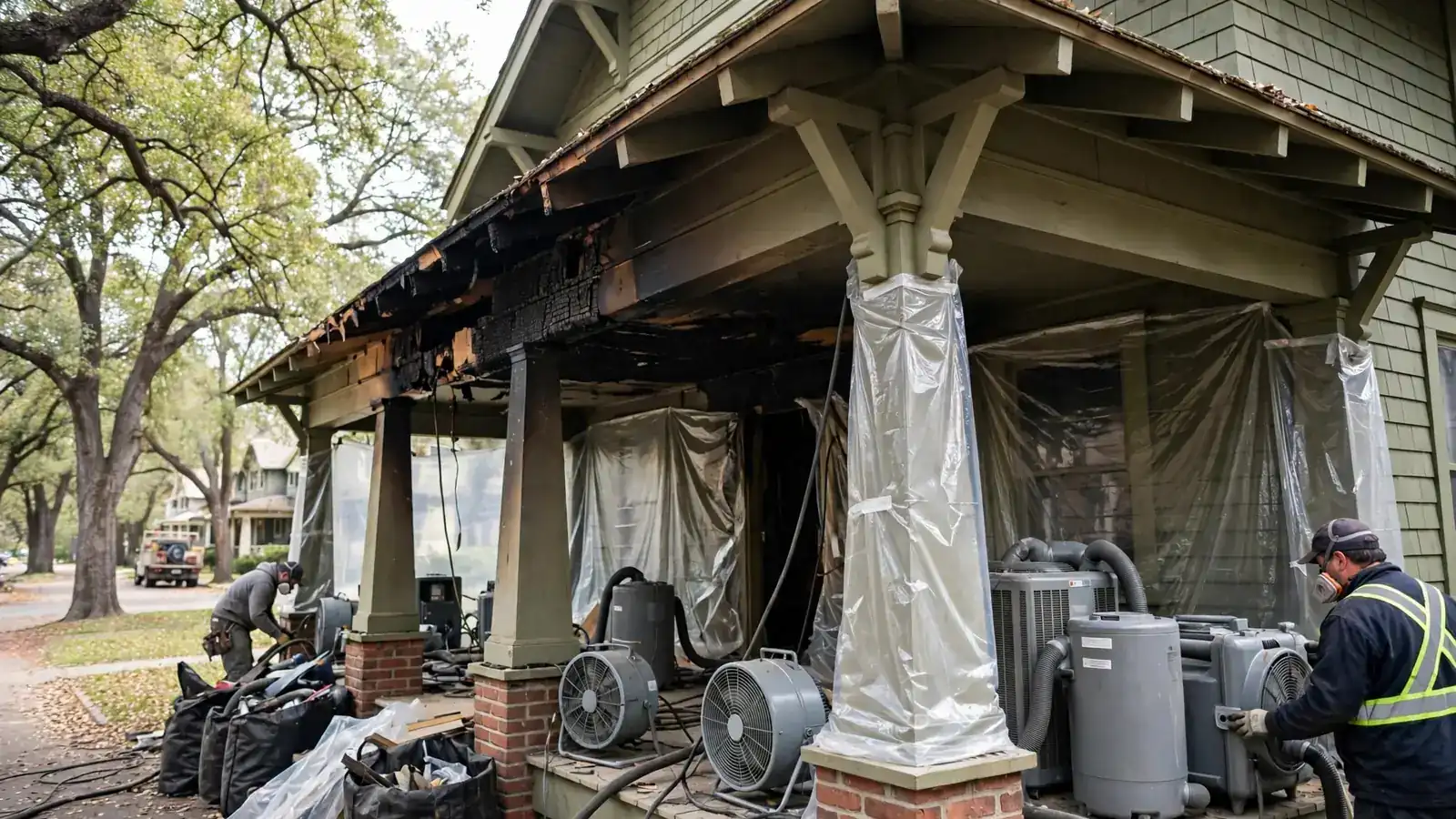
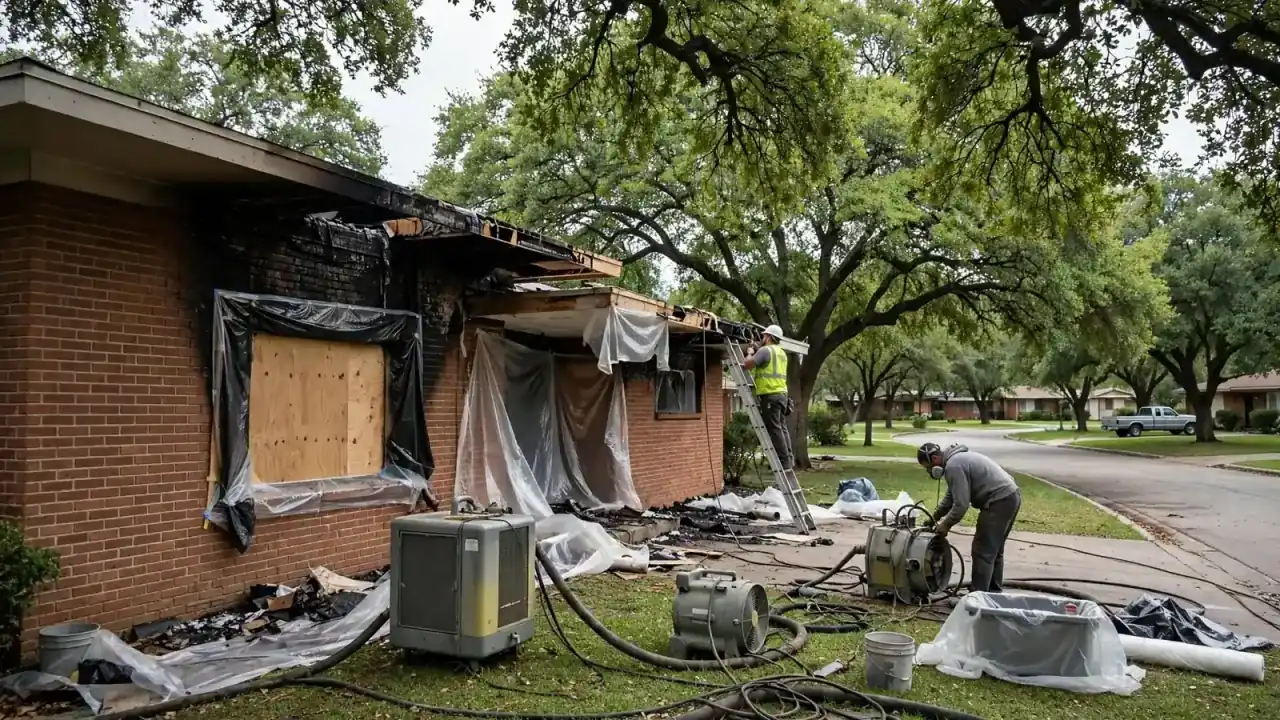
Many Tanglewood homes have back patios, covered porches, pools and outdoor kitchens, often under a roof extension tied into the main house. Grills, fire pits, patio heaters and outdoor wiring can all start fires. When a fire starts under a patio cover, it can travel along the roof framing into the main attic, and smoke can enter the house through doors and windows facing the yard.
After an outdoor fire, the inside of the house may look nearly clean while the attic above the patio and the rooms facing the yard carry residue. The patio cover itself may need repair or replacement if its framing was scorched. Ask the contractor to inspect where the patio roof meets the house and the attic just inside that connection.
Pool equipment, outdoor refrigerators and lighting near the fire should be checked by an electrician before they are used again.
Kitchens
Kitchen fires in remodeled ranch houses
Kitchens in Tanglewood ranches have usually been opened up and remodeled, often with a large island, a vent hood and recessed lighting. Open plans mean a kitchen fire's smoke reaches the family room and dining area immediately. Recessed lights and hood ducts give smoke a path into the attic above.
Burned food leaves protein residue that is hard to see and easy to underestimate. It coats cabinets, ceilings and walls well beyond the stove, and it has a sharp, lingering smell. Cleanup uses products designed for protein residue, and cabinet interiors and ceiling paint may need sealing.
Stone counters and tile backsplashes usually clean well. Particleboard cabinet boxes may swell if firefighting water reached them, which can mean replacing cabinets even when the doors look fine.
Contents
Mid-century furniture, art and collections
Owners of mid-century homes often collect furniture, lighting and art from the same period. Pieces in teak, walnut and molded plastics, along with original lighting fixtures, need careful handling after smoke exposure. Some finishes are delicate, and some plastics yellow quickly when exposed to smoke residue.
Ask whether the contractor works with specialists for valuable furniture and art. Photograph and list valuable items before they leave the house, and keep written receipts for anything taken for cleaning. Do not try to clean delicate finishes yourself in the first days; soot can be smeared into them.
Slab floors
Water on a slab: what happens under Tanglewood floors
Original Tanglewood ranches sit on concrete slabs. When firefighting water floods a slab house, it has nowhere to drain. It spreads under flooring, wicks into the bottom of drywall and soaks the base of cabinets and built-ins. Terrazzo and tile hide water underneath them; wood and carpet show it sooner.
Moisture mapping is the only reliable way to find where water went on a slab. Readings at the base of walls, under cabinets and along door thresholds show how far it traveled. Wet drywall is often cut a short distance above the floor to let the wall cavity dry, and baseboards are removed so moisture can escape.
Concrete itself dries slowly. Flooring should not be reinstalled until the slab has dried to the level the flooring manufacturer requires, which the contractor checks before rebuilding begins.
Timing
Why summer fires need fast attic work
A Tanglewood attic in July can get far hotter than the outdoor temperature. If smoke residue sits in that heat for weeks, odor bakes deeper into framing and insulation and spreads through the ductwork every time the system runs. Starting attic cleanup early, and removing smoky insulation quickly, makes the rest of the restoration easier.
If the fire happened in winter, there is a little more time, but the same residue will release odor when spring warms the attic, so the attic should still be part of the plan.
FAQ
Tanglewood fire restoration questions
Our garage fire did not reach the house. Why does it smell inside?
Attached garages share walls and often attic space with the house. Smoke moves through the connecting door, wall gaps and the attic, and the air conditioning can spread it further. Inspection of the attic and nearby rooms is needed.
Should we test for asbestos before restoring a 1950s Tanglewood house?
If materials such as textured ceilings, old floor tile or duct insulation might be disturbed, testing is wise. The EPA advises not disturbing suspect material until it is tested by an accredited professional.
Can a stone fireplace wall be cleaned after a house fire?
Usually it improves a great deal with masonry cleaning suited to the stone. Very porous stone may keep a faint shadow. Have the chimney inspected before using the fireplace again.
Does humidity near the Trinity affect drying?
It can. Shaded, low-lying lots near water may stay damp longer, so drying relies more on dehumidifiers. Daily moisture readings show when materials have actually reached dry targets.
We rent near TCU. Who handles the fire damage?
Usually the owner's insurance covers the building and tenants' renters policies cover belongings. Owners and tenants should each contact their insurers and agree on access for the restoration crew.
Will a contractor answer my call from Tanglewood?
Calls from ZIP 76109 are within this service's coverage. You speak with an independent local restoration contractor on that call, and any next steps are agreed with them directly.
A fire started under our patio cover. What should be checked?
The patio roof framing, the connection to the house, the attic just inside that connection and the rooms facing the yard. Outdoor wiring, pool equipment and lighting near the fire should be checked by an electrician.
Can mid-century furniture be cleaned after smoke exposure?
Often, by specialists who know the finishes. Teak, walnut and original lacquers can be delicate, and some plastics yellow quickly. Keep pieces protected and do not clean them yourself until a specialist has seen them.
How do we know the slab is dry enough for new floors?
The contractor measures moisture in the concrete and compares it to what the flooring manufacturer requires. Floors go back only when readings meet that level, which prevents warping, adhesive failure and mold under new flooring.