Key facts: Smoke odor that won't go away
- Smoke odor comes from tiny particles that cling to walls, furniture, floors and clothing, not from the air itself [1].
- Professional fire restoration under IICRC S700 removes residue before treating odor, because deodorizing alone does not last [2].
- The EPA warns that ozone generators can harm health and should not be used in occupied spaces [3].
- Wet materials left more than 24 to 48 hours can grow mold, adding a musty smell to smoke odor [4].
Short answer
Why the smell will not leave
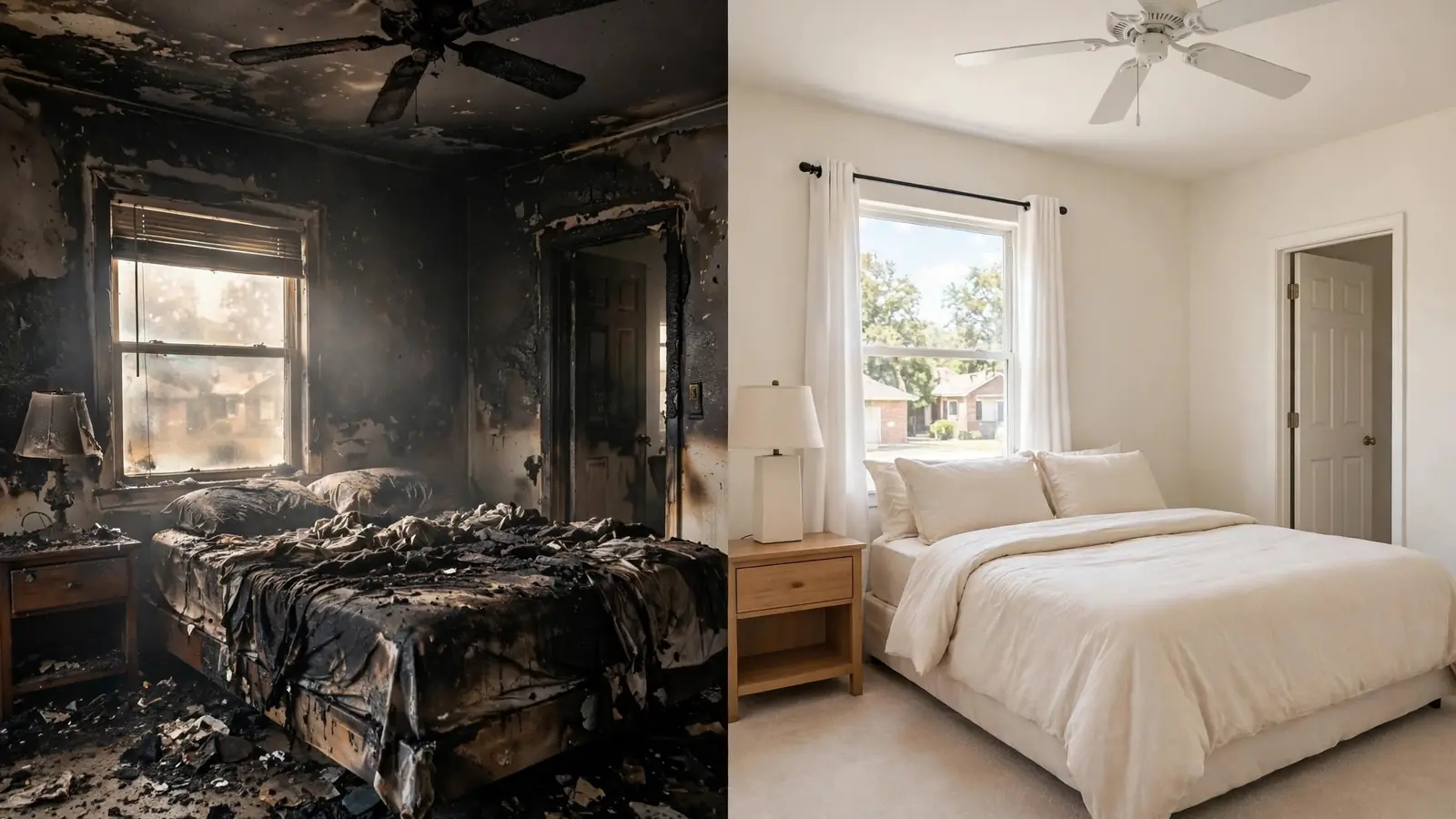
Smoke odor lingers because smoke residue is still in the house. The U.S. Fire Administration explains that the smell comes from tiny particles clinging to walls, furniture, floors and clothing [1]. Air fresheners, open windows and ozone treatments can reduce the smell for a while, but as long as residue remains, it keeps releasing odor, especially when the house warms up.
The fix is to find where the residue is, clean or remove it, and seal what cannot be fully cleaned. The places it most often hides are the attic, the air conditioning system, closets and contents, wall cavities and anything that was painted over without proper sealing.
Diagnose it
Odor patterns and what they usually mean
| What you notice | Likely source | What to do |
|---|---|---|
| Smell jumps when the AC turns on | Ducts, air handler or return plenum | Clean or replace ducts; clean coil and blower; change filters often |
| Worse on hot afternoons | Attic insulation and framing | Remove smoky insulation; clean and seal framing |
| Strongest in closets | Clothing, linens, stored boxes | Professional textile cleaning; clean closet surfaces |
| Comes through fresh paint | Residue painted over without sealer | Clean, apply odor-blocking primer, repaint |
| Musty as well as smoky | Wet materials, possible mold | Find moisture, dry or remove materials |
| Near outlets and switches | Residue in wall cavities | Inspect cavities; clean or treat |
Check yourself
Safe checks you can do
- Run the AC testClose the house on a warm afternoon, run the air conditioning for an hour, then walk through each room. Note where the smell is strongest.
- Check the filterPull the HVAC filter. If it is grey or smells of smoke after a short time, residue is moving through the system.
- Open closets one by oneSmell each closet with the door just opened. Closets often hold more odor than rooms.
- Wipe a white tissueWipe the top of a door frame or a register cover. Grey on the tissue means residue is still on surfaces.
- Look at the attic hatchLook, without entering, at insulation near the hatch. Darkened insulation is a strong odor source.
Cause 1
The attic and the summer heat
In many Fort Worth homes, the attic holds the air handler, the ducts and a thick layer of blown-in insulation. Smoke rises into the attic through light fixtures, the hatch and gaps around pipes and wires. Insulation absorbs smoke like a sponge, and it cannot be cleaned.
North Texas summers push attic temperatures far above the outdoor temperature. As the attic heats, residue in insulation and on framing releases odor, which drifts down into the house through every ceiling opening and gets pulled into the air system. That is why many families notice the smell is worst on summer afternoons. Removing smoky insulation and cleaning and sealing attic framing is usually the single most effective step.
Cause 2
The air conditioning system
If the air conditioning or heat ran during or after the fire, it pulled smoke through the return, coated the coil and blower, and pushed residue into every supply duct. Even if it was off, smoke can drift into ducts through the registers. After that, every time the system runs, it delivers a little smoke odor to every room.
Sheet metal ducts can usually be cleaned. Insulated flex duct and duct board, both very common in Texas attics, hold odor in their insulation and are often replaced. The air handler, coil and blower need cleaning too. After the system is cleaned, change filters several times over the following weeks.
Cause 3
Closets, clothes and stored belongings
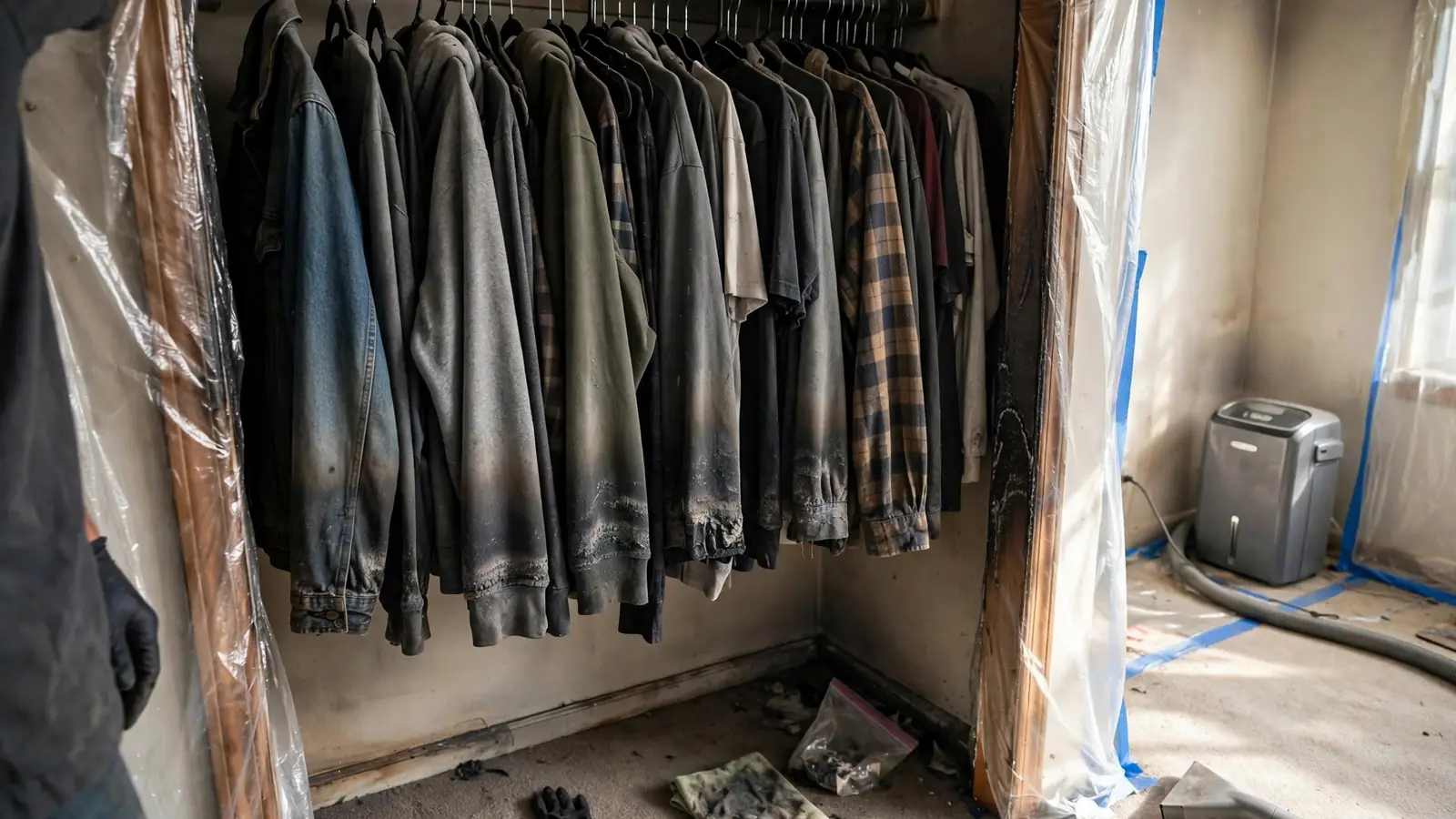
Closets are packed with porous material: clothing, linens, shoes, boxes of papers and keepsakes. Smoke is forced into closets during a fire even when doors are closed. Afterward, the contents hold odor for months, and they make the closet itself smell.
Restoration cleaners use processes designed for smoke-damaged textiles that are more effective than home laundering. Stored boxes need to be opened and sorted. The closet's walls, shelves and ceiling also need cleaning, and sometimes sealing.
How it is fixed
How a restorer tracks down lingering odor
- 1
Map the odor
Walk every room, closet, the attic and any crawl space, noting where the smell is strongest and when.
- 2
Remove the sources
Remove smoky insulation, carpet pad and items that cannot be cleaned.
- 3
Clean surfaces and contents
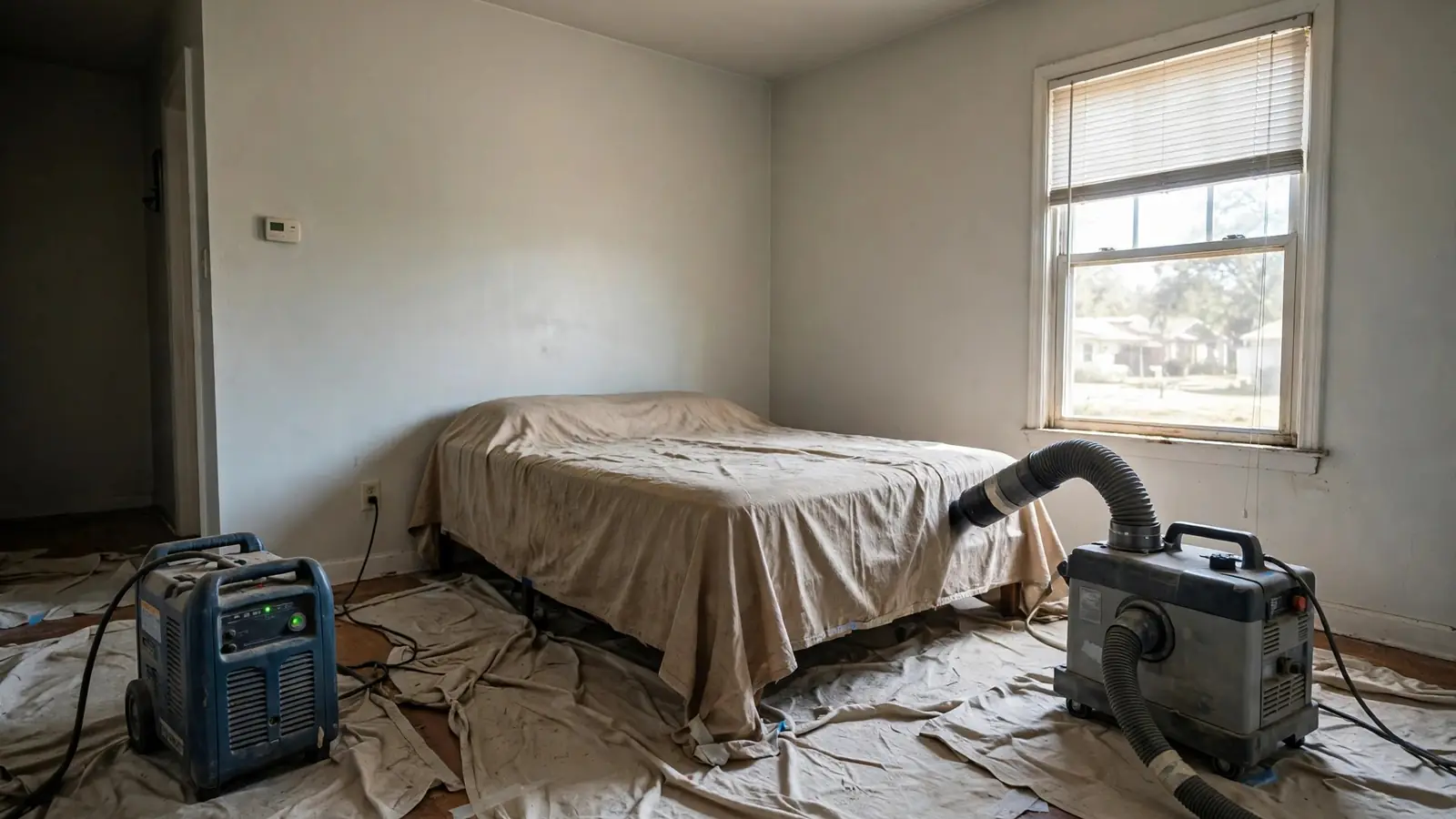
Clean walls, ceilings, cabinets, closets and belongings with methods matched to the residue.
- 4
Clean the HVAC system
Clean or replace ducts; clean the air handler, coil and blower; change filters.
- 5
Treat and seal
Use thermal fogging, hydroxyl or, in empty spaces only, ozone; then seal porous surfaces with an odor-blocking primer.
- 6
Retest in warm conditions
Close up the house on a warm day with the AC running and check again.
Avoid
What does not work
- Air fresheners and candlesThey mix their scent with smoke and make the source harder to find.
- Buying an ozone machineOzone can harm health and should never be used with people or pets present [3]. It also does not remove residue.
- Painting without sealingOdor comes back through ordinary paint.
- Bowls of vinegar or baking sodaThey absorb a little odor from the air but do nothing about residue in materials.
On the call
What to tell the contractor about the smell
- Where the fire started and what burned
- Which rooms and closets smell strongest
- Whether the smell changes when the AC runs or when it is hot
- What has already been cleaned, painted or treated
- Whether any rooms also smell musty
FAQ
Lingering smoke odor questions
How long does smoke smell last after a fire?
As long as residue remains. After thorough cleaning, removal and sealing, odor usually clears. If it keeps returning, residue is still somewhere, often the attic, ducts, closets or under paint.
Why does my house smell like smoke when it gets hot?
Heat drives odor out of residue in insulation, framing and materials. In Fort Worth homes, smoky attic insulation is a common cause, because attics get extremely hot in summer.
Will an ozone generator get rid of smoke smell?
It can reduce odor temporarily but does not remove residue, and the EPA warns it can harm health. Restorers use it only in empty spaces after cleaning, and ventilate before anyone returns.
Do the air ducts need to be replaced?
Sheet metal ducts can often be cleaned. Insulated flex duct and duct board hold odor and are often replaced. A contractor inspects and decides.
Can I just paint over smoke-stained walls?
Not without cleaning and sealing first. Odor and stains bleed through ordinary paint. Clean, apply an odor-blocking primer, then paint.
Who answers when I call about smoke odor?
An independent local restoration contractor, who talks with you on that same call. This site does not do the work or keep your details for later contact.