Key facts: Water Damage From Firefighting
- The EPA advises drying water-damaged materials within 24 to 48 hours to prevent mold growth [1].
- The IICRC S500 standard covers professional water damage restoration, including assessment, extraction and drying [2].
- Soot and dirty water left after a fire can contain things that make people sick, according to the U.S. Fire Administration [3].
- Items that did not burn can still be ruined by firefighting water, so contents need sorting as well as the structure [3].
Why it matters
The second disaster after the fire is out
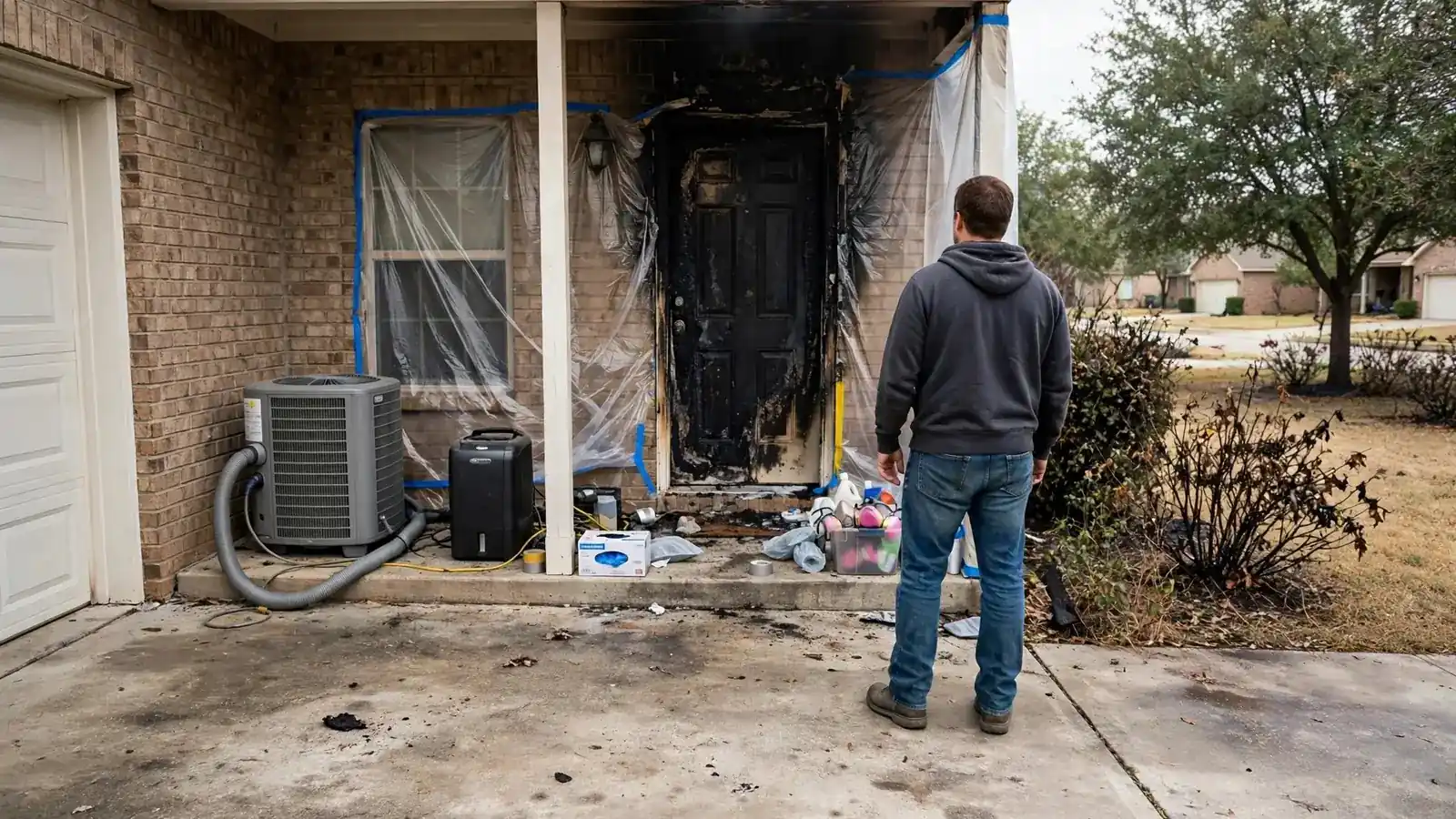
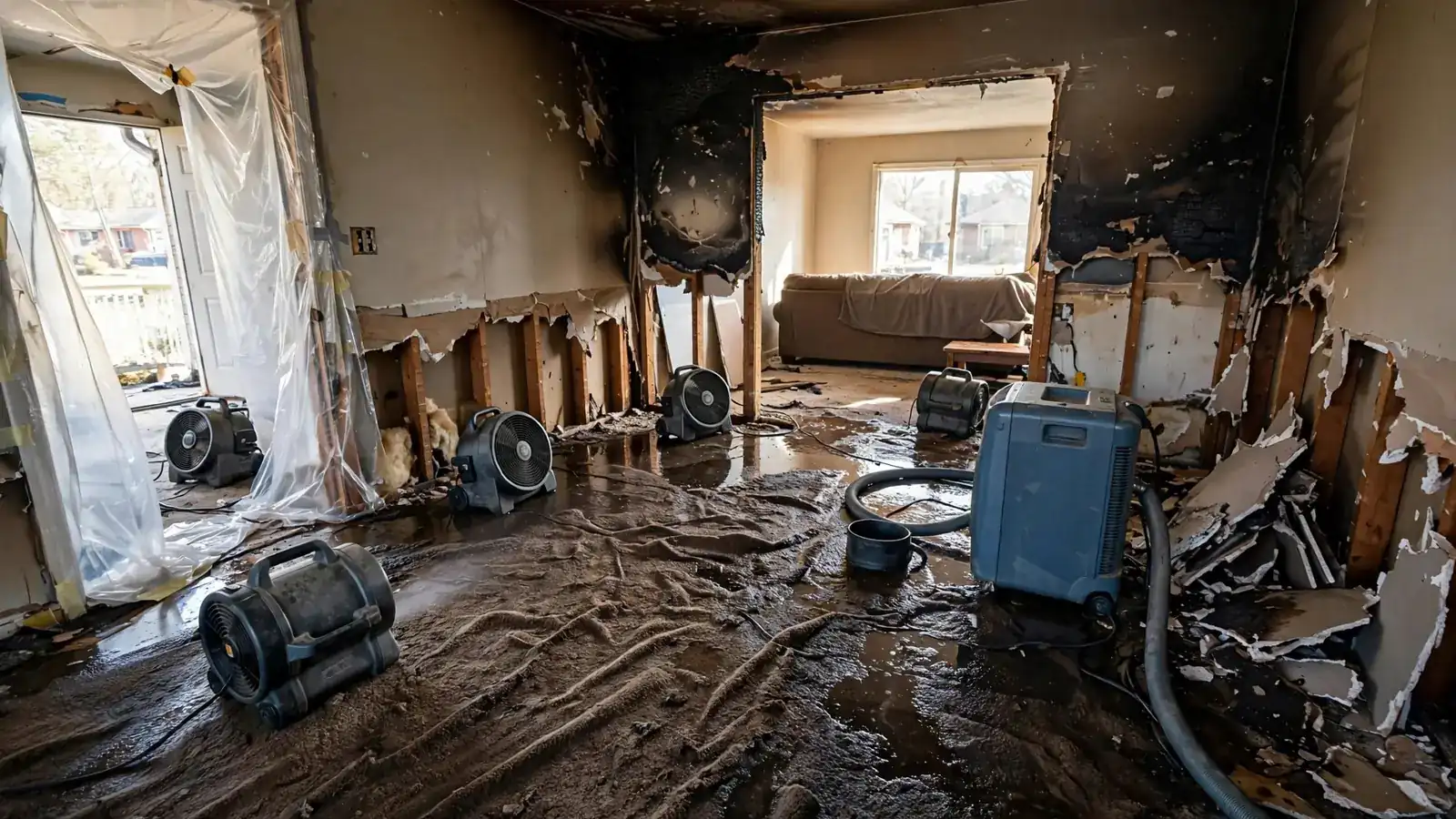
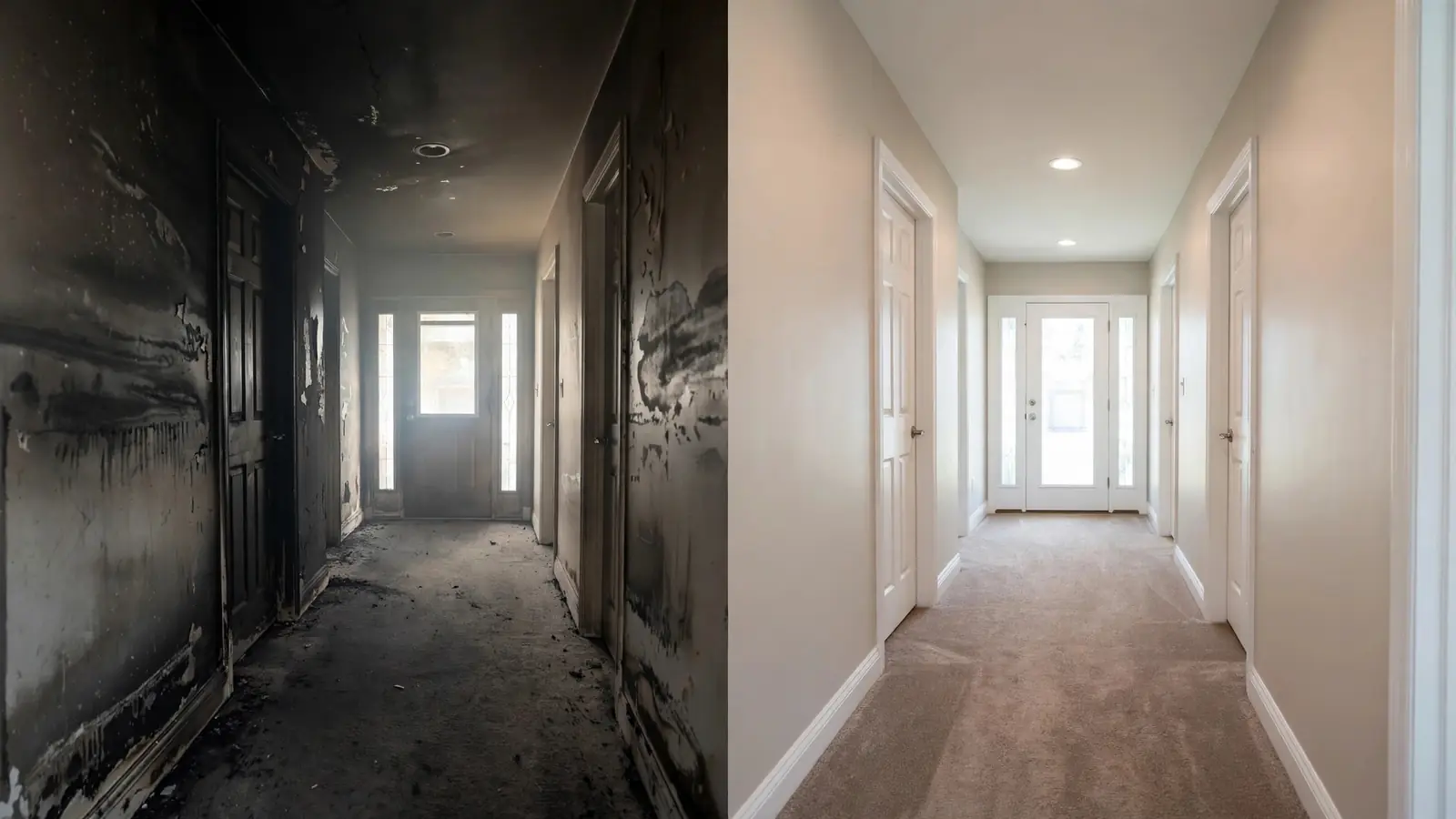
Firefighters use whatever water it takes to stop a fire and protect lives, and that is exactly what they should do. But the water does not leave with the fire engine. It runs down walls, soaks through ceilings, pools in carpets and flows into floor cavities and crawl spaces. In a two-story home it often comes down through the ceiling below the fire. Sprinkler systems, where present, add more.
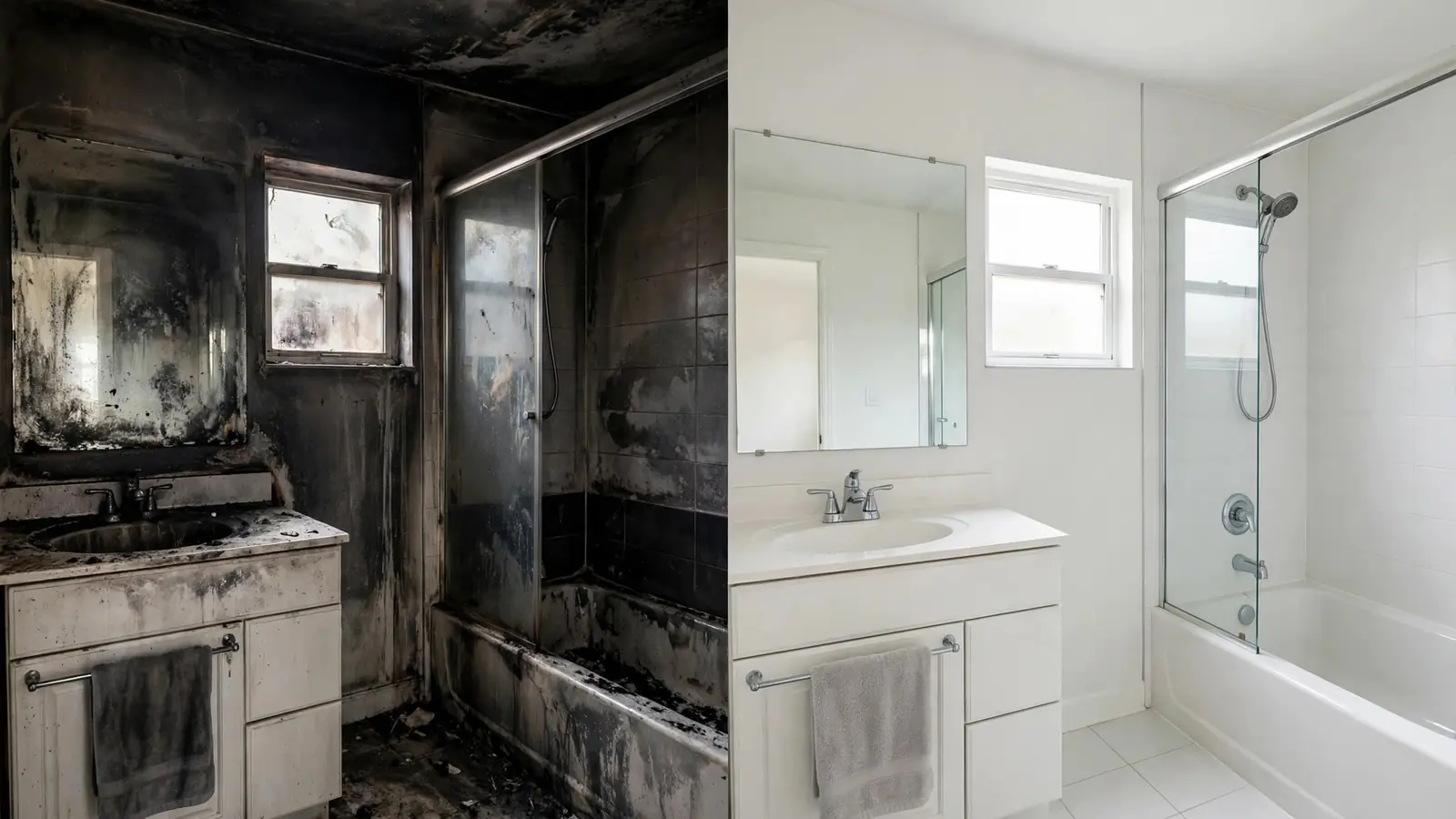
Firefighting water is not clean. It picks up soot, ash and debris on its way through the house and carries residue into materials that may not have been touched by smoke. The U.S. Fire Administration notes that the soot and dirty water left after a fire can contain things that make people sick [3]. That changes how wet materials are handled and what can be saved.
Water also sets a clock. The EPA advises drying water-damaged materials and furnishings within 24 to 48 hours to prevent mold growth [1]. After a fire, homeowners are rightly focused on safety, shelter and insurance calls, and the water can sit unnoticed in wall cavities and under flooring. By the time smoke cleanup starts, mold may already be starting in hidden places.
Professional restorers handle water damage according to the IICRC S500 standard, which covers assessing water category, extracting water, setting up drying equipment and monitoring until materials reach dry goals [2]. On a fire job, that water work runs alongside the smoke and soot cleanup described in the IICRC S700 fire standard. Drying should start as soon as the house is released.
Where water goes
Where firefighting water ends up in a house
Ceilings below the fire
Water from upstairs fires collects on the ceiling below, soaking drywall and insulation until it sags or drips through light fixtures.
Read moreCarpet and pad
Carpet pad acts like a sponge for dirty water and is almost always replaced after a fire. The carpet itself depends on how long it sat.
Read moreWall cavities
Water runs down inside walls, wetting insulation and the bottom plate where it is hard to see and slow to dry.
Read moreSubfloors and hardwood
Wood floors cup and swell as they absorb water. Subfloors under vinyl or tile can stay wet long after the surface looks dry.
Read morePier-and-beam crawl spaces
In older Fort Worth homes on piers, water drains into the crawl space, where it can sit and raise humidity under the whole house.
Read moreCabinets and built-ins
Particleboard cabinet boxes swell and lose strength when wet, and water trapped behind them is easy to miss.
Read more
The process
How water from firefighting is extracted and dried
- 1
Make the house safe to work in
Before anyone works around water, power to wet areas is shut off and checked. Sagging ceilings are assessed, because a ceiling holding water can collapse.
- 2
Extract standing water
Truck-mounted or portable extractors pull water out of carpet, pad and hard floors. The more water removed now, the faster everything dries.
- 3
Map moisture
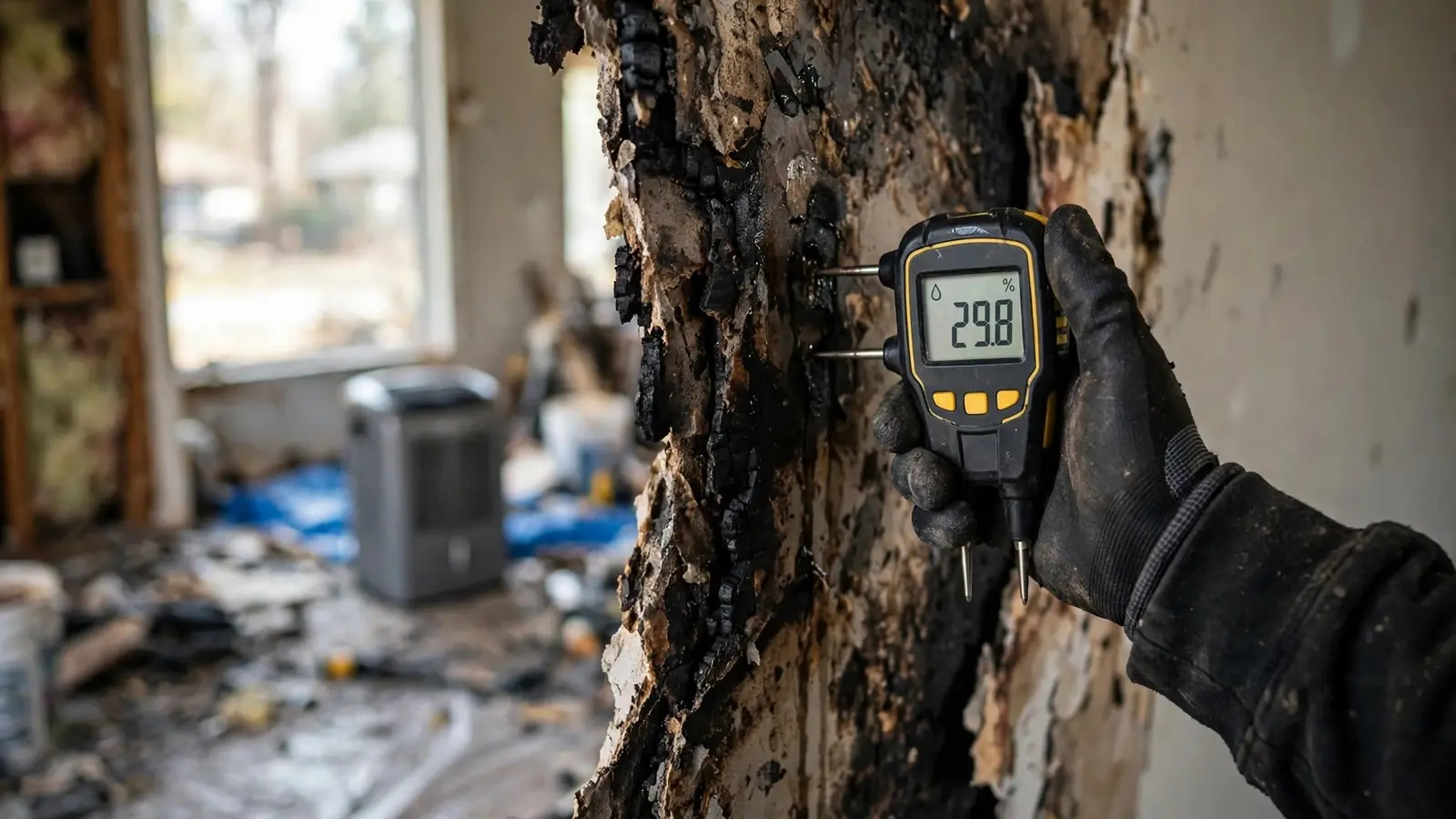
Moisture meters and thermal cameras show where water has spread inside walls, under floors and into ceilings. The map decides what is removed and where drying equipment goes.
- 4
Remove what cannot be dried
Saturated carpet pad, wet insulation, sagging drywall and swollen particleboard usually come out. Drywall is often cut a set height above the waterline to open the wall cavity.
- 5
Set up drying equipment
Air movers and dehumidifiers are placed to move air across wet surfaces and pull moisture out of the air. Wall cavities and subfloors may get specialized drying.
- 6
Clean and treat affected materials
Because the water carried soot, remaining materials are cleaned and may be treated to reduce microbial growth before they are sealed or rebuilt.
- 7
Monitor until dry
Moisture readings are taken and recorded regularly until materials reach dry targets. Equipment is moved as areas dry, and the readings become part of the claim file.
Materials
What usually happens to wet materials after a fire
| Material | Typical outcome | Why |
|---|---|---|
| Carpet pad | Replaced | Absorbs dirty water and residue; cannot be cleaned reliably |
| Carpet | Sometimes cleaned, often replaced | Depends on time wet, soot load and odor |
| Drywall | Dried if briefly wet, cut out if saturated or sagging | Paper facing grows mold; soaked gypsum loses strength |
| Wall insulation | Usually removed | Holds water and odor; dries poorly |
| Hardwood flooring | Dried and monitored; may cup or need replacement | Wood absorbs water and swells |
| Subfloor plywood or OSB | Dried; OSB that swells is replaced | OSB loses strength when soaked |
| Particleboard cabinets | Often replaced | Swells and crumbles when wet |
| Framing lumber | Dried and cleaned | Solid lumber usually recovers if dried promptly |
The contractor decides on site using moisture readings. These are general patterns only.
Right away
What you can do about the water before help arrives
- Stay out of rooms with sagging ceilingsA ceiling holding water can come down without warning. Keep everyone out until it is assessed.
- Keep power off in wet areasDo not use outlets, lights or appliances in rooms that got wet until an electrician or the contractor confirms it is safe.
- Move small items to a dry areaIf it is safe to enter, lift photos, documents and small valuables off wet floors. Leave heavy furniture for the crew.
- Photograph the waterTake pictures of standing water, wet ceilings and soaked contents before anything is moved. Water evidence disappears quickly.
- Do not use a household vacuumRegular vacuums are not made for water and can cause electric shock. Leave extraction to equipment built for it.
- Do not seal the house up hot and wetClosing a wet house in summer heat speeds mold growth. Ventilate if it is secure and safe, or wait for drying equipment.
Fort Worth homes
Pier-and-beam, slab and summer heat in Fort Worth
Fort Worth has two very different foundation types, and they handle water differently. Older homes in neighborhoods like Fairmount, Arlington Heights, Ryan Place and the Northside are often pier-and-beam, with a crawl space under the floor. Water from firefighting drains through floor gaps into that space, where it can sit on the soil and raise humidity under the whole house. The crawl space needs inspection and sometimes drying of its own.
Most homes built from the 1950s onward sit on concrete slabs. Water on a slab has nowhere to drain, so it spreads under flooring, into the bottom of walls and under cabinets. Tile and vinyl can hide wet subfloor or slab for a long time. Moisture mapping is essential on slab homes.
North Texas heat speeds everything up. In the warm months, a house with wet materials and no air conditioning becomes warm and humid inside quickly, which is ideal for mold. If the fire knocked out the power or the HVAC, getting dehumidifiers and air movers running is one of the first priorities.
Many homes in the area have the air handler in the attic and ductwork overhead. If firefighting water came through the ceiling, it may have wet duct insulation and the air handler itself. These need checking before the system runs again, both for electrical safety and to avoid blowing moisture and residue through the house.
Mold
Keeping mold out of a fire-damaged house
Mold needs moisture, a food source and time. After a fire, the moisture comes from firefighting water, the food comes from drywall paper, wood and dust, and the time comes from the delays that follow any disaster. The EPA's advice is to dry wet materials within 24 to 48 hours [1]. That is not always possible after a fire, which is why wet materials are often removed rather than dried.
If you see or smell mold, tell the contractor. Mold growth adds steps: containment, removal of affected materials and cleaning before rebuilding. It is much simpler to prevent than to remove, which is the strongest argument for starting water work quickly, even before the smoke cleanup is fully planned.
- Dry within 24 to 48 hours where possible
- Remove what cannot dry
- Keep humidity down with dehumidifiers
- Report musty smells early
Contents
Wet belongings: what to save and what to let go
Contents soaked by firefighting water need quick decisions. Hard goods like dishes, tools and solid wood furniture can usually be cleaned and dried. Upholstered furniture, mattresses, pillows and stuffed toys that soaked up dirty water are usually not worth restoring for health reasons.
Paper and photographs can sometimes be saved by freezing them until they can be dried properly, a method many restoration and document specialists use. If important papers got wet, ask the contractor about freezing them rather than letting them dry stuck together.
Electronics that got wet should not be plugged in. Even if they seem to work, water and soot inside can cause failures later. Set them aside for evaluation. Food, medicine and cosmetics exposed to heat, smoke or water should be thrown away, as the U.S. Fire Administration advises [3].
Second story
When the fire was upstairs and the water came down
In two-story homes, which are common in far north and southwest Fort Worth subdivisions, a fire upstairs often causes more water damage downstairs than smoke damage. Water soaks through the upstairs floor, fills the ceiling cavity below and comes through light fixtures, vents and drywall seams. The downstairs ceiling may look intact while holding a great deal of water.
Contractors check for this with moisture meters and thermal cameras and often open the ceiling to let water drain and air reach the cavity. Ceiling insulation between floors is usually removed. The joists are dried and cleaned before new drywall goes up.
Do not poke holes in a bulging ceiling yourself. Water can come down with the drywall, and electrical wiring is often in the cavity. Leave it for the crew, who will cut it safely with power off.
Paperwork
Moisture logs and your insurance claim
Drying records are an important part of a fire claim. Daily moisture readings show what was wet, how wet, and when it reached dry targets. They justify equipment and removal decisions and help resolve questions if the adjuster asks why something was replaced.
Ask the contractor to share moisture maps and readings, along with photos of opened walls and ceilings. Keep your own simple log of when equipment arrived and left. If you are living elsewhere while the house dries, keep your receipts and check whether your policy includes additional living expenses, as the Texas Department of Insurance advises [4].
Firefighting water damage is generally treated as part of the fire loss rather than a separate water claim, but every policy is different. Your adjuster confirms what applies to your situation.
Water quality
Why firefighting water is treated as contaminated
Water damage professionals sort water by how contaminated it is. Water straight from a supply line is considered clean at first, while water carrying sewage or significant debris is treated as heavily contaminated. Firefighting water starts out clean in the hose, but by the time it has passed through a burning room, collected soot and ash and soaked into carpet and building materials, it is no longer clean.
That classification affects what can be saved. Porous materials soaked by contaminated water, such as carpet pad, upholstery and insulation, are usually removed rather than dried and cleaned. Hard surfaces are cleaned and may be treated before they are sealed or rebuilt. Crews wear protective equipment when handling wet debris, and homeowners should avoid touching it with bare hands.
The IICRC S500 water damage standard describes how professionals assess water and decide what can be restored [2]. On a fire job, those decisions are made alongside the smoke and soot assessment, because the same material may be both wet and smoke-damaged.
Equipment
What the drying equipment in your house is doing
Air movers are the low, snail-shaped fans placed along walls and floors. They push air across wet surfaces so moisture evaporates faster. They are loud and run around the clock, and moving them without asking can slow drying in that area.
Dehumidifiers pull moisture out of the air after it evaporates. Without them, the air in a closed house becomes saturated and drying stalls. Restoration dehumidifiers are much larger than household units and may drain into a sink or out a window through a hose.
HEPA air scrubbers often run on fire jobs as well, capturing soot particles stirred up by air movement. Specialized systems may be used to push dry air into wall cavities or under hardwood floors. The contractor should check readings regularly, move equipment as areas dry, and remove it once materials reach dry targets.
Floors
Hardwood, laminate and tile after firefighting water
Solid hardwood floors absorb water and swell, often cupping so the edges of boards rise above the centers. If drying starts early, many solid hardwood floors flatten again and can be sanded and refinished. If they sat wet for a long time or soaked up sooty water, replacement may be needed.
Laminate and many engineered floors do not tolerate soaking well. Their cores swell and do not return to shape, so they are usually replaced. Luxury vinyl plank can survive water itself, but water trapped underneath has to come out, which often means lifting the planks.
Tile handles water well, but grout and the subfloor underneath may not. Water can migrate under tile and stay there. Moisture readings around the edges and at grout joints help find it. Do not assume a tile floor is fine just because the surface is dry.
Weather
When rain follows the fire
A fire that opens the roof or blows out windows leaves the house exposed to weather. North Texas storms can be sudden and heavy, and rain entering through a damaged roof adds water to materials that were already wet from firefighting. That is why board-up and tarping are usually done as soon as the fire department releases the property.
If rain is forecast and the roof is open, tell the contractor right away. Temporary protection over the damaged section and plastic over openings can prevent a second round of water damage that would otherwise spread into rooms the fire never reached. Our board-up and tarping page explains how that temporary protection is installed.
Drying plans also change with the weather. Humid stretches slow evaporation and make dehumidifiers more important. Dry, hot spells speed it up but can make wood floors and trim dry too fast and crack. A careful contractor adjusts equipment to the conditions rather than leaving the same setup in place for the whole job.
Your role
Living with drying equipment for a few days
If you are staying in part of the house, expect noise, warm air and power cords. Keep doors to drying rooms in the positions the crew set, because opening or closing them changes airflow. Do not unplug or switch off equipment, even overnight, without asking.
Keep pets away from air movers and dehumidifier hoses, and keep children out of rooms with opened walls or ceilings. If a breaker trips or a unit stops, call the contractor rather than resetting equipment in a wet area yourself.
FAQ
Firefighting water questions for Fort Worth homes
How fast does water damage need to be dried after a fire?
As fast as practical. The EPA advises drying wet materials within 24 to 48 hours to prevent mold. After a fire that is not always possible, so wet materials are often removed and the rest dried with equipment.
Can wet carpet be saved after firefighting?
The pad is almost always replaced because it absorbs dirty water. Carpet may be cleaned if it was wet briefly and the soot load is light, but it is often replaced after a fire.
Is firefighting water dangerous?
It carries soot, ash and debris, and the U.S. Fire Administration notes that dirty water left after a fire can contain things that make people sick. Avoid contact and let crews handle it.
My house is pier-and-beam. Does that matter?
Yes. Water drains into the crawl space and can sit there, raising humidity under the house. The crawl space should be inspected and dried if needed.
Will mold grow after a house fire?
It can if materials stay wet. Fast extraction, removal of soaked materials and dehumidification keep the risk low. Tell the contractor if you smell anything musty.
Does the call send someone to my house?
Your call connects you with an independent local restoration contractor who speaks with you on that call. Anything that happens after is agreed between you and them during the call.
Why are they cutting my drywall above the waterline?
Cutting a strip of drywall opens the wall cavity so air can reach wet insulation and framing. It is faster and more reliable than trying to dry a closed wall, and it shows whether mold has started.
Can I run my air conditioning while the house dries?
Only after the system has been checked. If water or soot reached the air handler or ducts, running it can spread residue and moisture. The contractor can tell you when it is safe.