Key facts: Working with your insurance adjuster
- The Texas Department of Insurance advises checking whether your policy has additional living expenses coverage and keeping receipts while displaced [1].
- TDI's consumer help line can answer questions about insurance claims in Texas [2].
- Hidden smoke damage in attics, ducts and closets is easy to miss on a quick walk-through, so documentation matters [3].
- You generally choose who restores your home; the adjuster determines what the policy covers.
Short answer
What the adjuster does and how to help the process
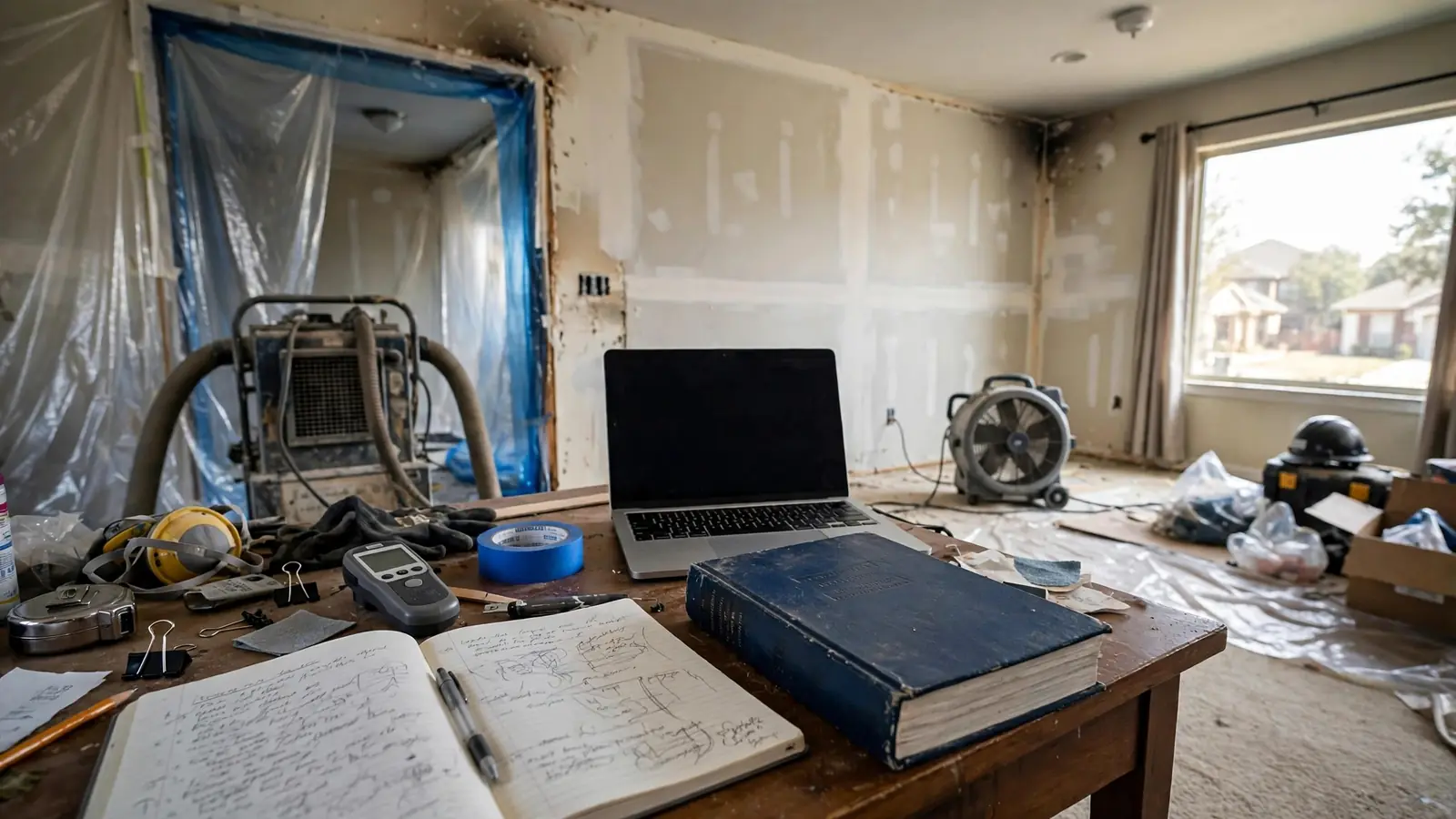
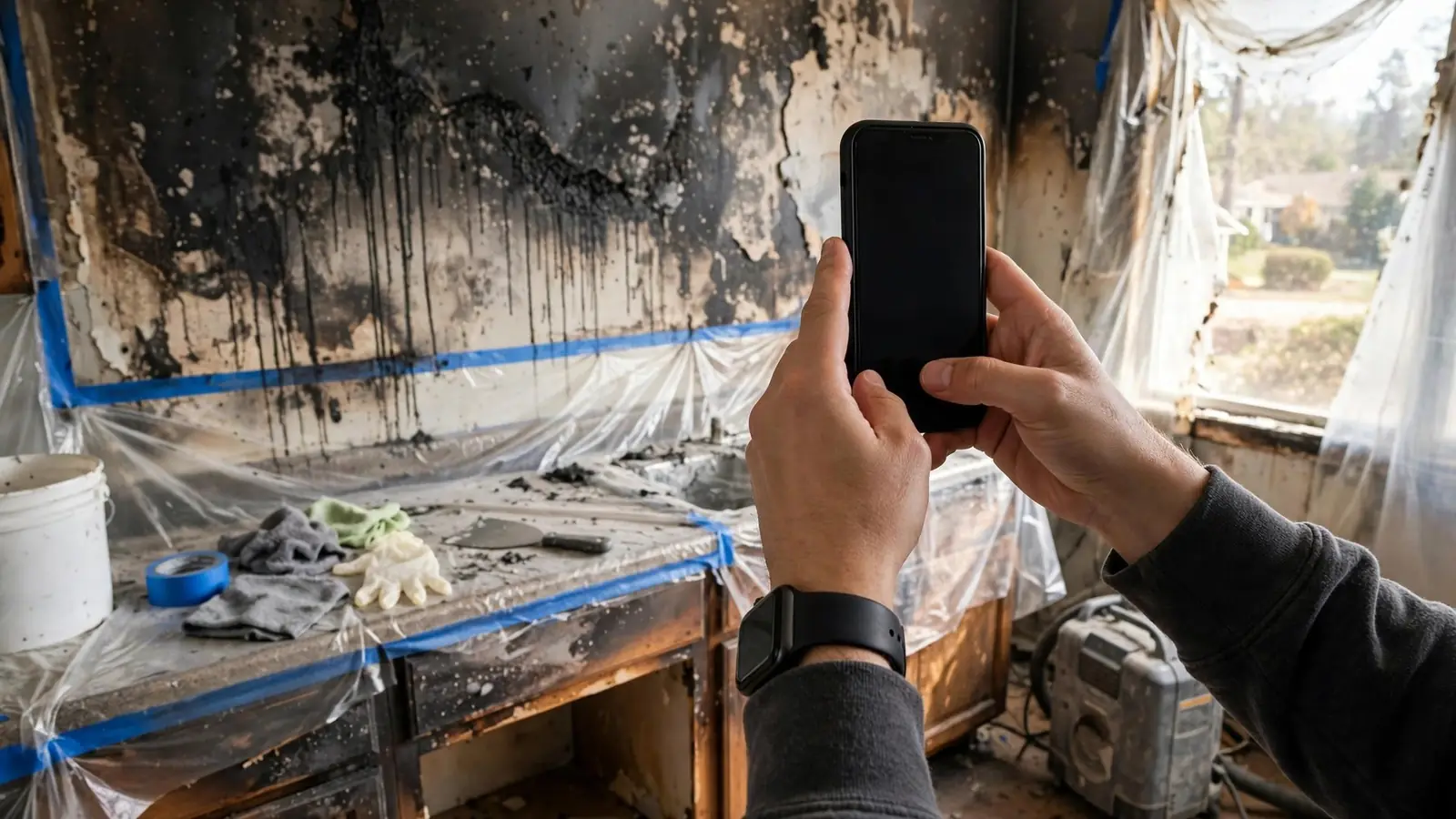
An insurance adjuster inspects the damage, reviews your policy and determines what the insurer will pay for. To make the process work for you, document everything before it is cleaned or removed, walk the adjuster through hidden damage such as the attic, ducts and closets, keep a contents list and every receipt, and get the scope in writing so you can compare it with your contractor's.
You can choose your own restoration contractor. If you disagree with the scope, ask questions, provide more documentation, and if needed contact the Texas Department of Insurance for help [2].
Roles
Who does what in a fire claim
| Person | Role | What to ask |
|---|---|---|
| Insurance company adjuster | Inspects damage and determines what the policy pays | When is the inspection? What is covered? Can I get an advance? |
| Restoration contractor | Assesses and restores the home | What is your scope? Will you share photos and moisture readings? |
| You, the policyholder | Documents loss, protects property, chooses contractor | Keep records of calls, receipts and decisions |
| Texas Department of Insurance | Regulates insurers; helps consumers | Questions or complaints about a claim [2] |
Before the visit
Getting ready for the adjuster
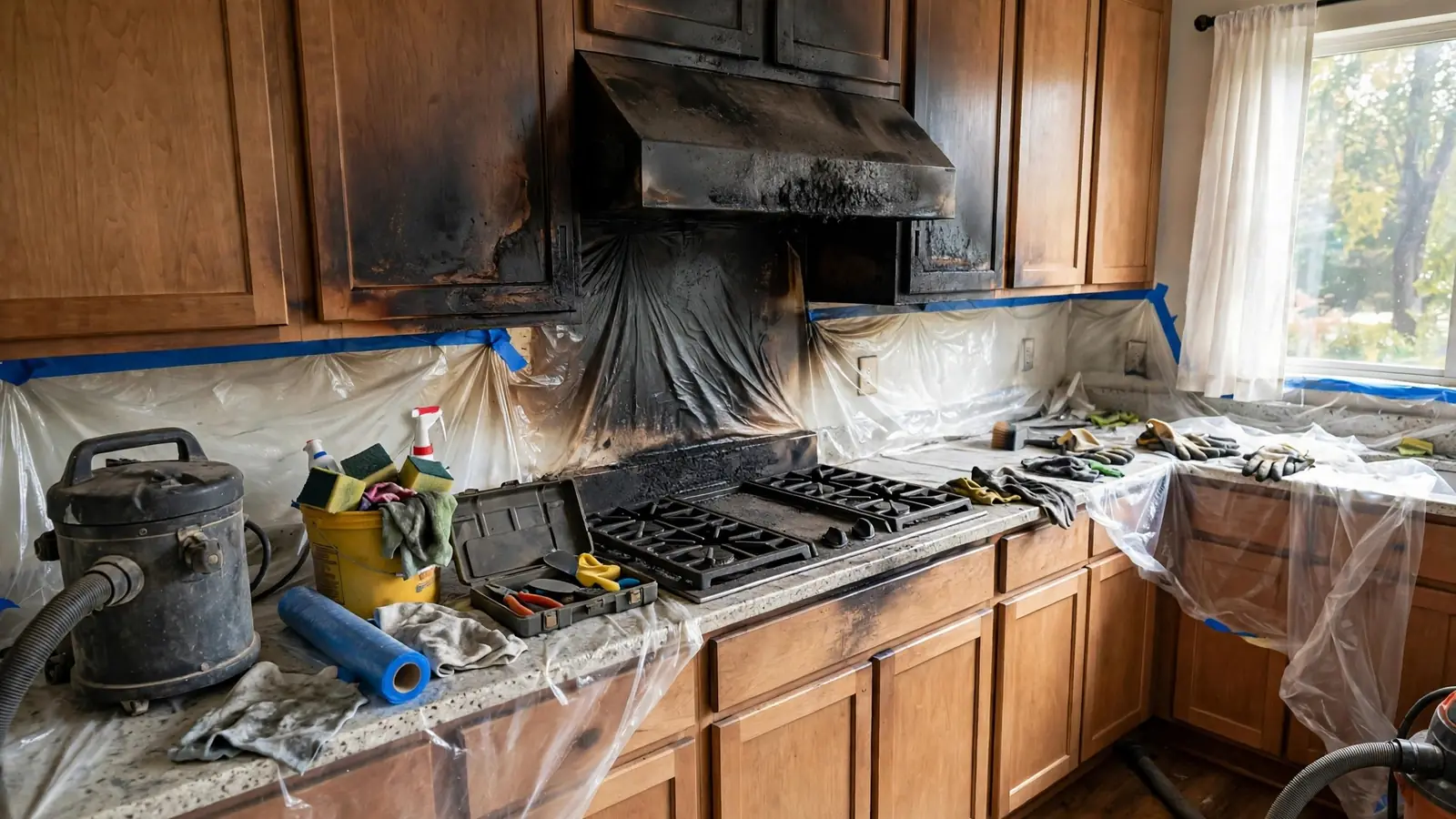
- Photograph every roomWide shots and close-ups, including inside closets, cabinets, the attic hatch, HVAC registers and the exterior.
- Keep damaged itemsDo not throw things out before the adjuster sees them or approves disposal, unless they are a health hazard; photograph them first.
- Start a contents listRoom by room, list items with a rough age and description. Photos, receipts and bank records help.
- Gather your policyHave your declarations page and policy number, and note coverage for dwelling, contents and additional living expenses.
- Keep a call logRecord date, name and summary for every call with the insurer and contractor.
Living elsewhere
Additional living expenses
If your home cannot be lived in, many policies include additional living expenses coverage. The Texas Department of Insurance explains that this coverage can help with the added expense of living away from home while repairs are made, and advises asking your agent about your policy's limits and keeping receipts [1].
Ask early how your insurer handles hotel stays, rentals, meals and other extra expenses, and whether there is a time or amount limit. Keep every receipt.
After the visit
From inspection to agreed scope
- 1
Get the scope in writing
Ask for the adjuster's estimate or scope of work, room by room.
- 2
Compare with your contractor
Line up the adjuster's scope with your contractor's. Differences usually come from hidden damage or method choices.
- 3
Provide supporting documents
Send photos, moisture readings and notes that explain each difference.
- 4
Ask for a re-inspection if needed
If new damage is found once walls or attics are opened, ask the insurer to review it.
- 5
Track payments and work
Keep records of payments received and work completed for each phase.
Disagreements
If you disagree with the adjuster
- Ask for the reason in writingUnderstand exactly which items differ and why.
- Add evidencePhotos, readings, product information and contractor notes often resolve differences.
- Read your policySome policies include an appraisal clause for disputes over amounts.
- Contact TDIThe Texas Department of Insurance helps consumers with questions and complaints about claims [2].
On the call
What to tell the restoration contractor about your claim
- Your insurance company and claim number
- Whether the adjuster has visited yet
- Any items the adjuster has asked you to keep
- Whether you need documentation such as moisture readings or photos for the claim
Contents
Building a contents inventory that holds up
The contents list is often the slowest part of a fire claim. Work room by room, starting with the rooms that were most damaged. For each item, note what it is, roughly how old it is, and where it was. Phone photos and videos taken before the fire, online order histories and bank statements help show what you owned.
Separate items that were destroyed from items that can be cleaned. Restoration companies often clean contents and give you a list of what was cleaned and what could not be saved, which can be added to your inventory. Keep a copy of every version you send to the insurer.
Do not try to finish the list in one sitting. It is normal to remember items weeks later. Add them as you go, and tell your adjuster you may be updating the list.
FAQ
Insurance adjuster questions after a fire
Do I have to use the restoration company my insurer recommends?
Generally you may choose your own contractor. The insurer determines what the policy pays for. Check your policy and ask your insurer if anything is unclear.
Should I clean up before the adjuster comes?
Take steps to prevent further damage, such as board-up, tarping and water extraction, but photograph everything first and keep damaged items until the adjuster sees them or approves disposal.
What if more damage is found later?
Hidden damage often appears when walls or attics are opened. Document it with photos and ask the insurer to review it as part of the claim.
Does insurance cover a hotel after a fire?
Many policies include additional living expenses coverage. Check your policy limits and keep every receipt, as the Texas Department of Insurance advises.
Who can help if I have a problem with my claim?
Start with your insurer. If you cannot resolve it, the Texas Department of Insurance helps consumers with questions and complaints about claims.
Can a contractor help me understand my damage?
Yes. Call to speak with an independent local restoration contractor on the same call. They can explain the damage, though coverage decisions are your insurer's.
How detailed does my contents list need to be?
As detailed as you reasonably can: item, rough age, where it was and any proof such as photos or order history. Start with the most damaged rooms, and keep adding items as you remember them.