Key facts: Soot on walls and ceilings
- Soot left after a fire can carry substances harmful to health, so heavy soot should be handled with protection [1].
- Professional fire restoration under IICRC S700 starts with assessing the residue before choosing dry or wet cleaning [2].
- Textured ceilings in homes built before the 1980s may contain asbestos and should be tested before being scraped [3].
- Homes built before 1978 may have lead paint, which changes how walls are sanded or scraped [4].
Short answer
What soot on walls is telling you
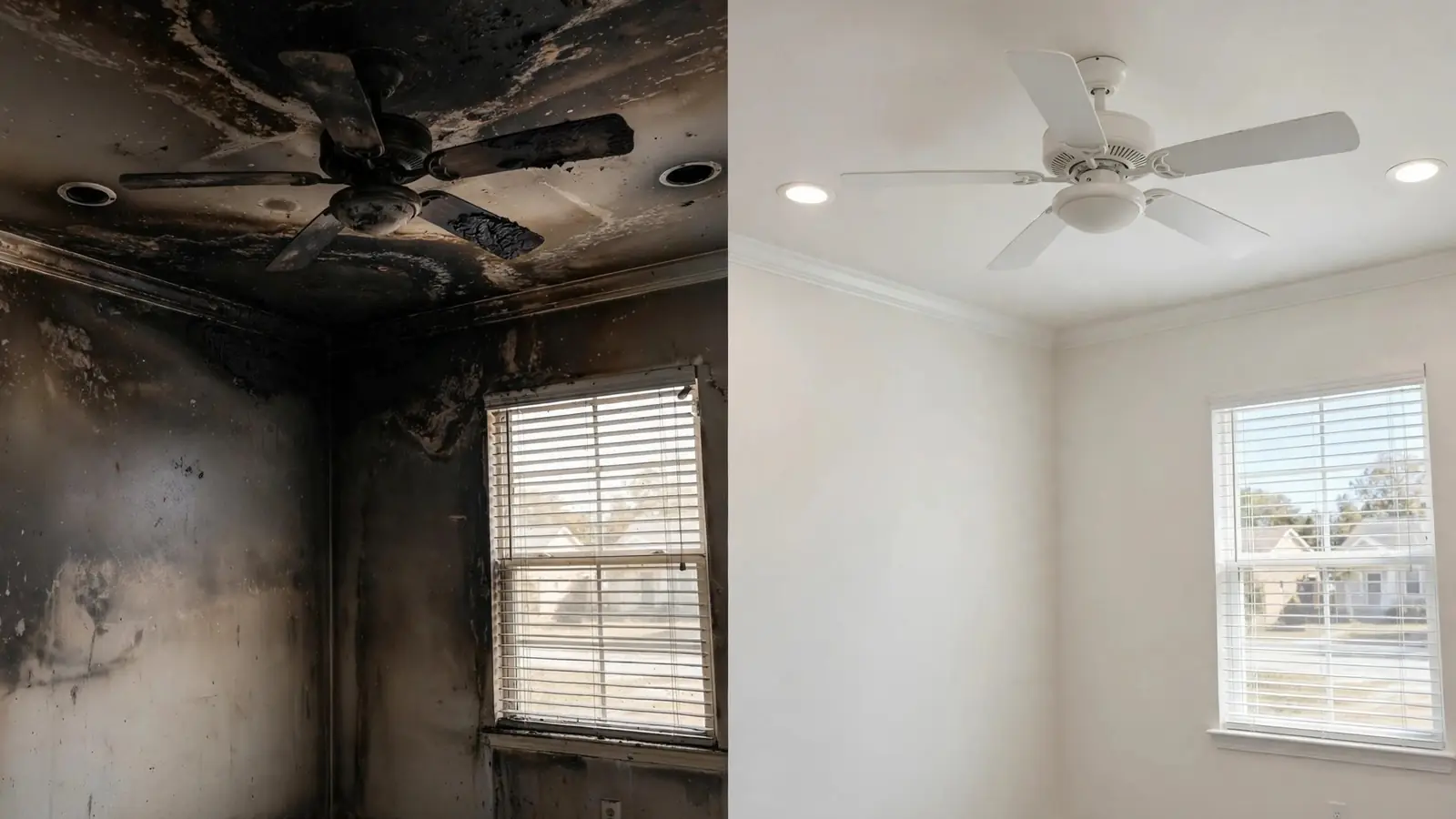
Soot on walls and ceilings is fine carbon residue from incomplete burning. After a house fire, it maps where smoke traveled: heavier near the fire and along ceilings, lighter in far rooms, and in tell-tale shapes around outlets, vents and nail heads where air moved. It should be removed dry first with HEPA vacuums and dry sponges, then cleaned with products matched to the residue, then sealed if odor or staining remains.
Soot without a fire is also common. Candles, oil lamps, fireplaces with poor draft and malfunctioning gas appliances can all leave soot. If you see soot and there was no fire, have fuel-burning appliances checked, because incomplete burning can also produce carbon monoxide.
Read the pattern
Soot patterns and what they mean
| What you see | What it means | Next step |
|---|---|---|
| Black band along the ceiling | Path of hot smoke from the fire | Dry removal, then cleaning, then seal |
| Grey fans above outlets and switches | Air moving through wall cavities | Clean surfaces; check inside walls |
| Dark outlines around nail heads | Cold spots attracting soot | Clean and seal; common on exterior walls |
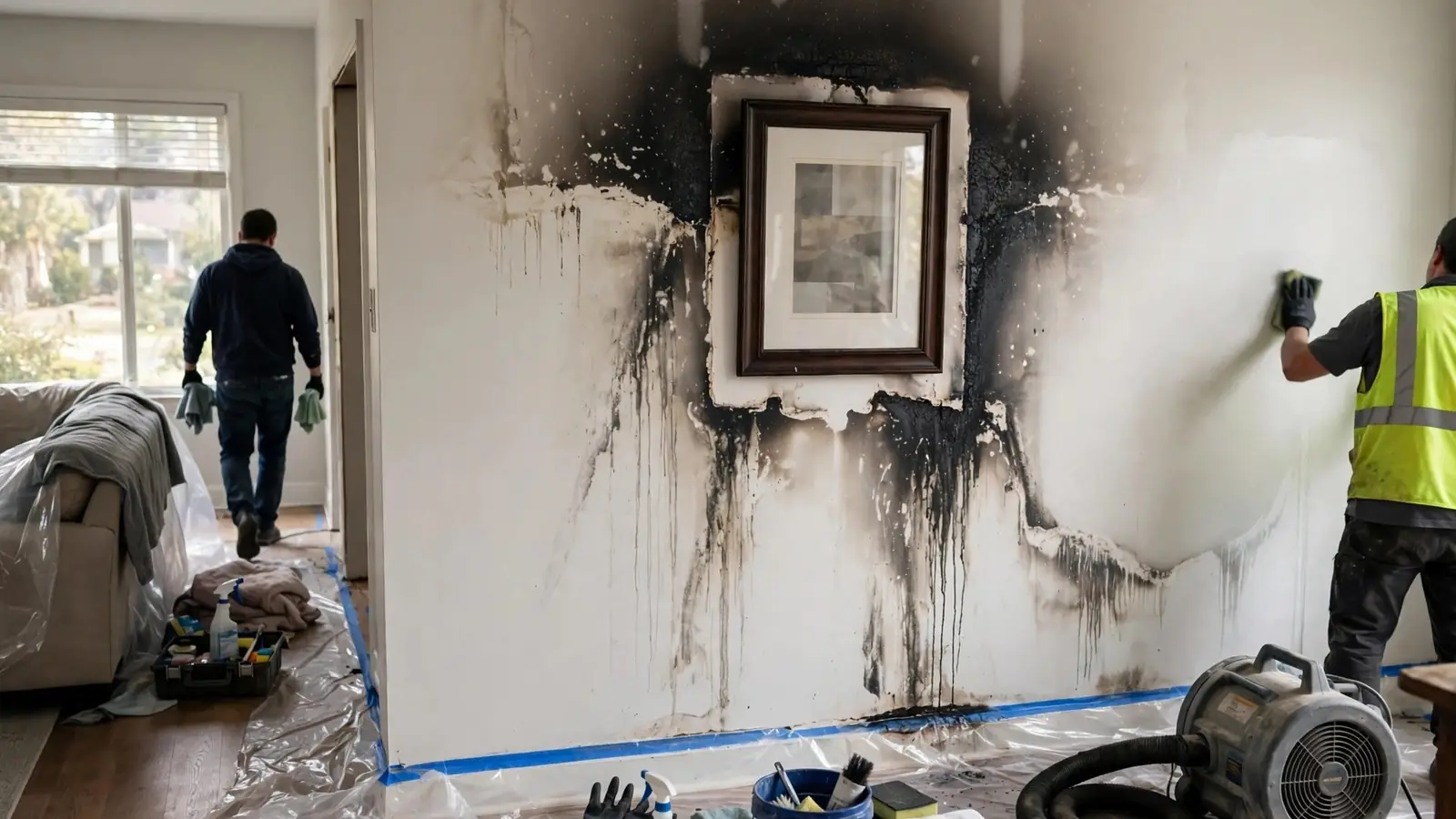
| Clean shapes behind pictures | Even soot layer across the wall | Whole wall needs cleaning, not spots |
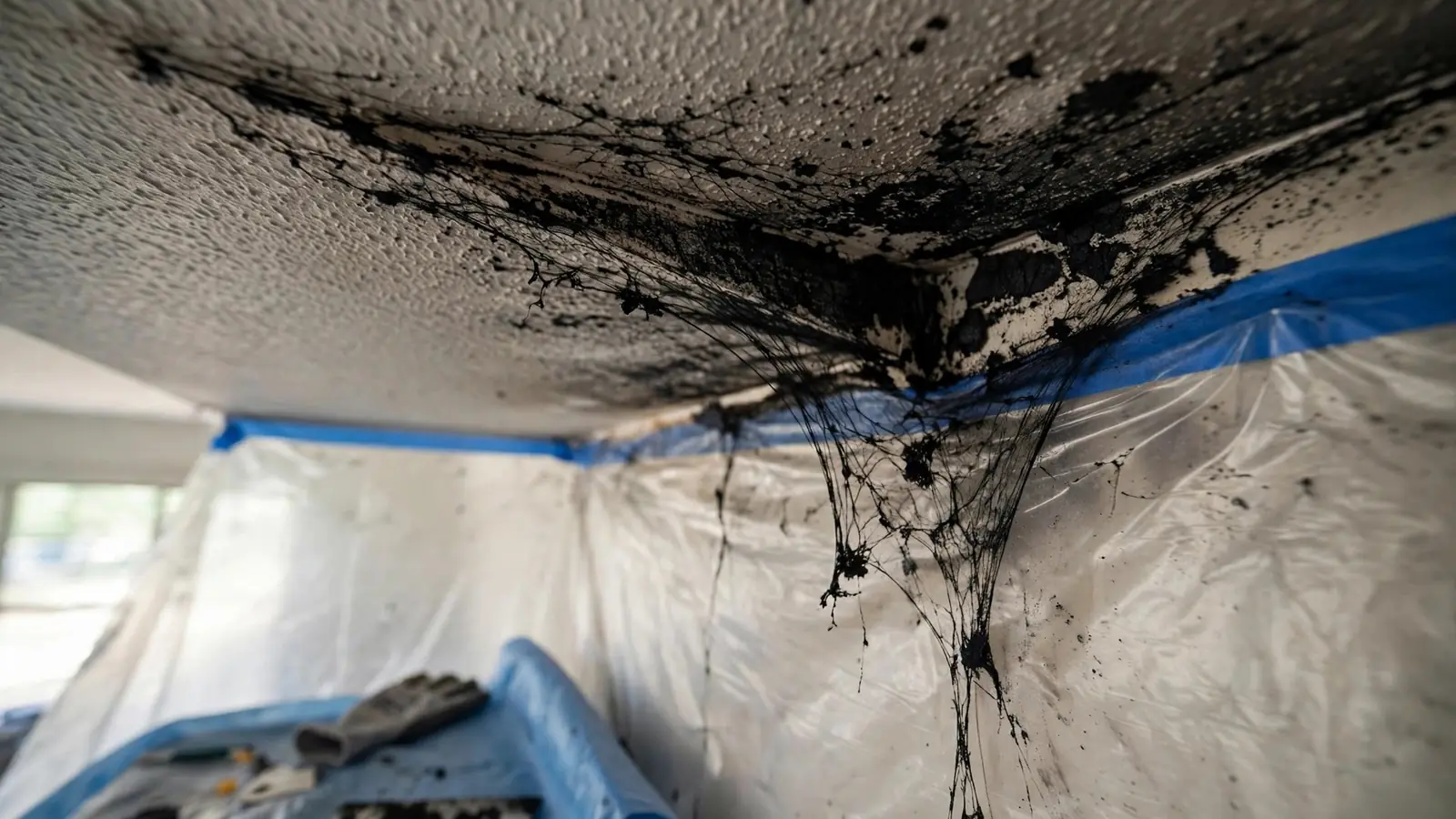
| Black strings in corners | Soot webs along air currents | HEPA vacuum without brushing |
| Soot above a candle or heater | Local incomplete burning | Clean area; check the appliance |
Safe checks
Checks you can do without making it worse
- The tissue testLightly touch a white tissue to the wall. If it comes away black and dry, the soot is powdery; if it smears, it is oily.
- Look behind thingsMove a picture or a piece of furniture. A clean shape behind it shows how much soot is on the whole wall.
- Check the ceiling cornersSoot webs and dark corners show where smoke collected.
- Do not wipeAvoid wiping with water or a damp cloth until you know the soot type; you will likely smear it.
Why wiping fails
Why a wet cloth makes soot worse
Soot particles are tiny and often oily. A damp cloth turns dry soot into a paste and pushes it into the texture of paint, especially flat paint common on walls and ceilings. Oily soot spreads into long grey streaks. Household cleaners can react with residue and set stains. The result is a wall that looks worse than before and is harder for professionals to clean.
That is why restorers always start dry: HEPA vacuums capture loose soot without blowing it around, and dry chemical sponges, made of vulcanized rubber, pull soot off the surface in one-direction strokes. Only after dry removal do they use liquid cleaners, chosen for the residue type and tested on a hidden spot.
Ceilings
Textured ceilings are a special case
Textured and popcorn ceilings are common in Fort Worth homes from the 1960s through the 1980s. They trap soot in every bump and are easily damaged by wiping. Many cannot be fully cleaned; instead they are vacuumed carefully and sealed, or the texture is removed and the ceiling refinished.
Some ceiling textures made before the 1980s contained asbestos. The EPA advises against disturbing suspect materials and recommends professional testing first [3]. If your ceiling is textured and the house is older, test before scraping.
Older walls
Plaster, old paint and lead
Older Fort Worth homes in neighborhoods such as Fairmount and Arlington Heights often have plaster walls with many layers of paint. Plaster's hard surface often cleans well. But paint in homes built before 1978 may contain lead [4], so sanding or scraping soot-damaged paint should use lead-safe methods with containment and HEPA cleanup.
Exterior walls
Why outside walls and cold spots darken first
Soot settles more heavily on cooler surfaces. Exterior walls, ceilings under an uninsulated attic and spots over framing tend to be cooler than the rest of the wall, so they collect soot first. That is why you may see faint lines that follow studs and joists, or dark dots over every nail and screw head in the drywall.
These patterns, sometimes called ghosting, are a clue for the restorer: they show which walls and ceilings had the most air movement and temperature difference. They usually clean up with the same dry-then-wet method, but they often need sealing before paint so the pattern does not reappear.
The method
How professionals remove soot from walls and ceilings
- 1
Protect and contain
Respirators for the crew, HEPA air scrubbers and plastic to keep soot from spreading.
- 2
Test the residue
Dry sponge test to see whether soot lifts or smears.
- 3
HEPA vacuum
Remove soot webs and loose soot without brushing.
- 4
Dry sponge
Wipe walls and ceilings in single strokes, turning to a clean face often.
- 5
Wet clean
Use cleaners matched to the residue, tested first, on remaining film.
- 6
Seal and paint
Apply an odor- and stain-blocking primer where residue penetrated, then repaint.
Prevention
Preventing soot from non-fire sources
- Keep candle wicks trimmed short and avoid drafts that make flames flicker
- Have gas furnaces, water heaters and fireplaces inspected so they burn cleanly
- Make sure fireplace dampers are fully open when in use
- Install and test carbon monoxide alarms near sleeping areas
On the call
What to tell the contractor about the soot
- Whether there was a fire, and where
- Whether the soot lifts dry or smears
- Which rooms and ceilings are affected
- Whether ceilings are textured and roughly when the house was built
- Whether anyone has tried cleaning it yet
FAQ
Soot on walls and ceilings: common questions
How do I get soot off walls?
Start dry: HEPA vacuum and a dry chemical sponge in one-direction strokes. Then clean any remaining film with a product matched to the residue. Seal before painting if stains or odor remain.
Can I use water to clean soot?
Not as a first step. Water turns dry soot into paste and spreads oily soot, often setting stains. Dry removal comes first.
Why is there soot when there was no fire?
Candles, oil lamps, fireplaces and fuel-burning appliances can leave soot when they burn incompletely. Have appliances checked, and make sure carbon monoxide alarms work.
Can soot be cleaned off a popcorn ceiling?
Usually only partly. Texture traps soot and is easily damaged. Older textures may contain asbestos, so test before scraping. Many are sealed and repainted or removed.
Is soot harmful?
Fine soot can be inhaled deeply and may carry harmful substances. Limit exposure, keep sensitive family members away, and leave heavy soot to crews with respirators.
Can I talk to a contractor about soot stains?
Yes. Call and you will be connected with an independent local restoration contractor who talks with you on that same call.