Key facts: What to do after a house fire
- Do not re-enter a fire-damaged home until the fire department says it is safe; roofs and floors may be weakened [1].
- The U.S. Fire Administration advises throwing out food, drinks and medicine exposed to heat, smoke or soot [1].
- The American Red Cross can help with emergency shelter, food and other needs after a home fire [2].
- The Texas Department of Insurance advises checking for additional living expenses coverage and keeping receipts while you are displaced [3].
Short answer
The short version
First, make sure everyone is safe and stay out until the fire department clears the house. Next, arrange a safe place to stay, with help from family, friends or the Red Cross if needed. Call your insurance company to start the claim. Get the house secured against weather and entry. Then begin water removal, smoke and soot cleanup, and an inventory of what was damaged, in that order.
The rest of this guide explains each step and the common mistakes that make recovery harder.
At a glance
First days after a fire: what to do and when
| When | What to do | Why |
|---|---|---|
| Immediately | Get everyone out and accounted for; get medical help if needed | People first; smoke injuries are not always obvious |
| Before re-entry | Wait for the fire department to clear the house | Structure, power and gas may be unsafe |
| First night | Arrange shelter; contact the Red Cross if needed | The home may not be livable |
| Day one | Call your insurer; start a claim file | Starts coverage, advances and an adjuster visit |
| Day one or two | Secure the house with board-up and tarps | Prevents weather and entry damage |
| First days | Water extraction and drying | Mold can start within 24 to 48 hours |
| First week | Smoke and soot cleanup plan; contents inventory | Residue keeps damaging surfaces over time |
Safety
Staying safe in the first hours
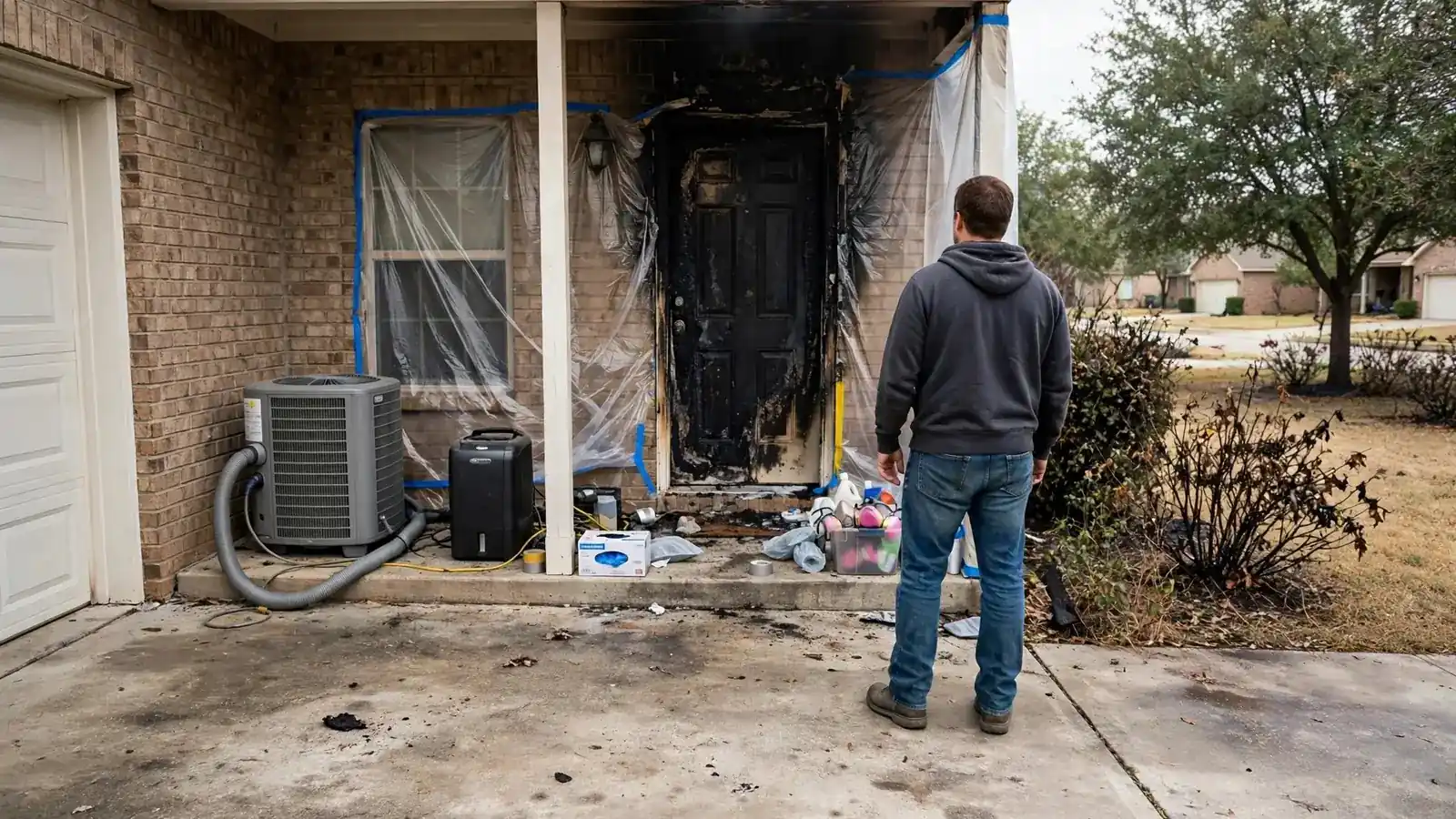
- Stay out until clearedThe fire department decides when the house is safe to enter. Hidden hot spots, weak floors and damaged roofs are real risks [1].
- Leave utilities aloneDo not turn power, gas or water back on yourself. A licensed professional should check them first.
- Check on people and petsSmoke inhalation symptoms can appear later. Get medical advice for anyone who breathed smoke, and a vet check for pets.
- Protect yourself if you go inIf allowed brief entry, wear sturdy shoes, gloves and a mask, and stay only in areas you were told are safe.
Shelter
Finding somewhere to stay
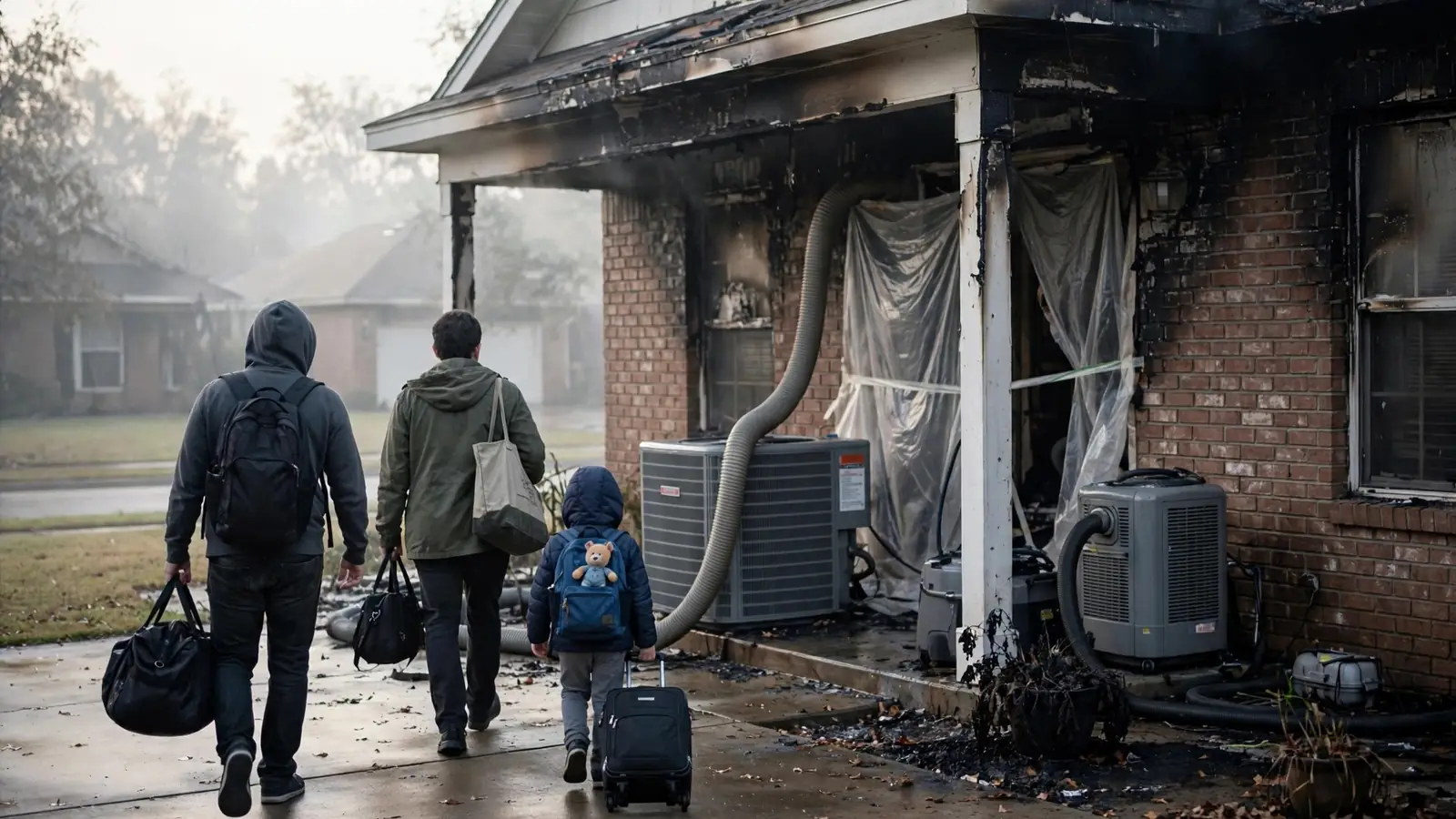
Most families cannot stay in a home right after a fire. Smoke, water, lack of power and safety concerns usually make it unlivable for at least a few days. If family or friends cannot help, the American Red Cross responds to home fires and can help with temporary shelter, food, clothing and emotional support [2].
If you have homeowners or renters insurance, ask whether your policy includes additional living expenses. The Texas Department of Insurance explains that this coverage can help when you have to live elsewhere while your home is repaired, and advises keeping receipts [3]. Ask your insurer how it works for your policy before booking anything long-term.
Take essentials when you leave, if you can do so safely: medications, glasses, phones and chargers, identification, insurance information and a change of clothes.
Insurance
Calling your insurer and starting the claim
Call your insurance company or agent as soon as you can. Have your policy number if possible; your insurer can look it up if not. Ask what happens next, when an adjuster will visit, whether you can get an advance for immediate needs, and what they want you to do to protect the property.
Start a claim file right away: a notebook or a folder on your phone. Record every call with the date, name and what was said. Keep every receipt. Photograph the house, inside and out, as soon as it is safe, before anything is moved or cleaned.
You can choose who restores your home. The adjuster's job is to determine what the policy covers; the contractor's job is to restore the house. Our guide on working with your insurance adjuster covers this in more detail.
Securing the house
Closing up the house against weather and entry
Broken windows, forced doors and holes cut in the roof leave the house open. Board-up and tarping close those openings until permanent repairs. Insurers generally expect owners to take reasonable steps to prevent further damage, and securing the house is the main one.
Do not climb on a fire-damaged roof yourself. Fire can weaken rafters and decking in ways you cannot see. Let a contractor with the right equipment handle it. In North Texas, where spring storms can be sudden and heavy, an open roof can take in a lot of water quickly.
Restoration
How restoration usually starts
- 1
Inspection
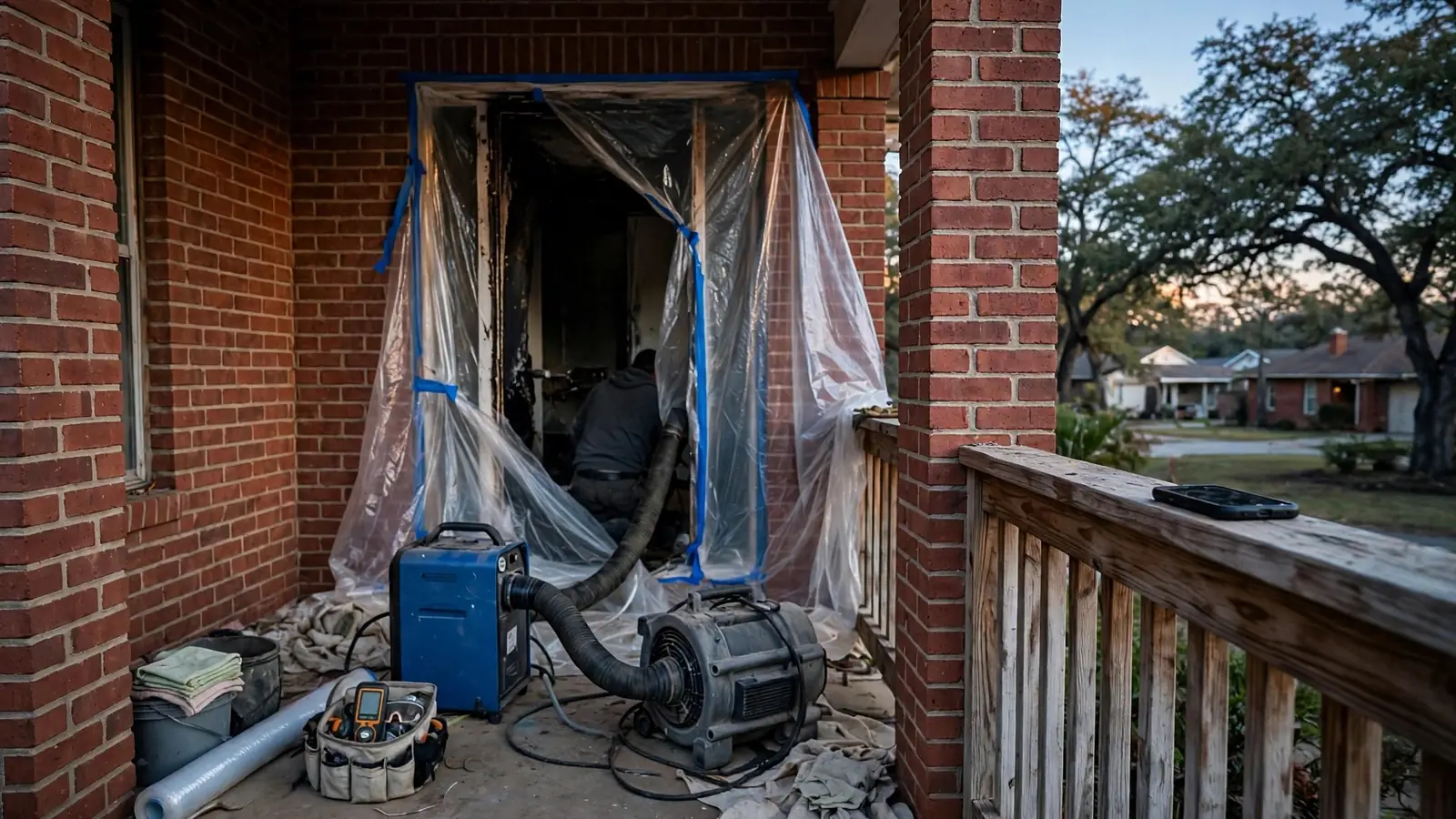
A restoration contractor walks the house, maps smoke, soot and water damage, and checks the attic, crawl space and HVAC.
- 2
Water extraction and drying
Standing water is removed and drying equipment set up, because the EPA advises drying materials within 24 to 48 hours to prevent mold [4].
- 3
Removal of ruined materials
Charred drywall, soaked insulation, carpet pad and destroyed contents are removed and documented.
- 4
Smoke and soot cleanup
Residue is removed dry first, then surfaces are cleaned by type; the HVAC system and attic are included.
- 5
Contents
Belongings are inventoried and cleaned in place or packed out to a facility.
- 6
Odor treatment and sealing
Remaining odor is treated after cleaning, and porous surfaces are sealed before rebuilding.
- 7
Rebuilding
Permitted repairs, inspections, and finally paint and flooring.
Avoid
Common mistakes in the first week
- Wiping soot with waterWet cleaning spreads soot and can set stains. Soot is removed dry first.
- Running the air conditioningIt spreads smoke residue through the ducts into clean rooms.
- Throwing everything awayMany items clean better than expected, and the insurer may want to see them first. Photograph before discarding.
- Eating exposed foodDiscard food, drinks and medicine exposed to heat, smoke or soot, as the U.S. Fire Administration advises [1].
- Signing anything under pressureTake time to read contracts and assignment forms. You can choose your contractor.
On the call
What to tell the restoration contractor
- Where the fire started and roughly how long it burned
- Whether the fire department has released the house
- Whether power, gas and water are on or off
- Whether the air conditioning or heat ran during or after the fire
- Where firefighting water pooled and whether ceilings are sagging
- Whether the roof or windows are open
- Your insurance company and claim number, if you have one
Documents
Replacing important documents
Fires often destroy or damage identification, birth certificates, Social Security cards, passports, titles, insurance policies and financial records. Make a list of what is missing. Most can be replaced through the agency that issued them; start with the documents you need right away, such as identification and insurance paperwork.
Damaged papers and photos may be salvageable. Do not try to pull stuck pages apart while wet; ask the contractor about freezing them until a specialist can dry them.
FAQ
Questions people ask after a house fire
When can I go back into my house after a fire?
Only when the fire department says it is safe. Even then, wear protective gear and avoid weakened floors, sagging ceilings and damaged roofs. Utilities should stay off until checked.
Who do I call first after a house fire?
After making sure everyone is safe, call your insurance company to start the claim. If you need somewhere to stay, contact family, friends or the American Red Cross.
Can I clean up smoke damage myself?
Light film on hard surfaces, sometimes. Most smoke and soot needs professional methods: dry removal first, then cleaning matched to the residue. Wiping with water usually makes it worse.
Should I throw away food after a fire?
Yes, food, drinks and medicine exposed to heat, smoke or soot should be discarded. Food in a closed refrigerator may also be unsafe if the power went off.
Do I have to use the contractor my insurer suggests?
Generally you can choose your own contractor. Your insurer determines what the policy pays for. Check your policy and ask your insurer if you are unsure.
Does calling this number connect me with someone who can help?
Yes. Your call connects you with an independent local restoration contractor who talks with you on that call. This site does not perform the work itself.