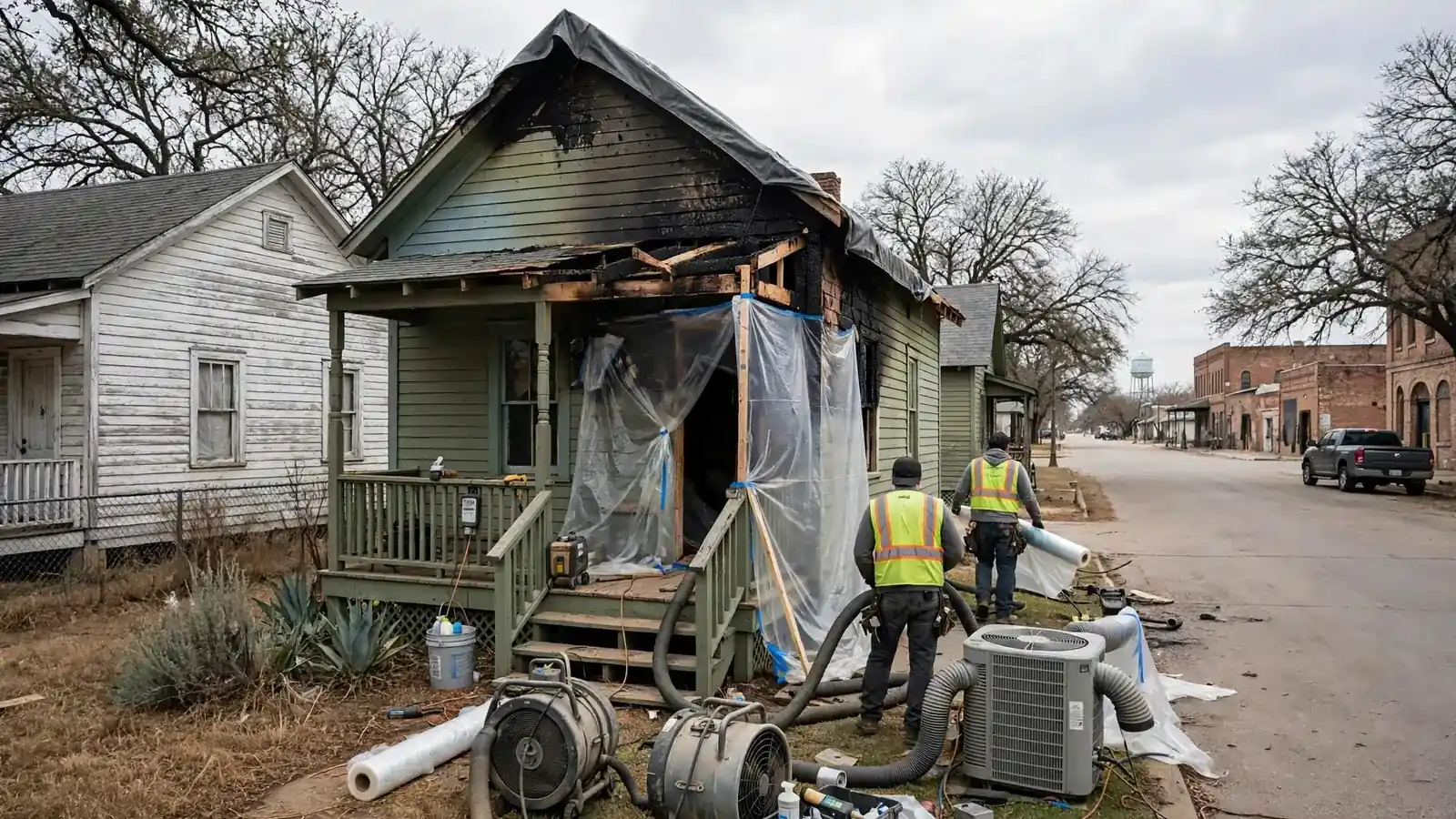
Key facts: Northside
- The Fort Worth Stockyards Historic District was added to the National Register of Historic Places in 1976 [1].
- Wood-frame houses set close together can be damaged by radiant heat from a neighboring fire, even without flames touching them [2].
- Most Northside homes were built before 1978, so original paint may contain lead and calls for lead-safe cleanup methods [3].
- Fort Worth's Development Services department handles permits for structural, electrical and mechanical repairs on the Northside [4].
Coverage
Northside ZIP codes in this service's coverage
This page covers homes on Fort Worth's Northside, north of downtown and the [Trinity River](/areas/tanglewood/). Calls from these ZIP codes are inside this service's coverage:
- ZIP 76164The historic Northside neighborhoods around North Main Street, Marine Park and the area south of the Stockyards.
- ZIP 76106The Stockyards area and neighborhoods to the north and east, including Diamond Hill and nearby streets.
- Outside these ZIPs?Tell the contractor your address when you call; they will say whether they can help.
The neighborhood
Northside homes and the Stockyards era
Fort Worth's Northside developed alongside the Stockyards and the meatpacking plants that once employed thousands of workers. The Fort Worth Stockyards Historic District, now a major visitor attraction, was added to the National Register of Historic Places in 1976 [1]. The neighborhoods around it grew with modest homes for working families, many built in the early twentieth century and in the decades that followed.
The typical older Northside house is a single-story wood-frame cottage or bungalow with clapboard or wood siding, a front porch, a pier-and-beam floor over a crawl space and a simple gabled or hipped roof. Lots are narrow, and houses sit close to their neighbors. Many have been updated with newer siding, windows, kitchens and baths, and some have been replaced with newer homes.
These features matter after a fire. Wood siding and close spacing mean fires can spread between houses or damage a neighbor's wall through heat. Pier-and-beam floors let smoke and water reach the crawl space. Long-serving electrical systems need careful inspection. And many families have deep roots here, with belongings and keepsakes that matter a great deal.
Newer infill homes and renovated houses are also part of the mix, so a contractor needs to understand each house individually before planning the work.
Common issues
What Northside fire restorations often involve
Scorched siding from a neighbor's fire
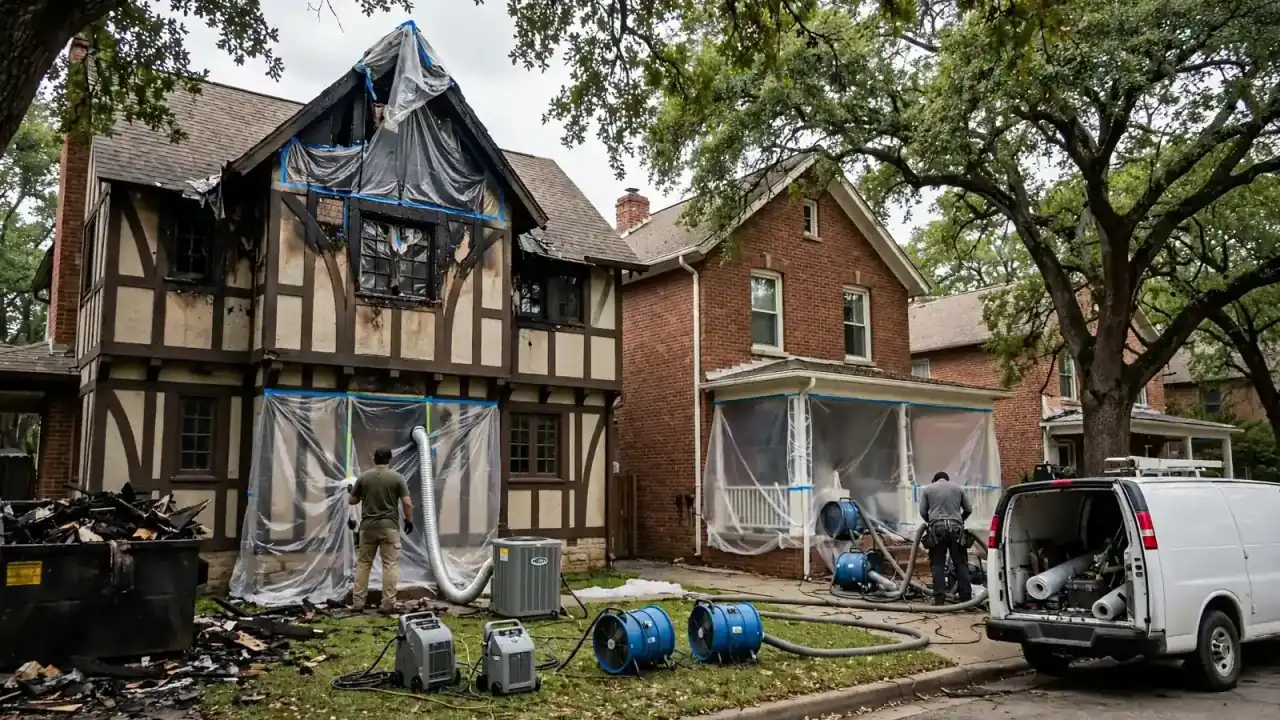
Radiant heat from a fire next door can blister paint, crack windows and char wood siding without the house catching fire.
Read moreSmoke and water in the crawl space
Pier-and-beam floors let firefighting water and smoke settle under the house, raising humidity and odor.
Read moreElectrical fires in older circuits
Older wiring and extension-cord use are known fire risks; an electrician should inspect before power returns.
Read moreWhole-house smoke in small homes
Smoke fills a small cottage quickly, so contents and every room usually need attention.
Read more
Close neighbors
When houses stand close: fire, heat and the house next door
On narrow Northside lots, the space between houses can be just a few feet. A serious fire in one home sends intense heat toward its neighbors. Radiant heat can crack and break windows, melt vinyl siding, blister paint and scorch wood siding on the next house even if no flames cross the gap. Embers can land on roofs and in gutters.
If a neighbor's fire affected your home, document everything with photos as soon as it is safe: the side wall, windows, roof edge and any damage inside the rooms facing the fire. Smoke can also enter through windows and attic vents, leaving residue in rooms that face the fire and in the attic. Contact your own insurer; your policy typically covers damage to your home whatever its source.
If your fire affected the house next door, let your neighbors know what happened and share the contractor's information if they want it. Each household's insurance usually handles its own home, but coordinating the work, especially on shared fences and the gap between houses, makes it easier for everyone.
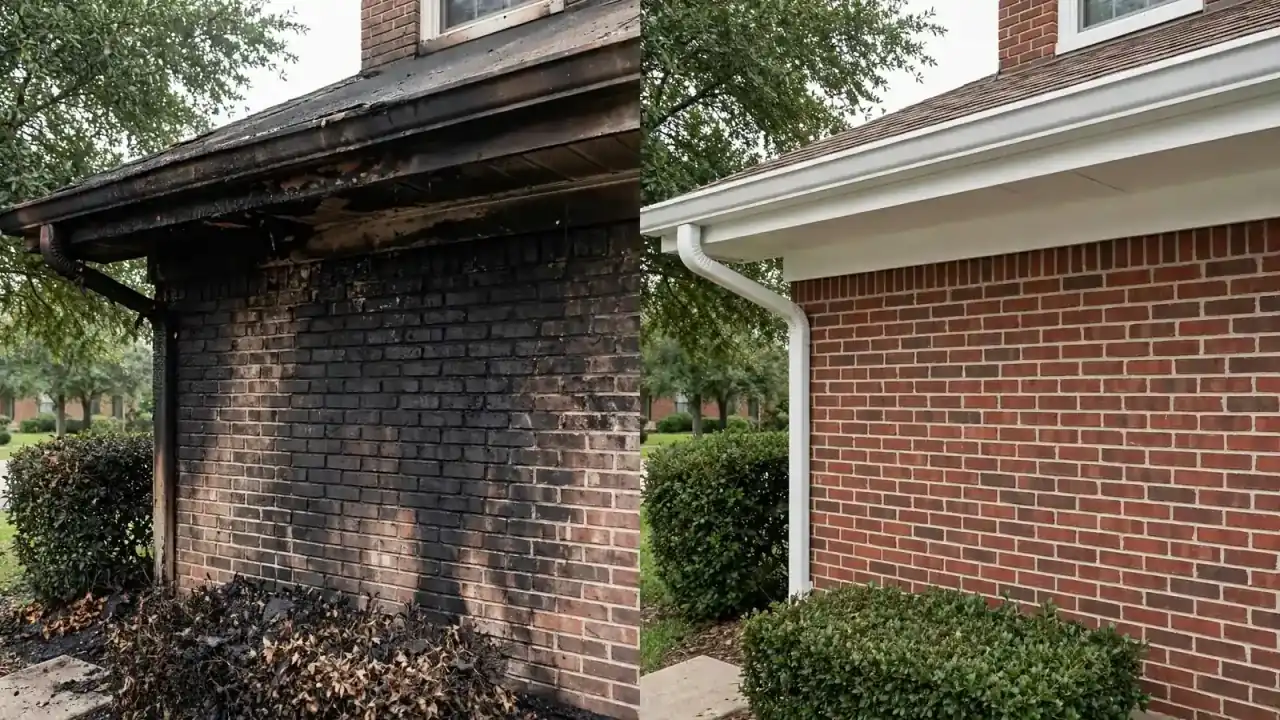
Wood siding
Wood siding, trim and exterior repairs
Wood siding responds to fire and heat in stages. Light exposure blisters paint and leaves soot; the wood underneath may be fine after cleaning, scraping and repainting. Heavier exposure chars the surface; charred boards are usually replaced. Water from firefighting can soak siding and the sheathing behind it, which needs to dry before new paint goes on.
Many older Northside homes have original paint layers that may contain lead [3]. Scraping blistered paint or removing damaged siding should follow lead-safe practices, with containment and careful cleanup so paint chips do not end up in the yard where children play.
Matching old wood siding profiles can be a challenge. A contractor may salvage undamaged boards from less visible walls to patch the street side, or have new boards milled to match. If your home is within or near a historic area, ask whether exterior changes need city review.
Crawl spaces
Under the house: crawl spaces after a Northside fire
Pier-and-beam houses sit on piers above the ground, leaving a crawl space between floor and soil. During a fire, smoke settles into this space. Afterward, firefighting water drains through floorboards and gaps into the crawl space, where it can pool on the soil and keep the floor framing damp.
A wet, smoky crawl space keeps the house smelling of smoke and can lead to mold on joists and subfloor. Restoration may include removing debris and soaked insulation from under the house, drying with fans and dehumidifiers, and cleaning residue from framing. A vapor barrier on the soil can help keep moisture down afterward.
- Inspect for standing water
- Dry joists and subfloor
- Remove soaked insulation
- Consider a vapor barrier
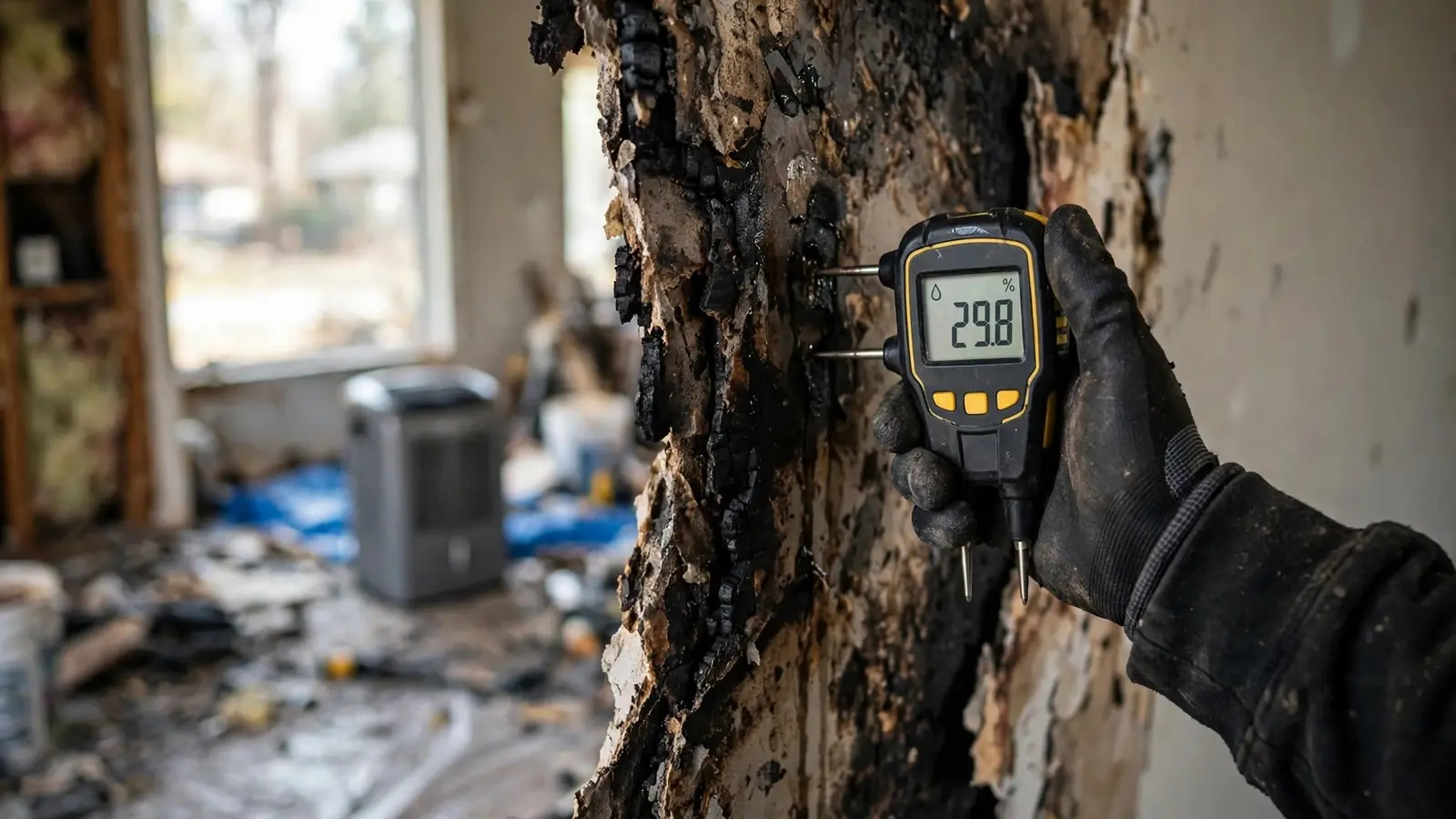
Electrical
Older wiring, space heaters and extension cords
Older houses often have fewer outlets than modern households need, which leads to extension cords and power strips running heaters, appliances and electronics. Space heaters used in drafty frame houses during cold snaps are another known risk. Electrical fires can start in walls or at overloaded cords, and heat can damage wiring along its path.
After a fire, keep power off to affected areas until an electrician inspects the system. Damaged circuits must be repaired, and the electrician may recommend adding circuits or upgrading the panel if the system is overloaded. That work usually needs a City of Fort Worth permit and inspection [4].
When the house is put back together, it is a good time to add outlets where they are needed so that extension cords are not required for everyday use.
Small homes
Small cottages and whole-house smoke
A Northside cottage might have four or five rooms. In a house that size, smoke from a kitchen or bedroom fire reaches every room, closet and the attic. Even if the fire was put out quickly, the cleanup usually covers the whole house: walls, ceilings, floors, windows, contents, the attic and any ductwork.
For many families, the hardest part is the contents. Clothing, bedding, furniture, photos and keepsakes all absorb smoke. Some items clean well; others do not. Take time to set aside the things that matter most, and ask the contractor about cleaning options before deciding what to discard. The U.S. Fire Administration advises throwing out food, medicine and cosmetics exposed to heat, smoke or soot [2].
Water
Drying an older frame house after firefighting
Water used to fight a fire in a frame house soaks wood floors, plaster or drywall, insulation and the crawl space. Older wood floors often recover if dried promptly. Plaster that is soaked may separate from its lath. Insulation in walls and attics that got wet is usually removed.
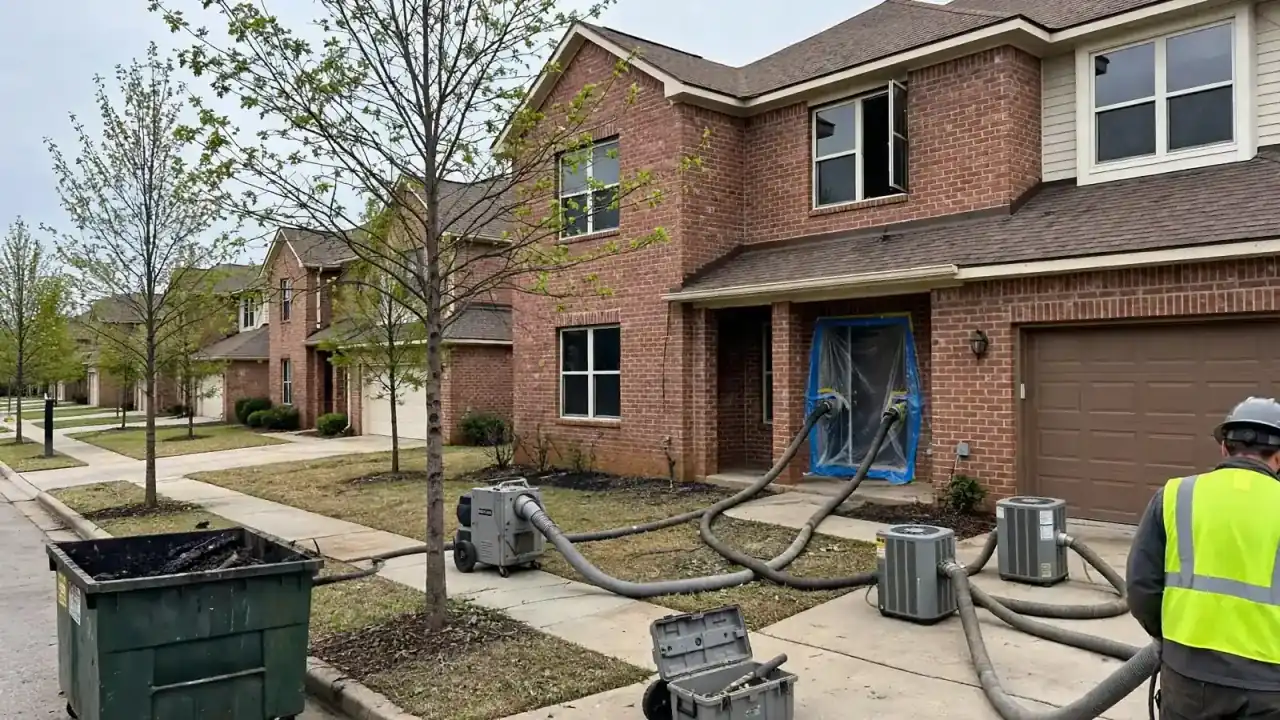
The EPA advises drying water-damaged materials within 24 to 48 hours to prevent mold [5]. Drying a frame house means getting air moving through the house and under it, with dehumidifiers to pull moisture from the air. The contractor should take moisture readings regularly and adjust equipment until materials reach dry targets.
Permits
Permits and city requirements on the Northside
The Northside is within the City of Fort Worth. Permits for structural repair, electrical, plumbing and mechanical work go through Development Services [4]. Temporary protection, water extraction and cleaning generally do not need permits; rebuilding generally does.
Some areas near the Stockyards have historic or special district rules that can affect exterior appearance. If your home is in such an area, ask the city before replacing siding, windows or porch elements. The contractor can help identify which items may need review.
Planning
Access, parking and working on a Northside street
Northside streets range from wide avenues to narrow residential blocks, and many lots have little or no driveway. Dumpsters and equipment trailers may need to go on the street, which can require a city permit. Ask the contractor how they will handle this and how long equipment will be there.
Visitor traffic around the Stockyards can be heavy on weekends and during events. If your home is close to the district, mention it on the call so the contractor can plan deliveries and debris removal around busy times.
With houses so close together, talk with neighbors before work starts. Crews may need to work in the narrow gap between houses to repair siding or windows, and a friendly agreement makes that easier.
Families
Multigenerational homes and long-held belongings
Many Northside homes have been in the same family for decades and house several generations. After a fire, that can mean a lot of people needing somewhere to stay, and a lot of belongings with meaning beyond their market value: family photos, religious items, letters, heirlooms.
Tell the contractor which belongings matter most. Photos and documents can often be cleaned or stabilized by specialists. Items can be packed out and cleaned while the house is repaired. Ask for an itemized list so the family knows what was saved, what was cleaned and what was discarded.
If language is a consideration for anyone in the household, mention it on the call so the conversation works for everyone involved.
Insurance
Insurance and record-keeping after a Northside fire
Photograph every room, the crawl space opening, the attic hatch and the exterior before work starts. If a neighbor's fire caused your damage, photograph the relationship between the houses and the side of your home that faced the fire. Keep receipts for anything you buy while displaced.
The Texas Department of Insurance advises checking whether your policy includes additional living expenses and keeping receipts [6]. If you rent, contact your landlord and your own renters insurer; the building owner's policy generally does not cover your belongings.
Porches
Front porches, steps and railings on Northside cottages
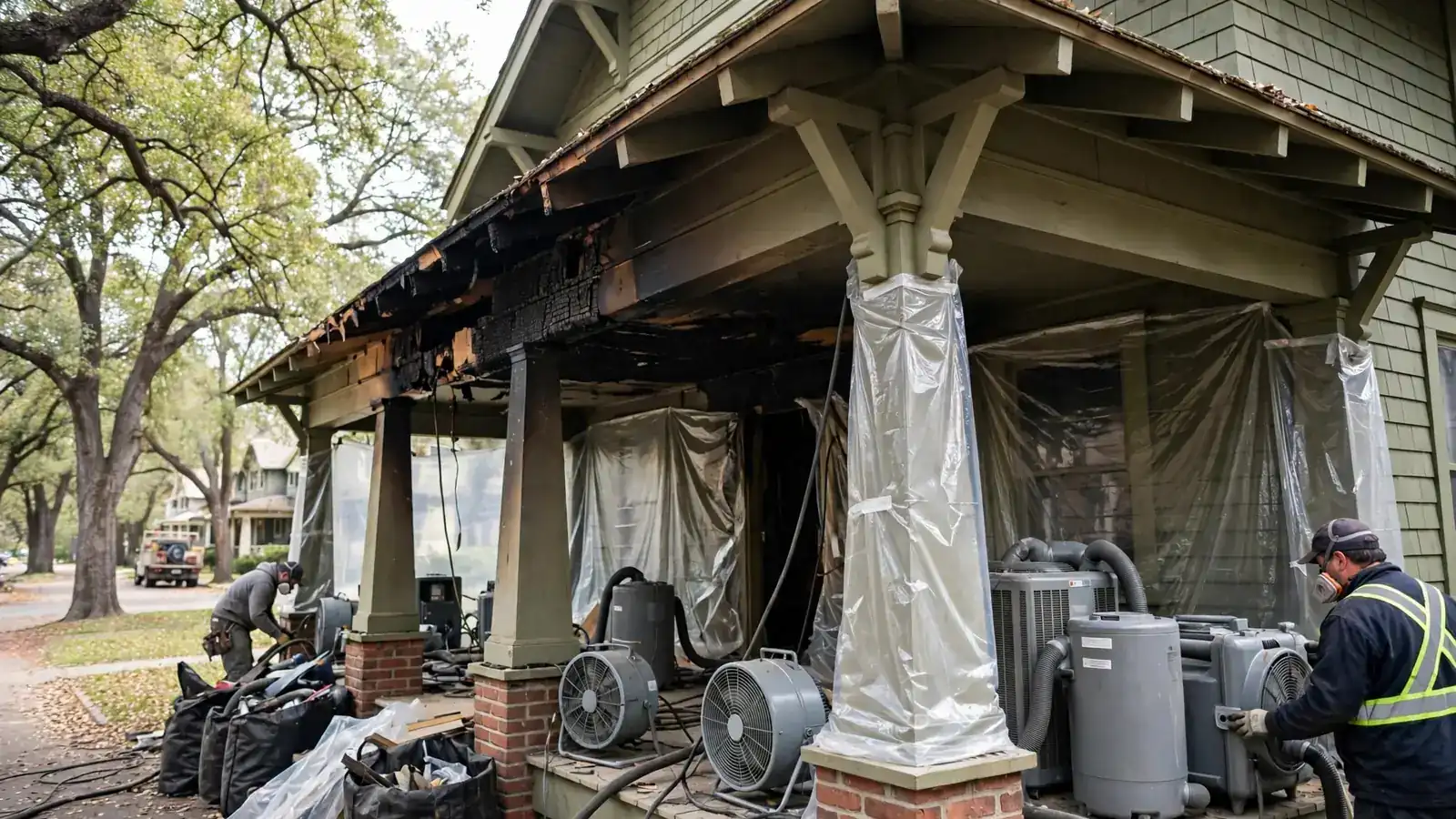
Front porches are part of daily life on many Northside streets, and they are often where firefighters enter and where debris is carried out. Porch floors, steps and railings get scuffed, wet and sometimes damaged during the response. Porch ceilings collect smoke if a fire vents through the front windows or door.
After the fire, porch ceilings and trim can usually be cleaned and repainted. Damaged steps or railings should be repaired early, both for safety and because the crew will use them throughout the job. Ask the contractor to protect the porch floor with boards or mats during the work.
If your porch was enclosed at some point, treat it like a room: it may have its own roof cavity and old windows that trap smoke.
Roofs
Older roofs and attic spaces in frame houses
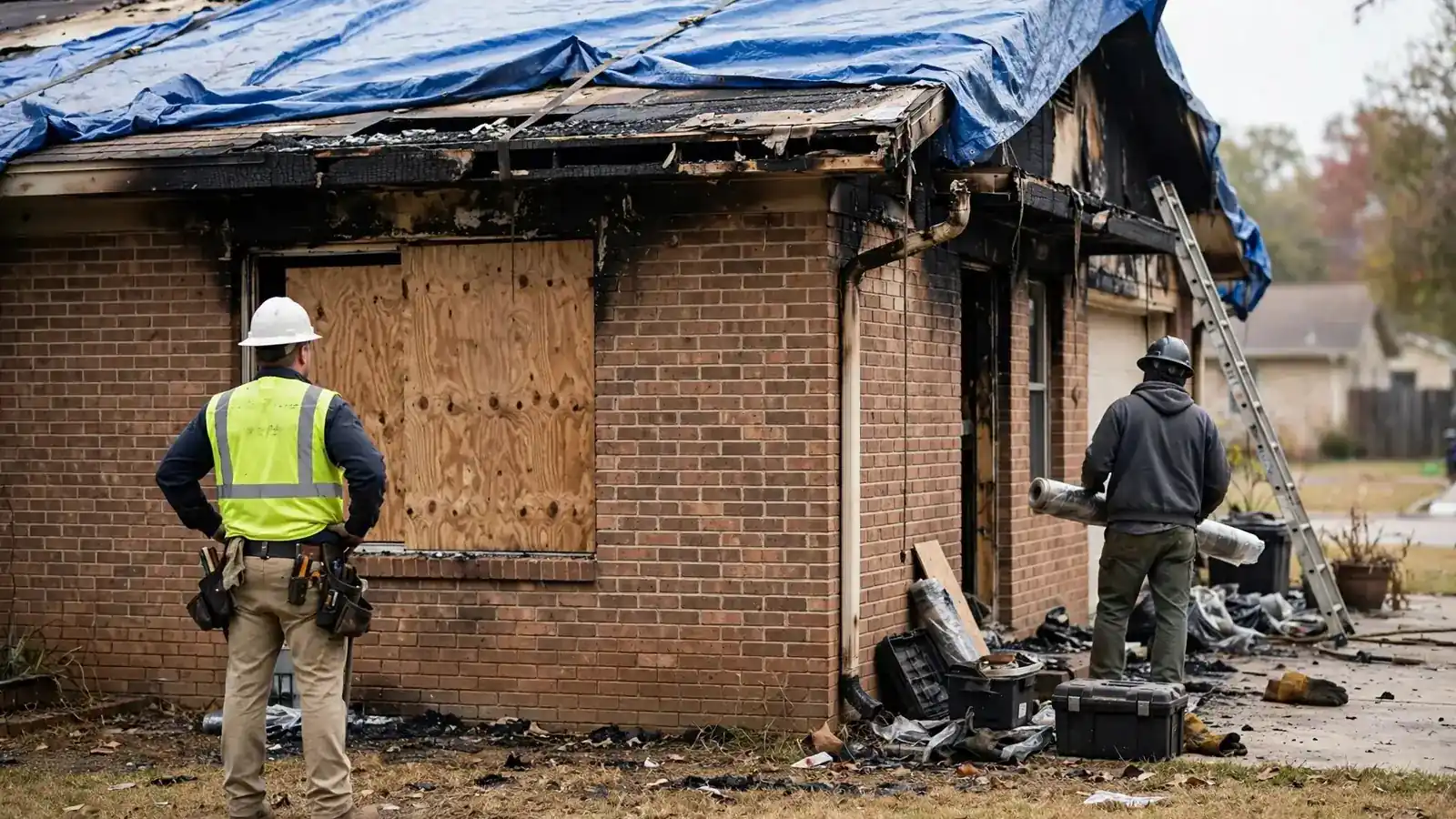
Many older Northside houses have been reroofed several times, sometimes with new layers over old ones. A fire that reaches the attic can damage roof boards, rafters and the layers above them. Firefighters may cut ventilation holes in the roof to release heat and smoke, which then need to be covered quickly.
Attics in these houses are often small and unfinished, with old insulation or none at all, and sometimes old wiring running across the joists. After a fire, smoky insulation is removed, framing is cleaned and, if needed, sealed, and wiring is inspected. If the roof structure was weakened, it must be repaired before permanent roofing goes on.
Until then, tarps and plywood keep weather out. Northside homes face the same North Texas storms as the rest of the city, so covers should be checked after strong wind or heavy rain.
Debris
Clearing debris from a narrow lot
Fire debris includes burned furniture, drywall, insulation, roofing and contents. On a narrow Northside lot with little yard space, it can pile up quickly. Before anything is hauled away, check with your insurer and the fire department whether any of it needs to be kept for inspection.
A roll-off dumpster on the street or a smaller container in the driveway is the usual solution. Debris should be covered when rain is expected and removed promptly so it does not attract pests or blow into neighbors' yards. Ask the contractor how often debris will be hauled and who arranges any street-use permits.
Safety
Children, pets and a fire-damaged house
Fire-damaged houses hold hazards for children and pets: broken glass, exposed nails, unstable floors, soot, wet insulation and old paint chips. Keep children and pets away from the house and yard until debris is cleared and the structure is assessed.
If you have to go back in to retrieve belongings, wear sturdy shoes, gloves and a mask, and only enter areas the fire department or contractor has said are safe. Pets that were in the house during the fire may need a check by a veterinarian for smoke exposure.
Heating and cooling
Window units, space heaters and central air in older cottages
Many older Northside homes were built without central air. Some have since added it, with ducts in the attic or crawl space; others rely on window units and portable or wall heaters. Each setup affects how smoke spreads and what needs cleaning after a fire.
Window air conditioners pull room air through their coils and filters, so after a fire they hold smoke residue and odor. They can sometimes be cleaned, but heavily smoke-exposed units are often replaced. Portable heaters near the fire should be discarded. Central systems need the same inspection, cleaning and filter changes as anywhere else.
If heating equipment was a possible cause of the fire, the fire department's report may say so. Share that information with the contractor and your insurer, and make sure any replacement heating is installed safely.
Plumbing
Pipes under the house after a fire
In pier-and-beam houses, water supply and drain lines run through the crawl space. A fire above can heat pipes, and firefighting water can soak pipe insulation. Older galvanized or cast-iron lines may already be near the end of their life, and fire damage can bring that forward.
Before the water is turned back on fully, it is worth having the visible plumbing under the house checked for leaks and damage. A slow leak in a crawl space after a fire adds moisture to a space that is already being dried. If pipes need replacing, it is easier while the floor and crawl space are already being worked on.
FAQ
Northside fire damage questions
My neighbor's house burned and mine has scorched siding. What should I do?
Photograph the damage, check for cracked windows and smoke inside rooms facing the fire, and contact your own insurer. Have a contractor inspect the side wall, roof edge and attic for heat and smoke damage.
Why does my pier-and-beam house still smell of smoke?
Smoke and firefighting water settle in the crawl space under the house. Wet soil and residue on joists release odor and humidity into the rooms above until the crawl space is dried and cleaned.
Can old wood siding be repaired after a fire?
Siding with blistered paint can often be cleaned, scraped with lead-safe methods and repainted. Charred boards are replaced, sometimes with boards milled to match or salvaged from less visible walls.
Do I need an electrician after a small fire in an older Northside home?
Yes. Heat can damage wiring inside walls without visible signs, and older systems are often overloaded. Keep power off to affected areas until an electrician inspects.
We rent our Northside home. Who covers what?
The owner's policy usually covers the building, while your renters policy, if you have one, covers your belongings and sometimes temporary housing. Contact both your landlord and your own insurer.
Will a contractor take my call from the Northside?
Calls from ZIPs 76164 and 76106 are within this service's coverage. You talk with an independent local restoration contractor on that same call.
Can a window air conditioner be cleaned after a house fire?
Sometimes, if smoke exposure was light. Units near the fire or in heavy smoke usually hold residue in their coils and are often replaced. Do not run one until it has been checked.
Should the plumbing under my house be checked after a fire?
It is a good idea in pier-and-beam homes. Heat and firefighting water can damage pipes and insulation in the crawl space, and a slow leak there adds moisture while the house is being dried.
How do I keep children safe around a fire-damaged house?
Keep them out of the house and yard until debris, glass and nails are cleared and the structure is assessed. Old paint chips and soot are also hazards, so supervise any visits closely.