Key facts: Firefighting Water Damage in Wedgwood
- Water on a slab spreads under flooring and into the bottom of walls, and moisture mapping is how it is found [6].
- On a Wedgwood slab, the EPA's 24 to 48 hour drying window is the target for keeping mold from starting [1].
- The IICRC S500 standard covers water damage assessment, extraction and drying for professionals [2].
Water spreading on a Wedgwood slab
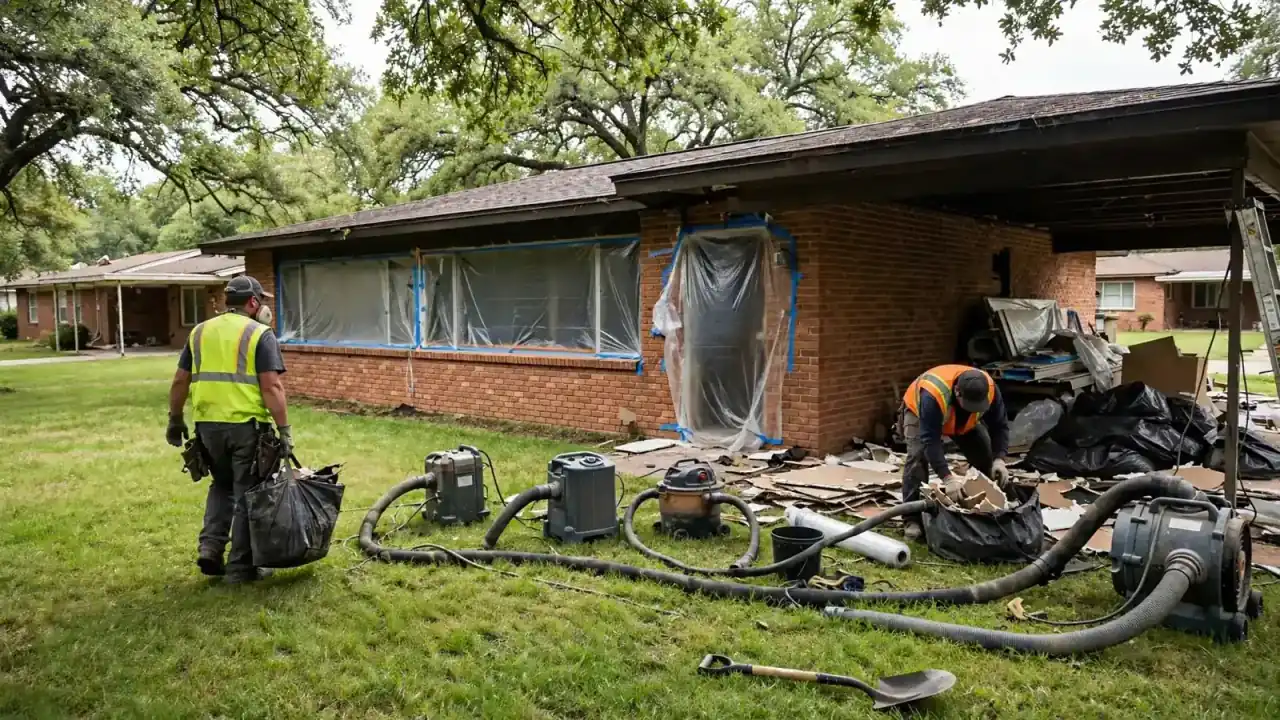
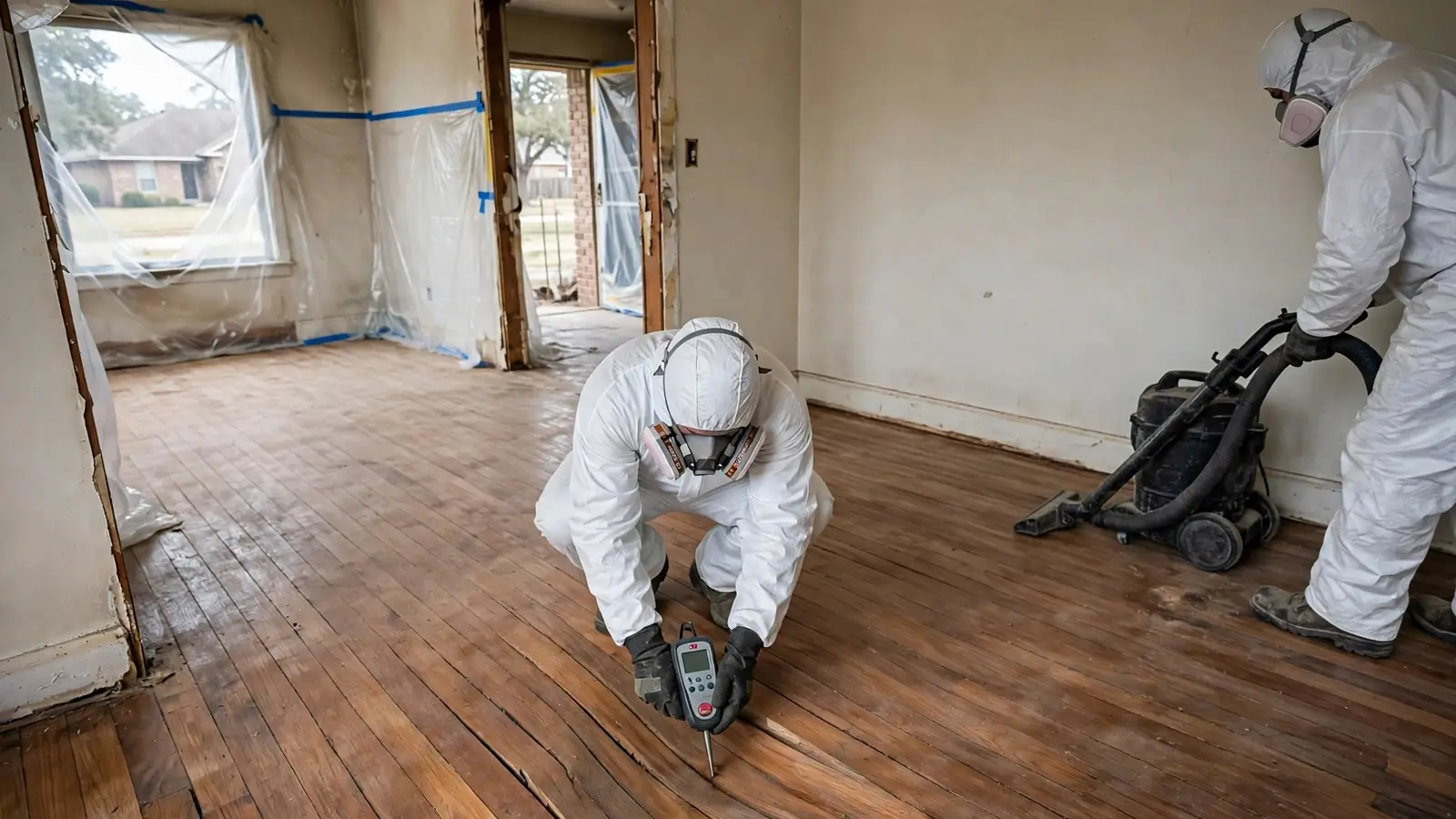
Wedgwood homes sit on concrete slabs. Firefighting water pools on the slab and moves outward under carpet, pad, vinyl and laminate, and wicks into the bottom of drywall and baseboards. In a long ranch, it can travel well beyond the room of the fire, down the hall and into bedrooms.
Moisture meters show how far it went, so the contractor knows which floors and walls need drying.
Carpet, pad and laminate
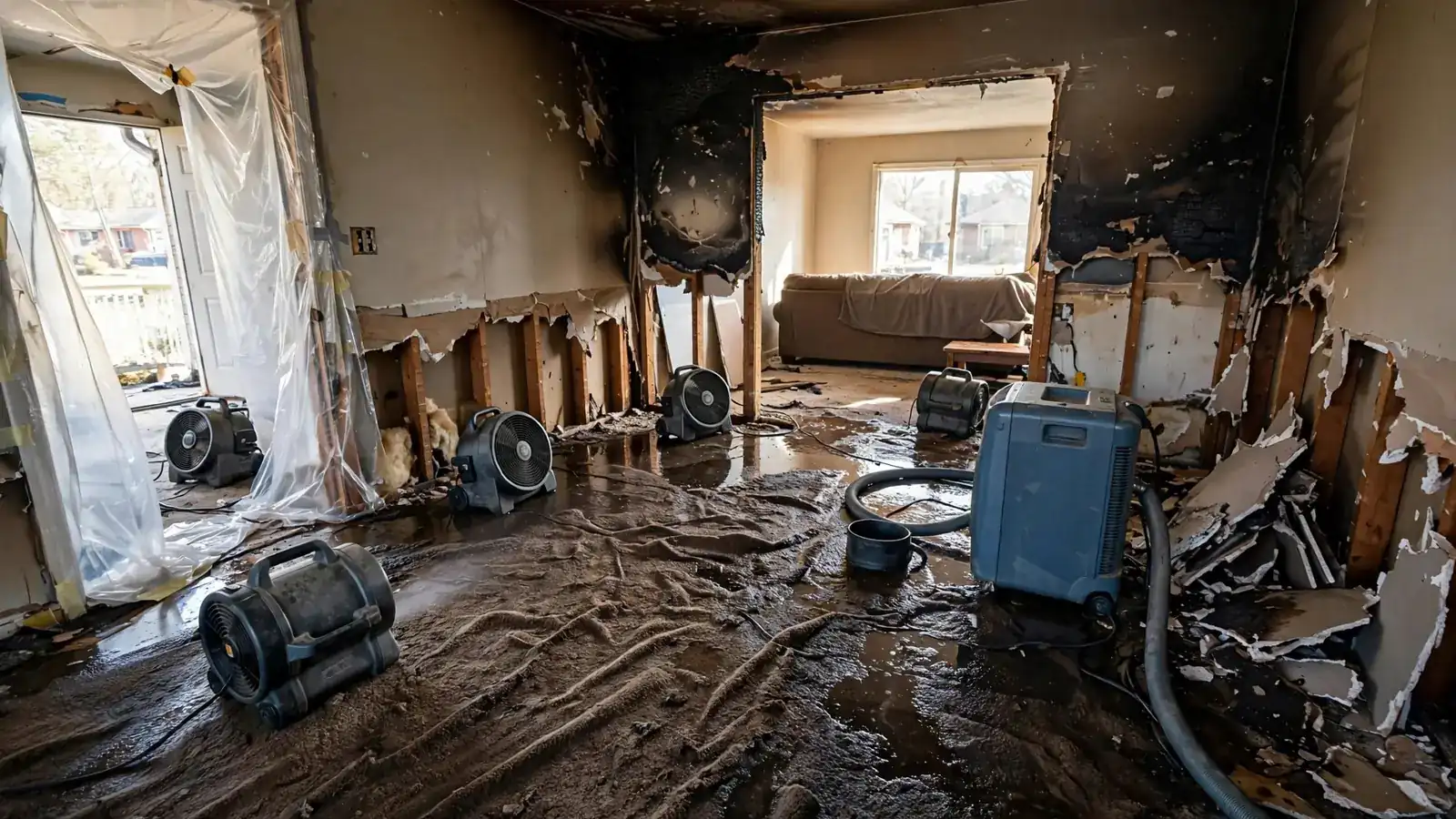
Carpet pad holds water against the slab and is usually removed. Carpet itself may be dried if the water was relatively clean, but firefighting water carries soot, so carpet is often replaced in the most affected rooms. Laminate and some vinyl planks trap water beneath them and may need to be lifted.
Tile usually survives, but water under it and in the grout lines still needs drying.
Drying a Wedgwood ranch
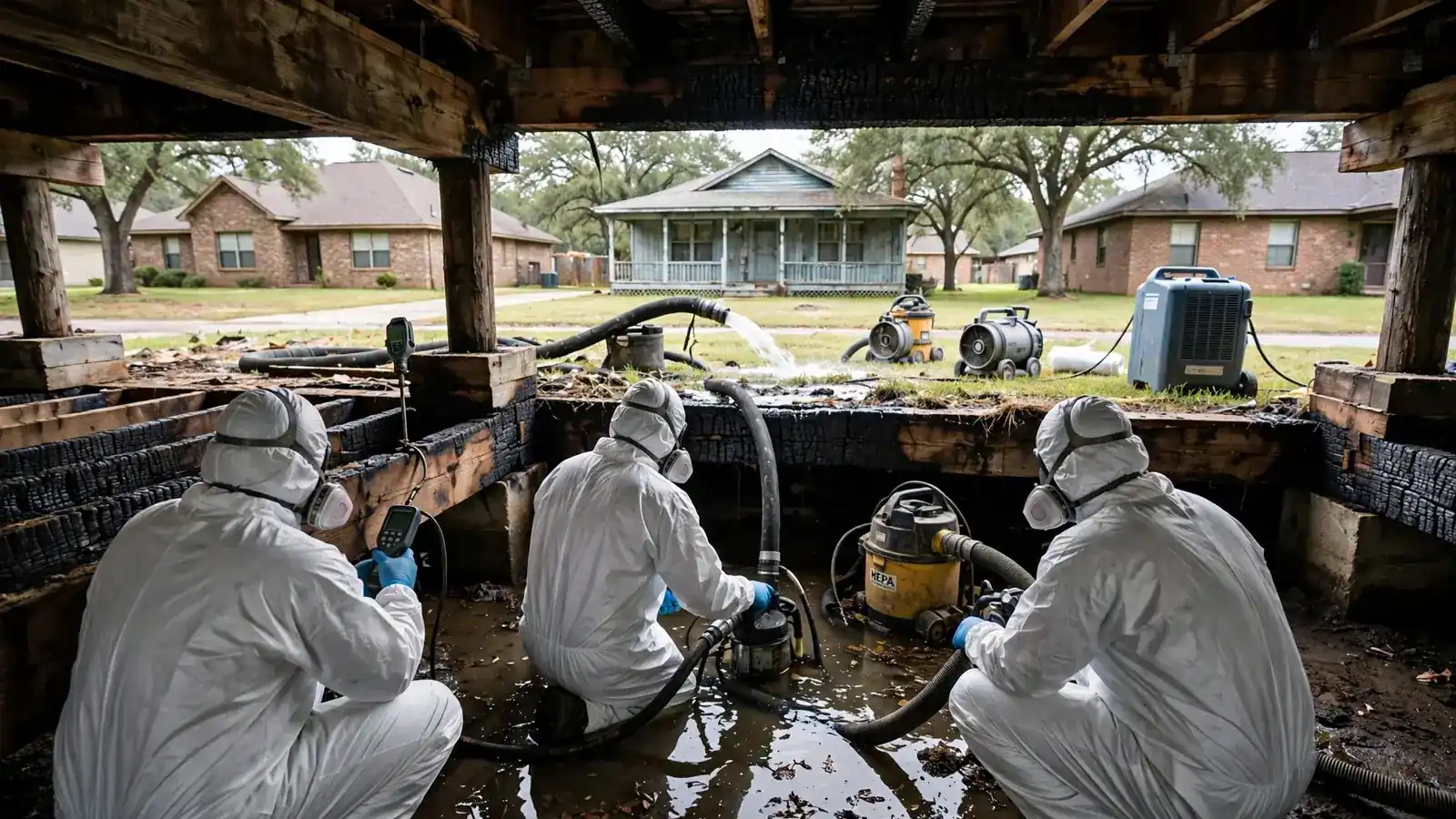
The usual order.
- 1
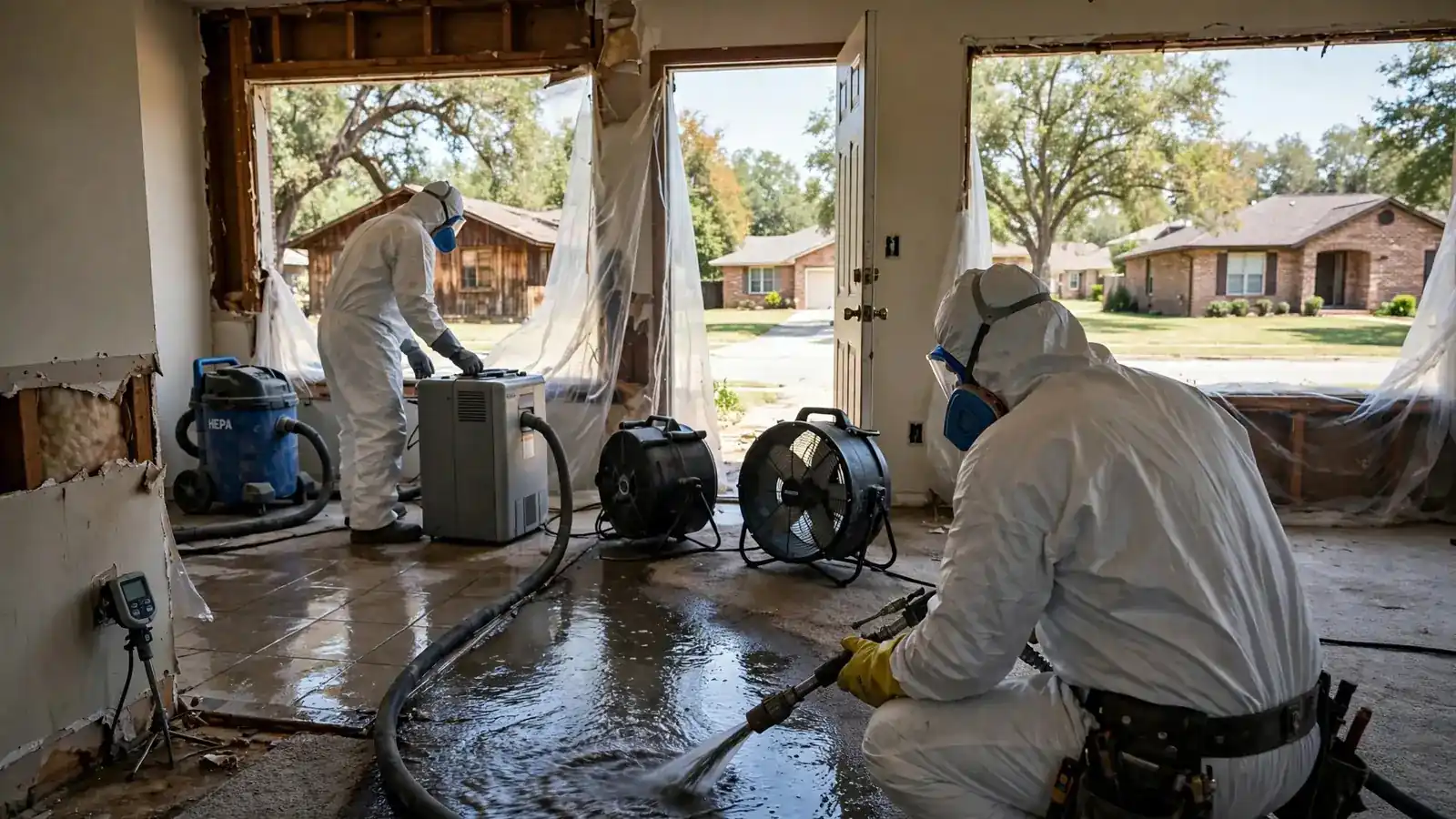
Extract water from the slab and carpets
Water is pulled from the slab, carpets and hall.
- 2
Lift pad and flooring that trap water
Let the slab and wall bottoms breathe.
- 3
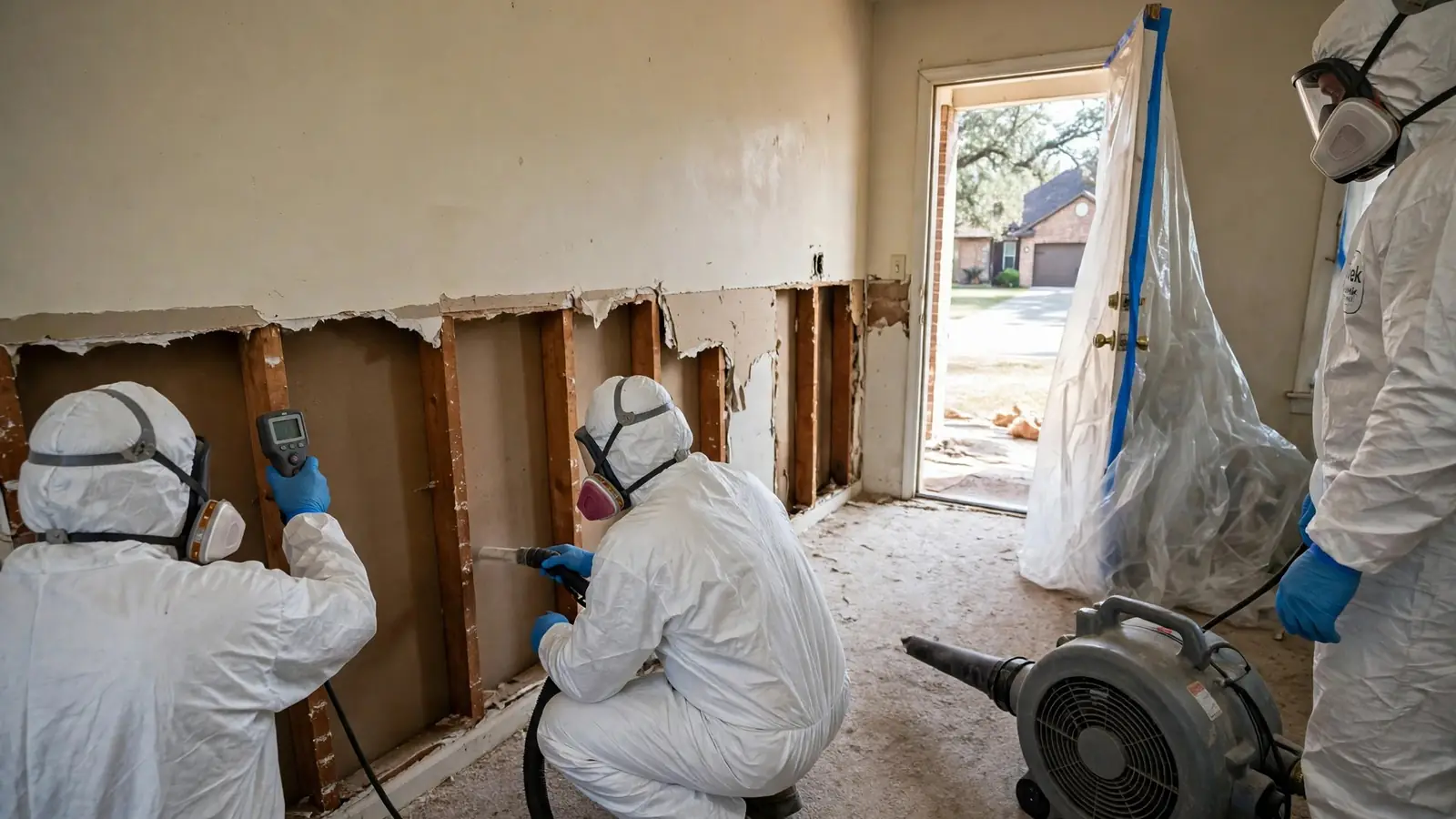
Open wall bottoms where needed
Remove baseboards or cut drywall to release trapped water.
- 4
Dry Wedgwood rooms until meters read normal
Daily checks until every area is dry.
Wet insulation above Wedgwood ceilings
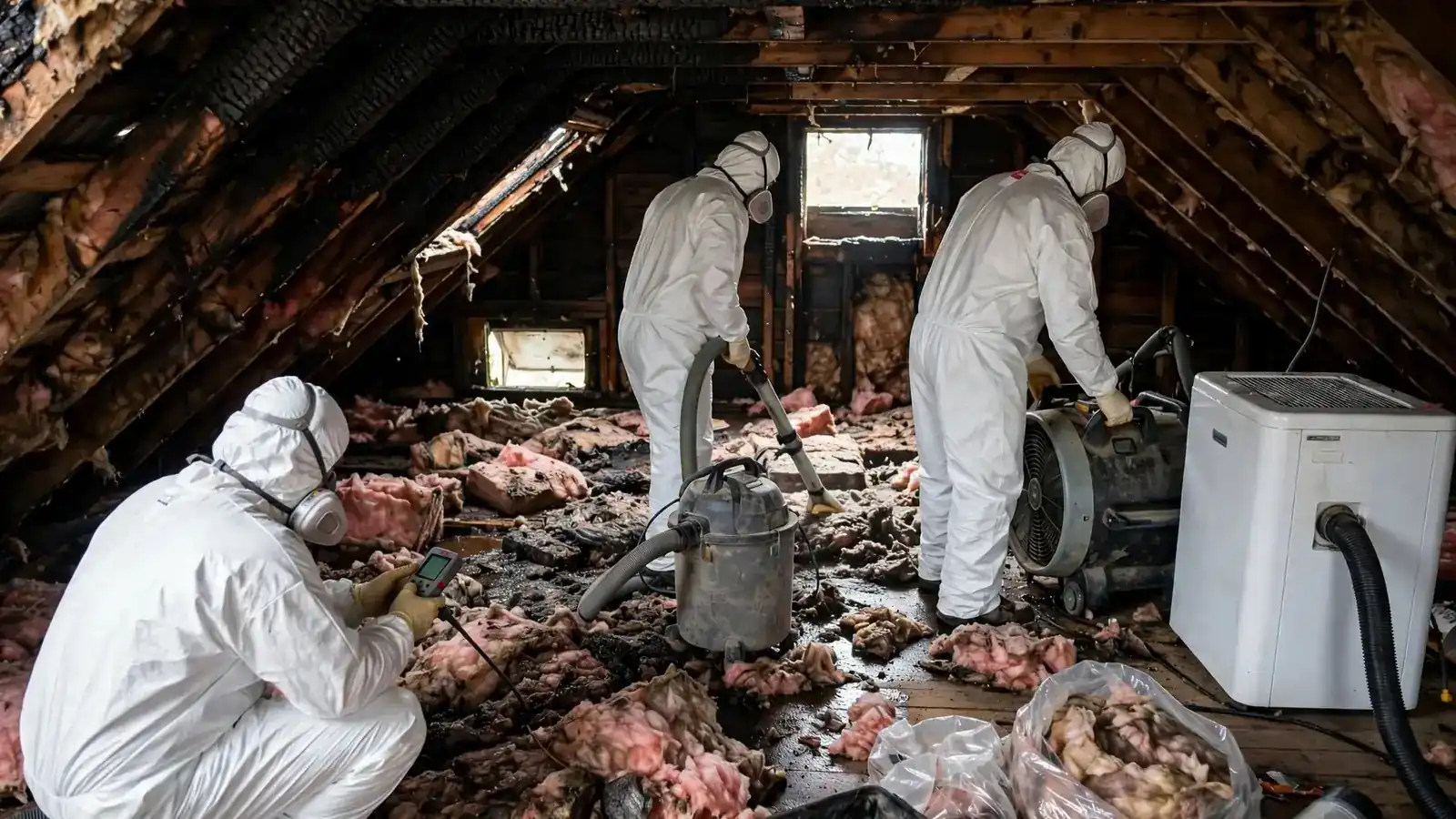
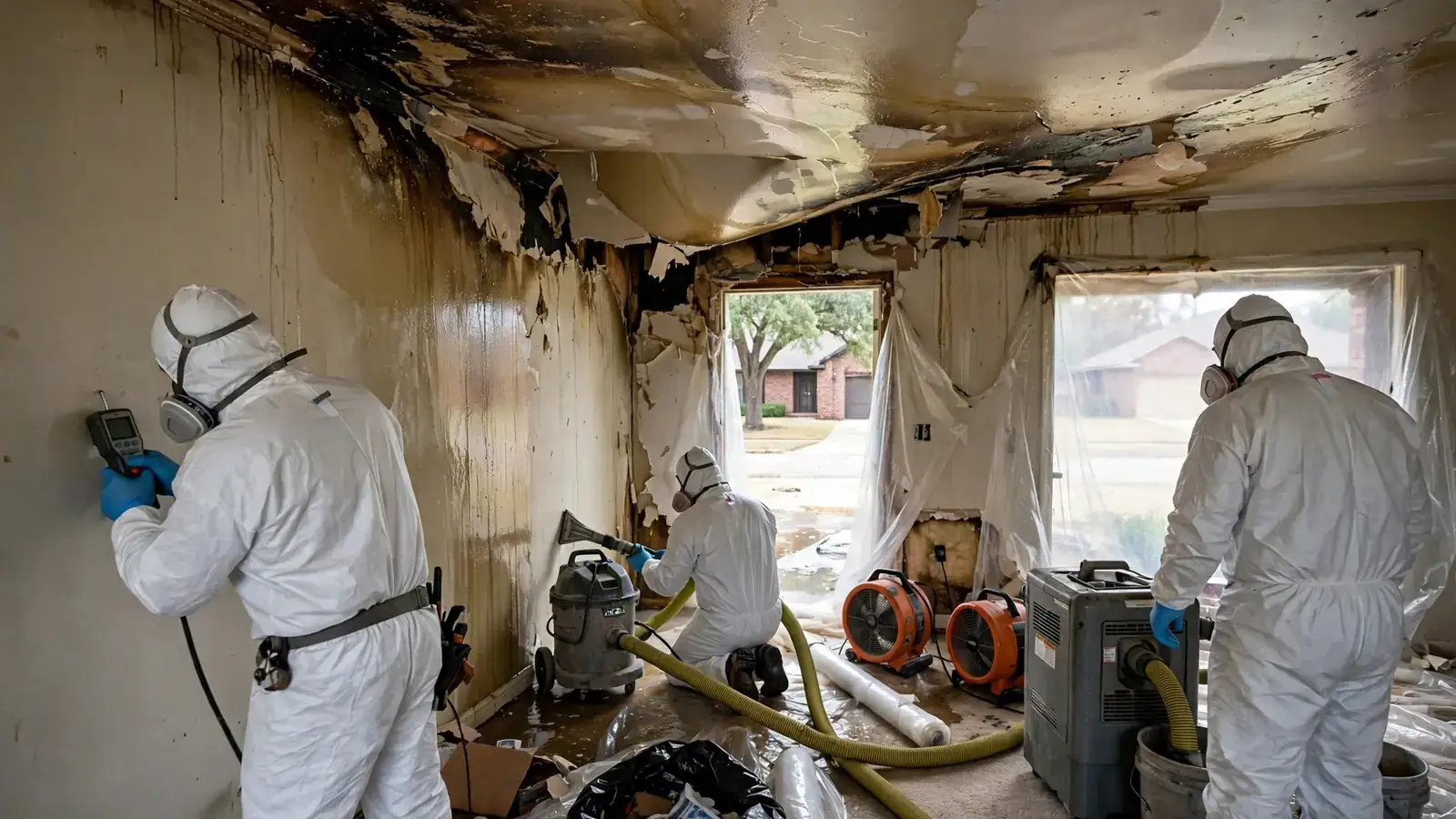
Water sprayed on the roof or into the attic soaks blown insulation and runs onto the ceiling drywall. Wet insulation is heavy and holds water against the ceiling. It is usually removed so the attic and ceiling can dry. Watch for stains and sagging ceilings and keep people out of rooms where the ceiling bulges.
Ceilings with textured finishes may need testing before they are removed [5].
Ductwork and the air handler
Wedgwood houses usually have the air handler and ducts in the attic. Water can soak duct insulation and reach the equipment. Wet flexible ducts are usually replaced, and the air handler should be checked by a technician before the system is used.
Running the system with wet ducts spreads moisture and odor.
Signs a Wedgwood home is still wet
Look for these after firefighting.
- Swollen baseboards and door casingsWater wicking up from the slab.
- Musty smell in the bedroom wingDamp carpet or walls.
- Ceiling stainsWet attic insulation above.
- Lifting vinyl or laminateWater trapped underneath.
Mold risk in a closed-up Wedgwood house
Mold can begin growing on damp materials within a day or two [1], and warm, humid weather helps it along. Starting drying soon after the house is released matters. If dark spots or a musty smell appear, mold may need its own cleanup before rebuilding.
The Wedgwood page explains how slab construction affects drying.
Furniture and boxes sitting on the wet slab
Furniture, beds, boxes and rugs sitting on the slab soak up water. Moving them out, drying what can be dried and listing what cannot gives a clear record for your claim. The U.S. Fire Administration notes that items not burned can still be ruined by water [3].
Books and papers can be frozen to prevent mold until they can be dried properly.
Moving from drying to smoke cleanup
When readings are normal, smoke damage cleanup and repairs can begin. Rebuilding before materials are dry traps moisture and can lead to mold later.
Drying out a slab home can mean several nights away; the Texas Department of Insurance explains how additional living expense coverage generally works [4].
Wiring and outlets near the floor
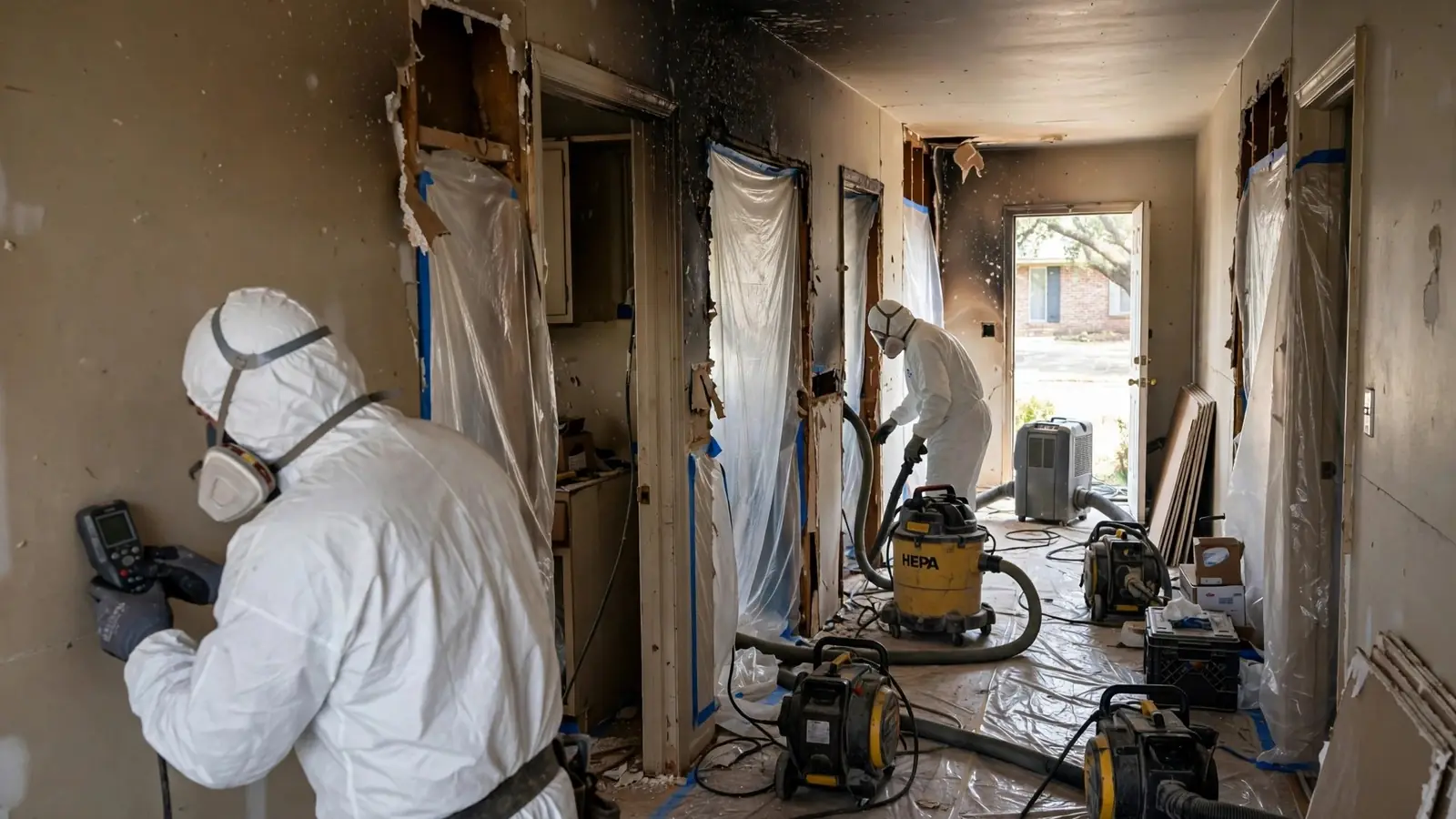
Outlets sit low on the walls in these homes, and water spreading on the slab can reach them. Keep power off to wet areas until an electrician checks the circuits. Drying equipment can be run from safe circuits or temporary power.
Appliances that sat in water should be inspected before use.
Bathrooms, kitchens and cabinets on the slab
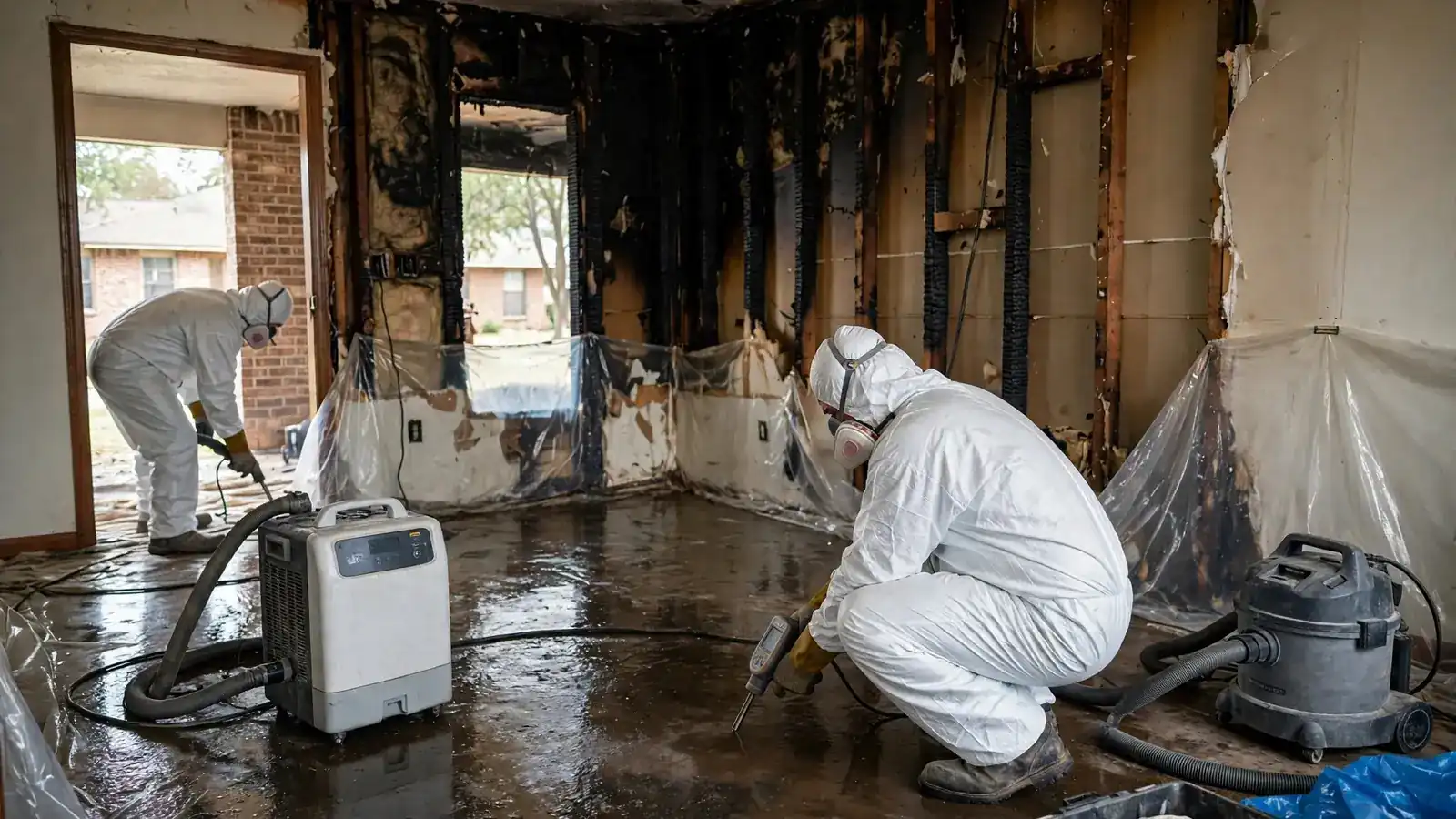
Kitchen cabinets and bathroom vanities sit directly on the slab, and water wicks into their bases. Removing toe kicks lets air reach underneath. Particleboard that has swollen usually needs replacing; solid wood often dries well.
Water can also hide under tub and shower bases and behind toilets, so readings around them matter.
FAQ
Firefighting Water Damage in Wedgwood: questions
How far can firefighting water spread on a slab?
Often well beyond the room of the fire. It moves under flooring and into the bottom of walls, and meters find it.
Does wet carpet have to be replaced?
Pad usually does. Carpet soaked with sooty firefighting water is often replaced too, especially near the fire.
Can I run my air conditioning to help dry the house?
Not until the ducts and air handler have been checked. Wet ducts can spread moisture and odor.
Sources and citations
- [1]U.S. EPA: A brief guide to mold, moisture and your home
- [2]IICRC: S500 Standard for Professional Water Damage Restoration
- [3]U.S. Fire Administration: After a fire
- [4]Texas Department of Insurance: Additional living expenses
- [5]U.S. EPA: Protect your family from exposures to asbestos
- [6]U.S. EPA: A brief guide to mold, moisture and your home