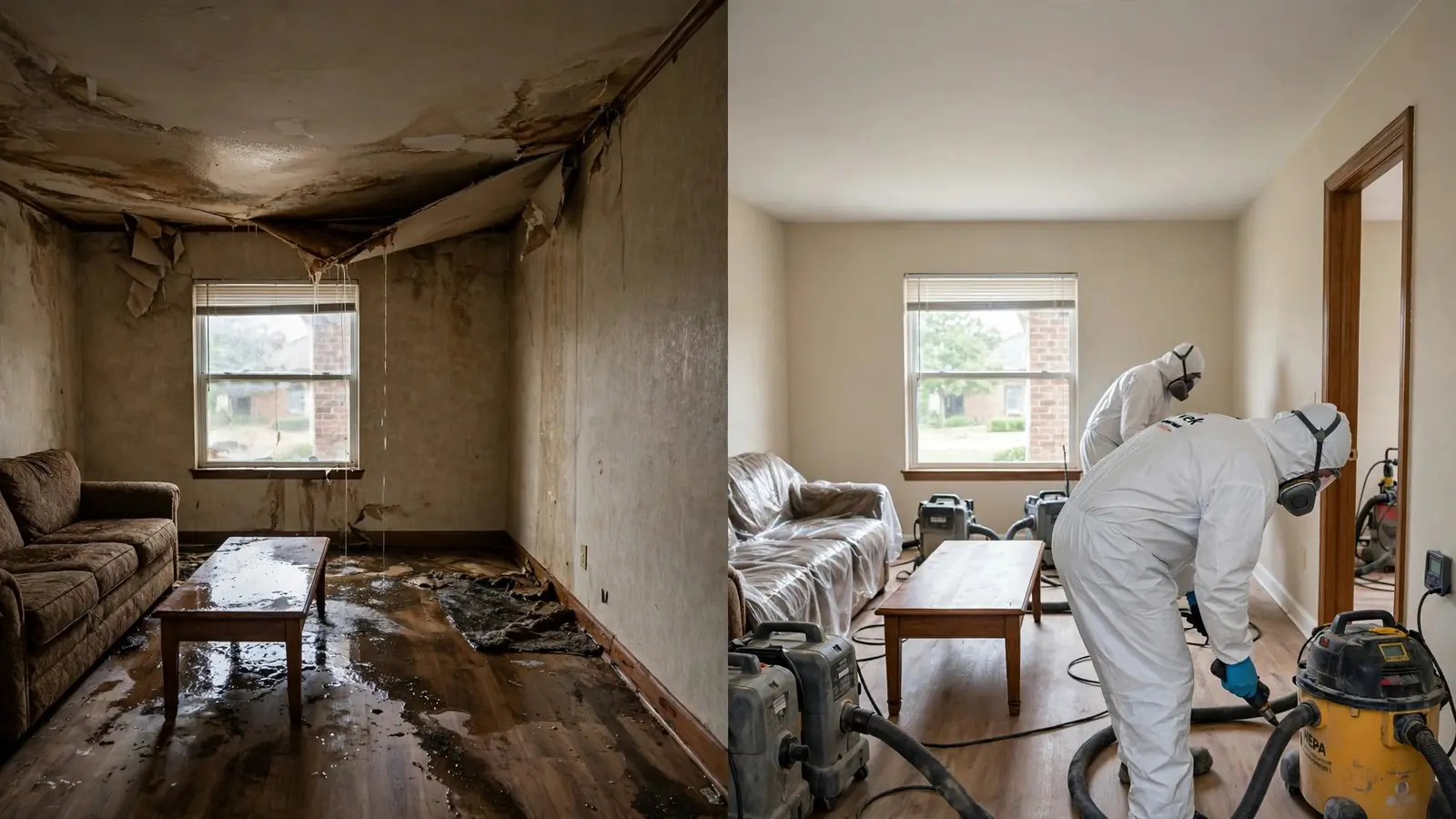
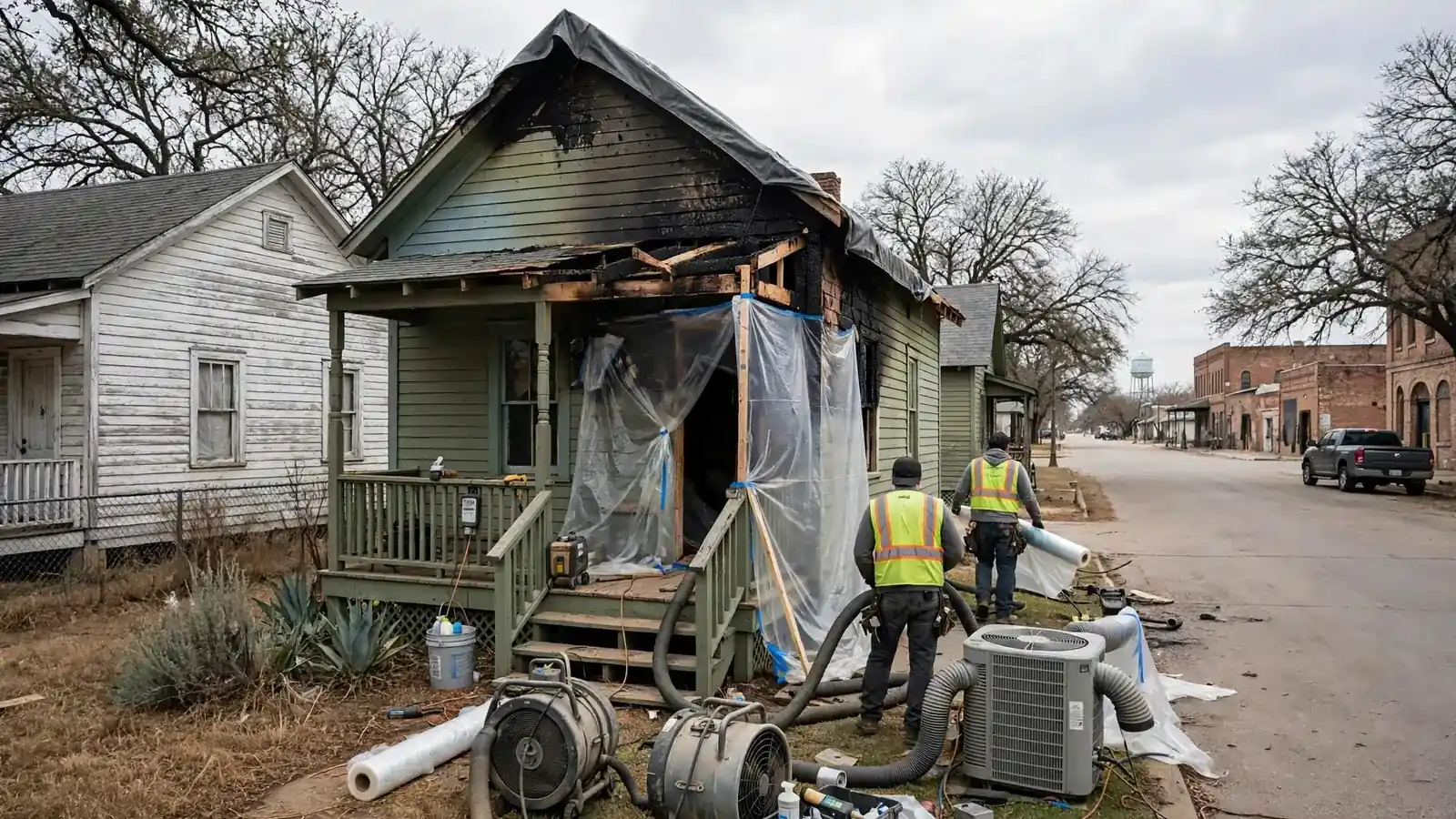
Key facts: Firefighting Water Damage on the Northside
- The EPA recommends drying water-damaged materials within 24 to 48 hours to prevent mold [1].
- IICRC S500 is the professional standard for water damage assessment, extraction and drying [2].
- Wet soil and water standing under pier-and-beam houses raise humidity in the rooms above until they are dried [5].
Water under a pier-and-beam house
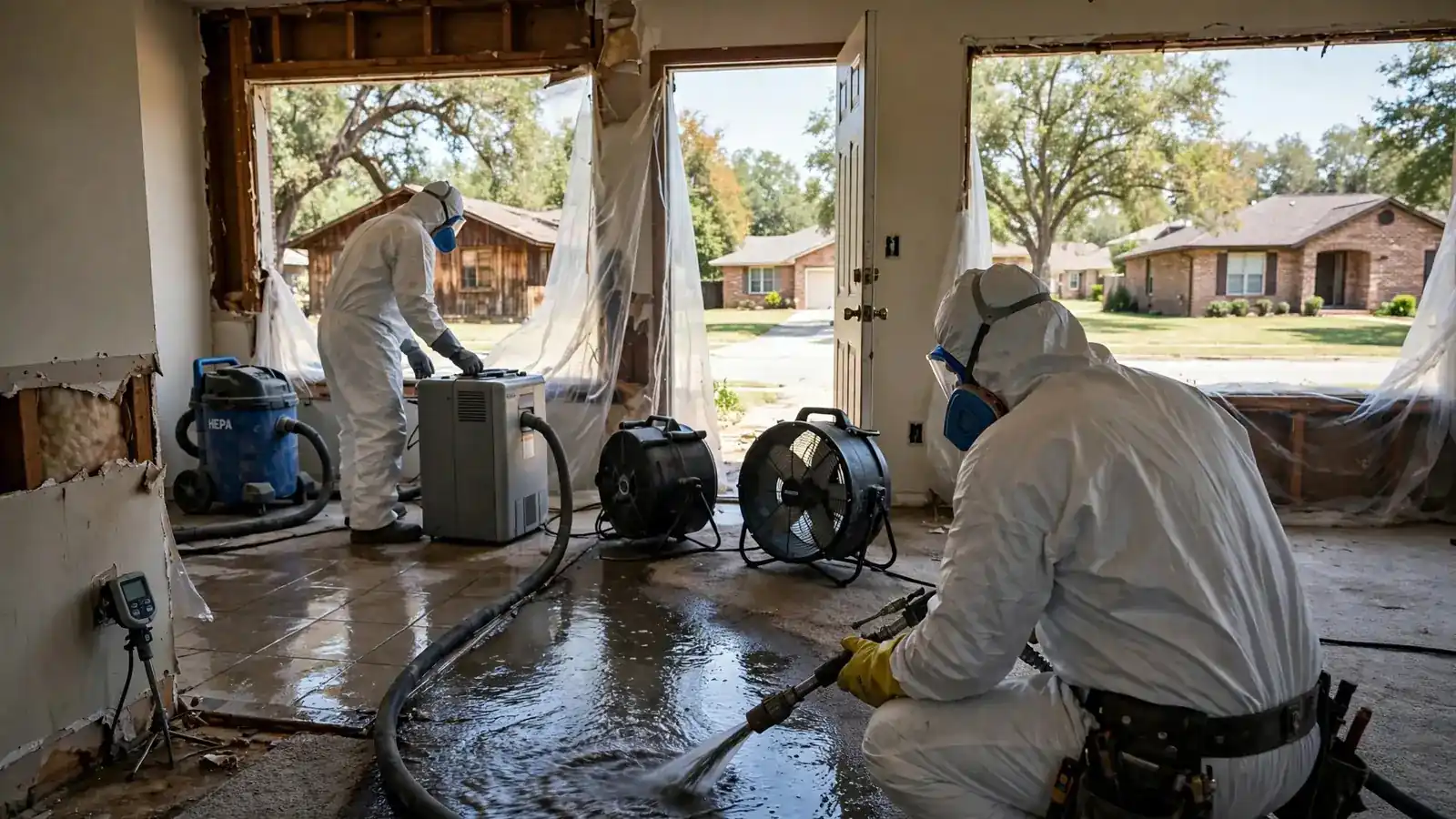
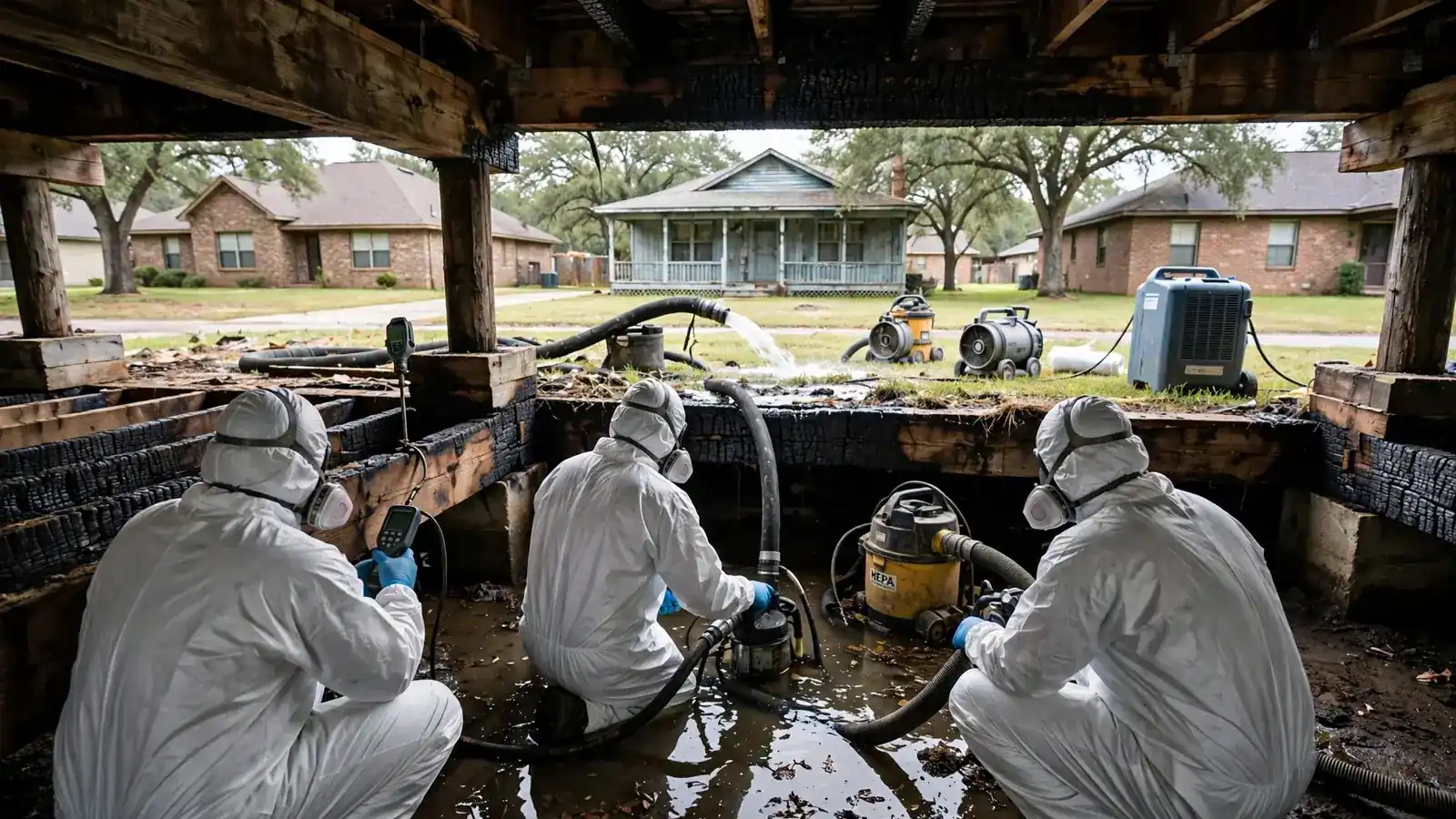
Many Northside homes are raised on piers with a crawl space underneath. Firefighting water runs through floor gaps and collects there, on the soil, beams and any ductwork or pipes. With little airflow, it can stay wet for days and raise humidity throughout the house.
Pumping out standing water, ventilating the crawl space and running dehumidifiers below the floor speed drying and help keep mold from starting.
Walls, floors and contents
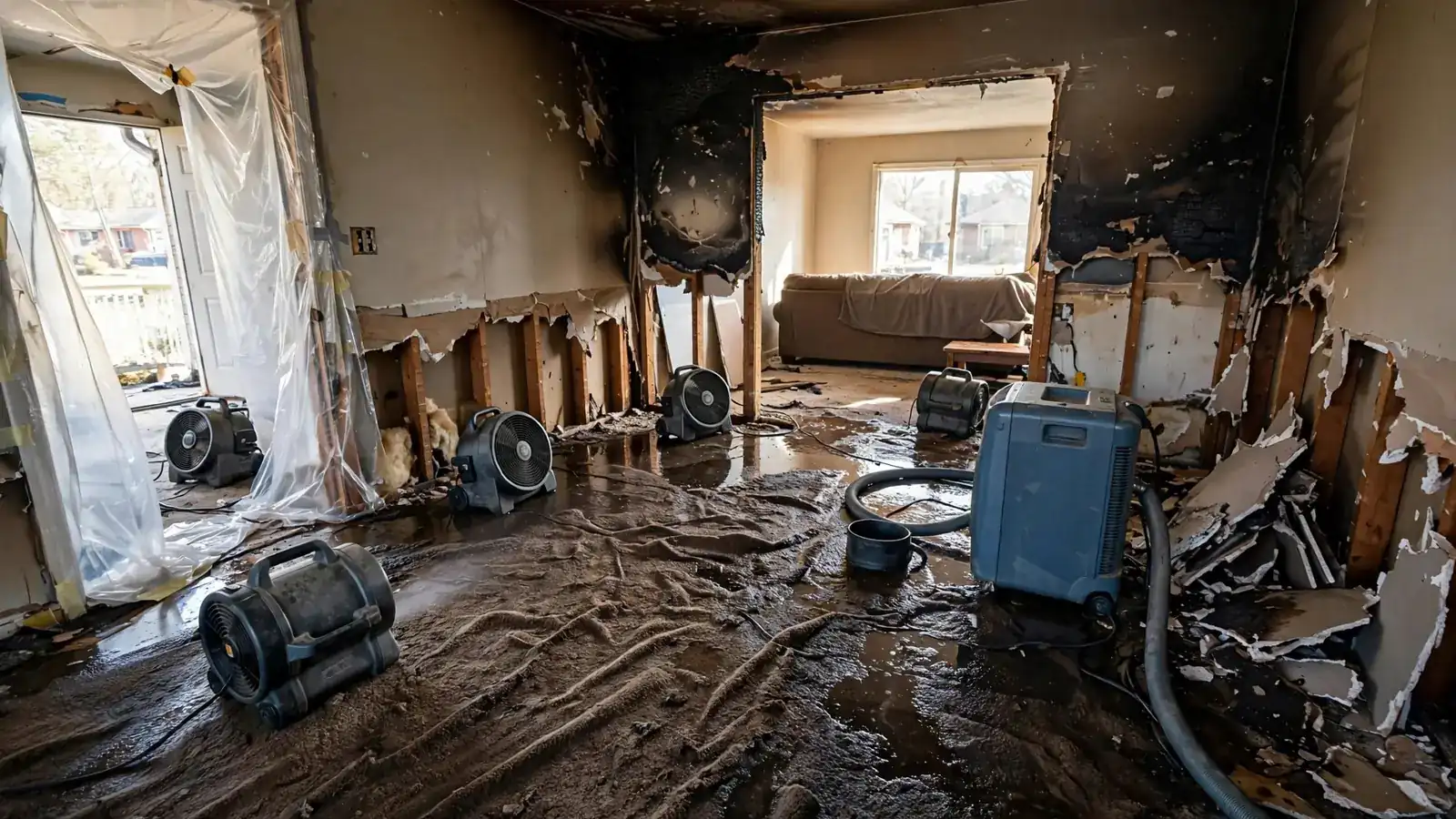
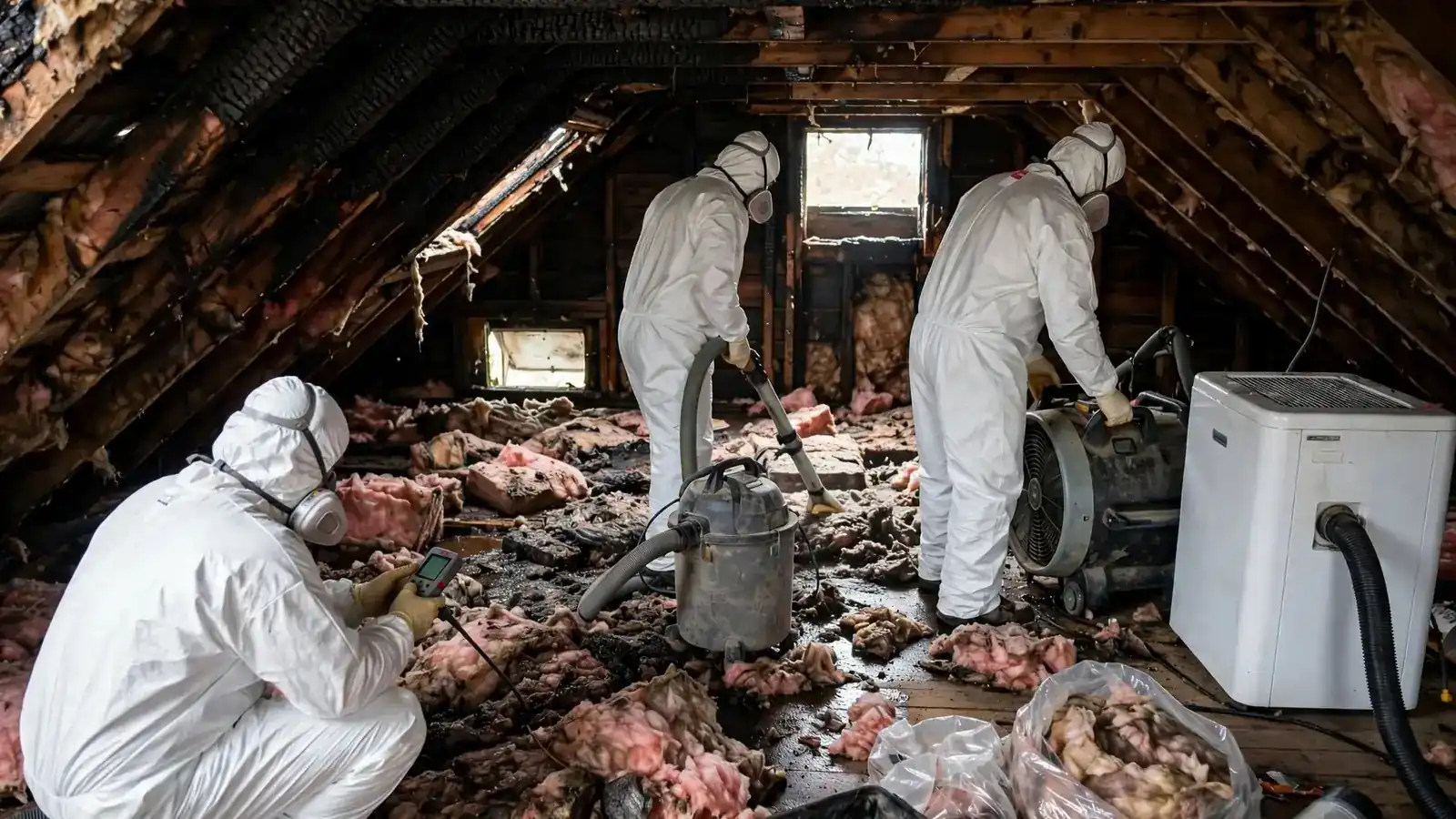
Water soaks into drywall or plaster, runs down inside the walls and pools on floors. Wood floors swell and cup; vinyl can lift. Insulation in the walls and attic absorbs water and may need removal. In a small house, almost every room can be affected.
Furniture, clothing, mattresses and papers soaked by firefighting water need sorting. Some can be dried and cleaned; others cannot. Moving them out of wet rooms quickly gives the most items the best chance.
Drying a Northside home after a fire
The usual order of work.
- 1
Remove standing water inside and below
Floors, carpets and the crawl space are extracted and pumped.
- 2
Check moisture with meters
Readings show how far water spread into walls and framing.
- 3
Place drying equipment
Dehumidifiers and air movers are set for each room and the crawl space.
- 4
Track readings until dry
Materials are tested daily until they reach normal levels.
Mold risk in Fort Worth's climate
Warm, humid weather in Fort Worth helps mold grow in damp spaces. The EPA advises drying materials within a day or two [1], and that timeline is tight after a fire, when the house may still be closed off. Getting drying started as soon as the house is released is important.
If a musty smell appears or dark spots show up on walls or under the house, mention it to the contractor. Mold may need its own cleanup before repairs.
Signs a Northside home is still wet
Look for these after firefighting.
- Soft or cupped floorsWood floors that feel spongy or have raised edges.
- Damp smell from under the houseThe crawl space may still hold water.
- Stains spreading on walls or ceilingsWater is still moving inside.
- Peeling paint or swelling trimMaterials are holding moisture.
From drying to rebuilding
Once the house is dry, smoke damage cleanup and repairs can begin. Our Northside page explains how frame cottages and older materials affect the rest of the restoration.
If you are out of the house while it dries, keep receipts for your extra expenses. The Texas Department of Insurance explains how additional living expense coverage generally works [4].
Wiring, outlets and water
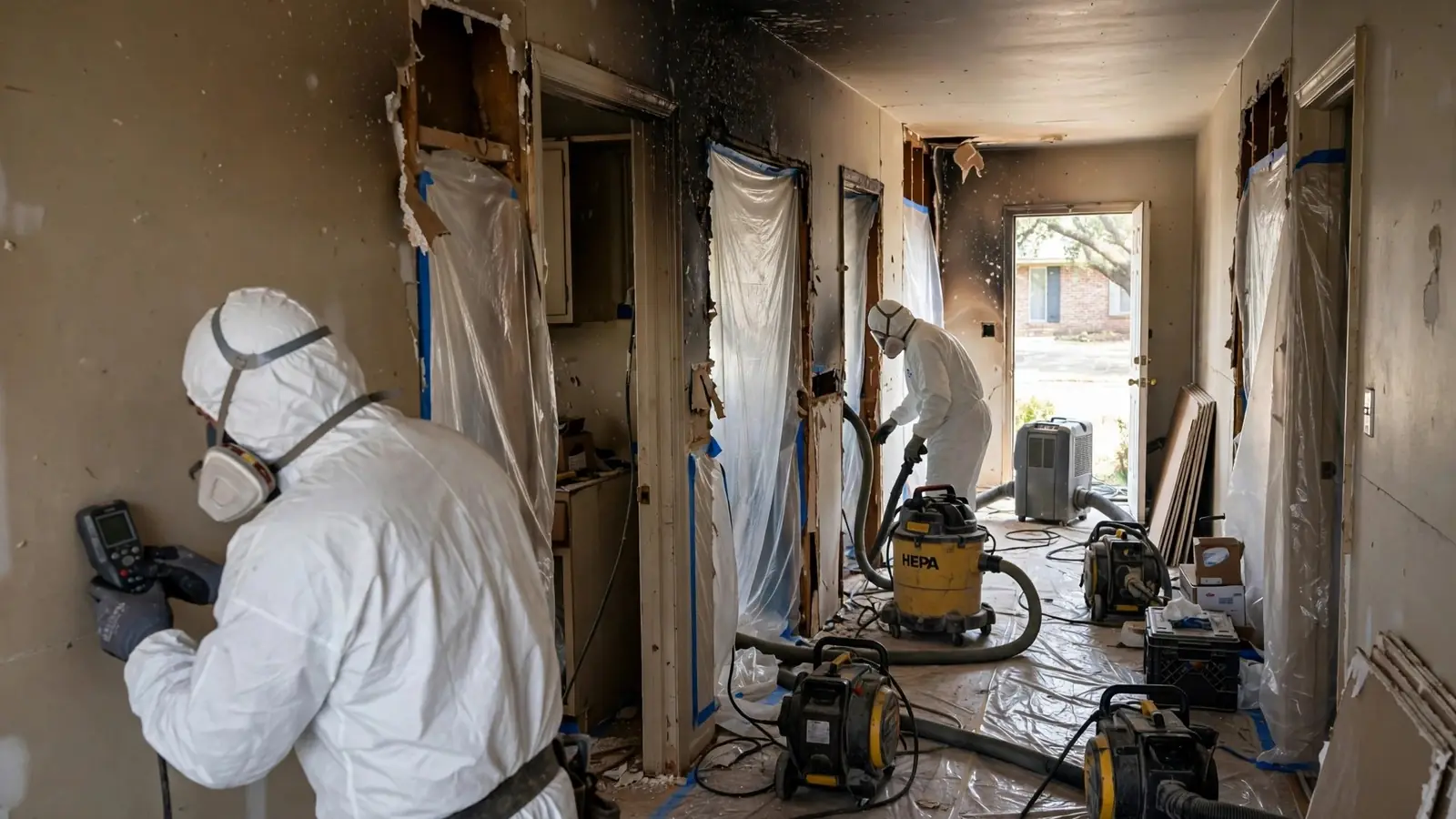
Many Northside homes have older wiring, and some still have original circuits. Water from firefighting can reach outlets and junction boxes inside walls and under floors. Keep power off to wet areas until an electrician has checked them, even if everything seems to work.
The drying crew can run equipment from circuits that have been checked or from temporary power.
Ductwork and appliances under the floor
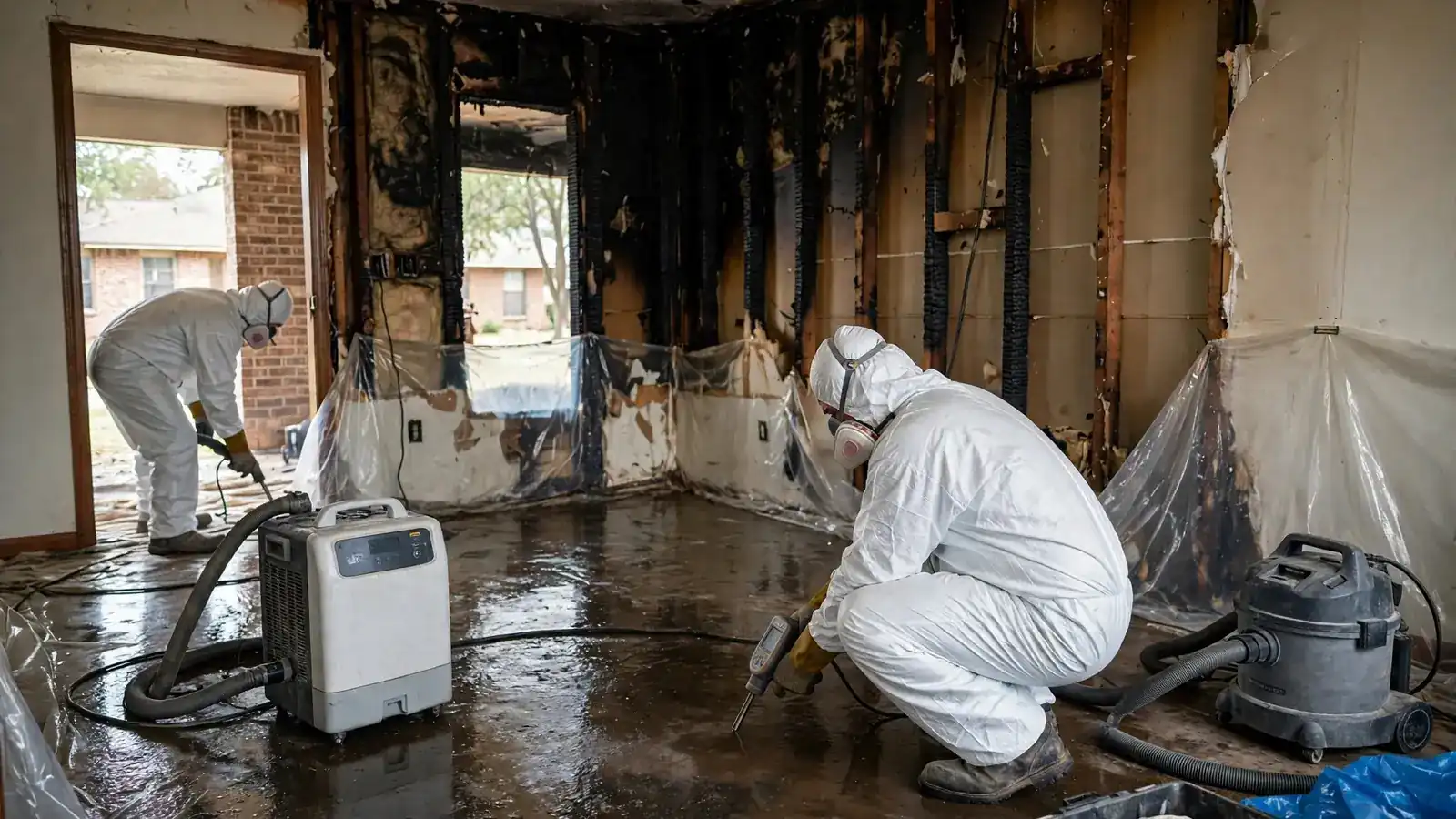
In some pier-and-beam houses, ducts, water heaters or furnaces sit in the crawl space. Water collecting there can soak duct insulation and reach equipment. Wet duct insulation usually needs to be replaced, and appliances should be checked before they are used again.
If you are not sure what is under your house, the contractor can look while pumping and drying the crawl space.
Floors, subfloors and soft spots
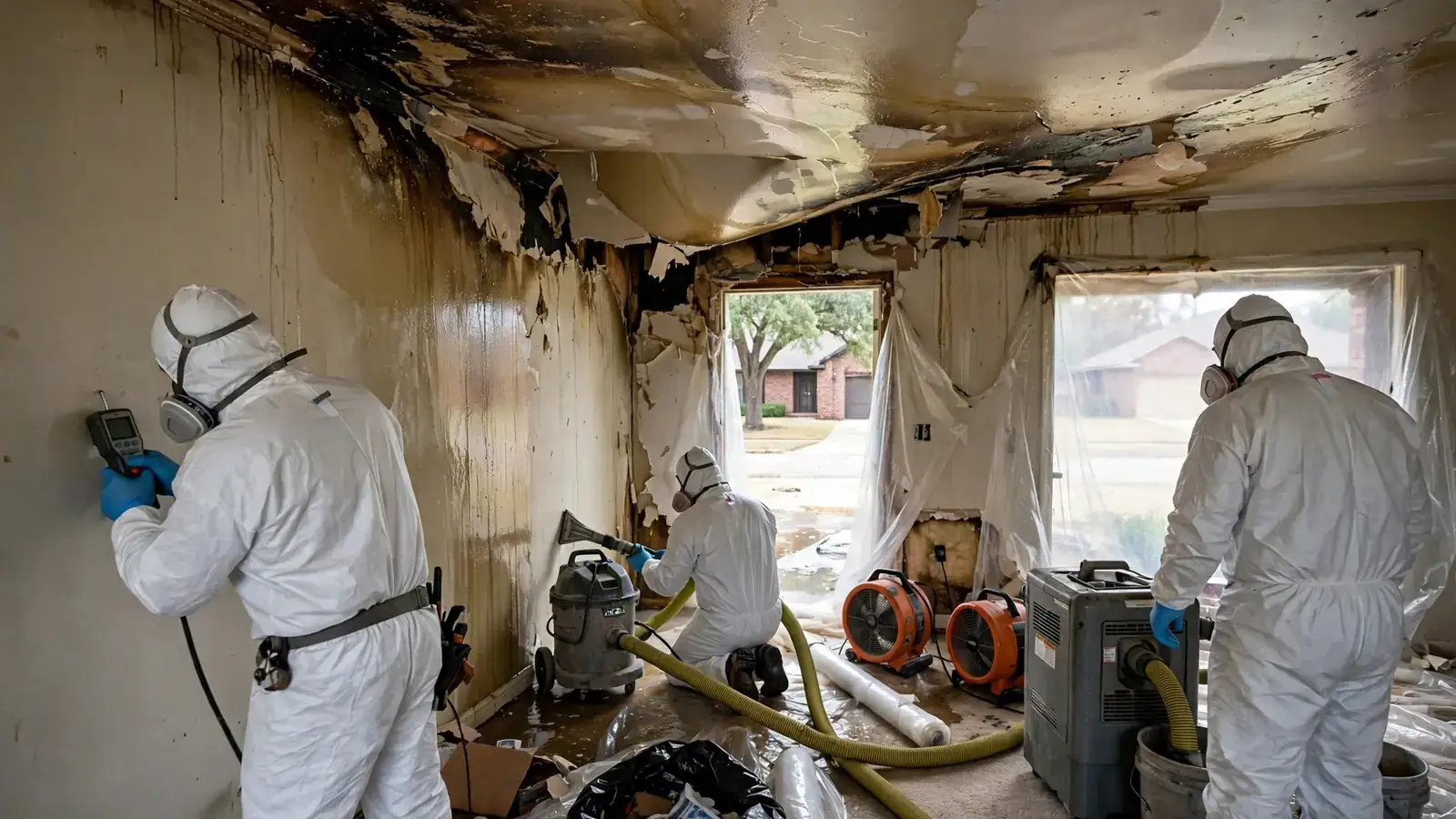
Water that soaked into floorboards often reaches the subfloor and joists below. A floor that feels soft or bouncy after drying may have damaged subfloor that needs repair. Moisture readings from below and above the floor help decide what can stay.
Wood floors that cup usually need time to settle before refinishing. Rushing it can mean sanding twice.
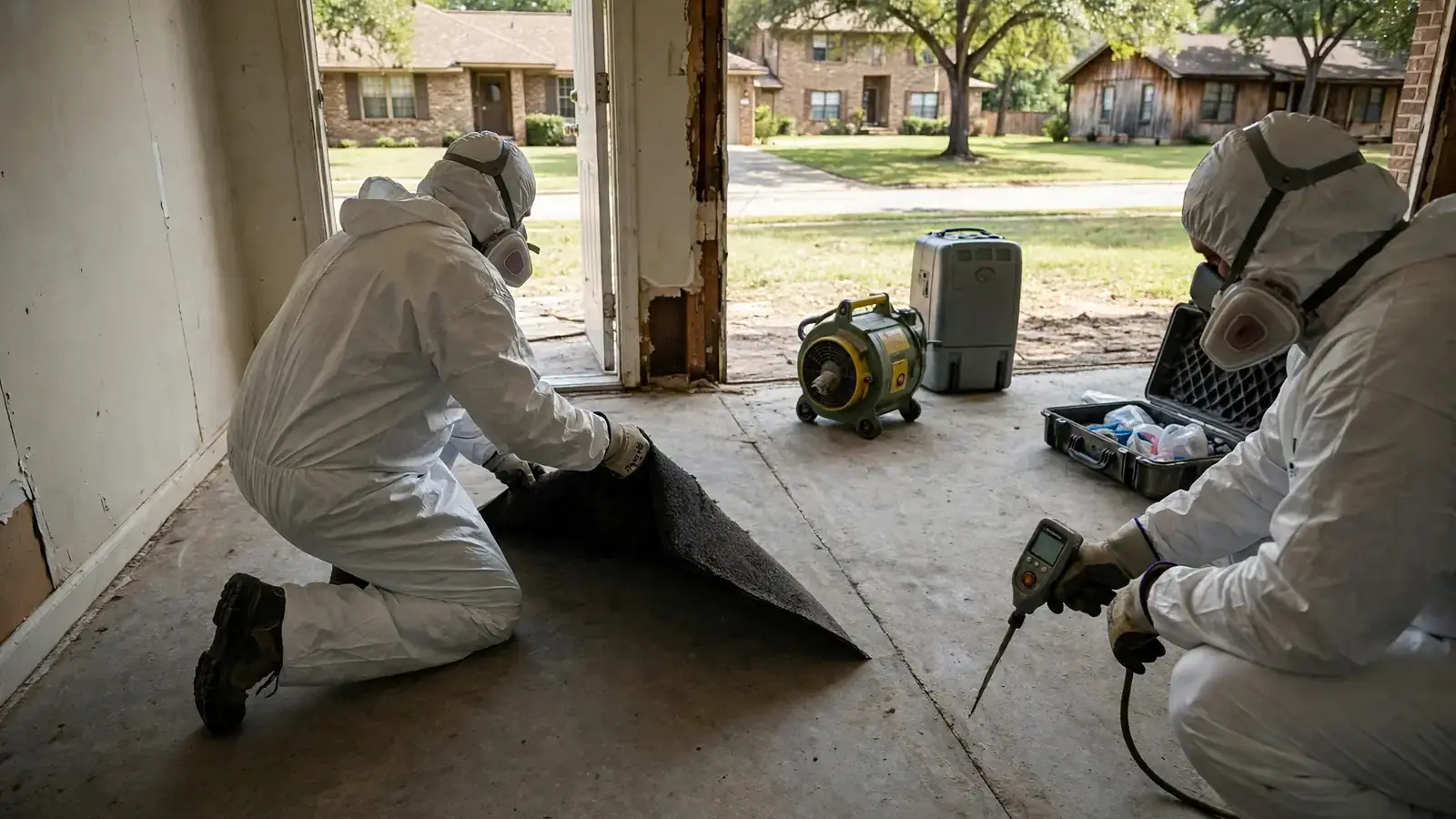
Insurance and documenting water damage
Water damage from firefighting is generally part of the fire claim, but it helps to document it separately: photos of standing water, wet floors, soaked contents and the crawl space before it is pumped. Moisture readings from the contractor show the extent of the water and how long drying took.
Keep a list of soaked items you had to discard, with photos, to give your adjuster a clear picture of the loss.
FAQ
Firefighting Water Damage on the Northside: questions
How do I know if water is under my house?
Look for standing water through crawl space vents, a damp smell or soft floors. A contractor can check with meters and a visual inspection.
Can wet wood floors be saved?
Often, if they are dried evenly. Many cupped floors settle back and can be sanded and refinished.
Why does drying need to start so quickly?
Mold can begin growing on wet materials within a day or two [1], and Fort Worth's humidity speeds that up.