Key facts: Soot Removal on the Northside
- The U.S. Fire Administration advises learning about the health risks of soot before trying to clean it [1].
- The IICRC S700 standard guides how professionals select dry or wet methods for removing fire residue [2].
- Older paint disturbed during soot cleanup can release lead dust in homes built before 1978 [3].
Soot inside a Northside cottage
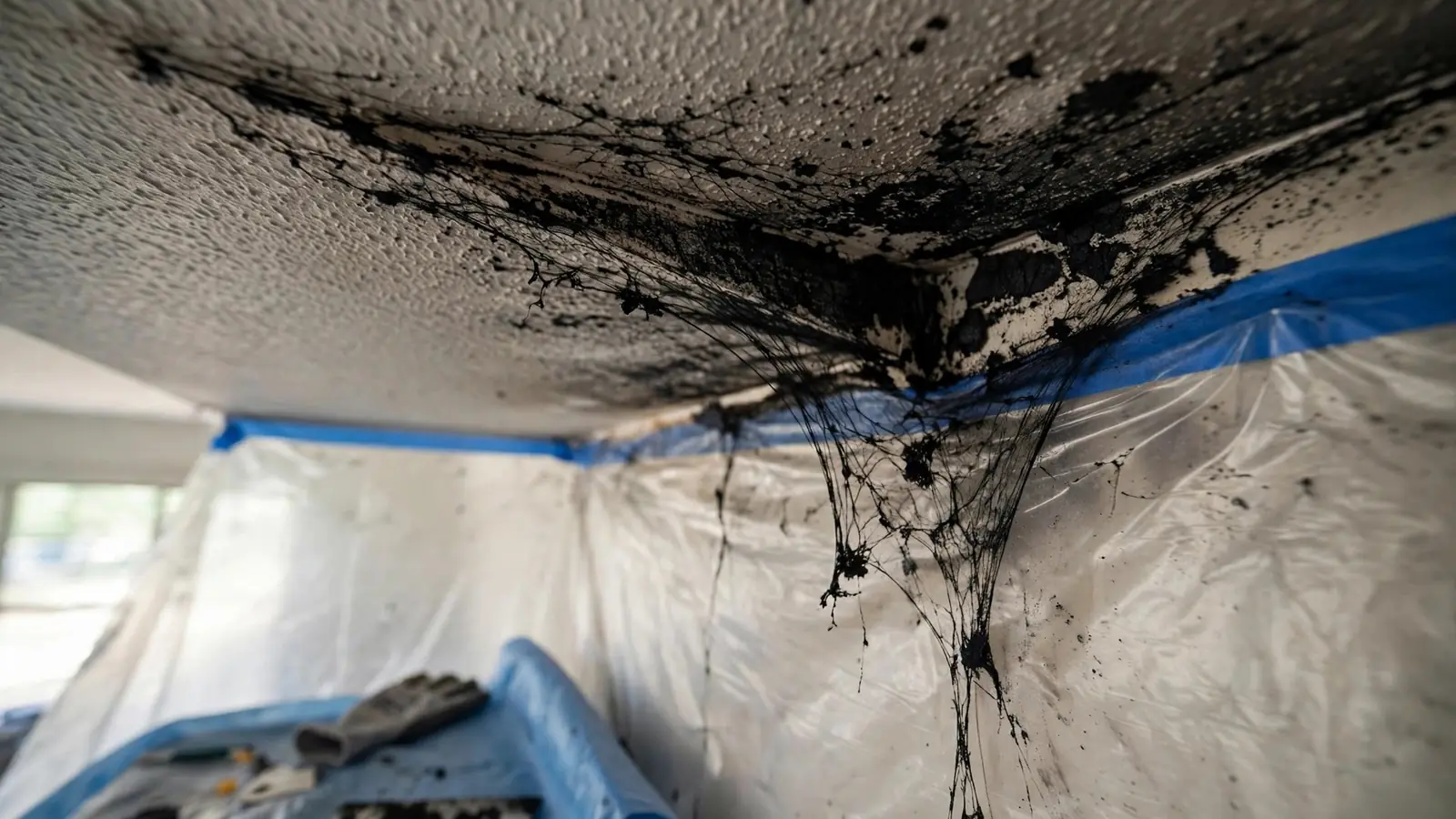
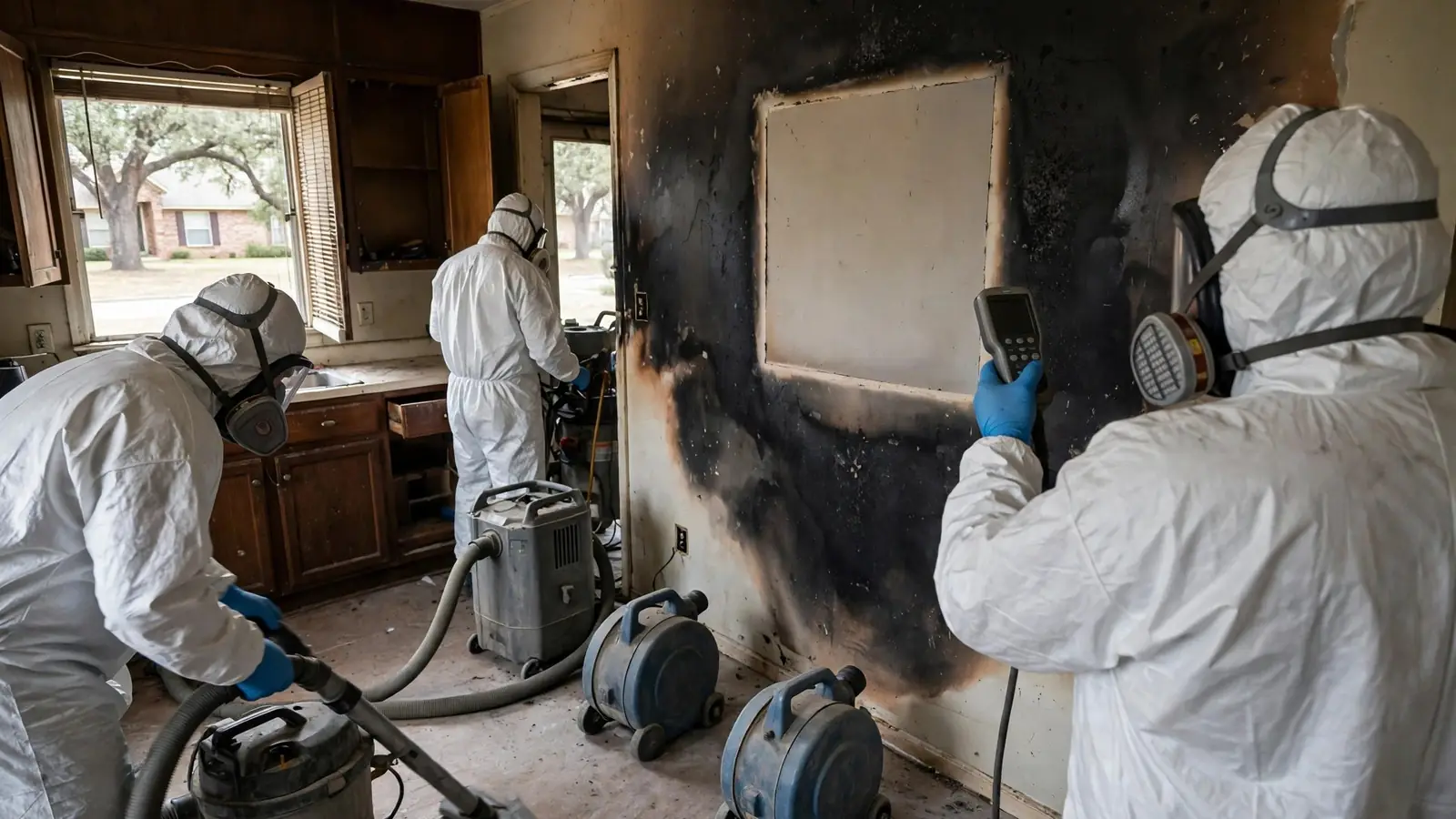
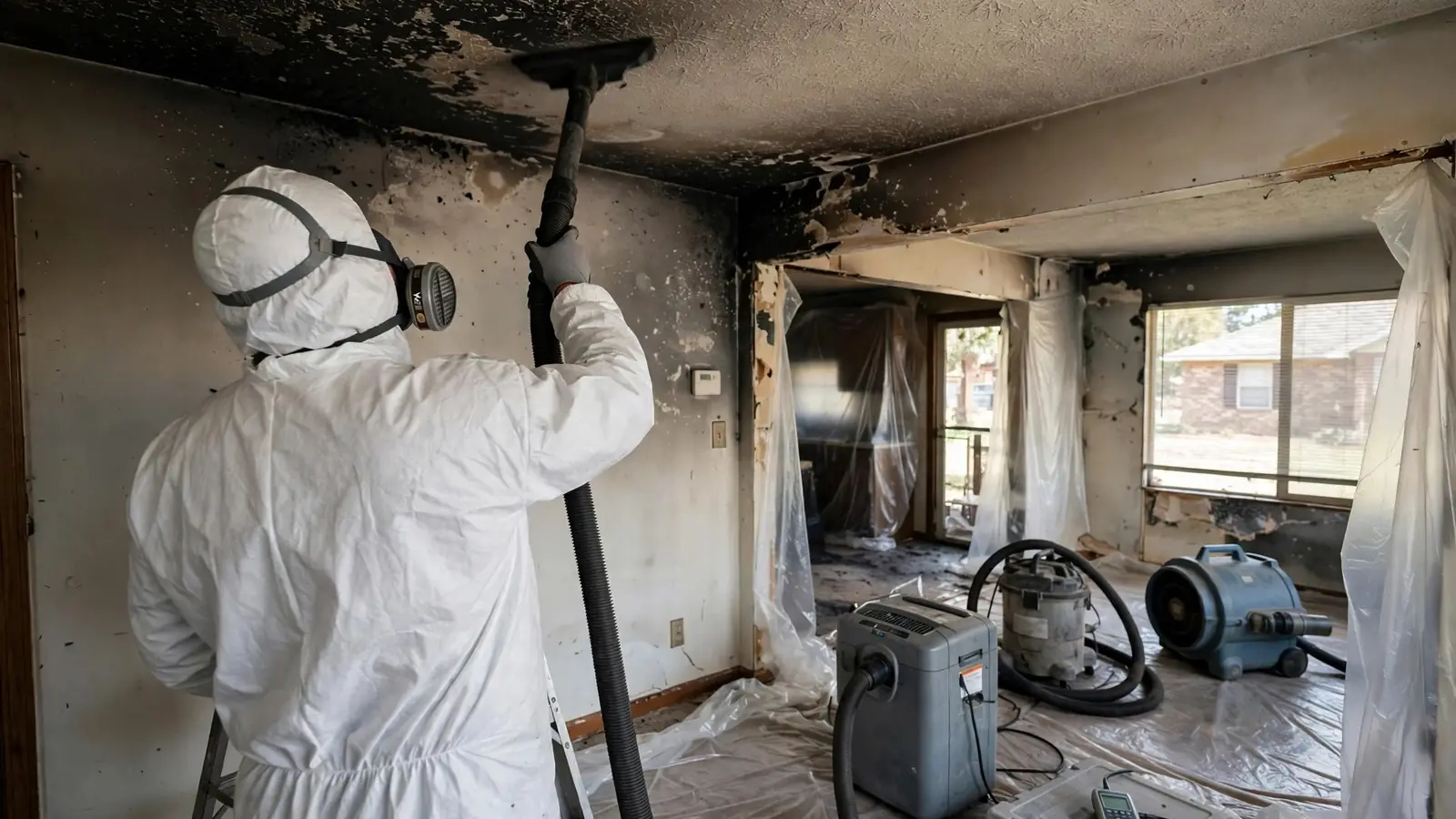
In a small house, soot spreads quickly and evenly. Ceilings darken, walls take on a gray film, and window glass and blinds collect a greasy layer. Soot webs, dark strings of residue that form along air currents, often hang in corners and along ceiling edges.
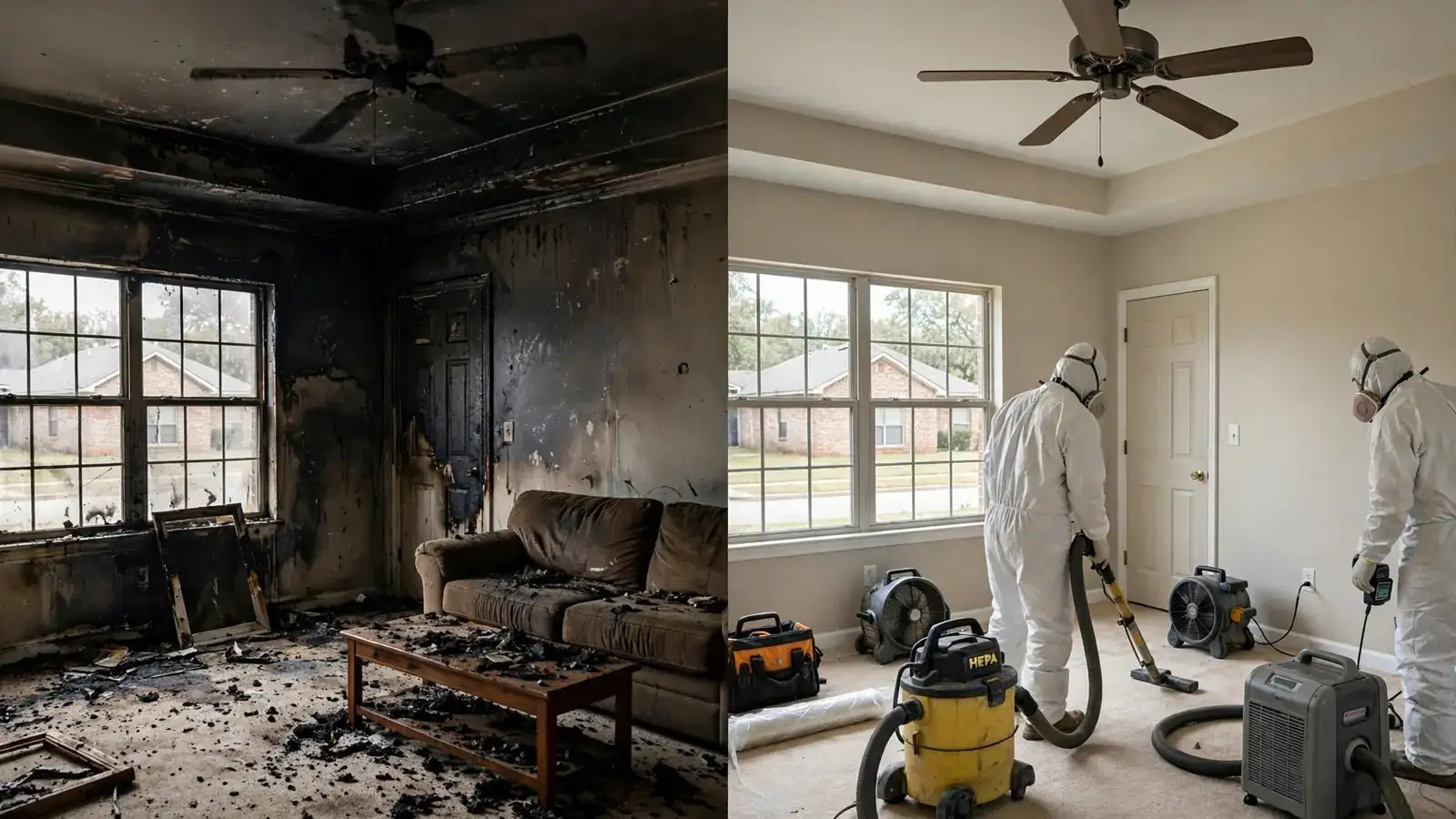
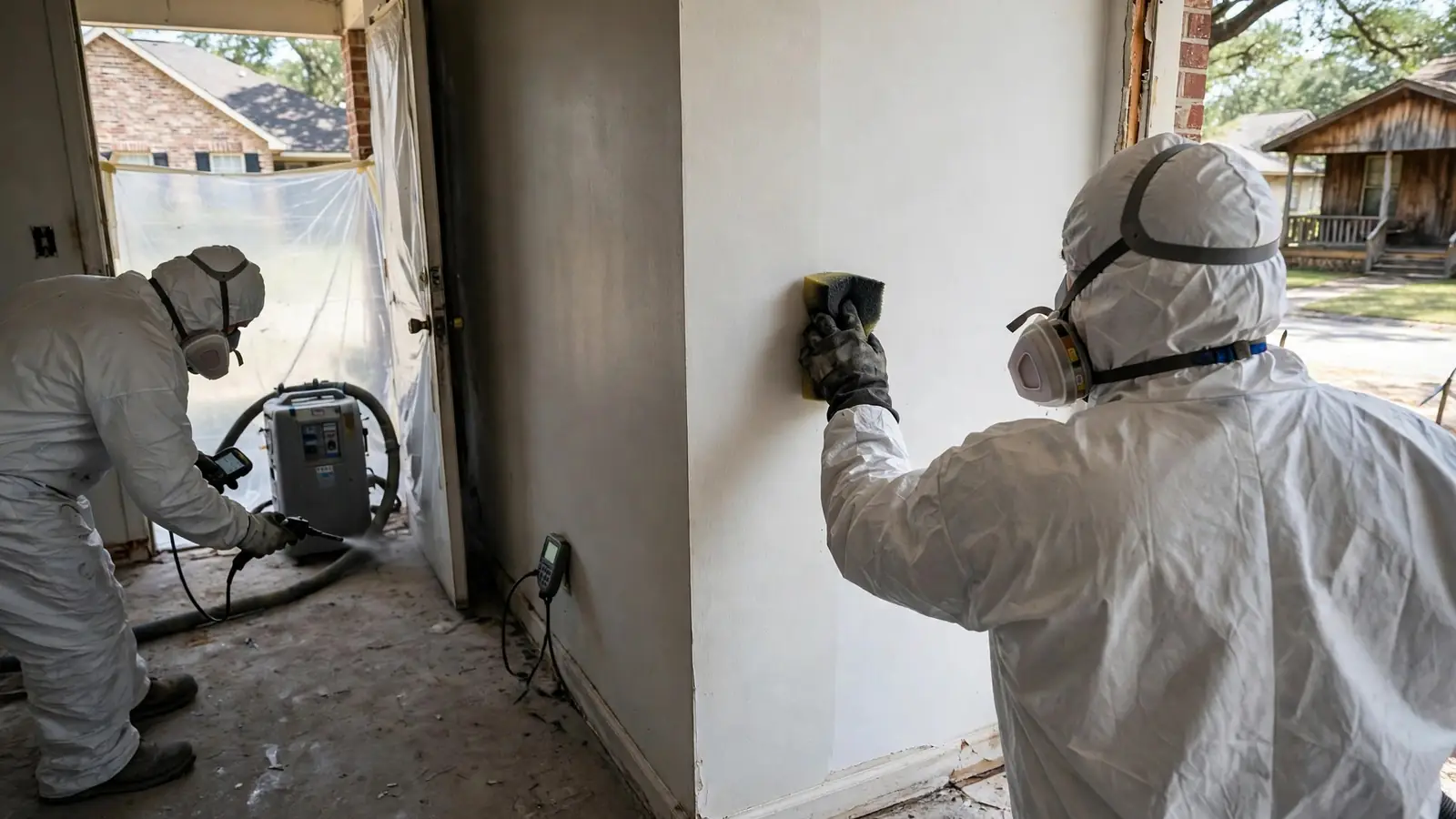
Wiping soot with a damp cloth smears it into the surface and can make stains permanent. Dry removal with chemical sponges and HEPA vacuums comes first, followed by washing with cleaners suited to the residue.
Wood siding, porches and exterior soot
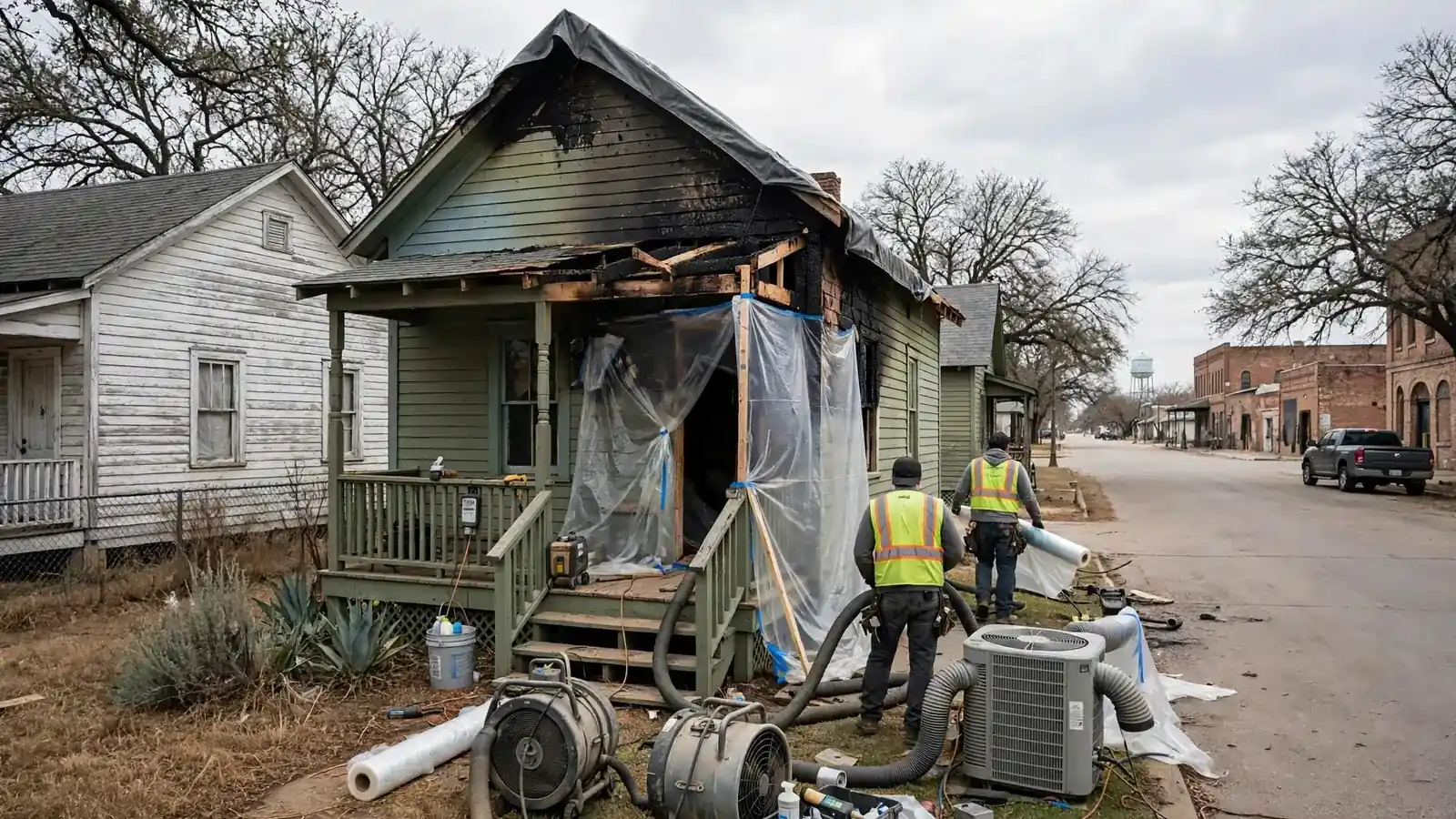
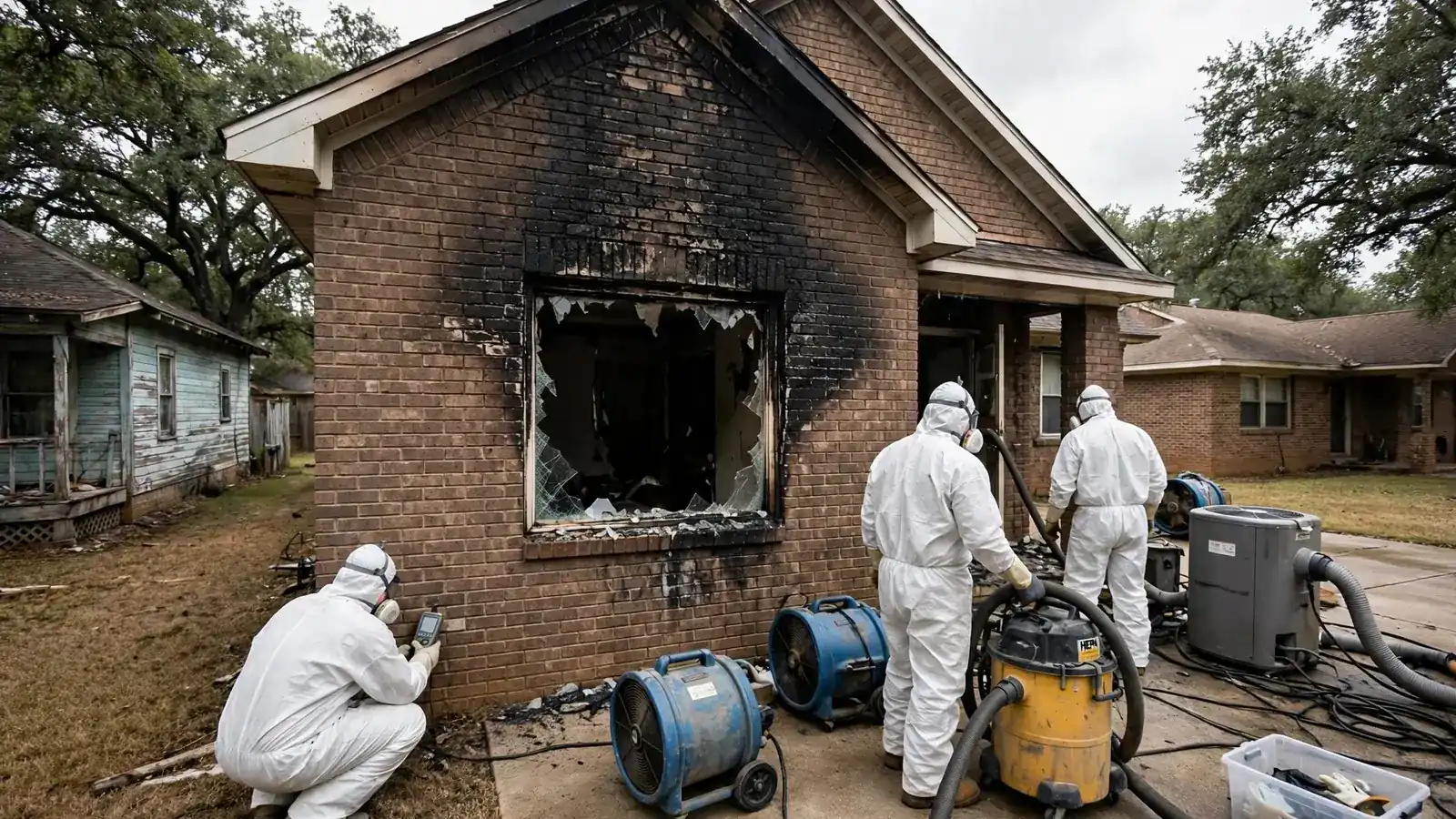
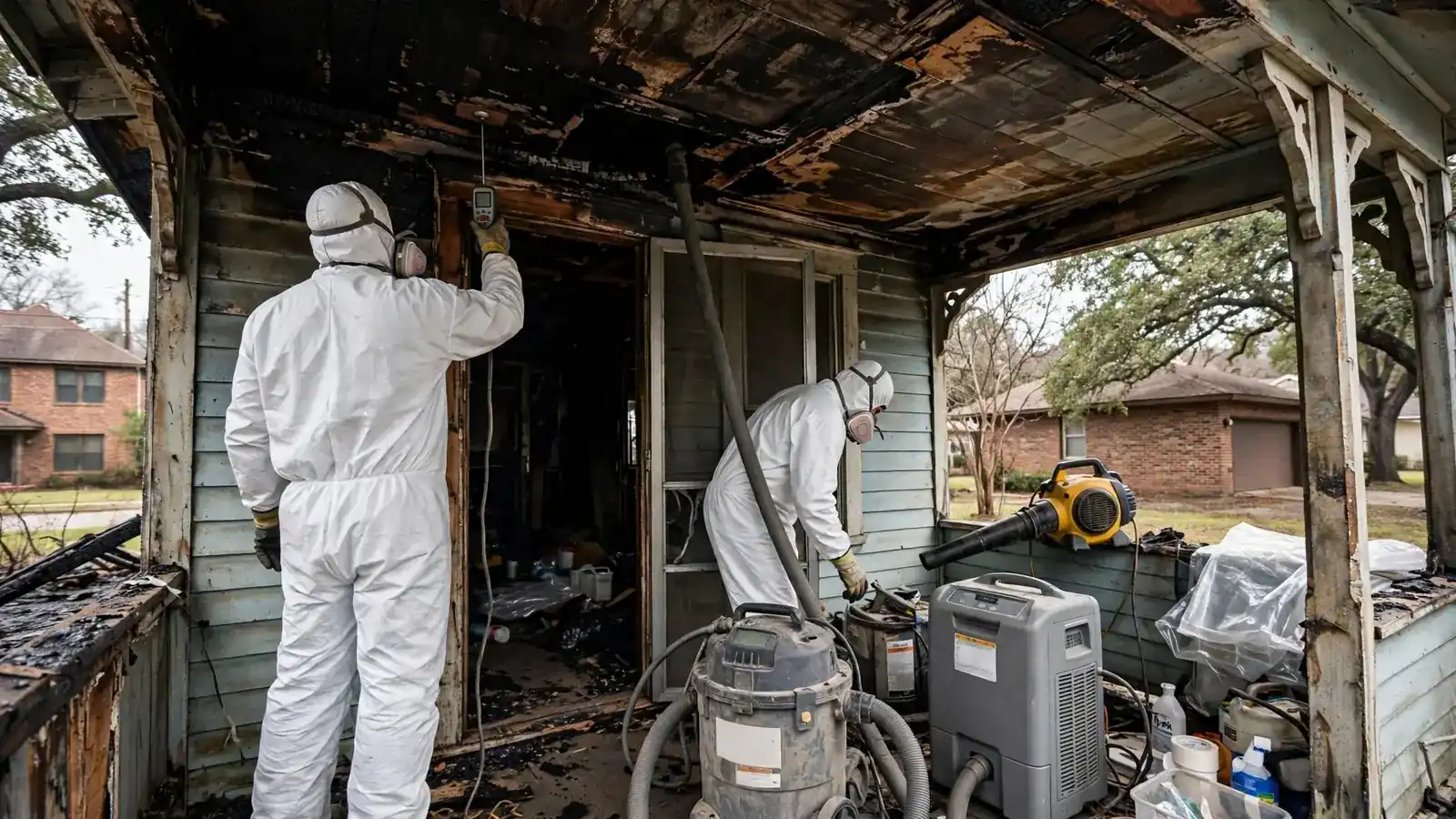
Northside cottages often have wood siding and front porches. Smoke pouring out of windows leaves dark plumes on the siding above them, and porch ceilings collect soot along every board. Exterior soot is cleaned with gentle methods; heavily charred boards may need replacement.
If your fire affected a neighbor's house, their siding may also be stained. Each homeowner's insurer typically handles their own property, so photograph any damage to both houses.
Soot removal steps in a Northside home
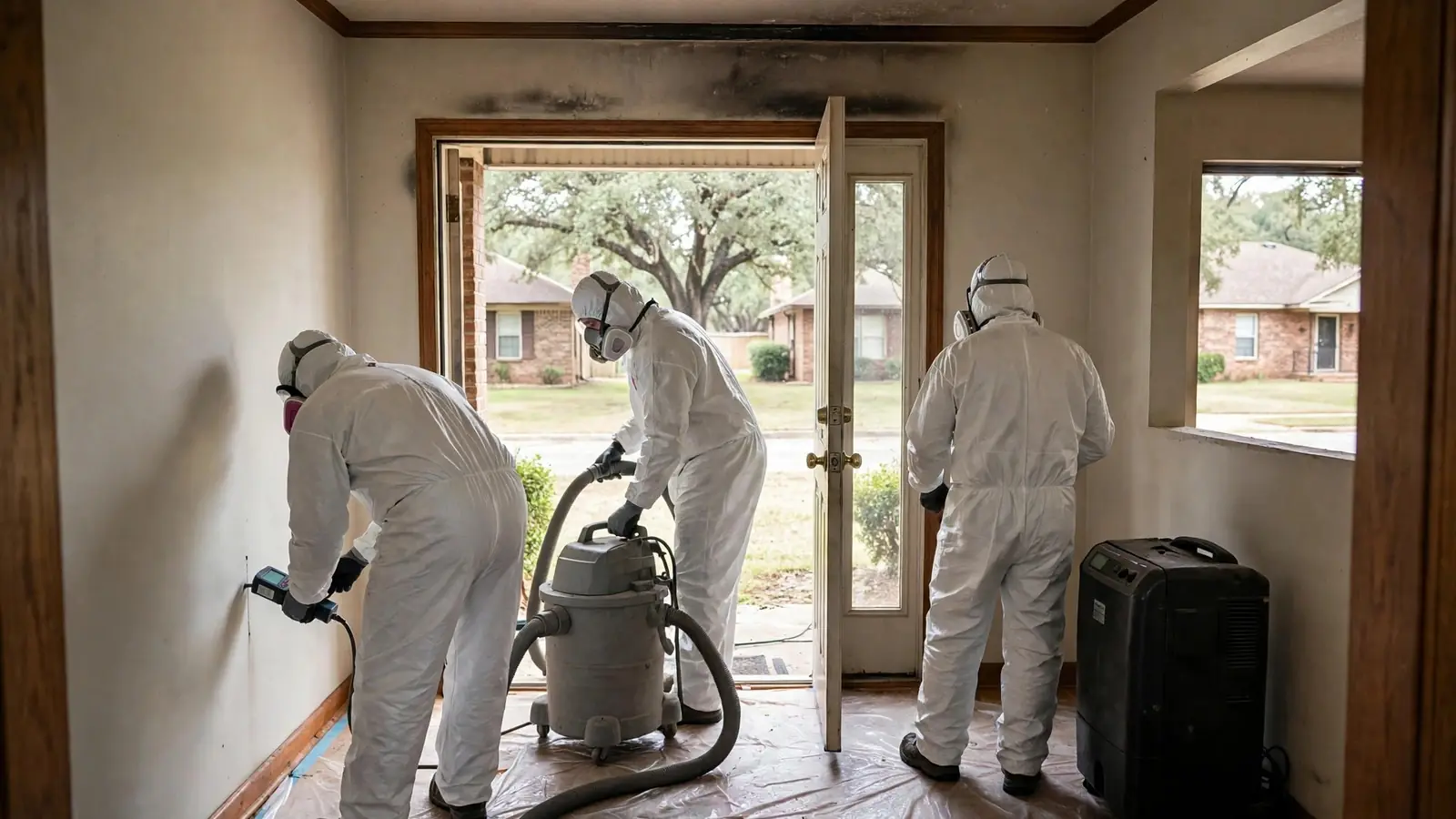
A typical sequence for a small frame house.
- 1
Check soot type in each room
Dry, oily or protein residue each need different cleaning.
- 2
Remove loose soot top to bottom
Ceilings first, then walls, then floors, using dry methods.
- 3
Wash with suitable products
Cleaners are matched to the residue and the surface.
- 4
Seal stubborn stains
Stain-blocking primers stop marks bleeding through paint.
Older paint and building materials
Many Northside homes have original paint under newer layers. Paint applied before 1978 may contain lead [3], and scrubbing, scraping or sanding it can release dust. Lead-safe practice uses containment, wet cleaning and HEPA vacuums.
Some older materials such as floor tile, siding or pipe wrap may contain asbestos and should be tested before being disturbed [4]. A careful contractor will raise this early.
Surfaces in Northside homes and how soot is handled
Common materials and the usual approach.
- Plaster or older drywallDry cleaning first, then gentle washing and sealing.
- Painted wood trim and doorsCleaning, then sealing and repainting where stained.
- Vinyl and linoleum floorsScrubbing with degreasing cleaners.
- Window glass and blindsCleaned or replaced if pitted by heat.
What comes after soot removal
Once soot is gone, odor may still linger in insulation, the crawl space or ductwork. Smoke odor removal handles that. Repairs and painting follow once everything is clean. Our Northside page explains how older frame houses affect the work.
Take photos before cleaning starts. If you are out of the house, the Texas Department of Insurance explains how additional living expense coverage generally works [5].
Soot on furniture and appliances
Soot coats furniture, appliances and electronics as well as walls. Wood furniture can often be cleaned and refinished. Appliances with smooth surfaces wipe clean, but soot inside refrigerators, stoves and electronics can be corrosive. Items with motors or circuit boards should be checked before they are used.
Upholstered furniture usually needs professional cleaning, and some pieces may need to be replaced if soot has worked deep into the cushions.
Timing and why soot should not wait
Soot is acidic and can permanently stain or etch some surfaces if left for weeks. Plastic, metal fixtures, grout and some paints are especially sensitive. Starting soot removal soon after the house is released and secured limits that damage and reduces what has to be replaced.
If drying is also needed after firefighting, the contractor will plan the two together so neither delays the other.
Cleaning around children and pets
Soot and cleaning products are both best kept away from children and pets. If you are staying in part of the house while work goes on, keep them out of work areas and wash hands after touching anything in the damaged rooms. Ask the contractor which products they use and how long rooms should be aired before use.
Mention any family members with asthma or breathing problems so the contractor can plan the work accordingly.
Soot inside cabinets and drawers
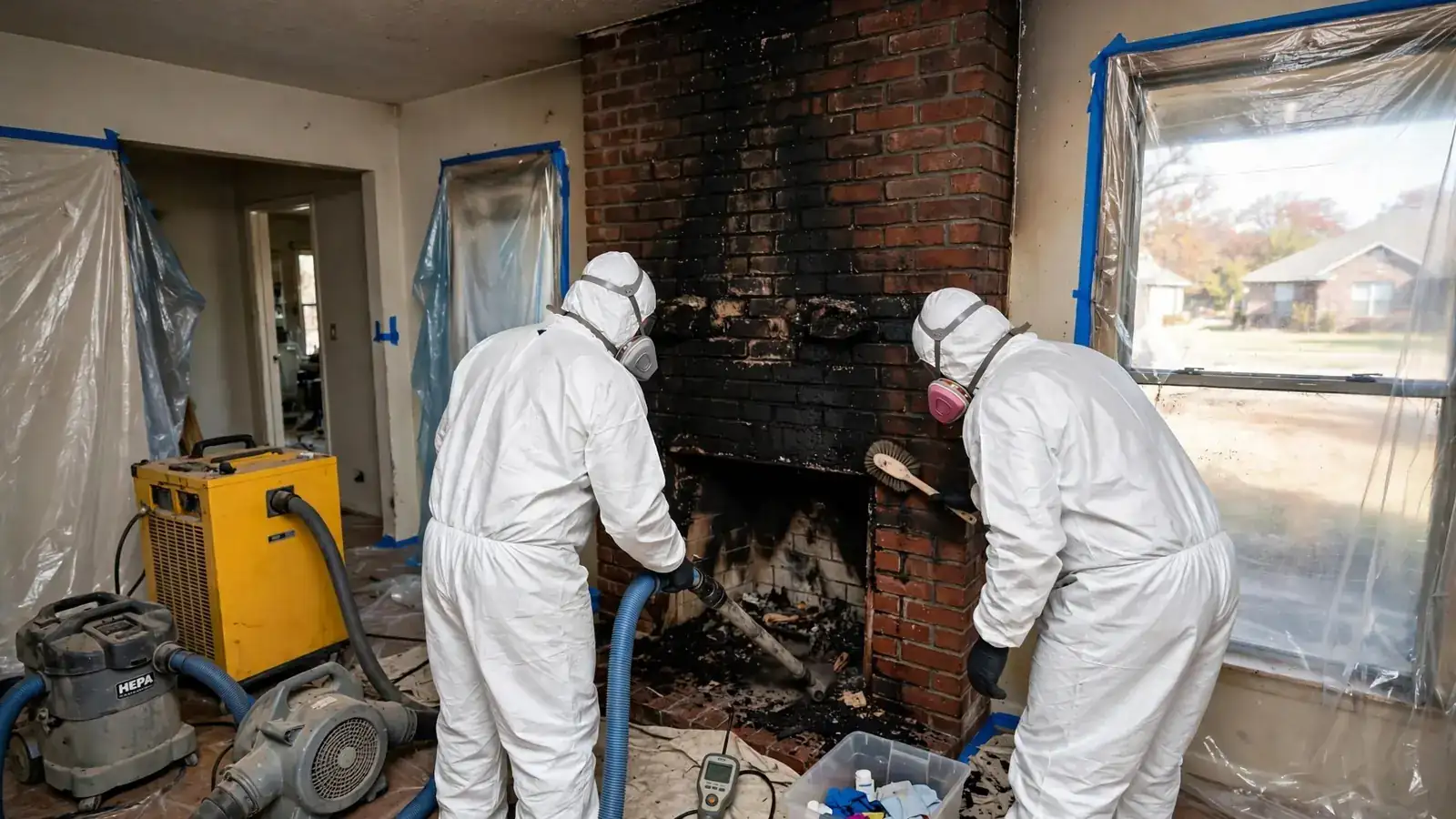
Kitchen cabinets and dresser drawers may look clean from the outside while soot has settled on the shelves and contents inside. Dishes, utensils and food containers need washing; open food and anything exposed to heat should be thrown away. Cabinet interiors are cleaned and may be sealed if odor remains.
Empty cabinets and drawers before cleaning so every surface can be reached.
FAQ
Soot Removal on the Northside: questions
Can soot be cleaned from wood siding?
Usually, with gentle exterior cleaning methods. Charred or blistered boards may need to be replaced.
Why shouldn't I wipe soot with a wet cloth?
Water spreads oily soot and pushes it into surfaces, which can make stains permanent. Dry removal should come first.
Is old paint a problem during Northside soot cleanup?
It can if older paint is scrubbed or sanded. Homes built before 1978 may have lead paint [3], so lead-safe methods should be used.