Key facts: Board-Up and Tarping on the Northside
- The Fort Worth Stockyards Historic District, at the heart of the Northside, was listed on the National Register of Historic Places in 1976 [5].
- Fire-damaged roofs and floors may be weak, so the U.S. Fire Administration urges caution before anyone walks on them [1].
- Local severe weather forecasts from the National Weather Service in Fort Worth help in timing roof protection [2].
Why Northside houses need quick securing
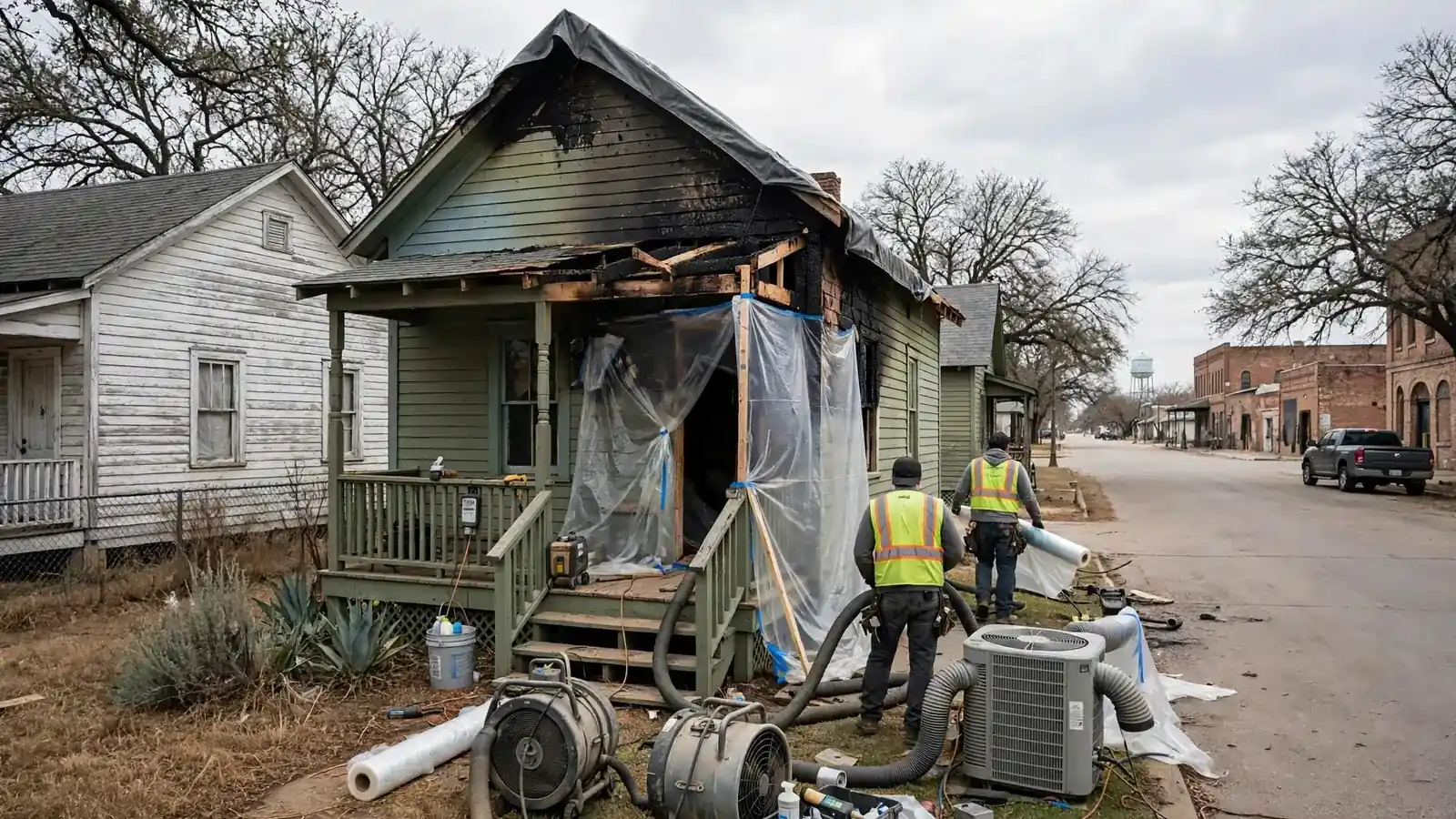
Many Northside homes are small wood-frame cottages built during the decades when the Stockyards and packing plants drew workers to this part of Fort Worth [5]. Wood siding, single-pane windows and shallow roofs mean a fire can open the house up quickly. With neighbors only a few feet away, an open house is also a risk to the homes beside it.
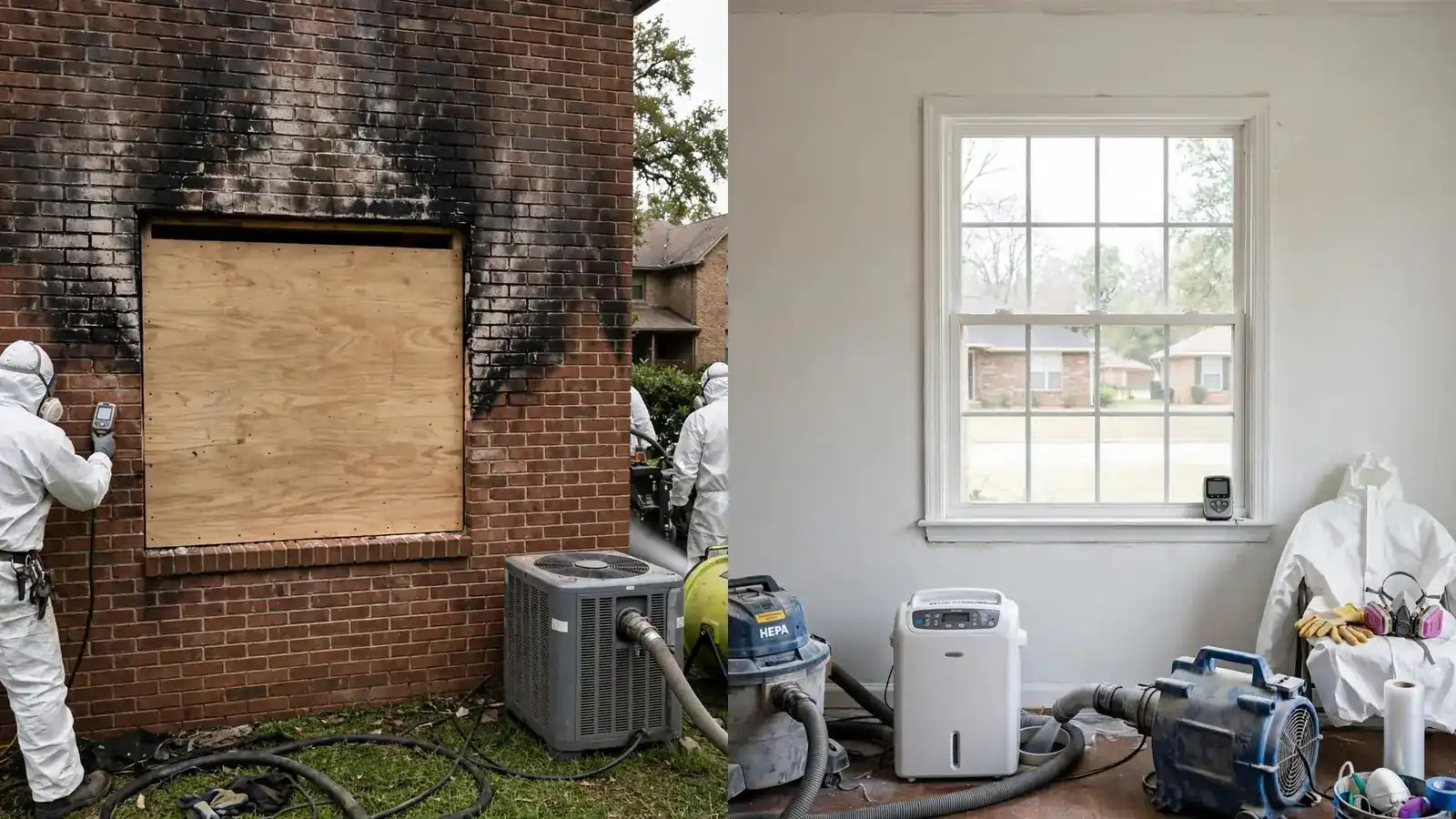
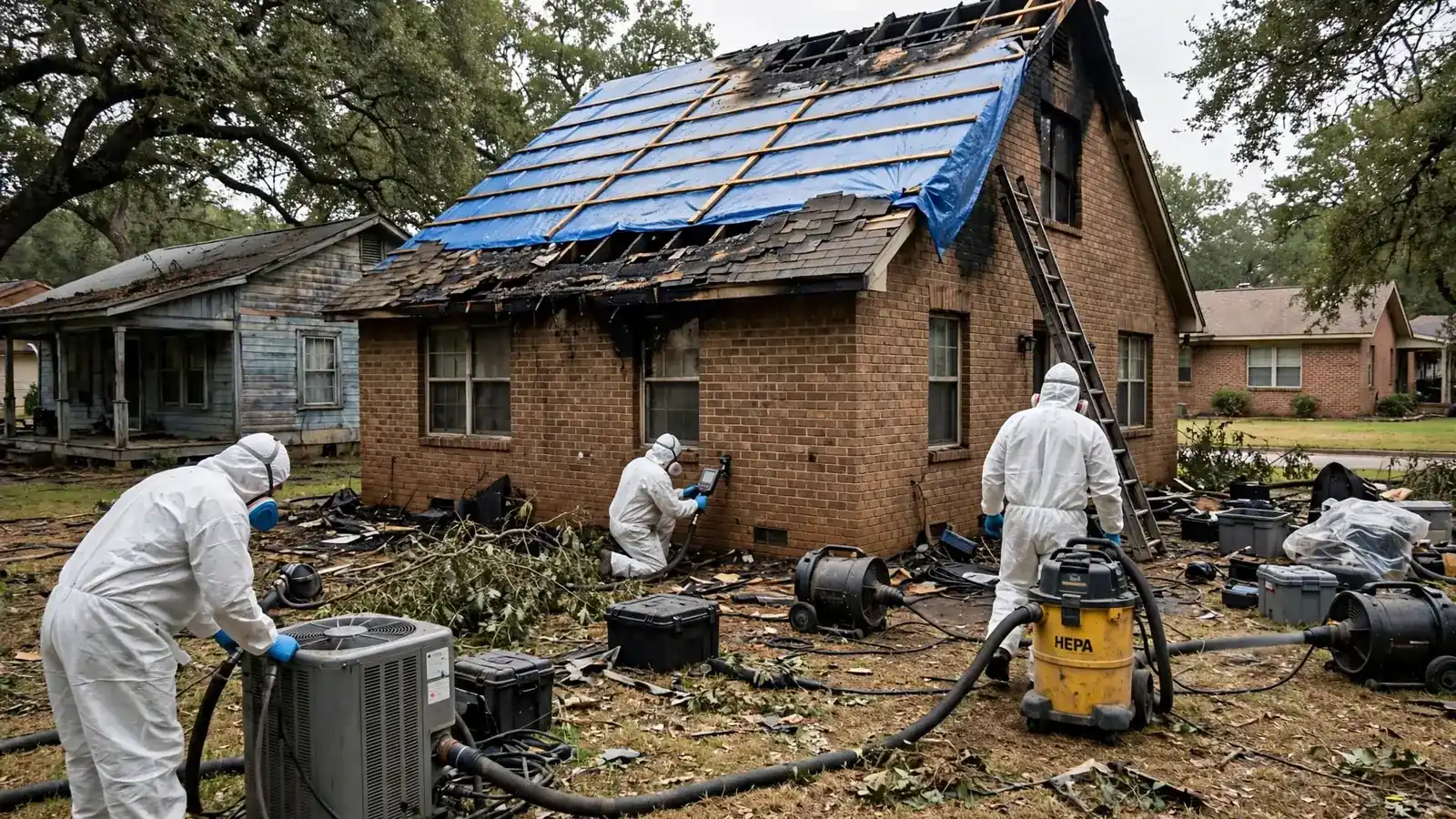
Boarding windows and doors and covering the roof keep rain out of the plaster or drywall, floors and belongings that survived. It also discourages people from entering a house that may have weak floors or damaged wiring.
When the house next door is damaged too
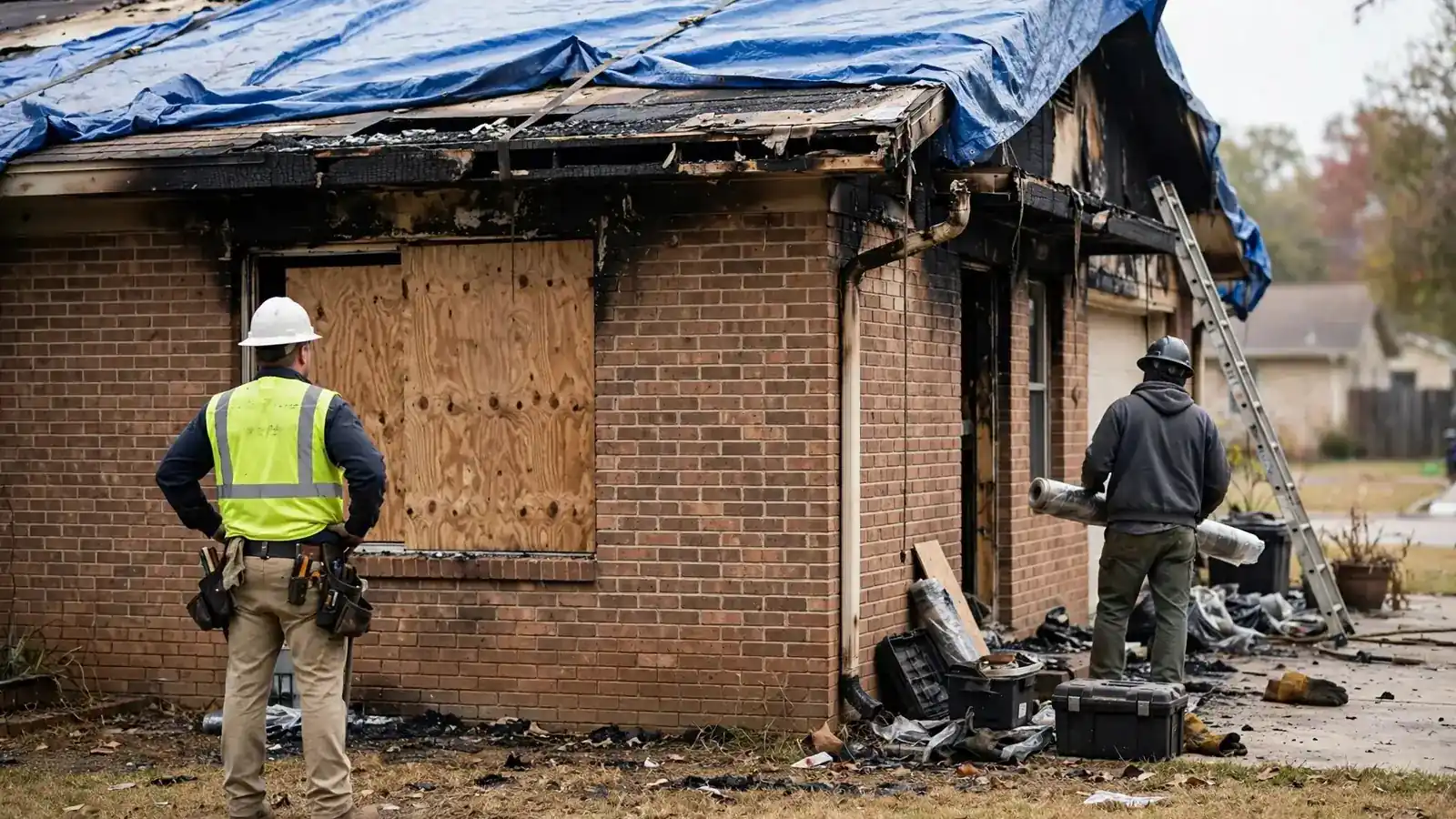
Radiant heat from a burning house can crack windows, melt vinyl and scorch siding on a neighboring home even if flames never touch it. On the Northside, where lots are narrow, it is common for two houses to need securing after one fire.
If your home was damaged by a neighbor's fire, photograph the damage and tell your insurer. The contractor on your call can board your broken windows and cover any roof damage separately from the house where the fire started.
Securing a Northside cottage after a fire
A typical order for closing up a small frame house.
- 1
Confirm the fire department has released it
Wait for the all-clear and for utilities to be checked.
- 2
Photograph the house and the neighbors' walls
Record damage on every side, including any heat damage next door.
- 3
Board windows and doors from the frame
Panels are fixed to frames so siding and trim are not split.
- 4
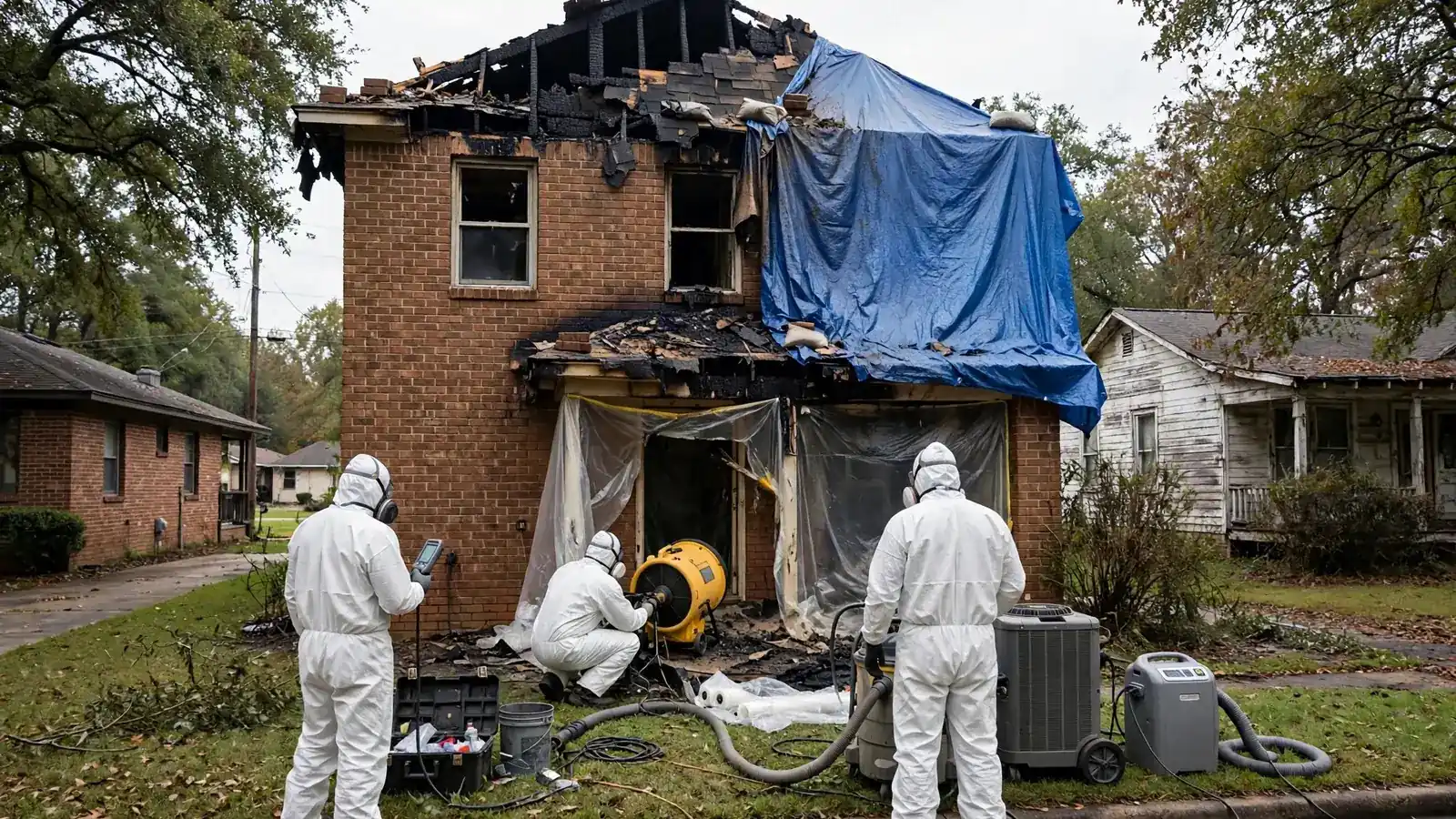
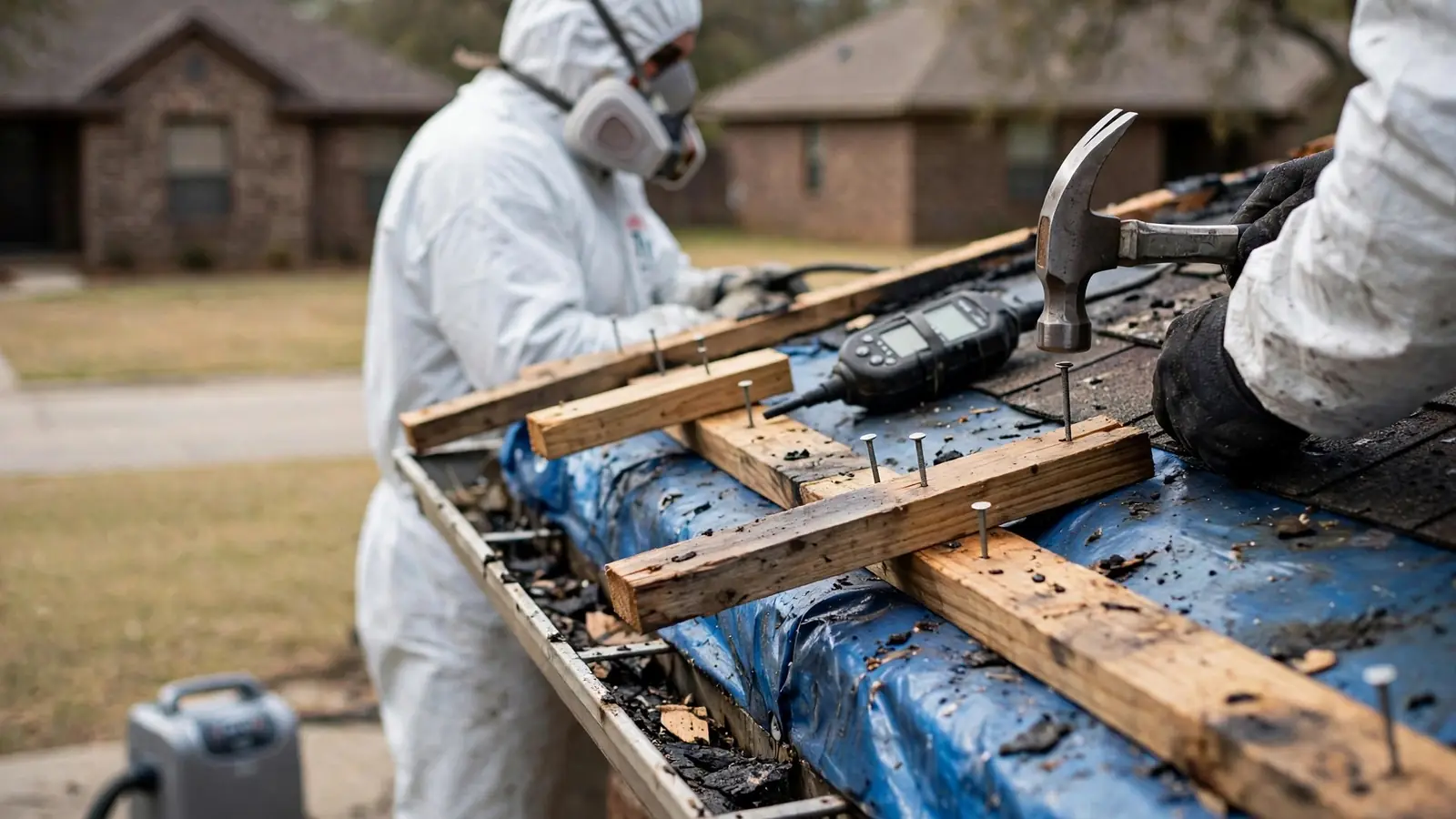
Tarp shallow roofs and porch roofs
Covers lap past the damage and are held along every edge.
Porches, siding and narrow side yards
Northside cottages often have front porches with wood posts and railings, and side yards just wide enough to walk through. Ladders and panels have to be handled carefully in that space, and porch roofs damaged by heat may not be safe to lean on. The crew will check what can carry weight before working from it.
Wood siding near the fire may be charred or loose. Covering exposed sheathing keeps water out of the wall cavity until siding can be replaced.
What happens after the house is secure
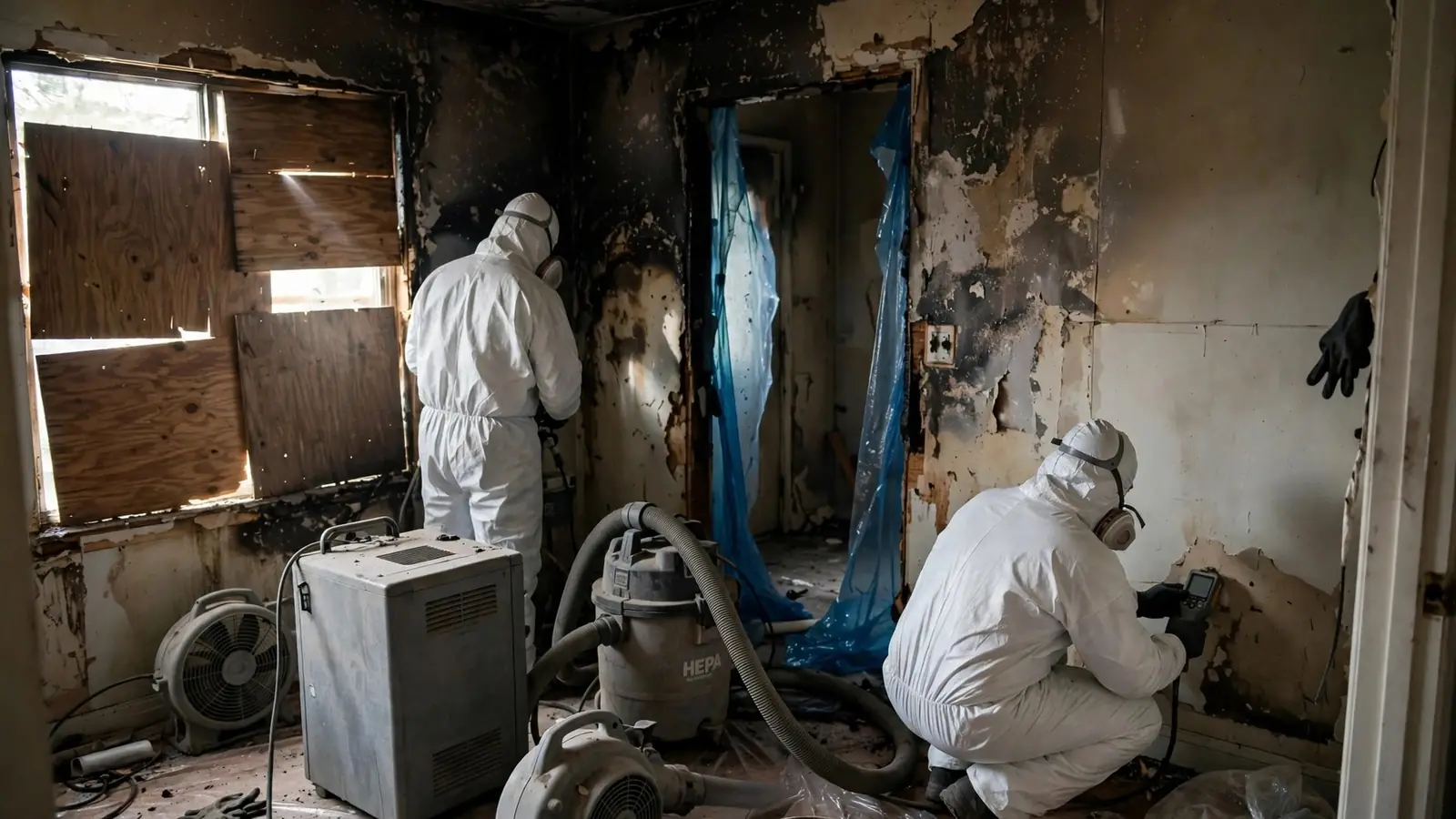
Once the house is closed in, the next steps are drying any firefighting water and cleaning smoke and soot. Our Northside page explains how frame cottages, pier foundations and older wiring shape that work.
If the house cannot be lived in, keep receipts for where you stay and what you buy. The Texas Department of Insurance explains how additional living expense coverage generally works [4].
Keeping the lot clear and the street safe
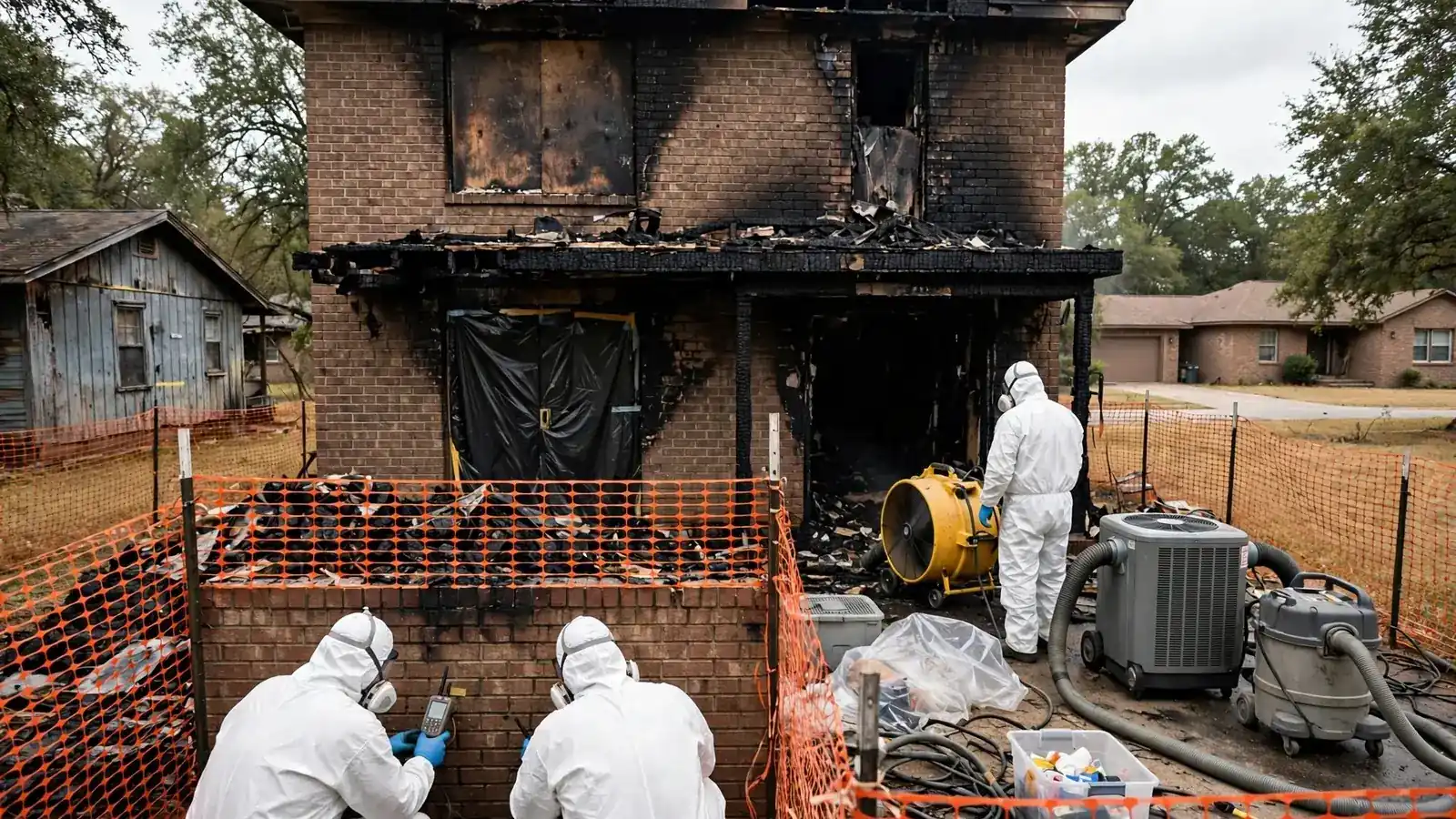
Northside streets are narrow and lots are small, so debris from a fire can spill onto the sidewalk or the neighbor's yard. Part of securing the house is clearing loose glass, charred boards and fallen siding so nobody is hurt walking past. A small debris trailer or bin can usually fit in the driveway or alley.
Children often walk to school along these streets. Fencing off an open porch or yard with temporary barriers keeps them away from sharp edges and unstable steps.
Older roofs and attic spaces
Many Northside cottages have low-pitched roofs with older decking. Fire can burn through quickly and weaken the boards around the hole. A tarp has to cover the damaged area with plenty of overlap, and battens must be fixed to solid framing, not to burned boards. The crew checks the decking from inside the attic where possible before working above it.
If the attic was not damaged, covering a hole quickly can keep it that way and protect the ceiling below.
Documenting securing work for your claim
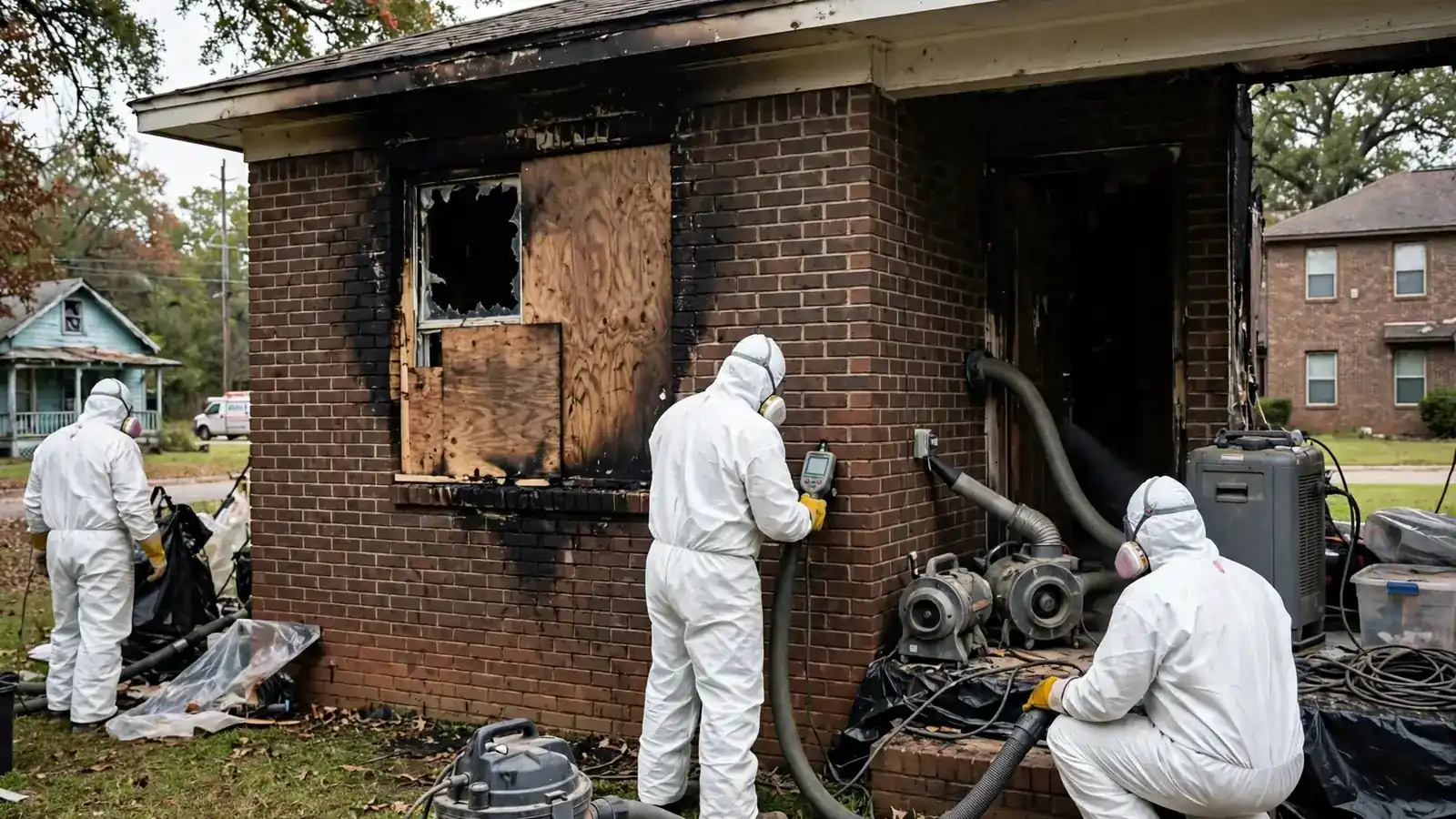
Most policies expect reasonable steps to protect a damaged house from further harm. Photos taken before and after board-up and tarping, along with the contractor's notes on what was done, show your insurer that the house was protected promptly. Keep these with your other claim records.
If more damage happens after the house is secured, for example a storm lifts a tarp, photograph it and report it right away.
FAQ
Board-Up and Tarping on the Northside: questions
Can heat from a neighbor's fire damage my house?
Yes. Radiant heat can crack windows, warp vinyl and scorch siding on nearby houses. Photograph the damage and tell your insurer.
Do crawl space openings need to be closed too?
If vents or access panels are damaged, closing them keeps animals and water out from under the house.
How long can a tarp stay on the roof?
Tarps are temporary. They should be checked after storms and replaced or repaired until permanent roofing is installed.