Key facts: Board-Up and Tarping in Ridglea
- Ridglea's postwar brick homes mostly predate 1978, so older paint on trim, doors and windows may contain lead [5].
- Roofs and floors damaged by fire can be weak, and the U.S. Fire Administration urges caution before anyone walks on them [1].
- The National Weather Service office in Fort Worth issues severe weather forecasts that help in timing roof protection [2].
Securing a postwar brick house
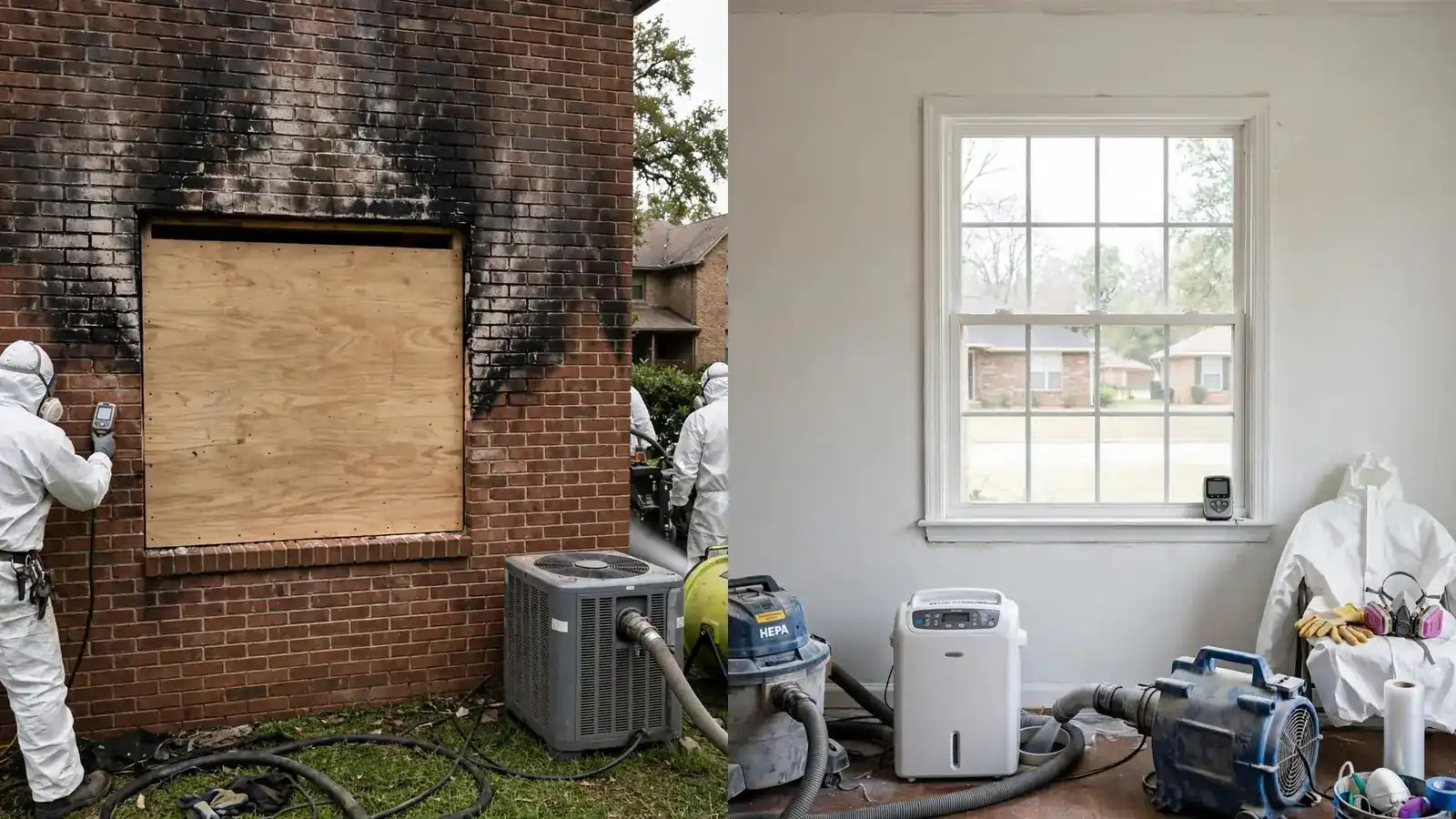
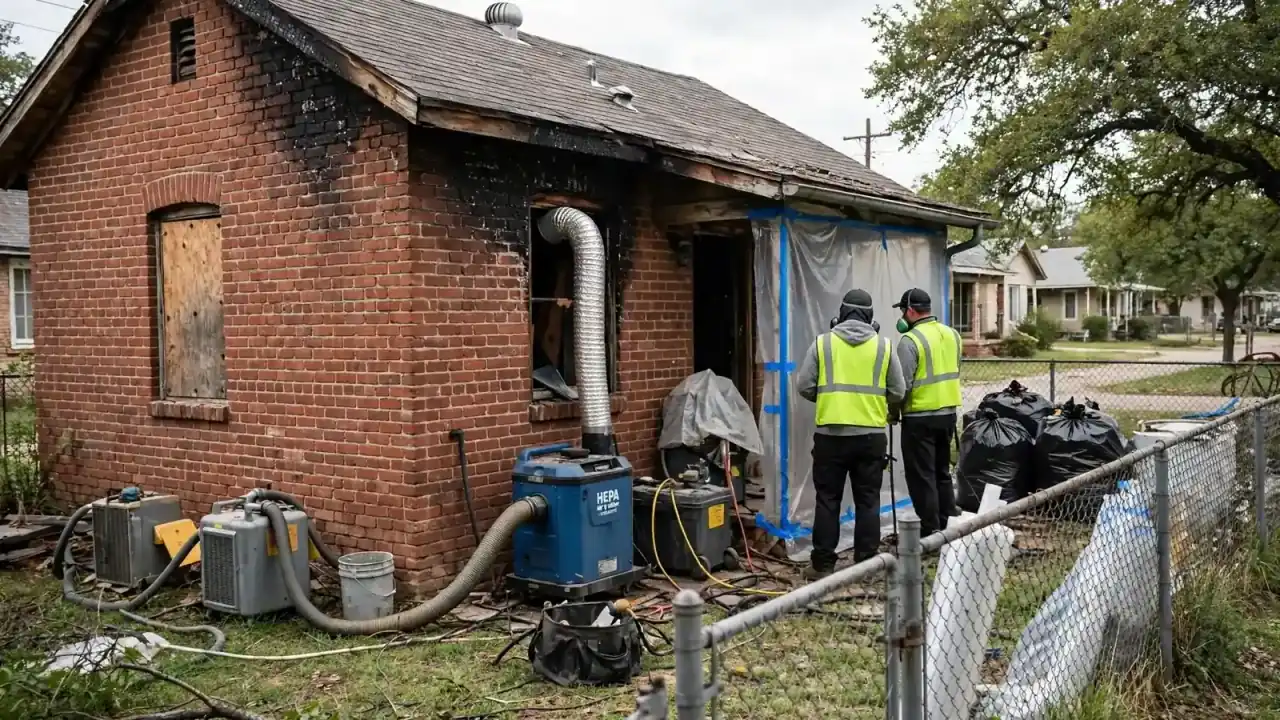
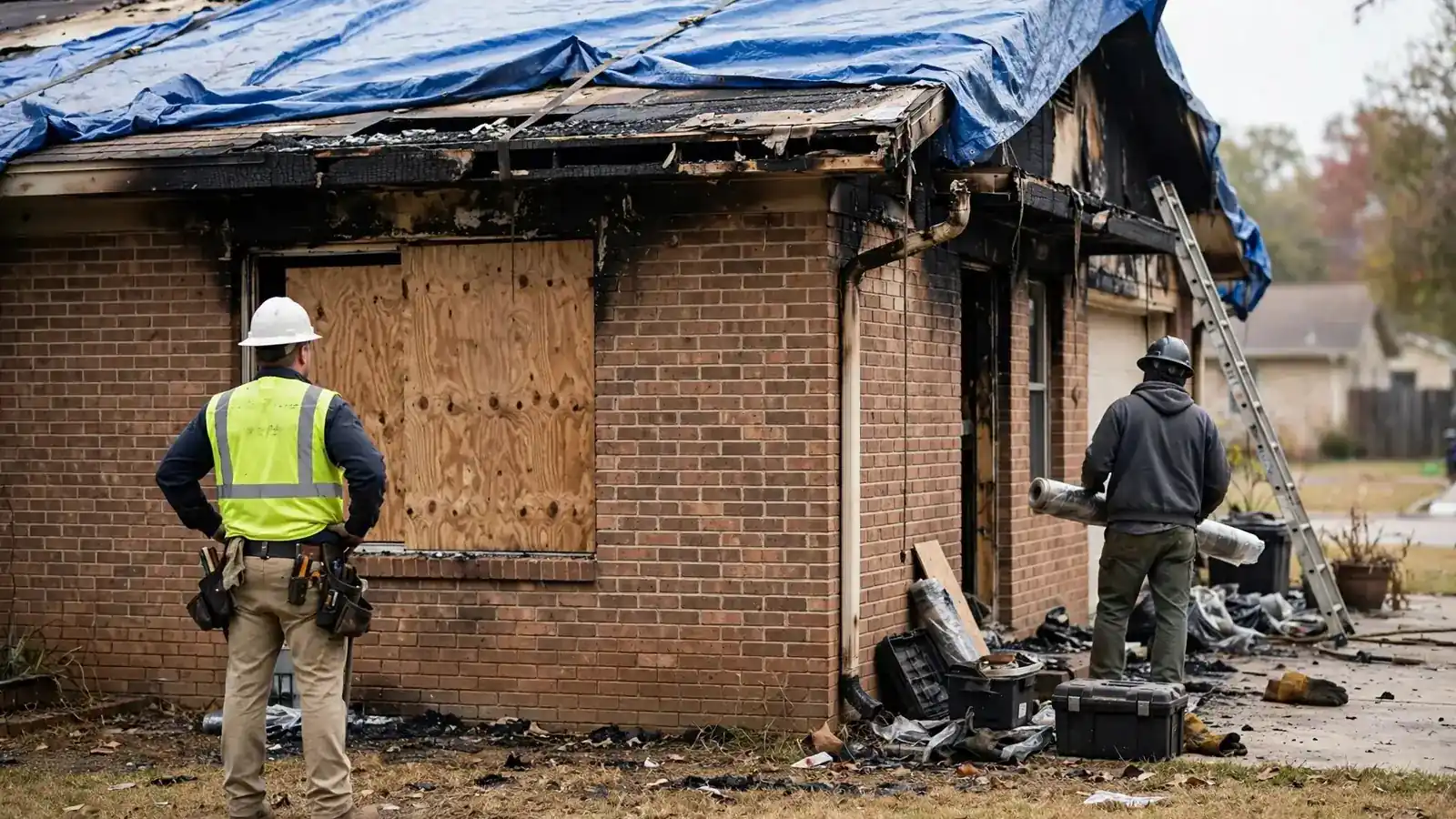
Ridglea homes are mostly one-story brick houses on modest lots, built in the years after World War II. Brick walls usually survive a fire well, but windows, doors and roofs do not. Broken glass, burned doors and holes in the roof need covering before rain soaks the house.
Because the houses are small, a single crew can often board and tarp the whole house in one visit.
Steel and wood windows
Many Ridglea homes still have their original steel casement windows or wood double-hung windows. Steel frames can warp in heat; glass cracks. Boarding steel windows means fitting panels to the masonry opening or frame, not trying to fasten through thin steel.
If you plan to keep original windows, ask the crew to avoid drilling into the frames so they can be repaired later.
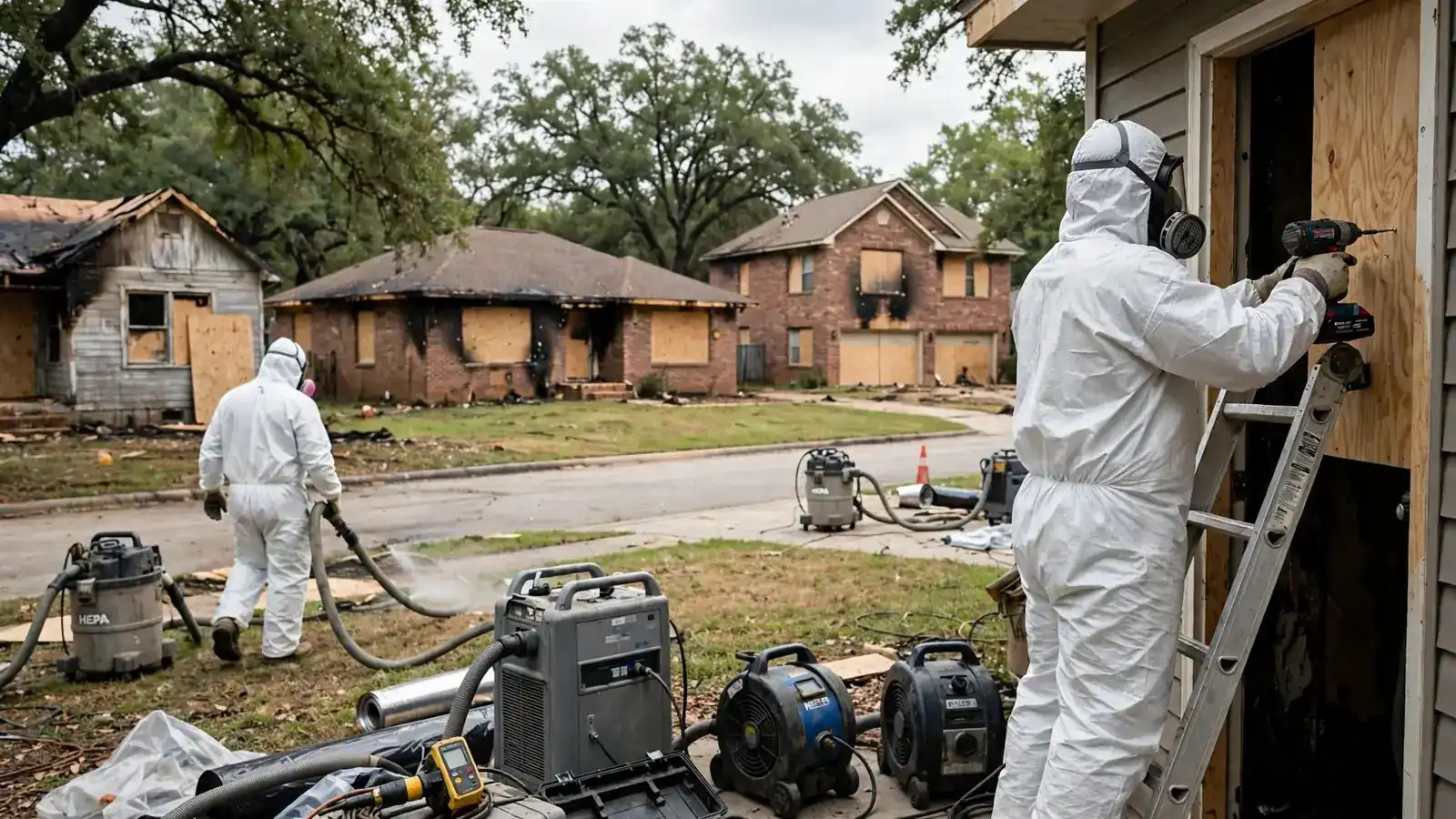
Securing a Ridglea house after a fire
A typical order of work.
- 1
Wait for the release from the fire department
Nobody enters until the house is released.
- 2
Photograph the house from every side
Record the street side, the alley side and the roof.
- 3
Board doors and windows to the masonry opening
Panels fit inside brick openings without damaging steel frames.
- 4
Cover roof damage with a battened tarp
Tarps lap past the damage and are fixed along the edges.
Alley garages, carports and sheds
Detached garages, carports and storage sheds along the alley are common. A fire that starts there can spread to the house, and a damaged garage gives easy access from the alley. Securing the garage as well as the house closes that gap.
Carports with heat-damaged roofs may need temporary support before anyone works under them.
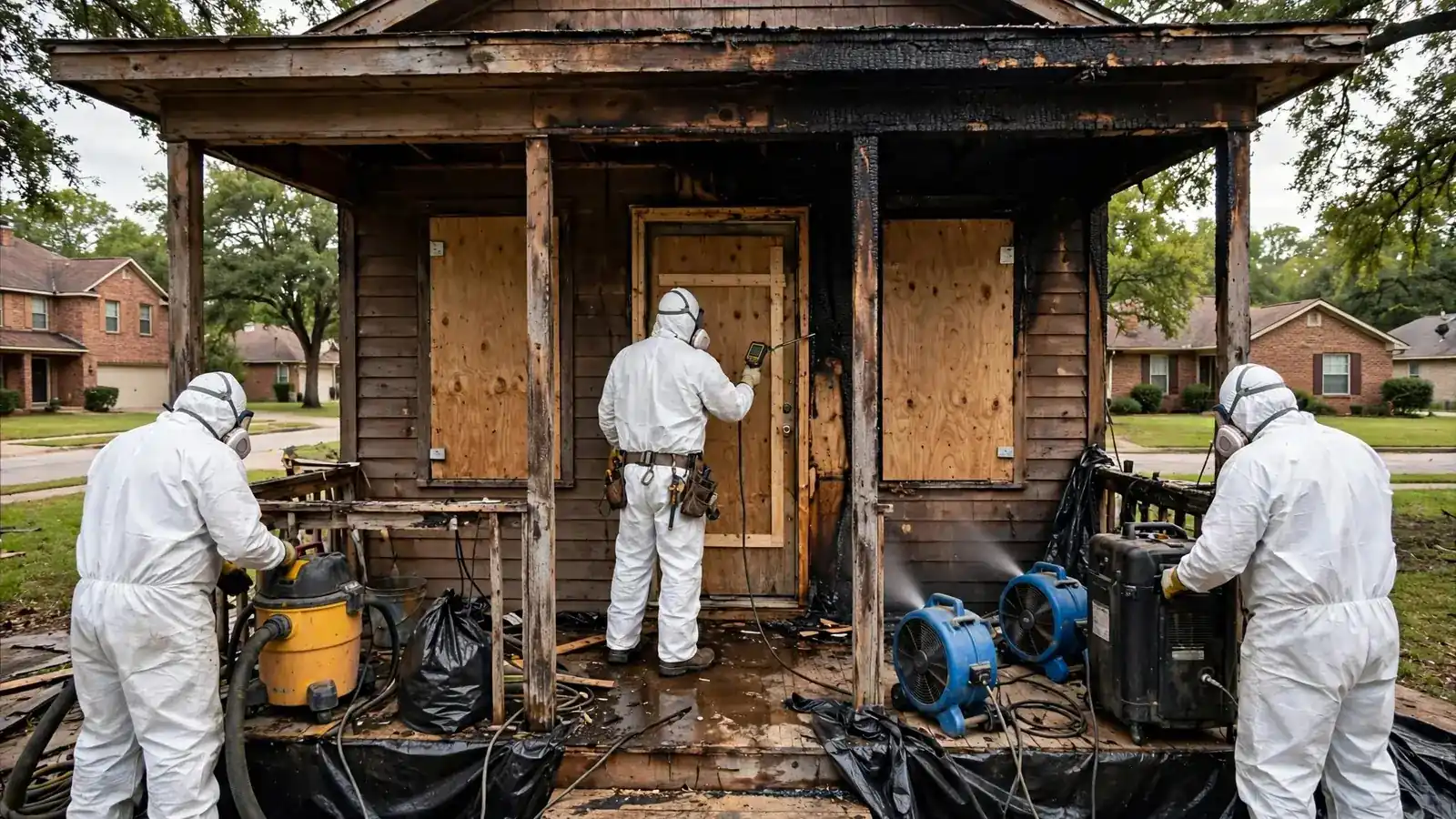
Small roofs and shallow attics
Ridglea houses often have simple gable or hip roofs and shallow attics. A fire in the attic can burn through quickly. Tarping must cover the hole with generous overlap and be fixed to solid framing. Walking on the roof should wait until the decking has been checked.
A small roof also means less room for error: a tarp that slides can expose most of the house to rain.
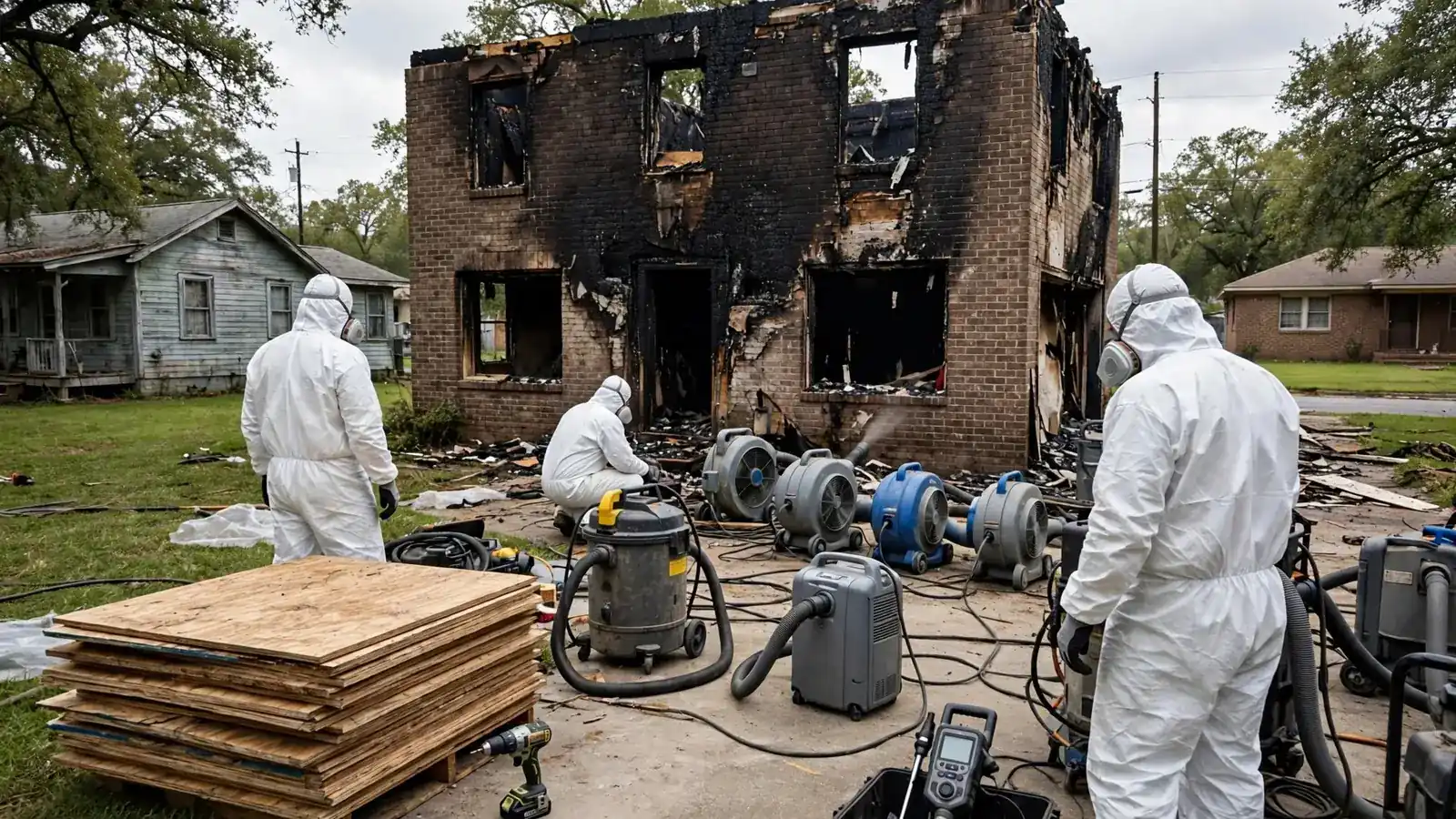
Spring storms on the west side
Fort Worth's spring storms bring heavy rain, hail and high winds. A tarp that is not well anchored can tear loose. Check the forecast before work starts and look at the tarp after each storm [2].
Large trees along some Ridglea streets can drop branches on a tarped roof. Point out any overhanging limbs to the crew.
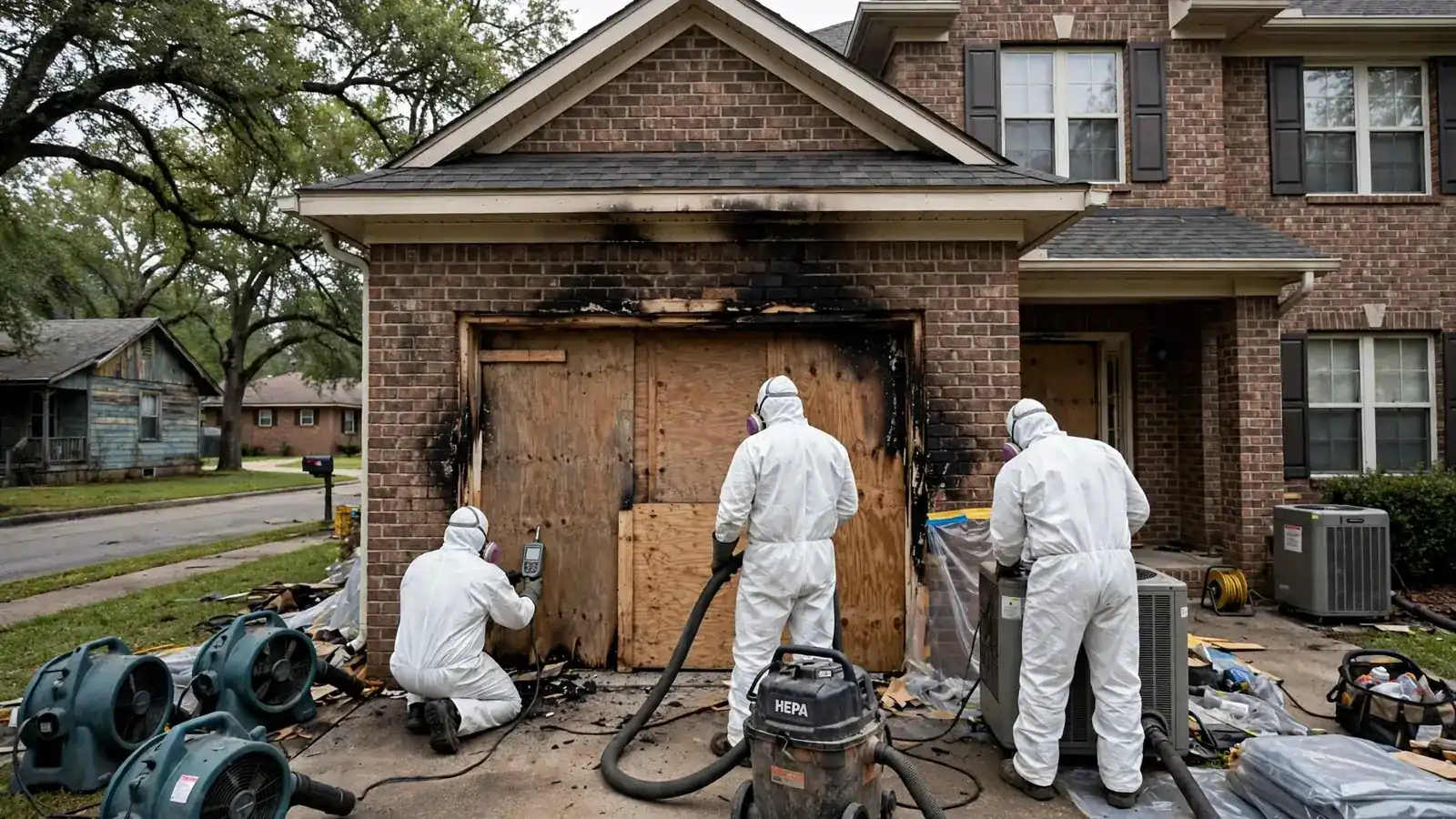
Keeping the house secure until repairs
Board-up and tarping are temporary. Check them regularly, especially after storms, and report any damage quickly. Keep the doors locked and let neighbors know the house is empty.
Our page on Ridglea homes explains how postwar construction affects what comes next.
After securing: drying and cleanup
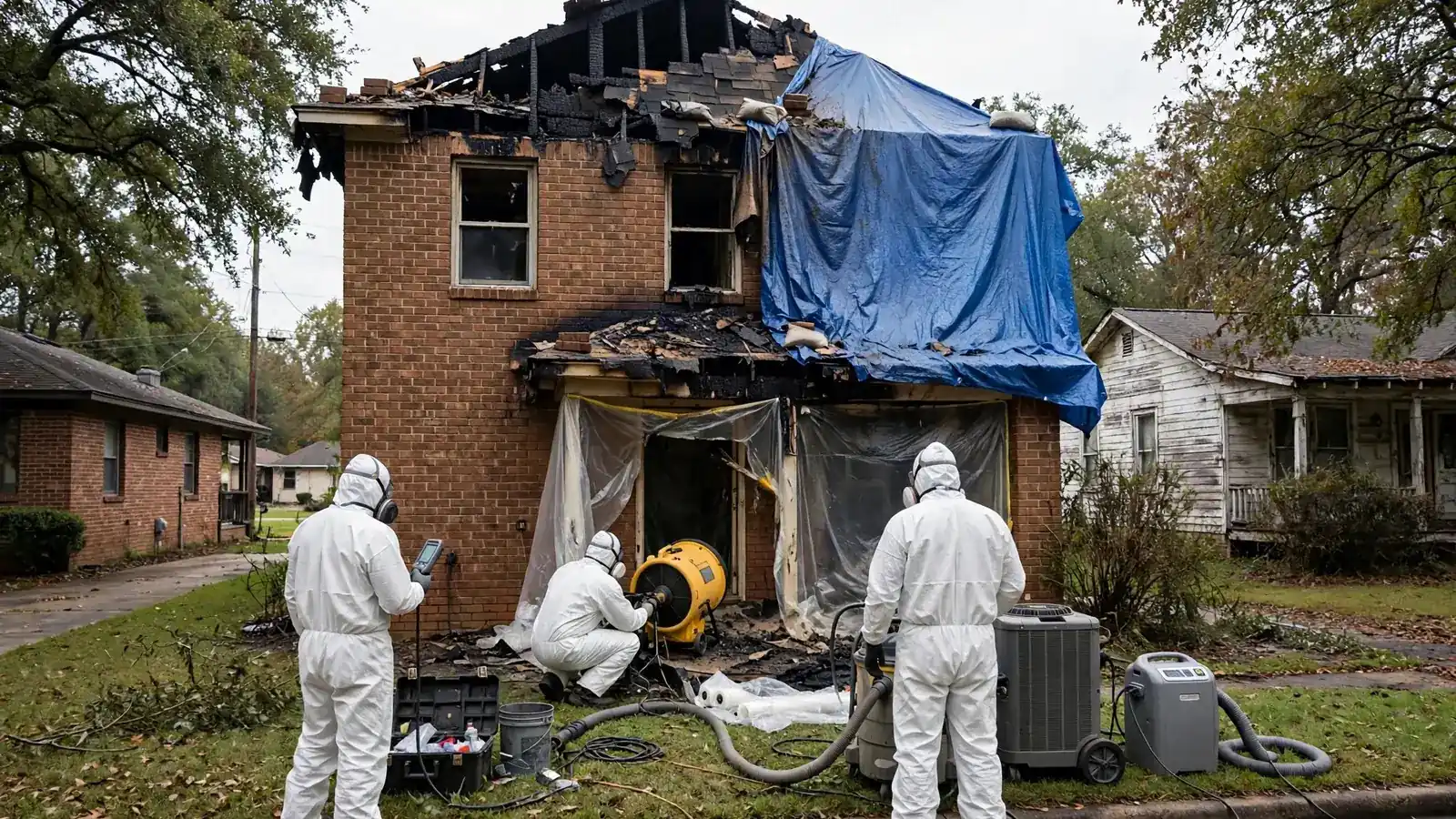
Once the house is closed in, the next steps are drying any firefighting water and cleaning smoke and soot. In a small house, smoke reaches every room, so cleanup usually covers the whole house.
If the house is not livable, save receipts for lodging and meals from the first night; the Texas Department of Insurance outlines how additional living expense coverage generally works [4].
Neighbors close by on Ridglea streets
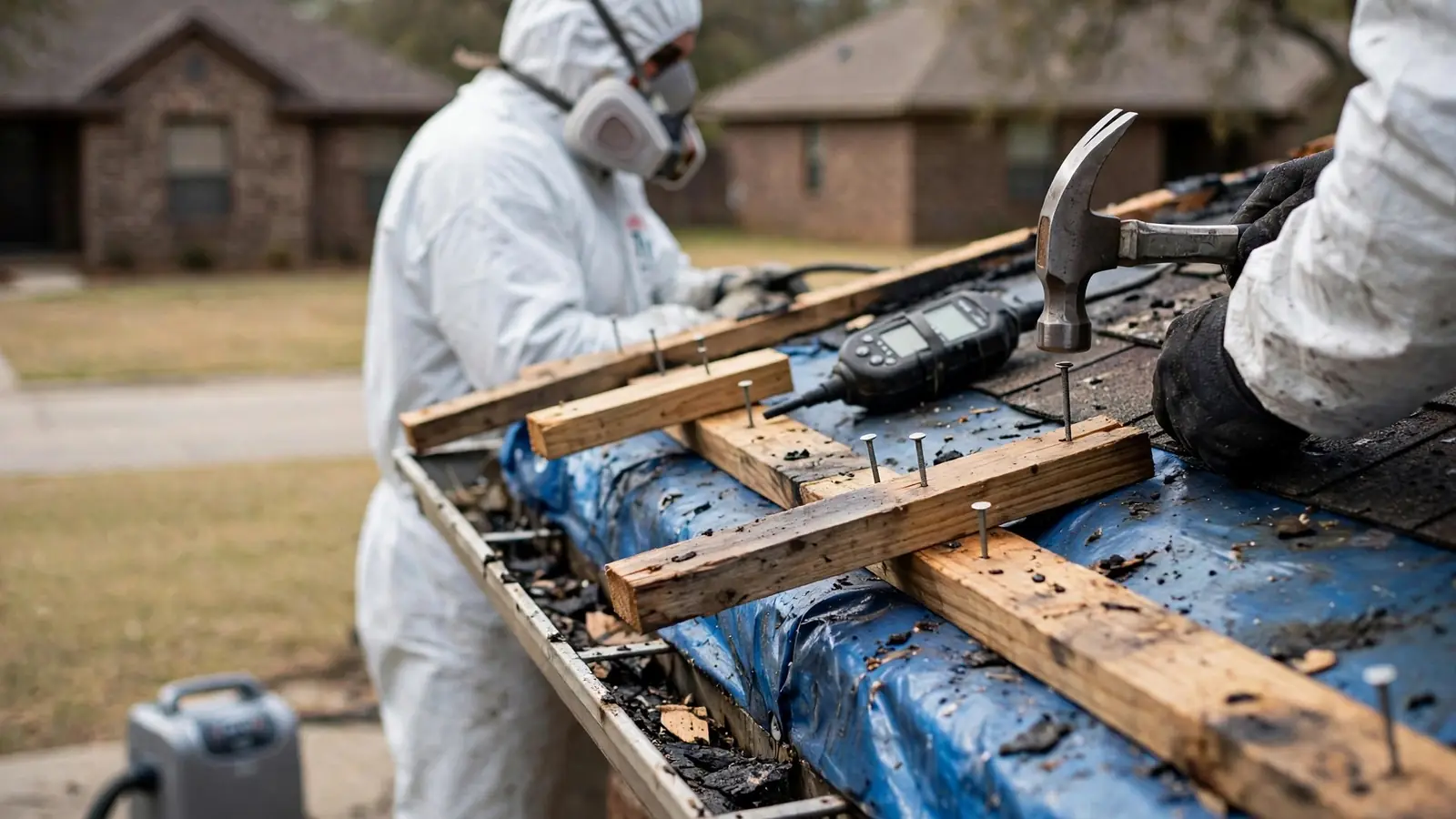
Ridglea houses sit on modest lots, often with only a driveway between them. Radiant heat from a fire can crack windows and scorch trim on the neighboring house. If your home was damaged by a fire next door, photograph it and report it to your insurer. The contractor can board your broken windows separately from the house where the fire began.
Letting neighbors know when the crew will arrive helps with parking and keeps everyone clear of falling debris.
Protecting the inside while the outside is open
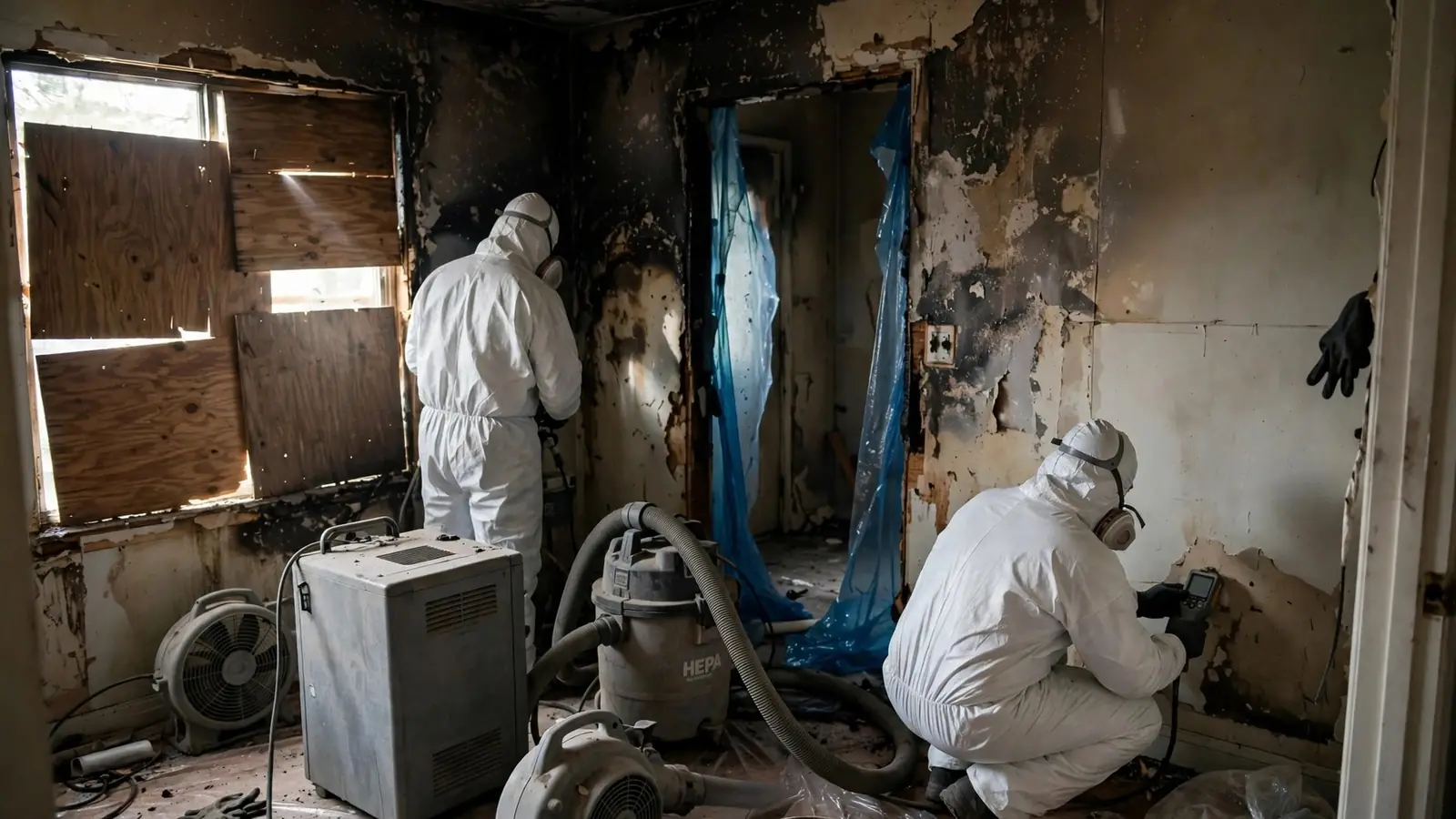
Until the house is fully closed in, rain can come through broken windows and roof holes. Moving furniture away from openings and covering it with plastic helps. If firefighters left water on the floors, opening interior doors and getting fans running once the power is checked will start drying while the board-up is completed.
Small houses dry faster than big ones, but only if the water and weather are kept out.
FAQ
Board-Up and Tarping in Ridglea: questions
Can steel casement windows be saved after a fire?
Sometimes. Warped frames may need replacement, but many can be repaired. Boarding them carefully helps.
Does my carport need to be secured?
If its roof is damaged, it may need support or removal for safety. The crew can check it.
How fast can a small house be secured?
Often in a single visit, once the fire department releases it.