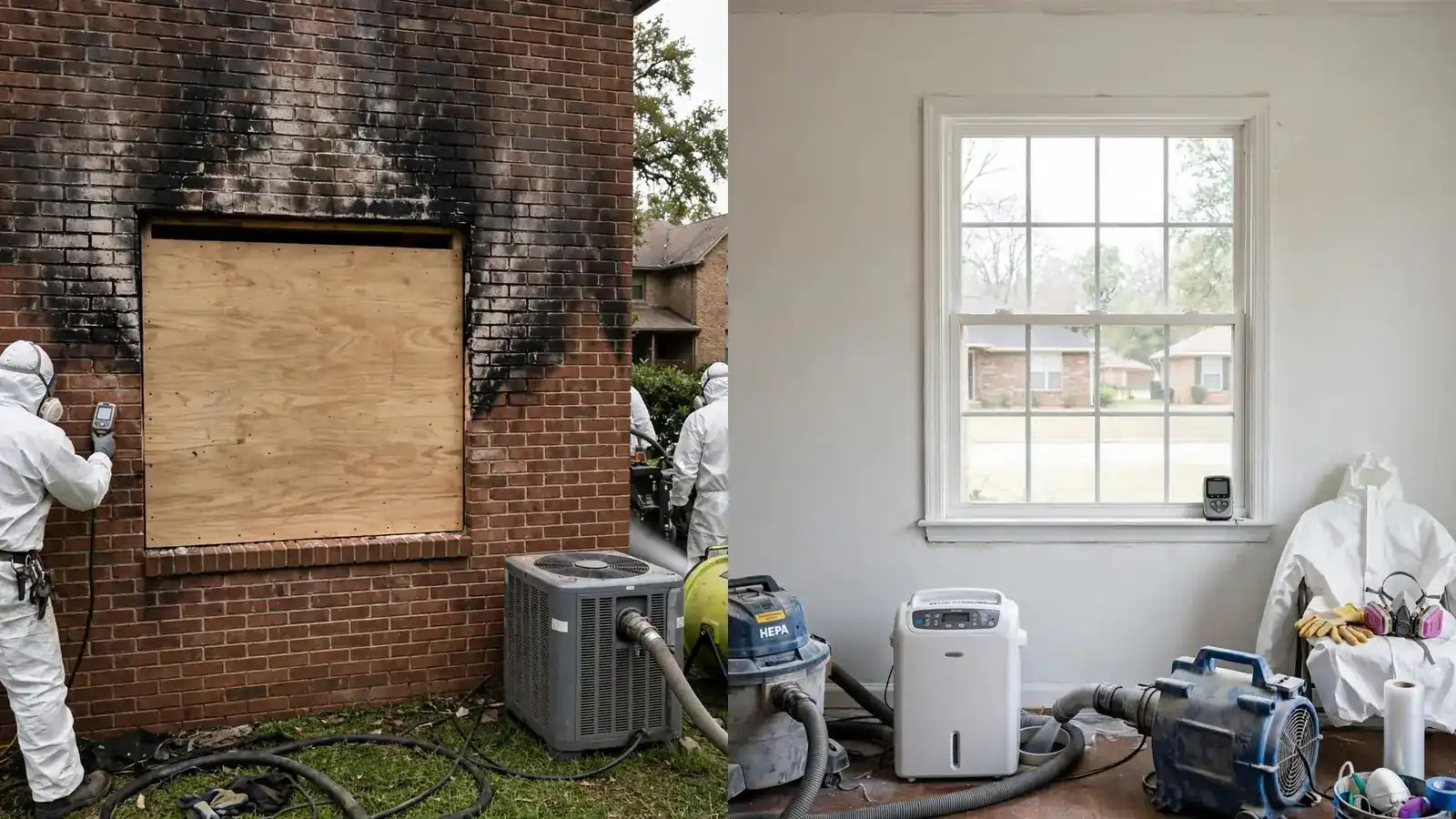
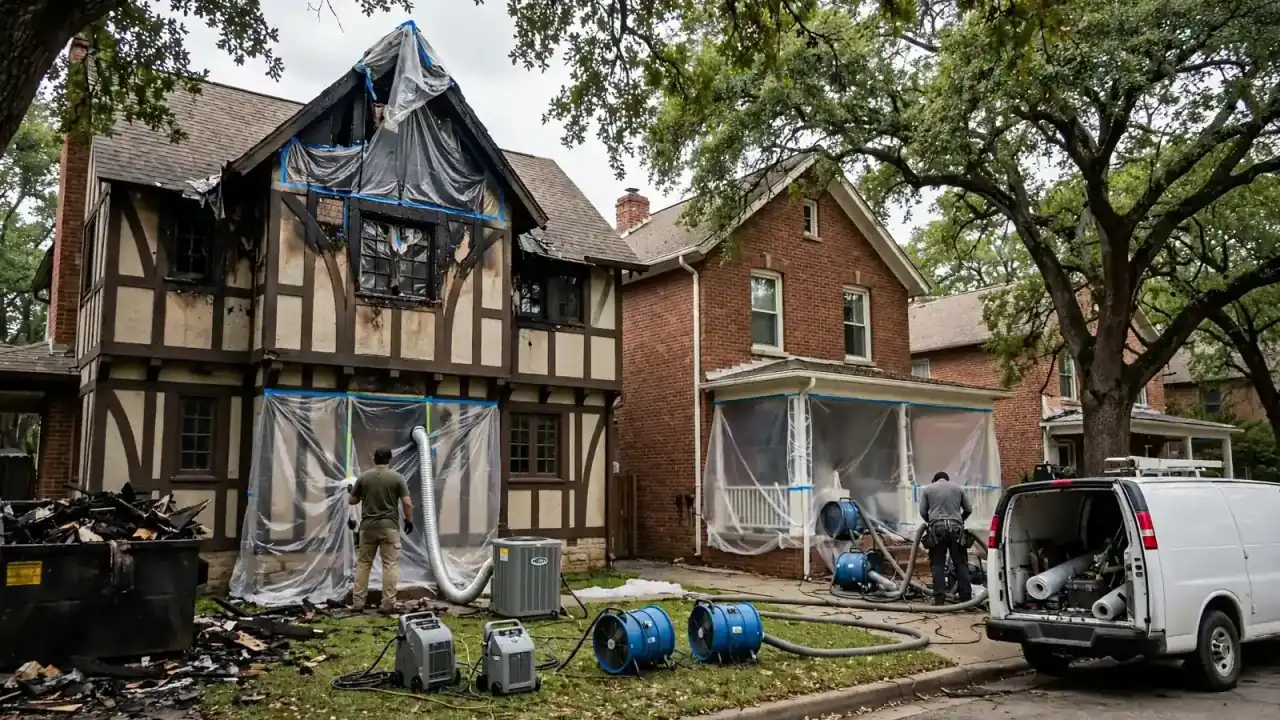
Key facts: Board-Up and Tarping in Arlington Heights
- Arlington Heights grew as a west side neighborhood after World War I brought soldiers to nearby Camp Bowie [5][6].
- Roofs and floors weakened by fire can give way, so the U.S. Fire Administration urges care before anyone goes onto a burned structure [1].
- The National Weather Service office for Dallas–Fort Worth posts local storm forecasts that help in timing roof cover work [2].
What makes Arlington Heights houses different to secure
Most homes here date from the 1920s and 1930s, with a mix of bungalows, Tudor and colonial revival houses and later additions. Many still have wood casement or double-hung windows, arched front doors and steep roof sections over entries. Those details are worth protecting, and they also make board-up less straightforward than on a newer house with standard openings.
A crew that knows older houses fits plywood to the opening frame rather than nailing through trim, and uses custom-cut panels for arched or odd-sized openings. That keeps the original woodwork in repairable shape when the smoke damage cleanup and rebuild begin.
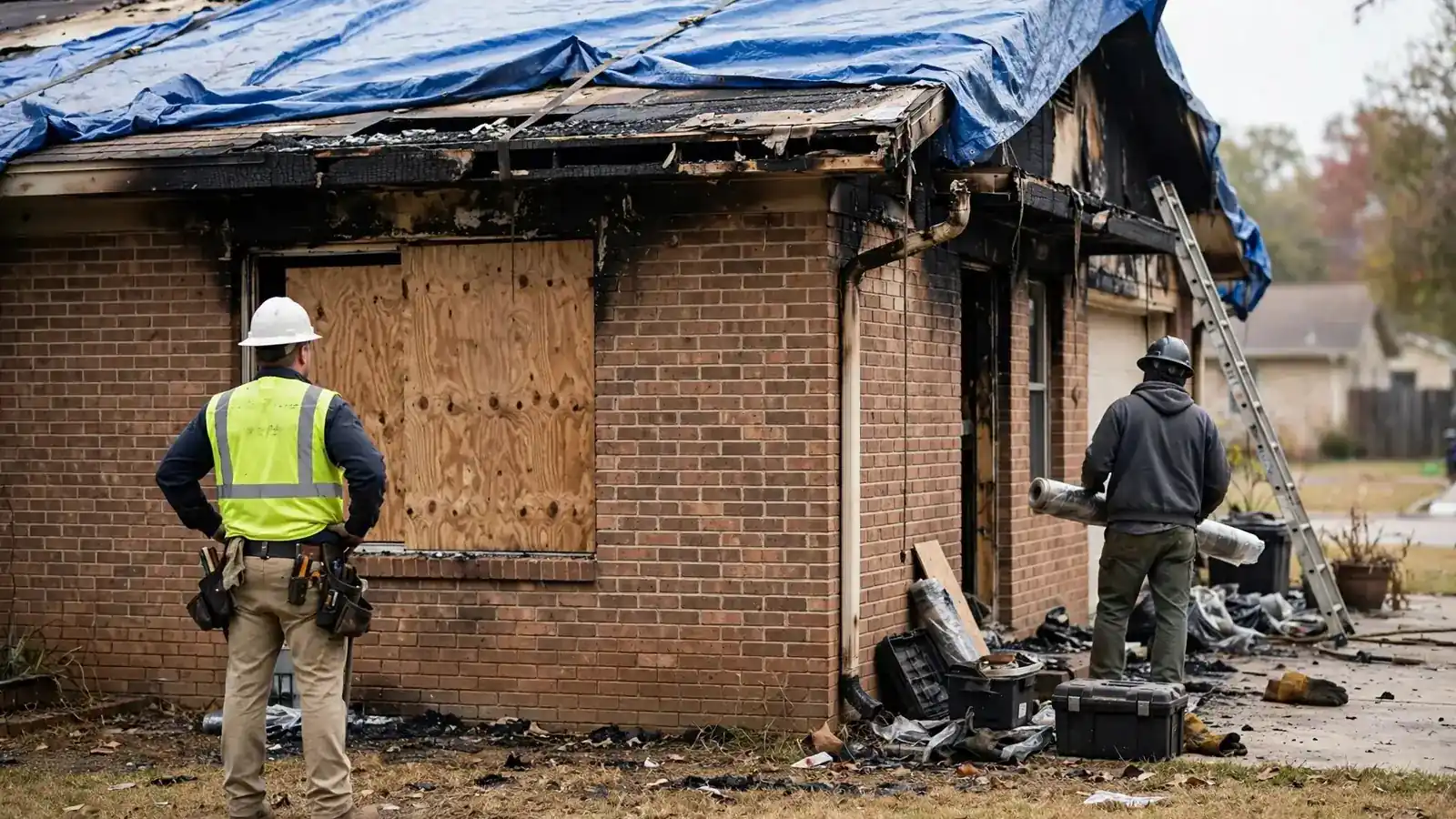
Alley garages and garage apartments
Many Arlington Heights lots have a detached garage or garage apartment on the alley. If the fire started there or spread to it, that building may need its own board-up, and the alley side of the main house may also be exposed. Alleys give a crew access for materials and debris, but they can also make an empty, damaged house easier for trespassers to reach.
Securing both buildings at once, and locking any gate between the alley and the yard, removes that weak spot. If a tenant lives in a garage apartment, ask the contractor how to keep their entrance usable while the main house is closed.
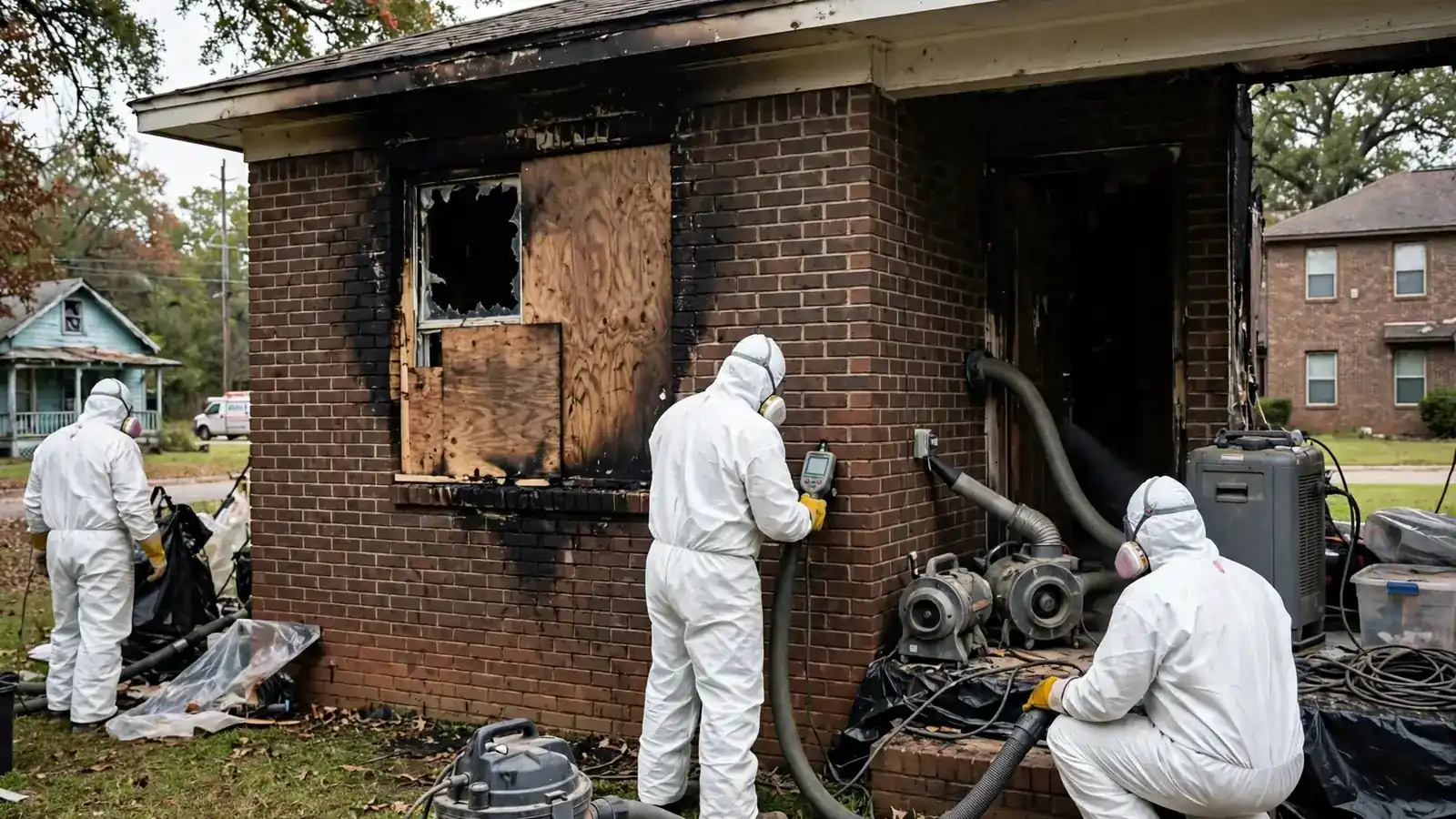
Securing an Arlington Heights home step by step
A typical order for closing up a fire-damaged house in this area.
- 1
Get the all-clear from the fire department
Nobody should enter or climb onto the house until it has been released and utilities have been checked.
- 2
Record the damage on all sides
Photograph the street side, the alley side and the roof from the ground before covering anything.
- 3
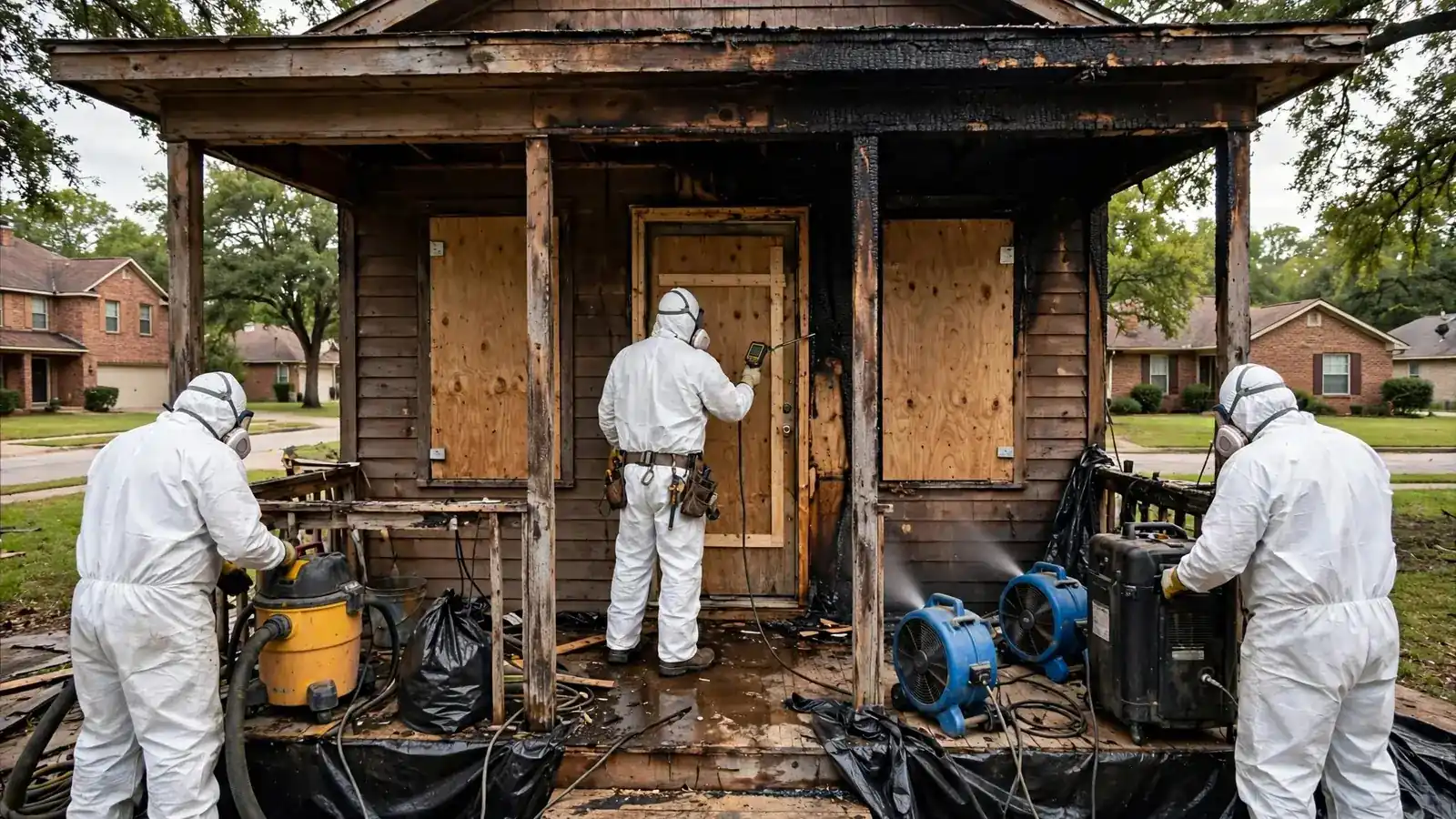
Fit panels to the window and door frames
Custom-cut panels protect arched and wood openings without drilling into the trim.
- 4
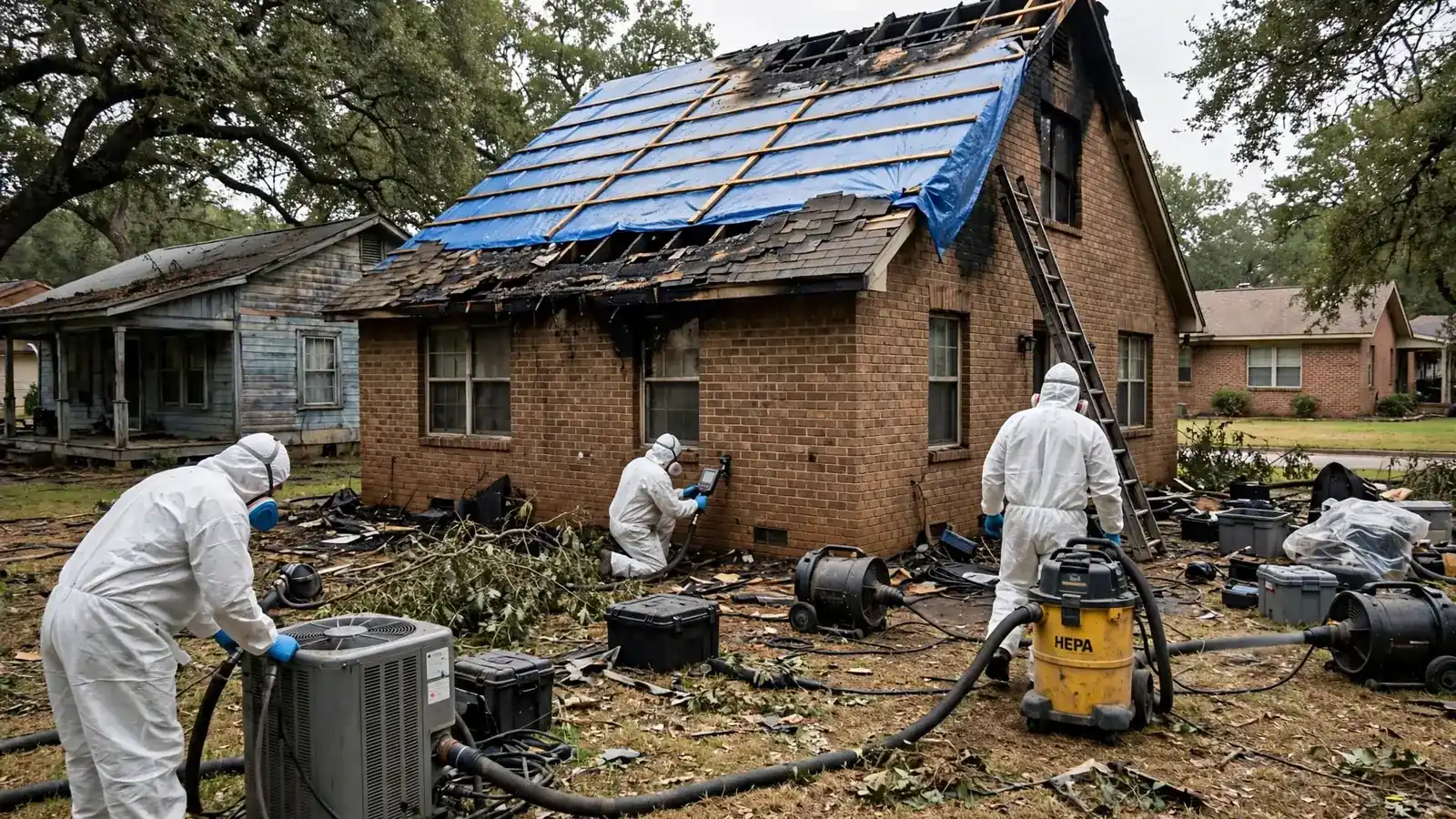
Cover and batten the roof sections
Tarps lap well past each opening and are fixed along their edges to resist west side winds.
Spring storms and roof protection on the west side
Fort Worth gets strong thunderstorms with hail and high winds, especially in spring. A tarp that is not fixed down properly can tear off in a single storm and let water into the attic and ceilings below. Checking the forecast before the work and again after each storm is part of keeping the house protected [2].
Large old trees line many Arlington Heights streets. After a fire, branches over the house may be scorched or weakened, so the contractor may point out limbs that should be looked at by a tree service before they fall on a tarped roof.
Information that helps the crew prepare
Share these details on your call so the right materials arrive.
- Window style and sizesWood casements, arched windows or large picture windows each need different panels.
- Garage or apartment on the alleyWhether a second building on the lot is damaged or occupied.
- Roof layoutWhere the roof is open, how steep it is and whether there is a second story.
- Truck and ladder accessWhether trucks can use the alley, the driveway or only the street.
From temporary protection to restoration
Board-up and tarping are temporary. Once the house is weather-tight, the restoration contractor can start sorting contents, drying any water from firefighting and cleaning smoke and soot. Our Arlington Heights page explains how the age and materials of these homes shape that later work.
Keep receipts from the first night if you have to stay elsewhere. The Texas Department of Insurance explains how additional living expense coverage generally works for Texas policyholders [4].
Keeping an empty house safe in a busy neighborhood
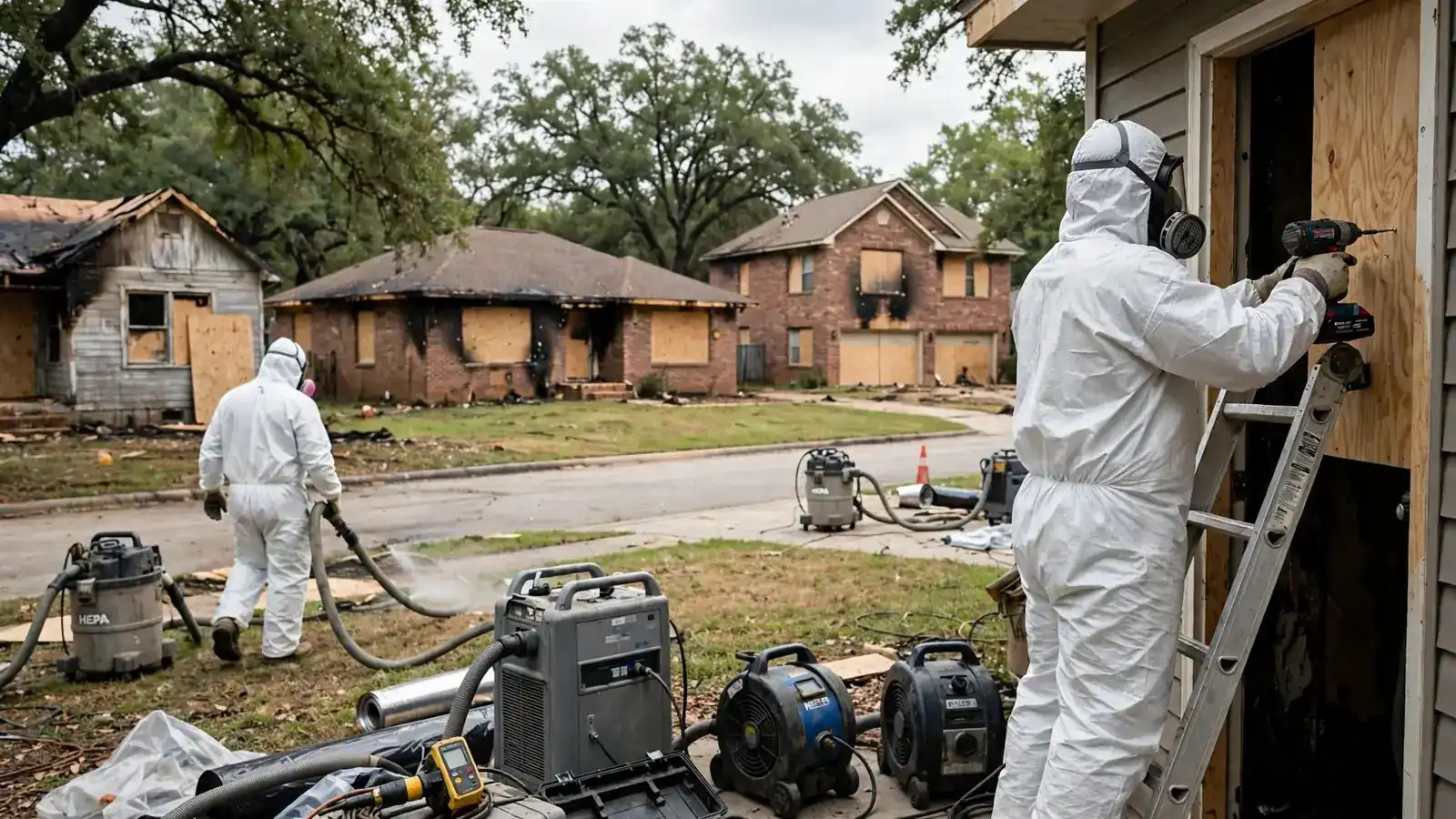
Arlington Heights sits close to Camp Bowie Boulevard and the Cultural District, with steady foot and car traffic. An obviously damaged, empty house draws attention. Solid panels on every ground-floor opening, a locked gate and a sign asking people to stay out all help. Some owners also ask a neighbor to keep an eye on the property and call if anything changes.
Valuables that survived the fire are safer out of the house. If you can, remove documents, jewelry and small electronics once the fire department allows entry, and note what you took for your records.
FAQ
Board-Up and Tarping in Arlington Heights: questions
Can a board-up crew work from the alley?
Often yes. Many Arlington Heights lots have alley access, which gives room for a truck and materials. The crew will check whether the alley is wide enough and clear of power lines.
Will plywood damage my arched or wood windows?
It should not. Panels can be cut to fit and fastened to the opening frame so the sash and trim are left intact for later repair.
What if the fire started in my detached garage?
The garage may need its own board-up, and the house wall facing it may also need covering. The contractor can secure both on the same visit.