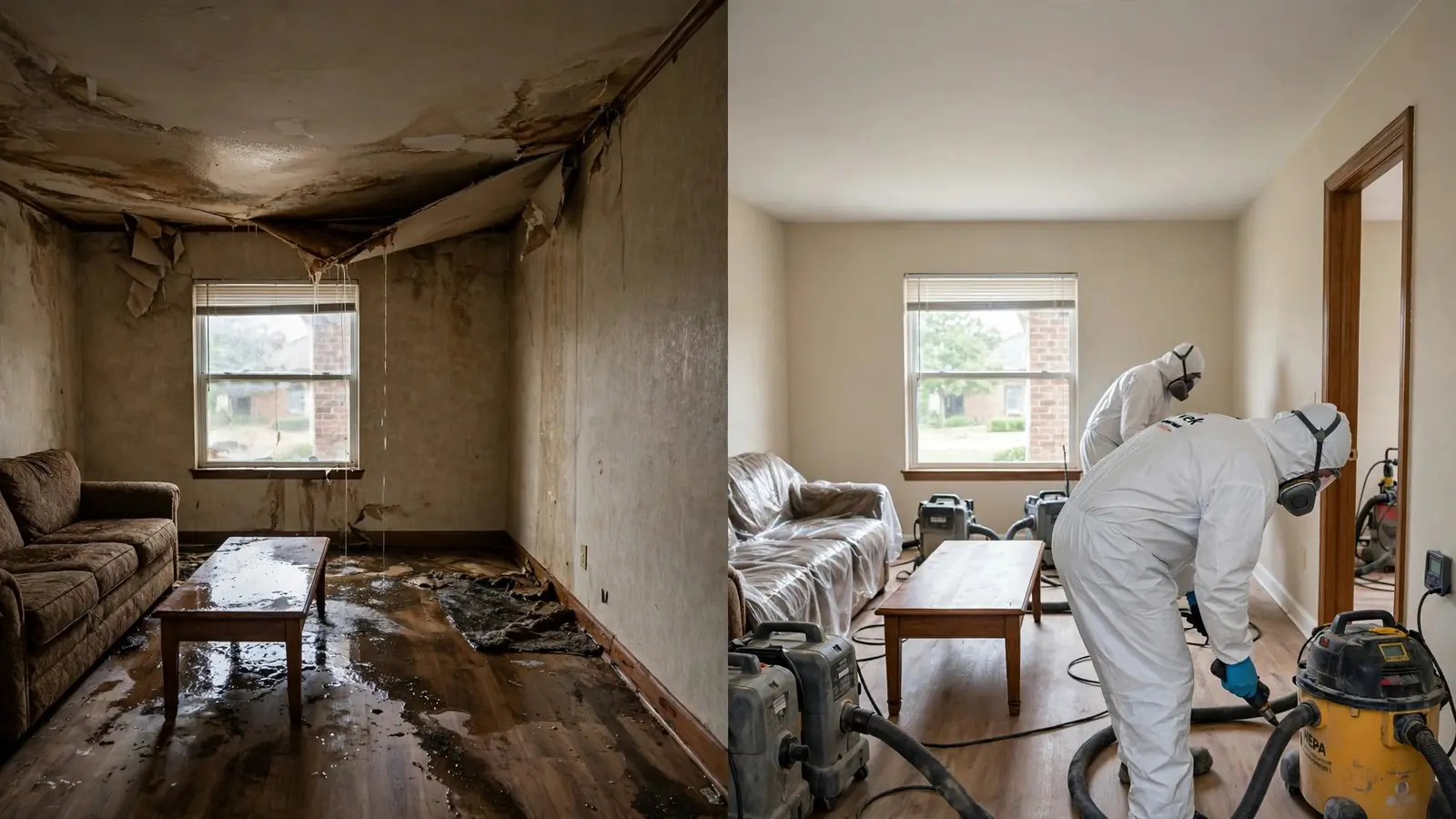
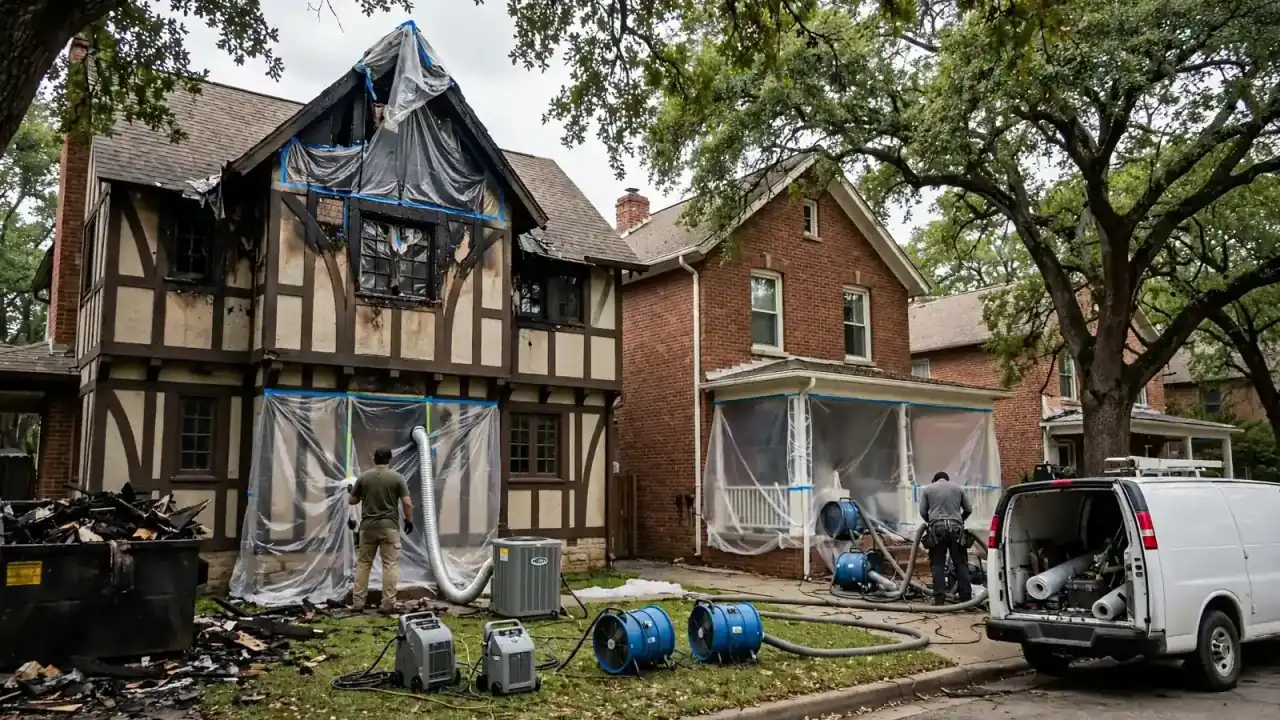
Key facts: Firefighting Water Damage in Arlington Heights
Where the water goes in an interwar house
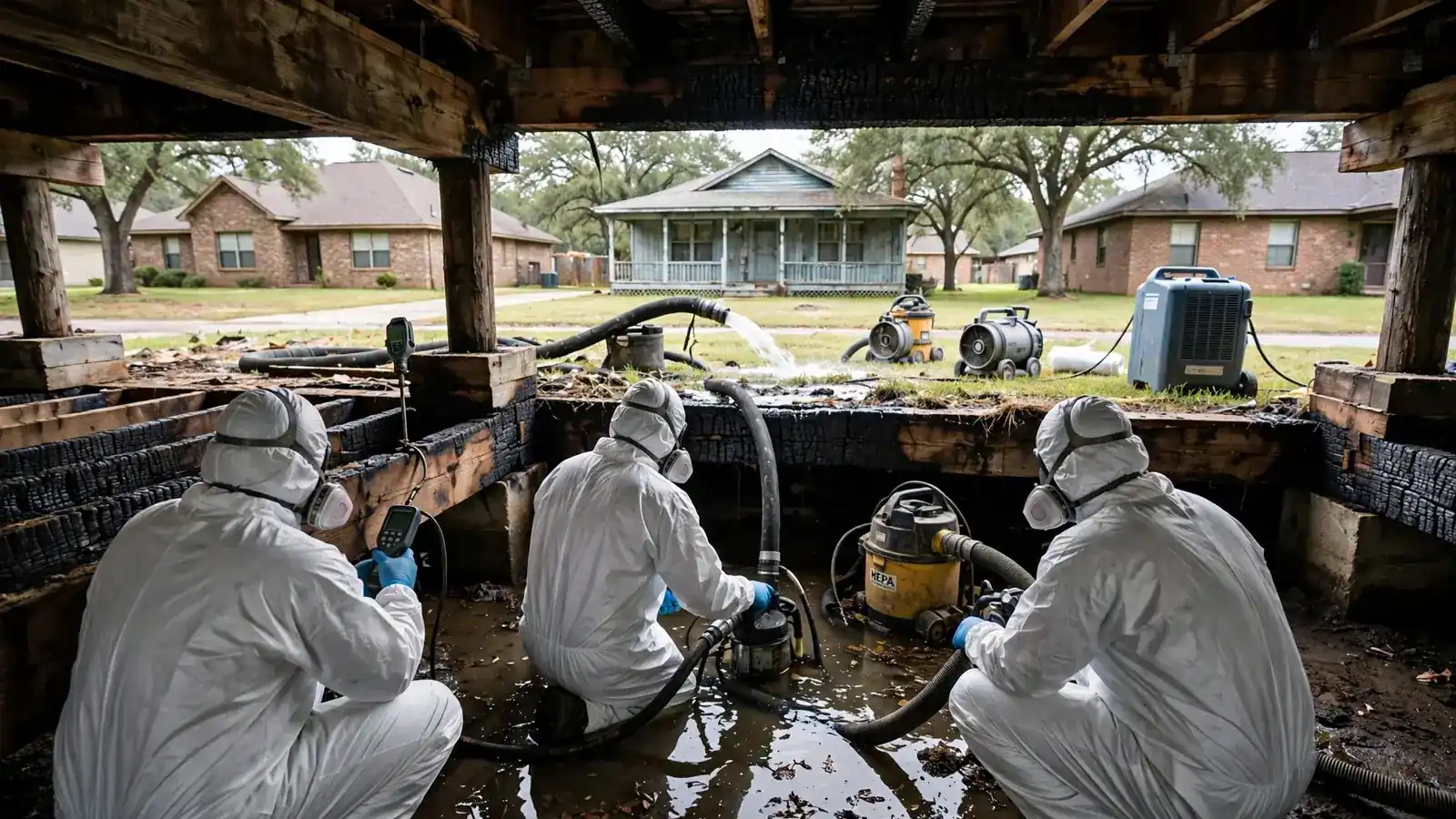
Houses from the 1920s and 1930s often have raised wood floors over a crawl space. Water from fire hoses runs through the gaps between floorboards and collects below, on the soil and on the beams. Without pumping and ventilation, it can sit there for days, raising humidity throughout the house.
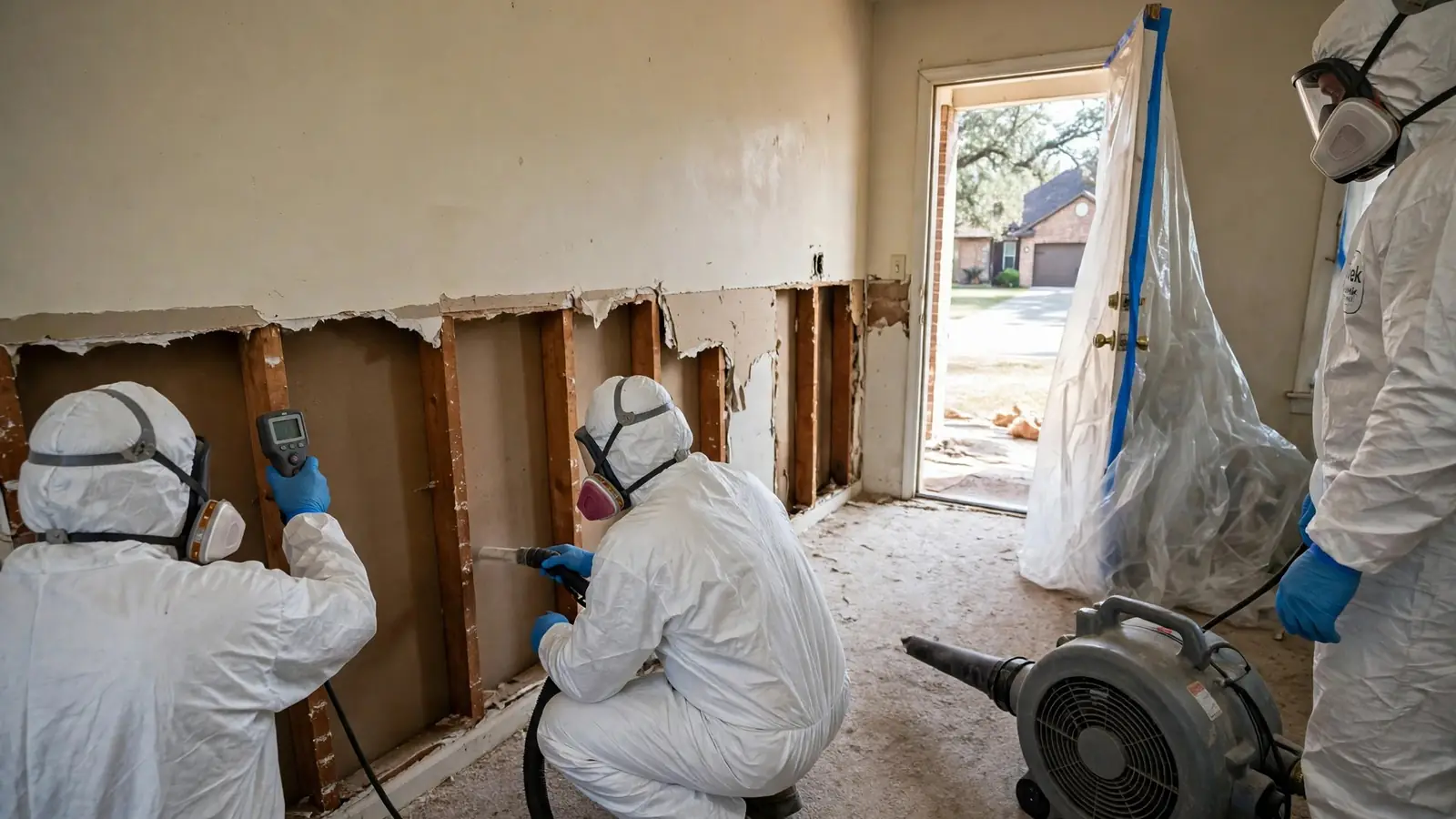
Upstairs, water pools on floors and seeps through ceilings to the rooms below. Plaster absorbs it and can sag or crack as it does. Attic insulation soaks it up and becomes heavy. Each area needs to be found and dried.
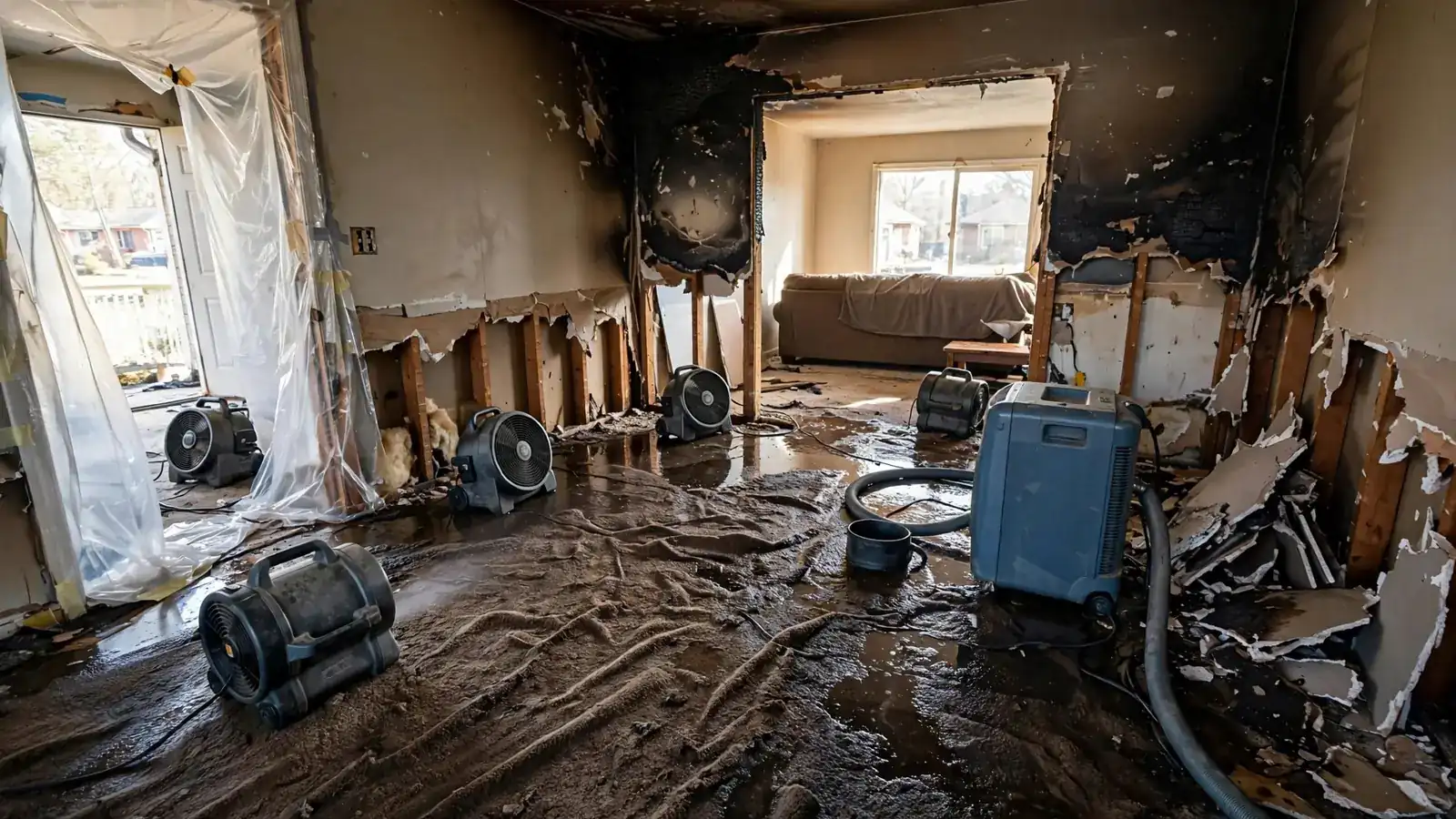
Oak floors after a soaking
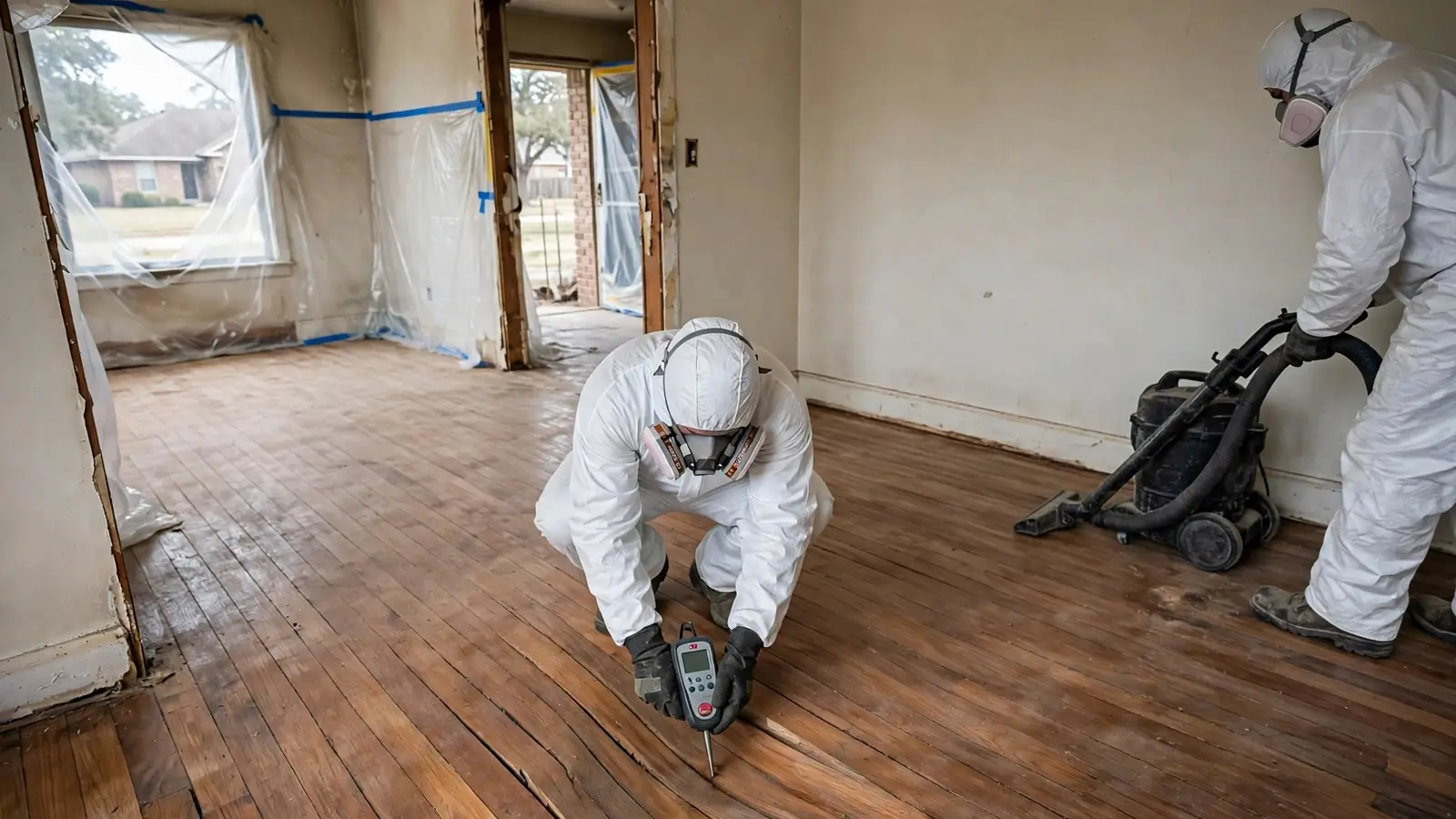
Oak strip floors are common in Arlington Heights and react quickly to water. Boards swell and cup, with edges higher than the centers. If they are dried slowly and evenly, many settle back close to flat and can be sanded and refinished. If they are left wet or dried too fast, they can crack or stay distorted.
Moisture meters let the contractor track how much water the floor still holds. Waiting for the readings to reach normal before sanding avoids refinishing a floor that will move again.
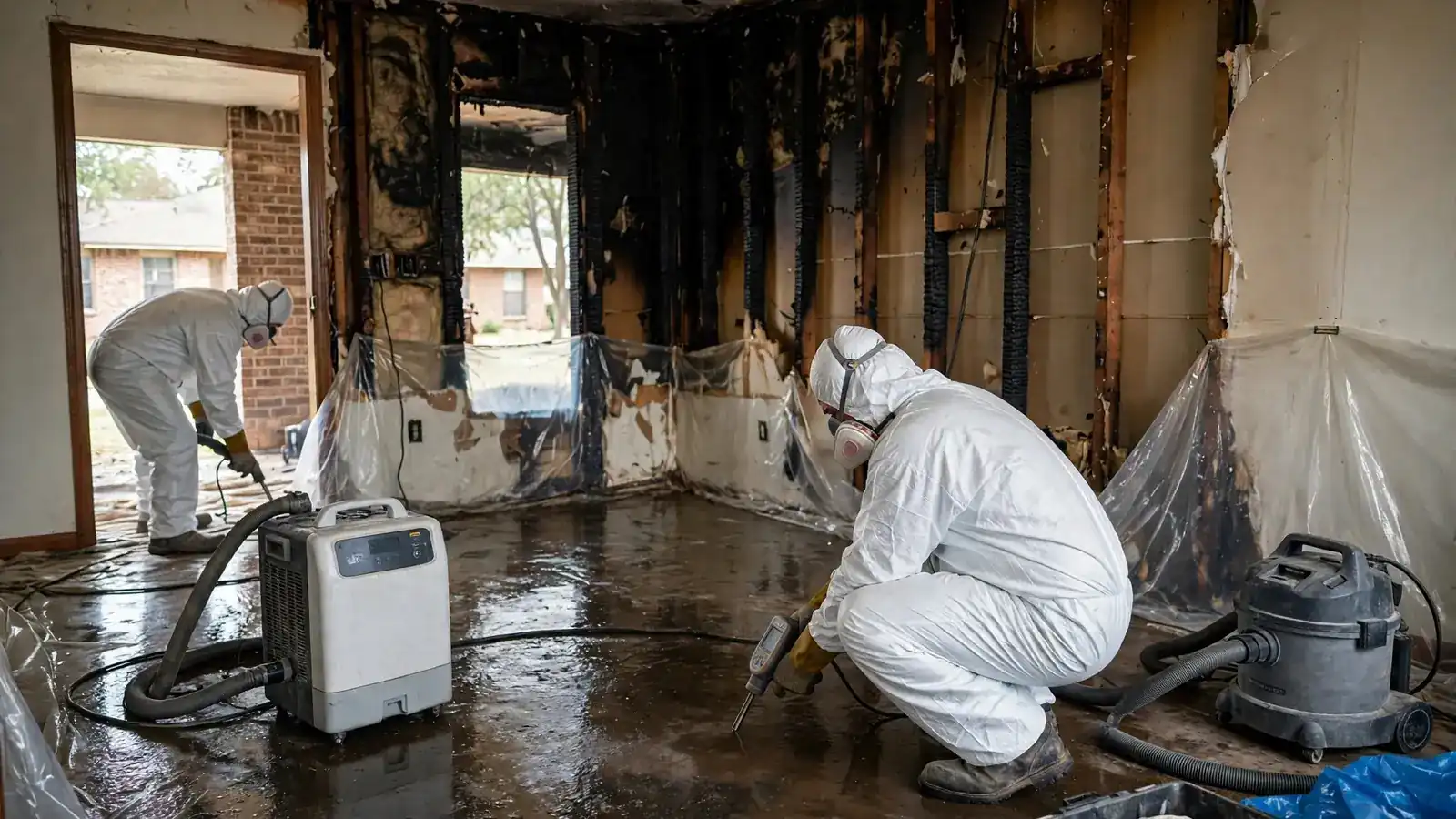
How an Arlington Heights home is dried after a fire
The typical sequence from extraction to final readings.
- 1
Pump and extract standing water
Water is removed from floors, carpets and the crawl space.
- 2
Measure moisture in every room
Meters map wet plaster, framing, floors and insulation.
- 3
Set dehumidifiers and air movers
Equipment is placed to dry each area at a safe pace.
- 4
Confirm dry readings before repairs
Materials are tested daily until they return to normal levels.
Wet plaster in Arlington Heights houses
Wet plaster is not always lost. If it stays bonded to the lath and does not sag, it can often be dried in place. Ceilings that bulge or crack badly may need to come down for safety. The contractor will check each area and explain which can be kept.
Removing plaster in a house this old raises lead and asbestos questions. Paint from before 1978 may contain lead [5], so demolition should follow lead-safe practices.
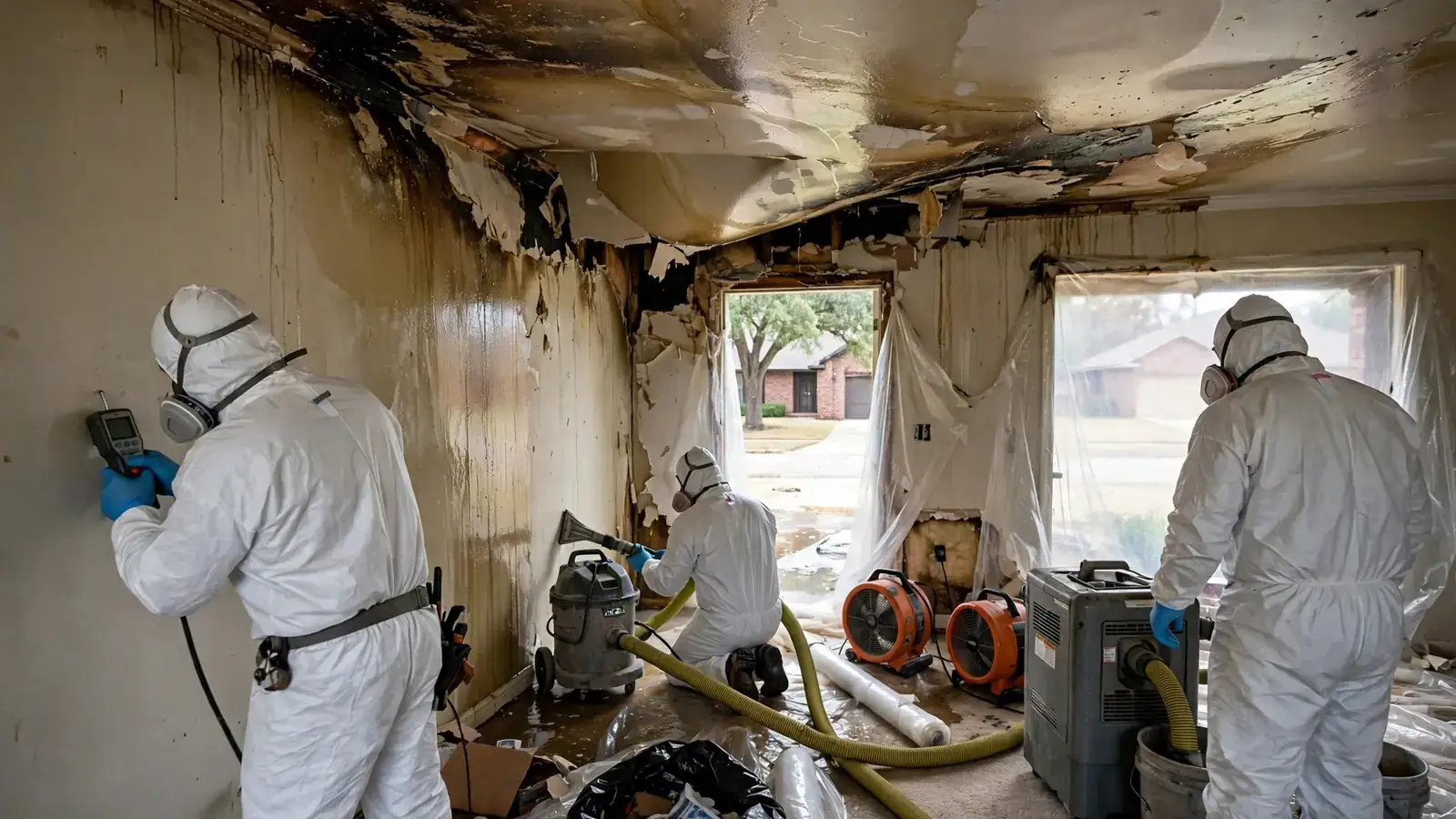
Places water hides in Arlington Heights homes
Check these areas after firefighting.
- Under the raised floorStanding water and wet soil under the floor.
- Under rugs and carpetPads hold water against wood floors.
- Attic insulationWater sprayed on the roof soaks into insulation.
- Garage apartmentA separate building may have taken water too.
Drying first, then smoke cleanup
Smoke and soot cleanup works best on dry surfaces, so drying usually comes first. Once readings are normal, the contractor can move on to smoke damage cleanup and odor work without trapping moisture behind new paint. Our Arlington Heights page explains more about the houses here.
If you need to stay elsewhere during drying, keep track of your extra expenses. The Texas Department of Insurance explains how additional living expense coverage generally works [4].
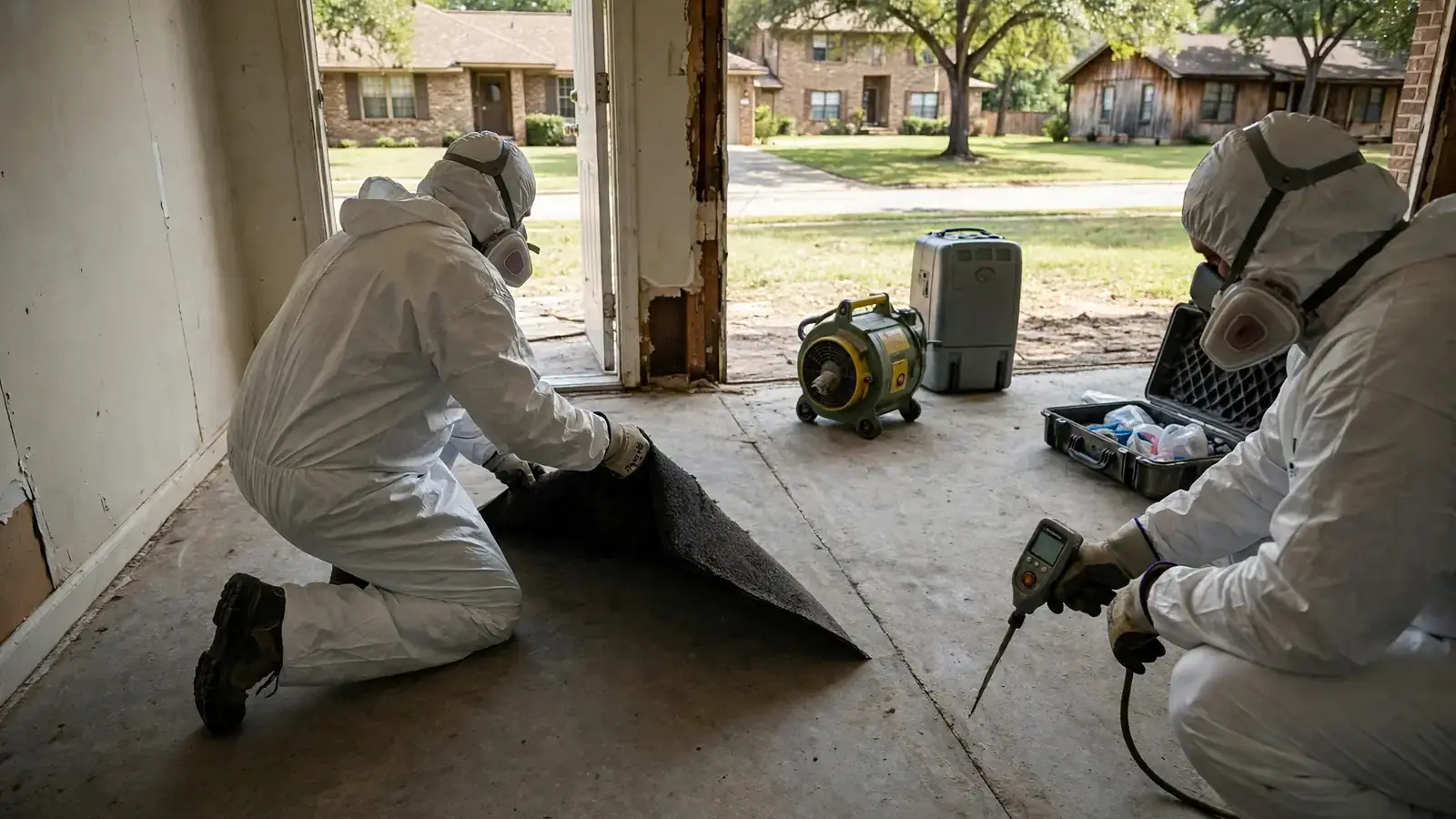
Wiring and outlets after the house got wet
Many Arlington Heights homes have wiring that has been updated in stages over the decades. Water from firefighting can reach outlets, switches and junction boxes inside wet walls. Power to wet areas should stay off until an electrician has checked the circuits, even if the lights seem to work.
The contractor drying the house will keep equipment on circuits that are safe to use, and may bring in temporary power if needed.
Contents soaked by hose water
Rugs, upholstered furniture, books and clothing soaked during firefighting need quick attention. Wet rugs left on oak floors trap water against the wood. Books and papers can be frozen to stop mold until they can be dried properly. Clothing can often be laundered or professionally cleaned once it is moved out of the wet rooms.
List each item as it is moved, with a photo, so you have a record for the claim.
Attic water and ceiling checks
When firefighters spray a roof or attic, water soaks the insulation and runs along rafters before dripping onto ceilings. Insulation that stays wet loses its value and can hold moisture against the ceiling for days. Wet insulation is usually removed so the attic and ceiling can dry, then replaced once the space is dry and clean.
Watch ceilings for bulges or spreading stains in the days after the fire. A bulging plaster ceiling can fall, so keep people out of the room and tell the contractor right away.
FAQ
Firefighting Water Damage in Arlington Heights: questions
How long does drying take after a fire?
Often several days, sometimes more in older houses with plaster and crawl spaces. Moisture readings show when each area is dry.
Will my oak floors need to be replaced?
Not always. Many cupped floors settle back as they dry and can then be sanded and refinished. Badly distorted boards may need replacing.
Can mold grow after firefighting?
Yes. Wet materials that stay damp for more than a day or two can grow mold [1], which is why fast drying matters.