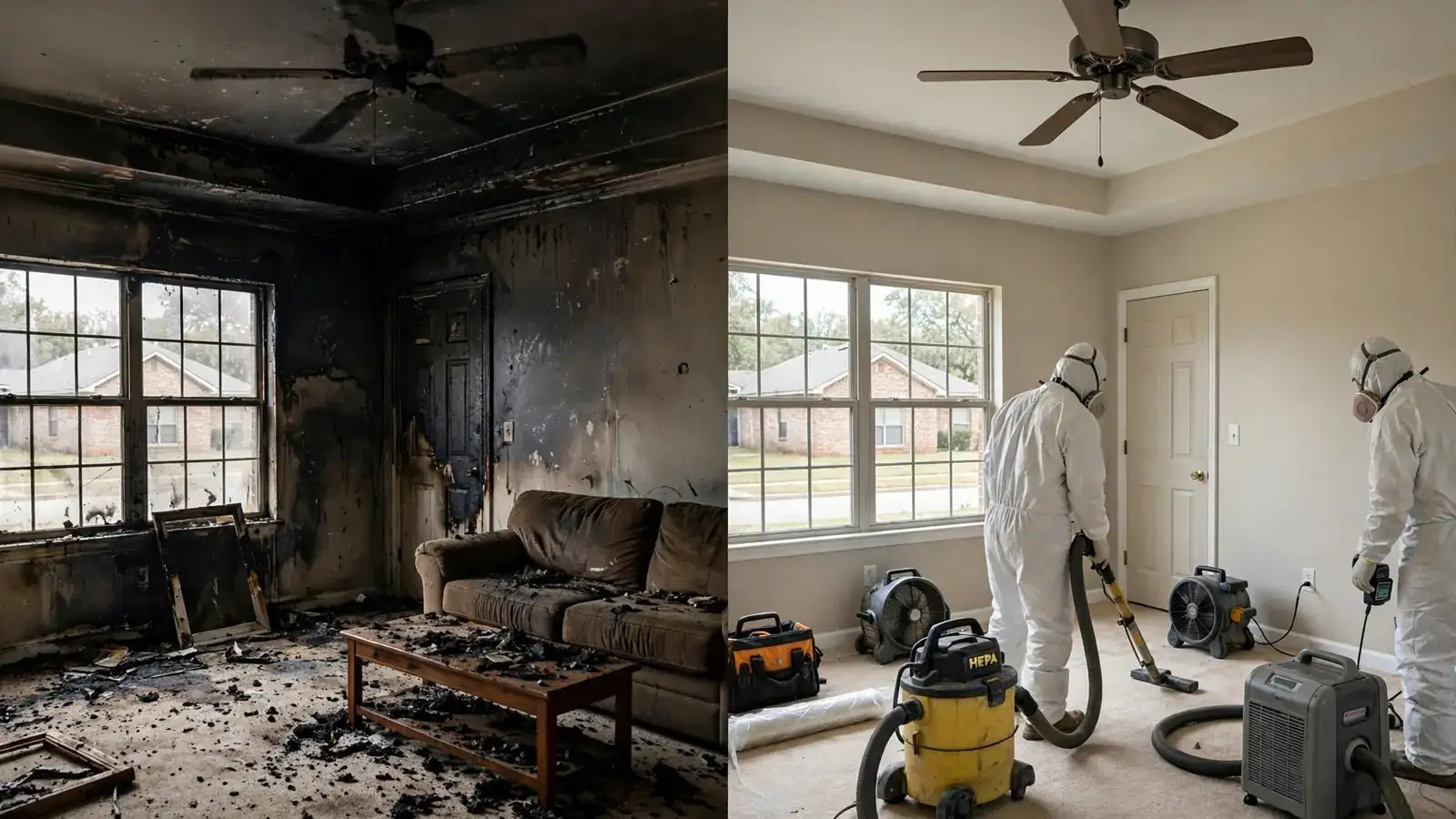
Key facts: Soot Removal in Arlington Heights
- Before you start cleaning soot, the U.S. Fire Administration advises understanding the health risk it may carry [1].
- IICRC S700 sets out how professionals choose dry or wet methods for fire residue on different surfaces [2].
- Asbestos may be present in some older building materials and should be tested before it is disturbed [4].
Reading the soot in an Arlington Heights home
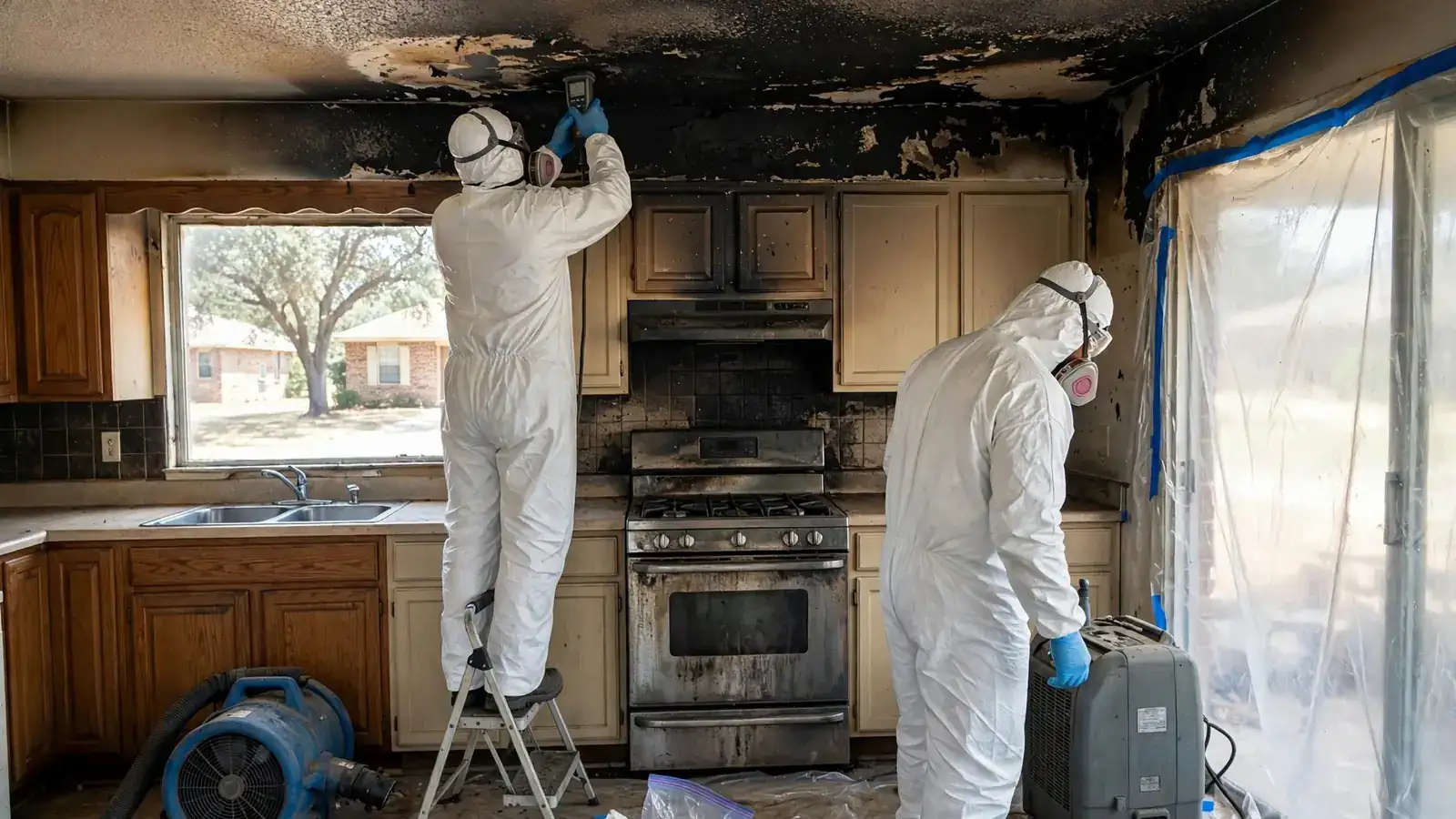
Soot is not all the same. Dry, powdery soot from a fast, hot fire vacuums off fairly easily. Oily, black soot from burning plastics and furniture smears and needs solvent-based cleaners. Protein residue from cooking fires is almost invisible but smells strongly. A quick wipe test tells the contractor which kind they are dealing with in each room.
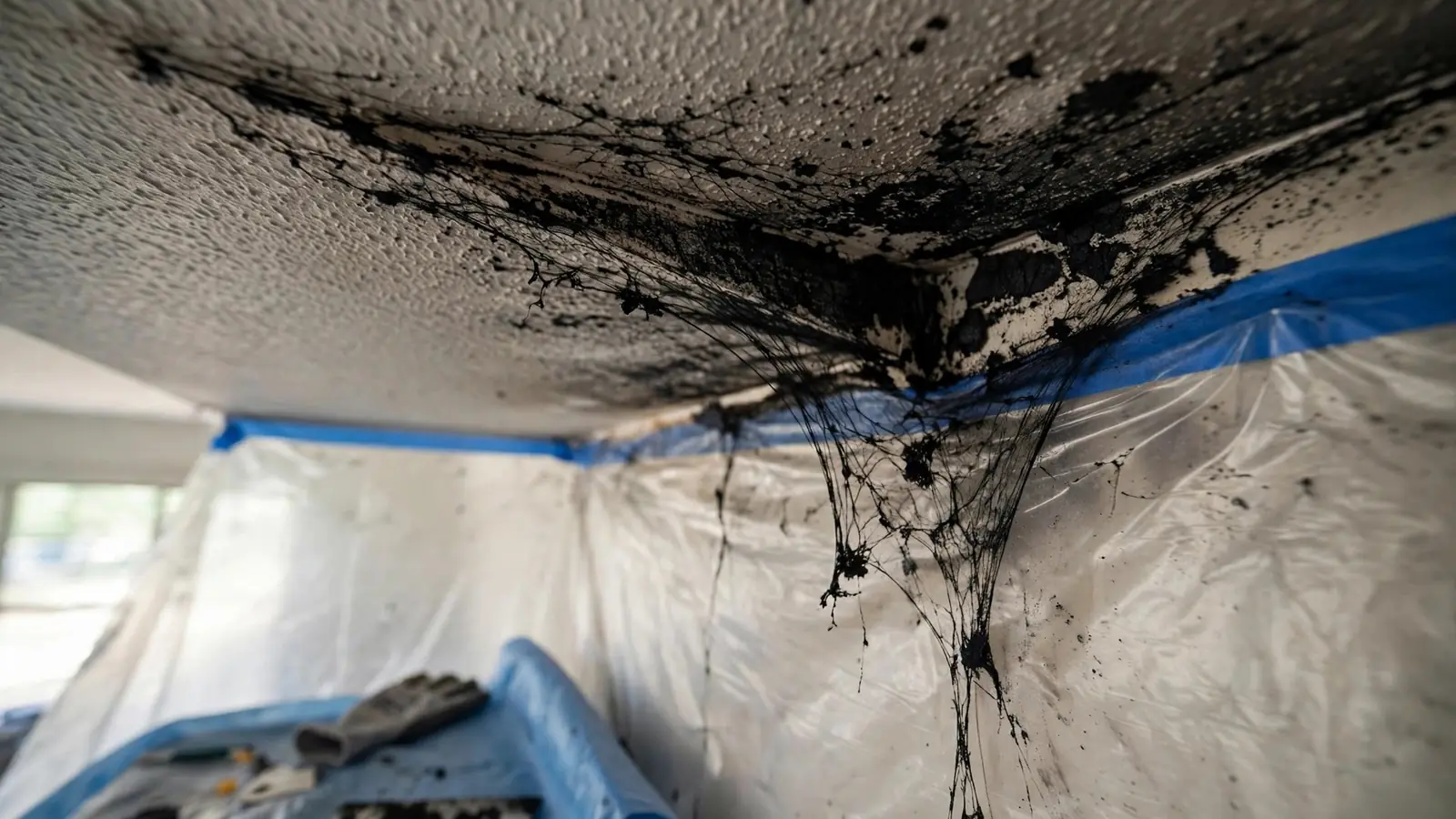
Patterns matter too. Dark lines on ceilings often follow joists or lath behind the plaster, because temperature differences make soot settle unevenly. Gray outlines around picture frames show how evenly the rest of the wall is coated.
Plaster ceilings and wood trim
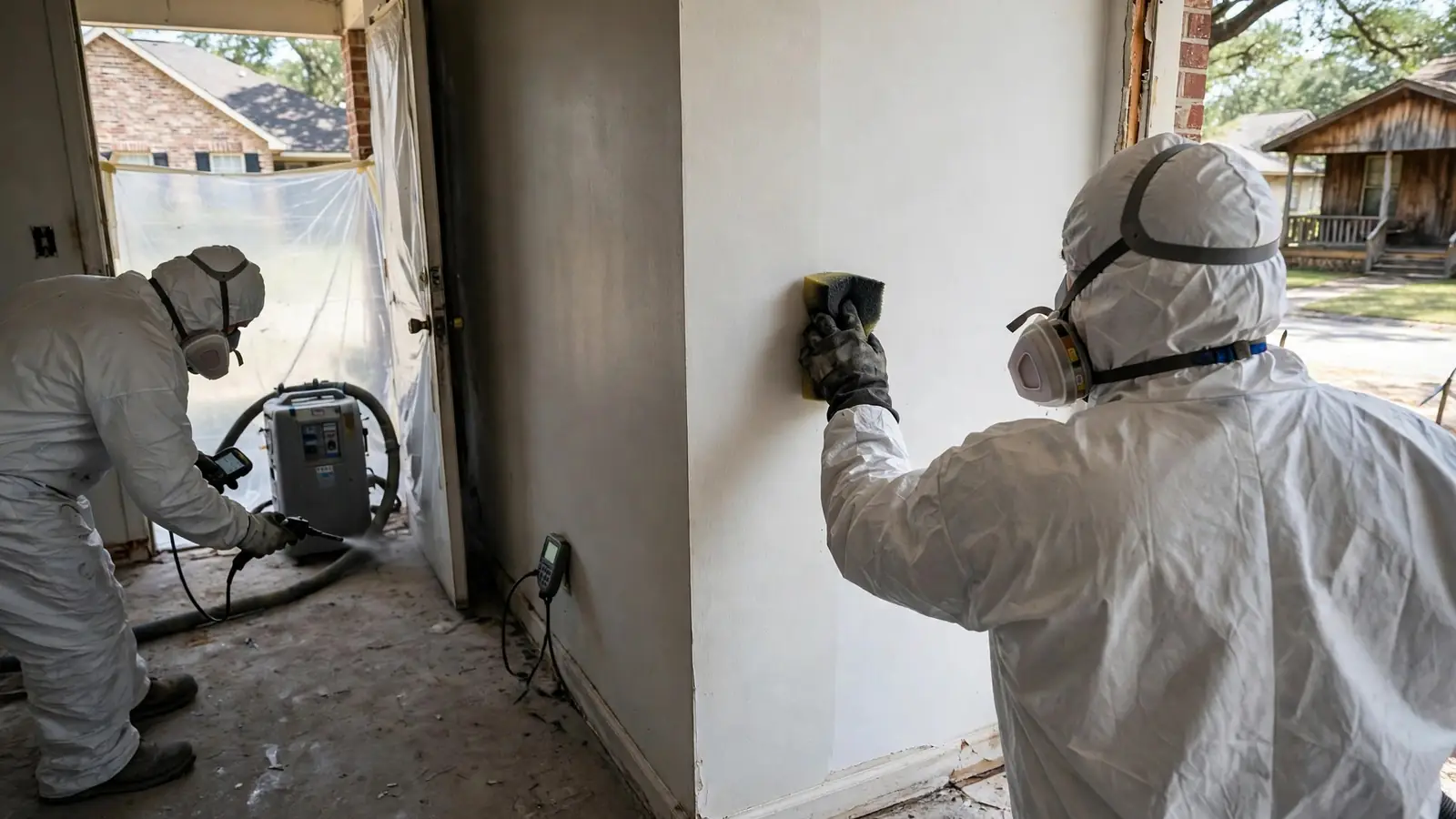
Plaster ceilings are common in houses from this era and are delicate when sooty. Dry sponges and HEPA vacuums remove the loose layer, working from the top down. Only then is the surface washed, with as little water as possible. Ceilings that remain stained are sealed with a stain-blocking primer before paint.
Wood trim, doors and built-ins may be painted or stained. Painted trim is cleaned and, if needed, repainted after sealing. Stained wood can often be cleaned with gentle products and given a fresh finish coat.
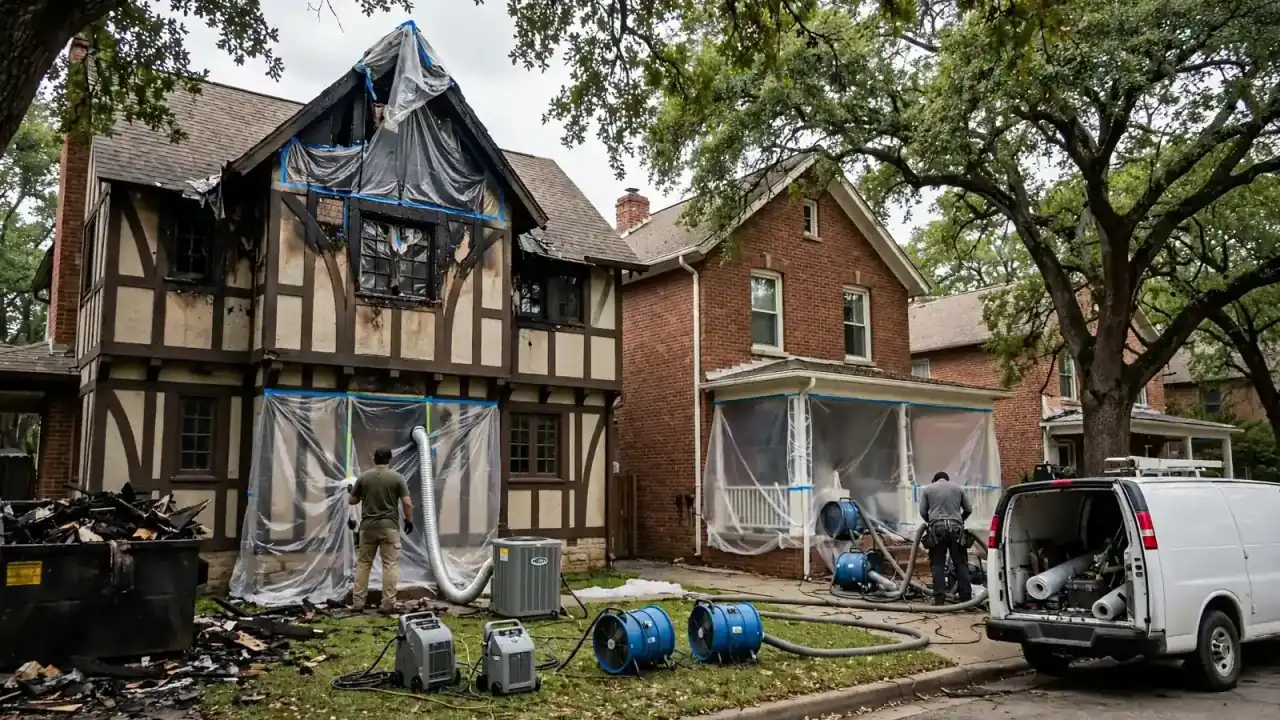
Removing soot from an interwar home
The general sequence a contractor follows.
- 1
Identify the soot type room by room
Wipe tests show whether residue is dry, oily or protein based.
- 2
Vacuum and dry-sponge from the top down
Loose soot comes off ceilings first, then walls, then floors.
- 3
Wash with cleaners matched to the residue
Oily soot needs different products from dry soot.
- 4
Seal stains that remain
Stain-blocking primers stop marks bleeding through new paint.
Brick fireplaces, chimneys and exterior soot
Many Arlington Heights living rooms have brick or stone fireplaces. Brick is porous and holds soot deeply, so it may need specialized cleaning products or gentle blasting methods. Testing a hidden patch first shows what will work without damaging the face of the brick.
Outside, soot can stain eaves, porch ceilings and siding near the fire. If the fire was in a detached garage, the wall of the house facing it may need cleaning too. Our Arlington Heights page covers the garages and outbuildings common in this area.
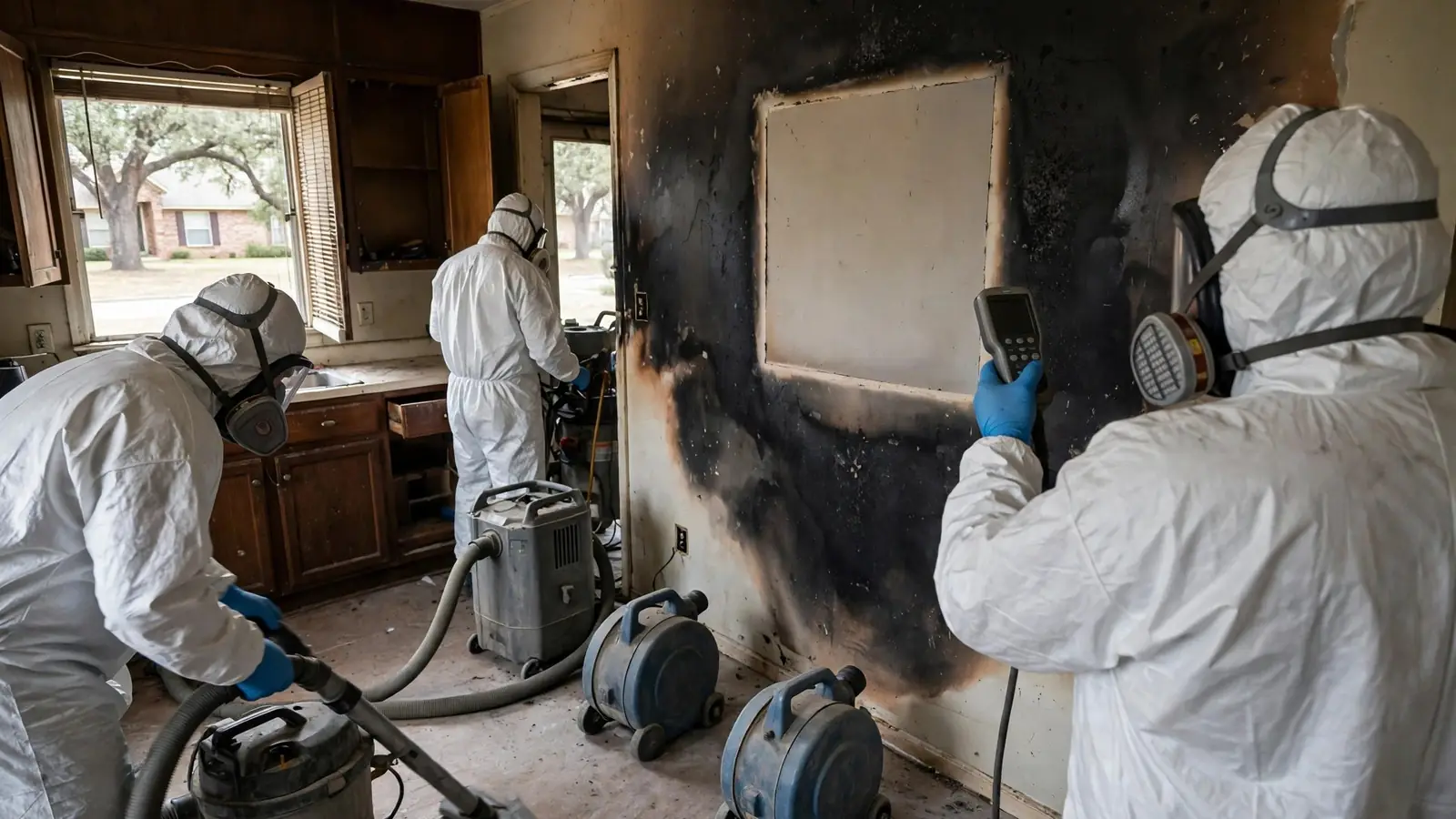
Signs that soot cleanup needs a professional
These usually mean the job goes beyond what you can safely do yourself.
- Dark strands hanging in cornersChains of residue that smear if brushed.
- Residue inside closets and cabinetsSoot has spread beyond the room of origin.
- Black streaks around outletsAir and soot are moving through the wall cavities.
- Old paint under the sootPaint from before 1978 may contain lead [6].
After soot removal: odor and repairs
Removing visible soot does not always remove the smell. Residue in insulation, ducts or wall cavities keeps releasing odor, so smoke odor removal usually follows. Repairs and repainting come last, once surfaces are clean and sealed.
Keep photos of sooty rooms before cleaning starts. They help your adjuster understand the work. If you are living elsewhere, the Texas Department of Insurance explains additional living expense coverage [5].
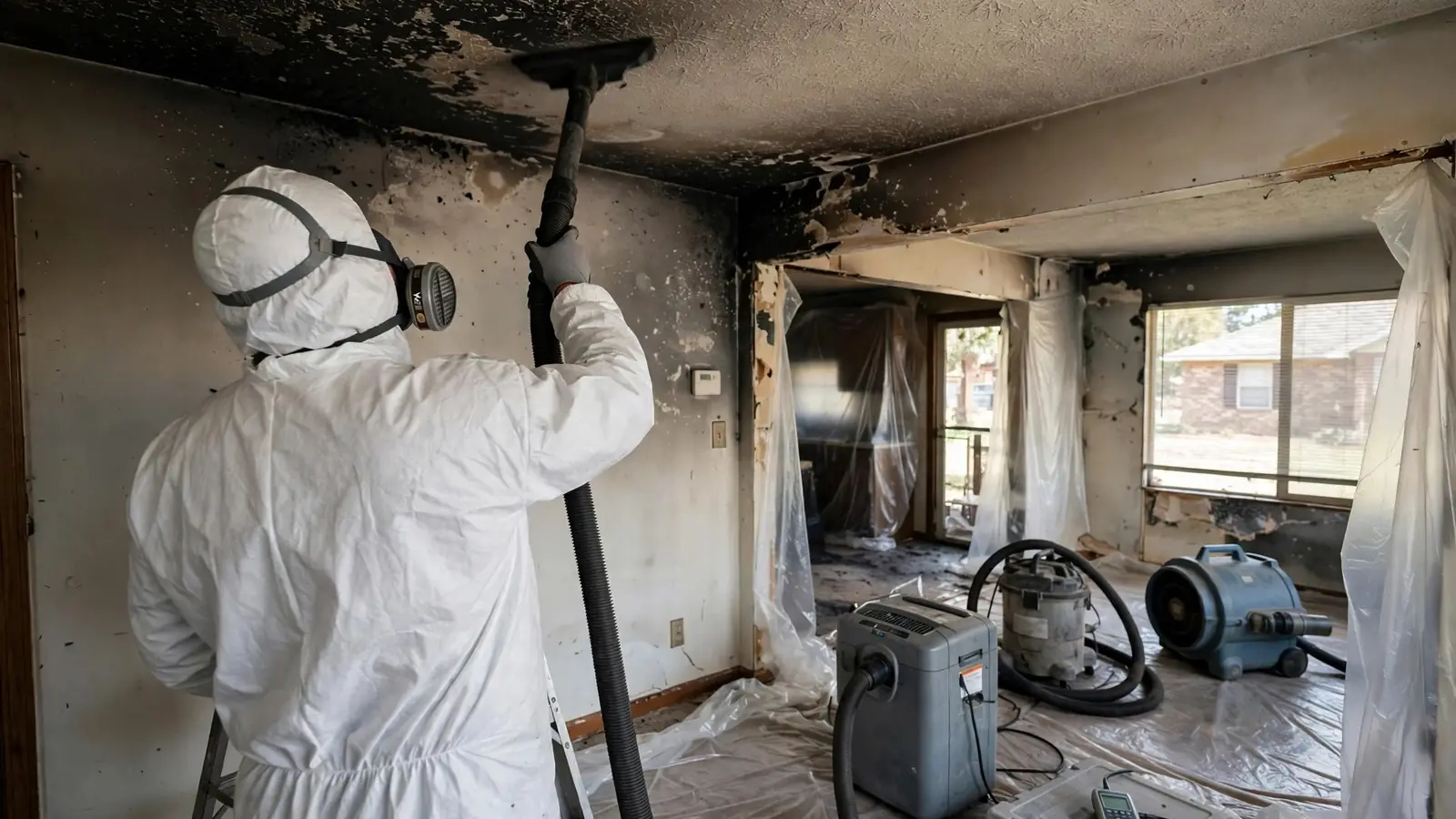
Light fixtures, hardware and small details
Older houses have many small metal details: door knobs, hinges, light fixtures, register covers and window hardware. Soot settles on all of them and can pit or discolor brass and nickel if left too long. Removable pieces are often taken off, cleaned separately and put back, which is faster and gentler than cleaning them in place.
Glass light shades and globes can usually be washed. Fixtures with fabric shades may need new shades.
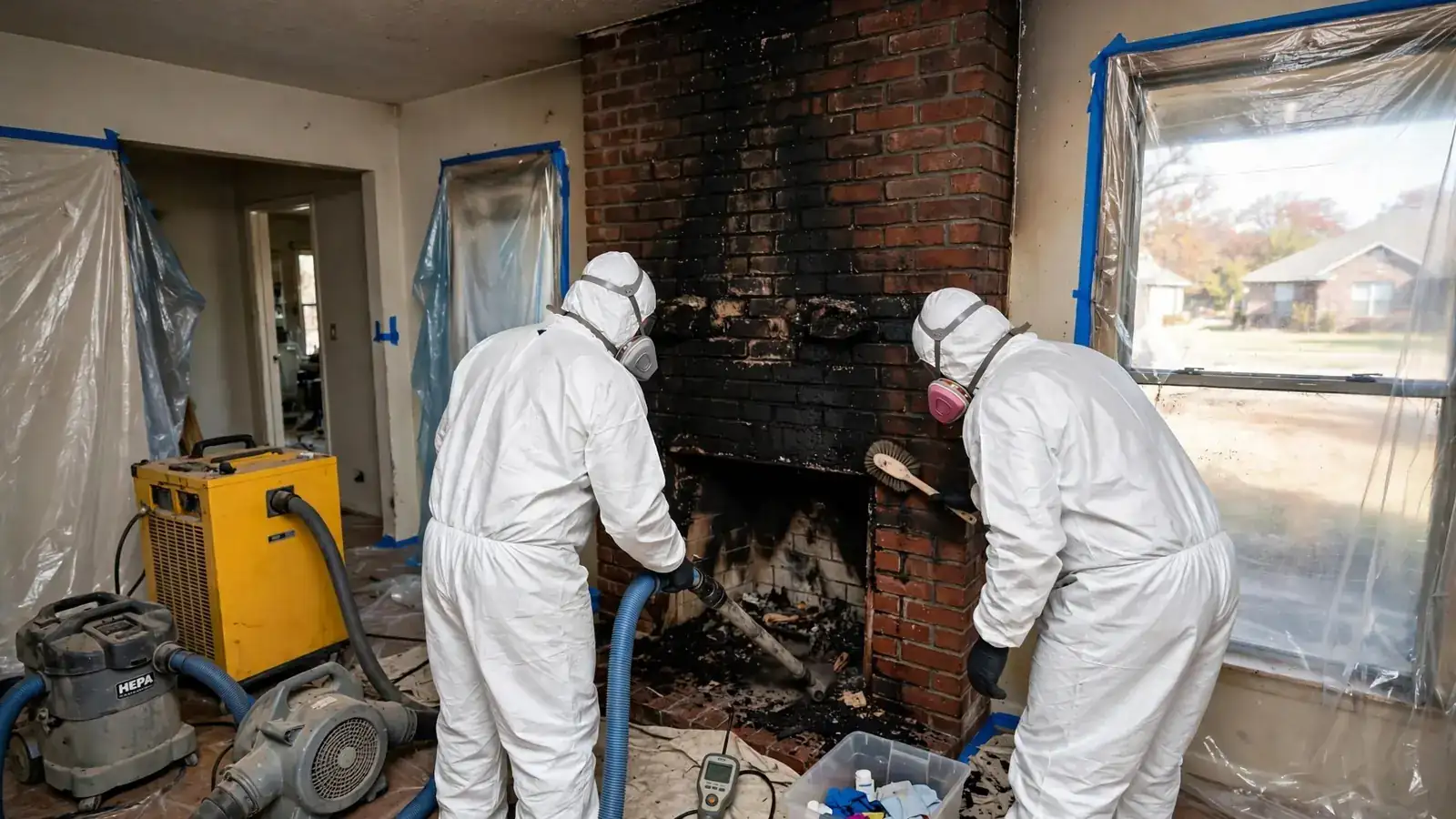
Protecting rooms that soot did not reach
Soot removal can spread residue if it is not contained. Plastic barriers at doorways, sticky mats at entrances and air scrubbers with HEPA filters keep cleaned or unaffected rooms from being recontaminated. In a house with a central hall, sealing off that hall is often the simplest way to protect the bedrooms.
Ask the contractor which rooms they will contain and how long the barriers will stay up. Moving belongings out of those rooms first also helps.
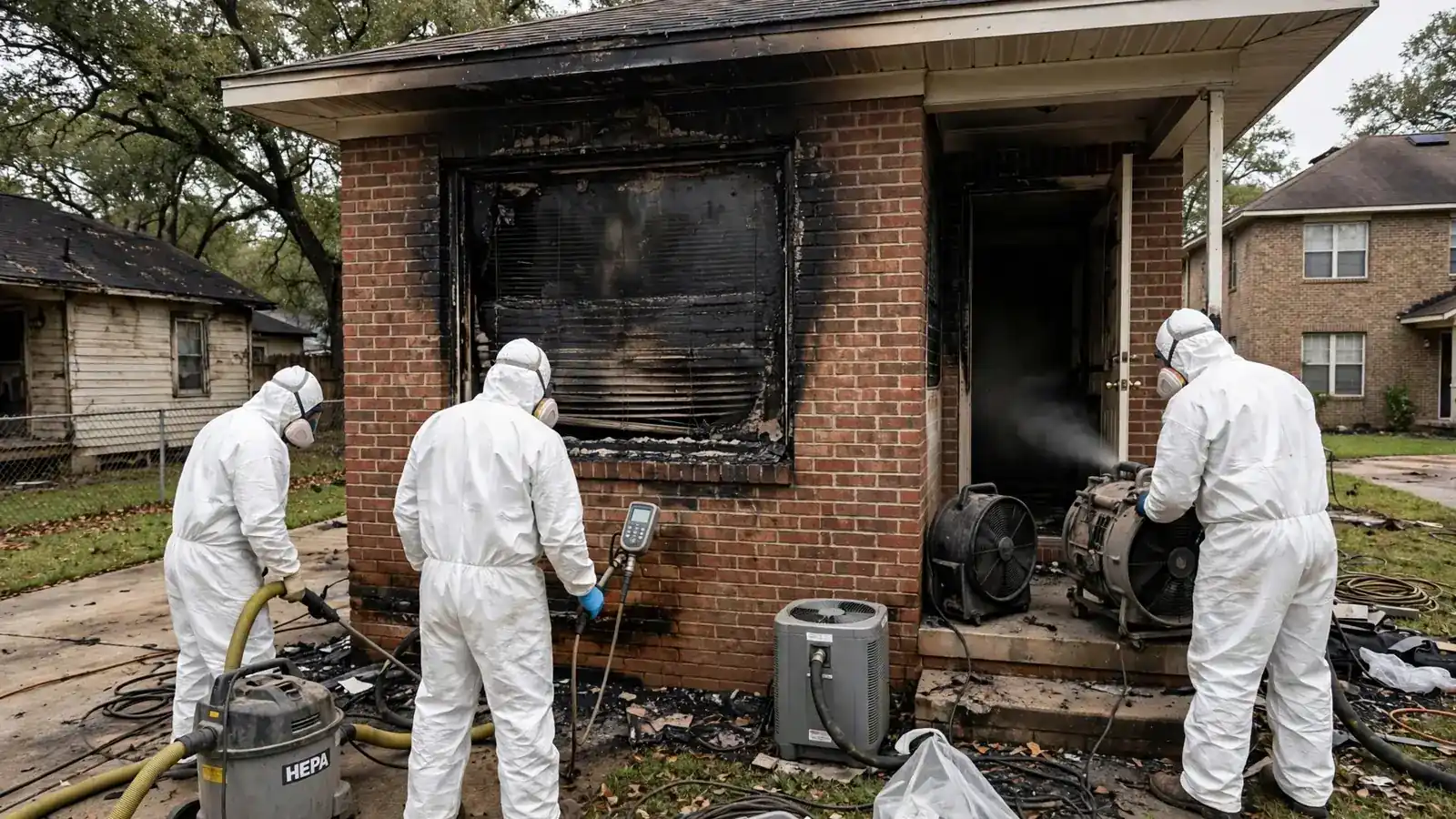
Attic soot above Arlington Heights ceilings
Soot rises, and in a house from the 1920s or 1930s it often finds its way into the attic through gaps around light fixtures, the attic hatch and the tops of walls. Rafters and decking above the fire may be darkened even when the ceiling below looks only lightly stained. Cleaning or sealing the attic framing and replacing affected insulation prevents odor and staining from returning.
Ask the contractor to show you photos of the attic if you cannot easily look yourself.
FAQ
Soot Removal in Arlington Heights: questions
Can I clean soot with soap and water?
Not as a first step. Water on loose soot spreads it and can set stains, especially on plaster. Dry removal comes first, then washing with suitable cleaners.
Why are there dark lines across my ceiling?
They often follow the framing or lath behind the plaster, where temperature differences made soot settle unevenly. They clean the same way as the rest of the ceiling.
Can soot be removed from brick fireplaces?
Usually, though porous brick holds soot deeply. Specialized cleaners or gentle blasting may be needed, tested first on a hidden area.
Sources and citations
- [1]U.S. Fire Administration: After a fire
- [2]IICRC: S700 Standard for Professional Fire and Smoke Damage Restoration
- [3]U.S. EPA: Protect your family from sources of lead
- [4]U.S. EPA: Protect your family from exposures to asbestos
- [5]Texas Department of Insurance: Additional living expenses
- [6]U.S. EPA: Protect your family from sources of lead