Key facts: Soot Removal in Ryan Place
- The U.S. Fire Administration advises understanding the health risks of soot before cleaning it [1].
- For tall plaster rooms like those in Ryan Place, the IICRC S700 standard guides when soot is removed dry and when washing can follow [2].
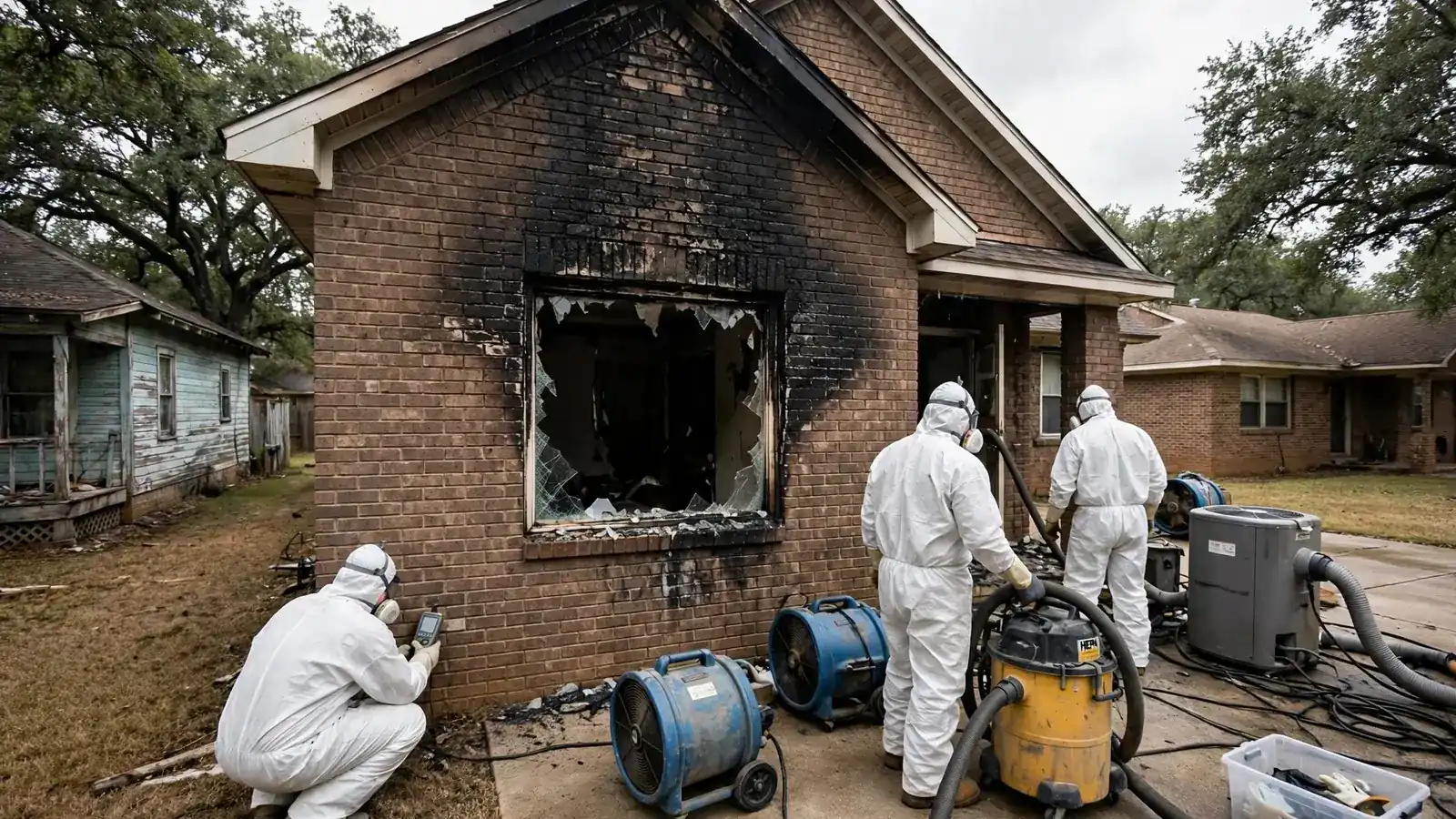
- Homes built before 1978 may contain lead paint, so soot removal that disturbs old finishes needs lead-safe methods [3].
Tall ceilings and high walls
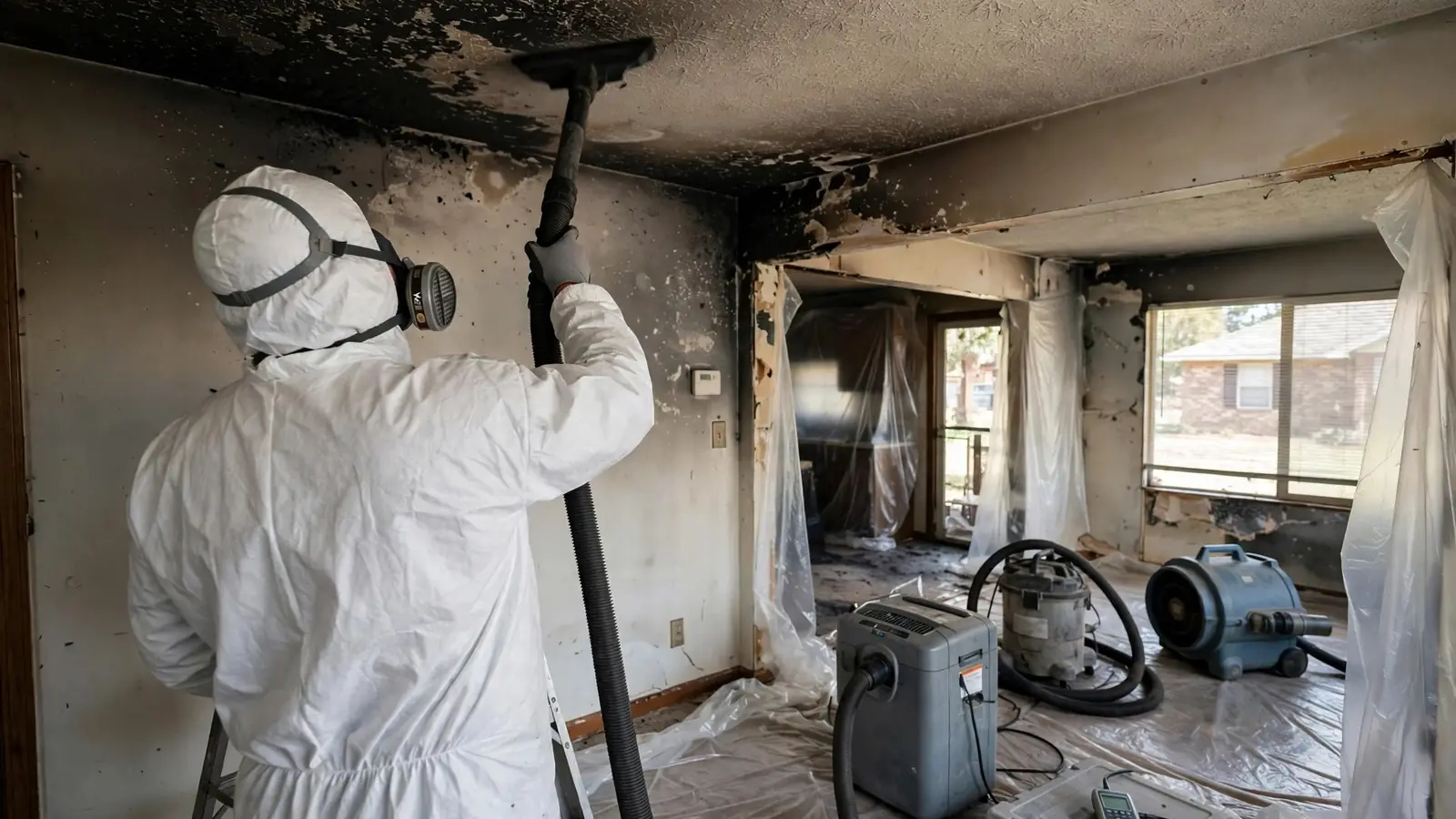
Ceilings in the larger Ryan Place houses can be ten feet or more, and stairwells rise two or three floors. Soot collects at the top of these spaces, along cornices and crown moldings. Reaching them safely takes scaffolding or tall ladders, and cleaning works strictly top down.
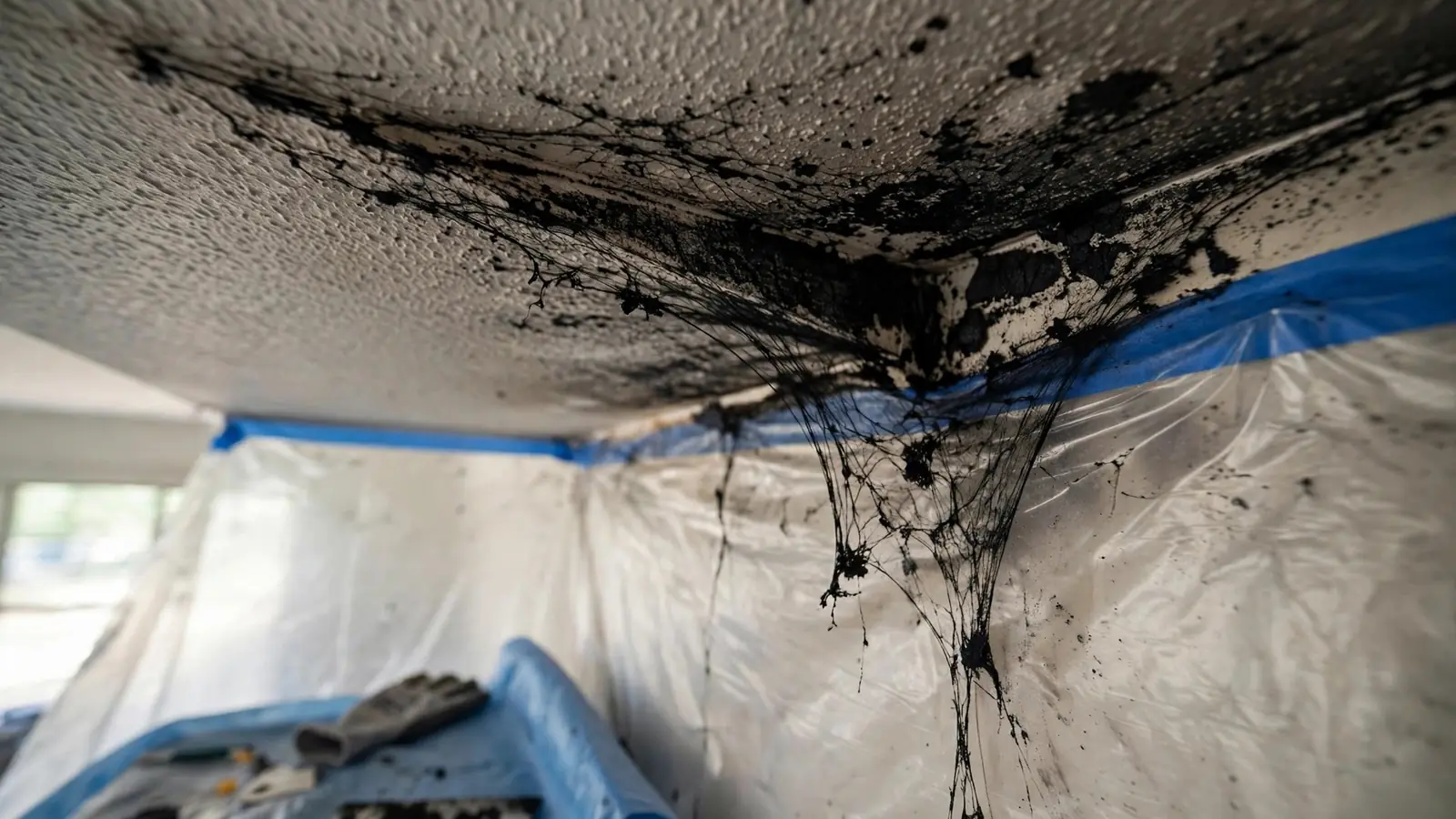
Dark lines across plaster ceilings often follow the lath or joists behind, where temperature differences made soot settle unevenly. They clean the same way as the rest of the ceiling.
Staircases, railings and balusters
Grand staircases with turned balusters, carved newel posts and wide handrails are features of many large homes here. Soot settles on every surface and in every groove. Each baluster is cleaned individually, and stained wood may need a fresh finish coat afterwards.
The underside of the staircase and the stair walls collect heavy residue because smoke flowed up them during the fire.
Removing soot in a large older home
The usual order.
- 1
Test the residue on each floor
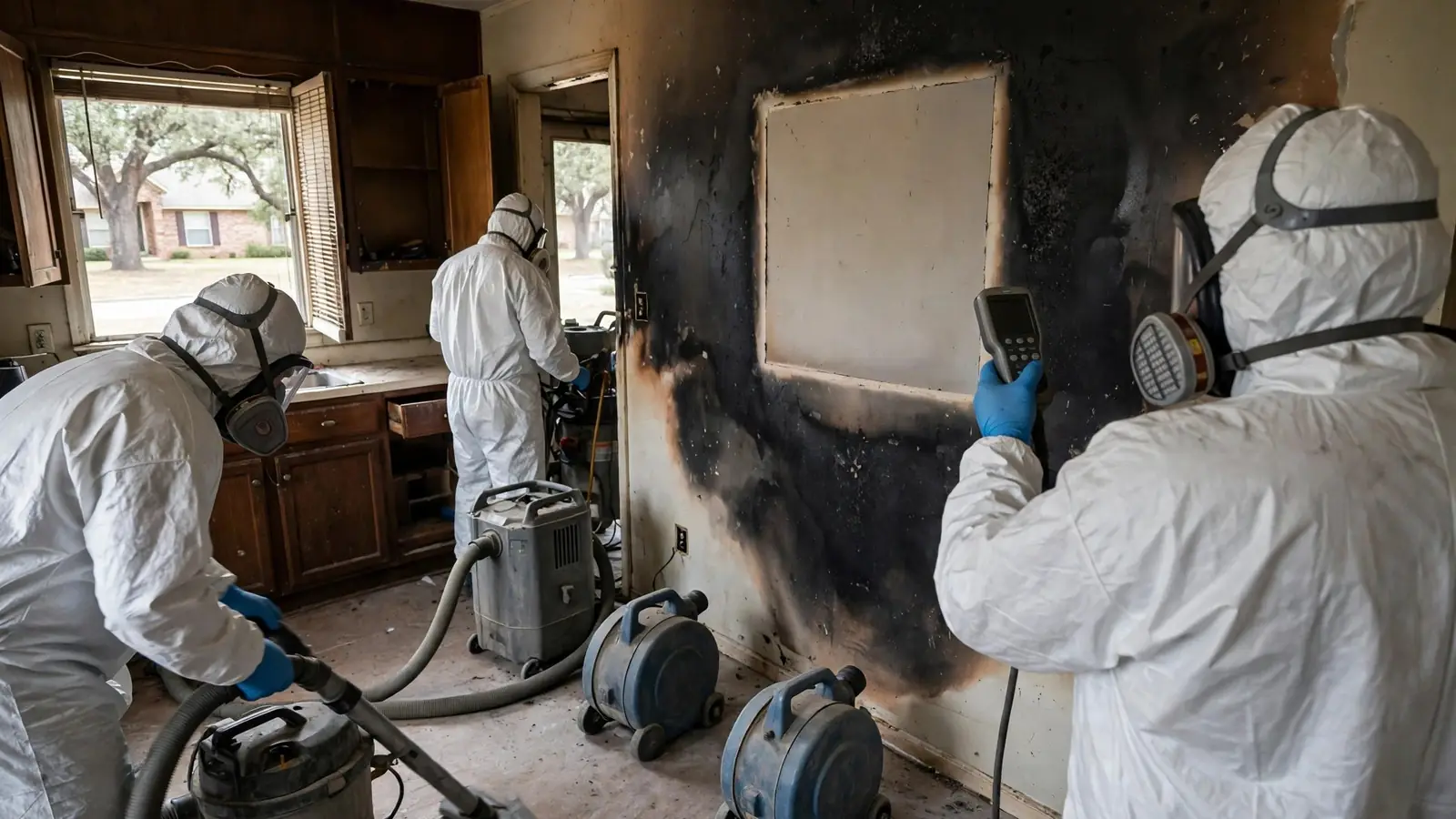
Wipe tests show whether soot is dry, oily or protein based.
- 2
Dry-clean ceilings and high walls first
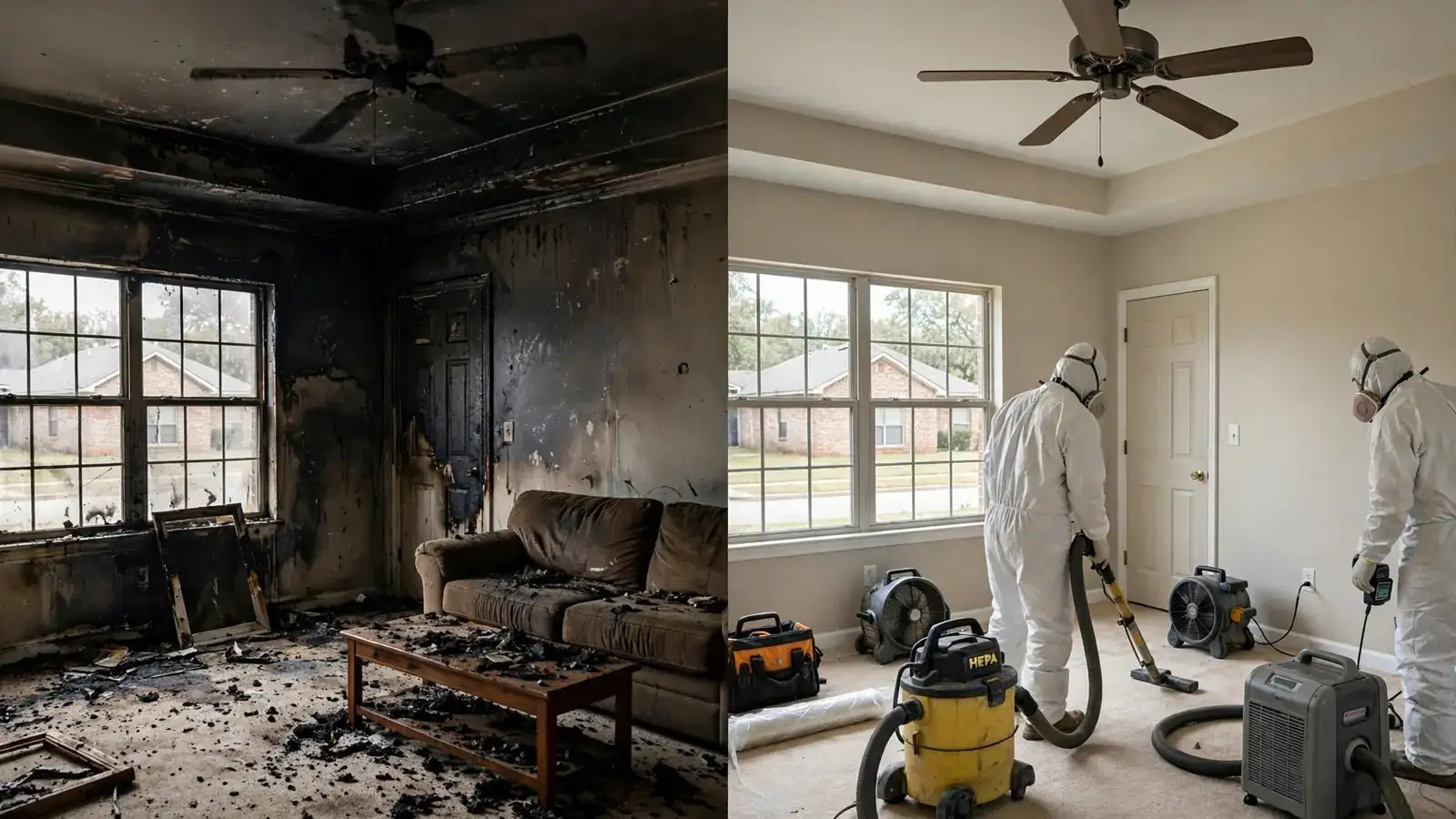
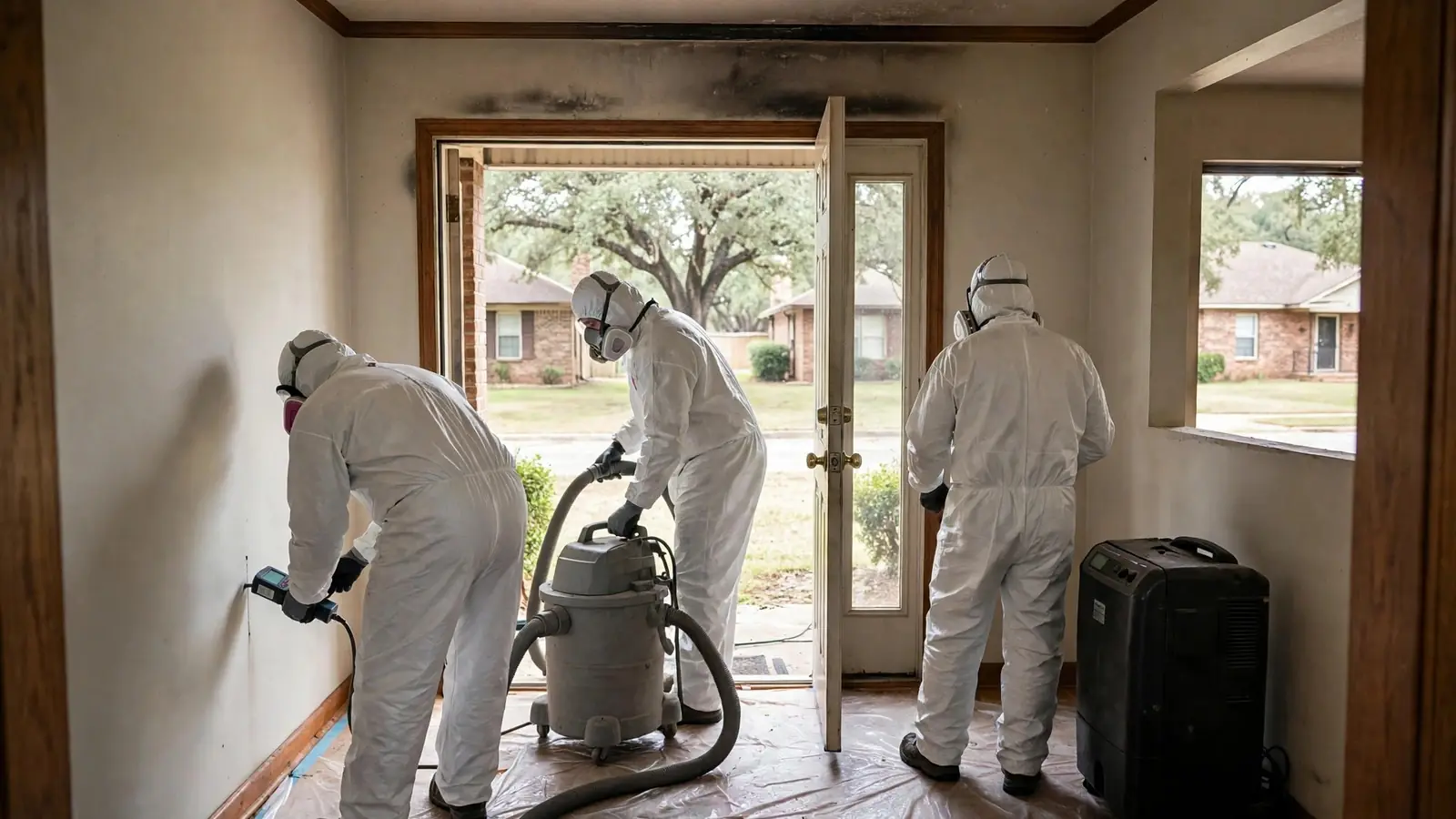
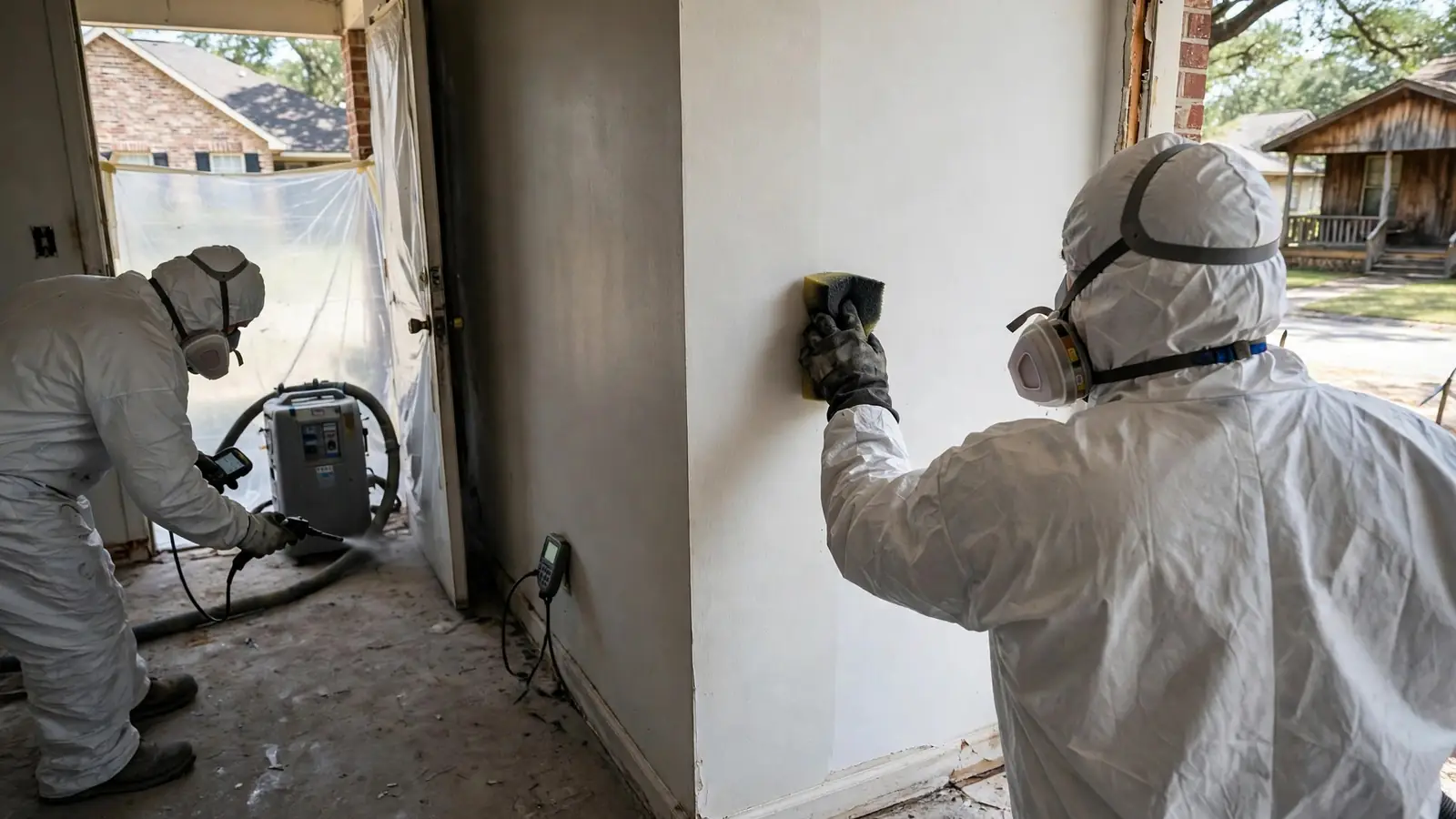
HEPA vacuums and dry sponges remove loose soot top down.
- 3
Clean staircases and woodwork by hand
Railings, balusters and paneling are cleaned piece by piece.
- 4
Wash and seal remaining surfaces
Cleaners matched to residue; sealers where stains remain.
Fireplaces, mantels and masonry
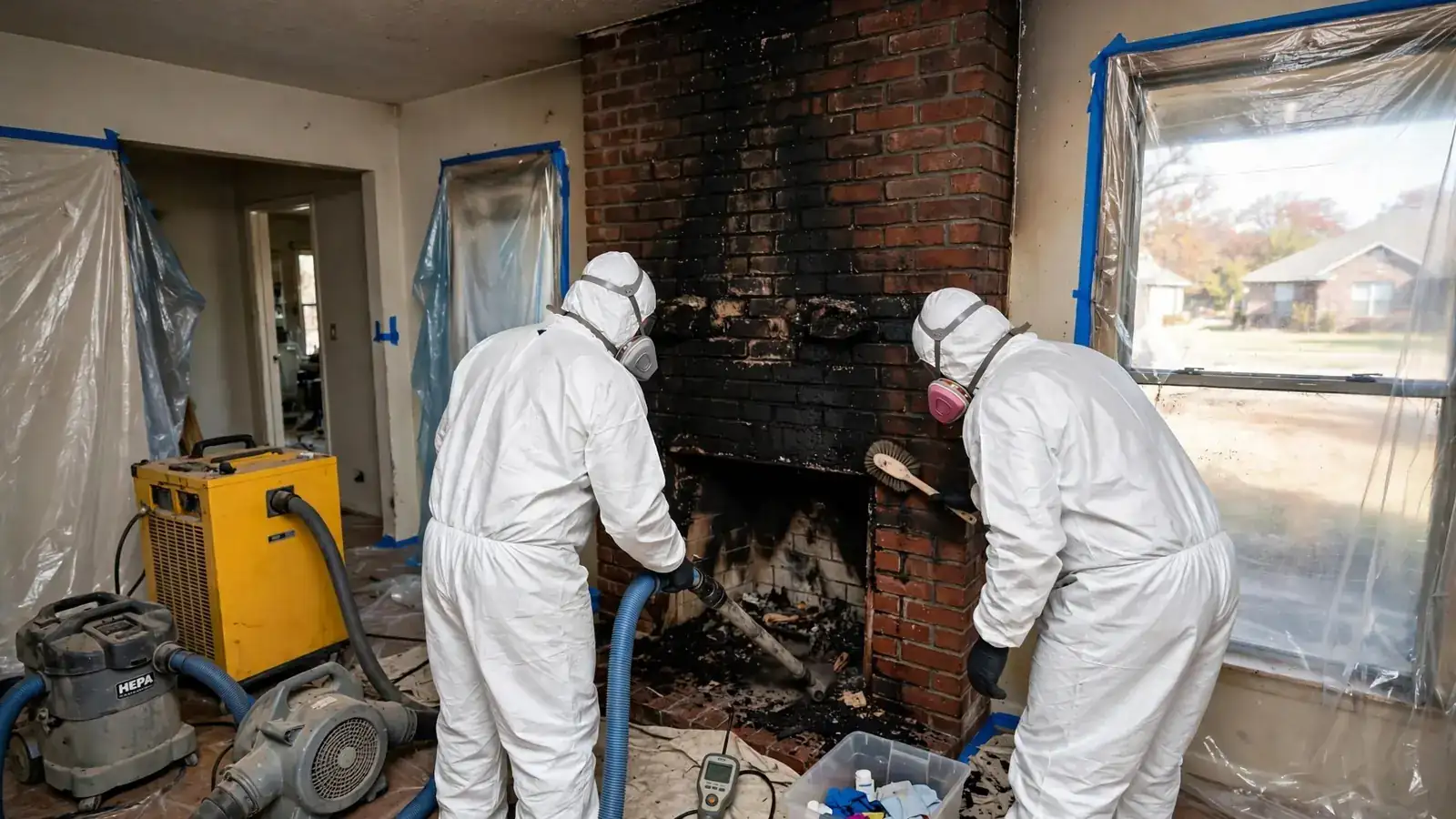
Many Ryan Place homes have several fireplaces with tile or carved wood surrounds and brick or stone fireboxes. Smoke from the house fire can stain the surrounds and the masonry. Tile and glazed surfaces clean well; porous brick and stone may need specialized cleaners tested on a hidden patch first.
Wood mantels are cleaned like other woodwork and may need refinishing.
Lead-safe soot removal
Original paint under newer layers may contain lead [3]. Scrubbing hard, scraping flaking paint or sanding sooty trim can release lead dust. Containment, wet cleaning and HEPA vacuums keep it under control.
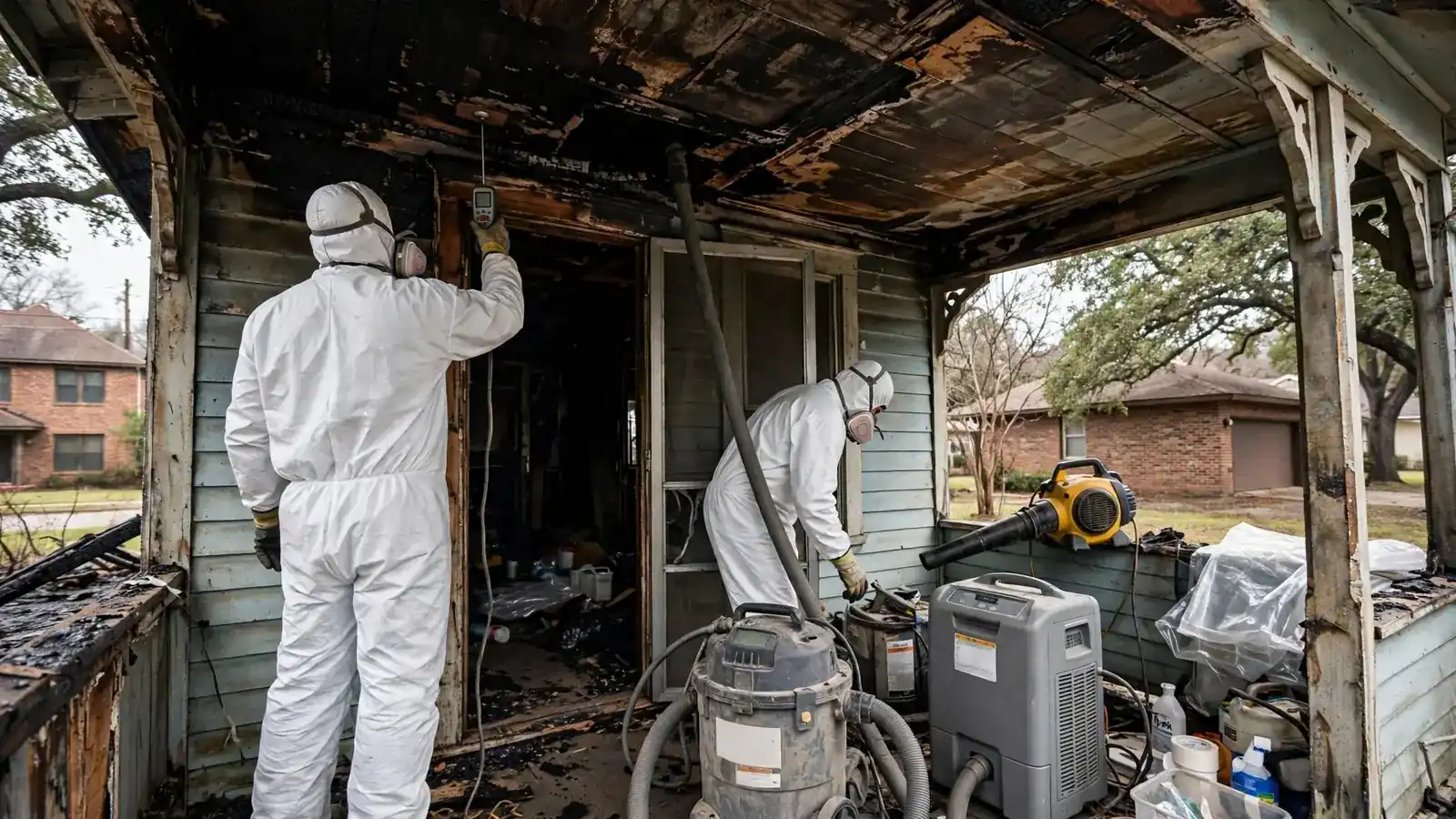
Asbestos is also possible in some older materials, such as pipe insulation, and should be tested before disturbance [4].
Surfaces in Ryan Place homes and soot treatment
Typical materials and the usual approach.
- Plaster with crown moldingsDry cleaning, gentle washing, sealing if needed.
- Stained oak and pine woodworkCleaning with finish-safe products, then recoating.
- Tile fireplace surroundsWashed; grout cleaned or renewed.
- Hardwood floorsCleaning and recoating, or light sanding if heavy.
Soot in attics and basements
Soot rises to the attic and, in houses with basements, can be carried down by firefighting water. Both spaces hold residue that can cause odor and staining later. Insulation that holds soot is usually replaced, and framing is cleaned or sealed.
The Ryan Place page explains the basements and deep crawl spaces found in some older houses.
Protecting unaffected rooms
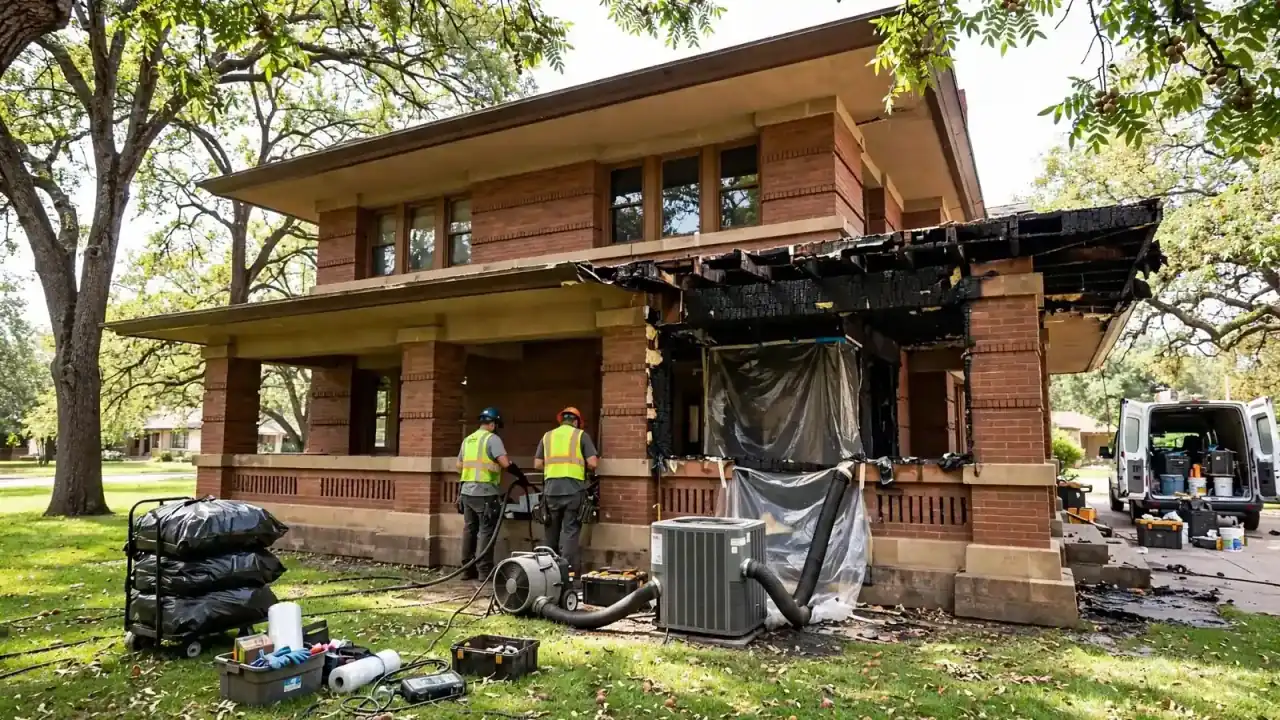
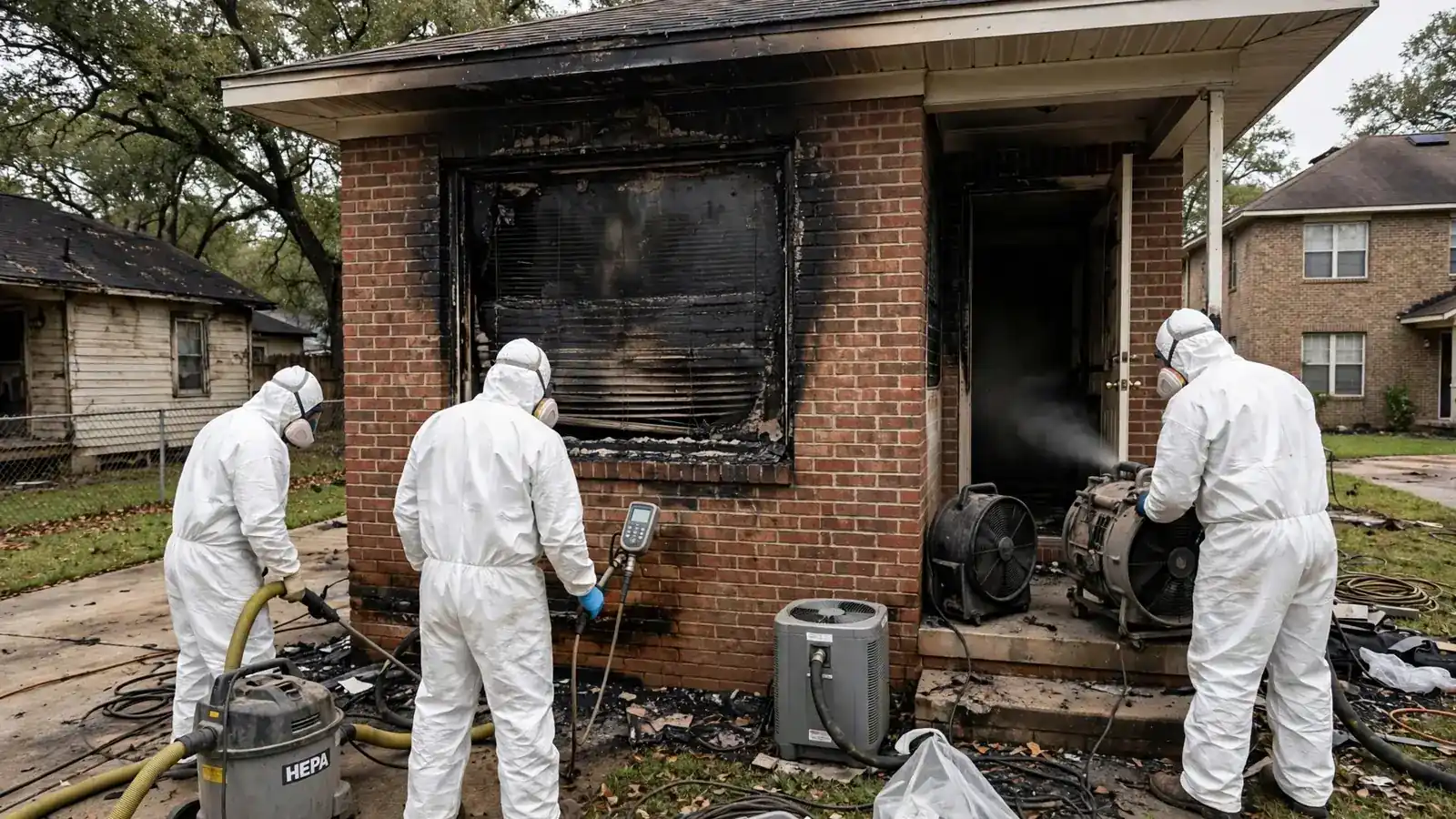
In a large house, some rooms may be lightly affected or untouched. Plastic barriers, sealed doors and air scrubbers keep soot from spreading into them during cleanup. Belongings in those rooms can stay in place if they are protected.
Ask the contractor which rooms will be sealed off and for how long.
Once Ryan Place soot is gone
With visible soot gone, any remaining smell is handled with smoke odor removal. Painting and refinishing follow. Photos taken before soot removal began help the adjuster understand the work.
If the family has moved out for the duration, the Texas Department of Insurance describes how additional living expense coverage generally works [5].
Windows, transoms and leaded glass
Tall windows and transoms in these houses collect a greasy film of soot on the glass and in the corners of the sashes. Plain glass cleans well with suitable products. Leaded and stained glass is more delicate: soot settles along the lead cames and needs gentle cleaning by hand, sometimes by a glass specialist.
Wood sashes are cleaned like other trim, and painted sashes may need sealing and repainting where stains remain.
Light fixtures, hardware and decorative metal
Older houses often keep original brass or bronze hardware, chandeliers and sconces. Soot is acidic and can etch metal finishes if left for long. Removable pieces are taken down, cleaned separately and returned to their places, which also makes it easier to clean the walls and ceilings around them.
Crystal and glass chandeliers are cleaned piece by piece, often on a table rather than on the ceiling.
FAQ
Soot Removal in Ryan Place: questions
How do you clean soot from very high ceilings?
With scaffolding or tall ladders on stable footing, working top down and using dry methods first.
Can carved staircases be cleaned without damage?
Yes, by hand, piece by piece, with products safe for the finish. Some may need a fresh coat afterwards.
Can I clean soot off the fireplace myself?
Glazed tile may wipe clean, but porous brick and stone need specialized products tested on a hidden area first.