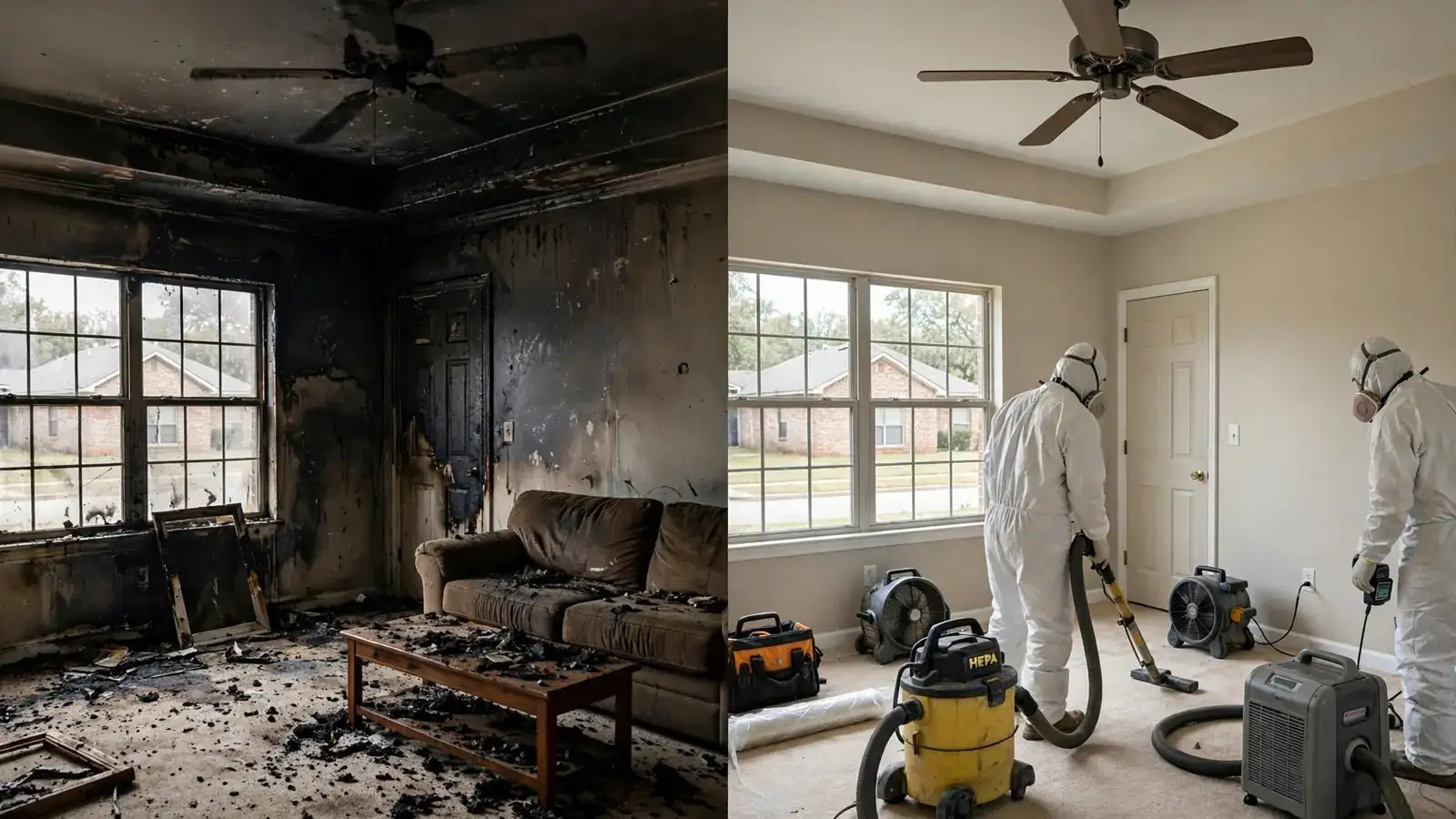
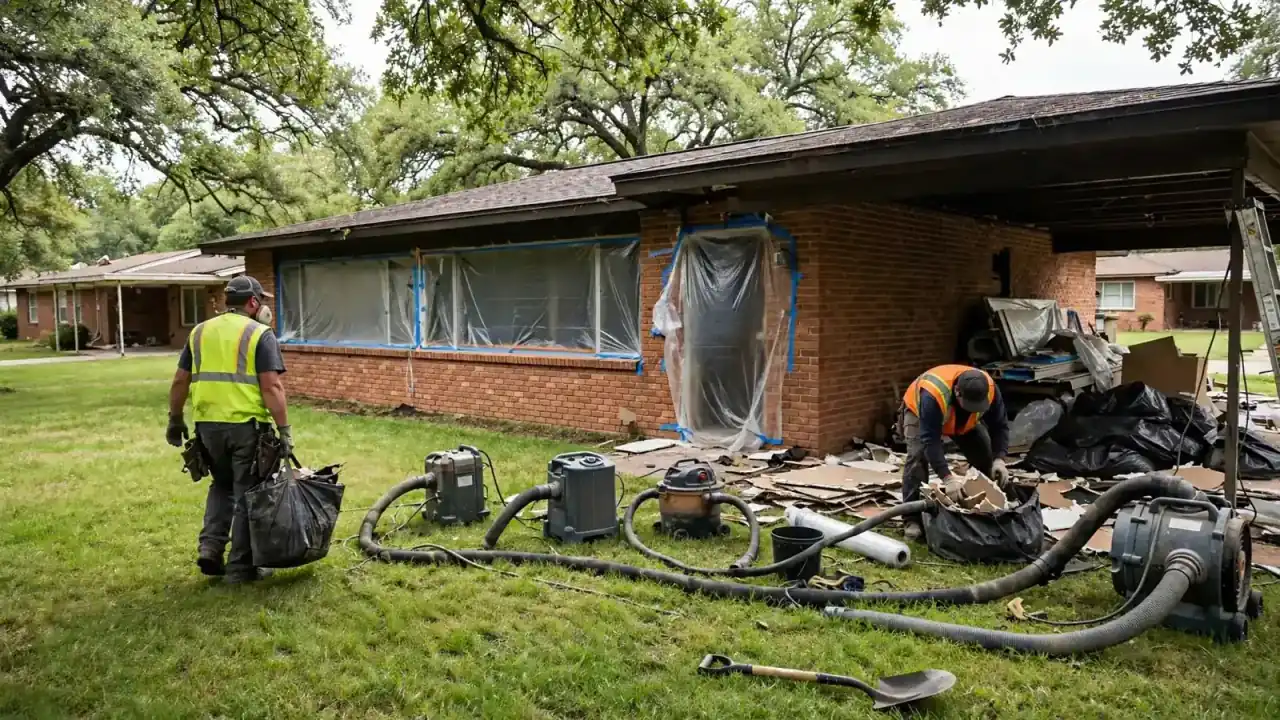
Key facts: Soot Removal in Wedgwood
- The U.S. Fire Administration advises learning about soot's health risks before cleaning it [1].
- IICRC S700 explains how professionals choose dry or wet methods for fire residue on different surfaces [2].
- Wedgwood homes from before 1978 may have lead in older paint layers, so scrubbing or sanding sooty trim calls for lead-safe methods [3].
Reading the soot in each room
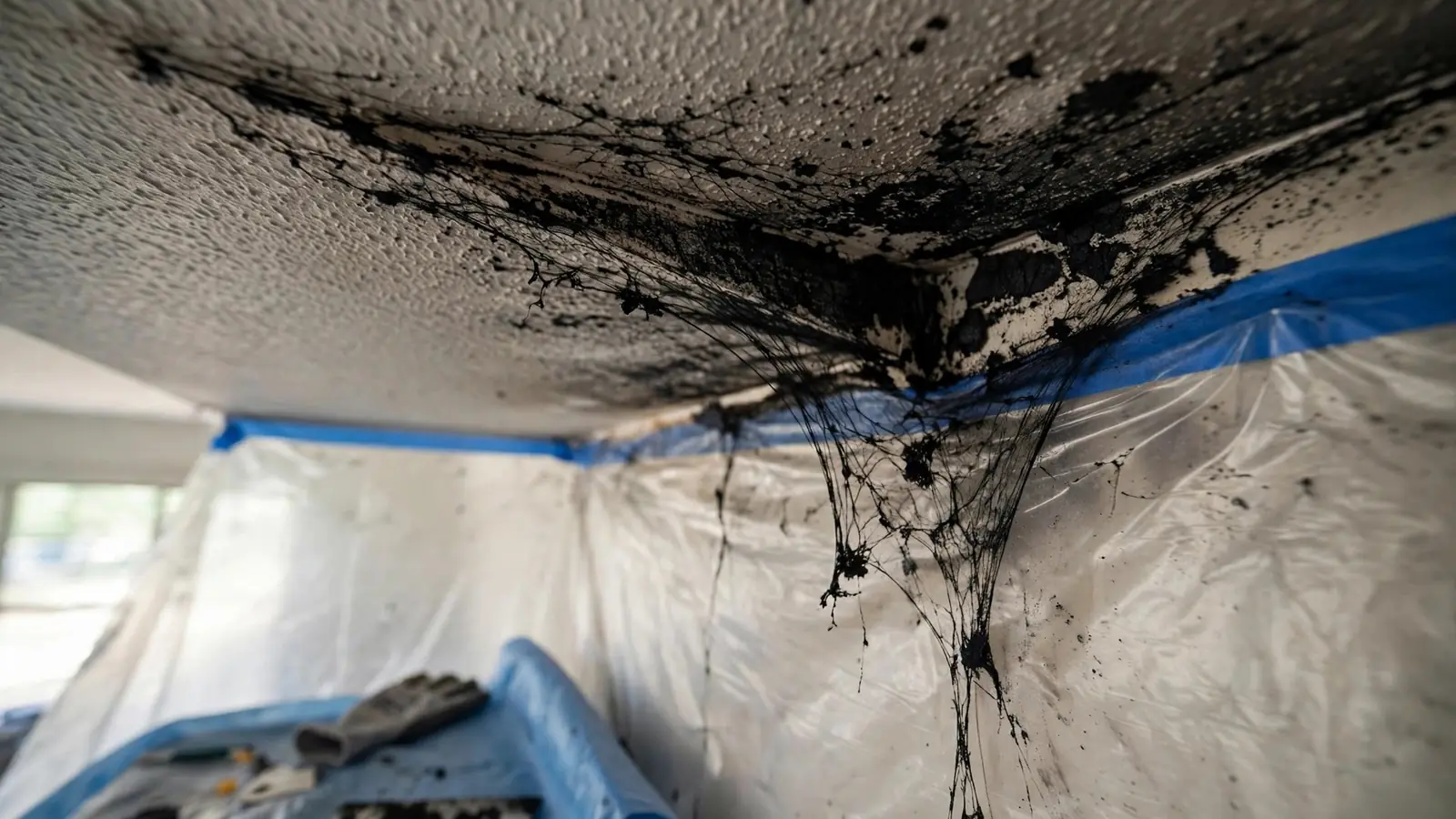
Soot is heaviest near the source and lighter down the hall. A gray film on bedroom walls, dark shadows above doorways and black strands in ceiling corners all show where smoke flowed. Kitchen soot is often mixed with grease; garage soot can be oily from burned plastics and fuel.
Wipe tests in each room tell the contractor whether the residue is dry, oily or protein based, which decides the cleaning products.
Popcorn ceilings
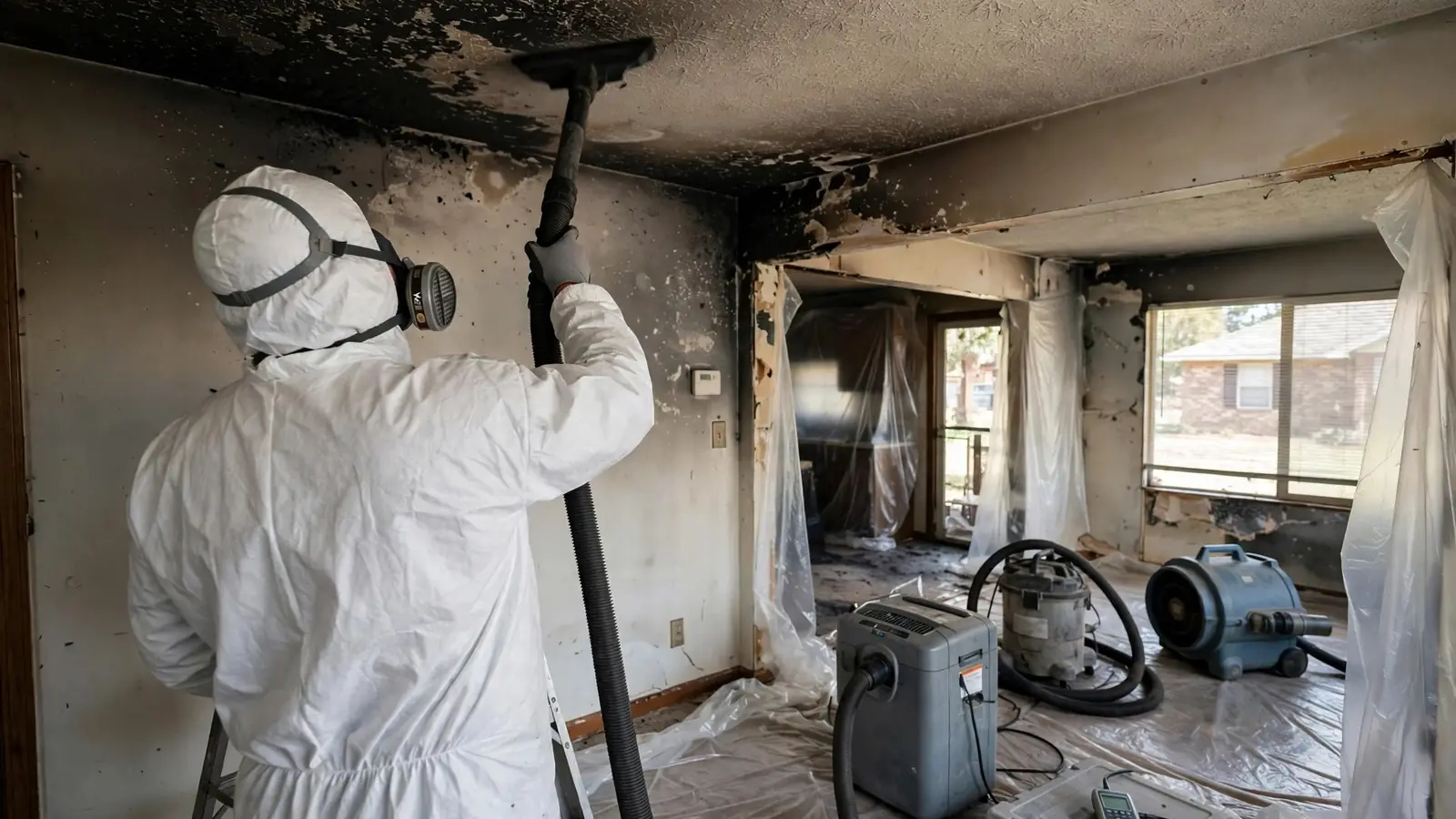
Textured ceilings trap soot in their rough surface and crumble easily. Some textures from the 1960s and 1970s may contain asbestos [4], so they are tested before anything more than gentle vacuuming. Sealing with a stain-blocking primer is often the best way to deal with soot staining that remains.
Never scrape or wet-wash a textured ceiling before it has been tested and the method agreed.
Soot removal steps in a Wedgwood home
The usual order.
- 1
Test residue and ceiling texture
Soot type and, where needed, asbestos testing.
- 2
Vacuum and dry-sponge top to bottom
Loose soot is removed from ceilings, walls and trim.
- 3
Wash walls, trim and cabinets
Cleaners matched to the residue on each surface.
- 4
Seal stains on ceilings and walls
Stain-blocking primer before new paint.
Den paneling and brick fireplaces
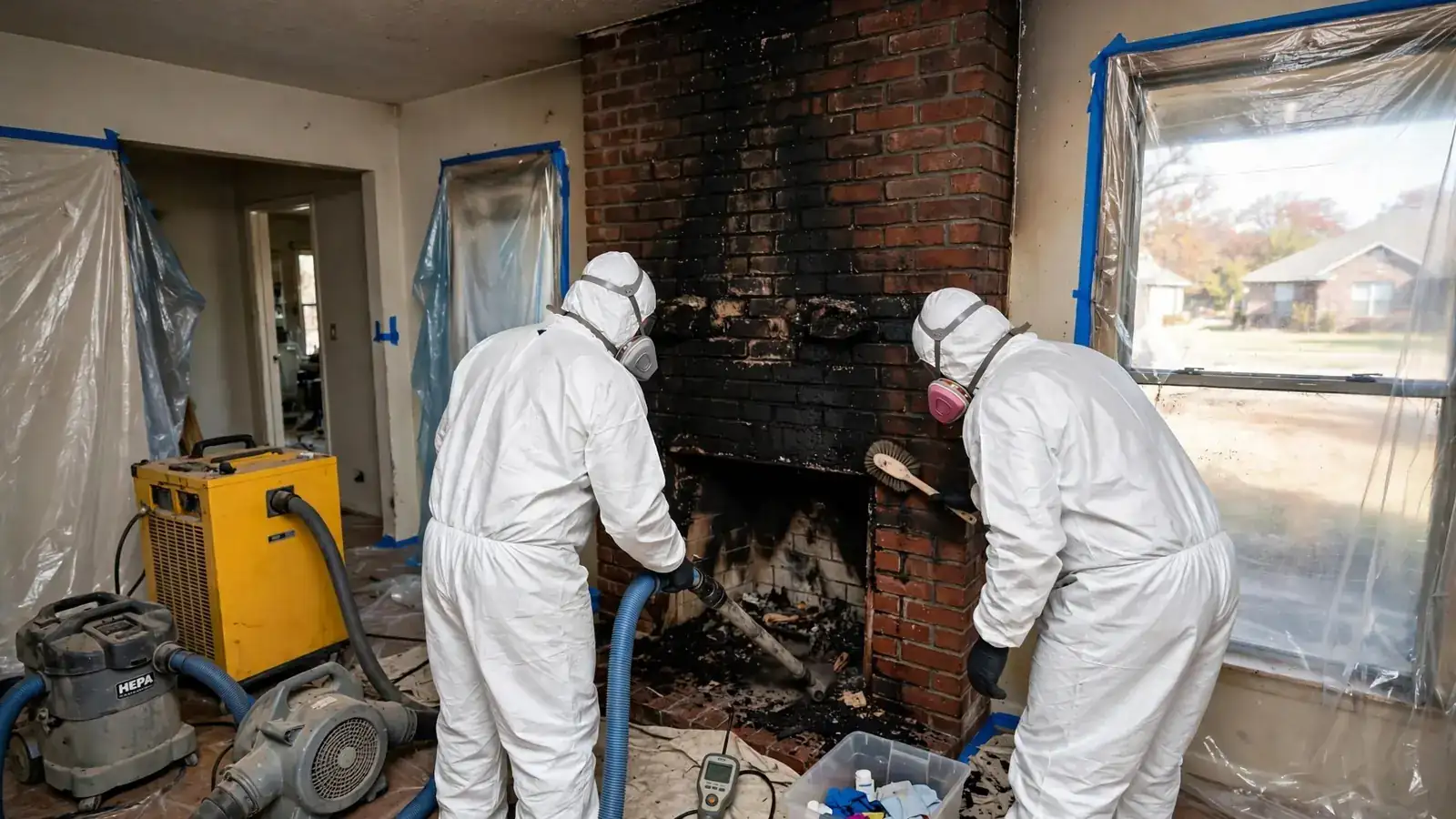
Many Wedgwood dens have wood paneling and a brick fireplace wall. Paneling is cleaned by hand with products safe for its finish and may need a fresh coat. Brick holds soot in its pores and may need specialized masonry cleaners, tested on a hidden patch first.
Mantels and hearths are cleaned along with the brick.
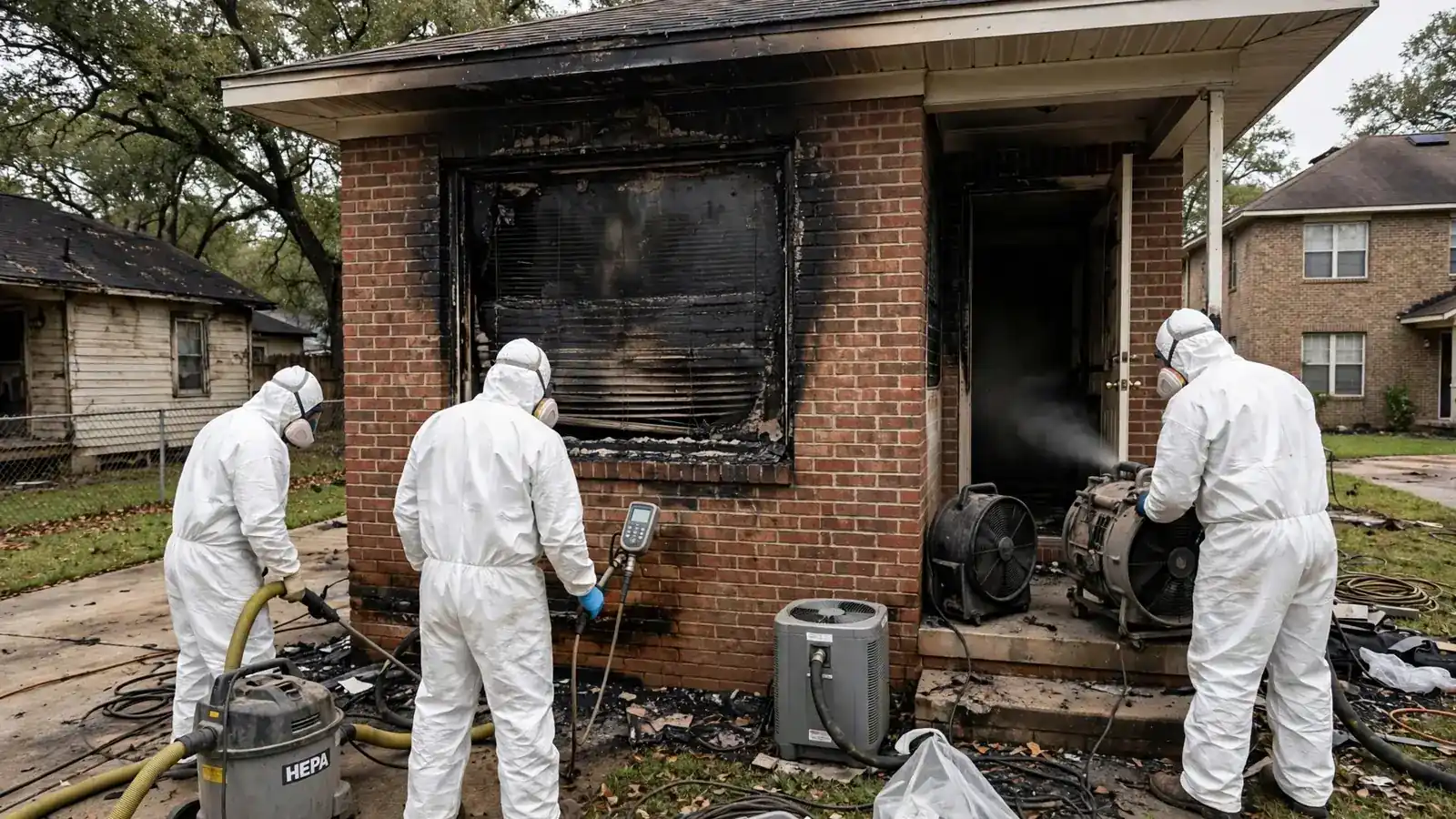
Aluminum windows, blinds and glass
Original aluminum windows collect soot in their tracks and on their frames. Frames are cleaned and dried promptly, tracks vacuumed, and glass washed. Mini blinds are cleaned slat by slat or replaced; heat-warped vinyl blinds are usually replaced.
Screens trap soot and are often simpler to replace than to clean.
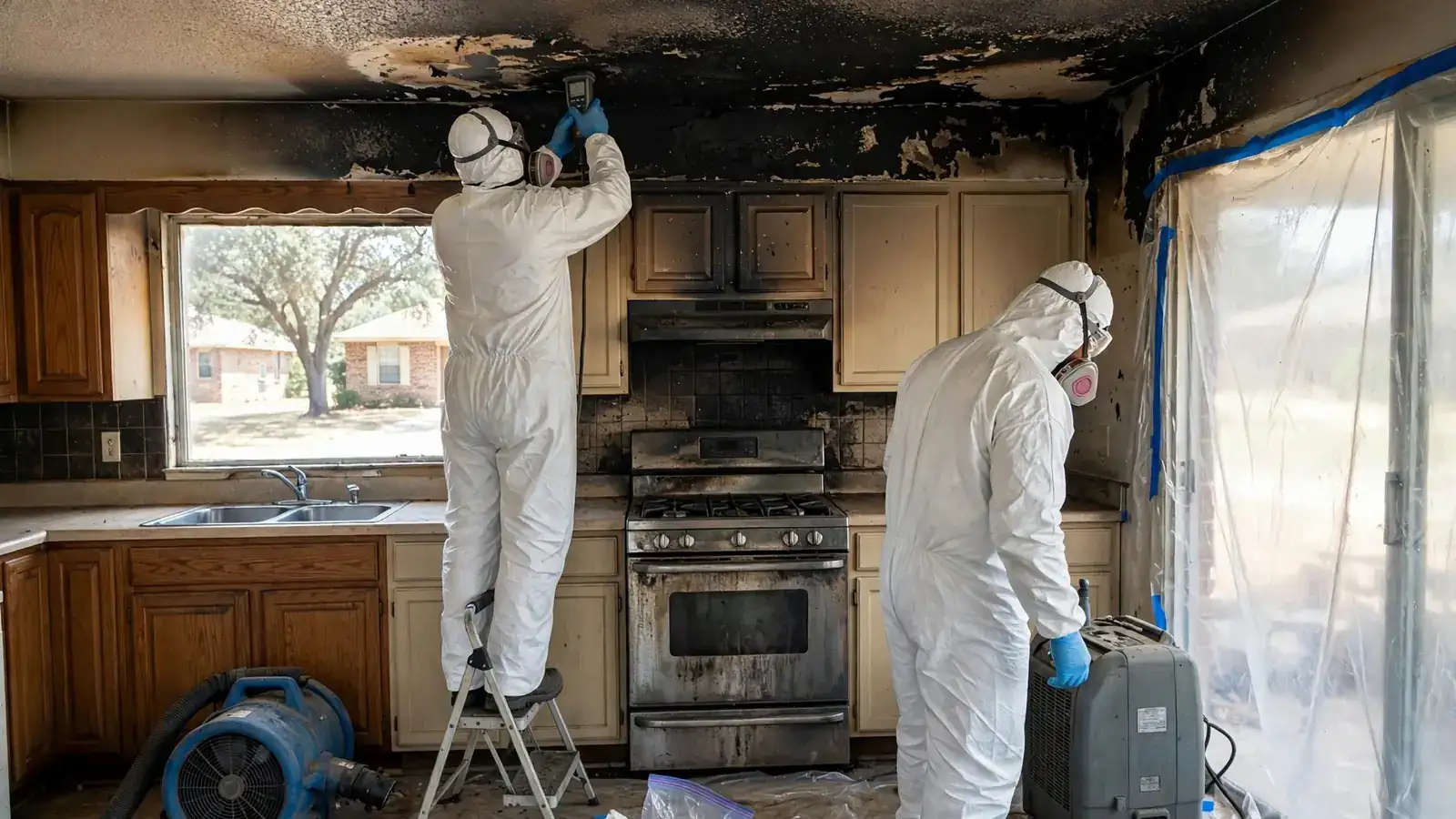
Wedgwood surfaces and how soot is handled
Typical materials in these homes.
- Painted drywallDry cleaning, washing and sealing if stained.
- Vinyl and tile floorsScrubbed with degreasing cleaners.
- Carpet in bedroomsCleaned, or replaced if heavily affected.
- Wedgwood kitchen cabinetsDegreased and refinished where needed.
Garage soot and the house
A garage fire leaves heavy soot on the garage walls and ceiling and pushes it into the house through the connecting door. The utility room or kitchen beside the garage often has the darkest residue inside. The shared wall may need cleaning inside its cavity.
The Wedgwood page explains why attached garages are standard in these homes.
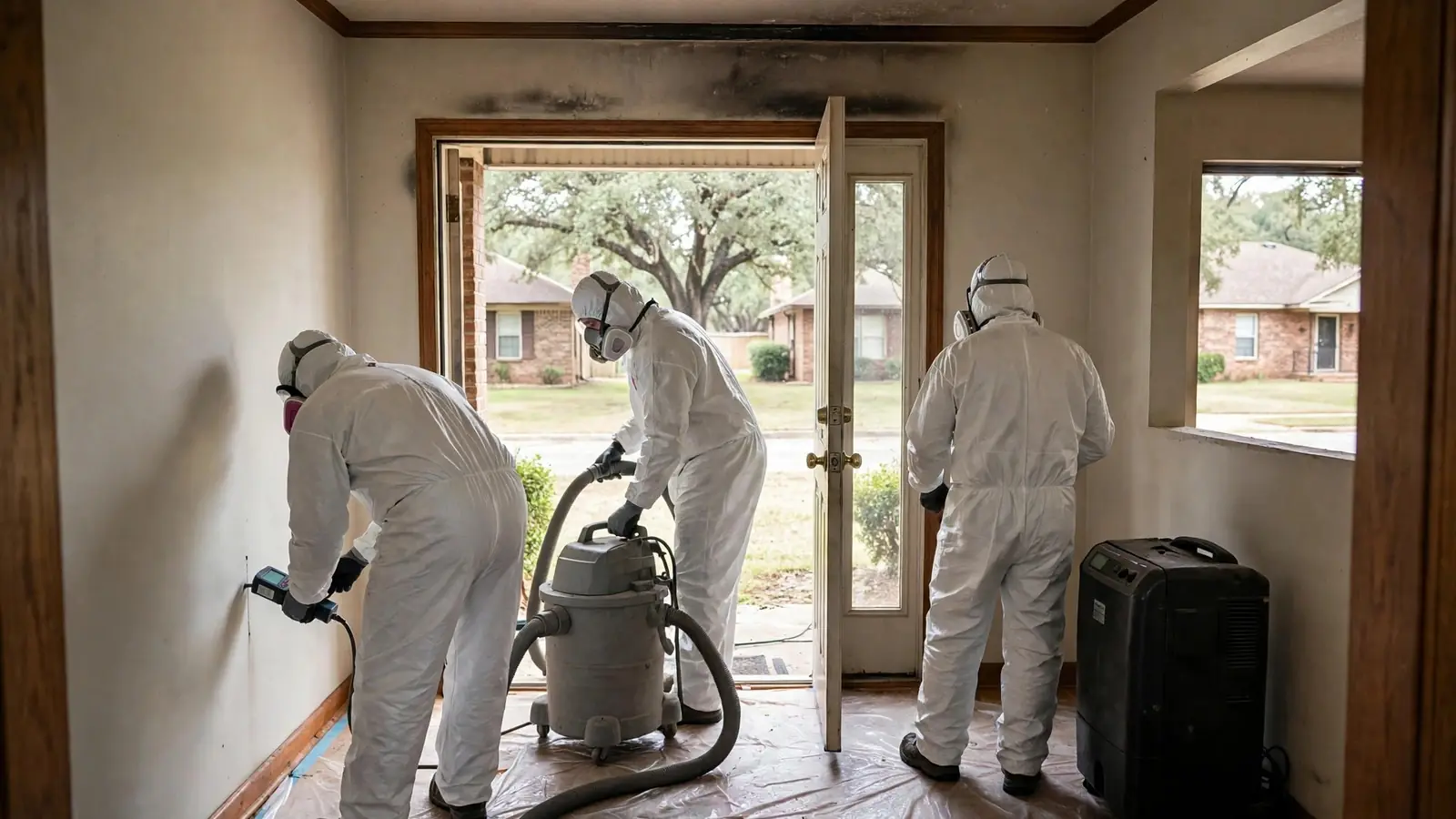
Attic soot and ductwork
Soot that reaches the attic coats insulation and ductwork. Insulation holding soot is replaced, framing is cleaned or sealed, and ducts are cleaned or replaced so soot is not blown back into the rooms.
Keep the air conditioning off until the contractor says the system is clean.
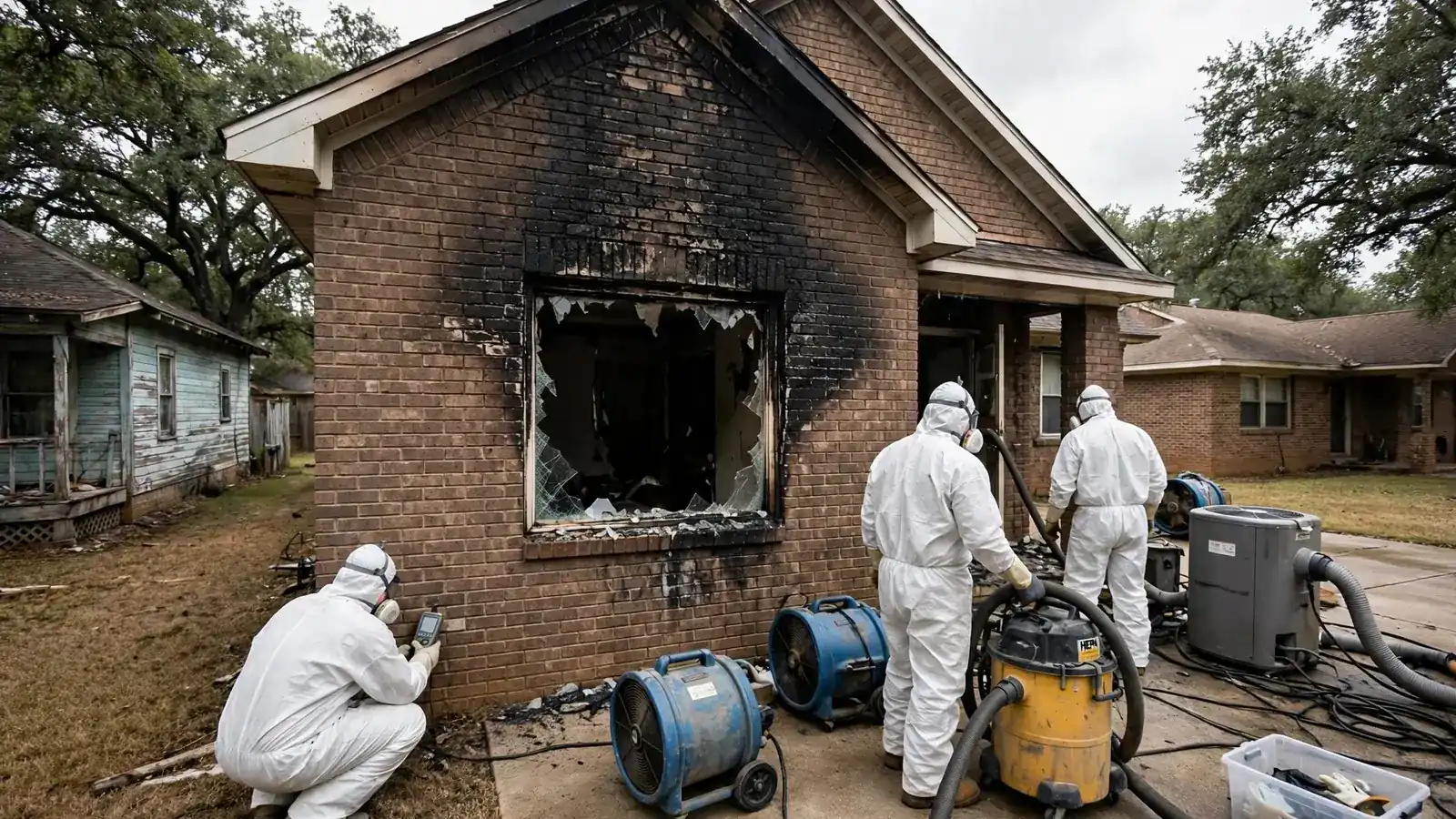
Once the soot is removed
Remaining smell is handled with smoke odor removal, and repainting follows. Photos taken before cleaning help your adjuster see the extent of the soot.
Families out of the house during soot cleanup can find guidance on additional living expense coverage from the Texas Department of Insurance [5].
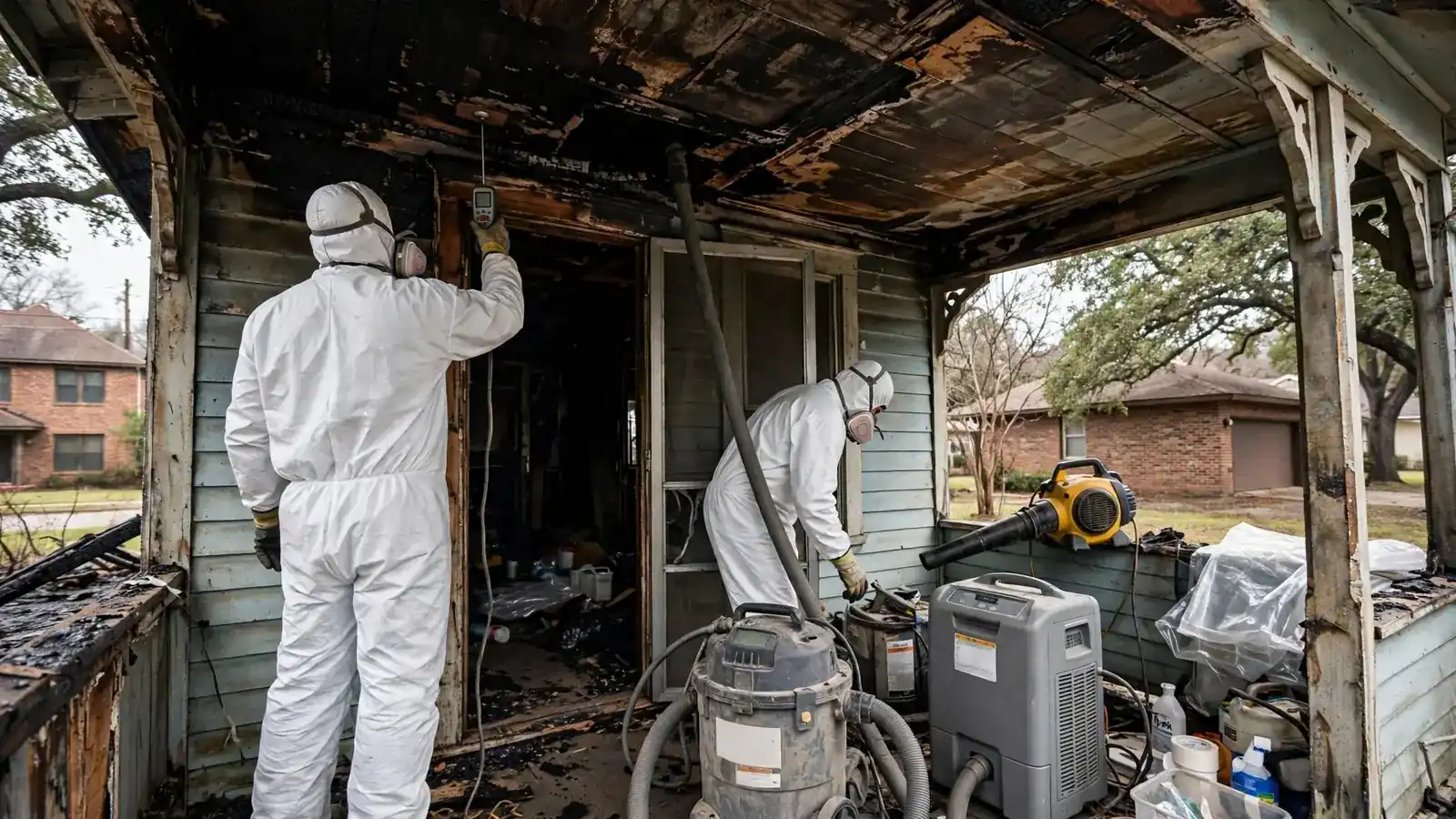
Kitchens with greasy soot
A kitchen fire leaves soot mixed with grease on cabinet faces, inside cabinets, on the ceiling and on appliances. It needs degreasing cleaners, not just dry sponges. Cabinets are emptied so shelves can be cleaned, and range hoods are cleaned or replaced. Wood cabinets can usually be cleaned and refinished.
Small appliances near the fire should be checked before they are used again.
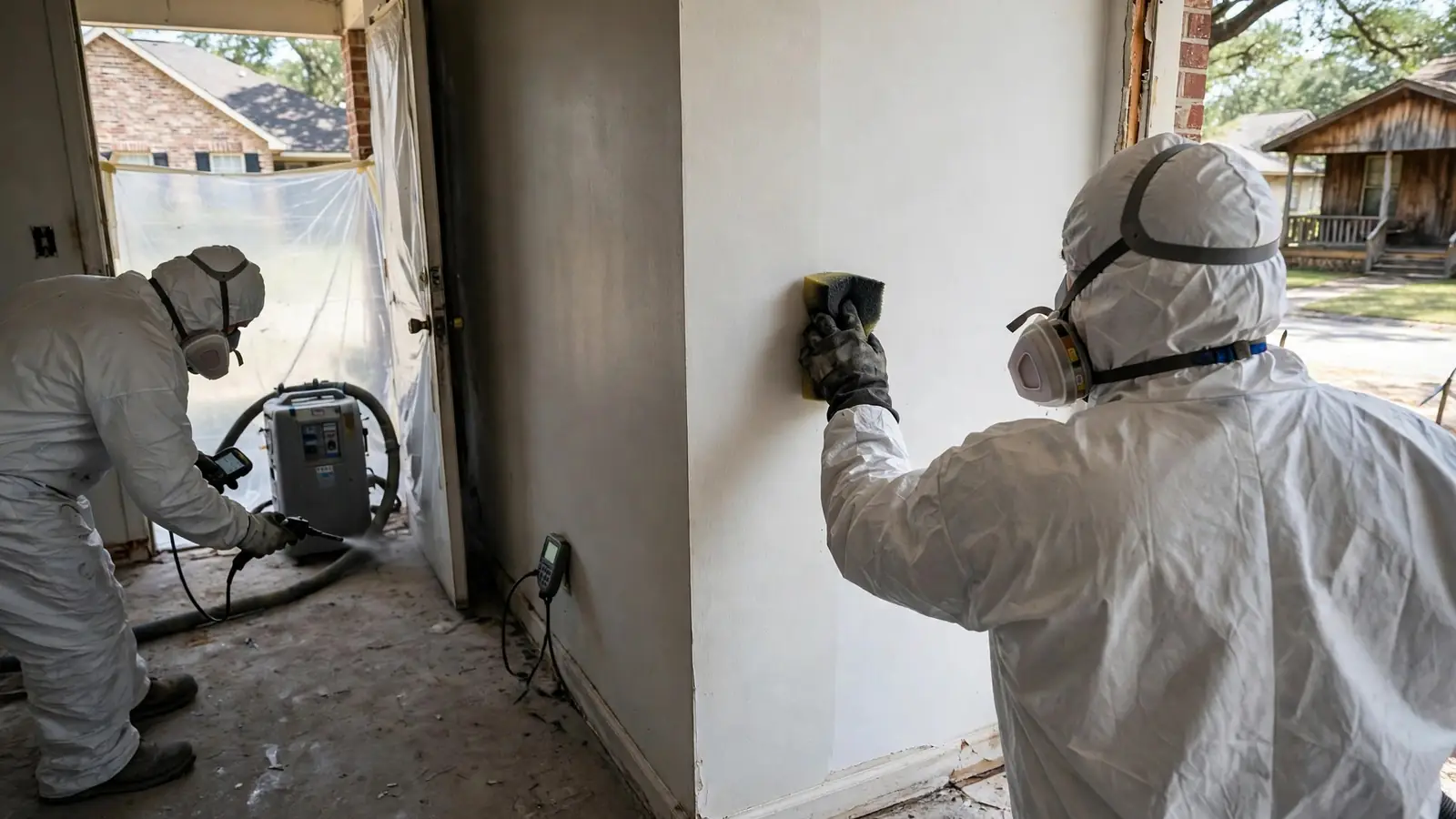
Doors, trim and hallway walls
The long hall in a Wedgwood ranch collects soot along its ceiling and upper walls, and on the tops of door frames. Doors carry soot on their faces and top edges. Painted doors and trim are cleaned and, where staining remains, sealed and repainted. Hollow-core doors that warped from heat are usually replaced.
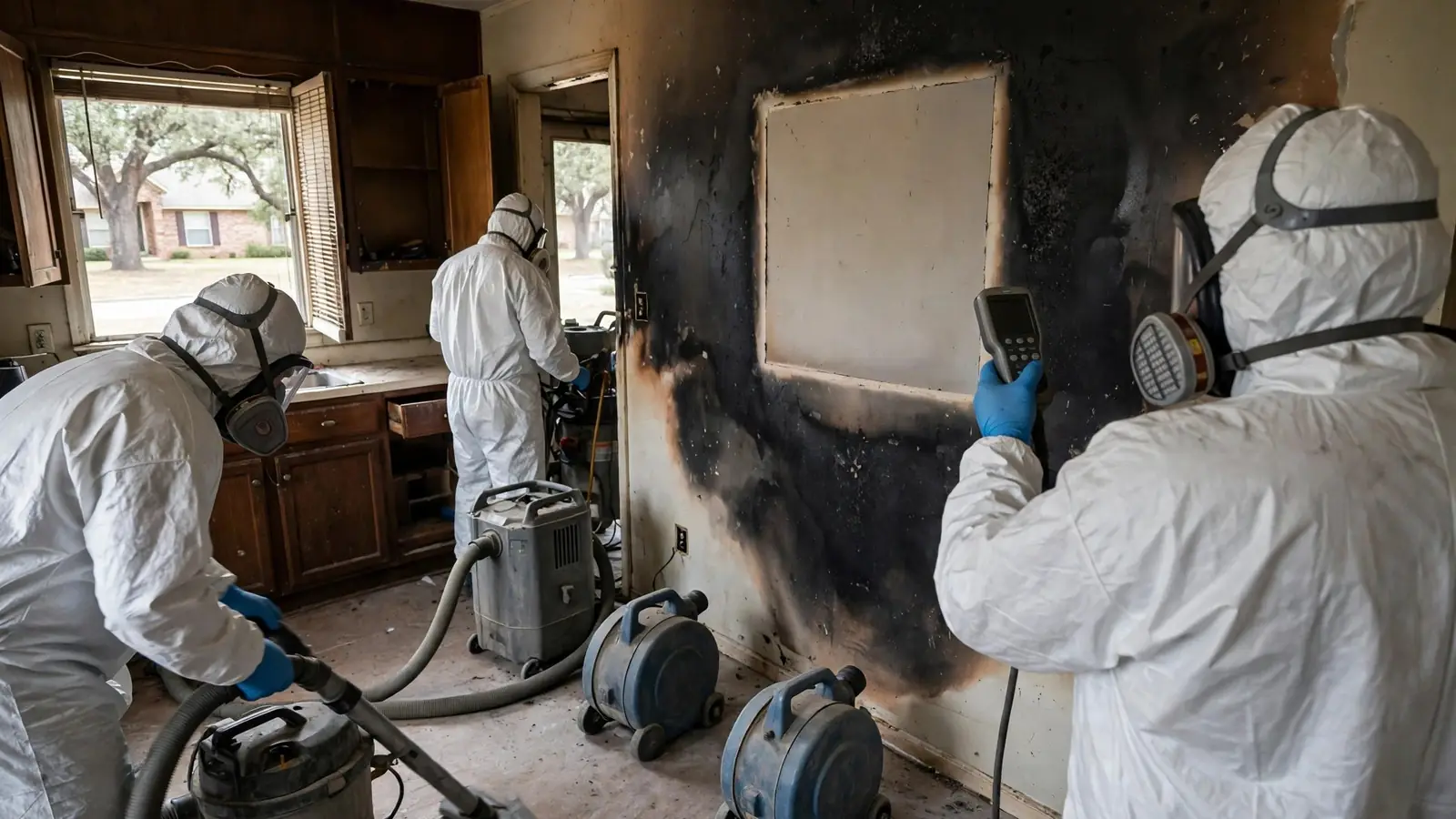
Protecting your family during soot cleanup
Keep children and pets out of rooms being cleaned, and avoid sweeping or dusting soot yourself, which puts fine particles in the air. Professionals use HEPA vacuums and respirators for this reason. Anyone with asthma or breathing problems should stay elsewhere until the work is done.
FAQ
Soot Removal in Wedgwood: questions
Can popcorn ceilings be cleaned of soot?
Gently, but test for asbestos first if the texture dates from the 1960s or 1970s. Sealing is often the best option.
How is soot removed from a brick fireplace wall?
With specialized masonry cleaners, tested on a hidden area first.
Why is the room next to the garage so sooty?
Soot from a garage fire enters through the connecting door and the shared wall, so nearby rooms get the heaviest residue.