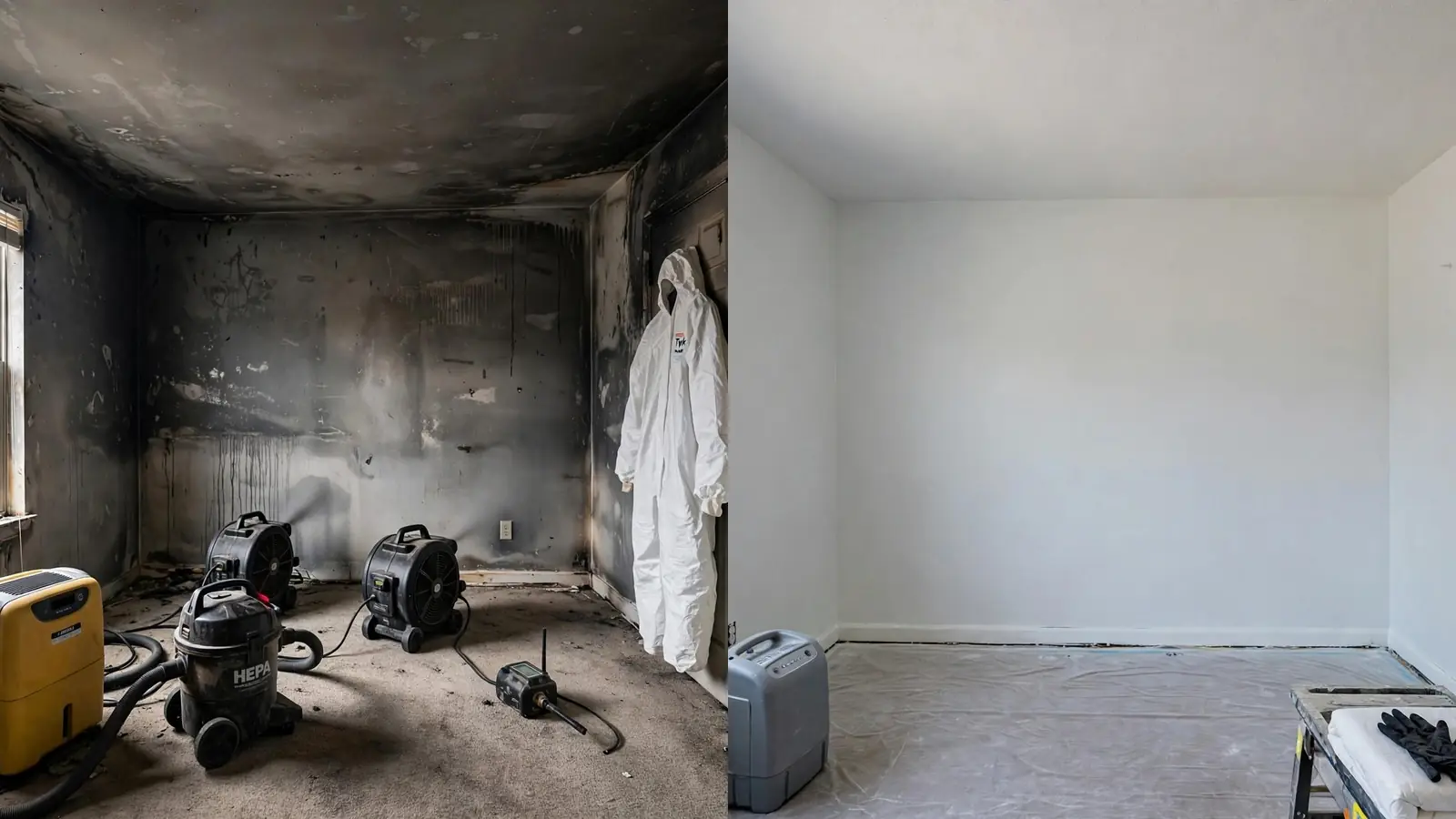
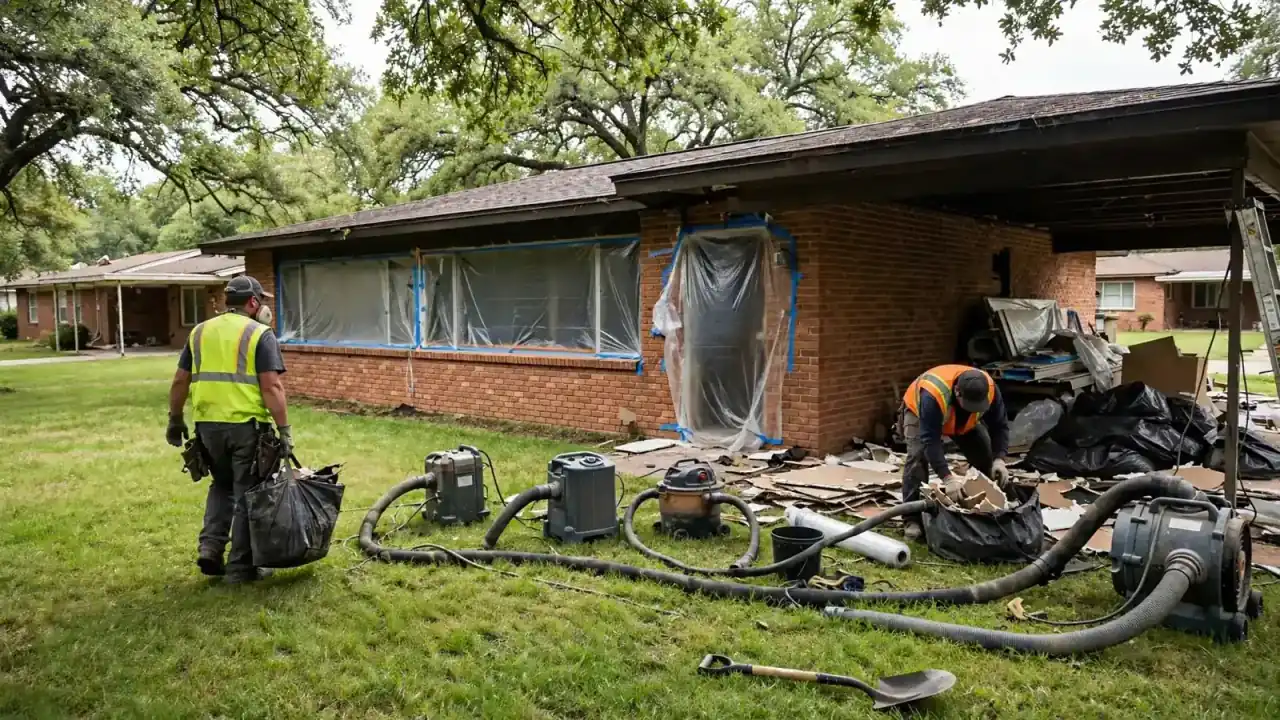
Key facts: Smoke Odor Removal in Wedgwood
- Smoke odor comes from fine particles that cling to surfaces and fabrics, according to the U.S. Fire Administration [1].
- The IICRC S700 standard puts odor treatment after residue removal in fire restoration [2].
- Cooking is the leading cause of home fires in the United States, the NFPA reports, so kitchen smoke is a common source of odor [8].
Attic ductwork that spreads the smell
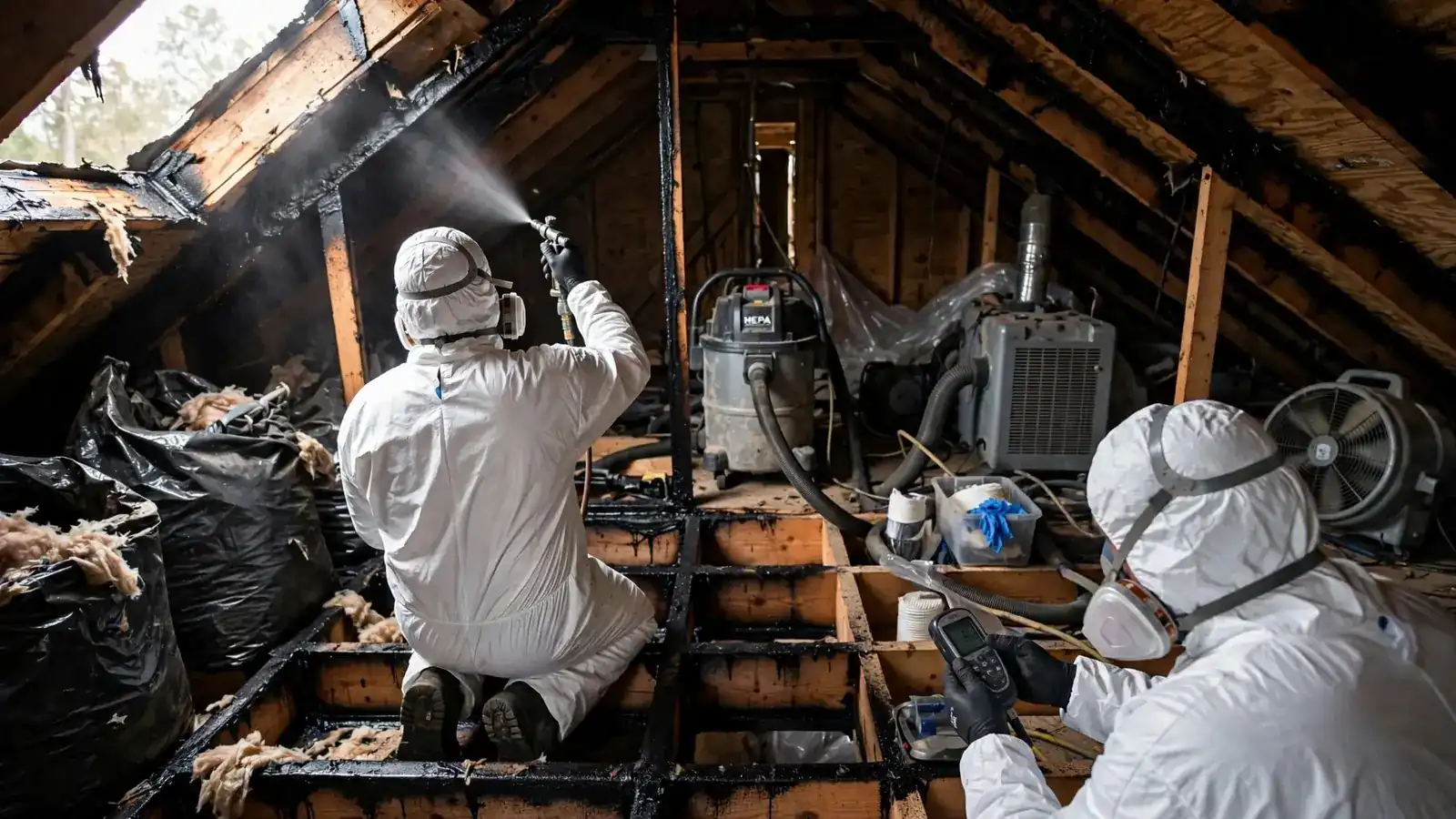
Wedgwood homes usually have their air handler and ducts in the attic, with supply vents in every room and a central return in the hall. During a fire, the system can pull smoke into the return and push it through every duct. Afterward, each time the system runs, odor comes back out.
Cleaning or sealing the duct interiors, cleaning the air handler and coil, and replacing filters are often the most important parts of odor removal in these houses. Some older flexible ducts are simpler to replace than to clean.
Textured ceilings and smoke
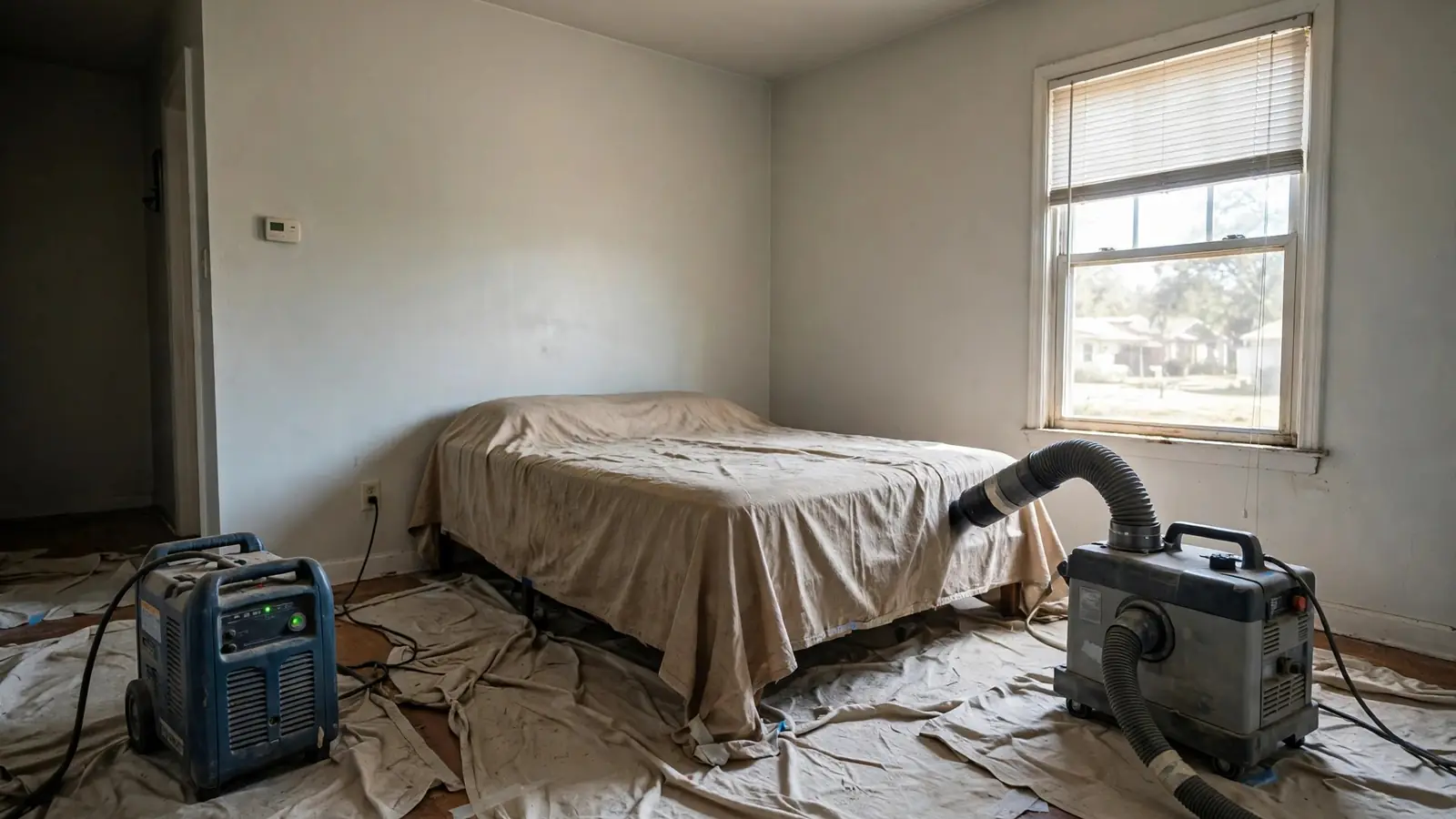
Many Wedgwood houses have textured or popcorn ceilings. The rough surface traps smoke particles and holds odor. Because ceiling textures from the 1960s and 1970s may contain asbestos, they should be tested before anything more than gentle cleaning [7]. Often the best approach is to clean lightly and then seal the ceiling with an odor-blocking primer.
Scraping a textured ceiling to get rid of smell is not a safe first step without testing.
How smoke odor is cleared from a Wedgwood ranch
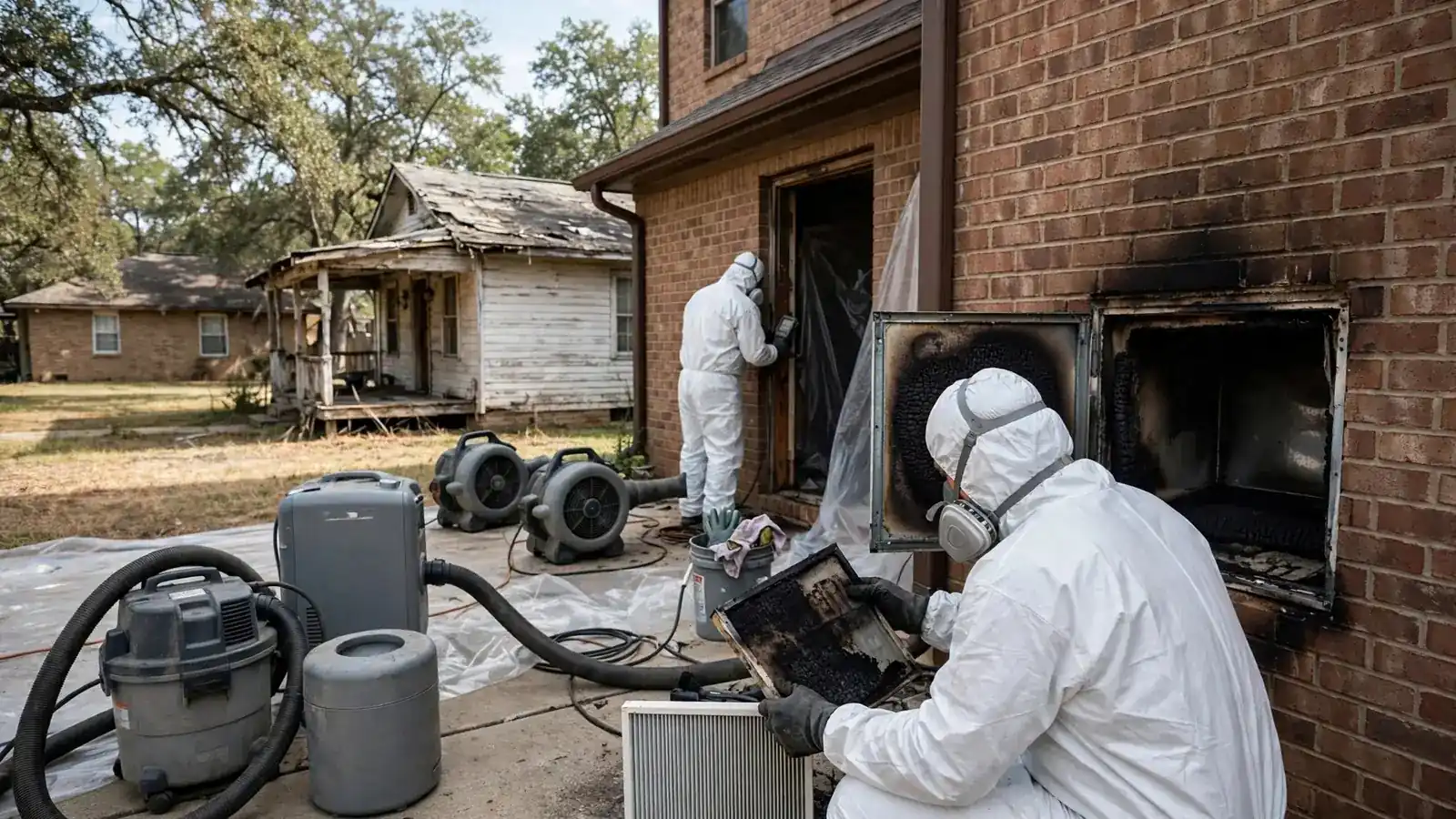
In a Wedgwood ranch, each step below removes one more place the smell is hiding.
- 1
Take out carpet, pad and attic insulation that hold smoke
Soft materials that cannot be cleaned are removed first.
- 2
Clean walls, ceilings and the bedroom hall
Every room along the smoke path, following S700 methods [2].
- 3
Clean or replace the attic ductwork
The hall return, supply ducts and the attic air handler are cleaned or swapped out.
- 4
Deodorize and seal before repainting
Fogging or hydroxyl treatment reaches what is left, and primer locks it in.
Kitchen fires and protein odor
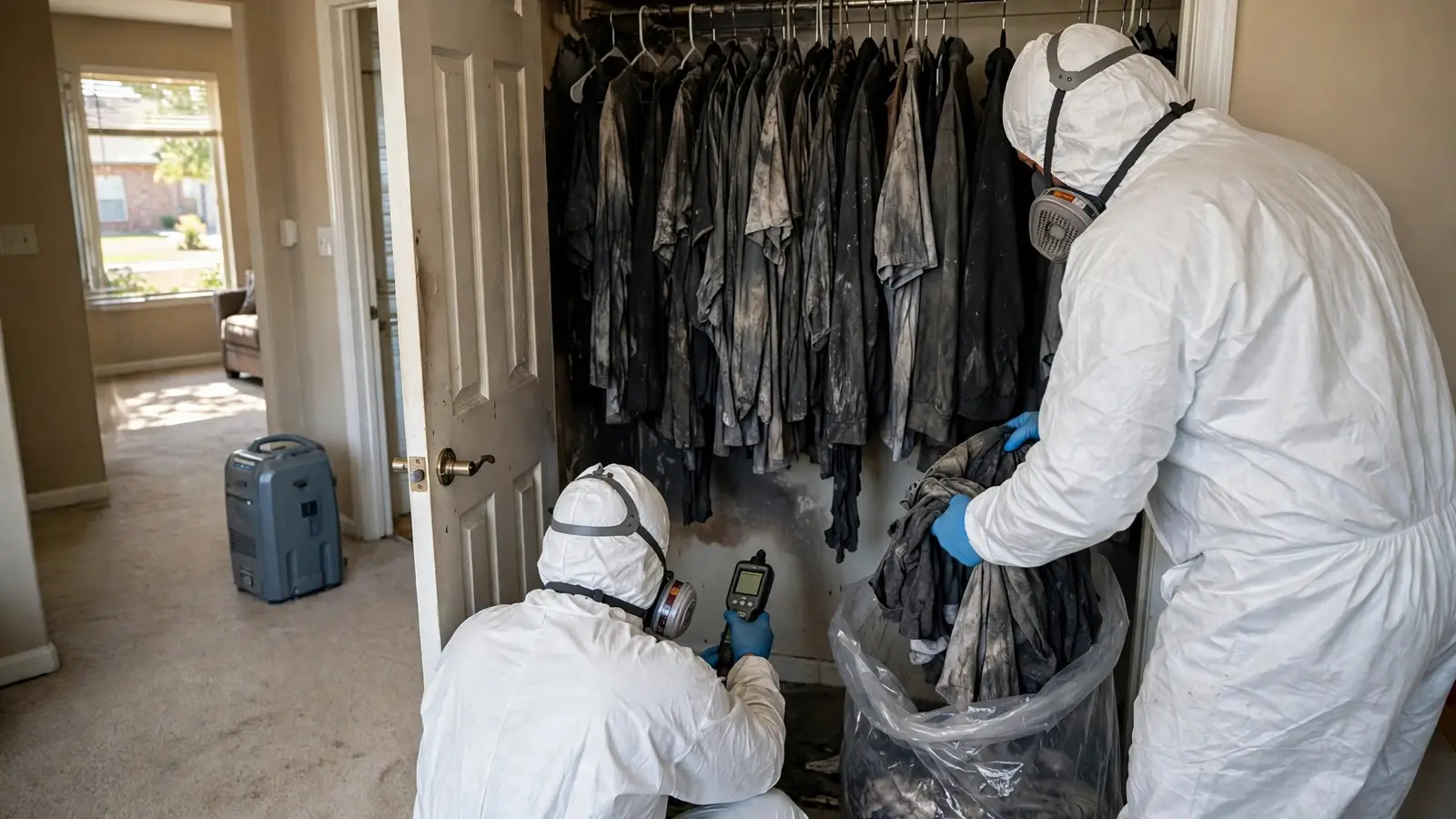
A pan left on the stove can produce a smell far stronger than the visible damage suggests. Burned food leaves protein residue that is thin, nearly invisible and very pungent. It coats kitchen cabinets, walls and ceilings and drifts down the hall. Degreasing cleaners and thorough washing of every surface are needed before any deodorizing.
The range hood and its duct also hold residue and should be cleaned or replaced.
Garage fires and chemical smells
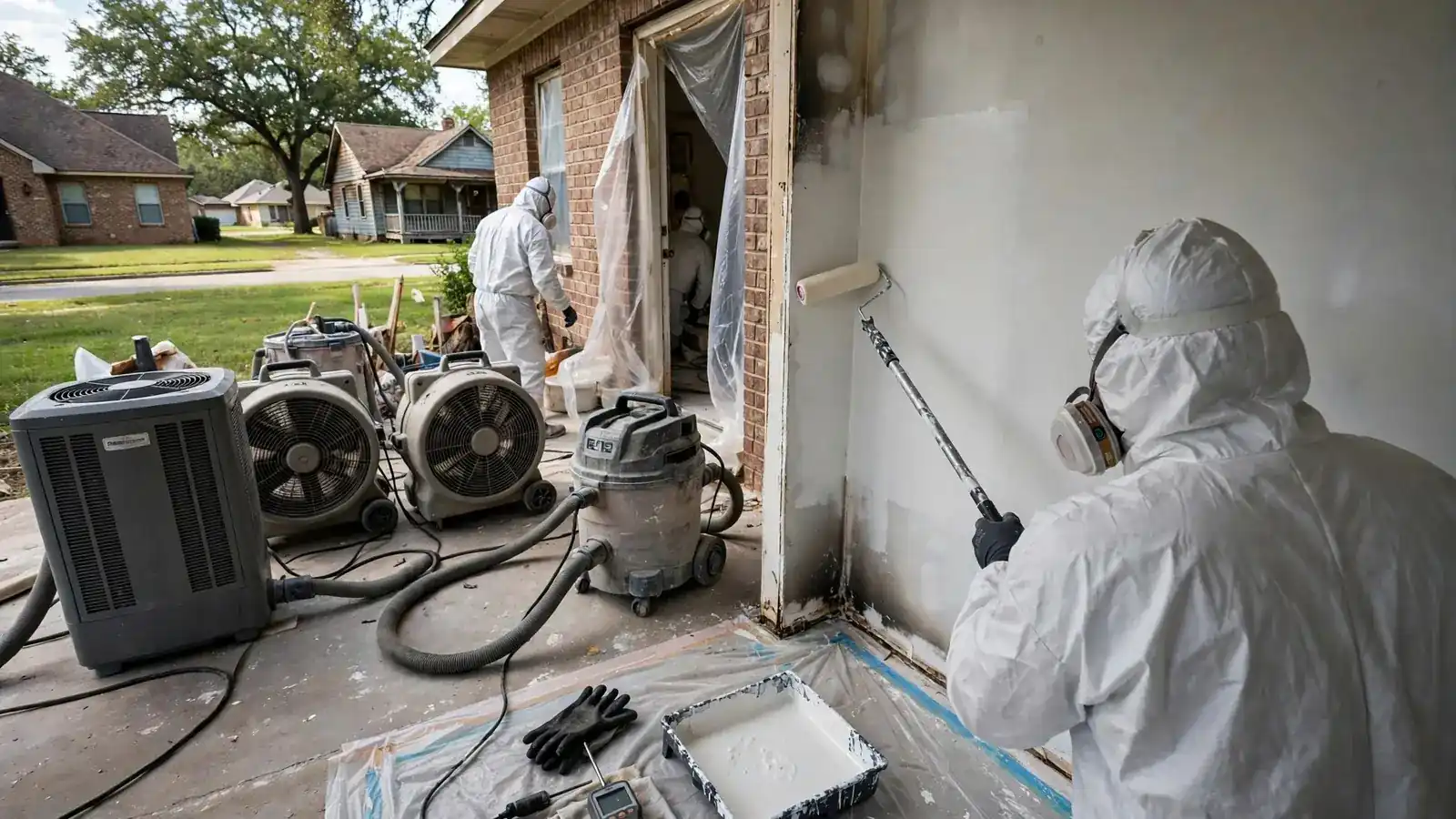
Attached garages are standard in Wedgwood [6]. A garage fire burns fuel, paint, plastics and tires, leaving a sharp chemical smell that enters the house through the connecting door and the shared wall. The garage, the shared wall cavity and the rooms beside it all need treatment.
Damaged containers of fuel and chemicals should be removed safely before odor work starts.
Where smell lingers in Wedgwood homes
Check these if the odor returns.
- The hall return grilleIt pulls smoky air from the whole house.
- Bedroom carpet at the end of the hallSmoke traveled the length of the house.
- Attic insulation above the kitchen or garageClosest to the source.
- Closets along the bedroom wingClosed spaces hold odor.
Using deodorizing treatments safely
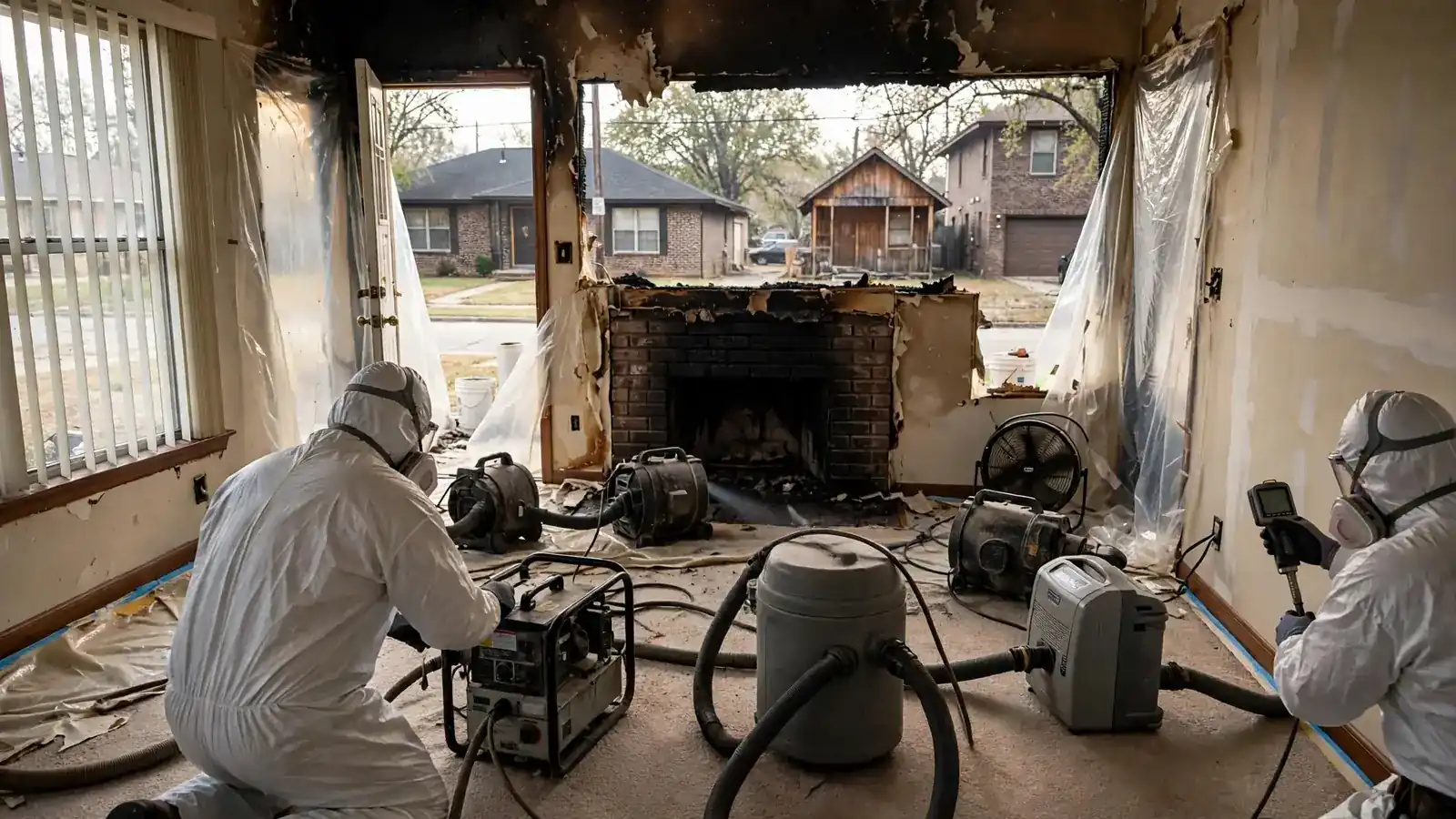
Thermal fogging and hydroxyl generators are common in homes like these. Ozone can be used only in an empty house, since the EPA warns it can harm health [3]. For a single-story ranch, the whole house is often treated at once, so plan to be away for the treatment and until the house has been aired.
Ask which method the contractor plans to use and how long you need to stay out.
Damp slab floors and musty odor
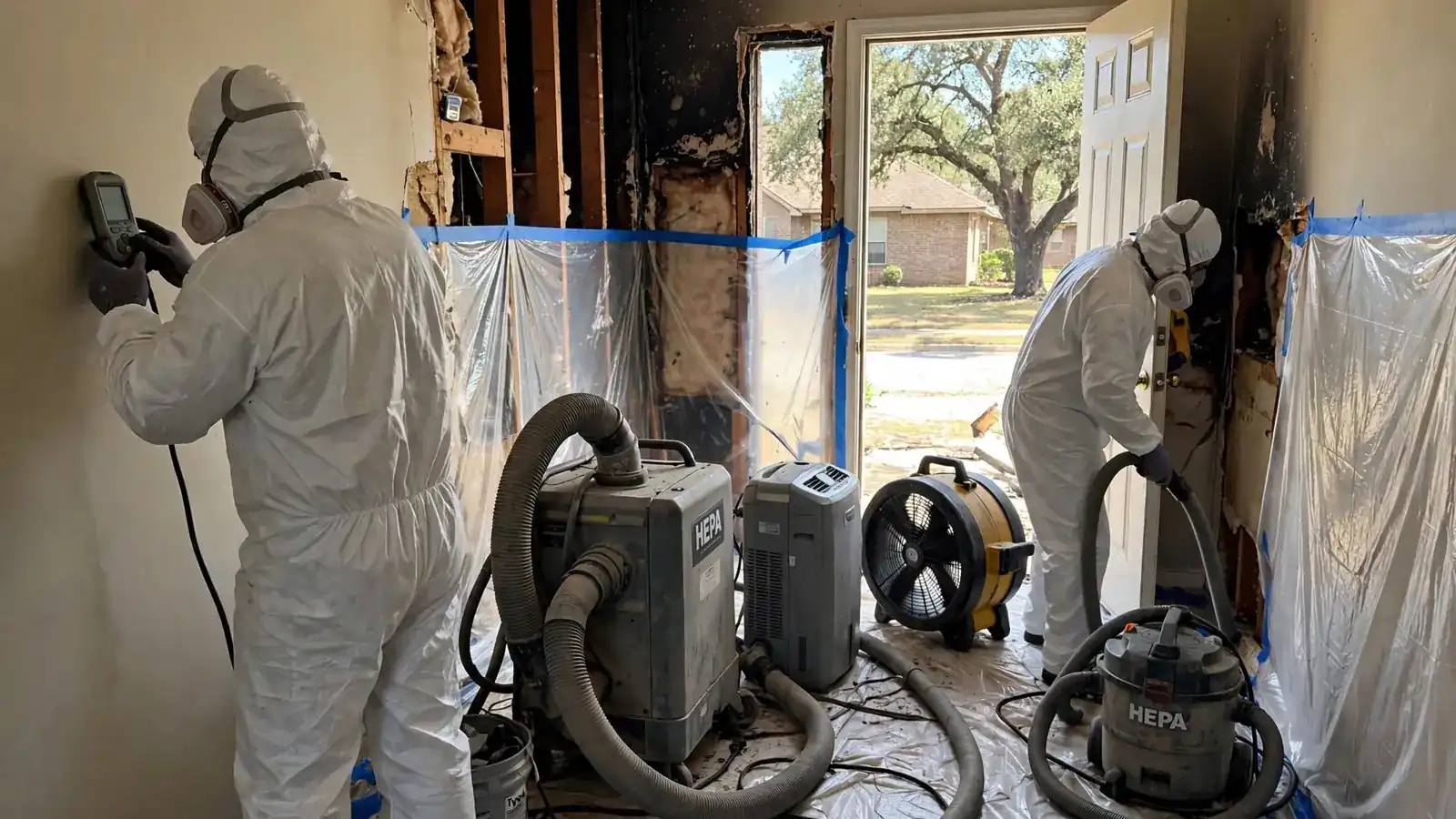
If water was used, it can spread under flooring on the slab and into the bottom of walls. Damp materials can grow mold within 24 to 48 hours [4], adding a musty smell that is easy to confuse with smoke. Drying must be finished before odor work is called complete.
The Wedgwood page explains how water behaves on these slab floors.
Confirming the house smells normal
Check the house with the windows closed and the air conditioning running, ideally on a warm afternoon. If the smell returns, the ducts or attic likely still hold residue. Our guide to smoke odor that won't go away explains common causes.
While odor treatment keeps the family out, the Texas Department of Insurance guidance on additional living expense coverage explains what is generally covered [5].
Bedrooms at the far end of the hall
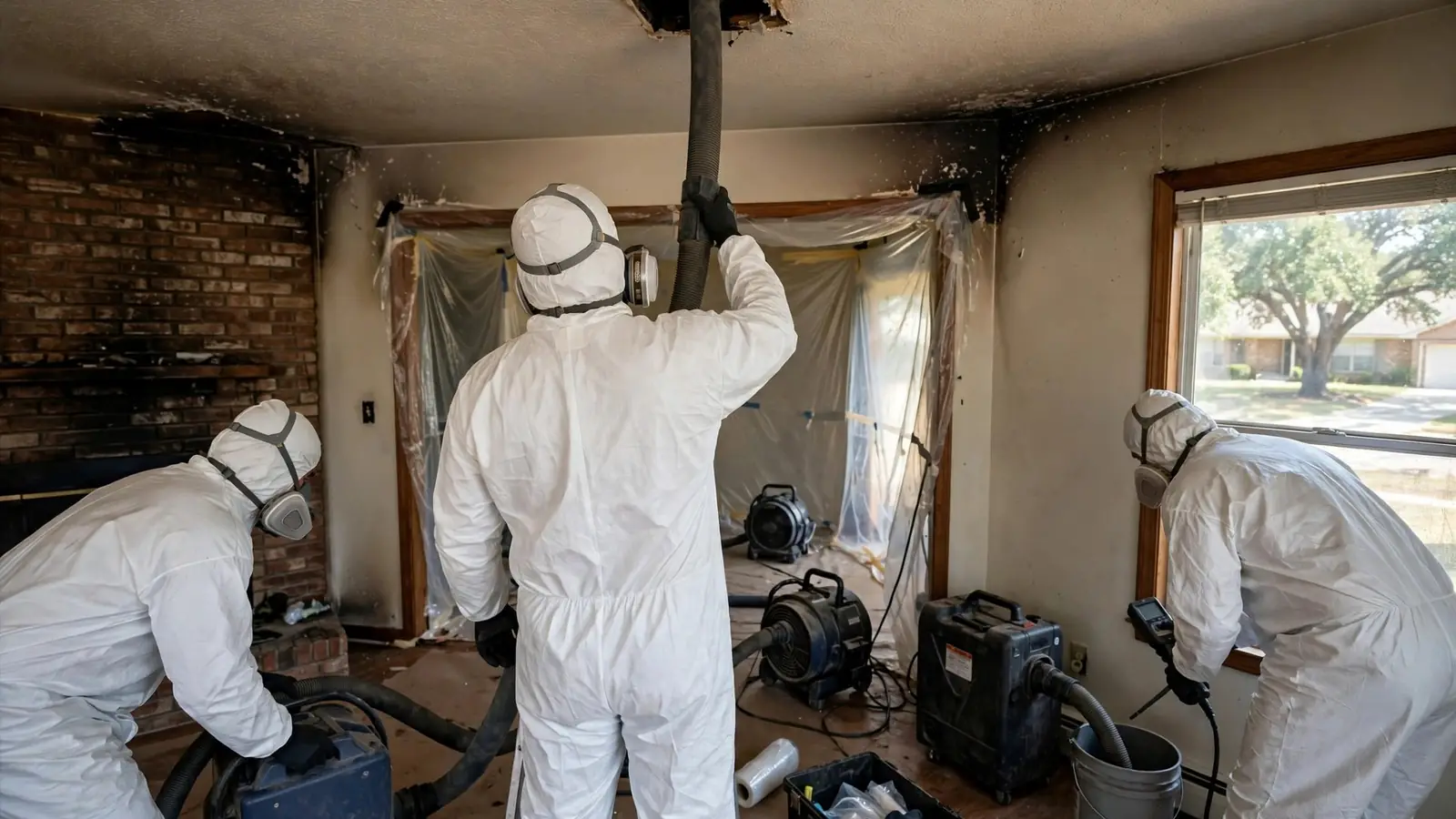
Bedrooms at the end of a Wedgwood hall often seem untouched, but smoke drifts in through open doors and settles in carpet, bedding, curtains and closets. Even a faint film can hold a noticeable smell once the room warms up. These rooms need the same cleaning as the rest of the house, and closets in particular should be emptied so their contents and shelves can be cleaned.
FAQ
Smoke Odor Removal in Wedgwood: questions
Why does my Wedgwood house smell again whenever the AC starts?
Residue in the attic ducts or air handler is blown into the rooms. The duct system usually needs cleaning or replacement.
Can I scrape my popcorn ceiling to remove the smell?
Not before testing. Textures from the 1960s and 1970s may contain asbestos. Gentle cleaning and sealing is usually safer.
How long does odor removal take in a ranch house?
Often a few days for cleaning and treatment, with a check afterwards. Stubborn odor may need a second round.
Sources and citations
- [1]U.S. Fire Administration: After a fire
- [2]IICRC: S700 Standard for Professional Fire and Smoke Damage Restoration
- [3]U.S. EPA: Ozone generators that are sold as air cleaners
- [4]U.S. EPA: A brief guide to mold, moisture and your home
- [5]Texas Department of Insurance: Additional living expenses
- [6]Wikipedia: Wedgwood, Fort Worth, Texas
- [7]U.S. EPA: Protect your family from exposures to asbestos
- [8]NFPA: Home structure fires