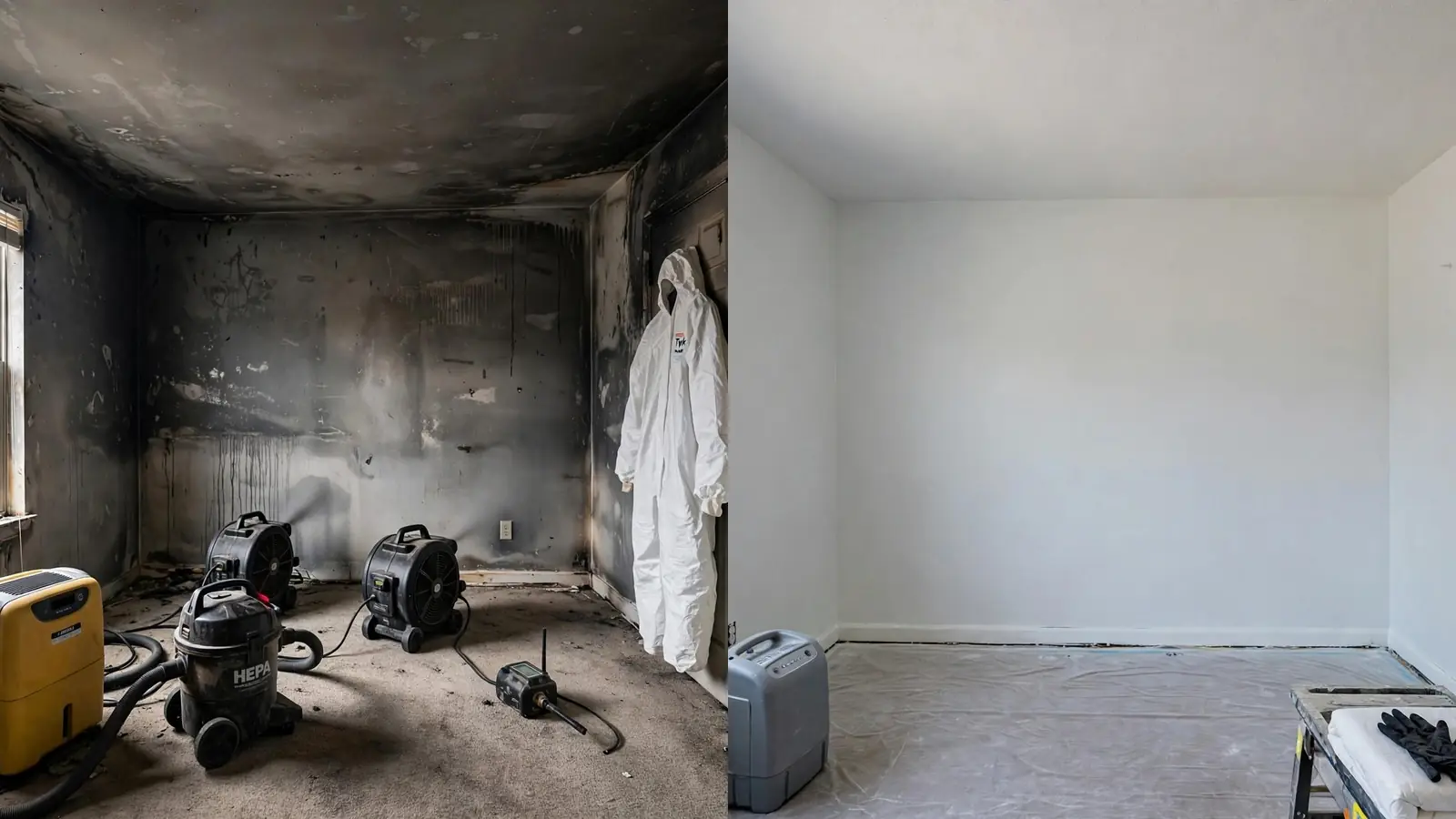
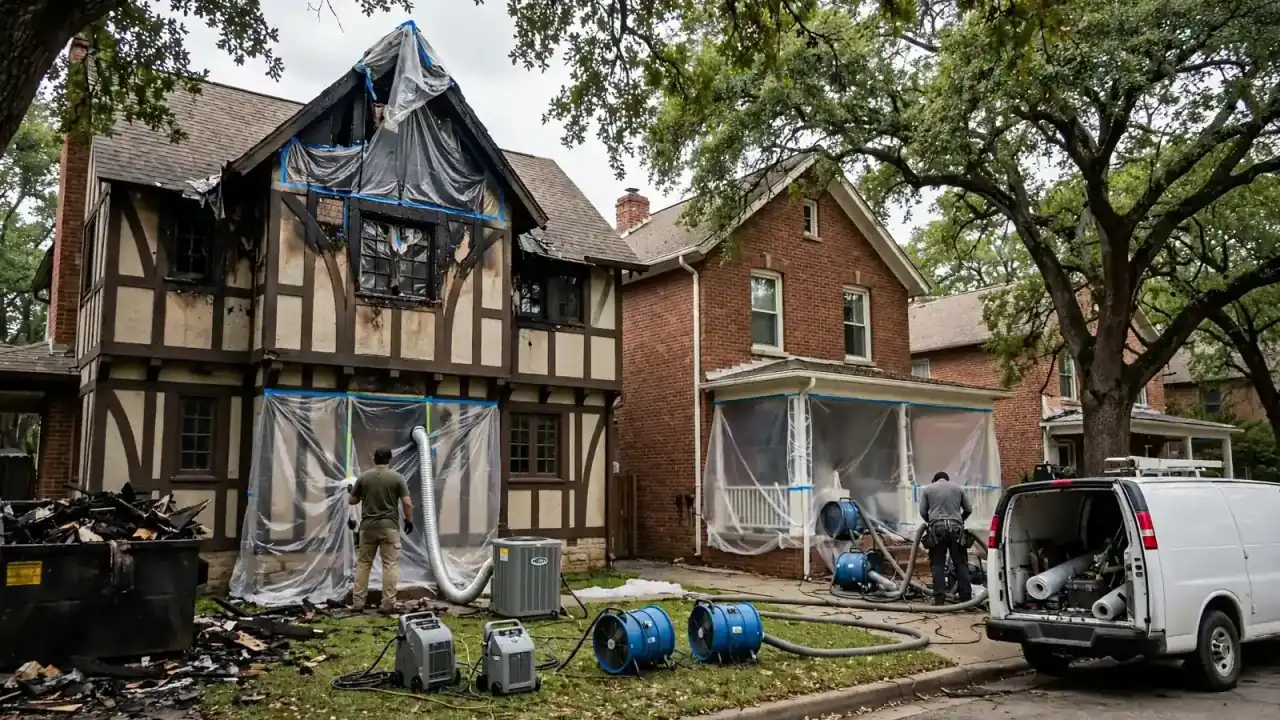
Key facts: Smoke Odor Removal in Arlington Heights
- Smoke odor is carried by fine particles that stick to surfaces and fabrics, as the U.S. Fire Administration explains [1].
- The IICRC S700 standard treats odor control as a step that follows cleaning, not a shortcut around it [2].
- High ozone levels can harm health, so the EPA cautions against using ozone generators where people are present [3].
Old and new parts of the same house
Many Arlington Heights homes have been added onto over the decades: a back den in the 1960s, a second-story addition in the 1990s, a new kitchen more recently. Smoke moves differently through each part. Older plaster and wood absorb residue deeply, while newer drywall and modern finishes hold a surface film that cleans more easily. The joint between them, where framing meets, can trap odor in a gap you never see.
A contractor maps the smell room by room and notes which era each part of the house belongs to. That map decides where cleaning alone is enough and where materials need to be removed or sealed.
The attic over an interwar house
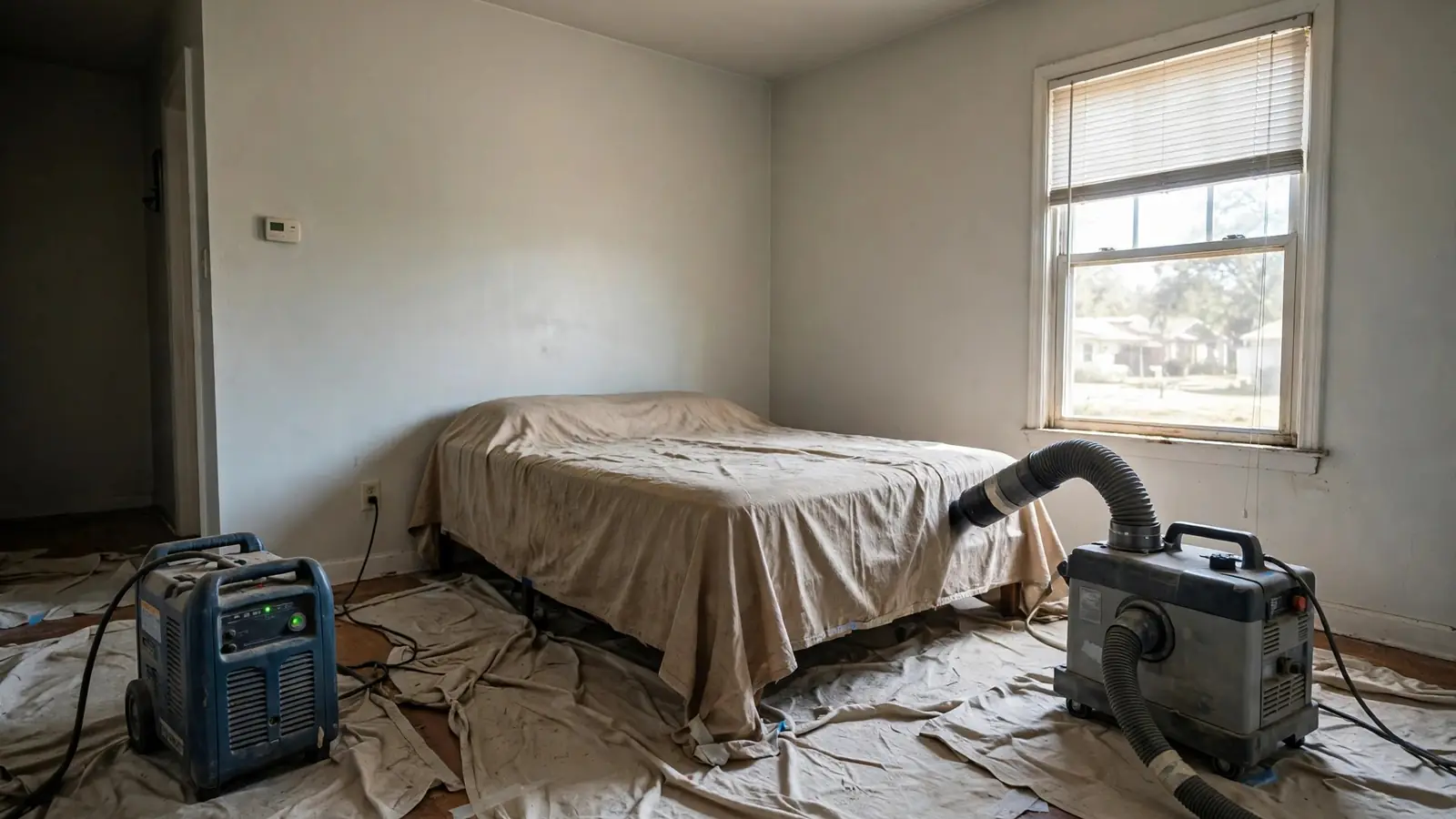
Attics in houses from the 1920s and 1930s are often low, with board decking, old insulation and wiring that has been added to over time. Smoke rises into that space easily and stays there. When summer heat bakes the attic, odor is driven back down through light fixtures, attic hatches and gaps around the ceiling.
Removing smoke-affected insulation, cleaning or sealing soot-stained framing and decking, and then reinsulating is often what finally ends the smell. It is worth asking whether the contractor will inspect the attic even if the fire seemed to stay downstairs.
How odor is removed from an Arlington Heights home
Each stage deals with a different source of smell.
- 1
Strip out odor-holding materials
Insulation, carpet and pad, and porous items that cannot be cleaned are removed first.
- 2
Clean surfaces in every affected room
Plaster, trim, floors and cabinets are cleaned following S700 methods [2].
- 3
Run deodorizing treatments
Fogging or hydroxyl units address residual odor in cavities and porous materials.
- 4
Prime with an odor sealer before paint
Sealing primers lock in any trace that cleaning could not reach.
Oak floors, plaster and original woodwork
Original oak floors are a feature of many houses here. Smoke settles into the finish and the gaps between boards. A thorough cleaning followed by a fresh coat of finish often brings them back; heavy residue may call for light sanding. Plaster walls are usually cleaned and then primed with a sealer before painting.
Older paint in these homes may contain lead, which makes sanding and scraping a health concern [6]. Ask how the contractor will protect your household if old painted surfaces are disturbed.
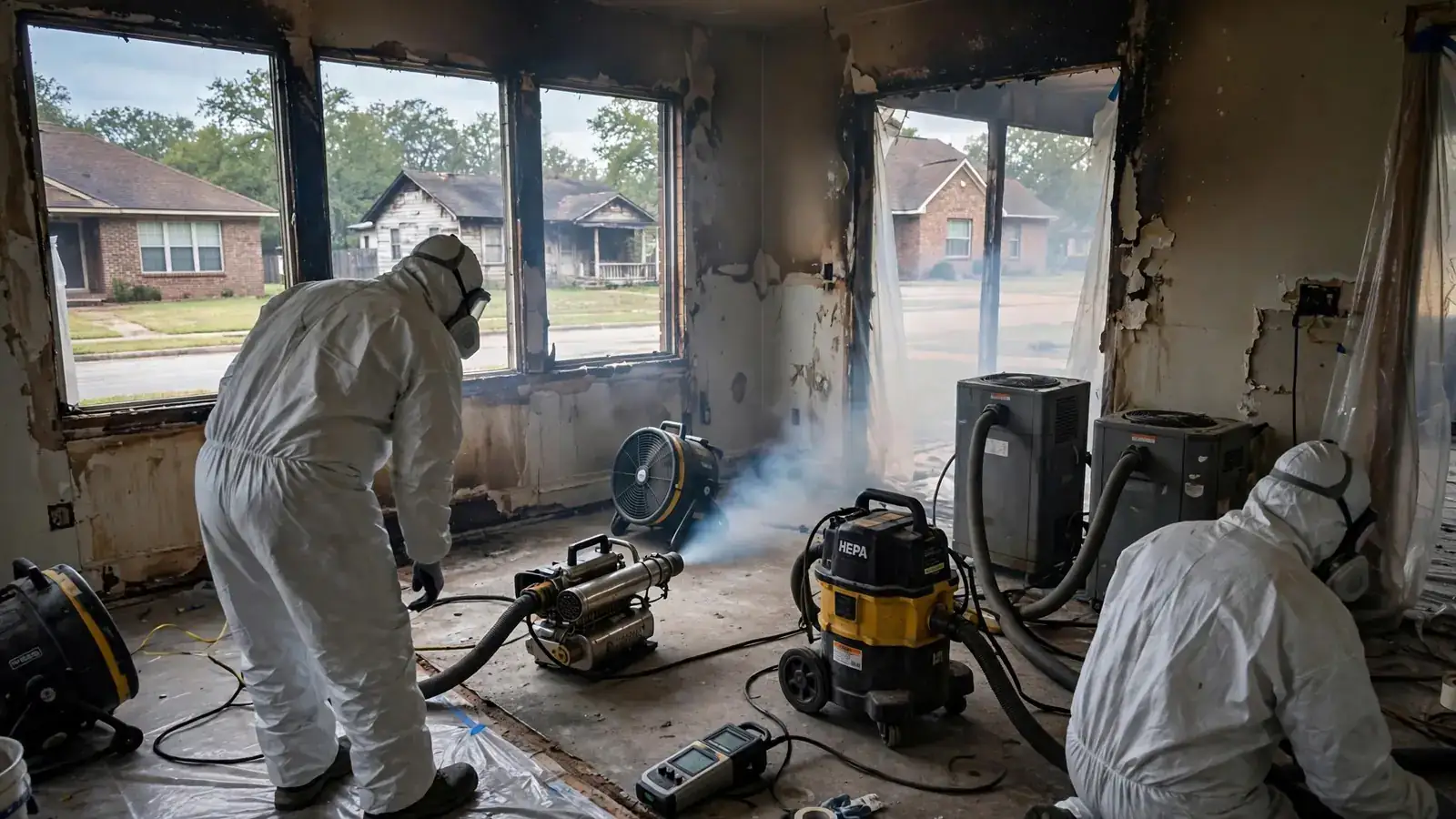
Odor sources people often miss
If the smell keeps coming back, check these places.
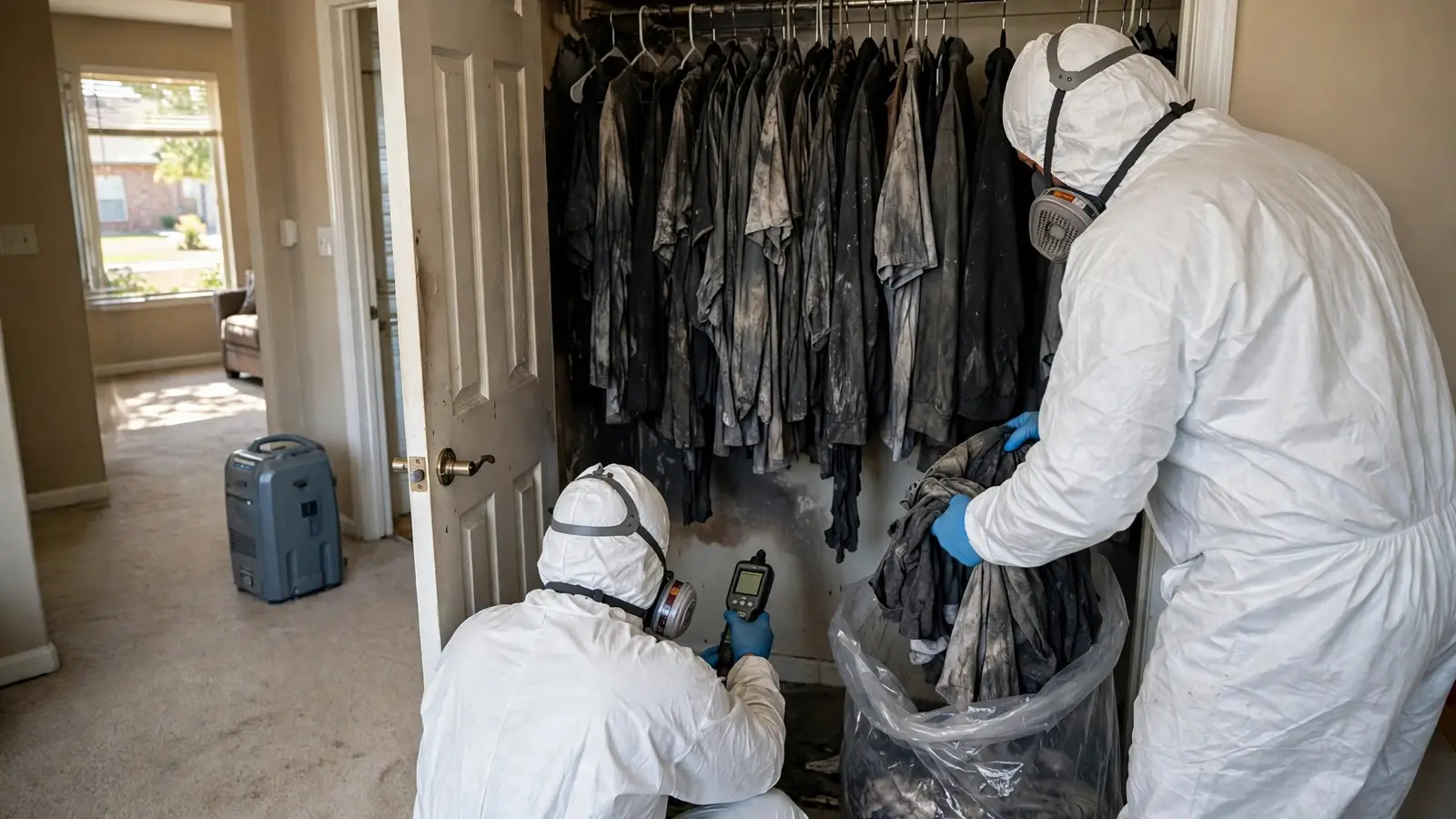
- Closets and built-in cabinetsClosed spaces hold concentrated smoke in fabric and wood.
- HVAC returns and ductsResidue in the system spreads odor every time it runs.
- Window wells and sash pocketsOld windows have hidden cavities where smoke collects.
- The garage apartmentA separate building on the lot may have been smoked even if it did not burn.
When the job is really finished
Odor removal is done when the house smells normal on a hot day with the air conditioning running and the windows closed. Ask the contractor how they will check that before they leave, and what happens if the smell returns. If firefighting left materials wet, a musty smell can appear too; the EPA notes that damp materials can grow mold within a day or two [4], so drying must be complete first.
If you are staying elsewhere during the work, keep track of the extra living expenses; the Texas Department of Insurance explains how that coverage generally works [5]. Our guide to smoke odor that won't go away has more on stubborn cases.
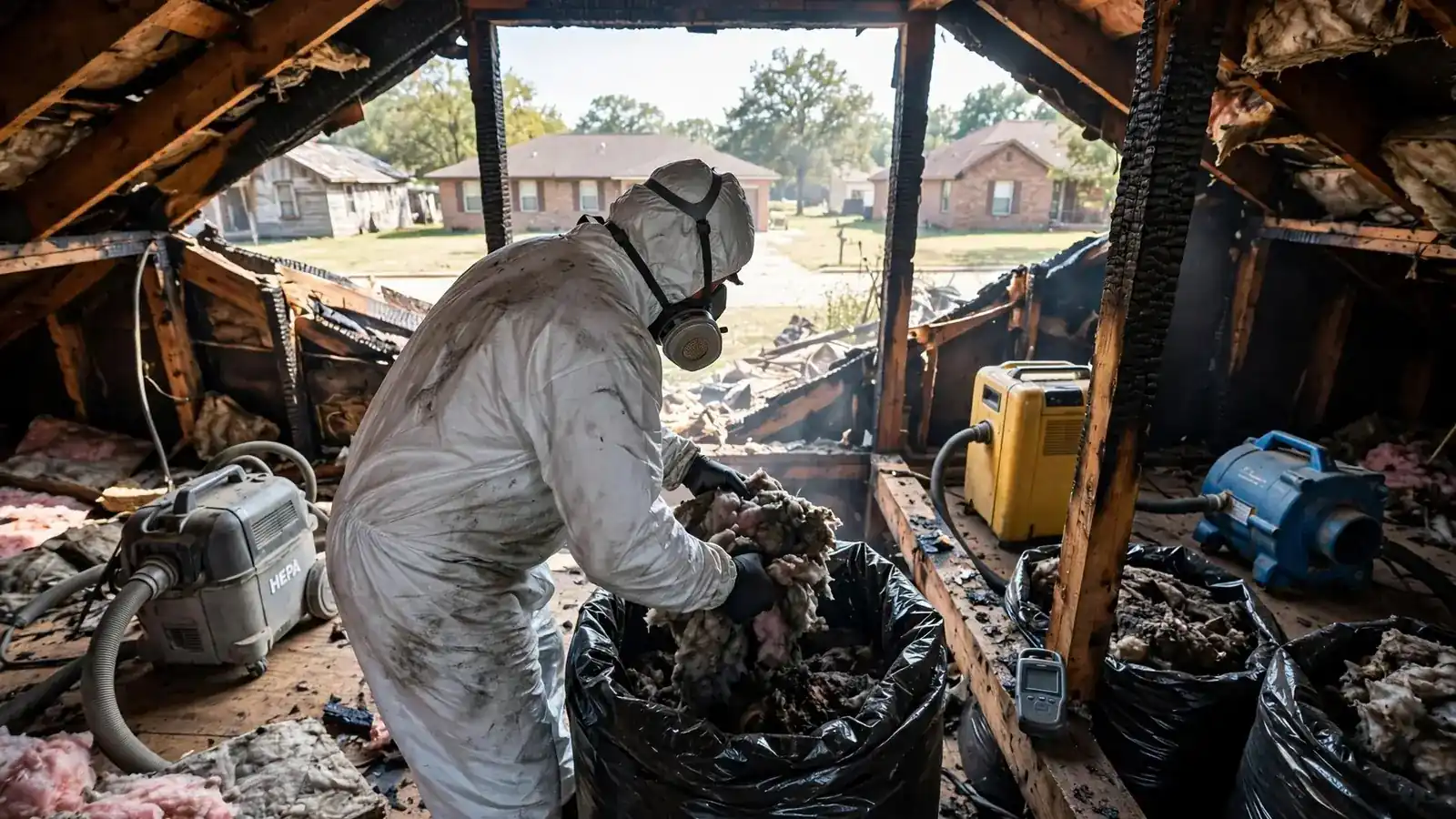
Fireplaces and chimneys as odor sources
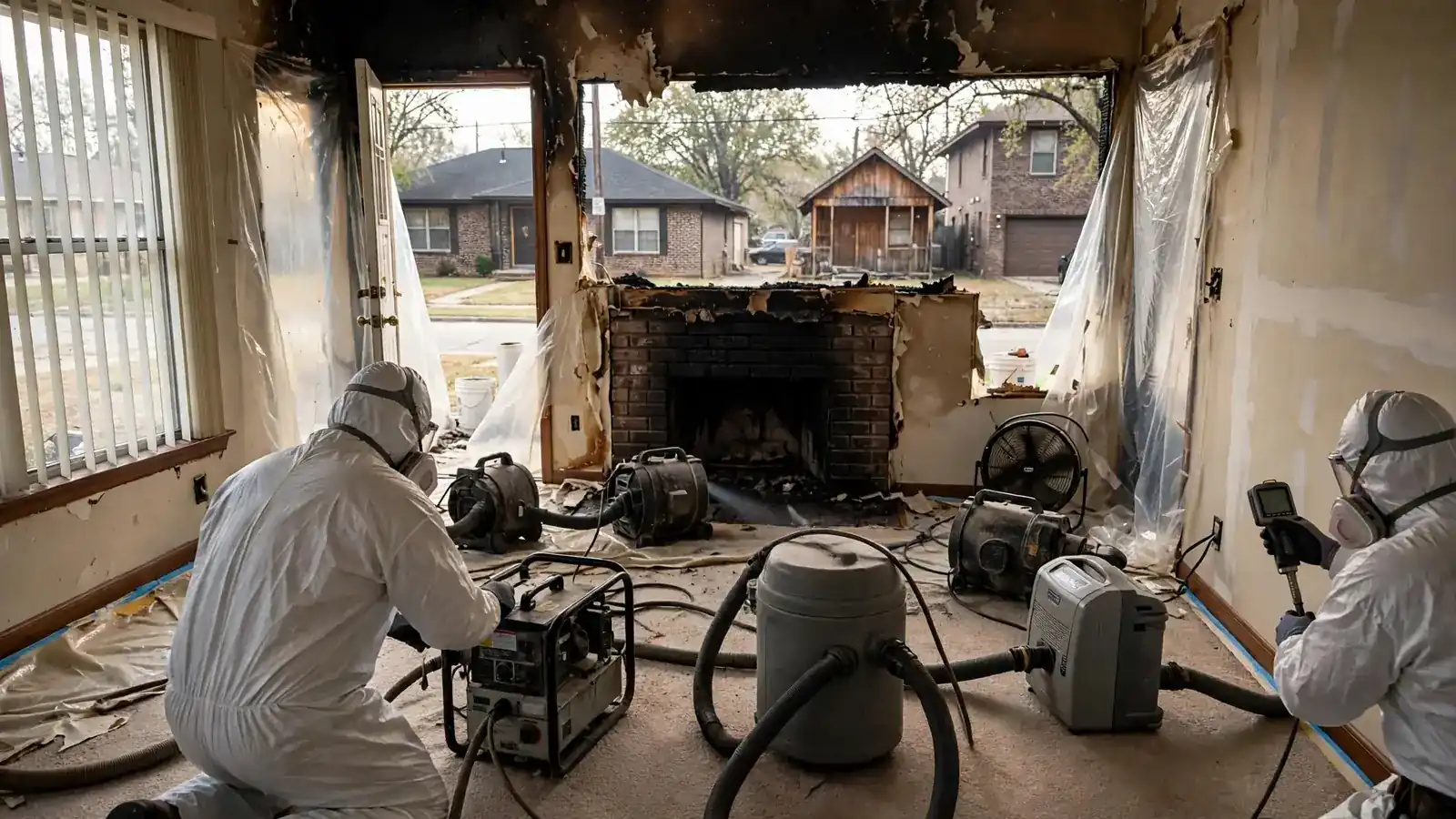
Many Arlington Heights living rooms have a brick fireplace. If smoke from a house fire was drawn into the firebox or chimney, the masonry can hold odor long after the rooms are clean. Brick and mortar are porous, so cleaning the firebox face and inspecting the flue are often part of a complete odor job.
A closed damper keeps chimney odor from drifting into the room while work continues. Ask the contractor whether the chimney should be inspected before you use the fireplace again.
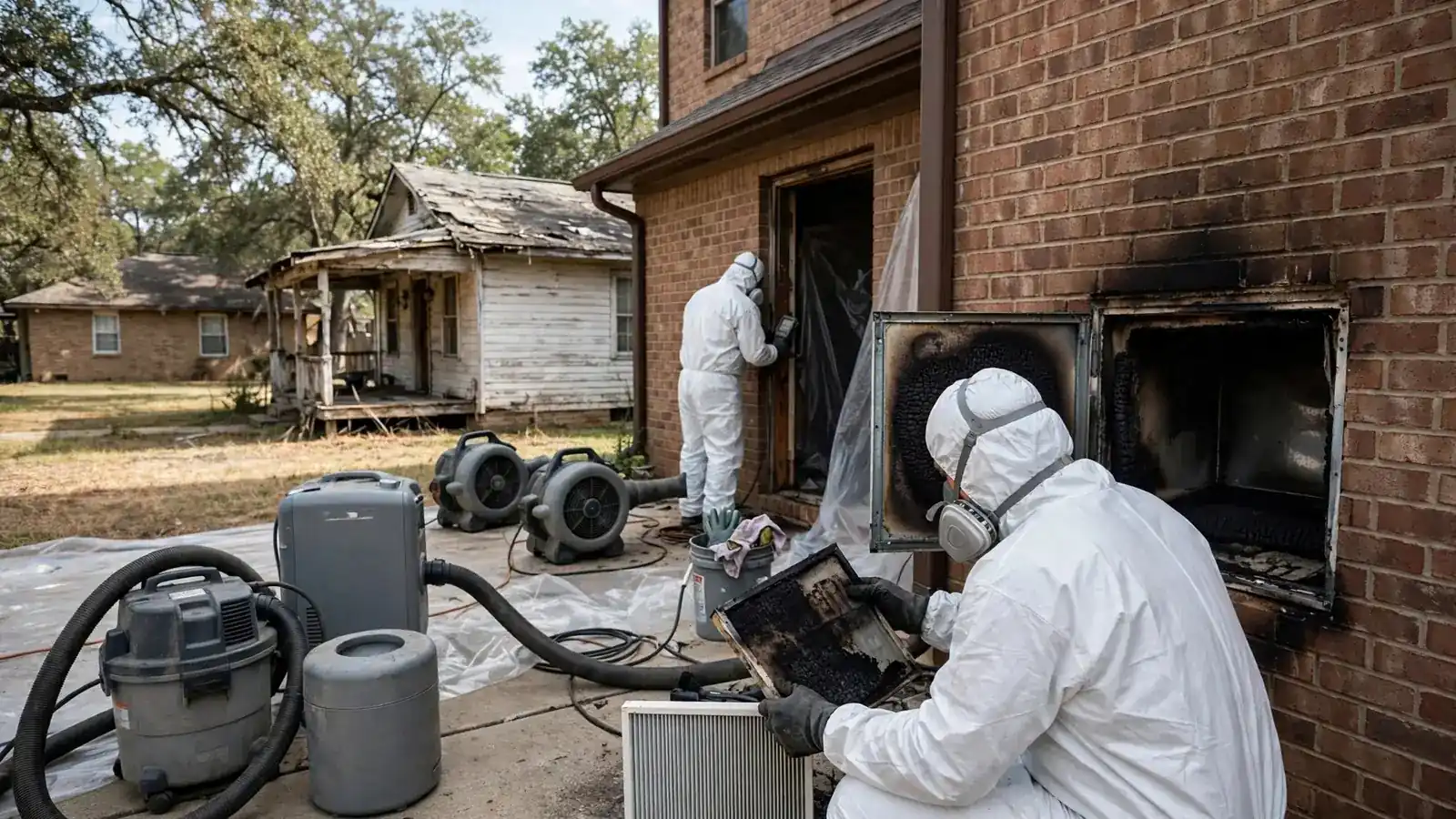
Talking to your adjuster about odor work
Odor removal can take several visits, and adjusters sometimes question why a house that looks clean still needs work. Notes from the contractor about where odor was found, what was removed and what was sealed help explain it. Photos of insulation pulled from the attic or residue on duct interiors make the case clearly.
Keep copies of these notes with your other claim records, and ask for an update if the plan changes after the first round of treatment.
FAQ
Smoke Odor Removal in Arlington Heights: questions
Why does smoke smell come back on hot days?
Heat drives odor out of materials that still hold residue, especially in the attic. If the smell returns in summer, the attic or ducts likely need more cleaning or sealing.
Can my oak floors keep their original finish?
Sometimes. Light residue can be cleaned and the floor recoated. Heavier residue may need light sanding before refinishing.
Is it safe to stay in the house during odor treatment?
It depends on the treatment. Some methods require the house to be empty, especially ozone, which the EPA warns can harm health [3]. Ask the contractor before each step.
Sources and citations
- [1]U.S. Fire Administration: After a fire
- [2]IICRC: S700 Standard for Professional Fire and Smoke Damage Restoration
- [3]U.S. EPA: Ozone generators that are sold as air cleaners
- [4]U.S. EPA: A brief guide to mold, moisture and your home
- [5]Texas Department of Insurance: Additional living expenses
- [6]U.S. EPA: Protect your family from sources of lead