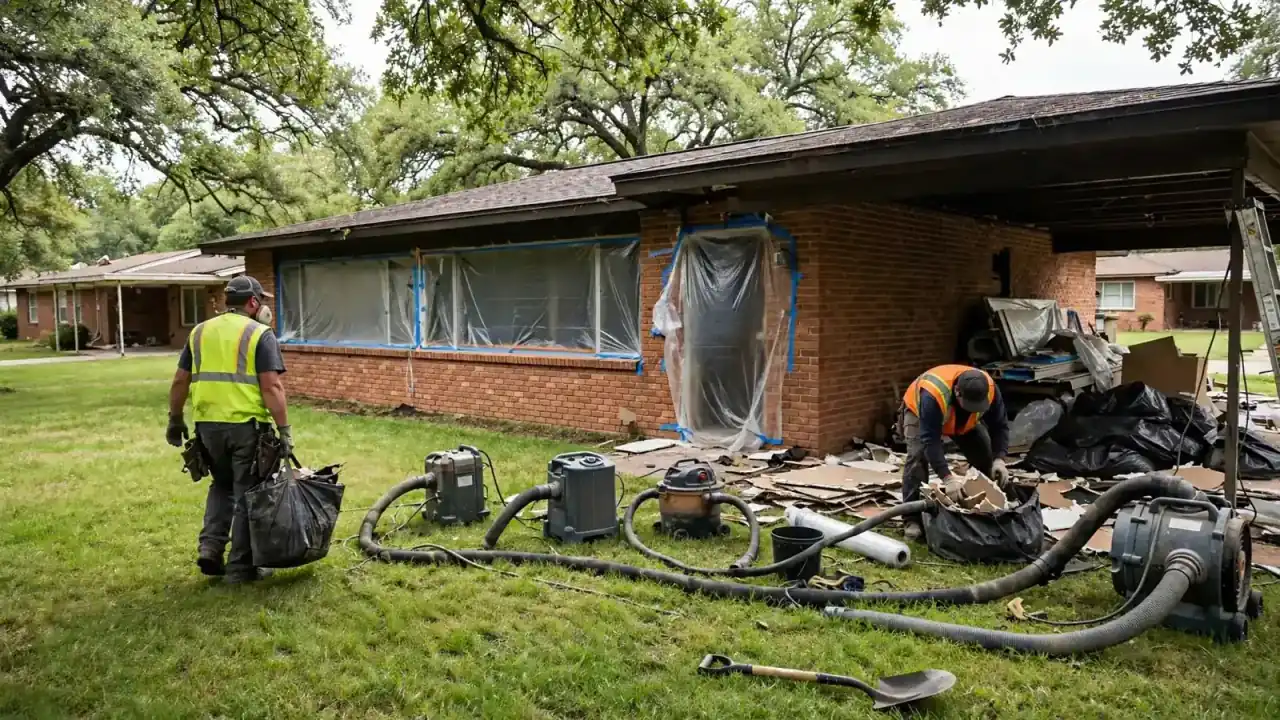
Key facts: Smoke Damage Cleanup in Wedgwood
- Soot and dirty water left by a fire can contain substances that make people sick, so cleanup starts with protection [1].
- Ceiling textures and other finishes in 1960s and 1970s homes may contain asbestos and should be tested before disturbance [7].
- Homes built before 1978 may contain lead paint, which affects how sooty surfaces are sanded or scraped [3].
How smoke moves through a Wedgwood ranch
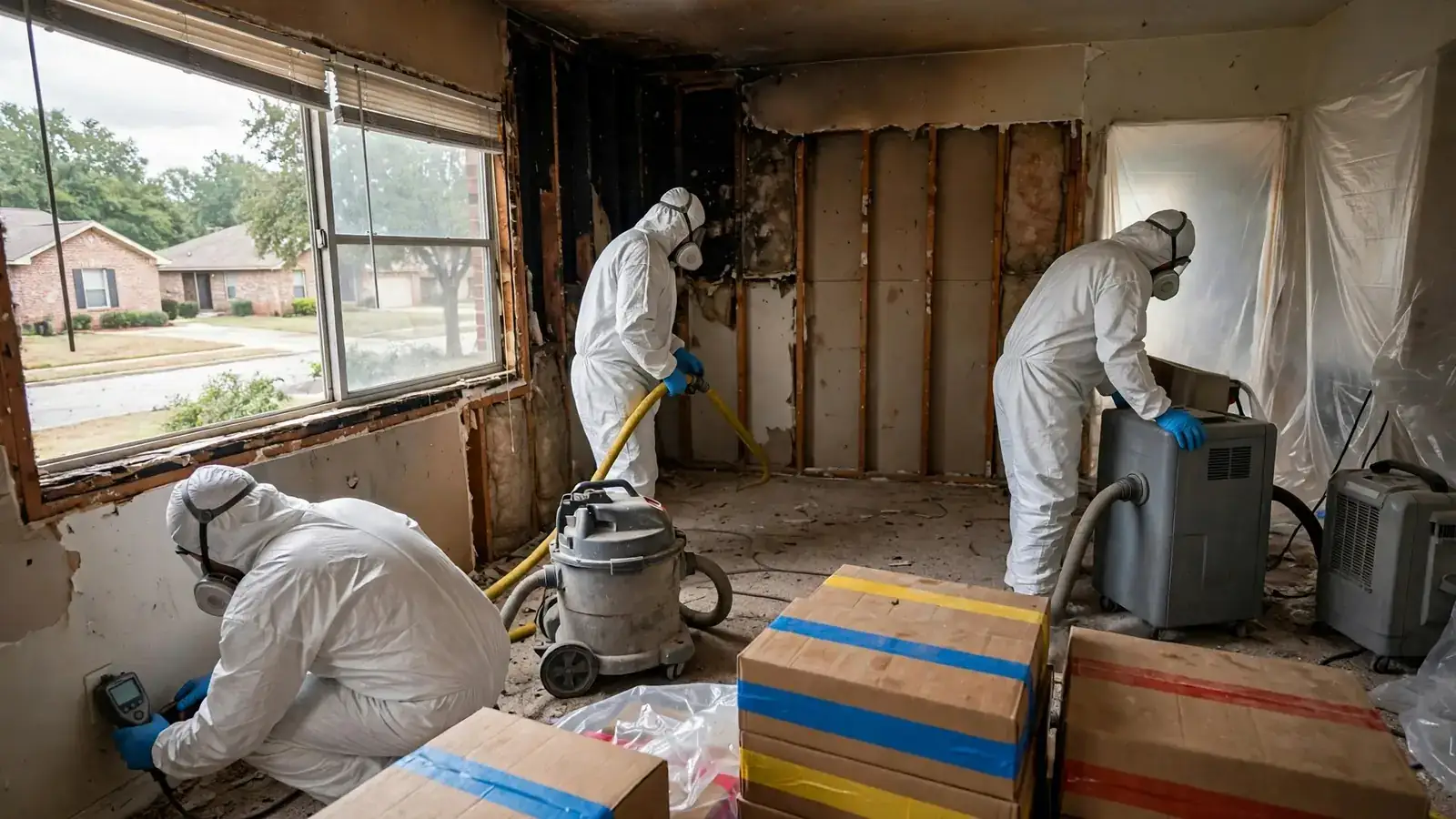
Wedgwood houses typically put the kitchen, den and garage at one end and the bedrooms down a hall at the other. Smoke from the kitchen or garage moves along the ceiling of the den and into the hall, leaving a darker band of residue near the source and a lighter film further away. Bedrooms with open doors collect it on walls, ceilings, bedding and clothes.
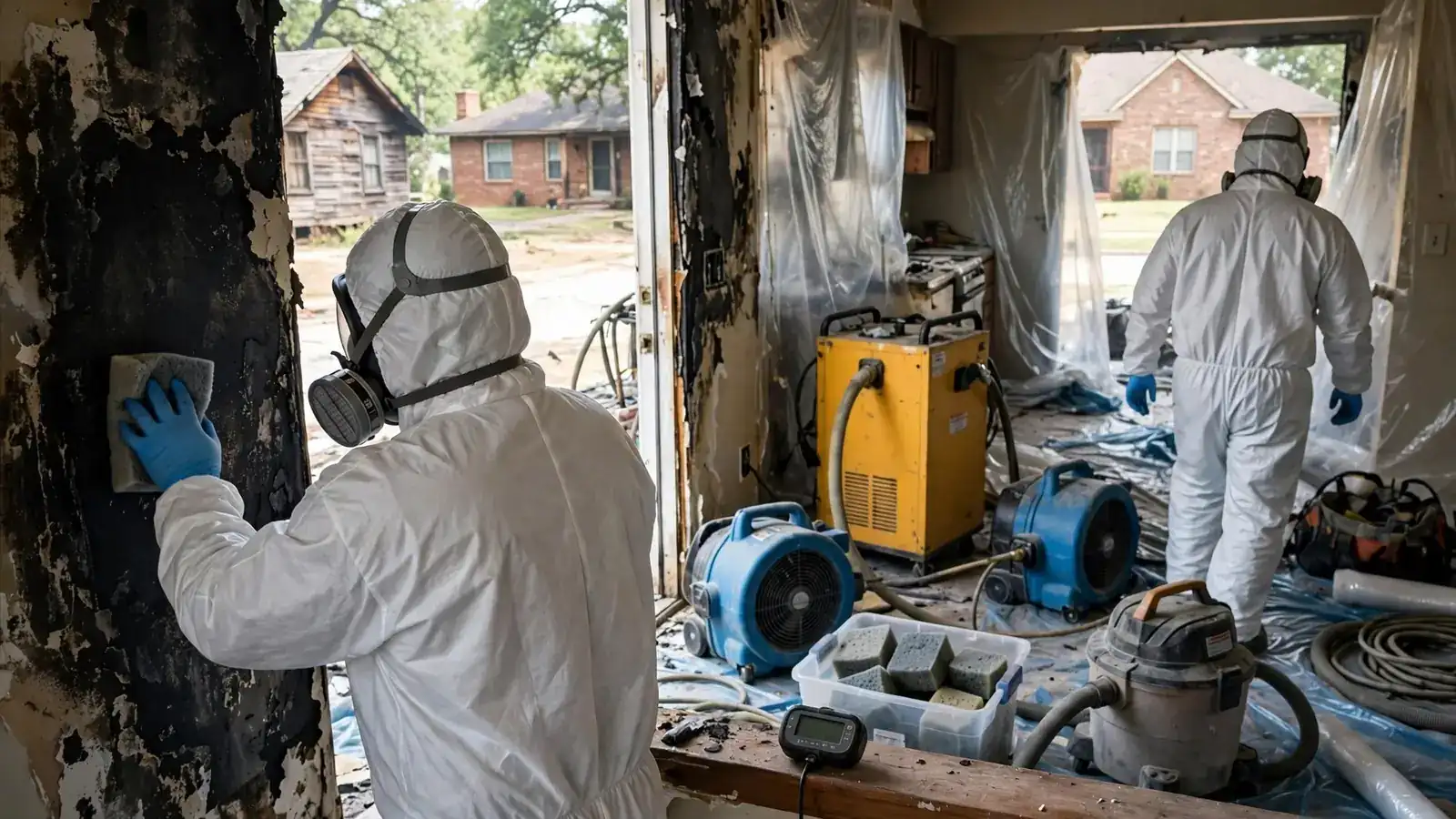
Cleaning starts in the lighter rooms and moves toward the source, working from ceilings down in each room so loosened residue does not land on clean surfaces.
Kitchens and dens
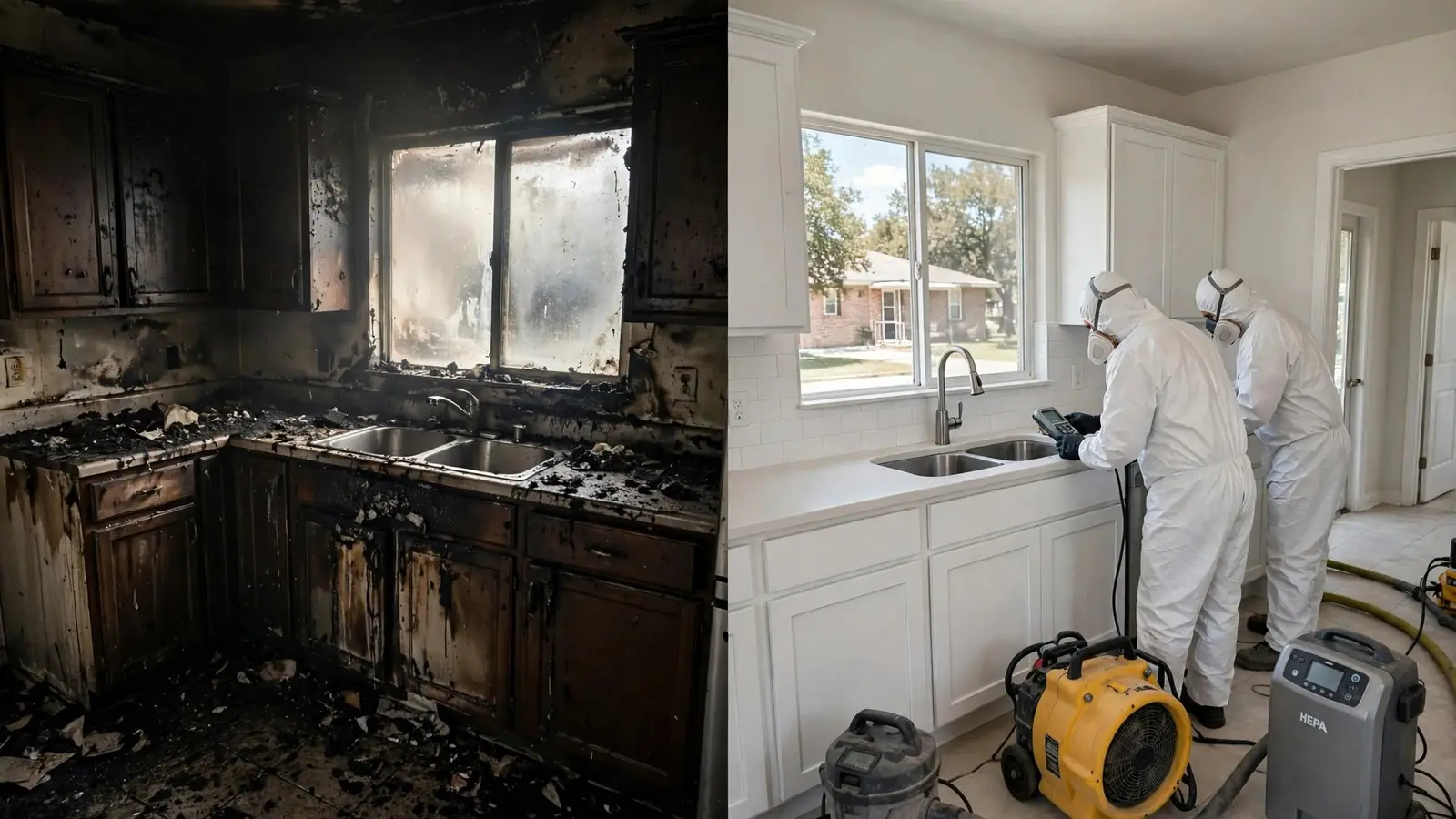
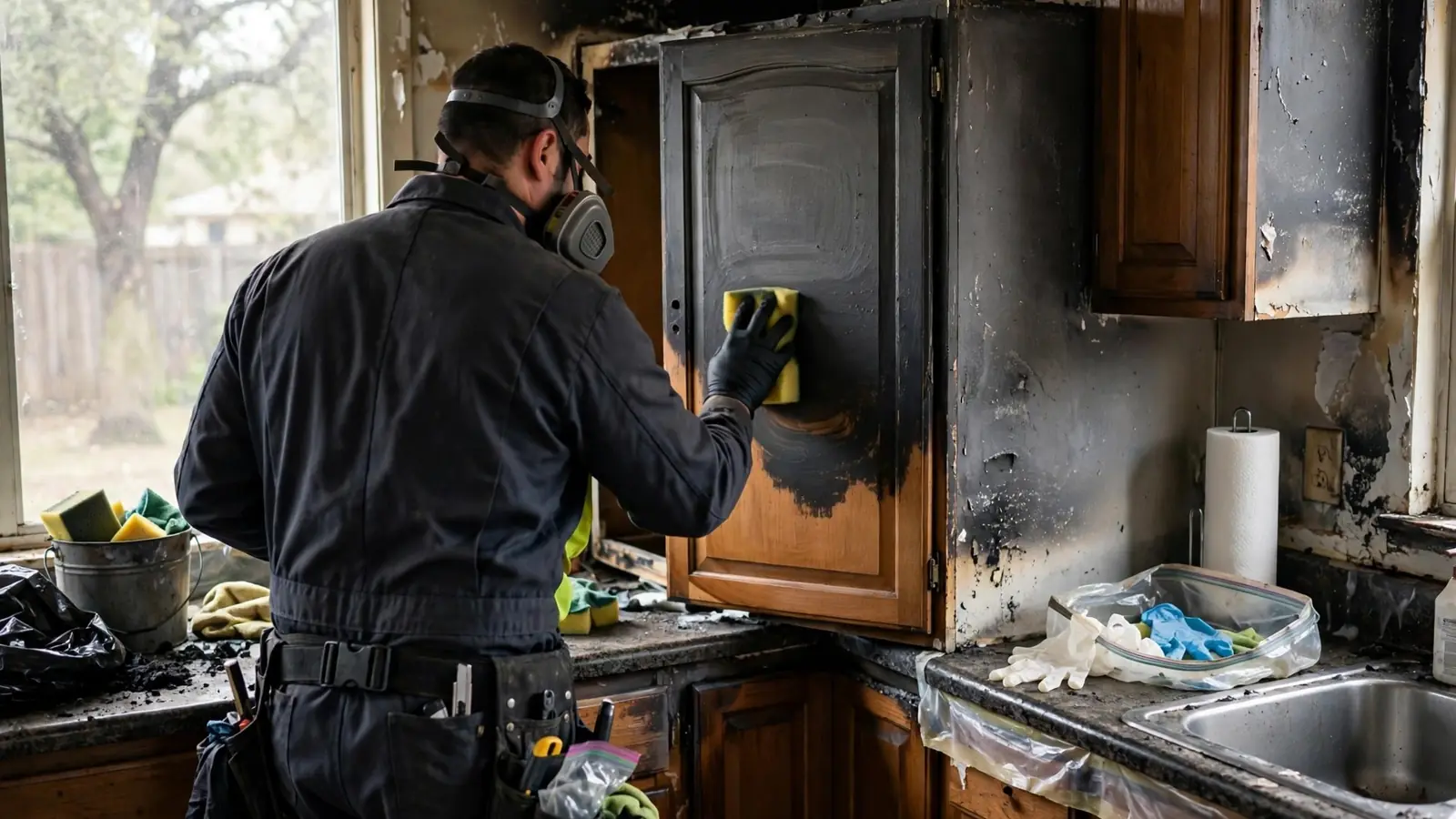
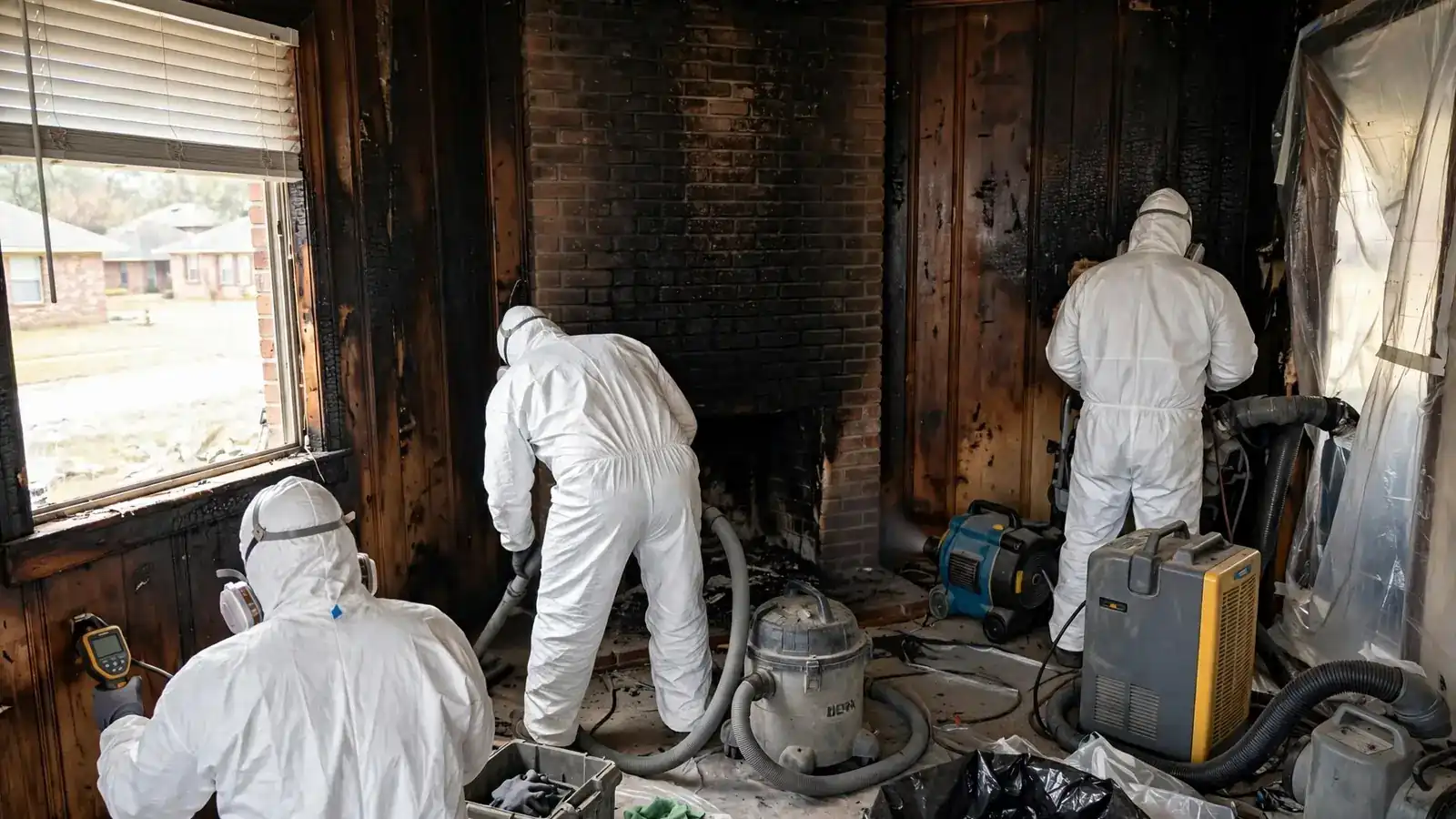
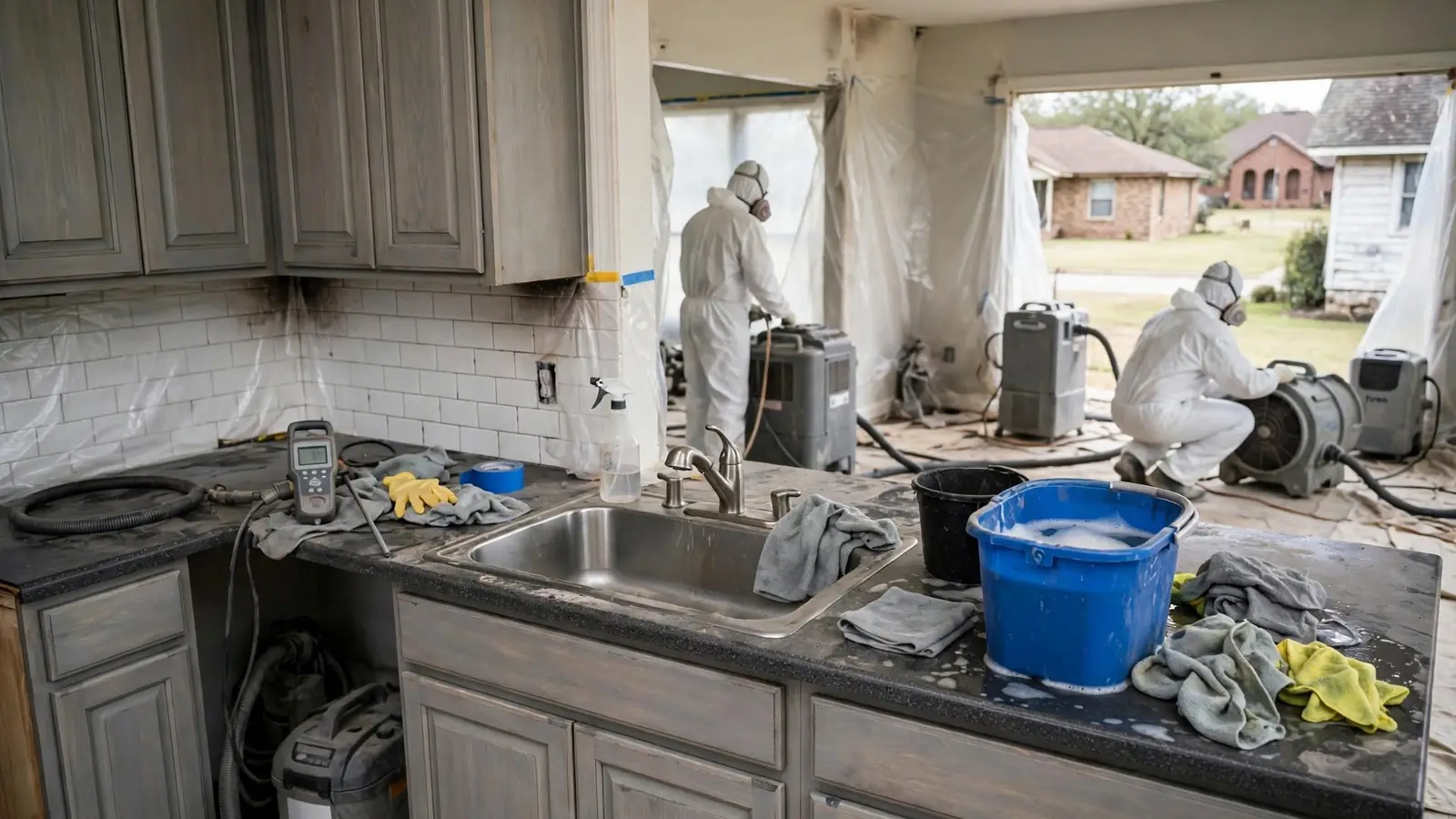
The kitchen and den are often one open space or separated by a bar. Grease and soot from a cooking fire coat cabinets, counters, the ceiling and paneled den walls. Degreasing cleaners remove protein and grease residue; wood paneling is cleaned with products safe for its finish and may need a fresh coat.
Brick fireplaces in the den hold soot in their porous surface and may need specialized cleaning.
Cleanup order in a Wedgwood home
How the work usually flows.
- 1
Inventory and move belongings
Contents are listed, photographed and packed or covered.
- 2
Clean the bedroom wing
Lighter rooms at the end of the hall are cleaned first.
- 3
Degrease the kitchen and clean the den
Heavier residue near the source is removed.
- 4
Clean the garage, attic and ducts
Hidden spaces and the garage are finished last.
Textured ceilings and older materials
Popcorn and other ceiling textures are common here, and some from this era may contain asbestos [7]. They are cleaned gently and then sealed with a stain-blocking primer if staining remains. Testing comes first if any texture will be scraped or removed.
Older layers of paint may contain lead [3], so sanding trim or walls should be done with lead-safe methods.
Attached garages after a fire
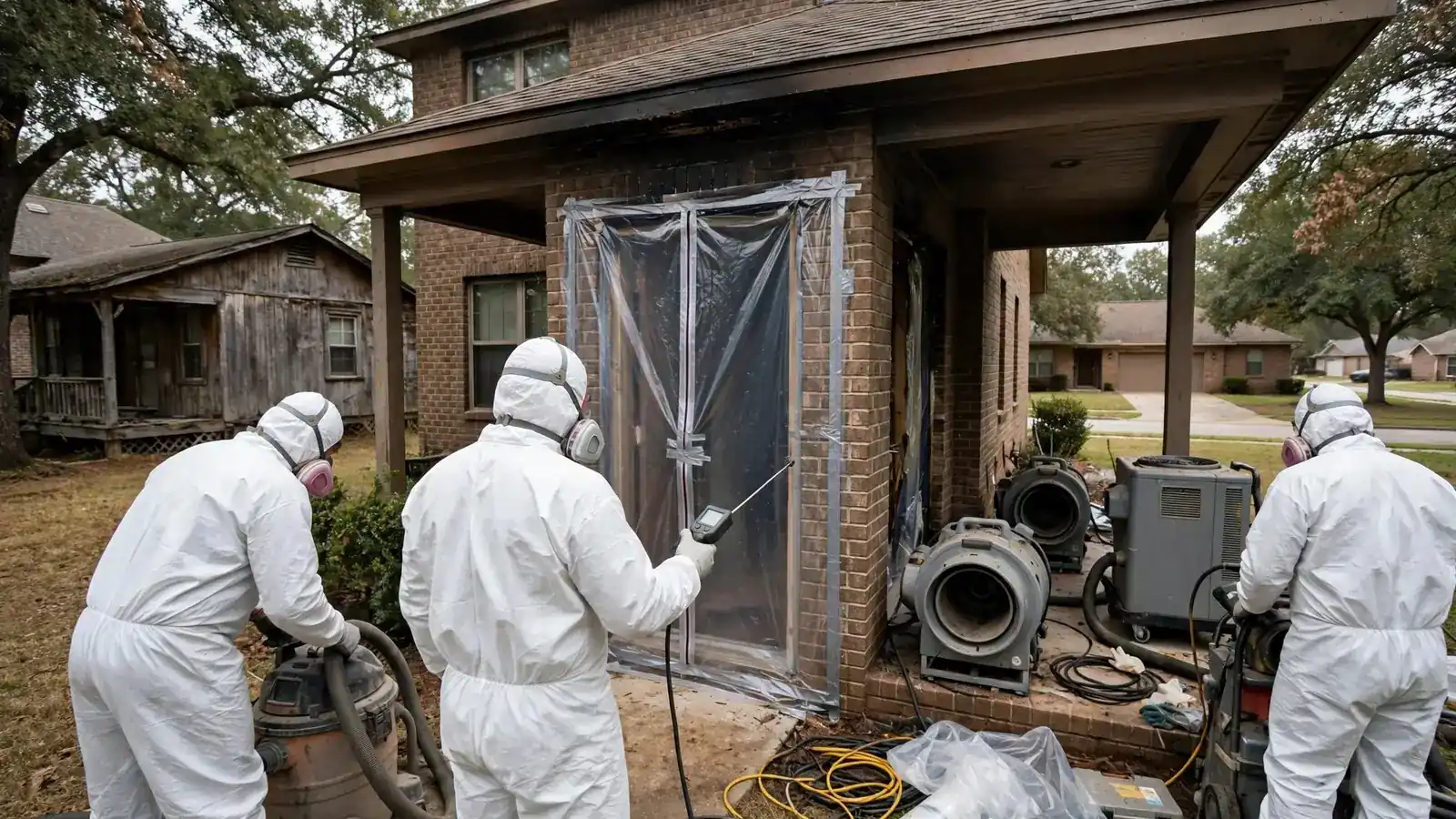
If the fire started in the garage, heavy soot coats the garage interior and seeps into the house through the connecting door. The garage drywall, ceiling and stored items all need cleaning or replacement. Heat-damaged containers of fuel or chemicals are disposed of safely.
The wall between the garage and the house may hold residue inside its cavity and is checked during cleanup.
Belongings to sort after smoke
Typical items in a Wedgwood home.
- Bedding and clothes in the bedroom wingProfessional cleaning removes most smoke.
- Den furniture and reclinersUpholstery cleaned or replaced if heavily affected.
- Kitchenware and pantry itemsDishes washed; exposed food discarded.
- Garage tools and holiday storageGarage shelving and stored boxes are cleaned, or replaced if heat warped them.
Wiring, panels and appliances
Many Wedgwood homes still have original or partly updated electrical panels and wiring. After a fire, the system should be checked before power is restored to damaged areas. Appliances near the fire, such as the range, microwave and refrigerator, should be inspected before use.
The Wedgwood page describes the wiring and equipment typical of houses from this period.
Pack-outs and keeping track of contents
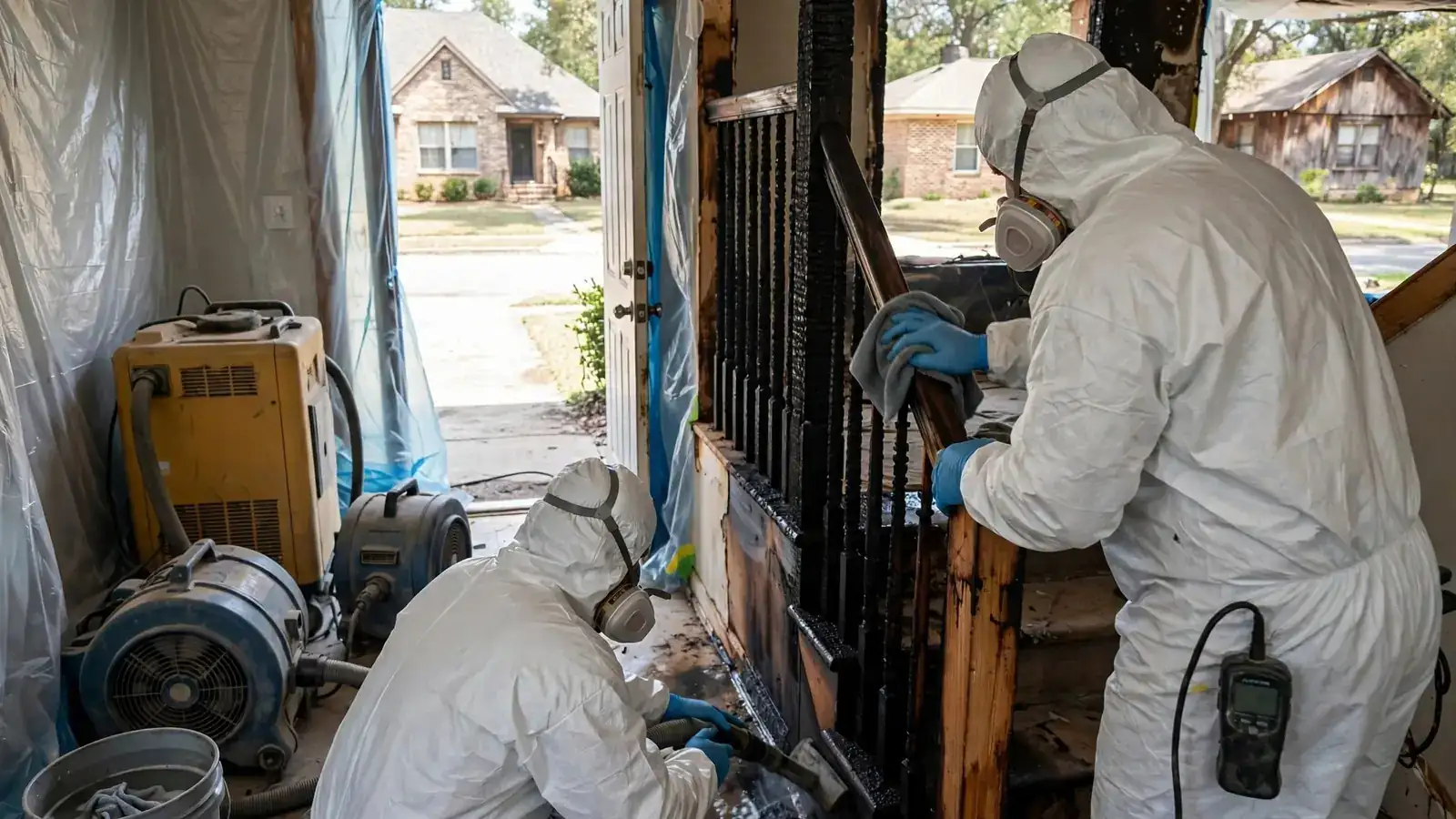
A pack-out moves belongings out so they can be cleaned off-site while the house is cleaned. Each item is listed and photographed, and the list becomes part of your claim. Ask how items will be tracked and how long they will be away.
Things with sentimental value should be set aside for careful cleaning before anyone decides they cannot be saved.
After the cleanup
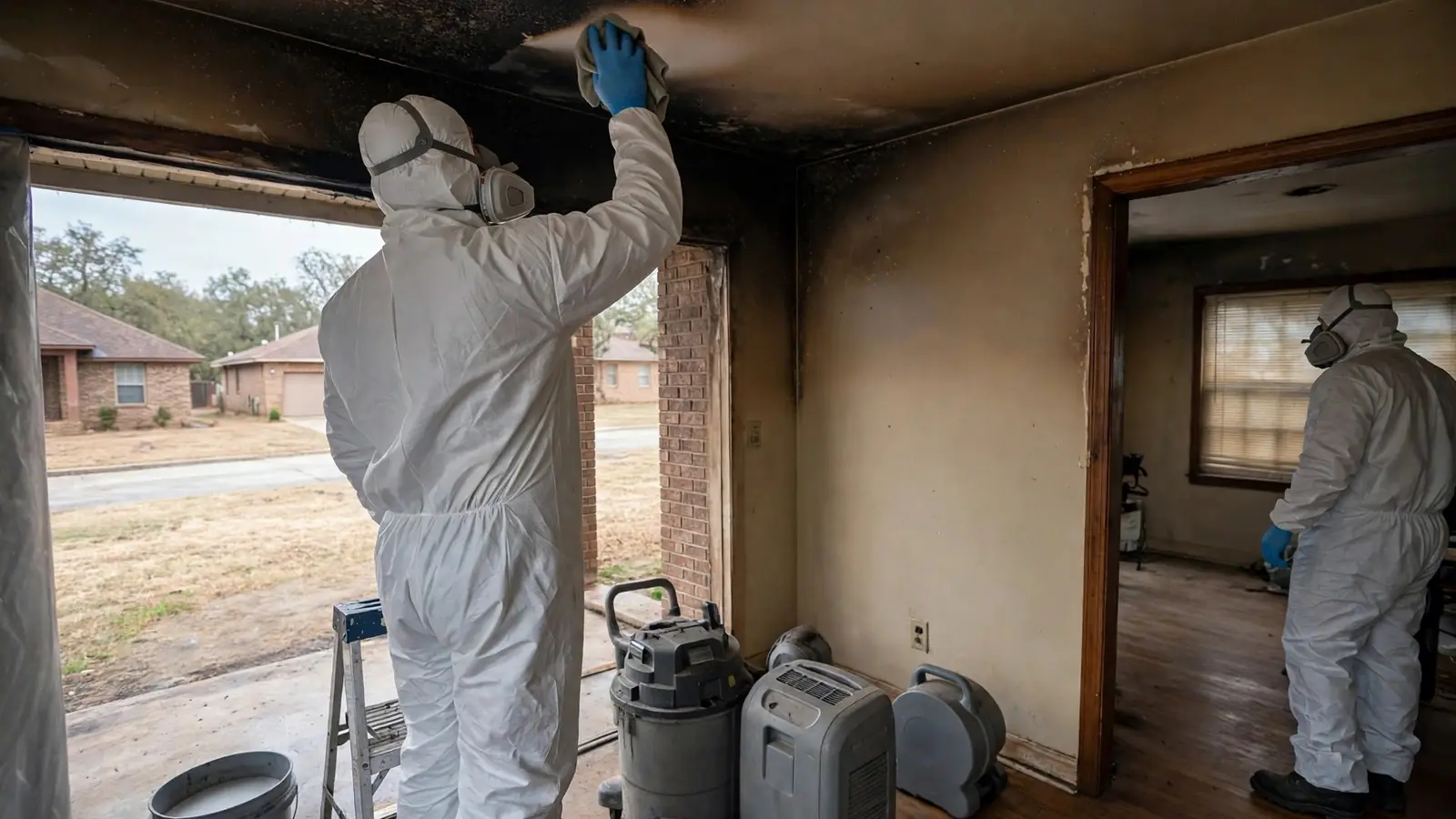
Remaining smell is handled by smoke odor removal, and any wet materials are dried. Painting and repairs follow. Smoke alarms near the fire should be replaced.
Cleanup in a Wedgwood ranch can take the family out of the house for a while; the Texas Department of Insurance explains how additional living expense coverage generally works [6].
Bathrooms and the hall bath
Hall bathrooms sit along the smoke path and collect residue on tile, mirrors, fixtures and inside vanities. Tile and fixtures clean well; grout can hold soot and may need deep cleaning. Medicine cabinets, towels and toiletries need sorting, and exposed items like toothbrushes should be replaced.
Exhaust fans in bathrooms pull smoky air through them during a fire and should be cleaned or replaced.
When to replace instead of clean
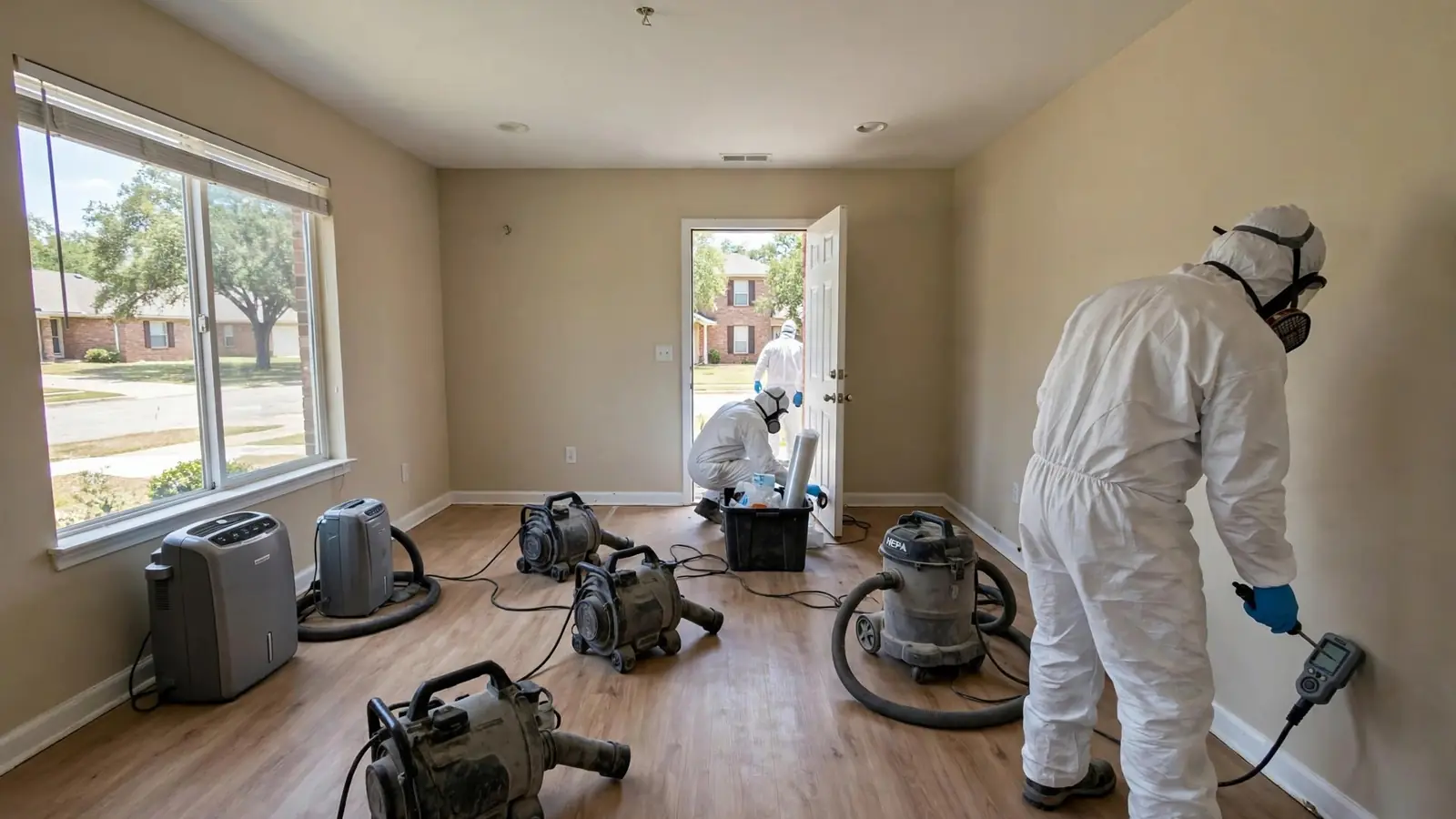
Most hard surfaces clean well. Items that usually need replacement are carpet pad, attic insulation, heat-warped vinyl blinds and soft goods that hold heavy odor. The contractor should explain each decision so you can share it with your adjuster.
FAQ
Smoke Damage Cleanup in Wedgwood: questions
Why are the bedrooms dirty when the fire was in the kitchen?
Smoke travels down the hall and into every open room. The bedrooms usually need cleaning even if they look only lightly affected.
Is my popcorn ceiling safe to clean?
Gentle cleaning is fine, but test for asbestos before any scraping or removal.
Should my electrical panel be checked?
Yes. After a fire, the panel and wiring in damaged areas should be inspected before power is restored.
Sources and citations
- [1]U.S. Fire Administration: After a fire
- [2]IICRC: S700 Standard for Professional Fire and Smoke Damage Restoration
- [3]U.S. EPA: Protect your family from sources of lead
- [4]City of Fort Worth: Historic districts
- [5]NFPA: Home structure fires
- [6]Texas Department of Insurance: Additional living expenses
- [7]U.S. EPA: Protect your family from exposures to asbestos