Key facts: Soot Removal in Ridglea
- Soot from a house fire can contain substances that make people sick, so the U.S. Fire Administration advises understanding the risk first [1].
- The IICRC S700 standard sets out how professionals choose dry or wet methods for removing fire residue [2].
- Older materials that may contain asbestos should be tested before they are disturbed during cleanup [4].
How soot spreads in a Ridglea house
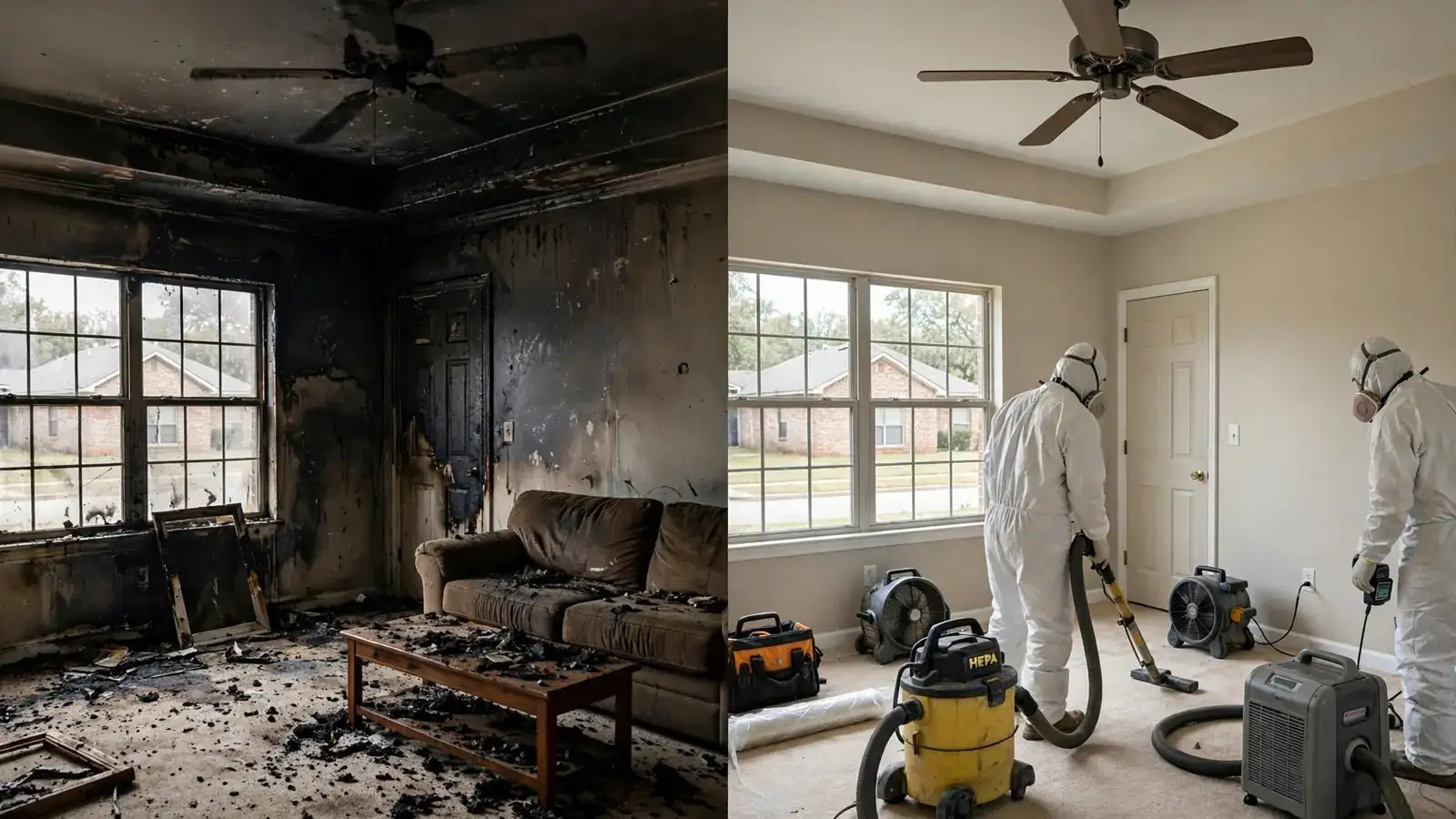
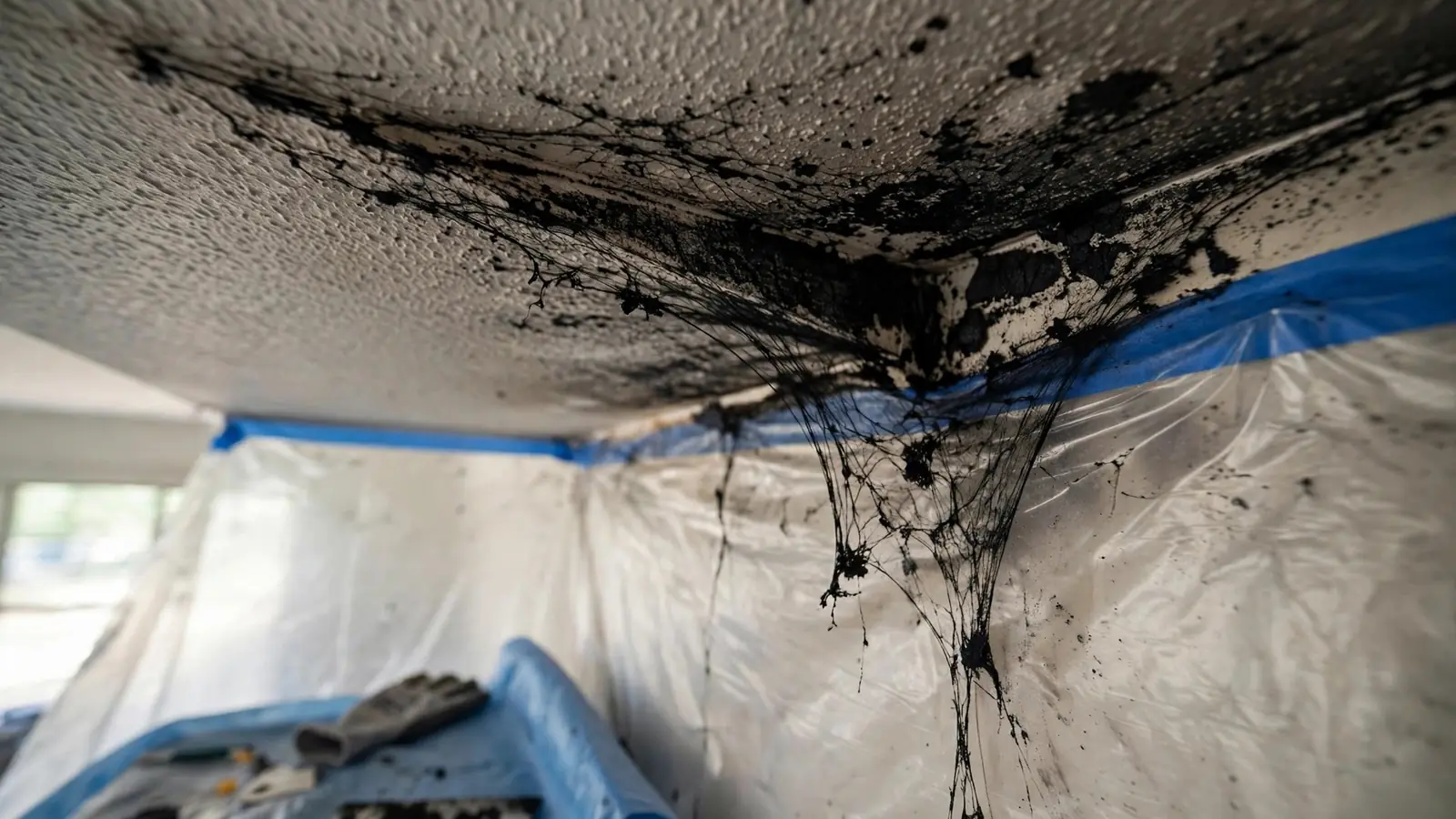
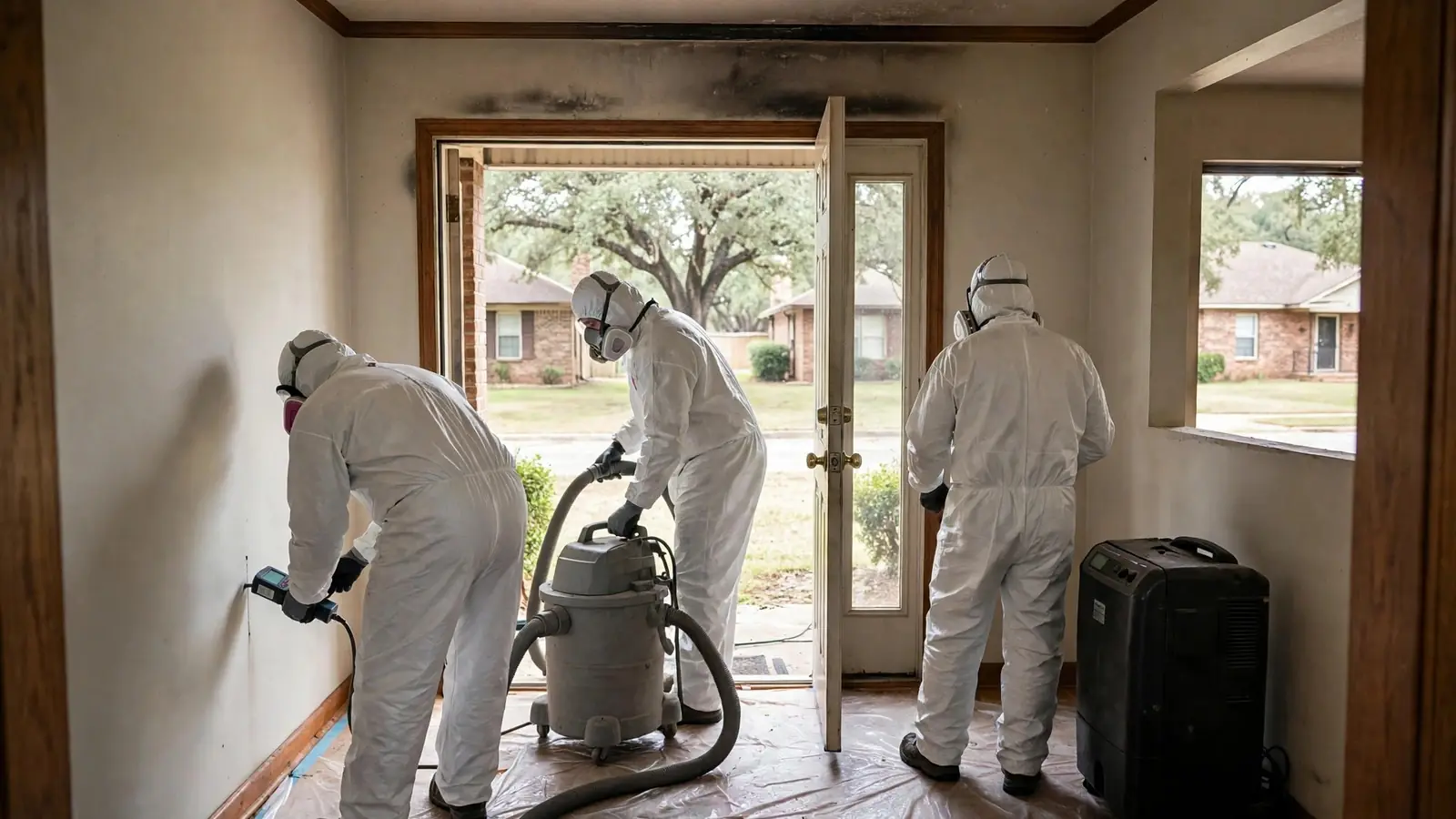
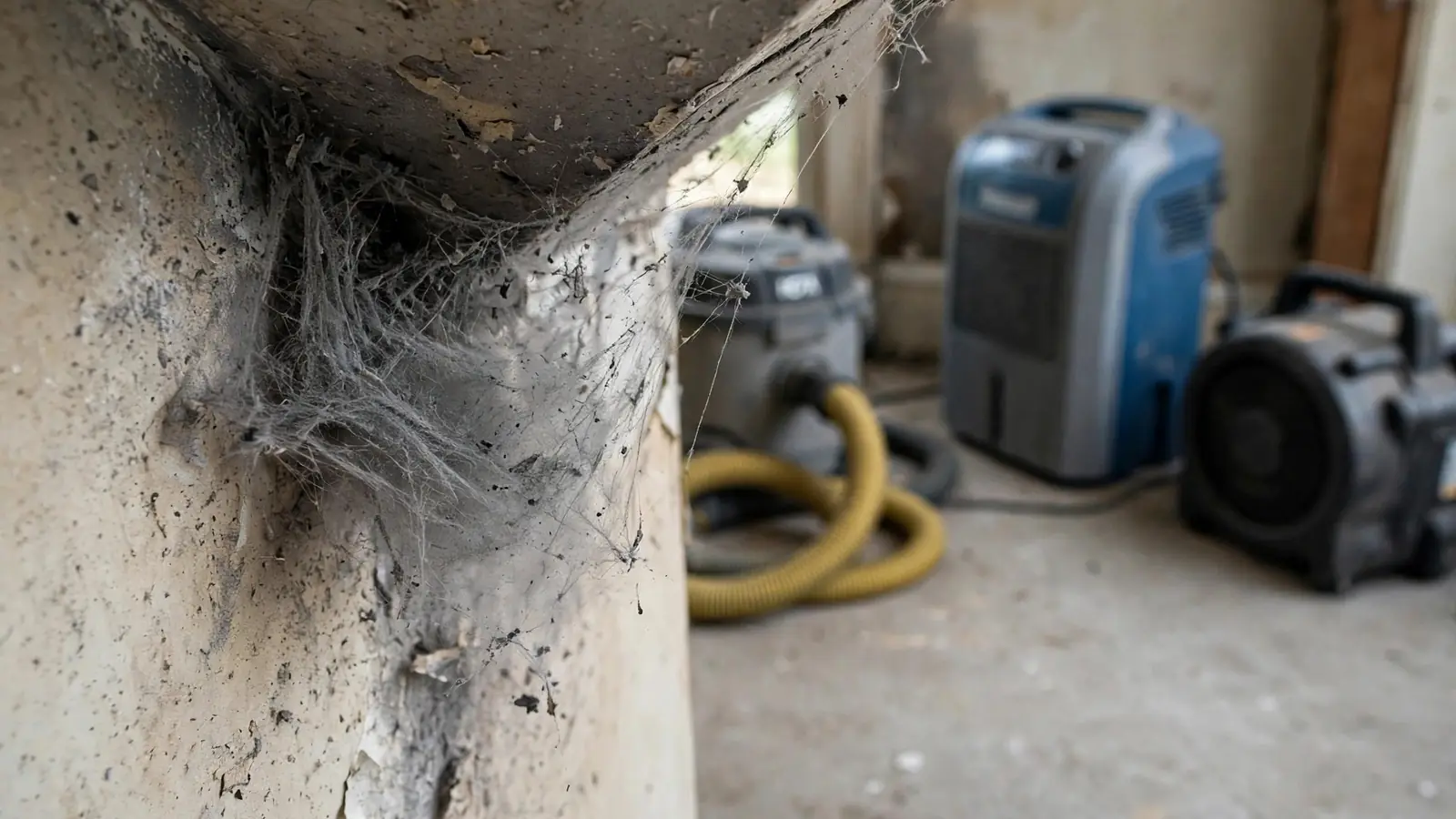
In small houses, soot spreads quickly and evenly. Ceilings darken, walls take on a gray film, and window glass becomes greasy. Soot webs, dark strings of residue, may hang from corners and ceiling edges.
Wiping soot with a damp cloth smears it and can set stains. Dry removal comes first, followed by washing with suitable cleaners.
Plaster, early drywall and paint
Ridglea homes may have plaster, early drywall or a mix. Both are dry-cleaned first, then washed. Older paint layers may contain lead [3], so scrubbing hard or sanding is avoided or done with lead-safe methods.
Stains that remain after cleaning are sealed with a stain-blocking primer before repainting.
Removing soot from a postwar home
The usual order.
- 1
Test residue in each room
Wipe tests show which cleaning method fits.
- 2
Remove loose soot dry, top to bottom
Ceilings, walls, then floors.
- 3
Wash with matched cleaners
Products suited to residue and surface.
- 4
Seal remaining stains
Primer before new paint.
Steel windows and hardware
Original steel casement windows collect soot on frames, cranks and glass. Steel can rust if cleaned with too much water, so it is cleaned carefully and dried. Hardware may be removed and cleaned separately.
Glass usually cleans well unless pitted by heat.
Oak floors and soot
Original oak floors collect soot in their finish and between boards. Cleaning with products safe for the finish, then recoating, usually works. Heavy residue may need light sanding.
Rugs and carpet over the floor may need professional cleaning or replacement.
Ridglea surfaces and soot treatment
Common materials and approaches.
- Ceiling textureTest for asbestos before disturbing.
- Painted trim and doorsClean, seal and repaint if stained.
- Tile bathroomsScrub tile and grout; reseal grout.
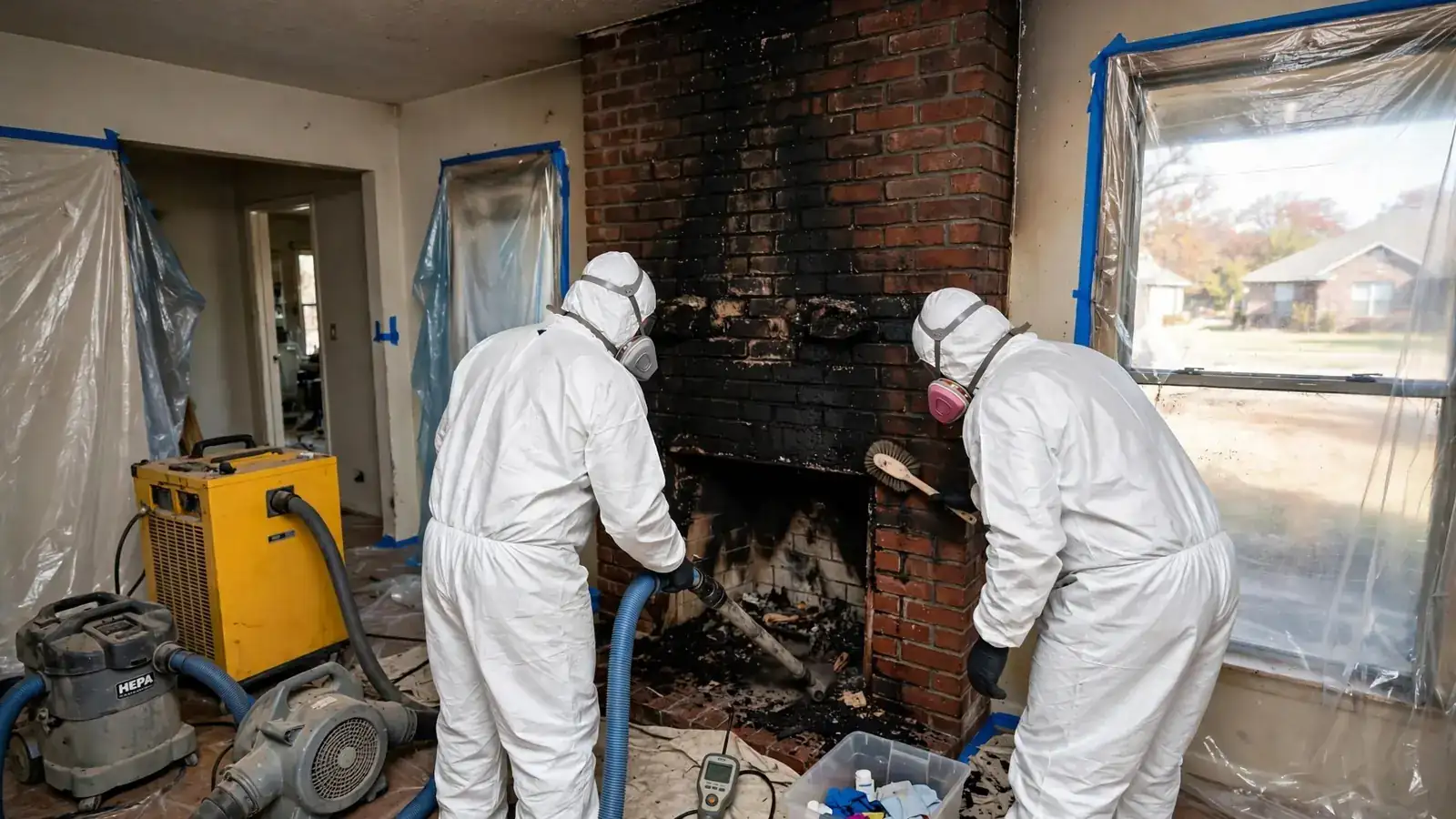
- Brick fireplacesPorous brick may need specialized cleaning.
Asbestos and textured ceilings
Textured ceilings and some floor tiles from the postwar era may contain asbestos [4]. Cleaning soot from these surfaces is done gently, without scraping, and testing is recommended before any removal.
Our page on Ridglea homes describes building materials common in the neighborhood.
Attic soot and insulation
Soot rises into shallow attics through ceiling gaps. Insulation that holds soot is usually replaced, and framing is cleaned or sealed. This prevents soot and odor from returning.
If ducts run through the attic, they need cleaning or replacement as well.
After soot removal
Lingering smell is handled with smoke odor removal. Repairs and repainting come last. Photos before cleaning help your claim.
If you are out of the house, the Texas Department of Insurance explains additional living expense coverage [5].
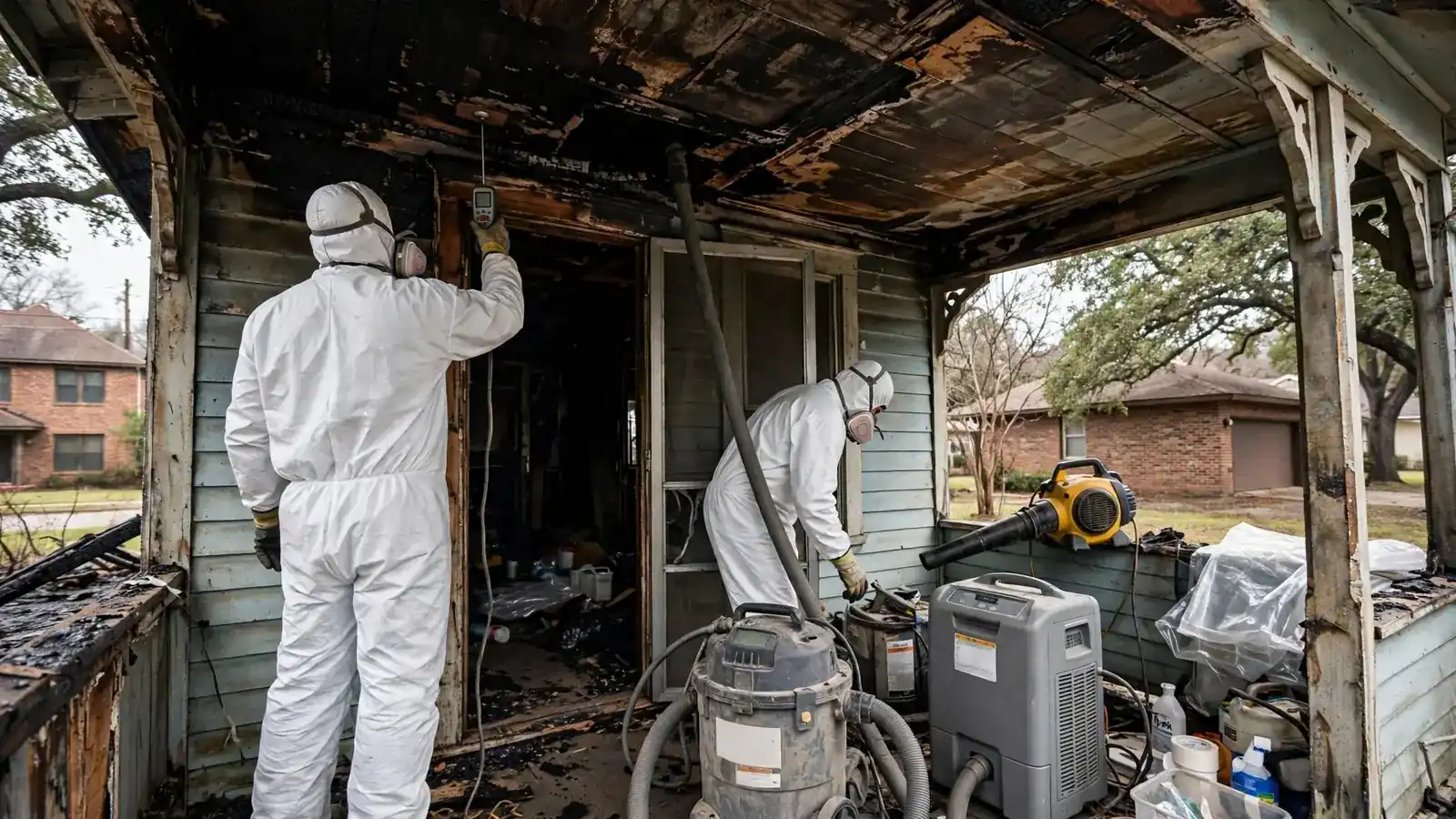
Window glass, blinds and curtains
Smoke leaves a greasy film on window glass that can be cleaned with suitable products. Blinds collect soot on every slat and are cleaned individually or replaced. Curtains and drapes go for professional cleaning.
In small rooms, clean windows make a big difference to how bright and fresh the house feels after the work.
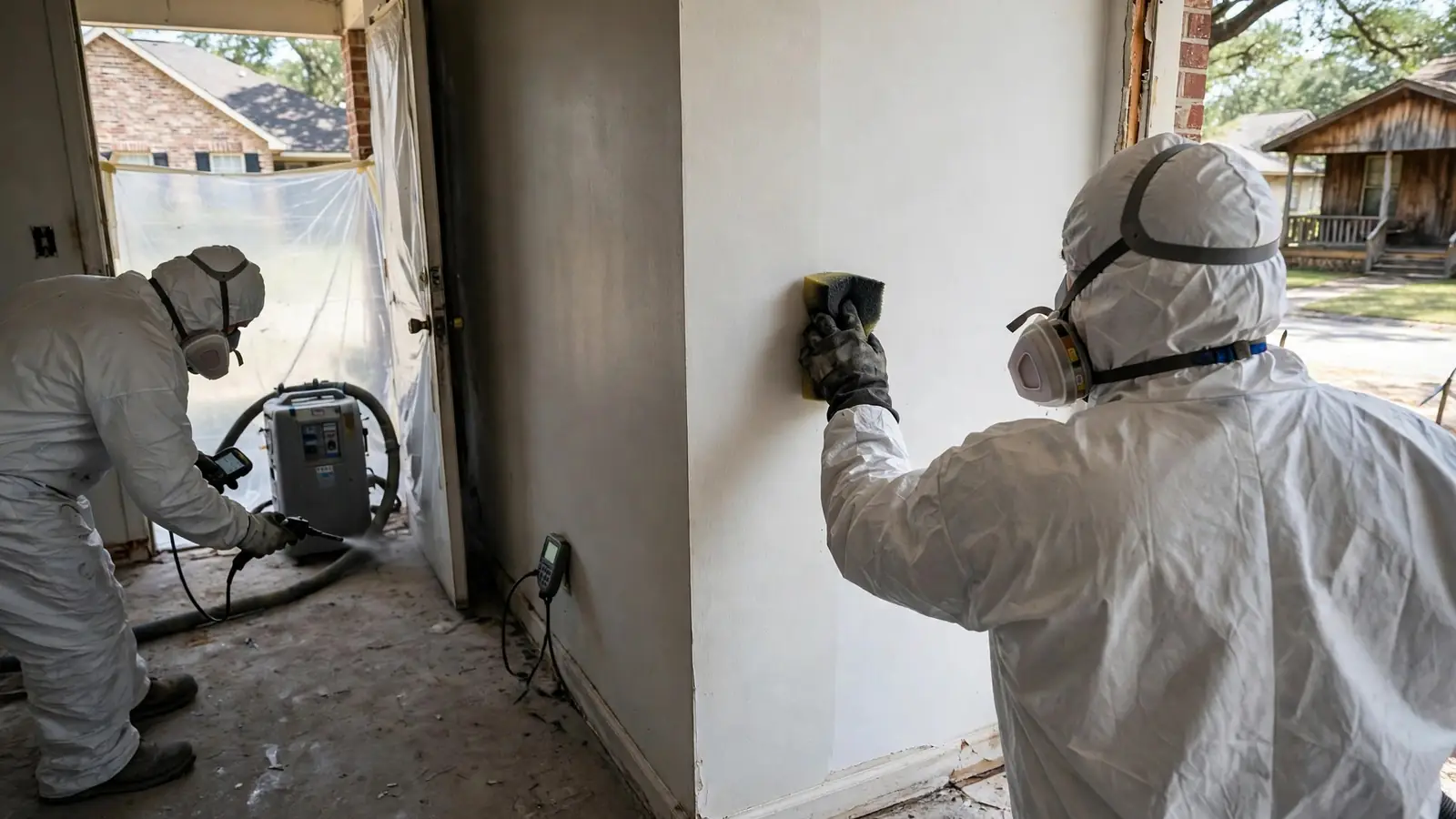
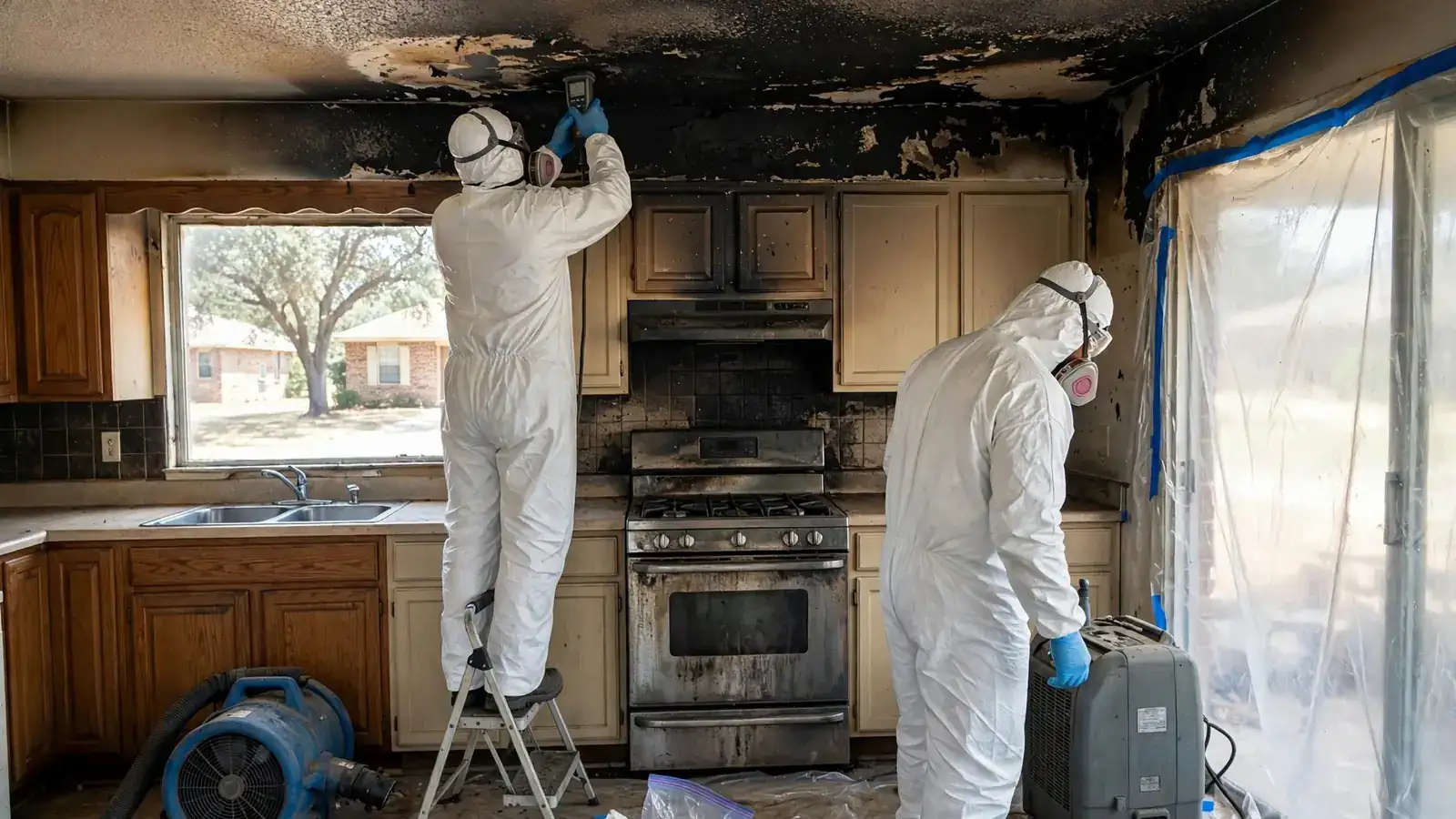
Kitchen soot and greasy residue
Kitchen fires leave soot mixed with grease on cabinets, ceilings and walls. Degreasing cleaners are needed, and cabinets are emptied so the insides can be cleaned. Original wood cabinets can often be refinished after cleaning.
Exhaust fans and range hoods collect heavy residue and may be replaced.
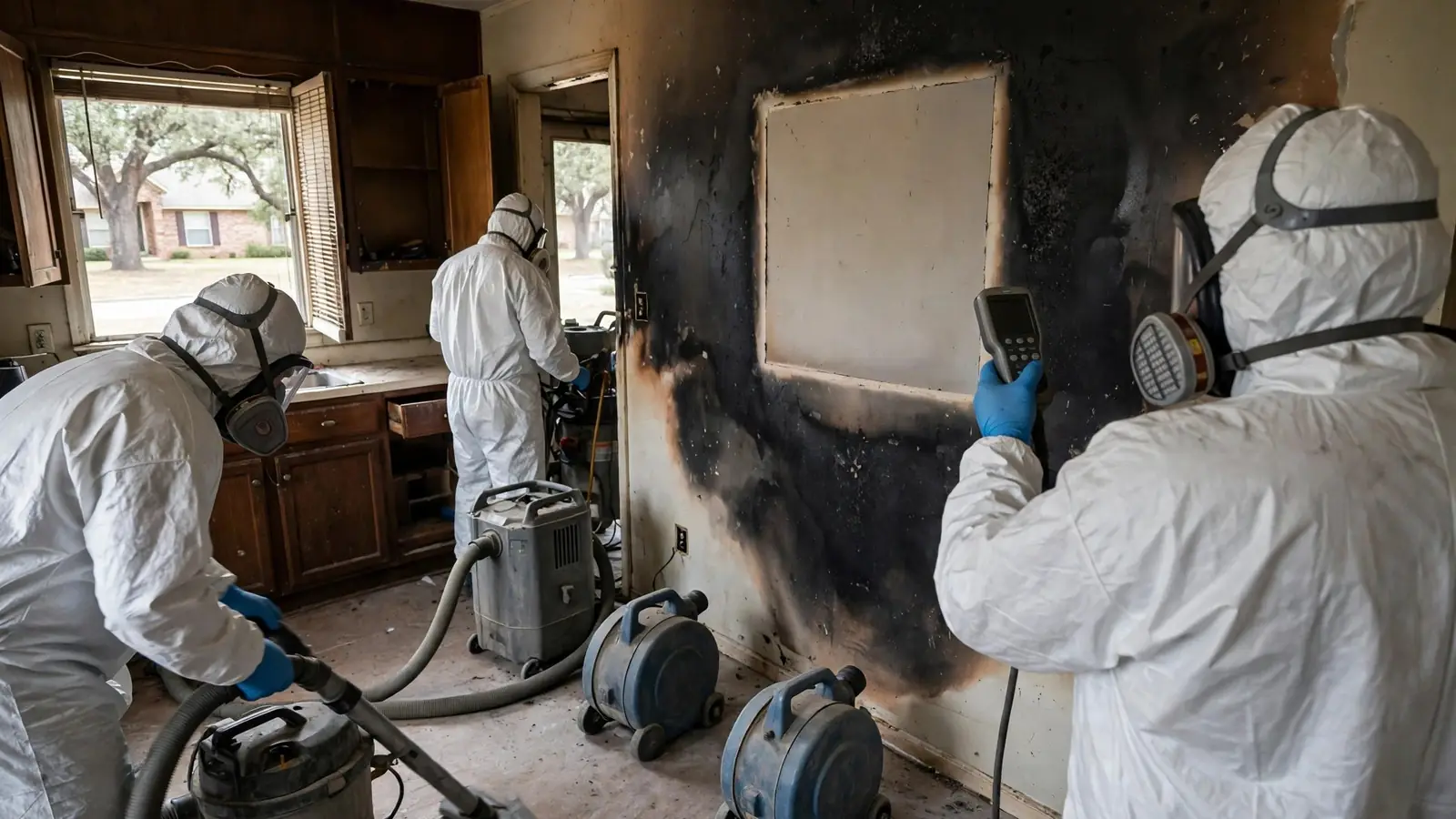
When to call for help
Light soot in one room may seem manageable, but soot in a small house usually spreads further than you can see. Residue in the attic, ducts and closets is easy to miss. Professional cleaning reaches these places and uses equipment that captures fine particles.
If you see soot in rooms away from the fire, the whole house likely needs attention.
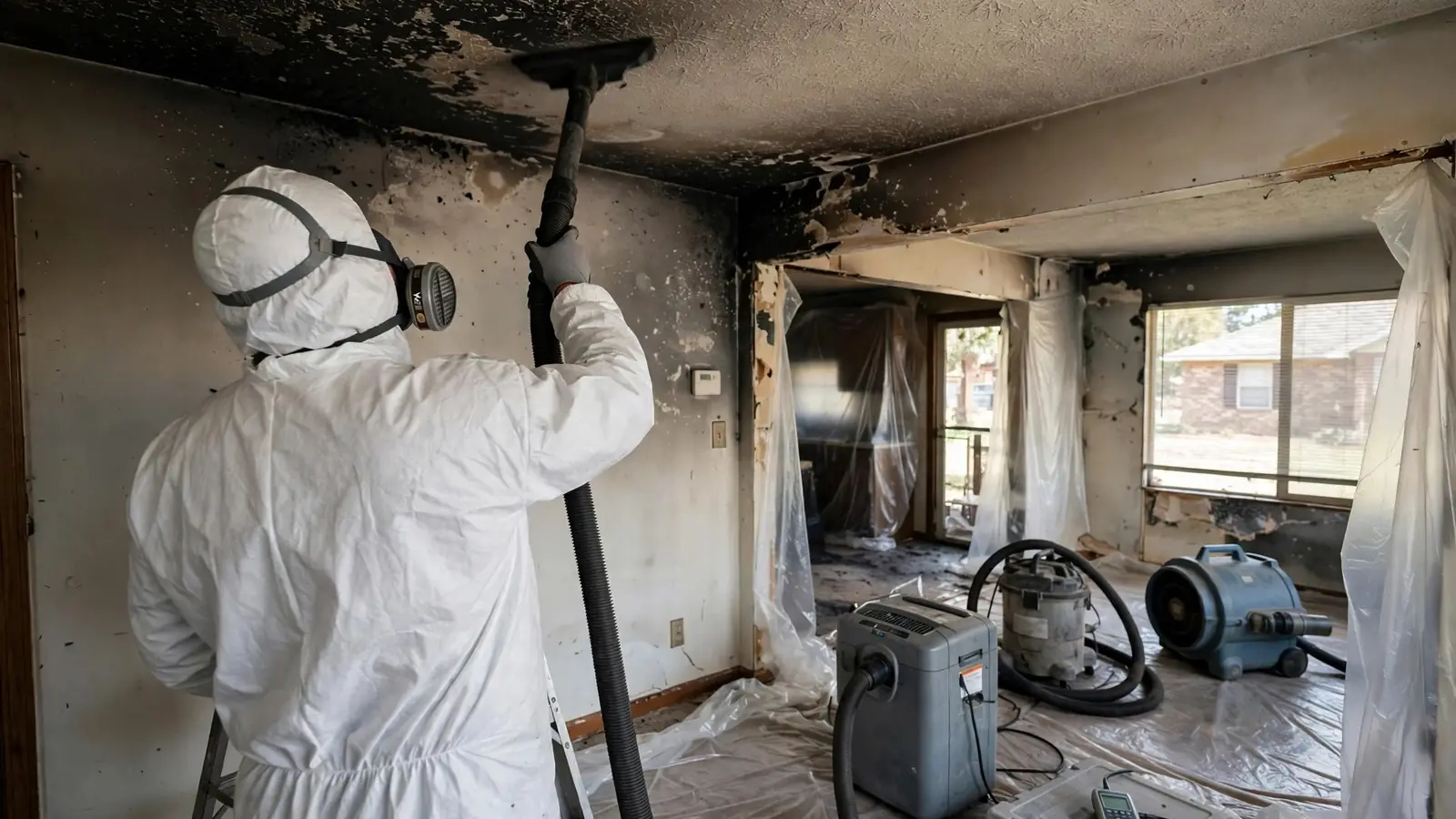
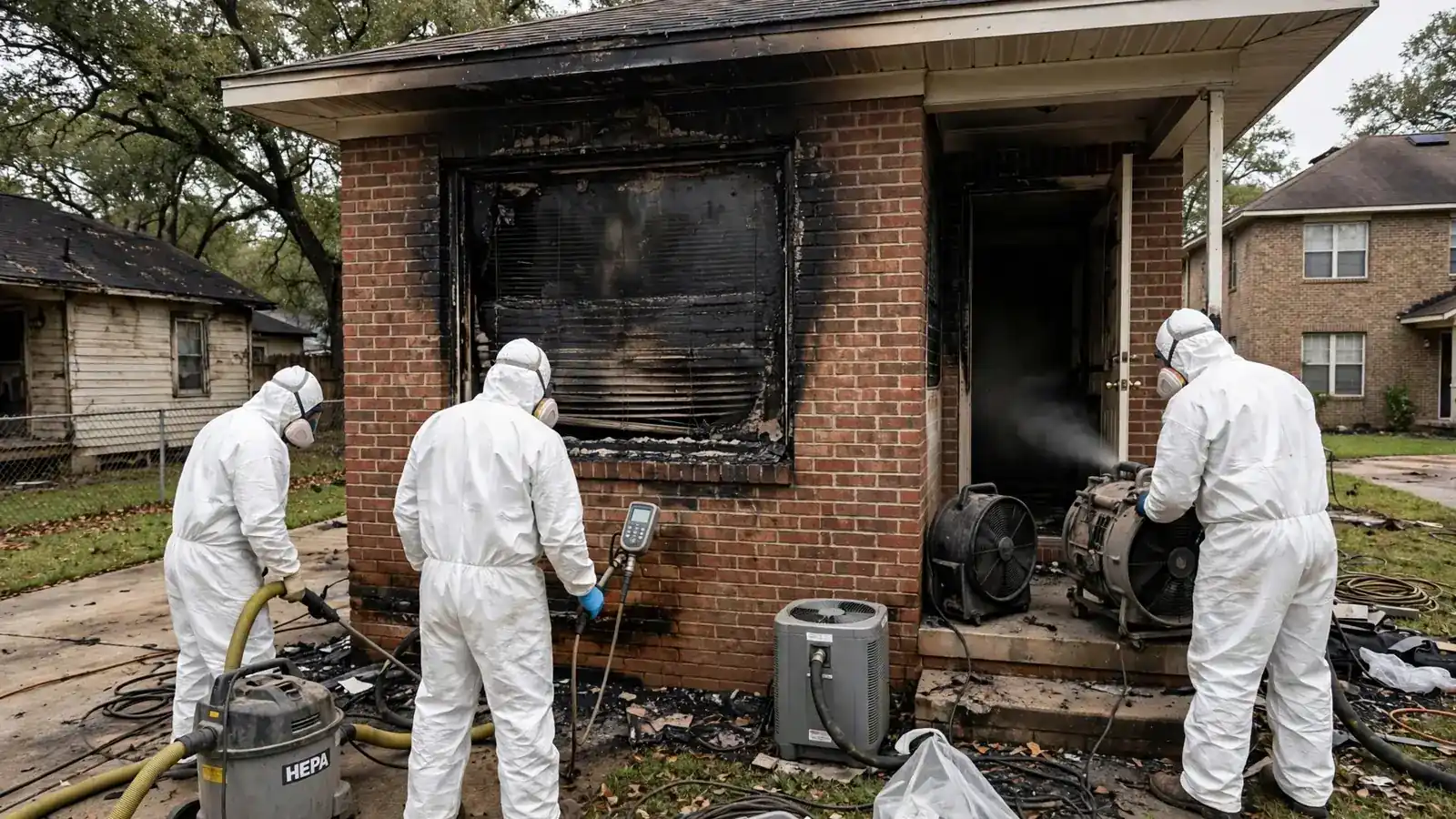
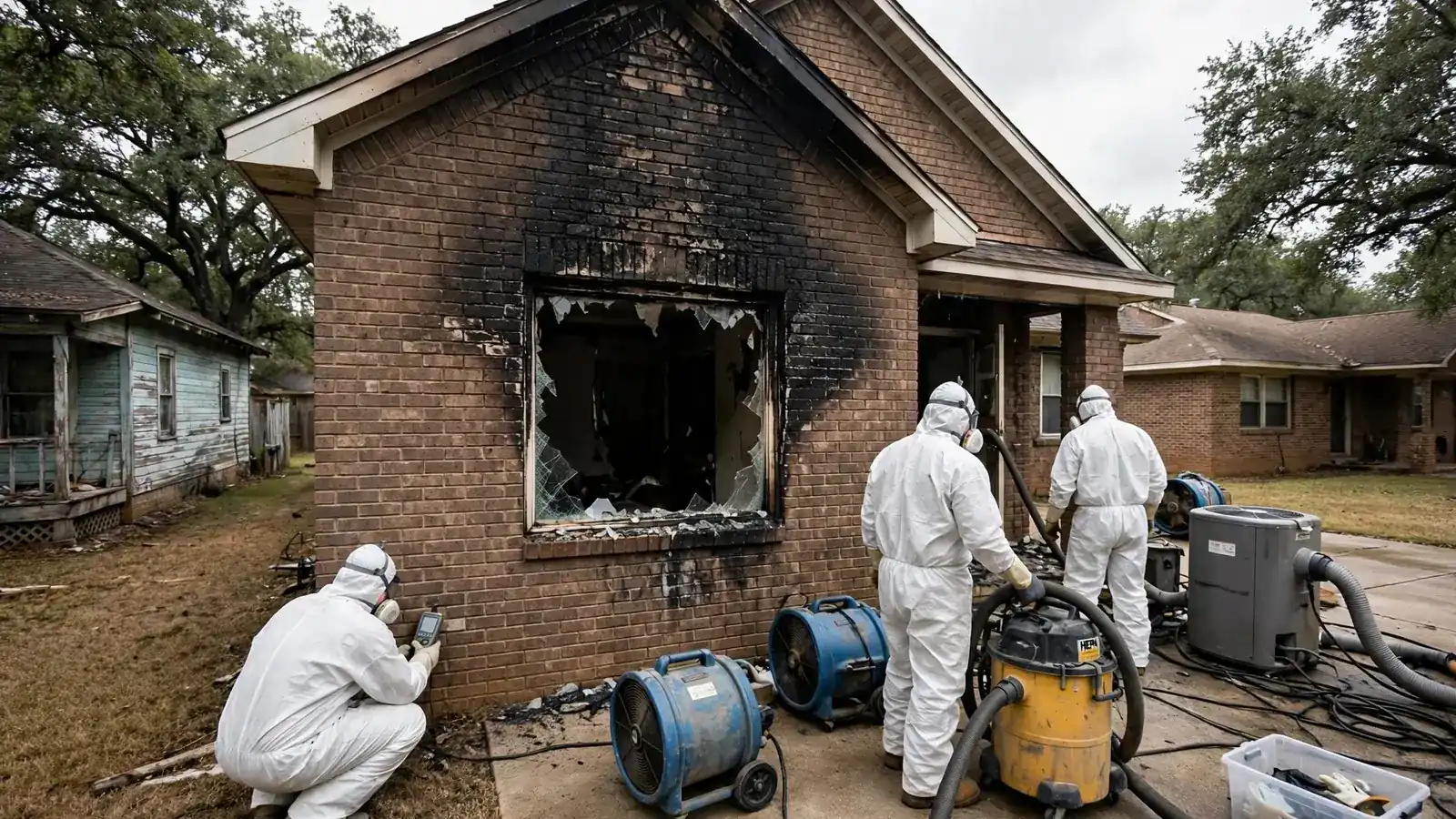
Soot on the outside of a Ridglea brick home
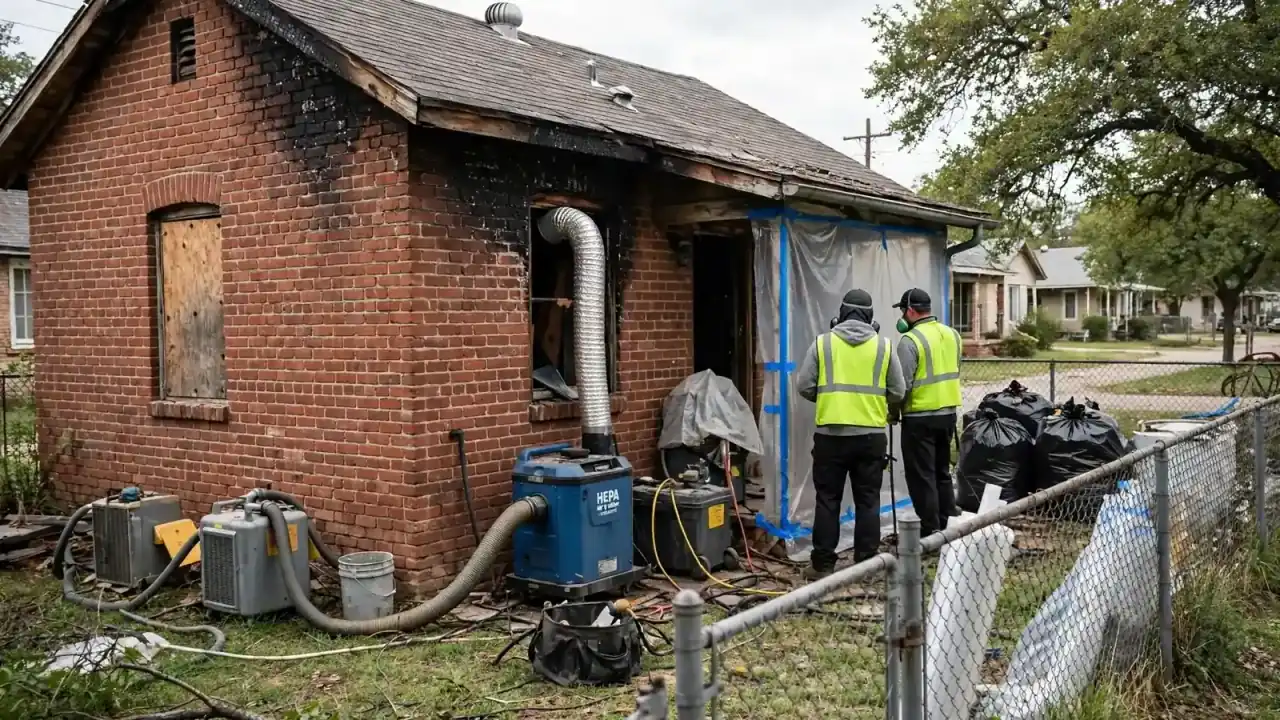
Smoke pouring from windows leaves dark streaks on the brick above them and on wood or metal trim around the openings. Brick is porous and holds soot in its surface, so exterior cleaning uses gentle detergents and low-pressure rinsing rather than harsh blasting that can wear away the brick face. Painted trim and eaves are washed and, where stains remain, sealed and repainted.
If the fire was in a detached garage or carport on the alley, the back wall of the house facing it is often stained as well and should be included in the cleaning plan.
FAQ
Soot Removal in Ridglea: questions
Can soot be cleaned from steel windows?
Yes, carefully. Steel is cleaned and dried promptly to avoid rust.
Is my textured ceiling safe to clean?
It can be cleaned gently, but if it dates from the postwar era, test for asbestos before scraping or removing it [4].
Will my oak floors need refinishing?
Light residue may clean off; heavier residue may need sanding and refinishing.