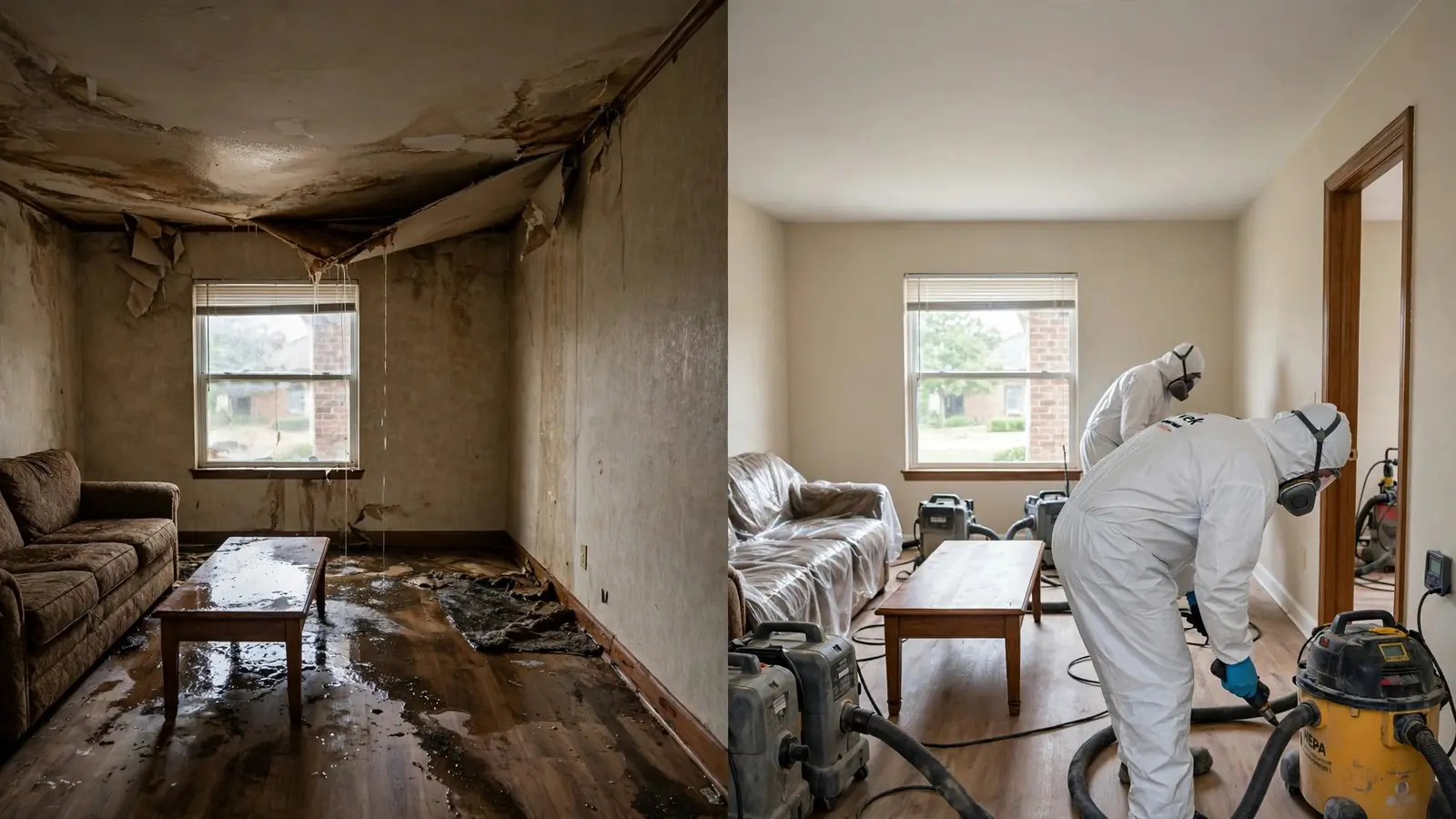
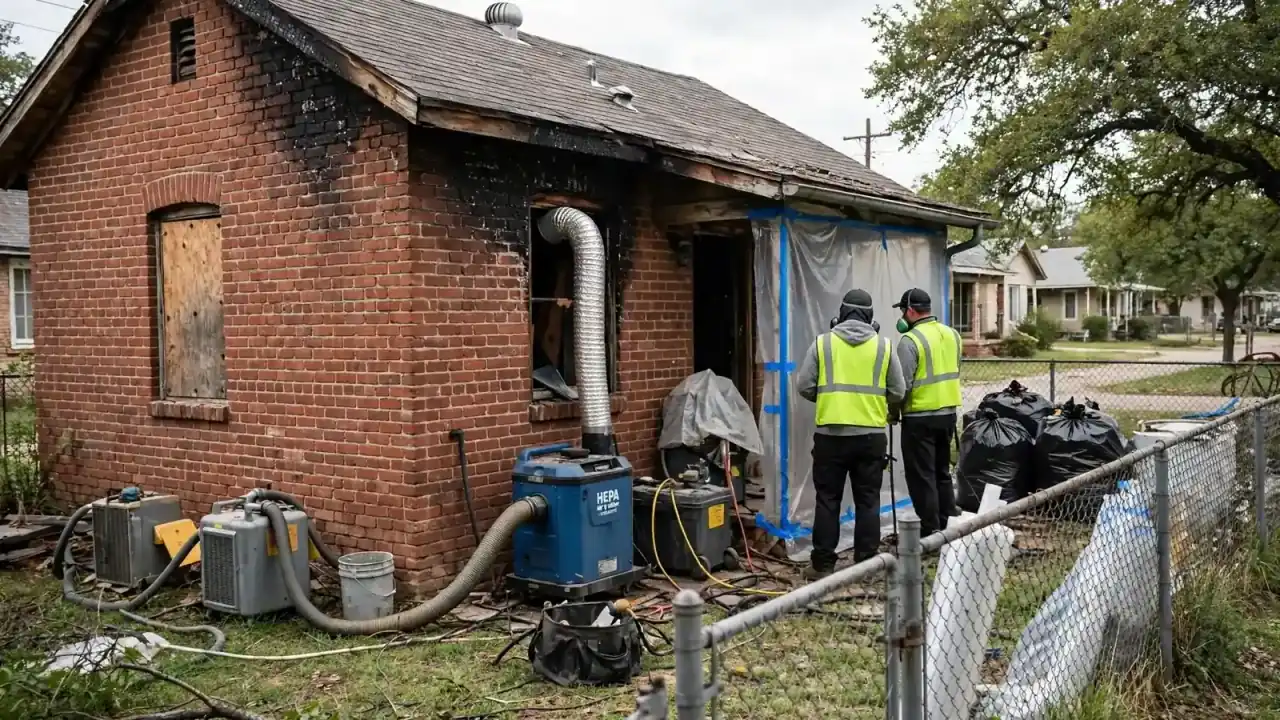
Key facts: Firefighting Water Damage in Ridglea
- Ridglea homeowners have about a day or two to get wet materials drying before mold can start, per EPA guidance [1].
- Professional drying follows the IICRC S500 standard for water damage restoration [2].
- Belongings untouched by flames can still be ruined by firefighting water, the U.S. Fire Administration notes [3].
How water spreads in a postwar home
In a small house, water from firefighting spreads quickly across floors and into walls. It runs under baseboards, soaks into plaster or early drywall, and reaches the attic if firefighters sprayed the roof. Oak floors absorb water and cup within hours.
Some Ridglea homes sit on slabs and others on piers. On a slab, water spreads under flooring; on piers, it drains to the crawl space.
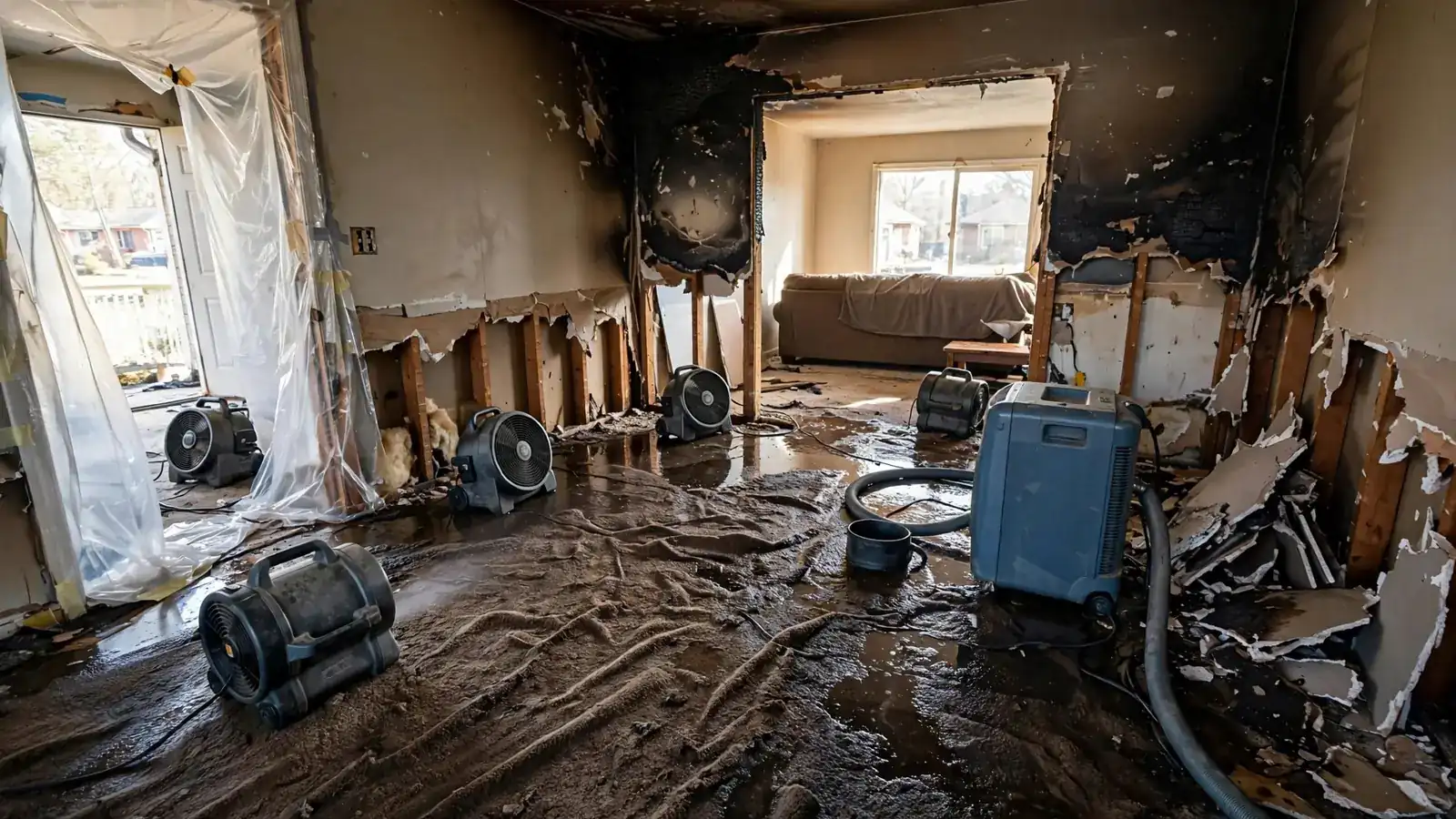
Hardwood floors after a soaking
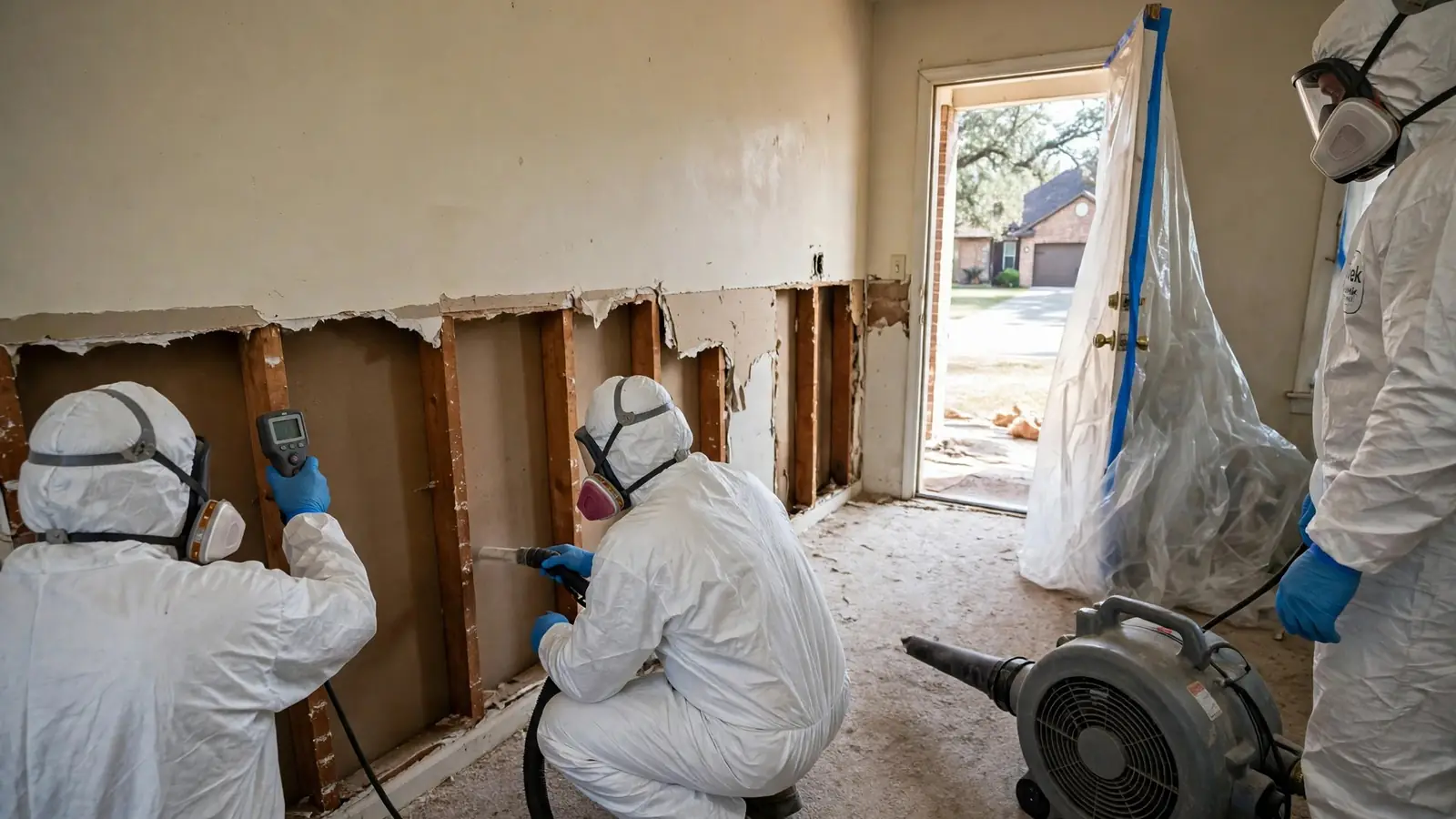
Oak floors swell and cup as they absorb water. Dried slowly and evenly, many settle back and can be sanded and refinished. Rugs and carpet over them should be removed to let them dry.
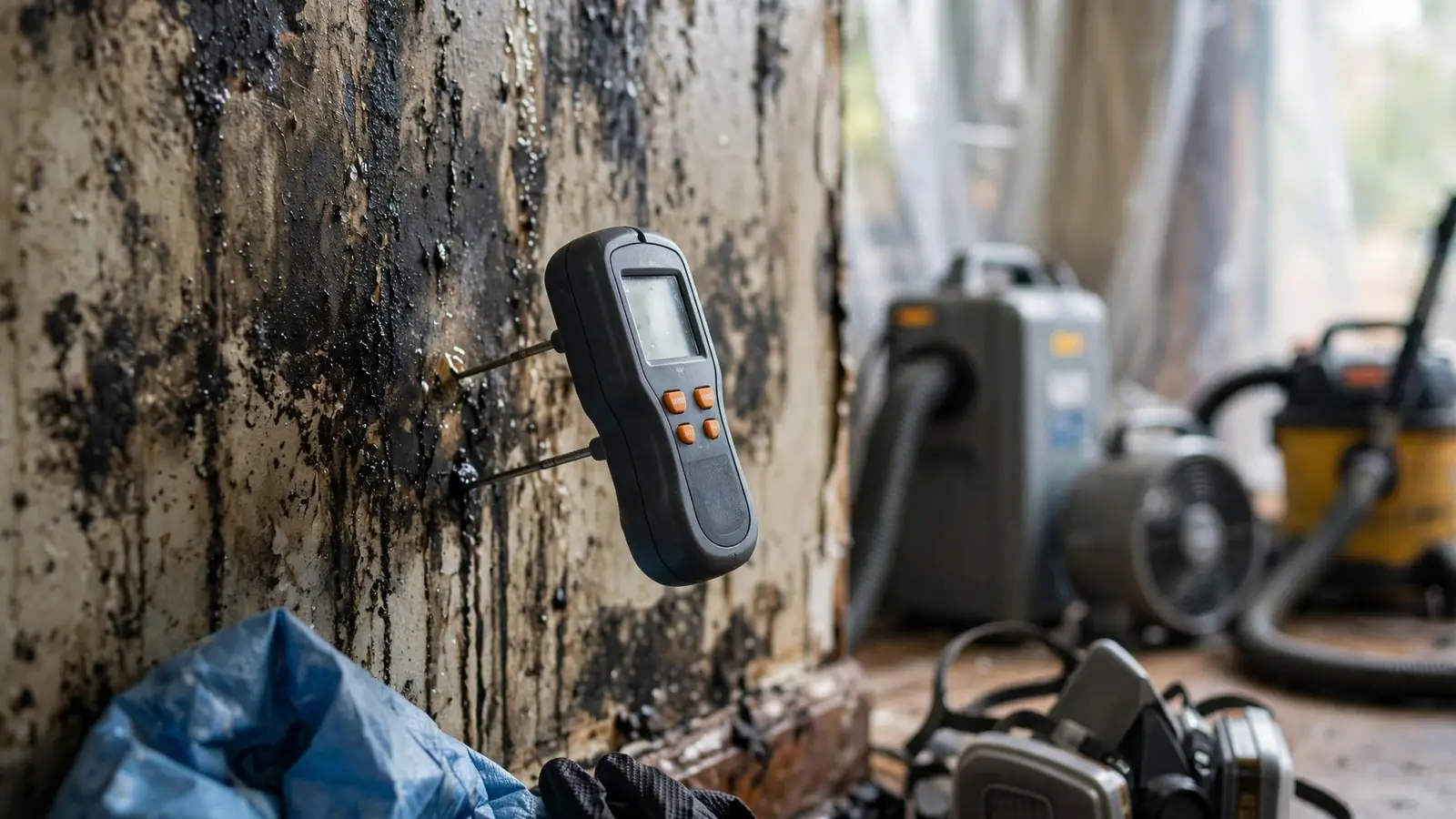
Moisture meters track progress. Sanding before the floor is dry can mean doing it twice.
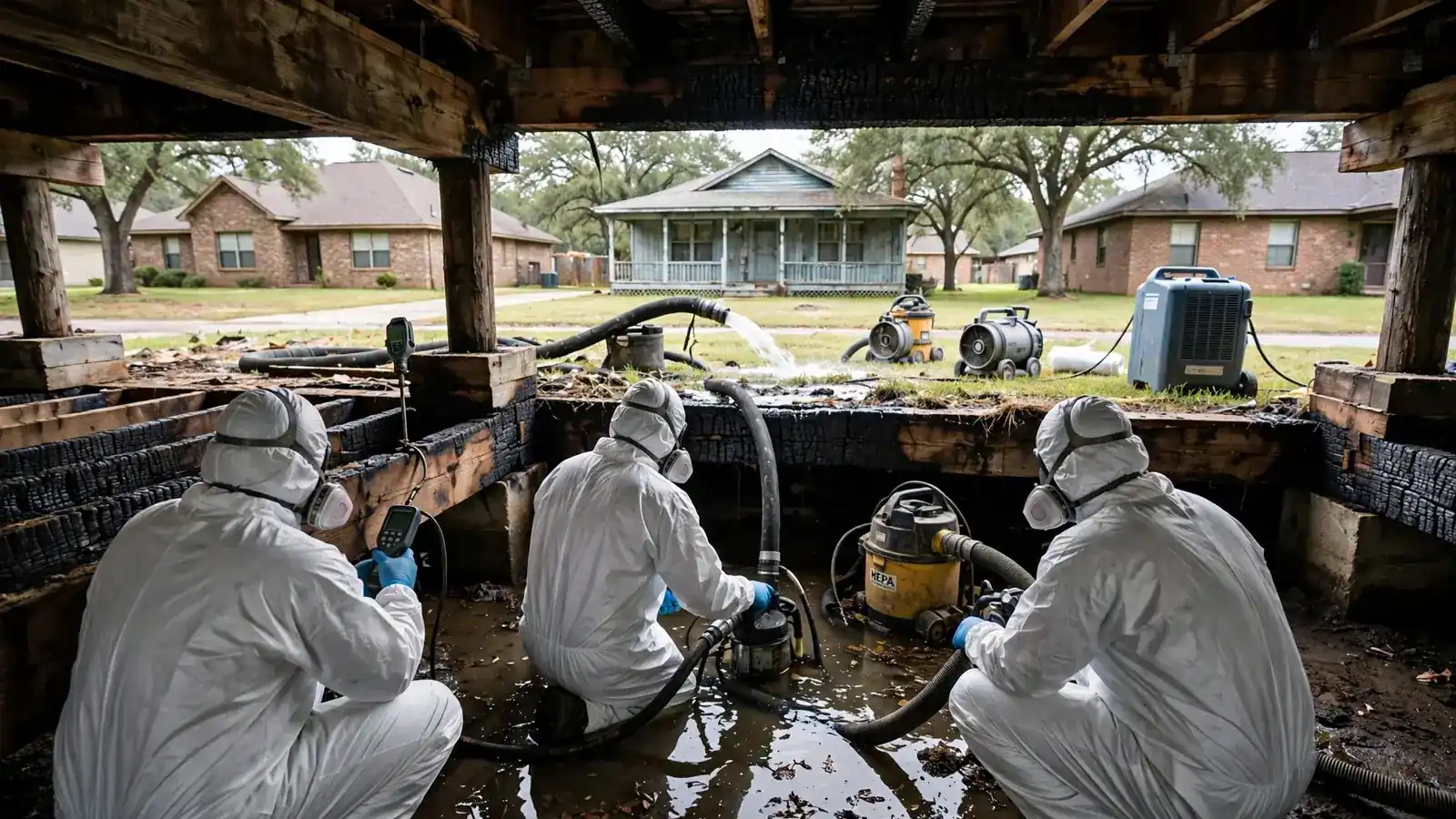
Drying a Ridglea home
Typical order of work.
- 1
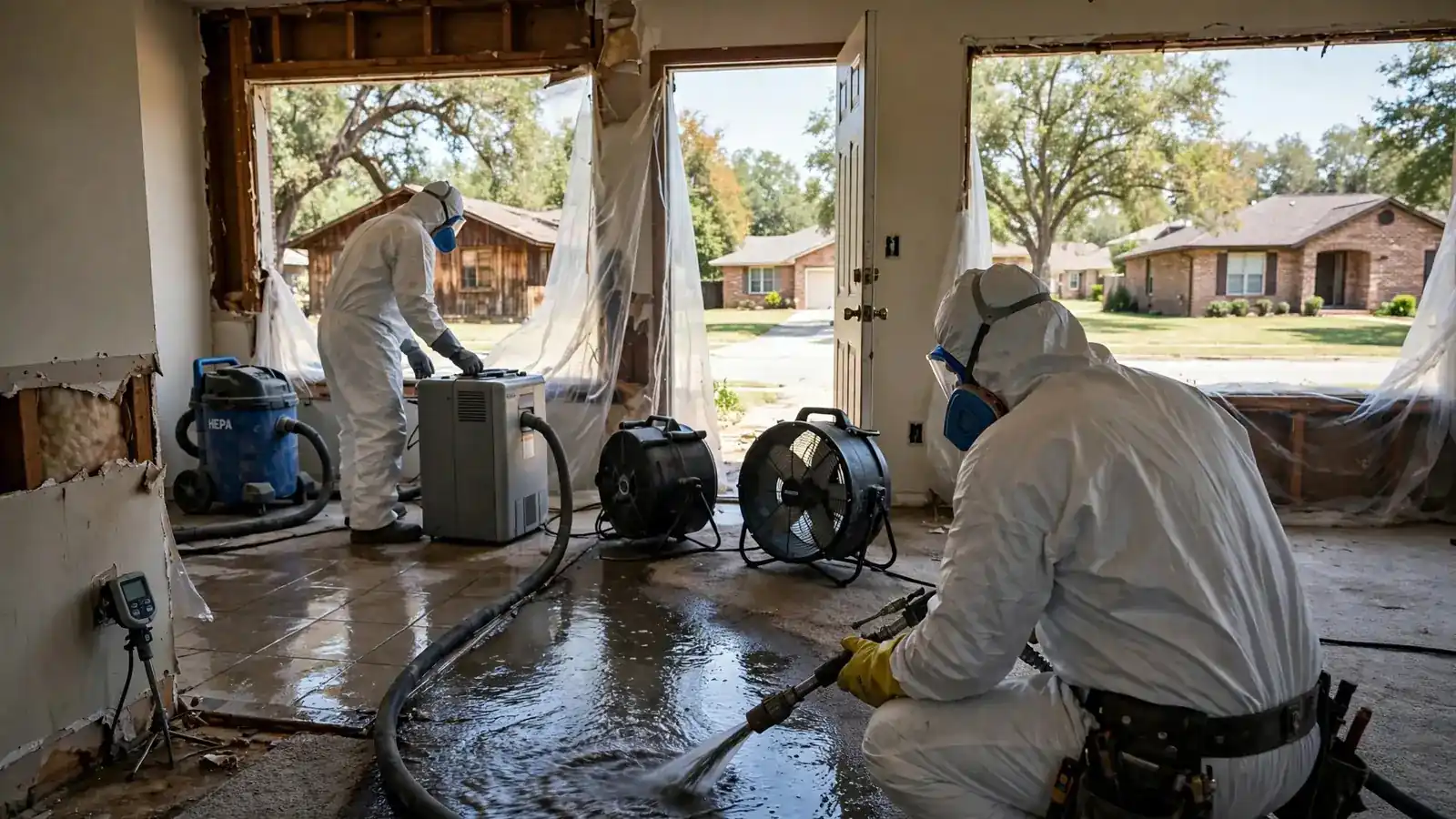
Pull water off Ridglea floors
From floors, carpets and any crawl space.
- 2
Measure moisture throughout
Find wet walls, floors and attic insulation.
- 3
Run dehumidifiers in each room
Dehumidifiers and air movers in each room.
- 4
Confirm dry readings
Daily checks until materials are normal.
Attic insulation and ceilings
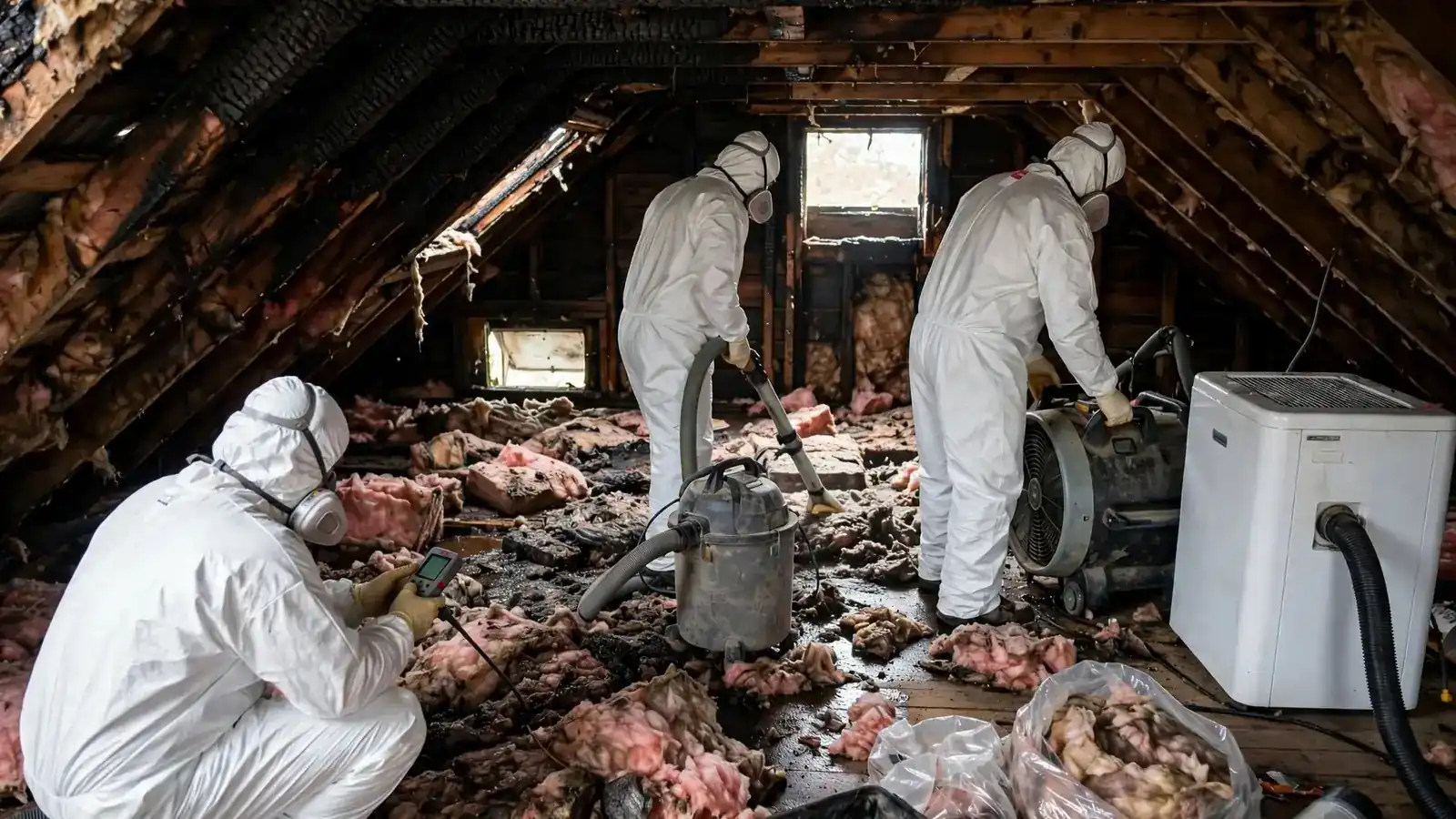
Water sprayed on the roof soaks attic insulation and drips onto ceilings. Wet insulation is heavy and holds moisture against the ceiling. It is usually removed so the attic can dry.
Watch ceilings for bulges. A sagging plaster ceiling can fall.
Older materials and safe removal
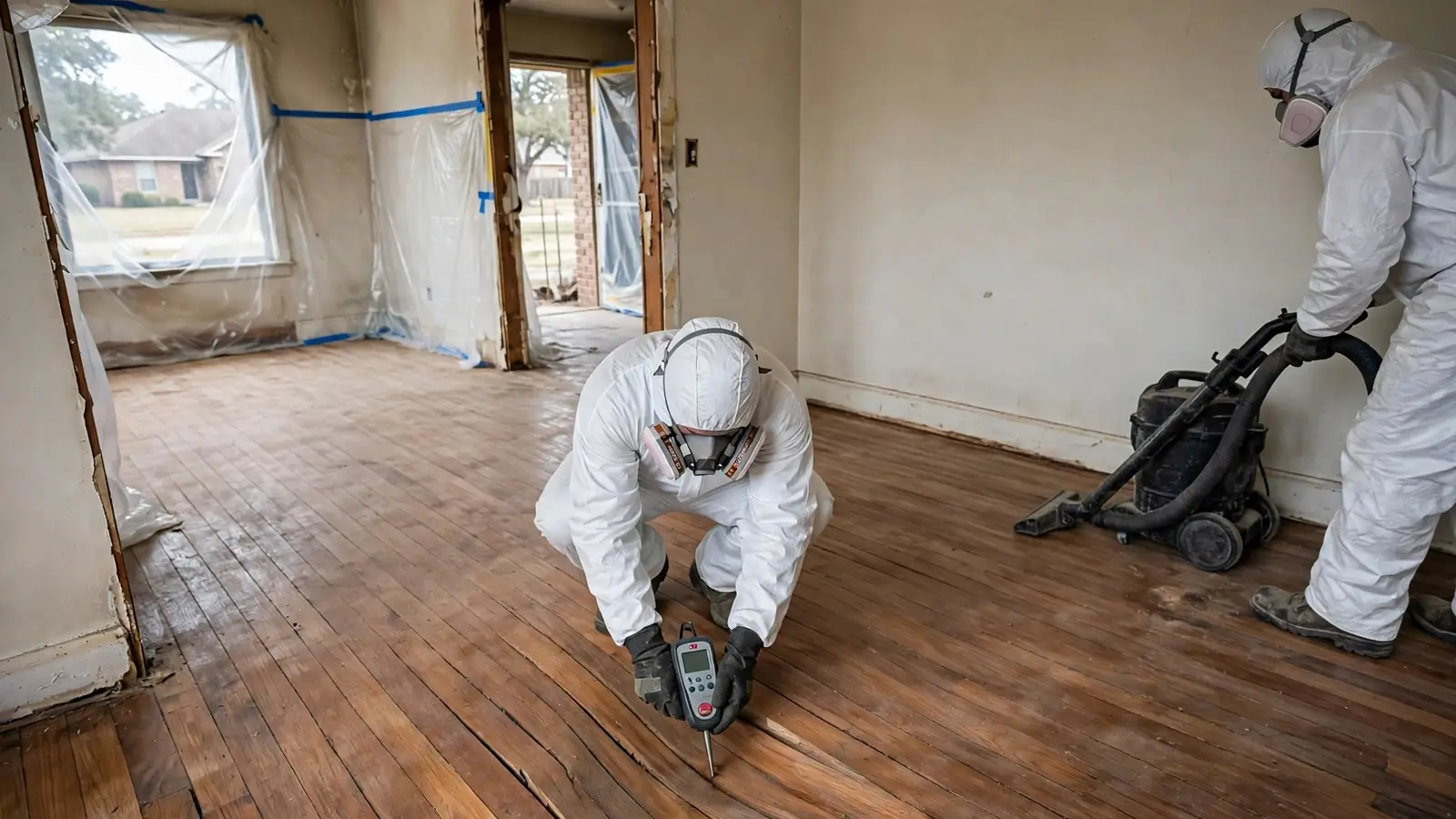
Removing wet plaster, floor tile or ceiling texture in a postwar home may disturb lead paint or asbestos [5][6]. Testing and safe work practices protect your household.
Our page on Ridglea homes explains these materials in more detail.
Signs of lingering water
Check these areas.
- Cupped or soft floorsWater still in the wood or subfloor.
- Stained or sagging ceilingsWater held in the attic or ceiling.
- Musty smellPossible mold growth.
- Peeling paintWater moving inside walls.
Mold and Fort Worth humidity
Warm, humid weather speeds mold growth. Drying within a day or two is the EPA's advice [1], so starting quickly matters. If mold appears, it may need its own cleanup.
Dehumidifiers work best with windows closed on humid days.
Electrical safety in wet homes
Older wiring and panels should be checked by an electrician before power is restored to wet areas. Drying equipment can run from safe circuits or temporary power.
Never plug in appliances or use outlets in rooms with standing water.
After drying
Once dry, smoke damage cleanup and repairs can proceed. If you are out of the house, the Texas Department of Insurance explains additional living expense coverage [4].
Keep photos and lists of wet contents for your claim.
Water under floors and in the crawl space
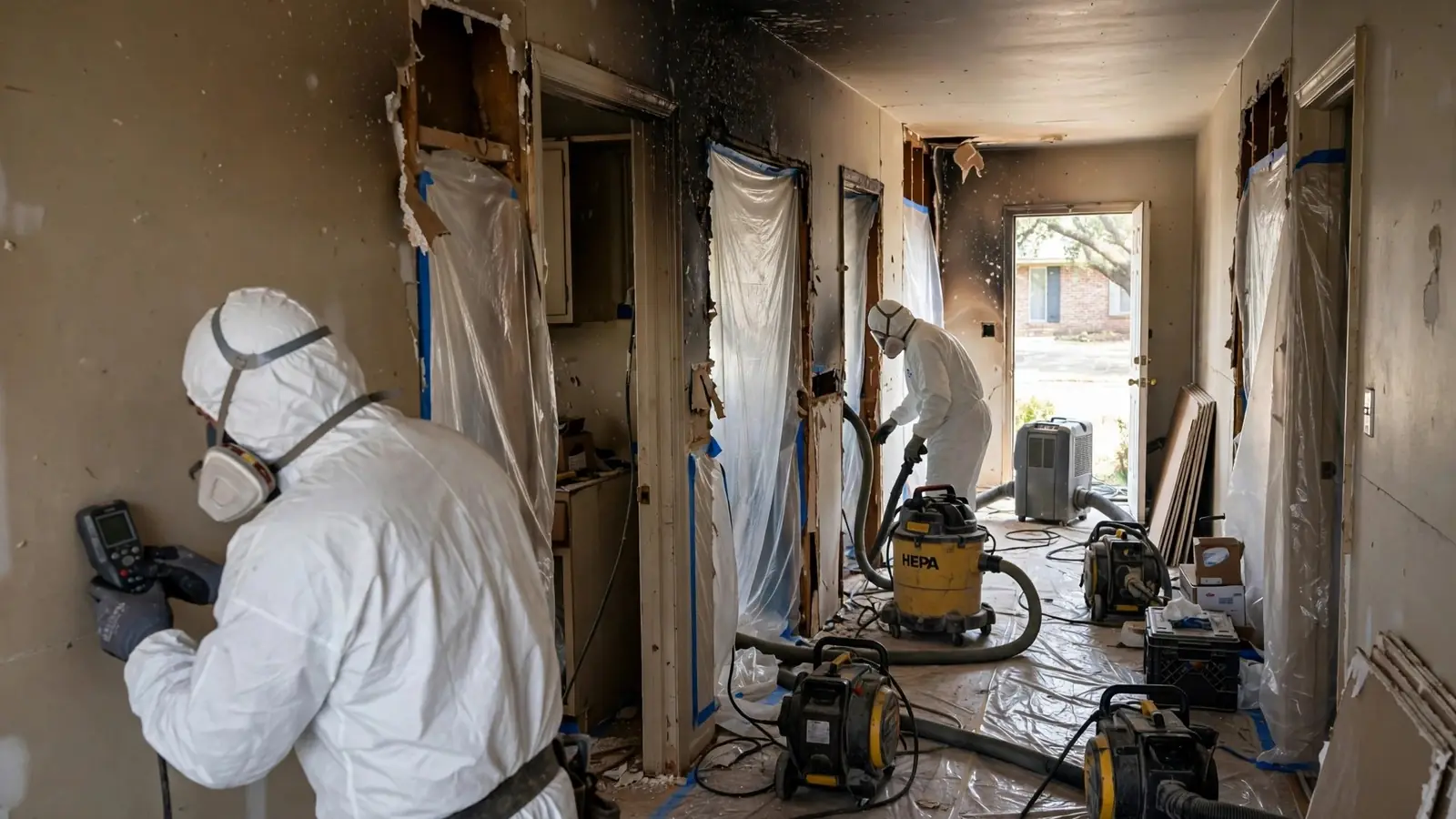
If your Ridglea home sits on piers, water drains through floor gaps into the crawl space. Standing water and wet soil under the house raise humidity in every room above. Pumping out the water and running dehumidifiers below the floor speeds drying.
On slab homes, water spreads under flooring and into the bottom of walls. Moisture meters find it.
Contents and belongings
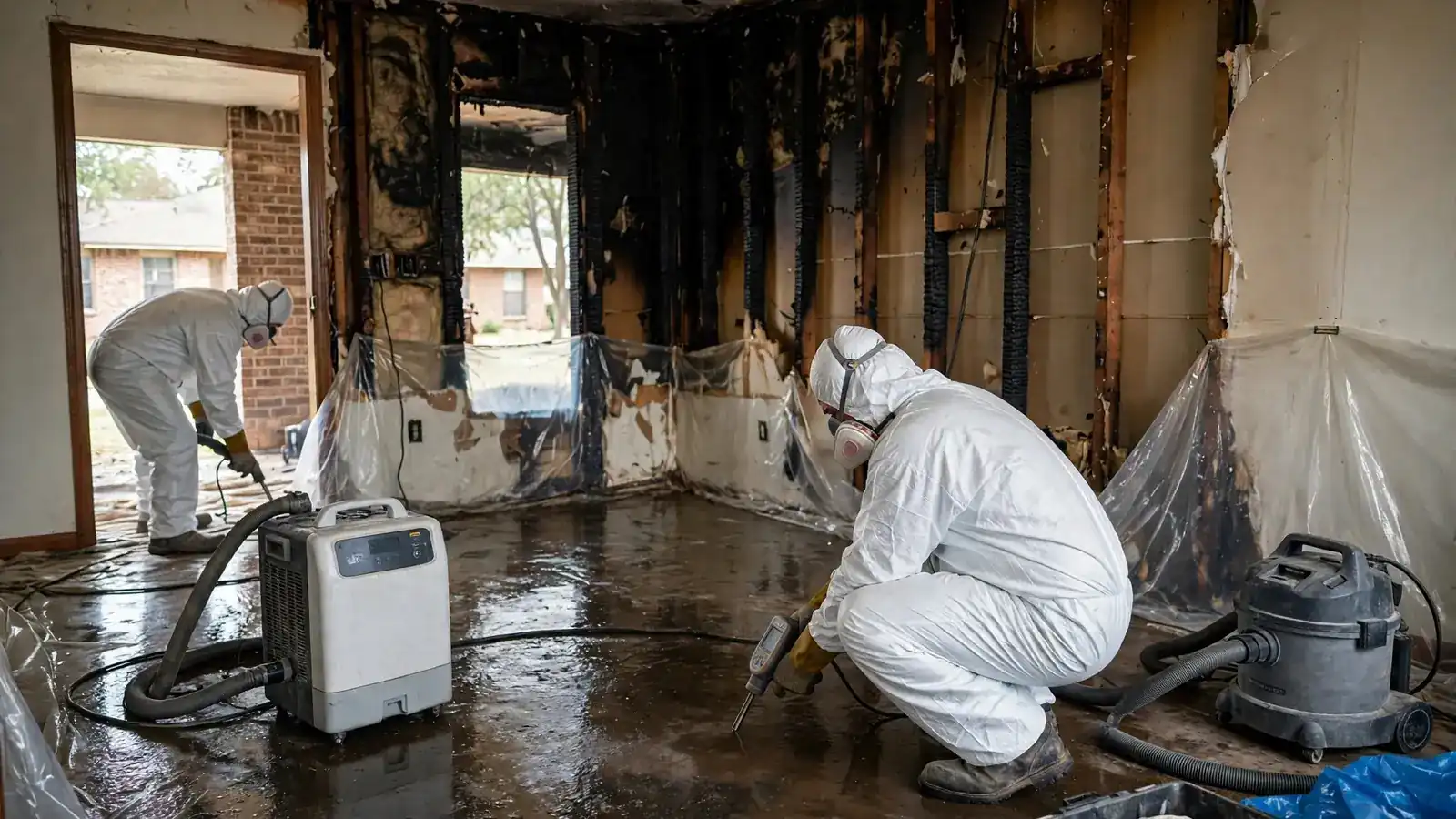
Furniture, rugs, clothing and papers soaked by firefighting need to be moved out of wet rooms. Some can be dried and cleaned; others cannot. Books and papers can be frozen to stop mold until they can be dried properly.
Photograph wet items before moving them and keep a list for your claim.
Drywall and plaster after soaking
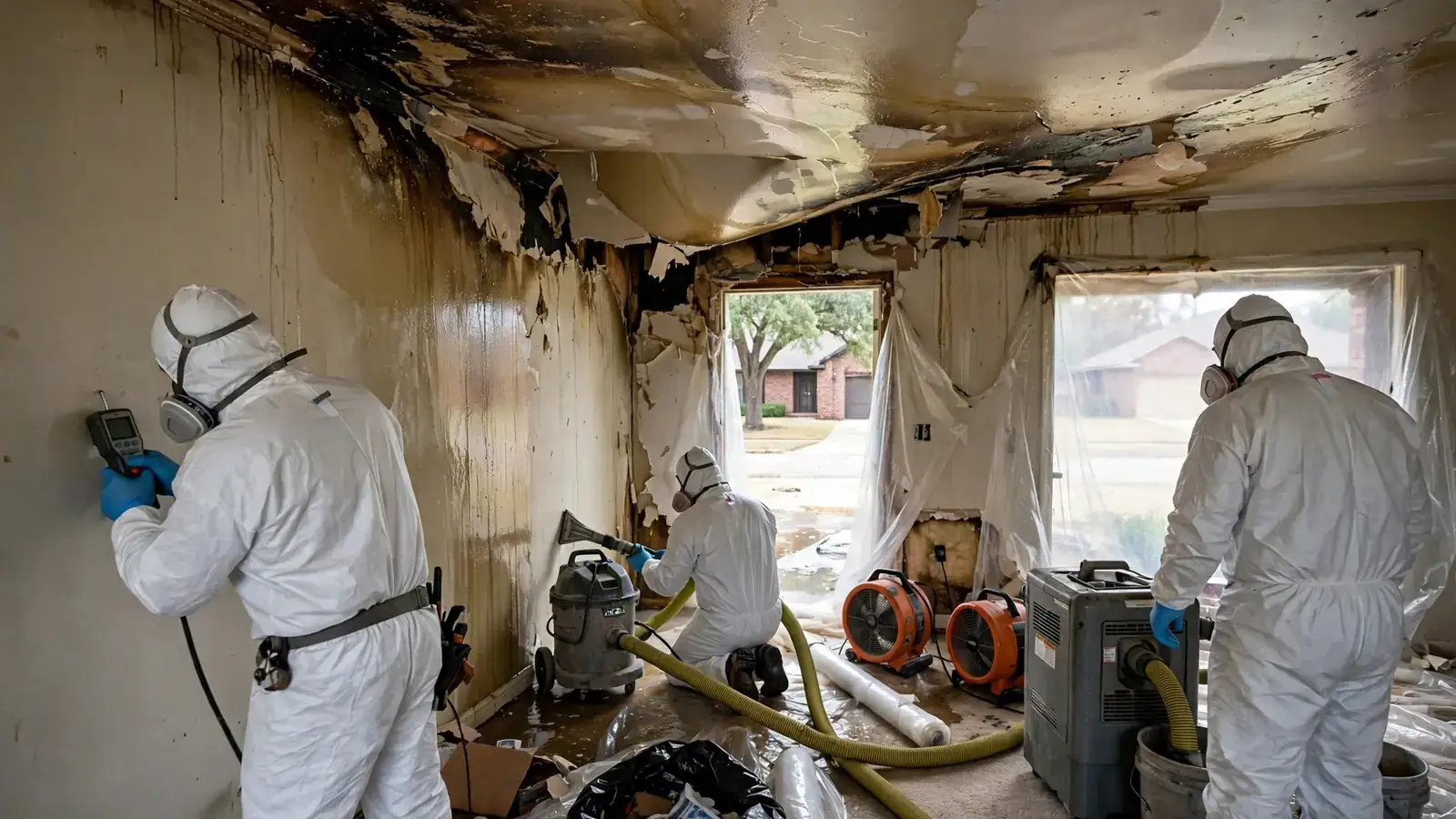
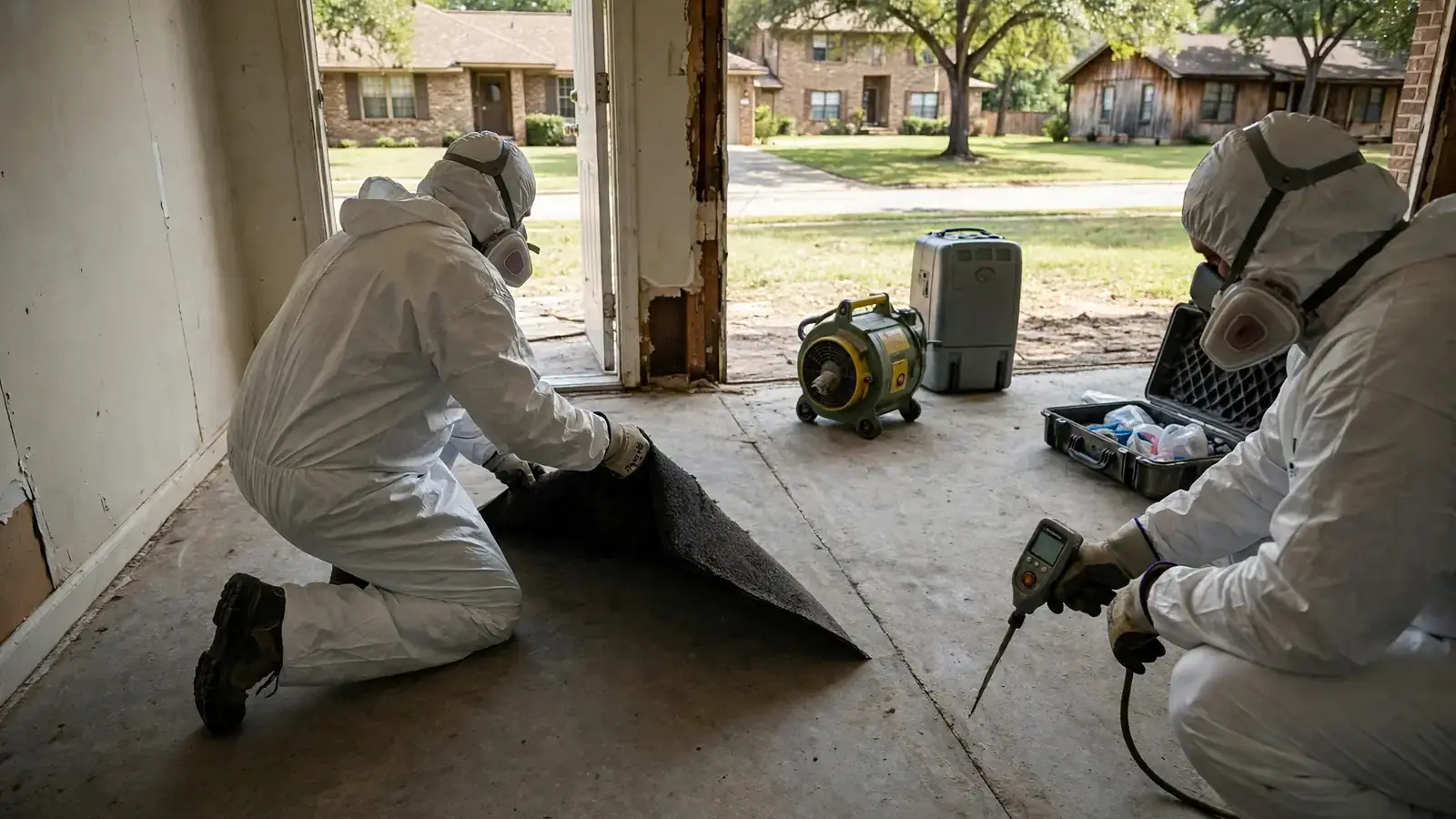
Wet drywall that stays firm can often be dried in place. Drywall that sags, crumbles or has been wet with dirty water is usually removed. Plaster is more tolerant of water but dries slowly.
The contractor will test each wall and explain what stays and what goes.
Bathrooms, kitchens and plumbing after a fire
Fire can damage plumbing as well as walls. Heat may soften plastic supply lines or melt drain fittings, and firefighters sometimes shut off the water at the meter. Before water is turned back on, check under sinks and behind toilets and appliances for damaged lines, or the drying job can turn into a new leak.
Kitchens and bathrooms with tile floors may look dry on top while water sits underneath in the mortar bed or subfloor. Readings around tubs, toilets and cabinet bases tell the contractor whether these areas need more drying time.
FAQ
Firefighting Water Damage in Ridglea: questions
Can cupped oak floors be saved?
Often. If dried slowly, many settle and can be refinished.
Why remove attic insulation?
Wet insulation holds water against the ceiling and dries slowly. Replacing it speeds drying.
How long does drying take?
Usually several days, depending on materials and how much water was used.
Sources and citations
- [1]U.S. EPA: A brief guide to mold, moisture and your home
- [2]IICRC: S500 Standard for Professional Water Damage Restoration
- [3]U.S. Fire Administration: After a fire
- [4]Texas Department of Insurance: Additional living expenses
- [5]U.S. EPA: Protect your family from sources of lead
- [6]U.S. EPA: Protect your family from exposures to asbestos