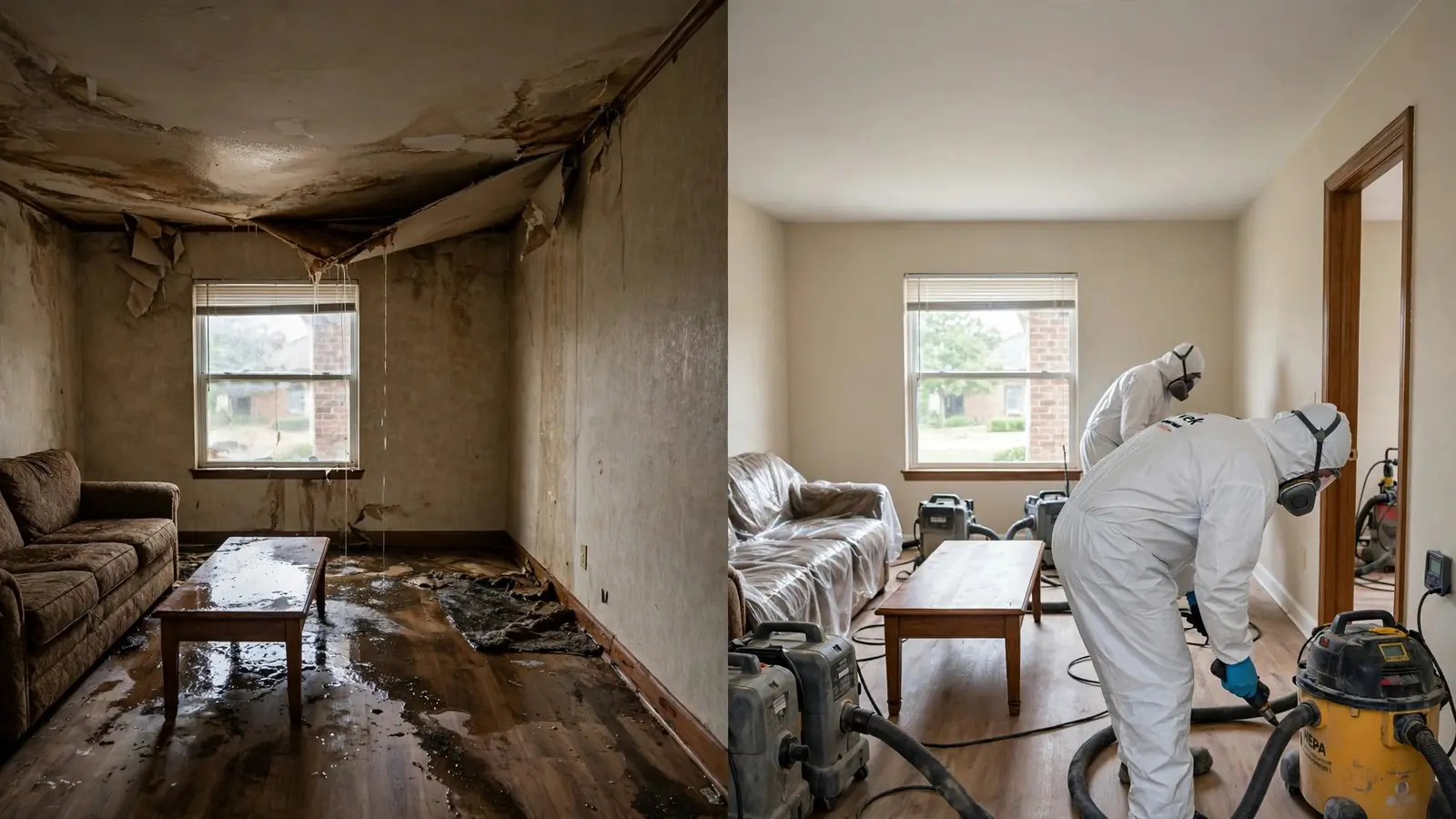
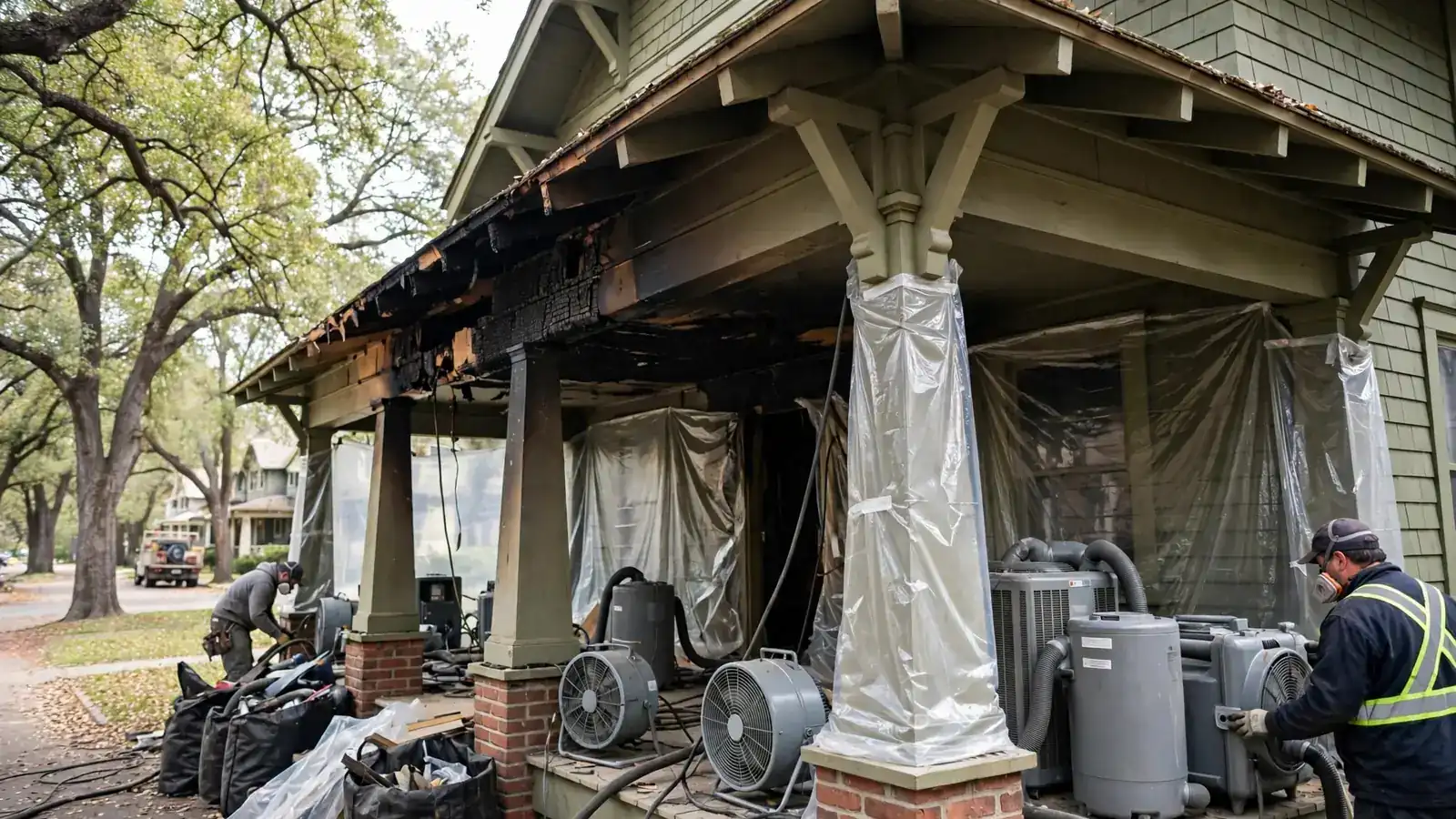
Key facts: Firefighting Water Damage in Fairmount
- Wet materials should be dried within a day or two to keep mold from starting, the EPA advises [1].
- Professional drying follows the IICRC S500 water damage standard, from moisture assessment to final readings [2].
- Fairmount's pier-and-beam houses let hose water run into the crawl space, where it can sit unseen under the floor [5].
Where firefighting water goes in a Fairmount house
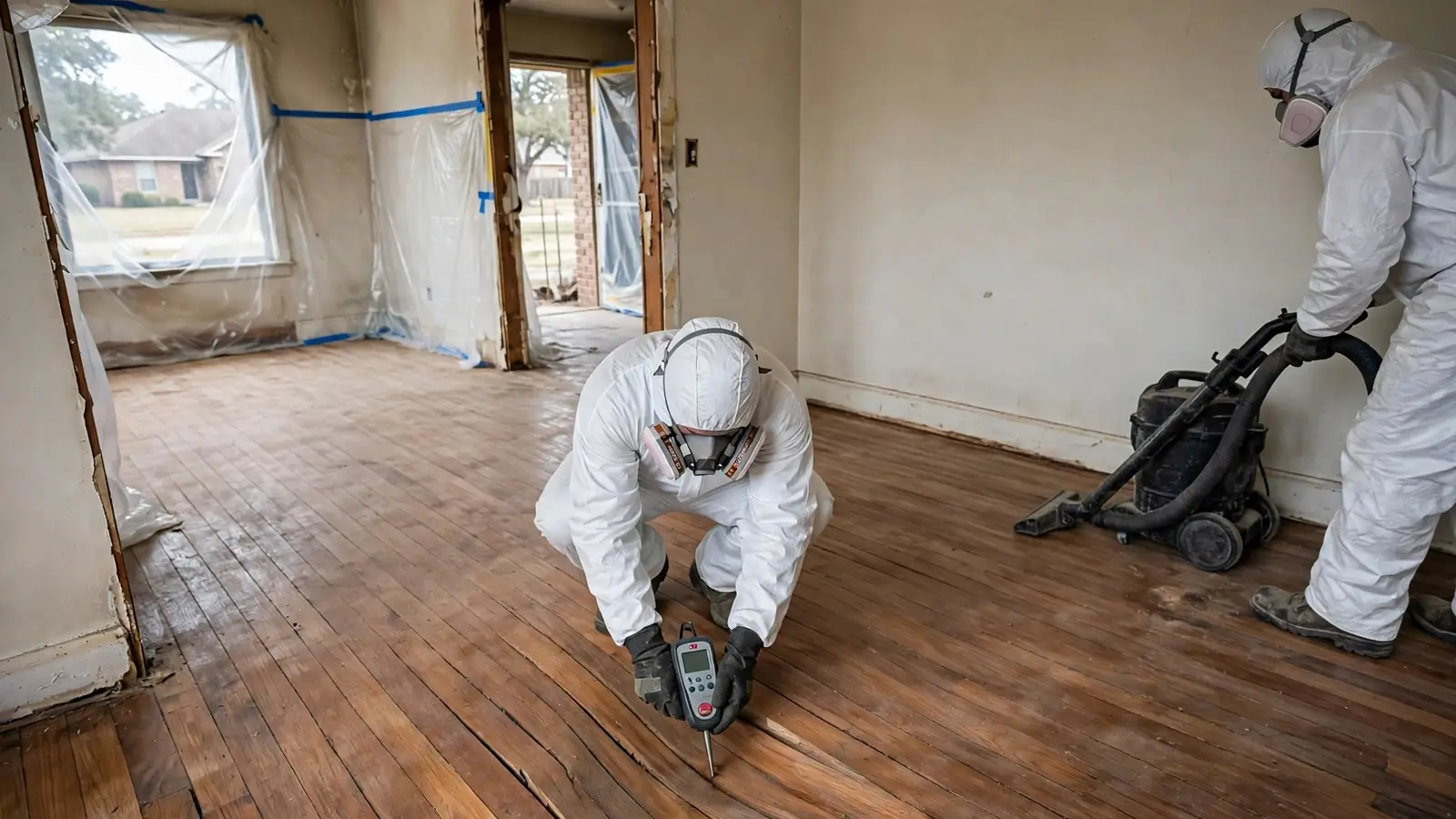
Many Fairmount homes sit on pier-and-beam foundations with a crawl space below the floor. Water from fire hoses runs through floorboards and gaps into that space, where it can stand for days. Balloon-framed walls act like channels, carrying water from upper floors down to the sill plates.
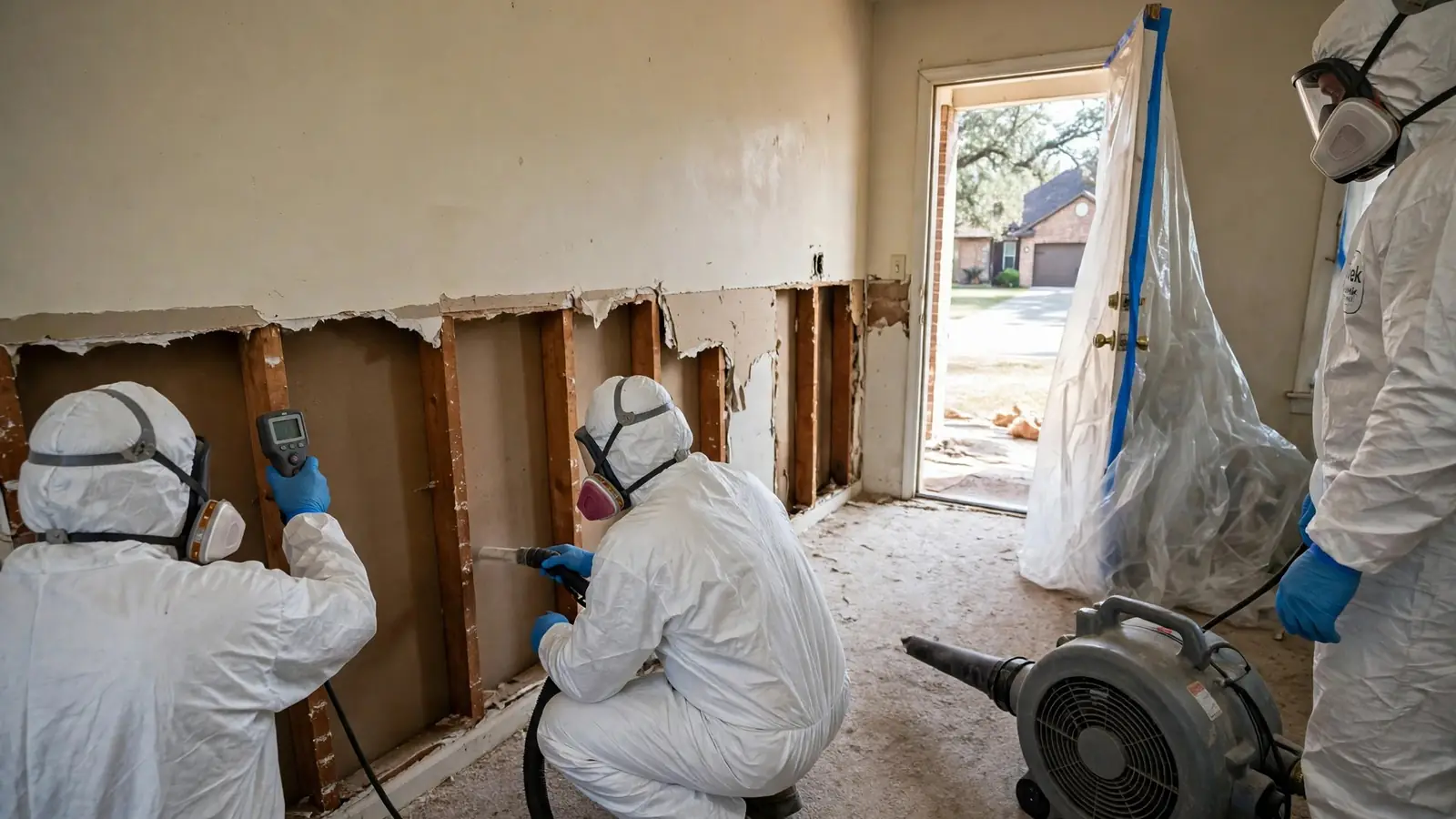
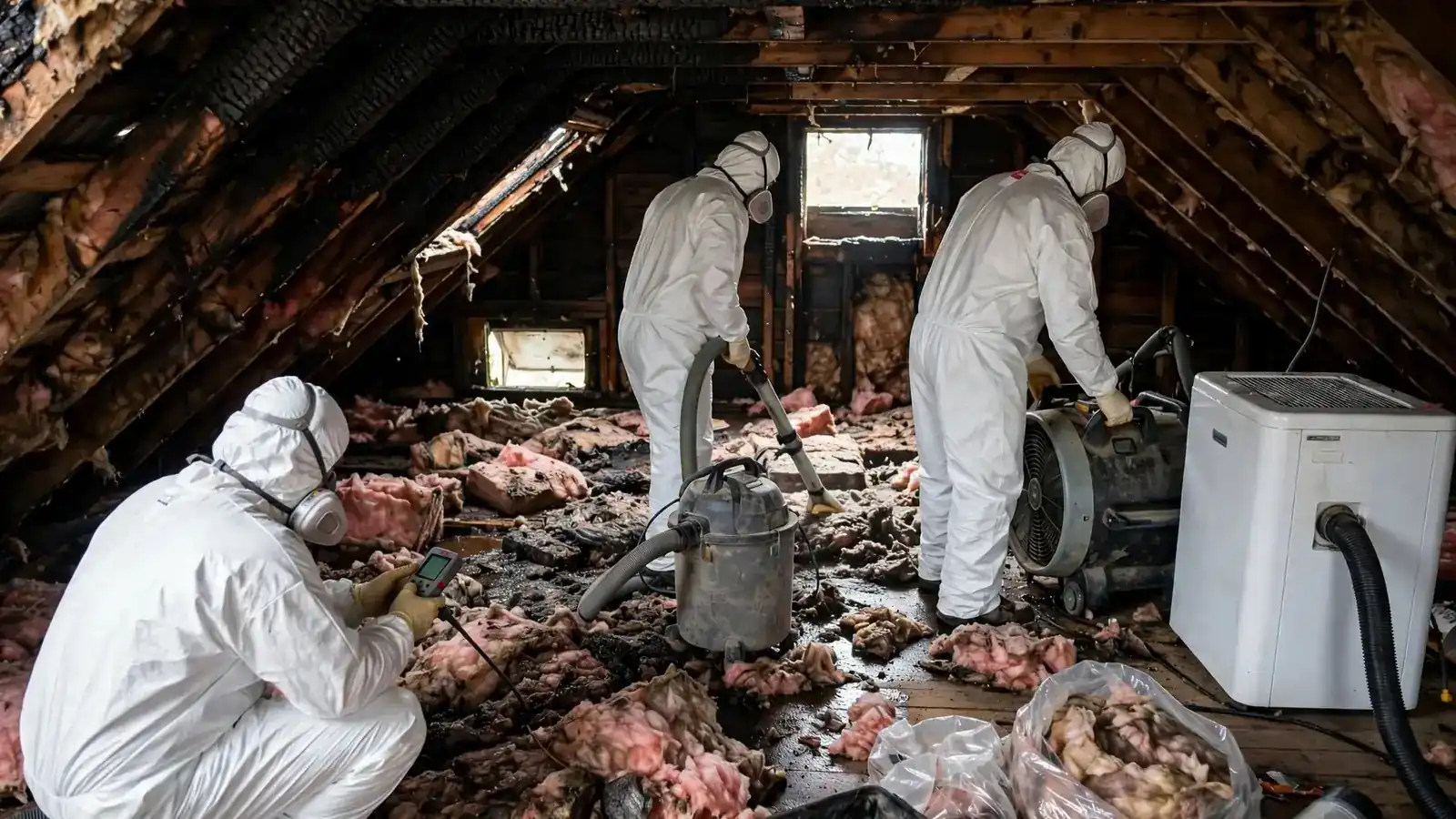
Plaster holds a great deal of water and dries slowly. Old wood floors cup and buckle as they absorb it. Insulation, if the house has any in the walls or attic, becomes heavy and stays wet. Each of these needs a different drying approach.
Why the first two days matter
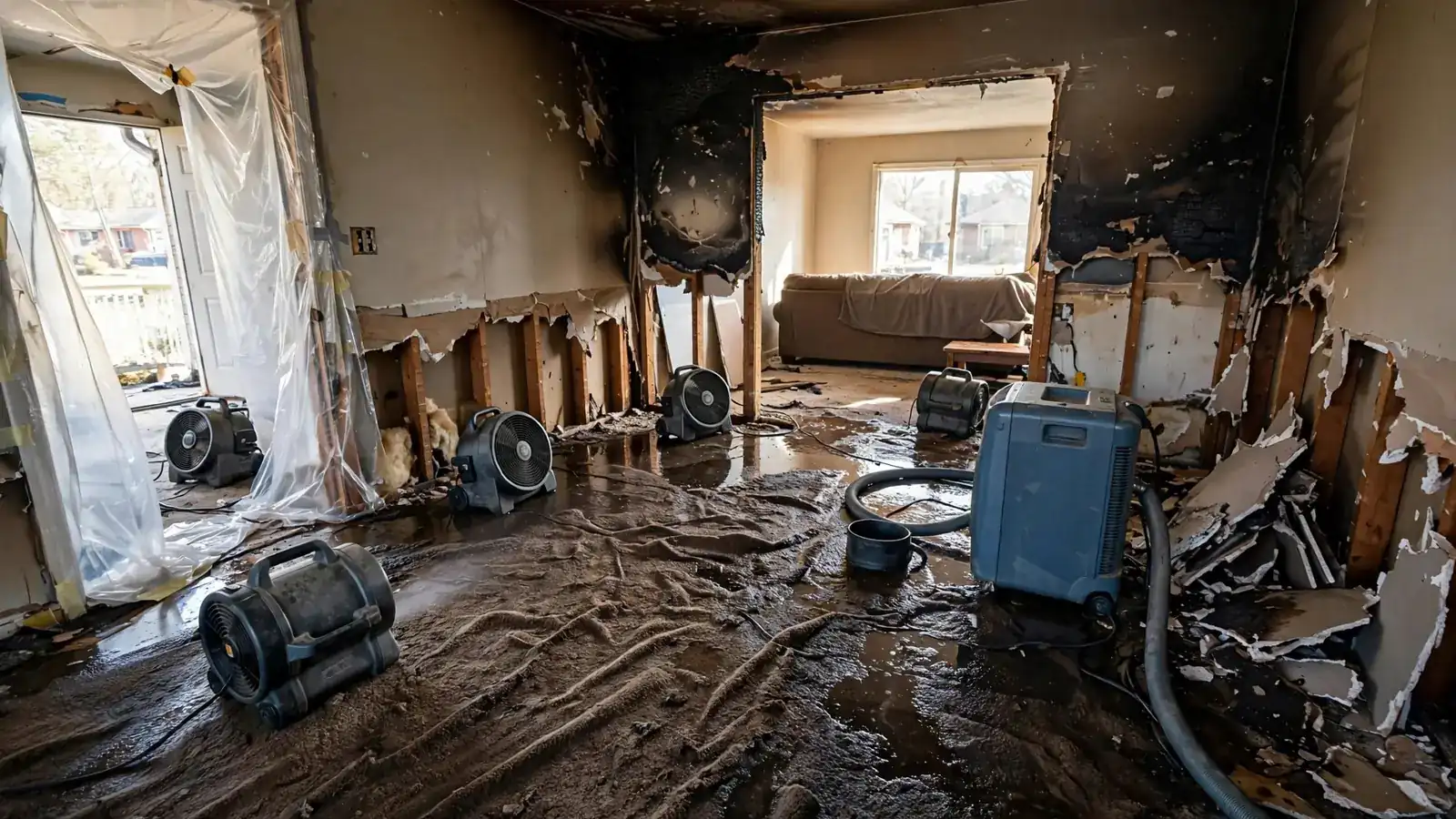
The EPA advises drying wet materials within 24 to 48 hours to prevent mold [1]. Fort Worth's warm, humid weather speeds up mold growth in damp spaces, and a crawl space under a wet house can stay damp for a long time without help.
The S500 standard sets out how professionals assess and dry water damage, from measuring moisture to choosing equipment [2]. In an old house, the contractor balances speed with care, because drying plaster and wood too aggressively can crack them.
Drying sequence for a Fairmount home
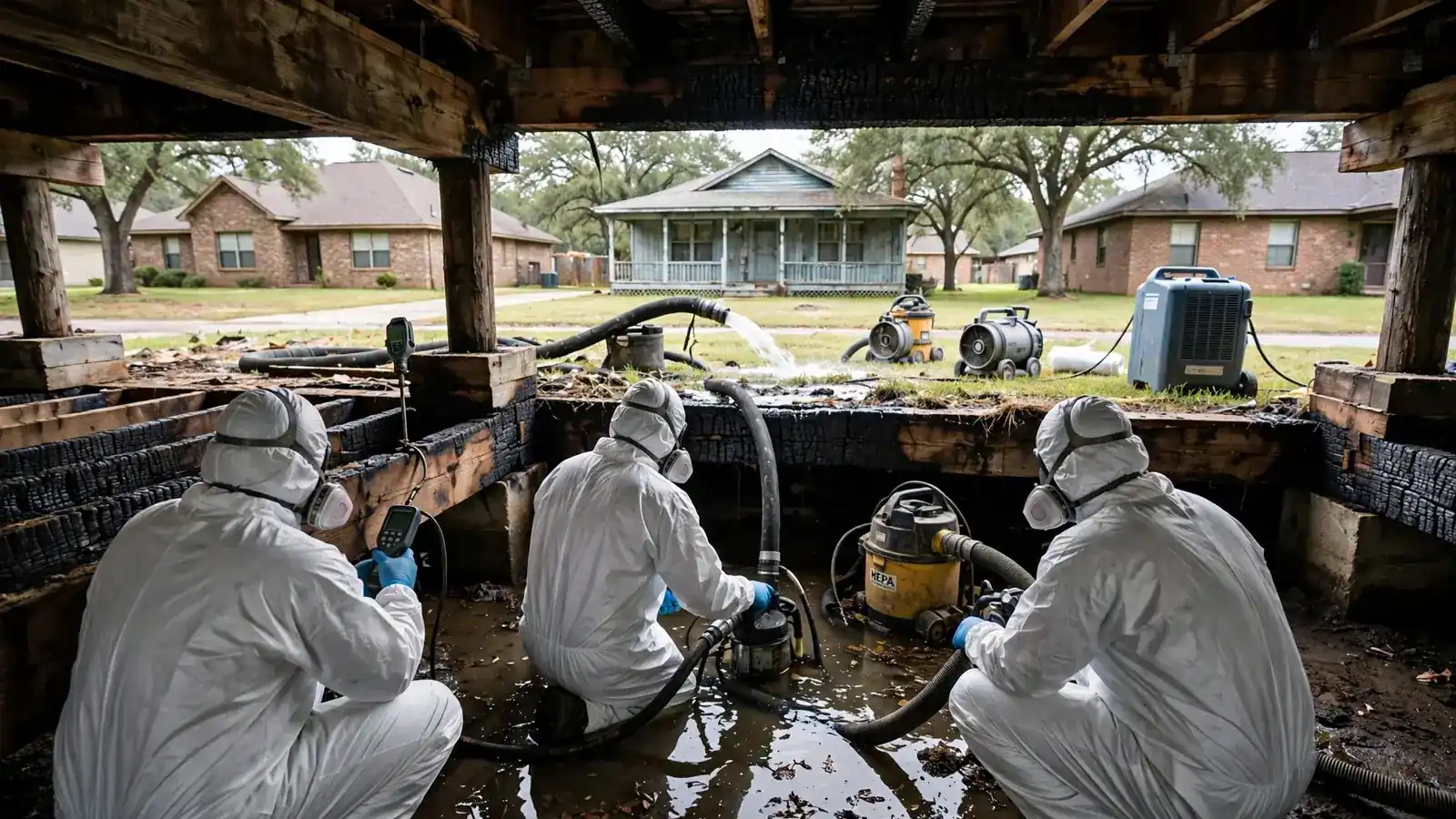
These steps remove water first and then bring materials back to normal moisture levels.
- 1
Pump the Fairmount crawl space
Pump out the crawl space and extract water from floors and any carpets.
- 2
Map moisture in plaster and framing
Meters show how far water has traveled into plaster, framing and subfloors.
- 3
Place dehumidifiers room by room
Dehumidifiers and air movers are placed for each room and for the crawl space.
- 4
Check readings until every room is dry
Daily readings confirm when materials reach normal levels before repairs begin.
Plaster, pine and other materials worth keeping
Wet plaster is not automatically lost. If it stays attached to the lath and dries without sagging, it can often be kept. Hardwood floors can sometimes be dried in place and then sanded flat. The contractor will test and explain which materials can be dried and which must come out.
Painted surfaces in older Fairmount homes may contain lead, so removing wet plaster or trim should follow lead-safe practices [6]. Asbestos is also possible in some older materials and should be tested before removal [7].
Areas to check after firefighting in Fairmount
Water hides in these places in older houses.
- Crawl spaceStanding water, wet soil and soaked beams under the floor.
- Balloon-framed wall cavitiesWater running down balloon-framed walls to the sill plate.
- Ceilings below upper floorsSagging plaster and wet lath under rooms where water was sprayed.
- Basements and cellarsSome older houses have small cellars that collect water.
Contents and claims after water damage
Belongings that were not burned may still be soaked. Furniture, books, papers and clothing should be moved out of wet areas and sorted, because some can be dried and cleaned while others cannot [3]. Photos of everything before it is moved help with your claim.
If the house is not livable while it dries, keep track of your extra expenses. The Texas Department of Insurance explains how additional living expense coverage generally works [4].
Humidity, summer heat and drying an old house
Fort Worth summers are long and humid, and an old house without much insulation can trap moisture in its walls and crawl space for weeks. Running dehumidifiers with the house closed is usually faster than opening windows on a muggy day. In cooler months, heat may need to be added to help materials give up their moisture.
Once readings show the structure is dry, smoke and soot cleanup can move ahead without trapping water behind new paint or sealer. Our page on smoke damage cleanup explains what happens next, and the contractor on your call can tell you how the two jobs are usually scheduled together.
Keep an eye on the floors as they dry. Old pine and oak boards often cup while wet and settle back as moisture leaves, so it is usually wise to wait for final readings before deciding whether a floor needs sanding or replacement. Rushing that decision can mean replacing boards that would have recovered on their own.
FAQ
Firefighting Water Damage in Fairmount: questions
How long does it take to dry a house after a fire?
It depends on how much water was used and what materials soaked it up. Many homes take several days of drying, and older houses with plaster can take longer. Moisture readings tell you when it is done.
Will my pier-and-beam crawl space dry on its own?
Often not quickly enough. Water under the house can stay for days and raise humidity throughout the home. Pumping and dehumidifying the crawl space speeds drying.
Can wet plaster walls be saved?
Sometimes. If the plaster stays attached and dries without sagging, it can often be kept. The contractor will test it and explain the options.
Sources and citations
- [1]U.S. EPA: A brief guide to mold, moisture and your home
- [2]IICRC: S500 Standard for Professional Water Damage Restoration
- [3]U.S. Fire Administration: After a fire
- [4]Texas Department of Insurance: Additional living expenses
- [5]Texas Historical Commission: Fairmount–Southside Historic District boundary increase nomination
- [6]U.S. EPA: Protect your family from sources of lead
- [7]U.S. EPA: Protect your family from exposures to asbestos