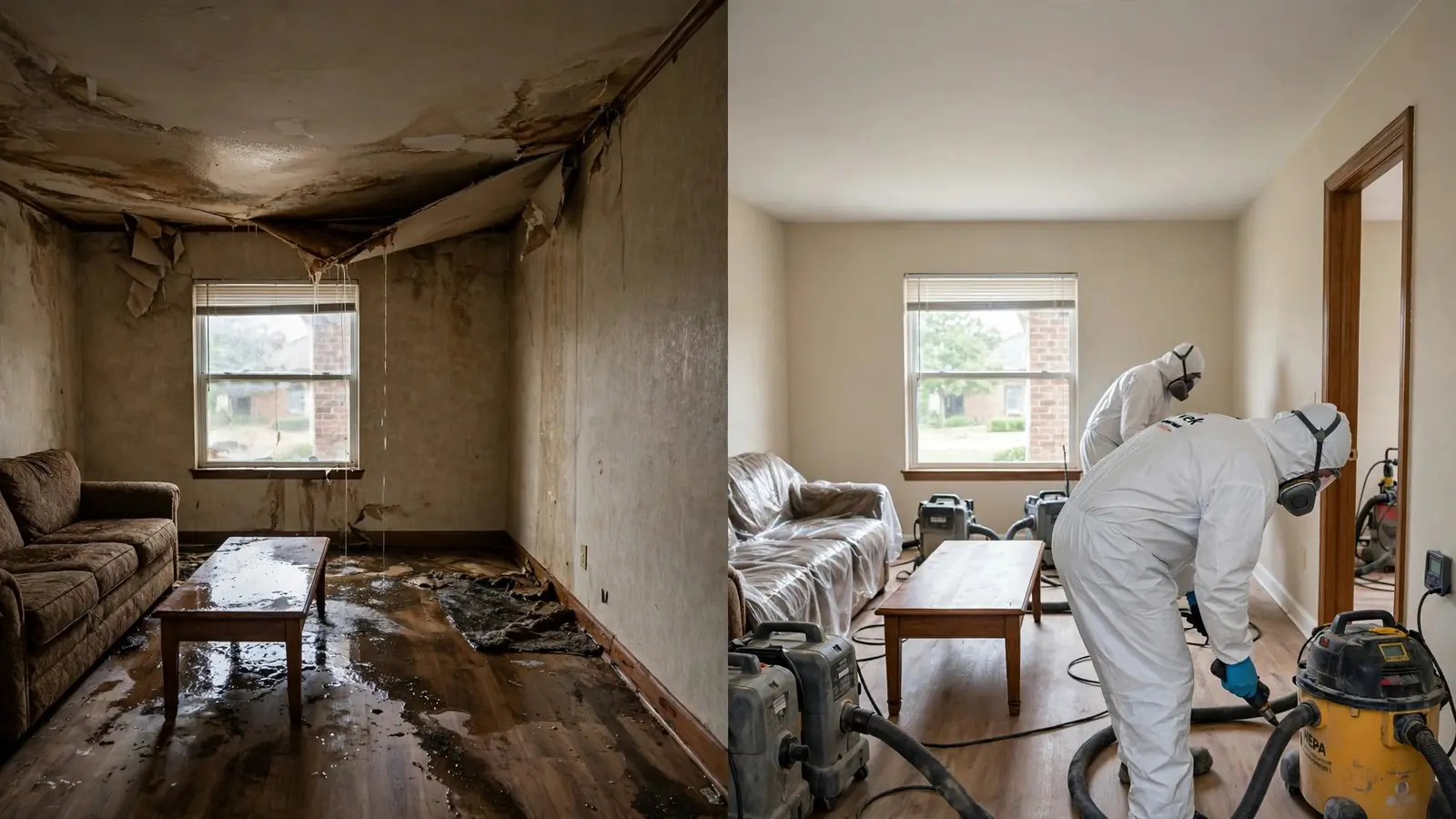
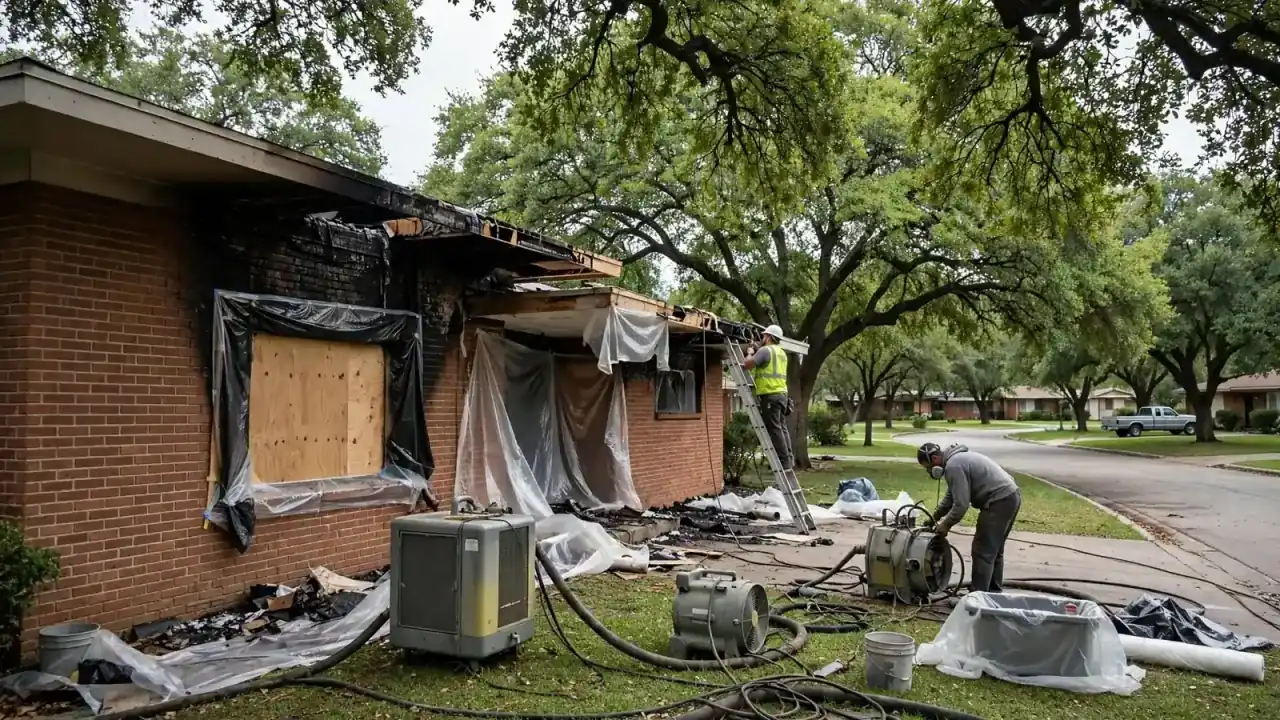
Key facts: Firefighting Water Damage in Tanglewood
Water on a slab across a long house
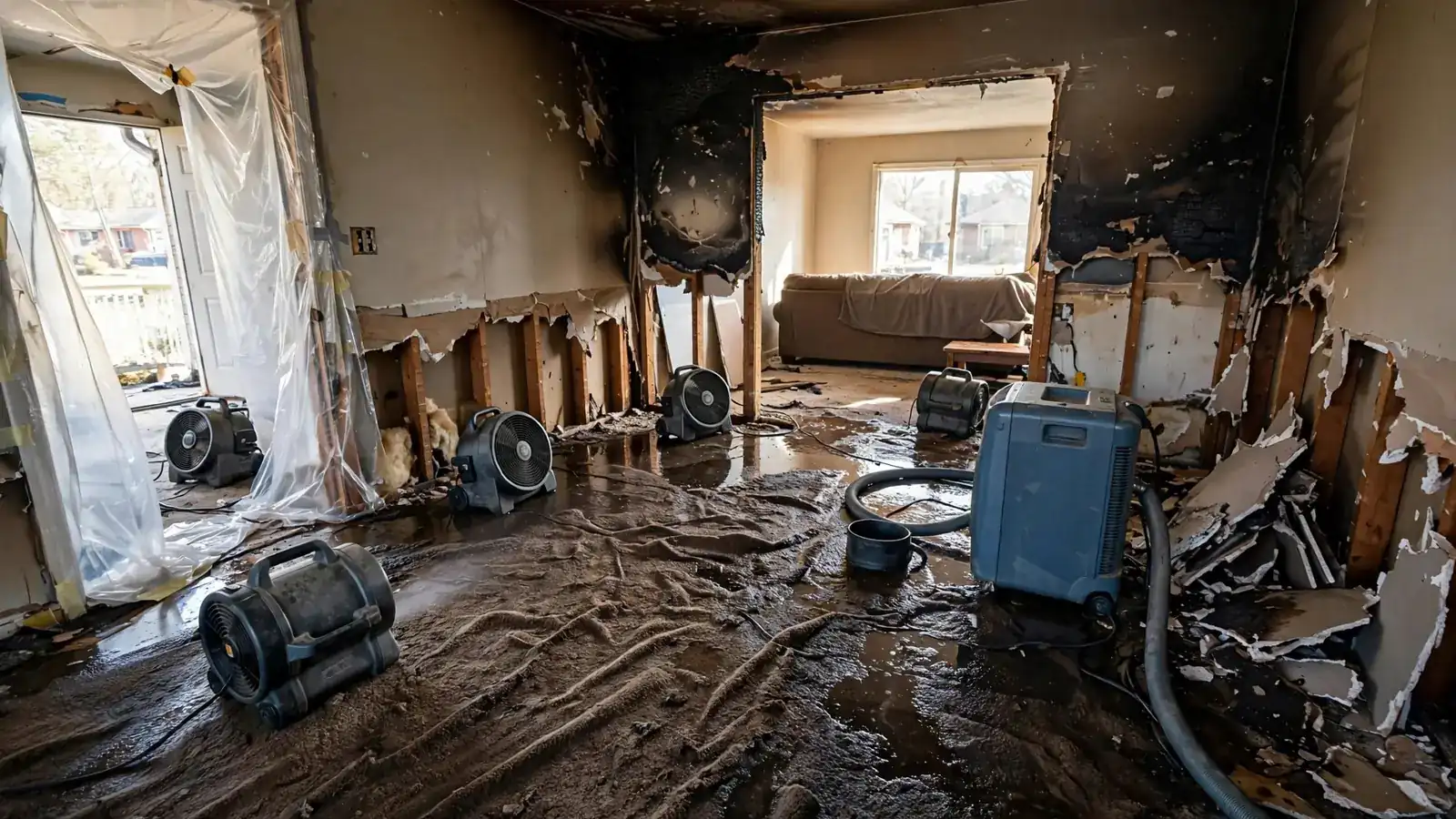
Most Tanglewood ranches sit on concrete slabs. Water from firefighting spreads across the slab, under flooring and into the base of walls. In a long house, it can travel well beyond the room where the fire was.
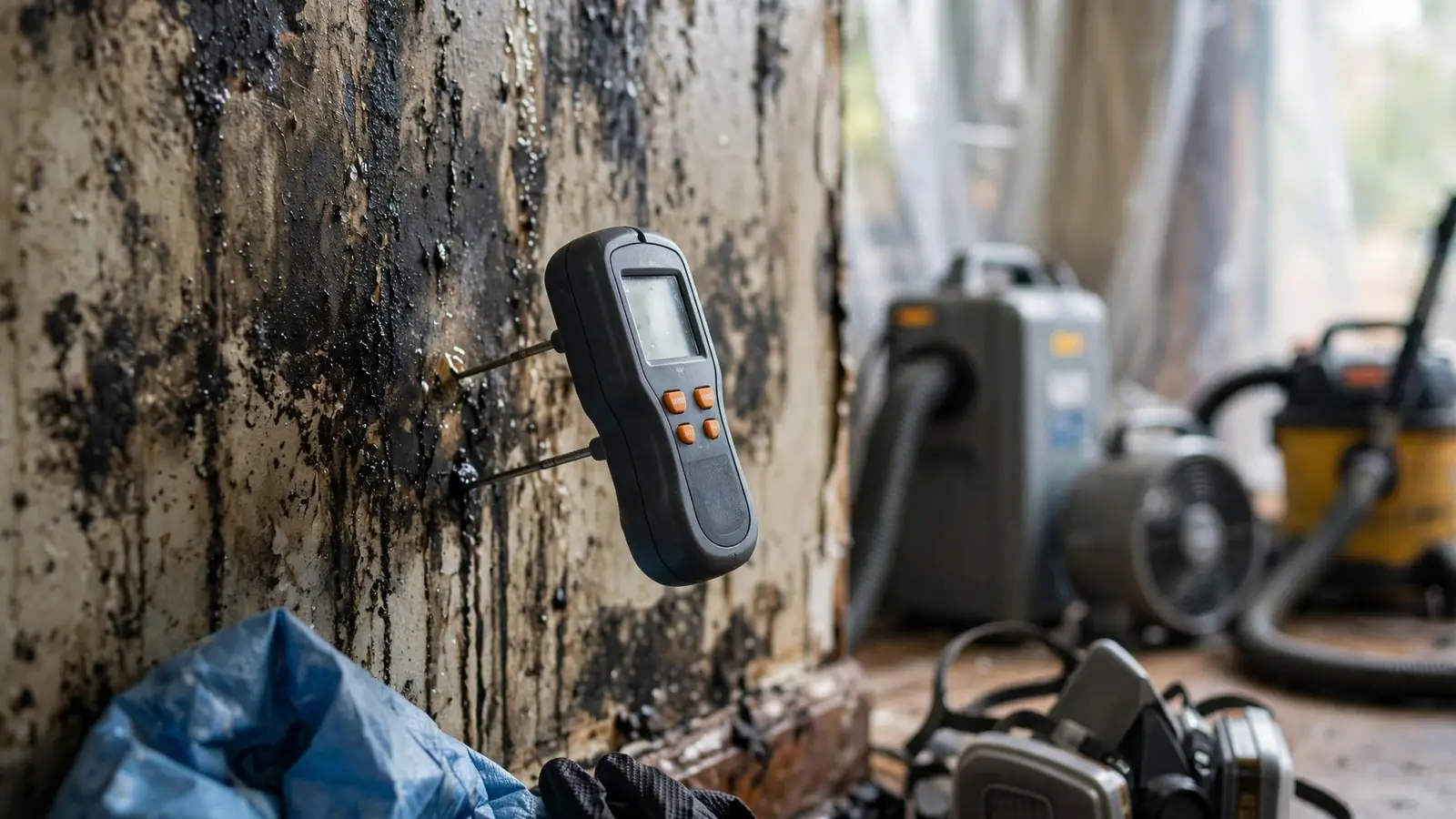
Moisture meters show where water has spread so the contractor knows which floors and walls need drying.
Attic insulation and long ceilings
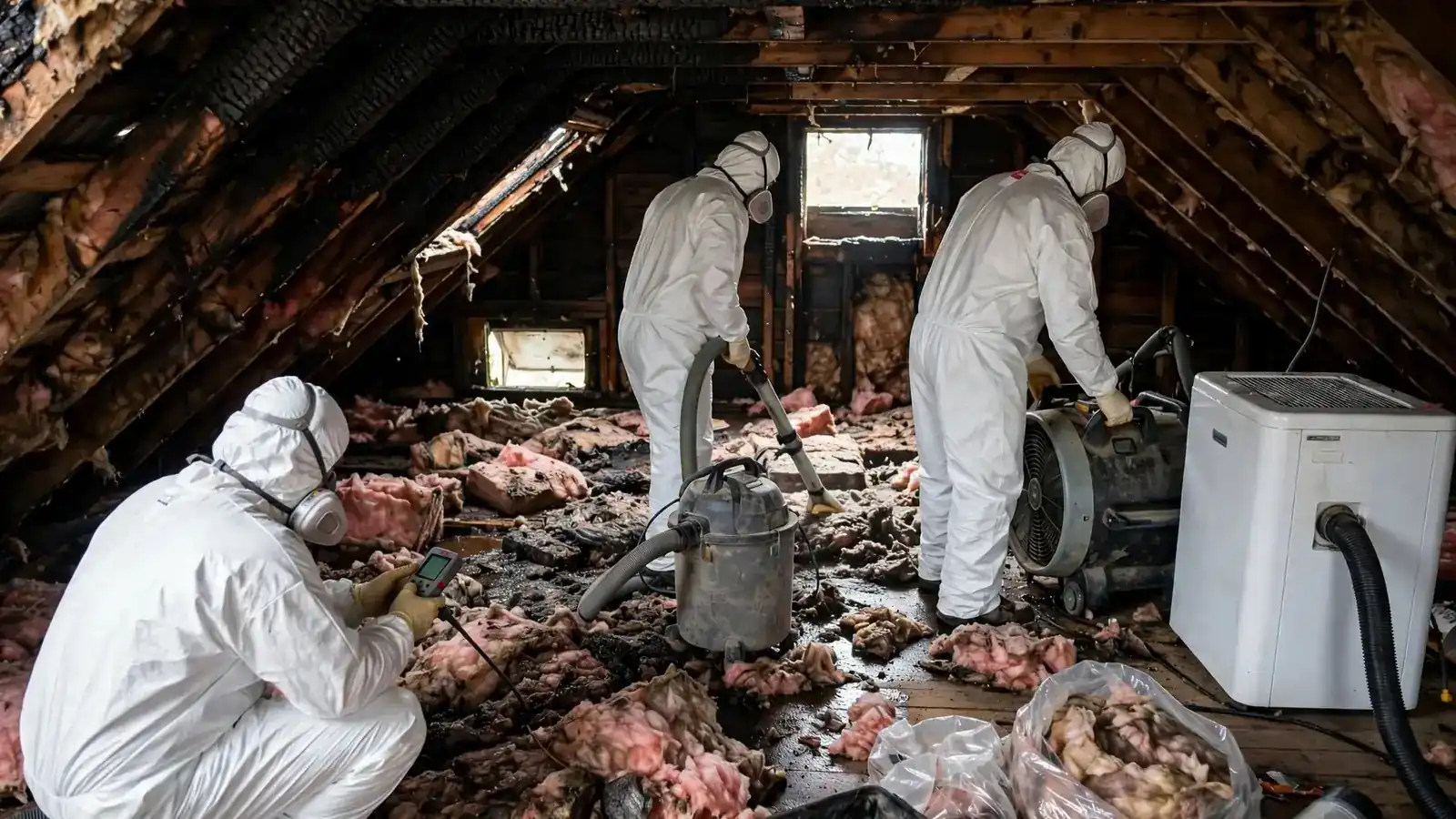
Water sprayed on the roof or into the attic soaks insulation along the length of the house. Wet insulation is heavy and holds water against the ceiling. It is usually removed so the attic and ceiling can dry.
Watch ceilings for stains and sagging, and keep people out of rooms where the ceiling bulges.
Drying a Tanglewood home
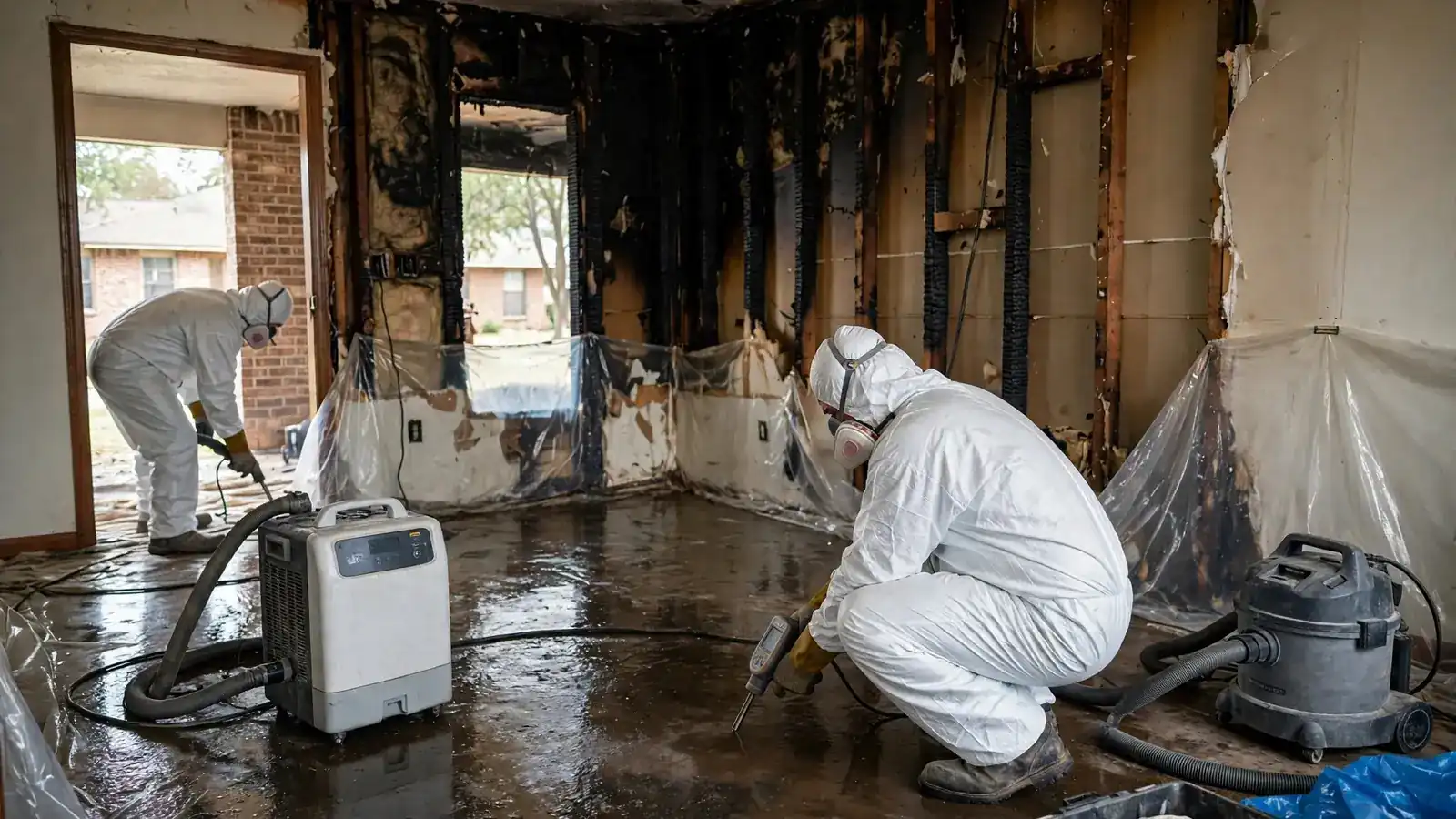
The typical order.
- 1
Extract water from floors and carpets
Standing water removed across the house.
- 2
Map moisture along the slab and walls
Find how far water traveled.
- 3
Remove wet insulation and open cavities
Let trapped water out.
- 4
Run dehumidifiers until readings are normal
Daily checks until dry.
Terrazzo, wood and tile floors
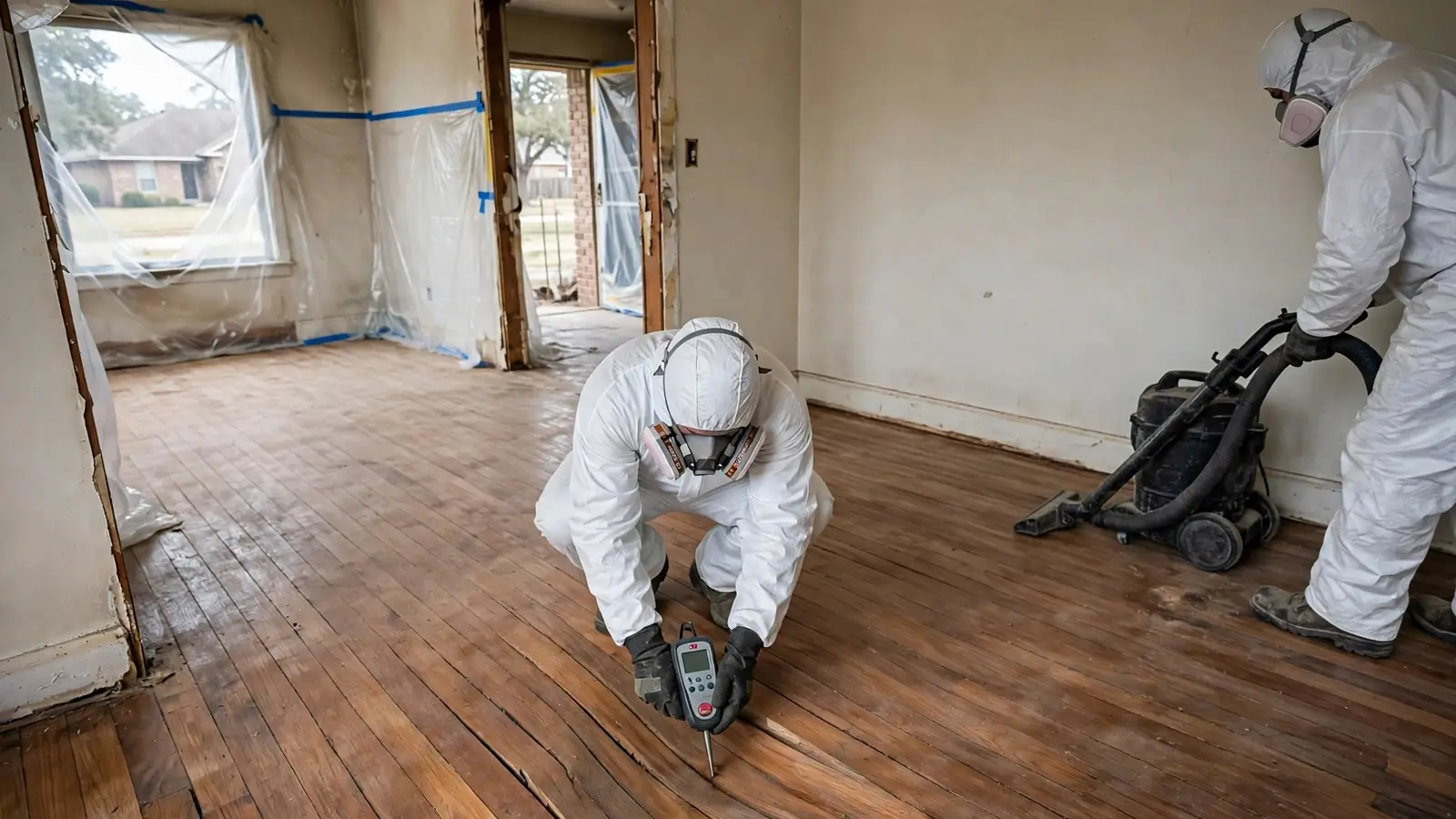
Terrazzo and tile survive water well, though water can sit beneath tile. Wood floors swell and may cup; dried evenly, many can be refinished. Carpet pad usually comes out.
Engineered wood in remodeled or rebuilt homes may delaminate and need replacement.
Humidity and the Trinity
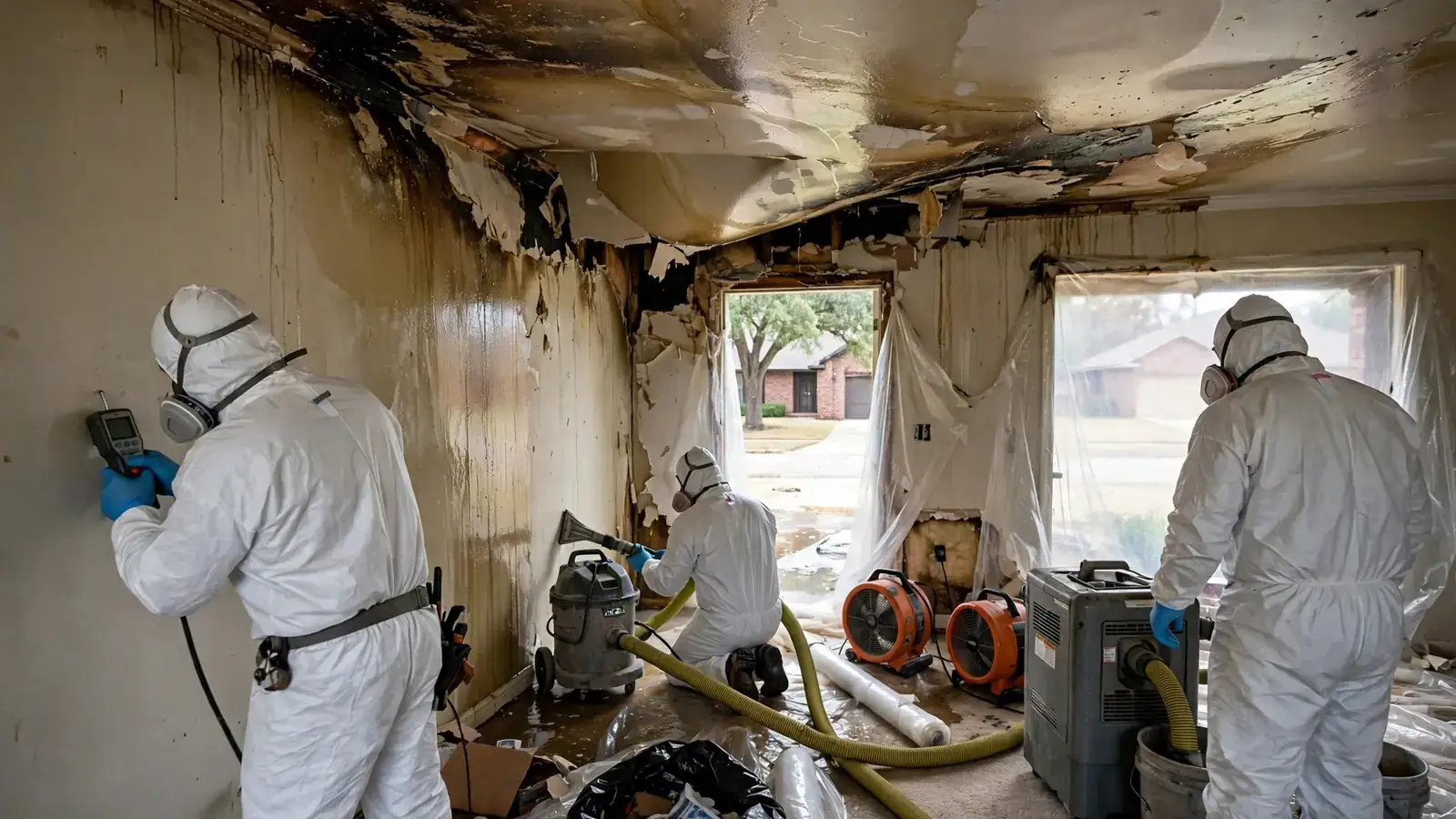
Tanglewood's shade trees and its location by a branch of the Trinity mean humid air. Dehumidifiers work best with the house closed. Opening windows on a humid day can slow drying.
Mold can start within a day or two [1], so drying should begin as soon as possible.
Signs of lingering moisture
Watch for these.
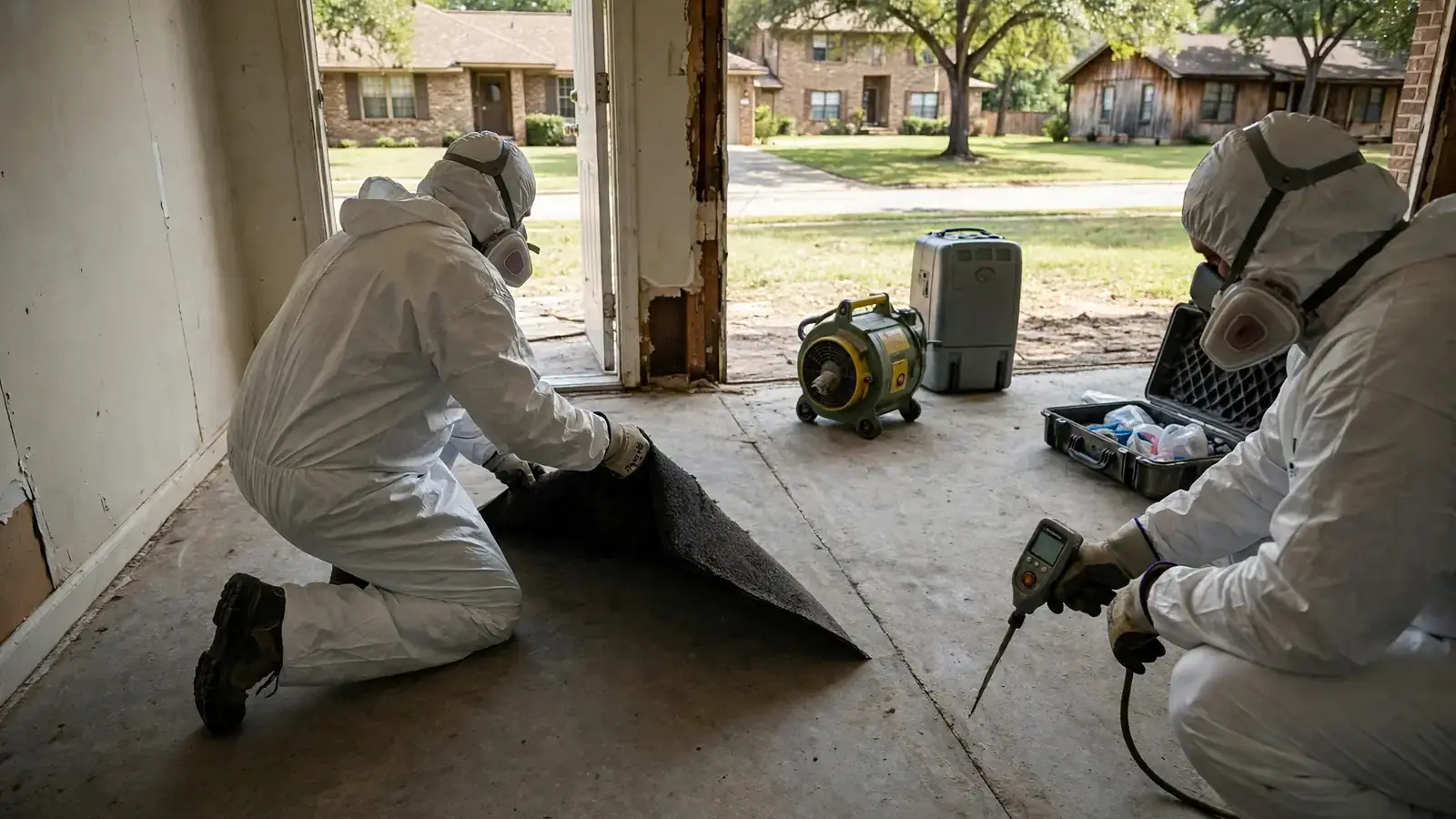
- Musty smell in closetsDamp walls or floors.
- Lifting tile or cupped woodWater under flooring.
- Stained ceilingsWet attic insulation.
- Swollen baseboardsWater in wall bottoms.
Paneling and older materials
Wet wood paneling can warp, and removing it may disturb older materials behind it. Textured ceilings and floor tile from the mid-century period may contain asbestos [6], so testing comes before removal.
The Tanglewood page describes common materials in these homes.
The garage after firefighting
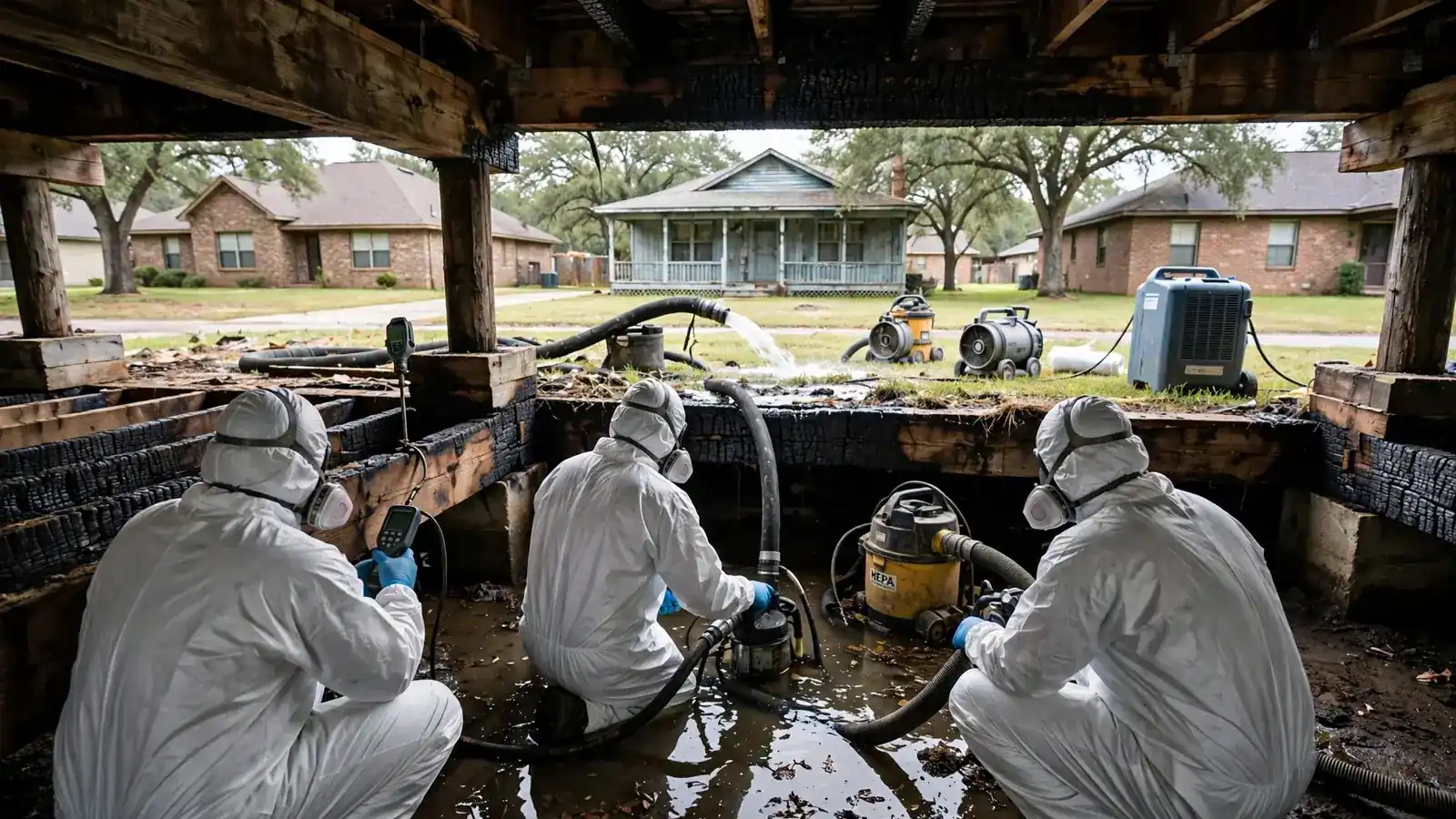
If the fire was in the attached garage, water from firefighting pools on the garage floor and can flow into the house through the connecting door. The garage drywall and stored items may be soaked.
Cars and equipment should be moved out so the garage can dry.
From drying to cleanup
When readings are normal, smoke damage cleanup and repairs begin. The U.S. Fire Administration notes that unburned items can still be lost to water [3], so contents are sorted too.
If the family stays elsewhere during drying, the Texas Department of Insurance explains how additional living expense coverage generally works [4].
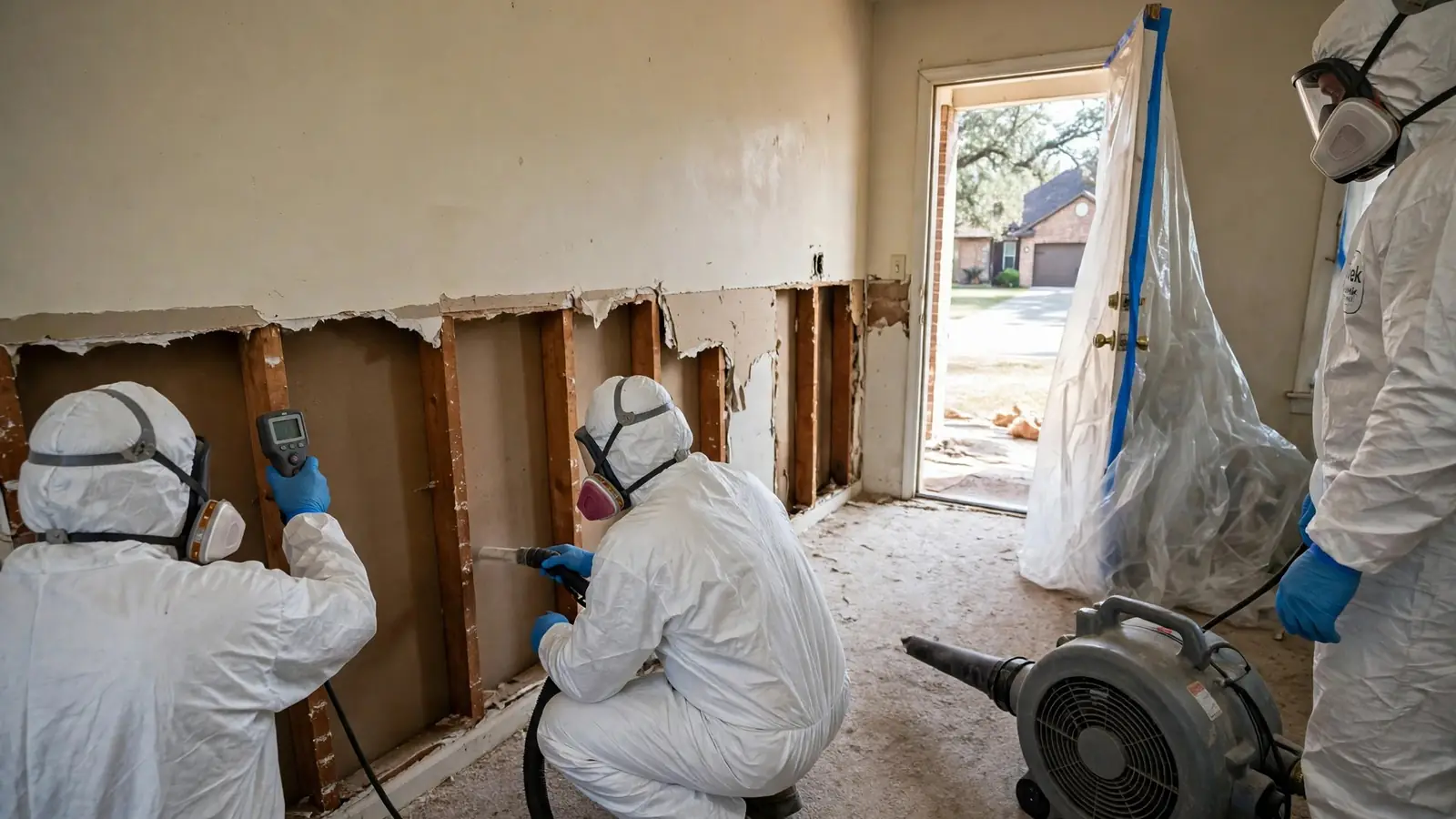
Wiring, outlets and appliances
Water on a slab often reaches outlets along the bottom of walls, and water through the ceiling can reach light fixtures and junction boxes. Keep power off to wet areas until an electrician has checked them. Appliances that sat in water, such as washers, dryers and refrigerators, should be inspected before use.
Drying equipment can run from checked circuits or temporary power.
Cabinets, vanities and built-ins
Kitchen cabinets, bathroom vanities and built-in bookcases sit directly on the slab. Water wicks into their bases and can stay trapped under them. Removing toe kicks or bottom panels lets air reach the floor beneath, and particleboard that has swollen usually needs replacement.
Built-ins of solid wood often dry well if air can reach them.
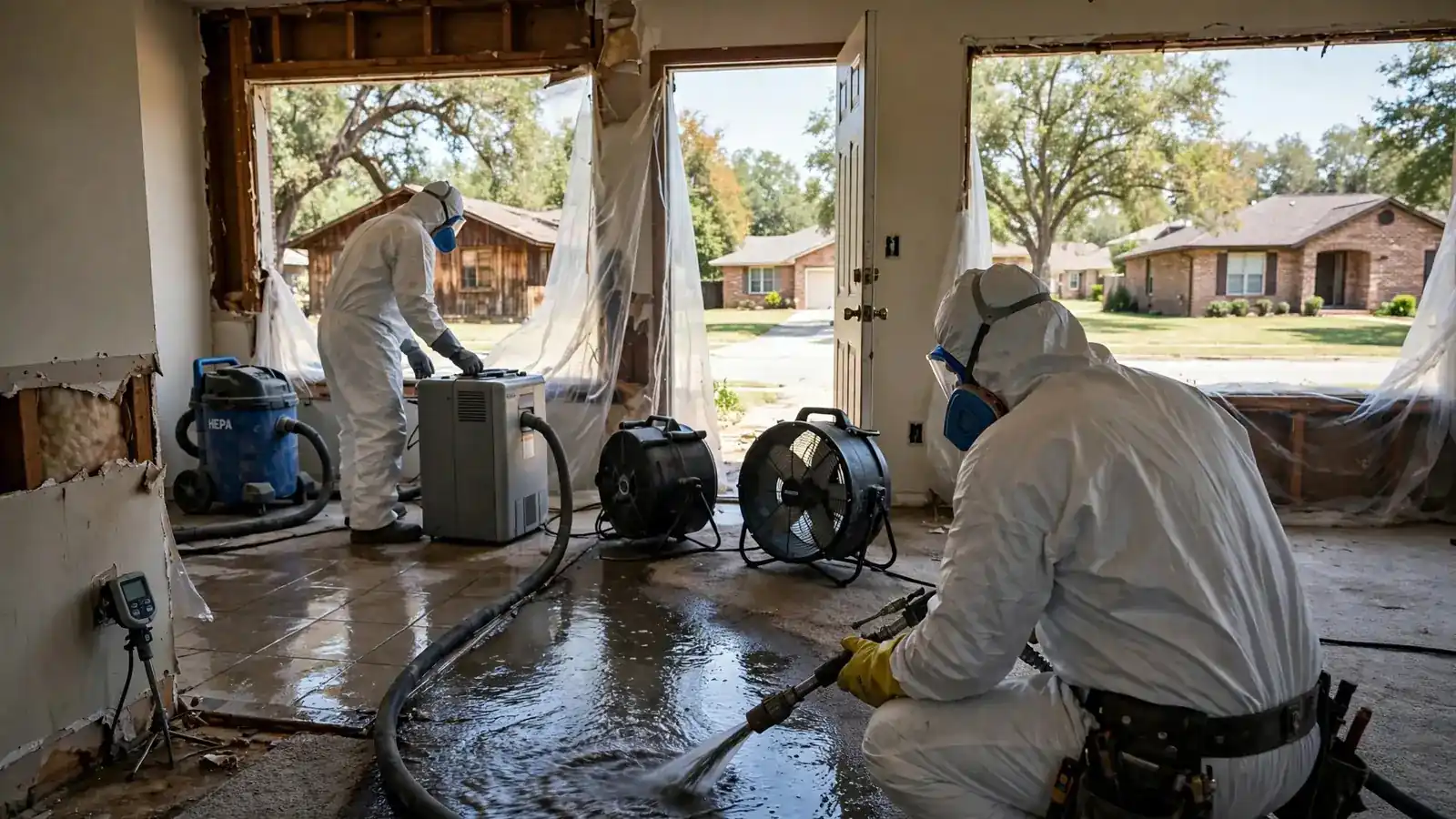
Belongings and rugs
Rugs, furniture and boxes on the floor soak up water quickly. Moving them out, drying what can be dried and listing what cannot gives you a clear record for your claim. Books and papers can be frozen to stop mold until they can be dried properly.
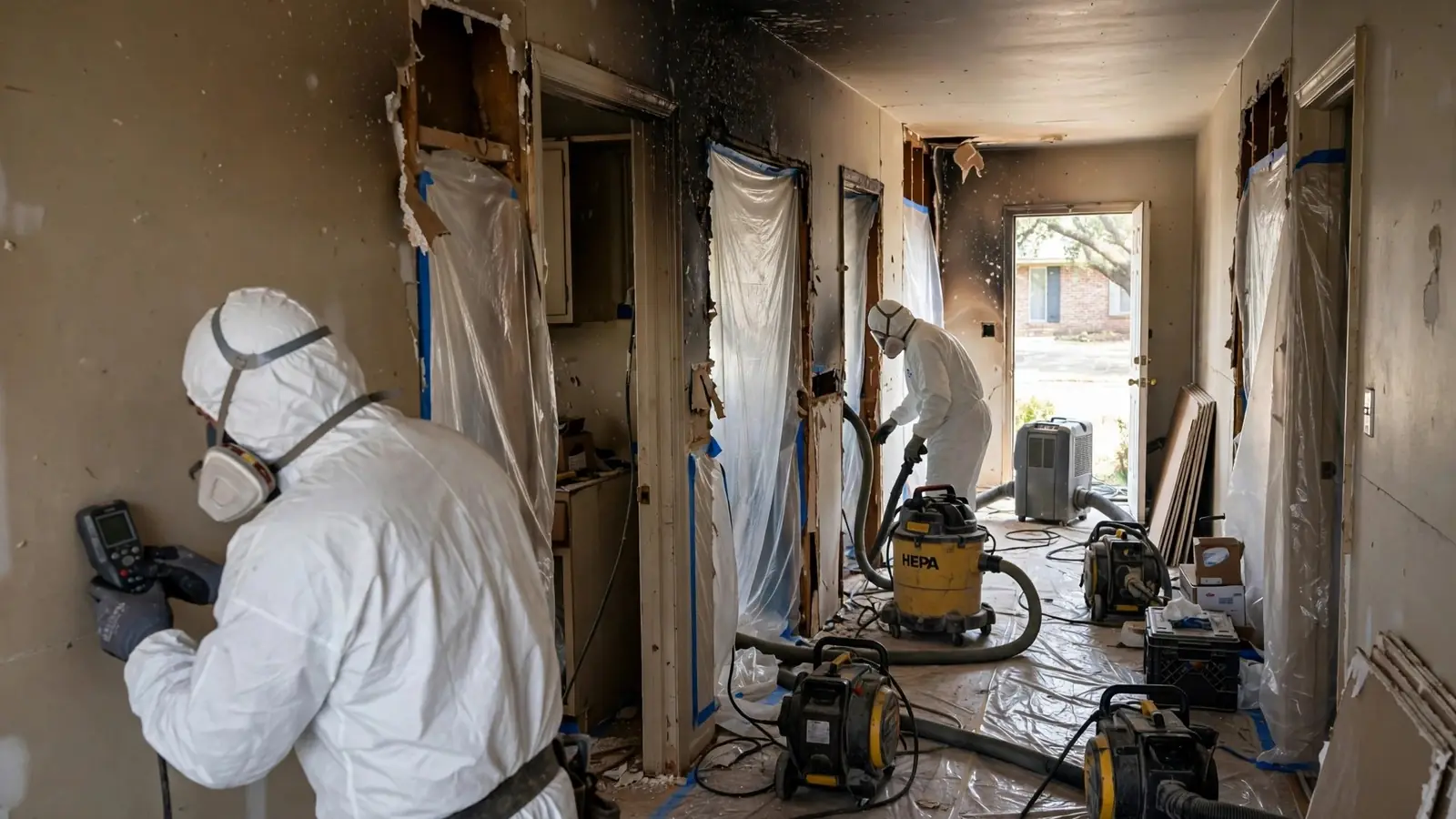
Ducts, the air handler and the attic platform
In many Tanglewood ranches the air handler and much of the ductwork sit in the attic. Water sprayed into the attic can soak duct insulation, fill drain pans and reach the equipment. Wet flexible duct and its insulation are usually replaced, and the air handler should be checked by a technician before the system is turned back on.
Running the system while ducts are wet can spread moisture and odor through the house.
How long drying usually takes in a ranch house
Most homes take several days to dry, but a long ranch with water across the slab and in the attic can take longer. The contractor will take daily readings and move equipment as areas dry. Rebuilding should wait until every area reads dry, even if surfaces feel dry to the touch.
FAQ
Firefighting Water Damage in Tanglewood: questions
How far can water spread on a slab?
Quite far. It moves under flooring and into wall bases. Moisture meters find it.
Does terrazzo survive water damage?
Usually, though water beneath it or under nearby flooring still needs drying.
Why keep windows closed while drying?
On humid days, outside air adds moisture. Dehumidifiers work best in a closed house.
Sources and citations
- [1]U.S. EPA: A brief guide to mold, moisture and your home
- [2]IICRC: S500 Standard for Professional Water Damage Restoration
- [3]U.S. Fire Administration: After a fire
- [4]Texas Department of Insurance: Additional living expenses
- [5]Wikipedia: Tanglewood, Fort Worth, Texas
- [6]U.S. EPA: Protect your family from exposures to asbestos