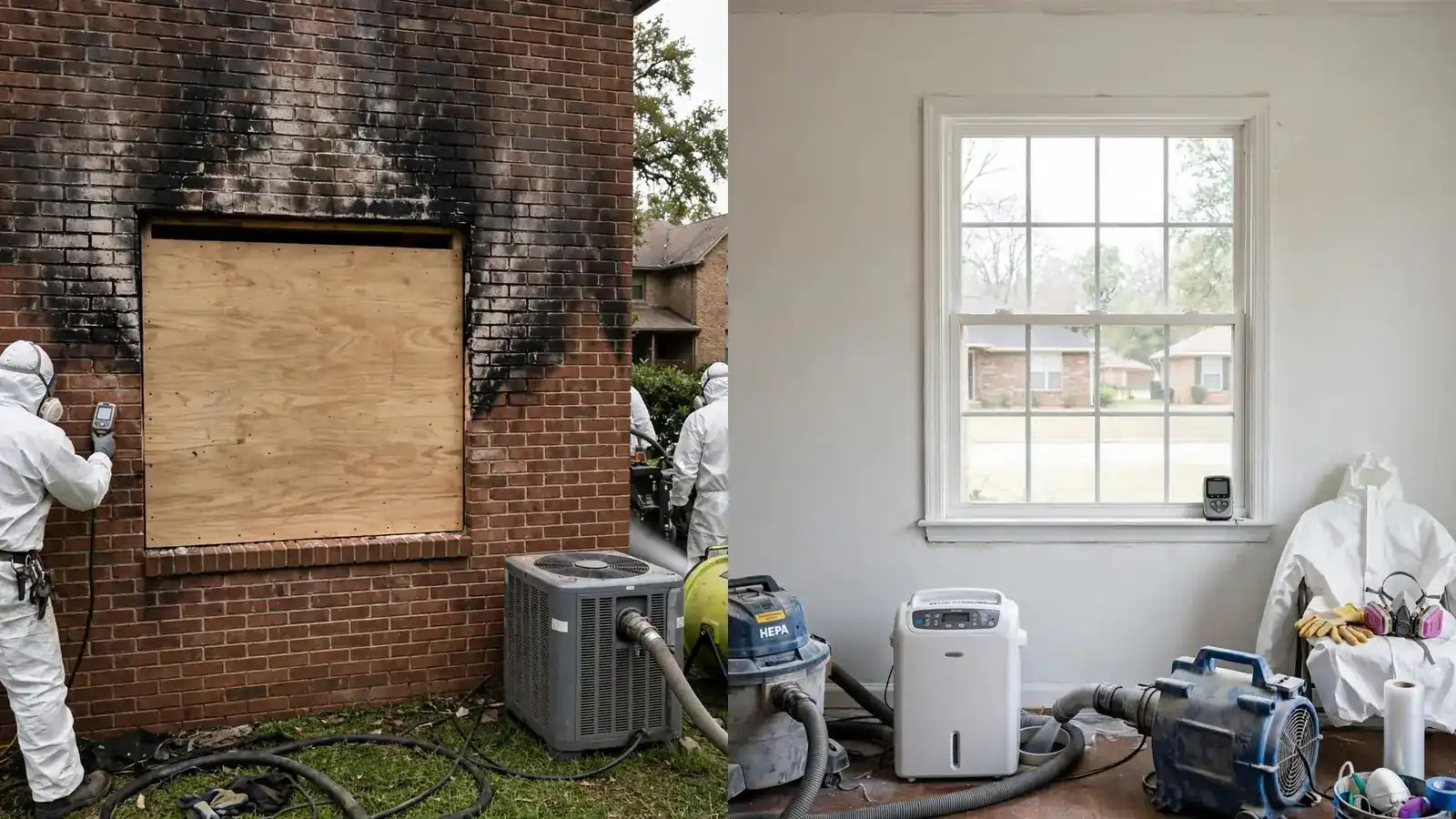
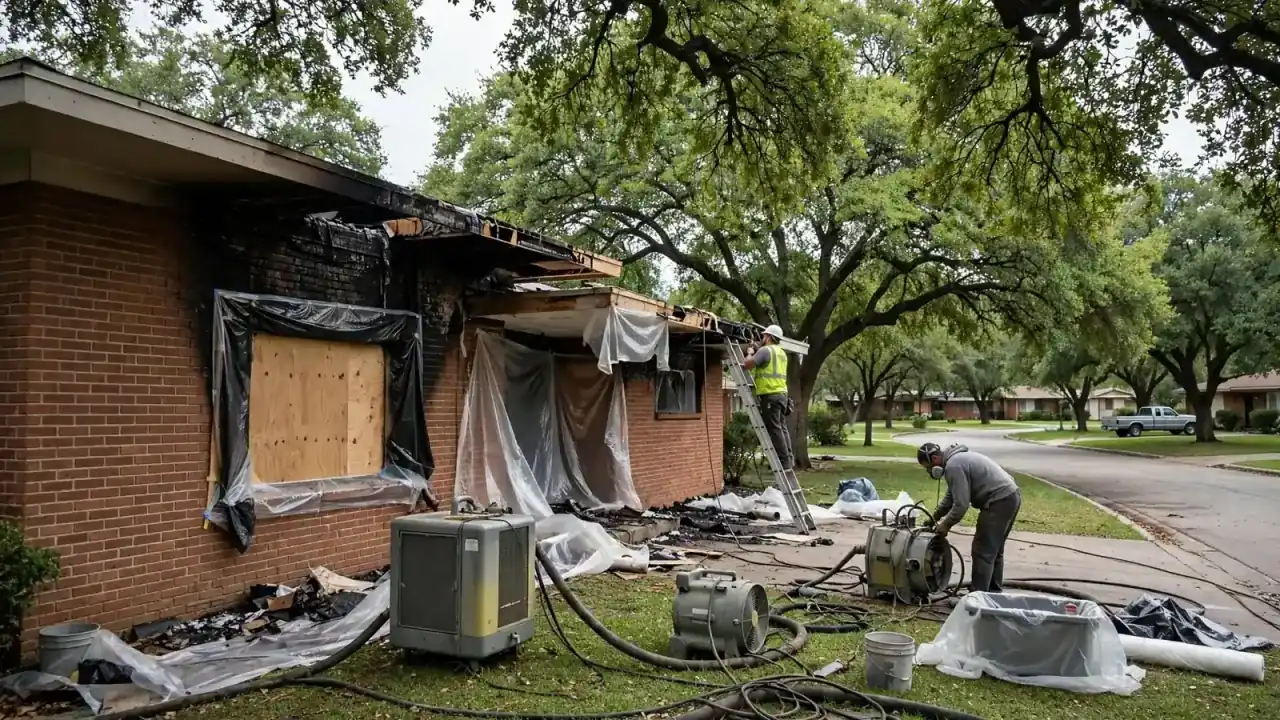
Key facts: Board-Up and Tarping in Tanglewood
- Tanglewood lies about five miles southwest of downtown Fort Worth, just west of TCU and beside a branch of the Trinity River [5].
- Early land-use rules in Tanglewood required brick or stone construction and attached two-car garages [5].
- A fire-damaged roof may not hold weight, so the U.S. Fire Administration urges caution before anyone goes onto it [1].
Long ranch houses and wide openings
Many Tanglewood homes are one-story ranches built in the 1950s and 1960s, with brick or stone walls, long rooflines and large windows or sliding doors facing the back yard. Some have been rebuilt or greatly enlarged since. Brick and stone walls often survive a fire, but large glass openings break easily from heat.
Covering wide windows and sliding doors takes larger panels or framed coverings. A secure, neat board-up also matters on streets where neighbors watch out for each other.
Attached garages and the door into the house
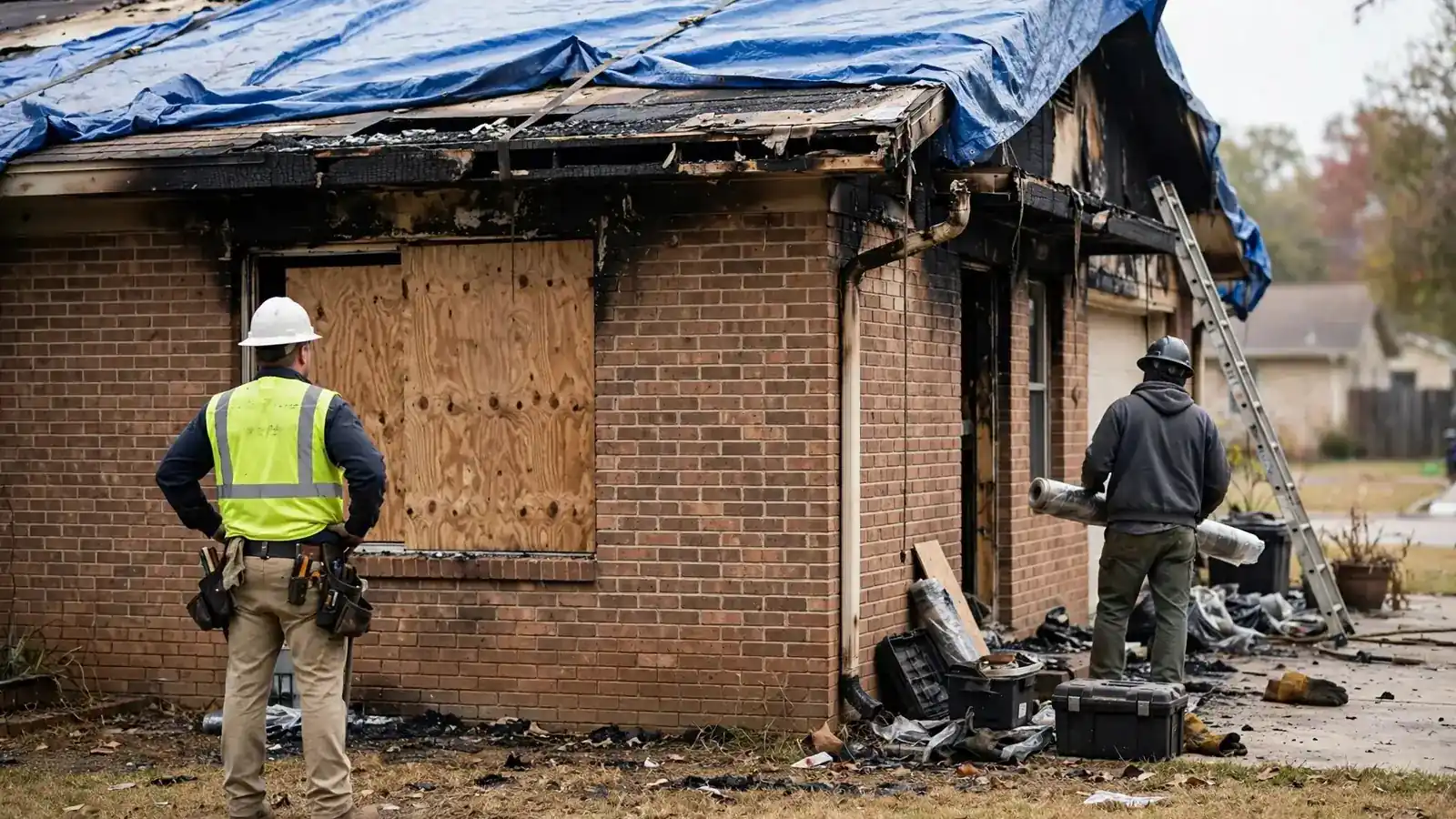
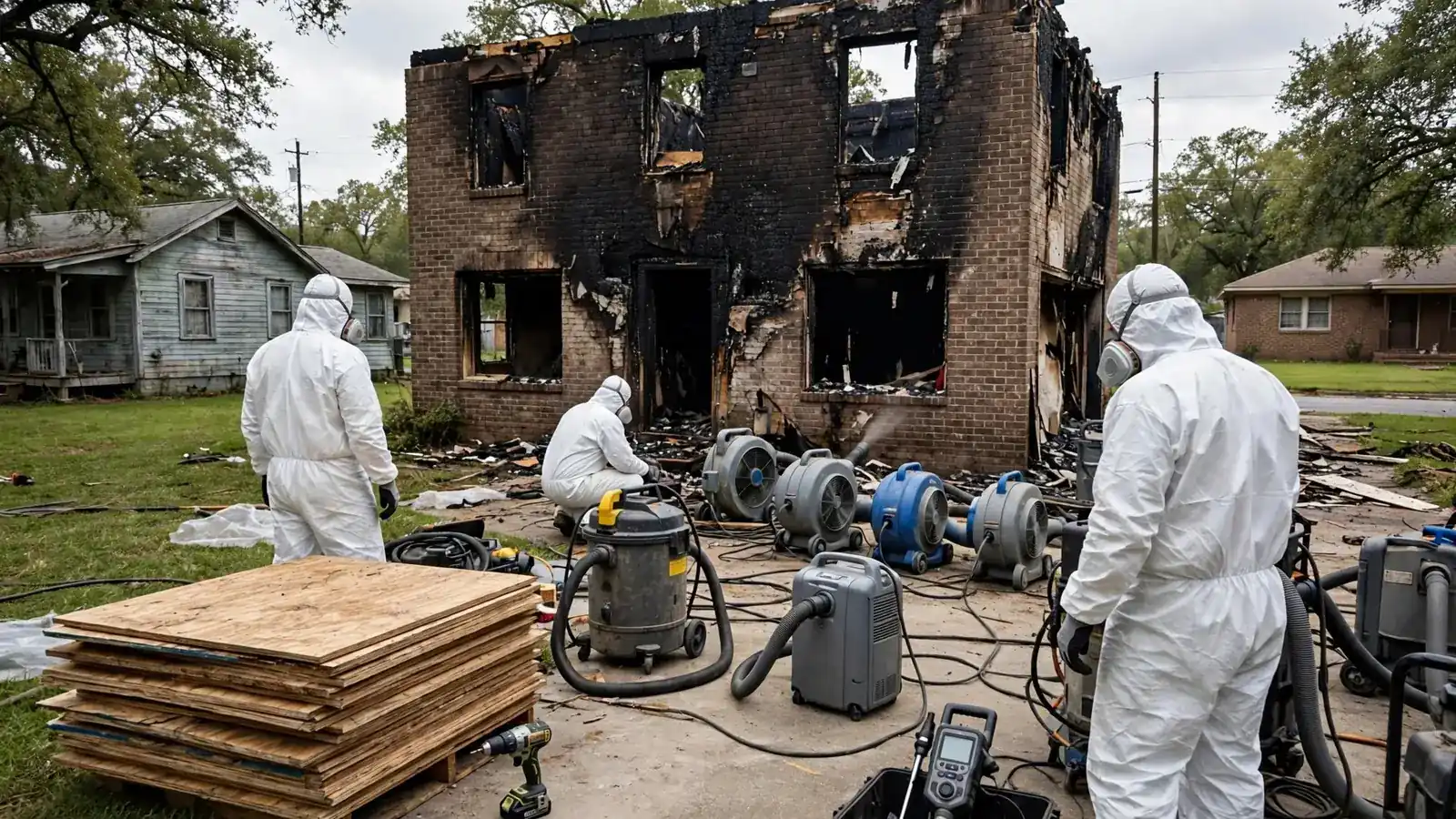
Because early rules required attached two-car garages [5], many fires here start in or reach the garage. Heat can warp the overhead door and burn through the wall or door into the house. Securing the garage opening and the door between garage and house closes the most common route in.
If cars or stored items were damaged, photograph them before anything is moved. Vehicle damage is usually handled under auto insurance.
Securing a Tanglewood ranch after a fire
A typical sequence.
- 1
Let the fire department release the Tanglewood house
Stay out until the house is released and utilities are checked.
- 2
Photograph the street side, yard side and roof
Wide openings and long rooflines should all be recorded.
- 3
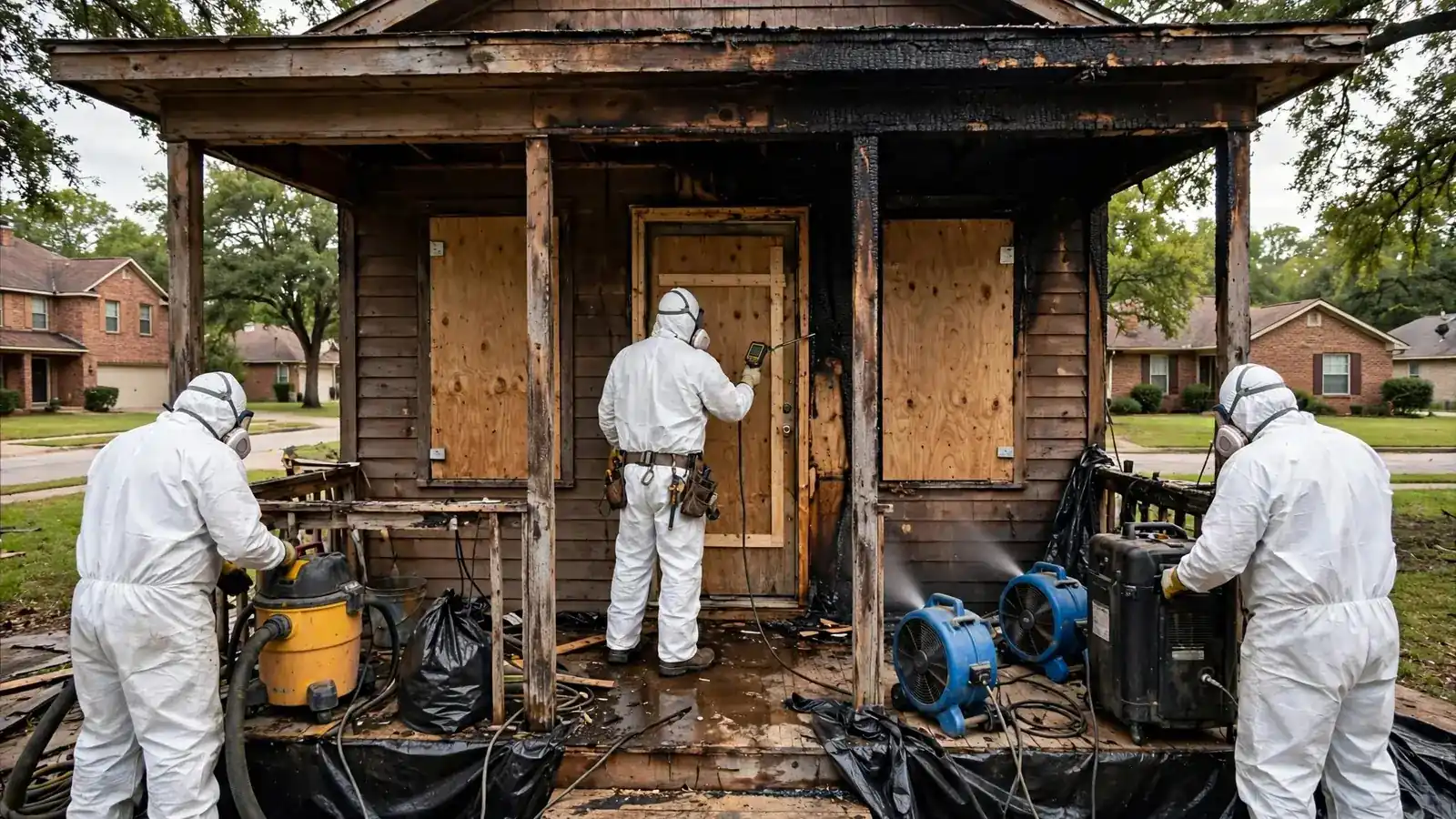
Board large windows, sliders and the garage
Framed panels cover wide openings; the garage door is braced or covered.
- 4
Tarp the long, low roof
Tarps lap past the damage and are battened along every edge.
Long, low roofs and summer heat
Ranch roofs are low and long, with large attics running the length of the house. A hole burned through one section lets rain into an attic that may stretch over several rooms. Tarping with good overlap and battens keeps water from spreading along the attic floor.
Fort Worth summers make attics extremely hot. A dark tarp in full sun gets hot too, so crews often work early in the day.
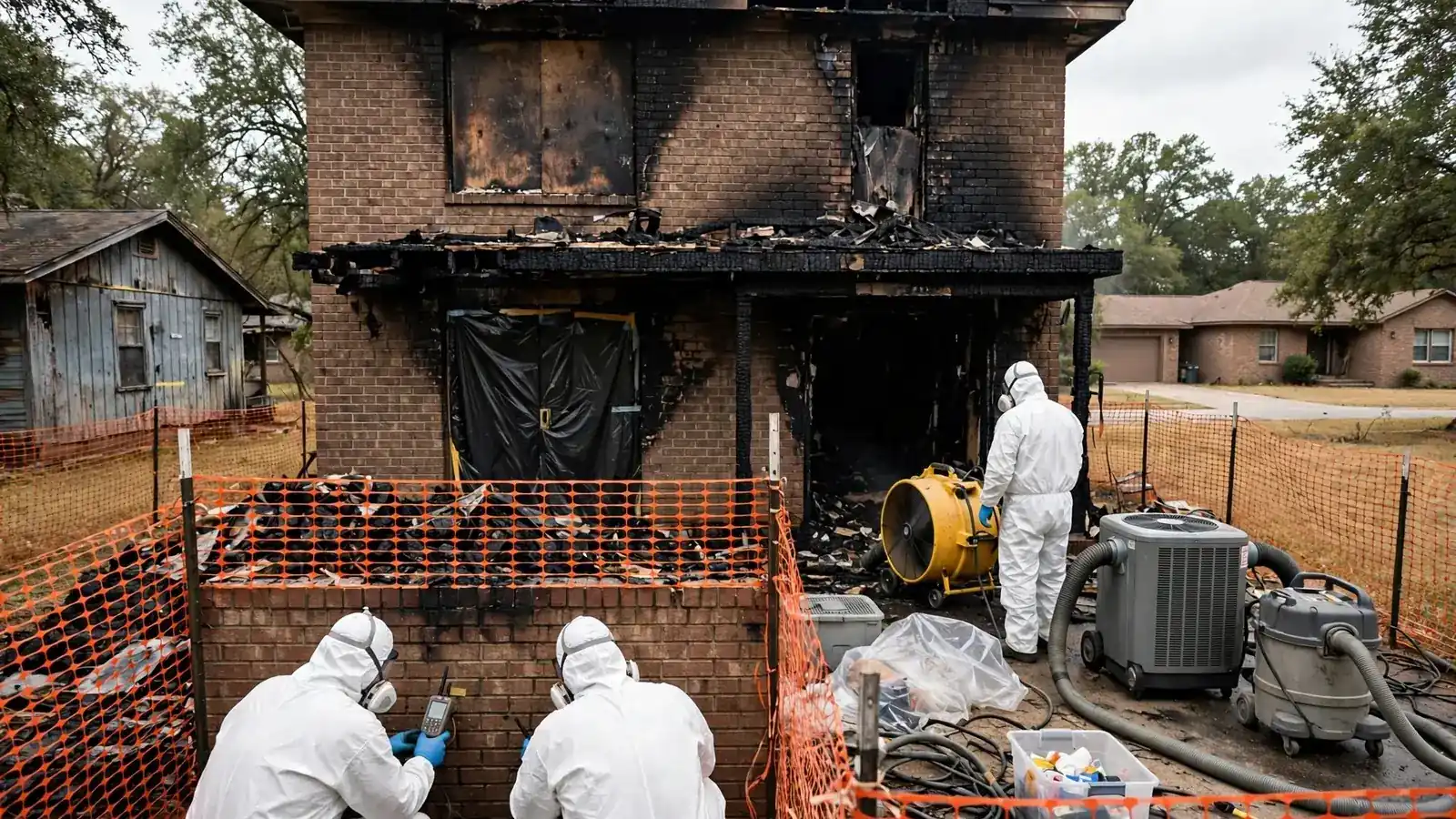
Trees, the Trinity and storm timing
Tanglewood's winding streets are shaded by mature trees, and the neighborhood borders a branch of the Trinity River [5]. Scorched limbs over the house can fall on a tarp, and spring storms can bring heavy rain and wind. Checking the forecast before tarping and looking at the cover after each storm keeps it doing its job [2].
If a large limb is hanging over the damaged roof, a tree service may need to remove it before the roof can be safely covered.
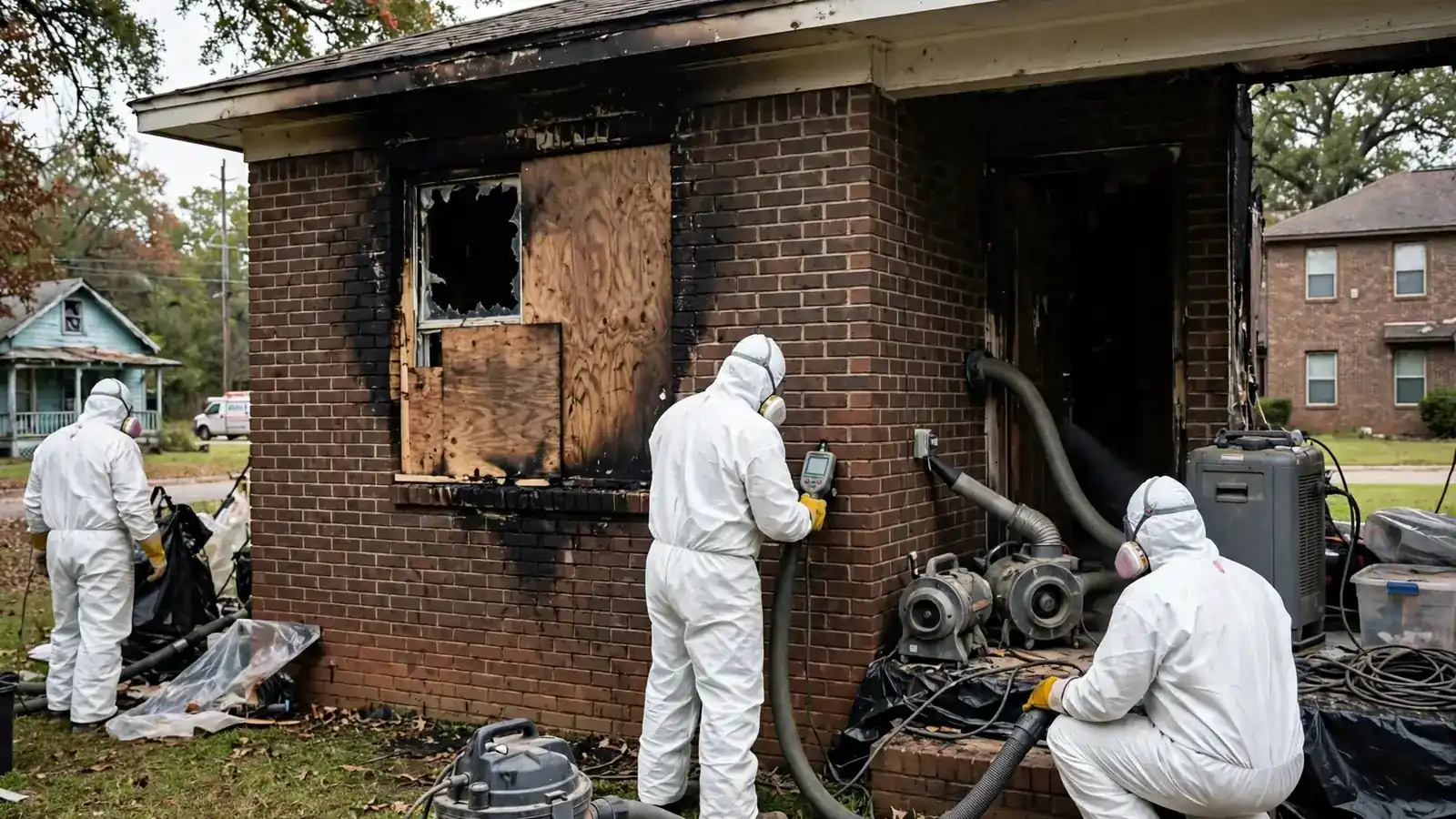
Rebuilt and enlarged homes
Some Tanglewood lots now have much larger houses built after older ranches were torn down, a trend Historic Fort Worth highlighted when it listed the neighborhood as endangered in 2013 [6]. These newer homes may have two stories, taller rooflines and larger glass walls, which change how board-up and tarping are done.
Tell the contractor whether your home is an original ranch or a rebuild so they bring the right equipment.
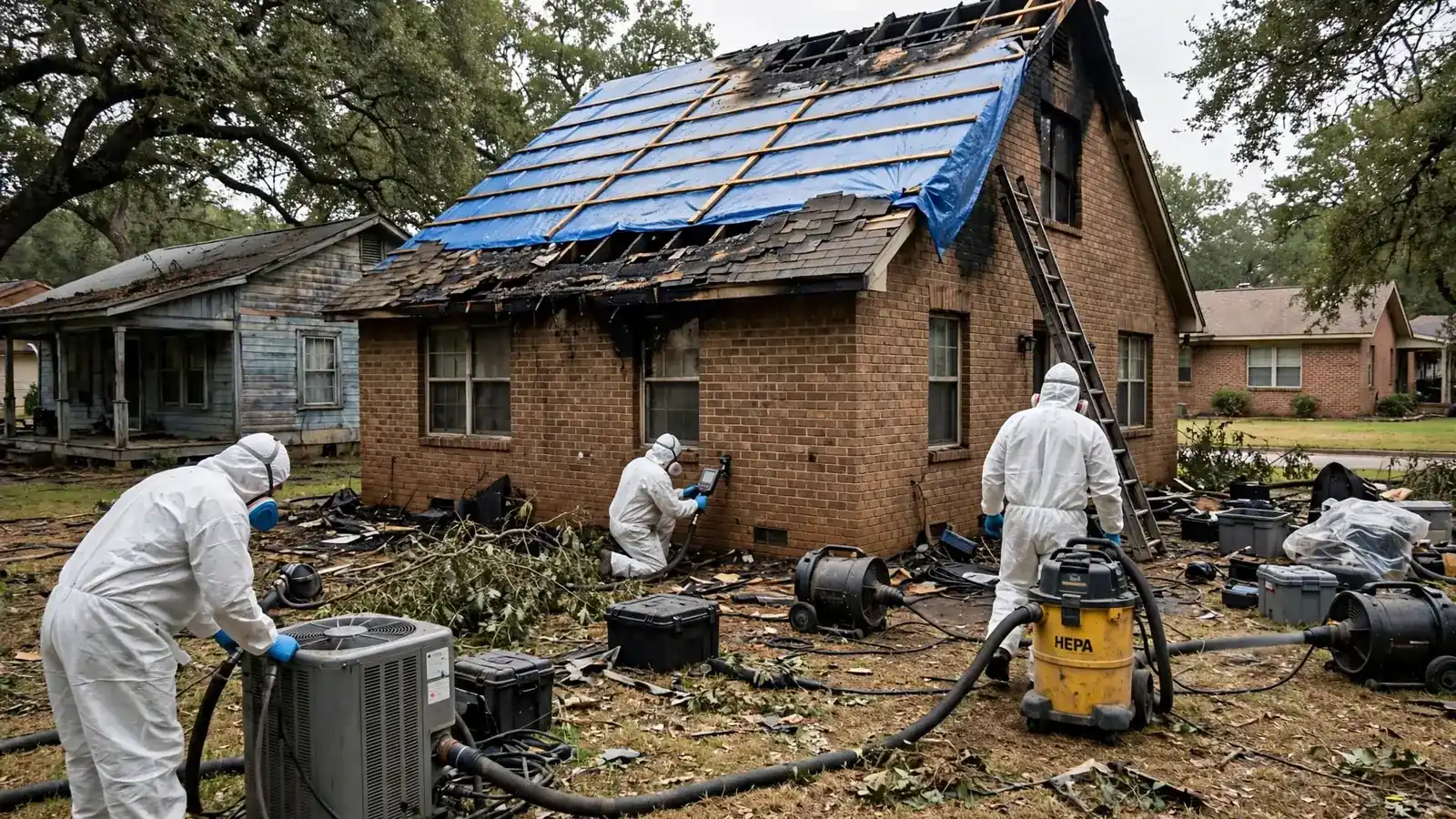
After the house is secure
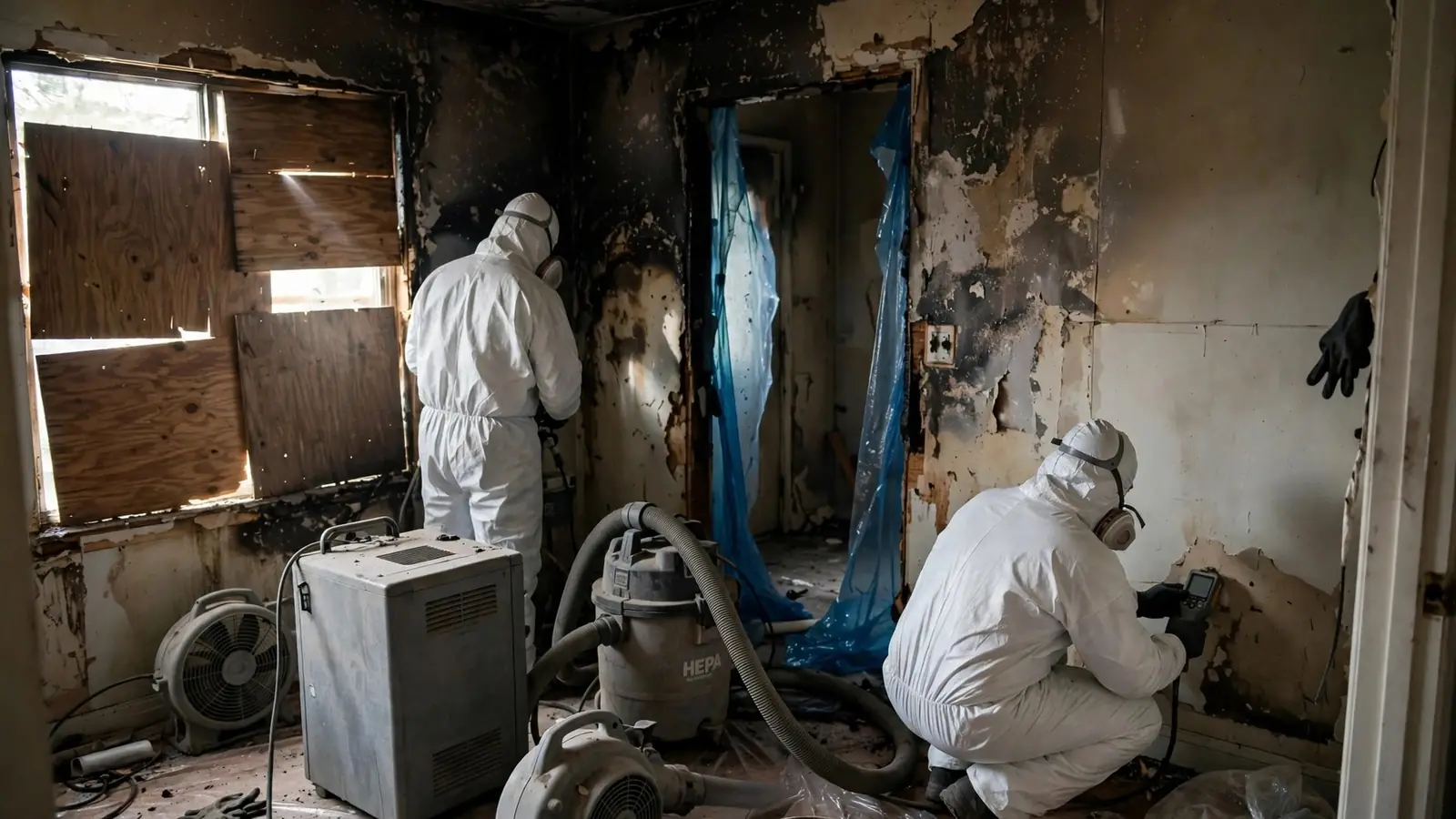
With the house closed in, attention turns to drying any firefighting water and cleaning smoke and soot. Attached garages and long attics shape that work; the Tanglewood page explains how.
Living away from a Tanglewood home while it is secured and assessed can add up quickly; the Texas Department of Insurance explains how additional living expense coverage generally works [4].
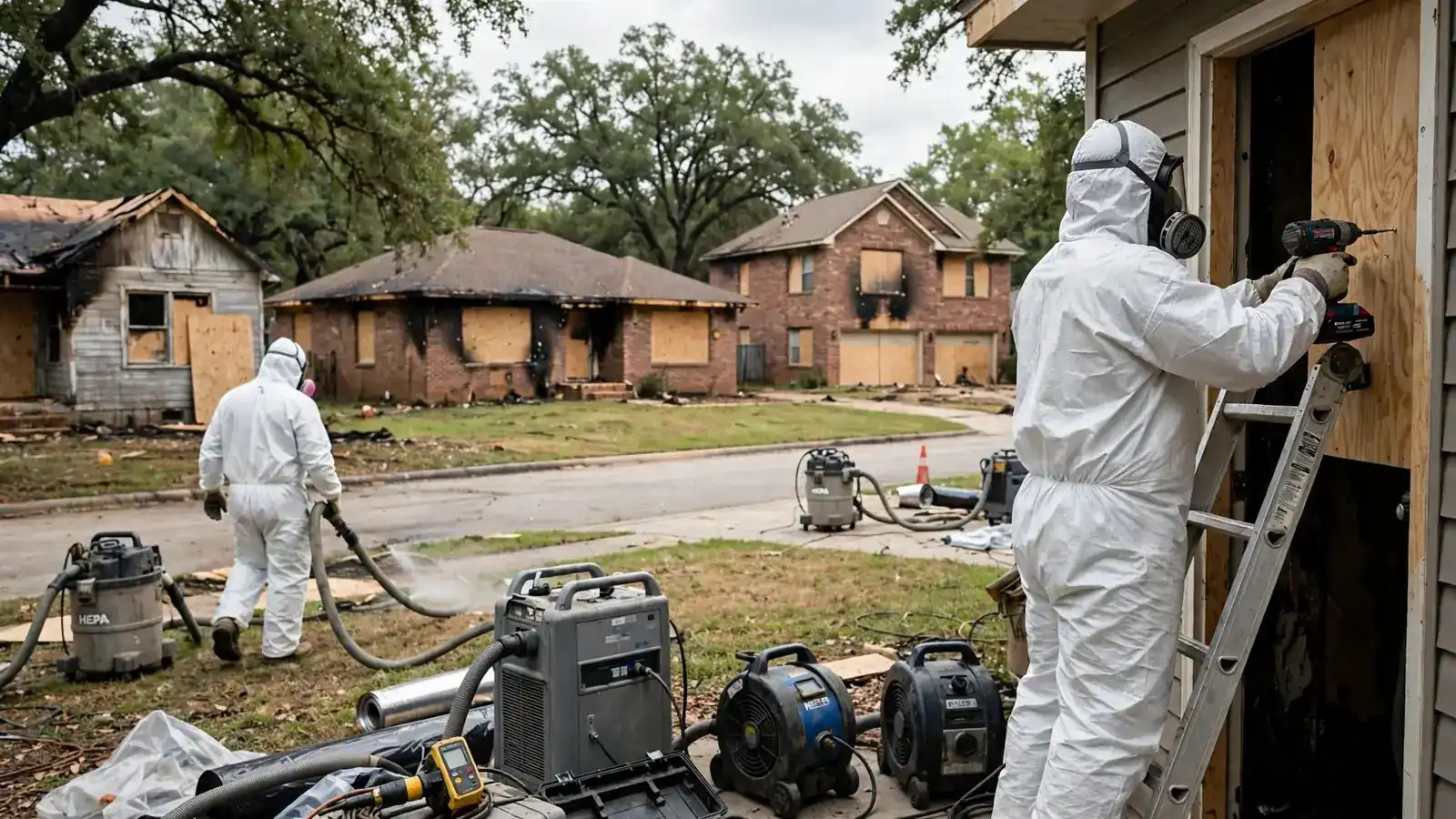
Patios, outdoor kitchens and back yards
Many Tanglewood homes have covered patios, outdoor kitchens or pools behind the house. A fire that starts outside, at a grill or fire pit, can spread to the patio roof and the back wall of the house. Covering the patio roof if it is damaged, boarding the back openings and fencing off the pool area protects the house and keeps visitors safe.
Pool areas should be checked for debris and glass before anyone uses them.
Keeping a record of the securing work
Photos before and after the house is boarded and tarped, along with the contractor's notes, show your insurer that you acted promptly to protect the home. Keep them with the rest of your claim file. If a storm loosens a cover later, photograph that too and report it the same day.
FAQ
Board-Up and Tarping in Tanglewood: questions
Can sliding glass doors be boarded?
Yes, with large panels or a framed covering fixed to the opening, not to the door itself.
What if the fire started in my attached garage?
The garage opening and the door into the house both need securing. The crew can do both on one visit.
Do trees near the house affect tarping?
Yes. Scorched or overhanging limbs can fall on a tarp. They may need removal before the roof is covered.