Key facts: Board-Up and Tarping in Ryan Place
- A Texas House resolution recognizing Ryan Place notes it was founded in 1911 as an upscale neighborhood and grew again after World War II [5].
- Fire can leave roofs and floors weak, so the U.S. Fire Administration cautions against walking on them until they are checked [1].
- Permanent exterior changes in Fort Worth historic districts can require city review, so temporary covers should be reversible [3].
Securing a large, older Ryan Place house
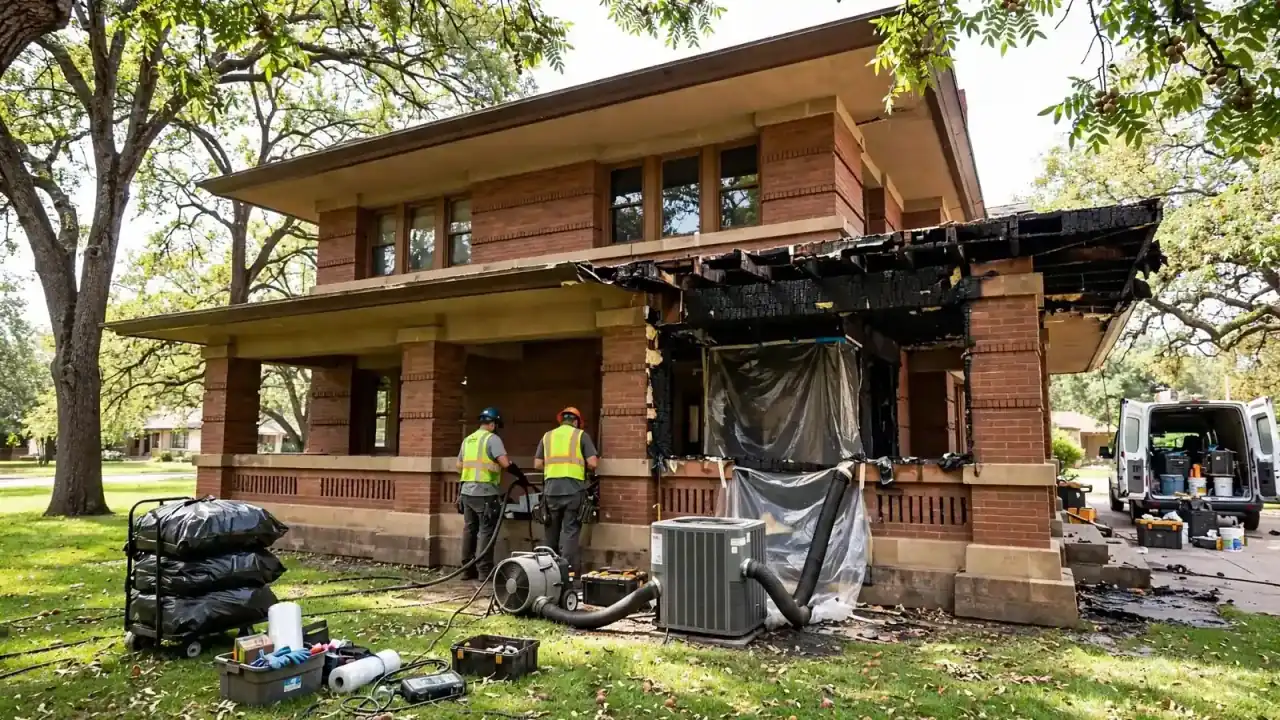
Many Ryan Place houses are two or two-and-a-half stories, built in the years after the neighborhood was laid out in 1911, with tall double-hung windows, leaded or beveled glass near the entry, and deep porches with columns [5]. When fire breaks out, the openings are large and often high above the ground. Covering them safely takes more panels, more ladders and sometimes a lift.
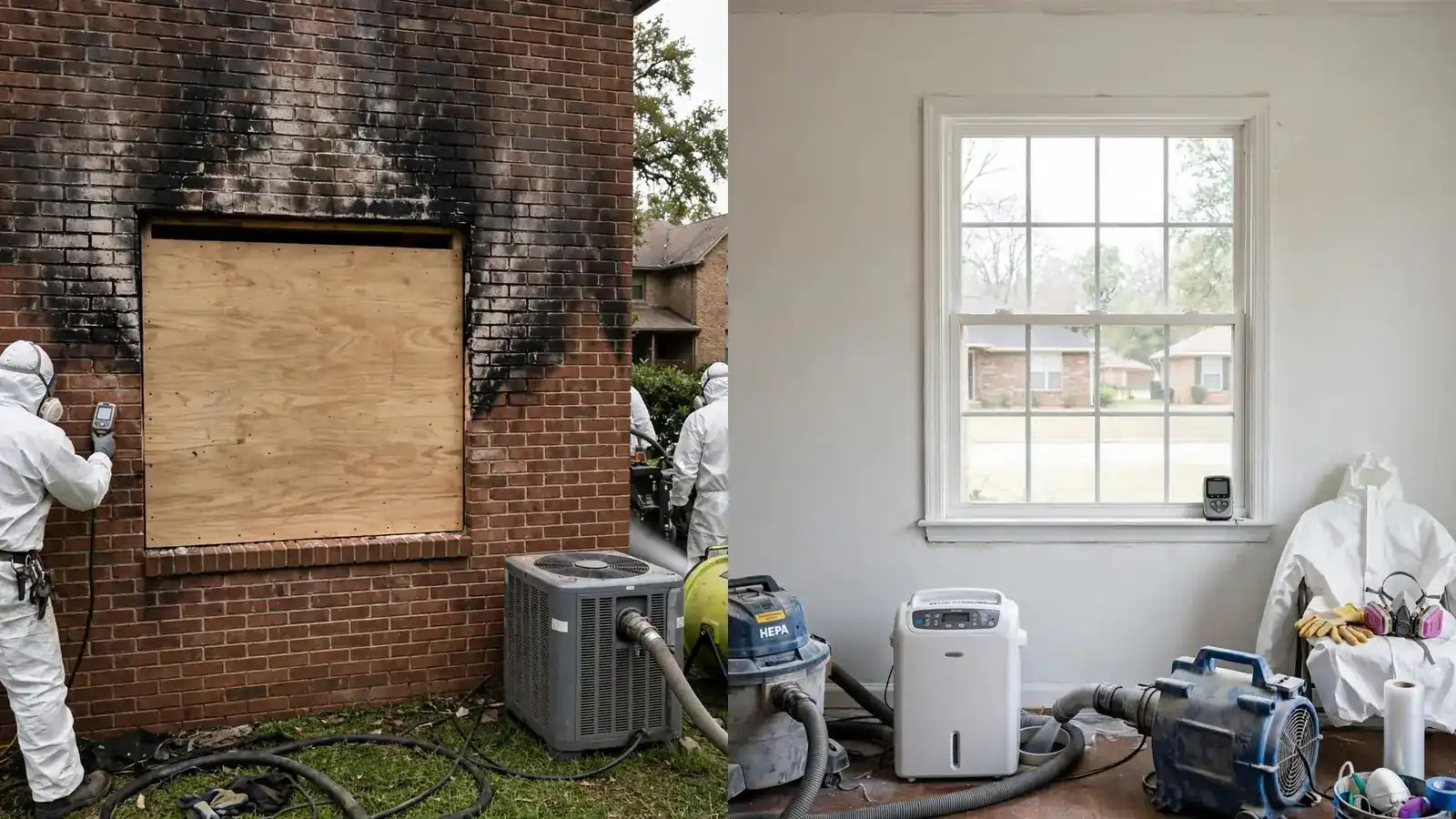
The aim is to keep weather, animals and people out without damaging the woodwork, glass and masonry that give these houses their value. Panels fixed to the opening frame, rather than nailed through casings, leave the original trim repairable.
Big roofs, steep pitches and old trees
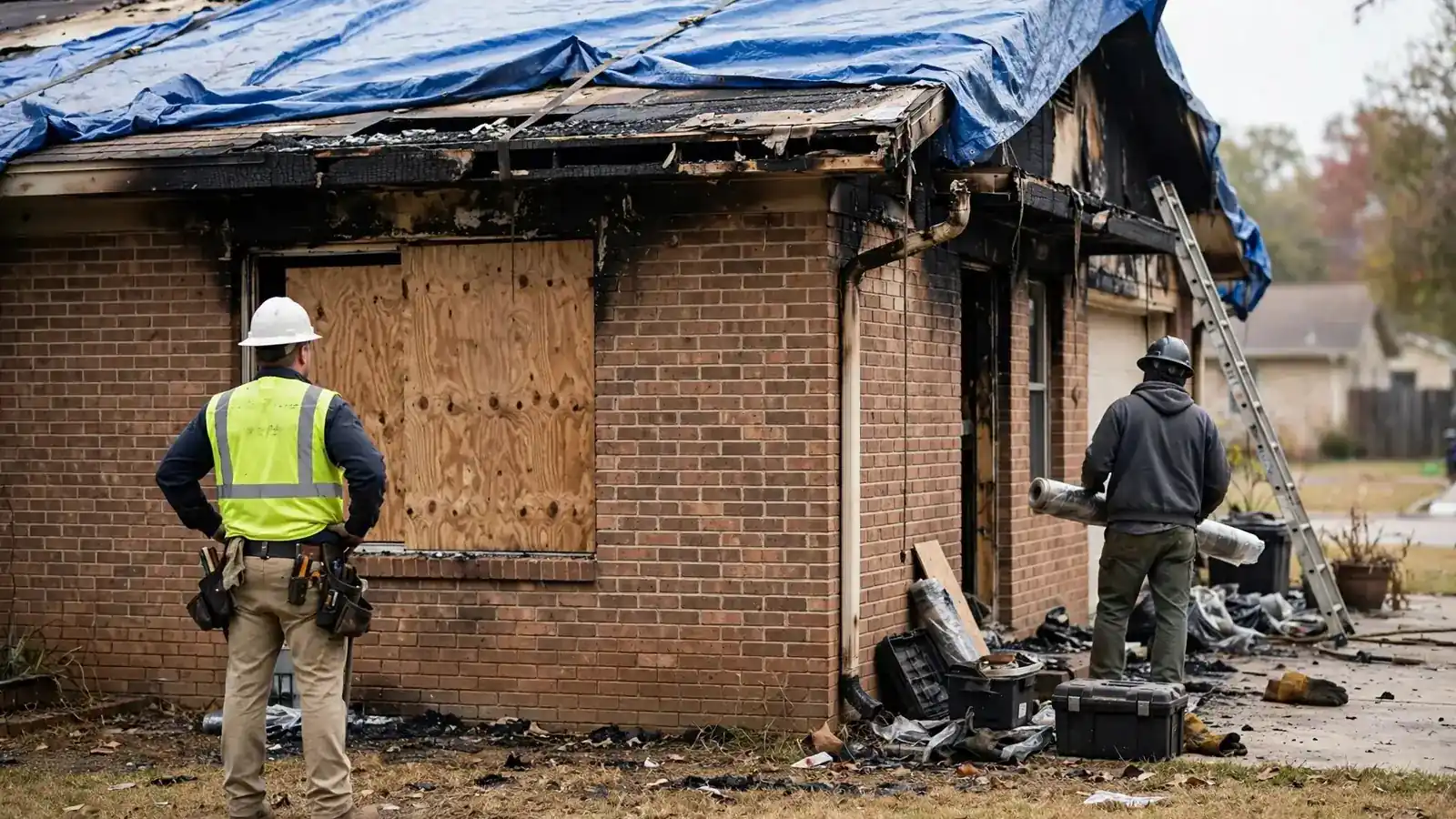
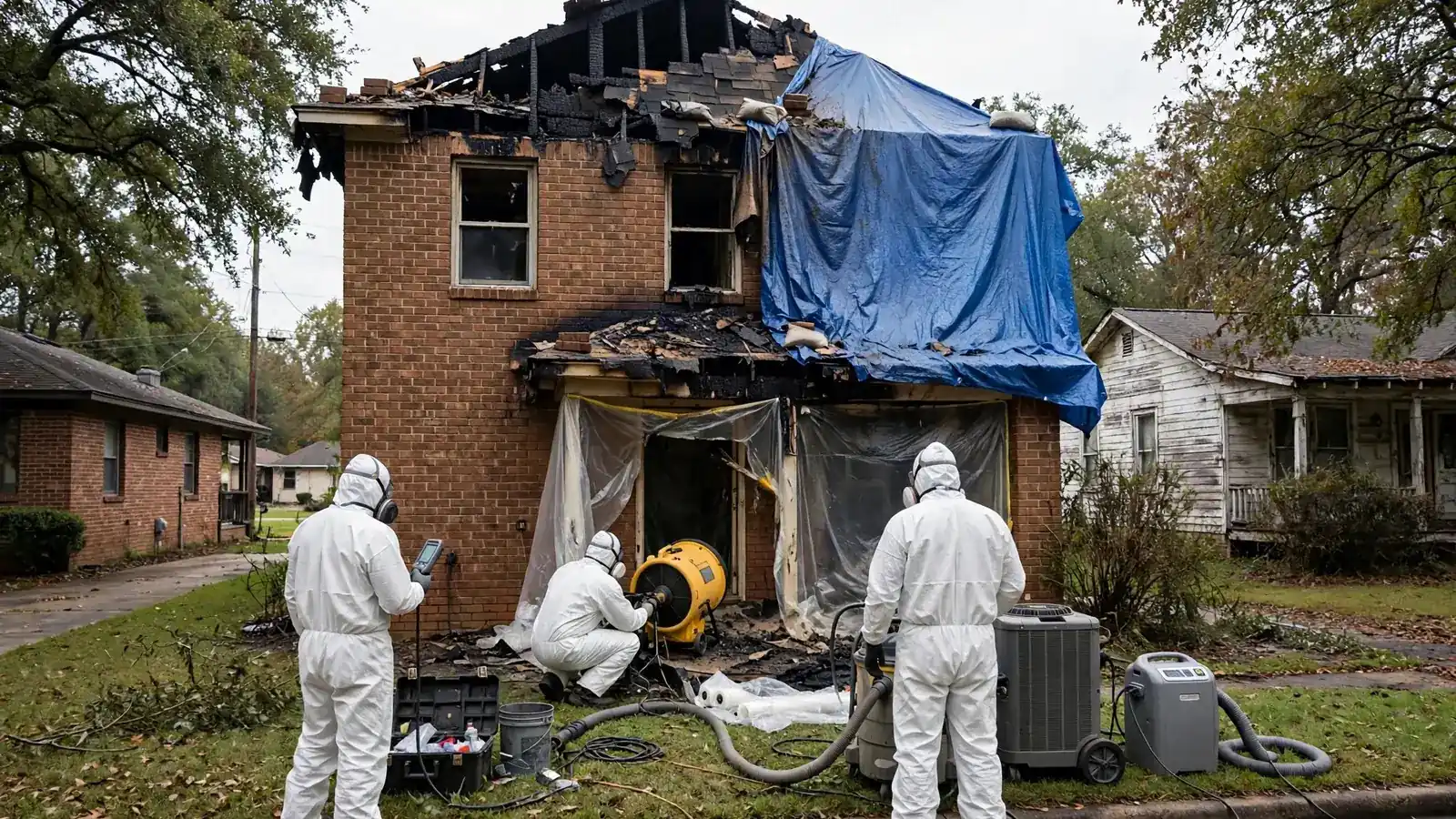
Ryan Place roofs are often steep, with multiple gables, dormers and sometimes tile or slate. A hole in a steep roof is harder to cover than one on a low ranch roof, and the tarp has to be anchored well against wind. Crews often work from a lift or roof jacks rather than walking a steep, fire-damaged surface.
Large pecans and oaks shade many lots. Branches scorched by the fire, or limbs hanging over the damaged roof, can fall on a tarp. Pointing them out early lets you arrange a tree service before they cause more damage.
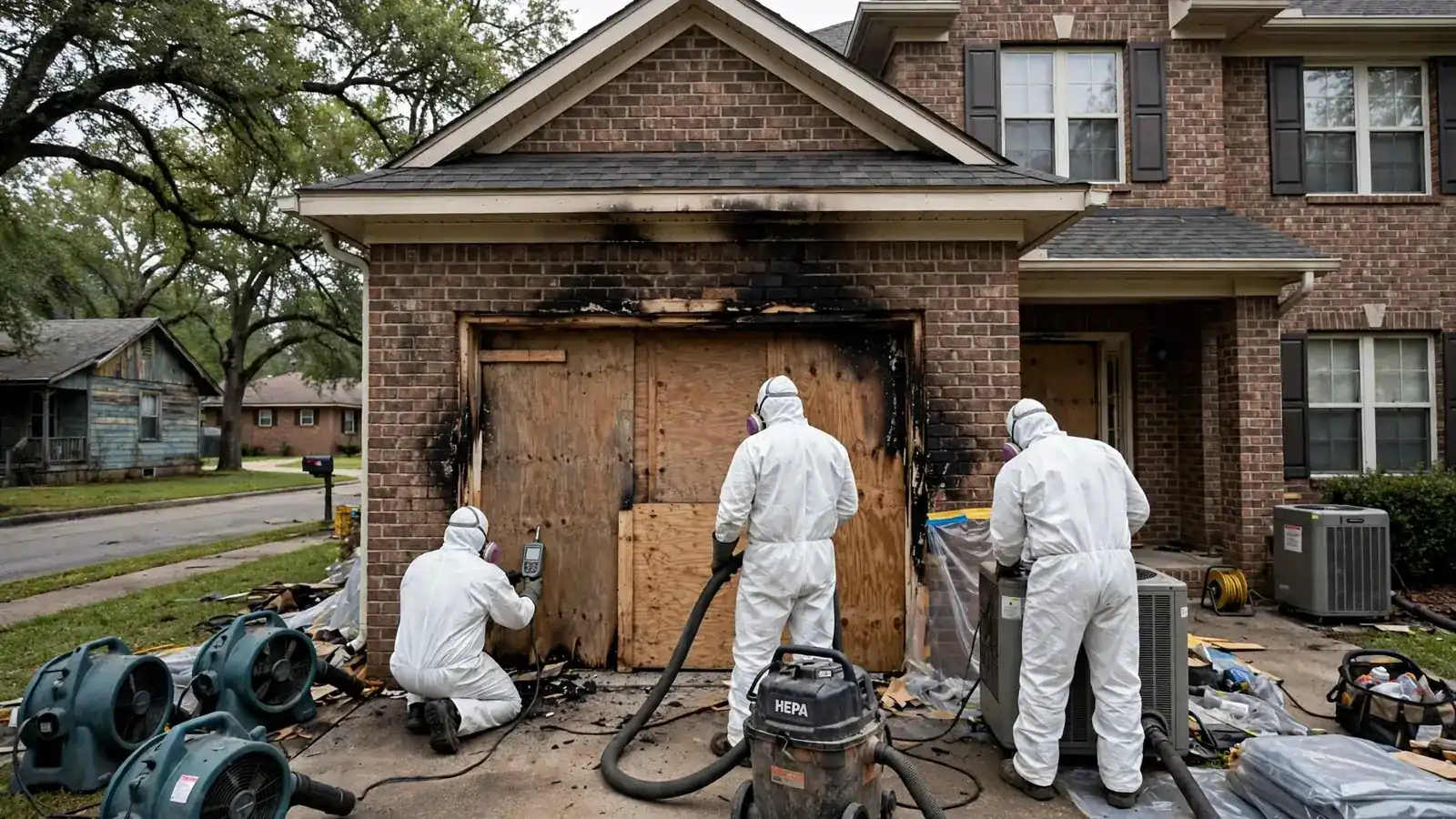
How a Ryan Place house is usually secured
The order keeps the crew safe on a tall house and protects the original fabric.
- 1
Get the fire department release first
No one goes inside or up until the house is released and utilities are checked.
- 2
Photograph every elevation, high and low
Record broken glass, burned trim and roof damage from the ground and from safe ladder positions.
- 3
Cover low openings, then upper ones
Ground-floor doors and windows are closed first to stop entry; upper windows follow from ladders or a lift.
- 4
Tarp steep roof sections with full overlap
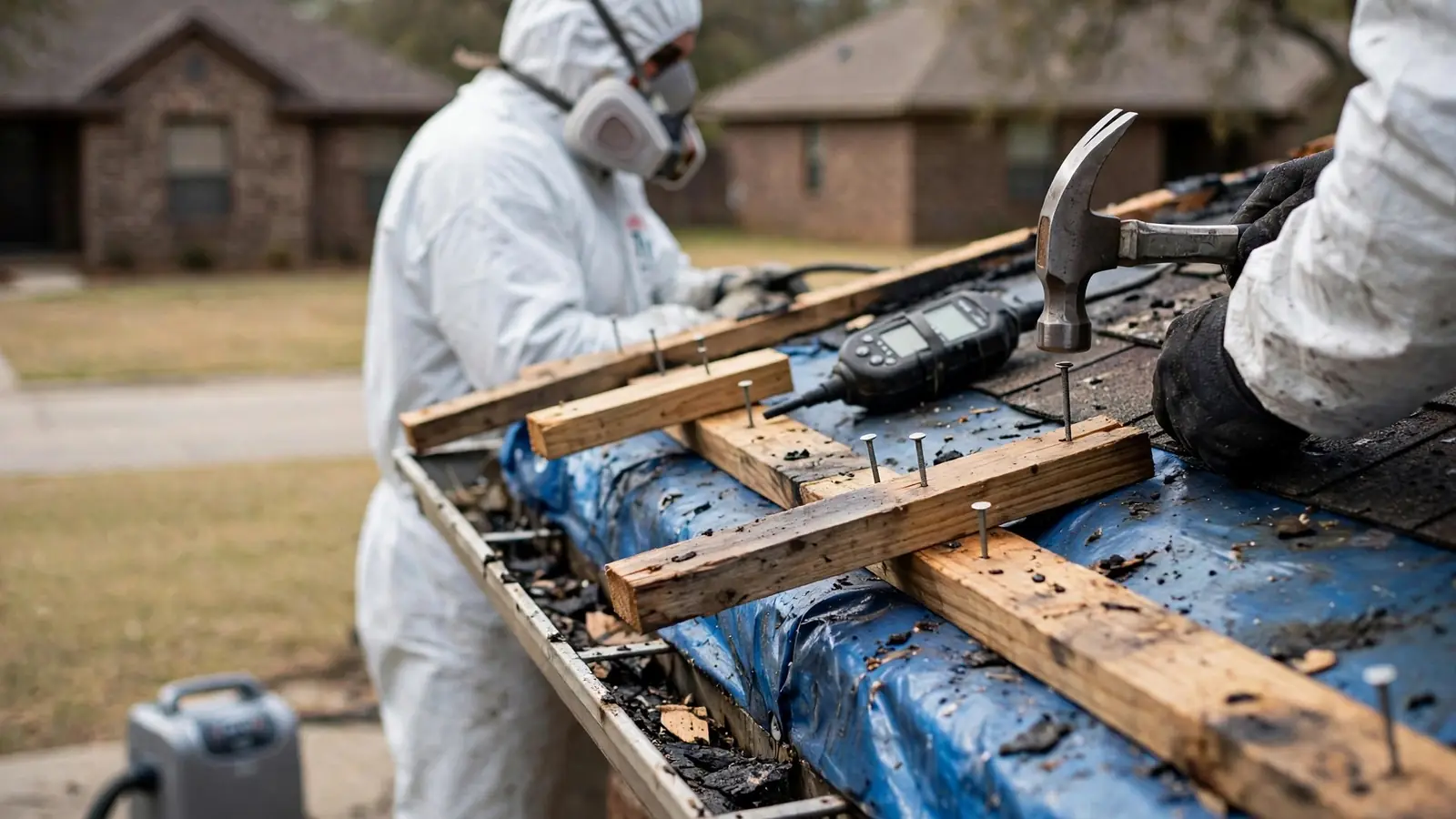
Tarps run past the damage and over the ridge where possible, held down by battens.
Leaded glass, porches and features worth keeping
Front doors with sidelights, leaded or beveled glass panels and stained glass stair windows appear in some of the larger homes. If they cracked in the heat, they can often be repaired by specialists, but only if the pieces are saved. Ask the crew to collect and bag any broken decorative glass rather than sweeping it into the debris.
Porch columns, railings and brackets may be scorched but still sound. Covering exposed ends and keeping water off them preserves them until repairs. A porch roof damaged by heat should be checked before anyone leans a ladder on it.
Historic review and temporary work
Parts of the area around Ryan Place fall within Fort Worth's historic preservation framework, and permanent exterior changes in designated districts can require review [3]. Temporary board-up and tarping are short-term protection, but keeping them neat, reversible and well fitted makes it simpler to restore the exterior later in a way that meets any review.
If you are not sure whether your house is in a designated district, the city's historic preservation office can confirm it before permanent repairs begin.
What to mention on your call
These details help the crew bring the right equipment.
- Number of floors and roof heightTwo-and-a-half story roofs often need a lift.
- Roof materialComposition, tile or slate each need different handling.
- Decorative glass or original doorsSo they can be protected and pieces saved.
- Trees over the damaged areaLimbs that may need attention before tarping.
Basements, cellars and lower openings
Some older Ryan Place houses have basements or deep crawl spaces with small windows and exterior doors. If firefighting water ran into them, or if the fire broke basement glass, those openings need covering too. Keeping water out of a basement is easier than drying one later.
Check that basement doors lock and that window wells are clear of debris that could let water pour in during the next rain.
A secure house protects the rest of the job
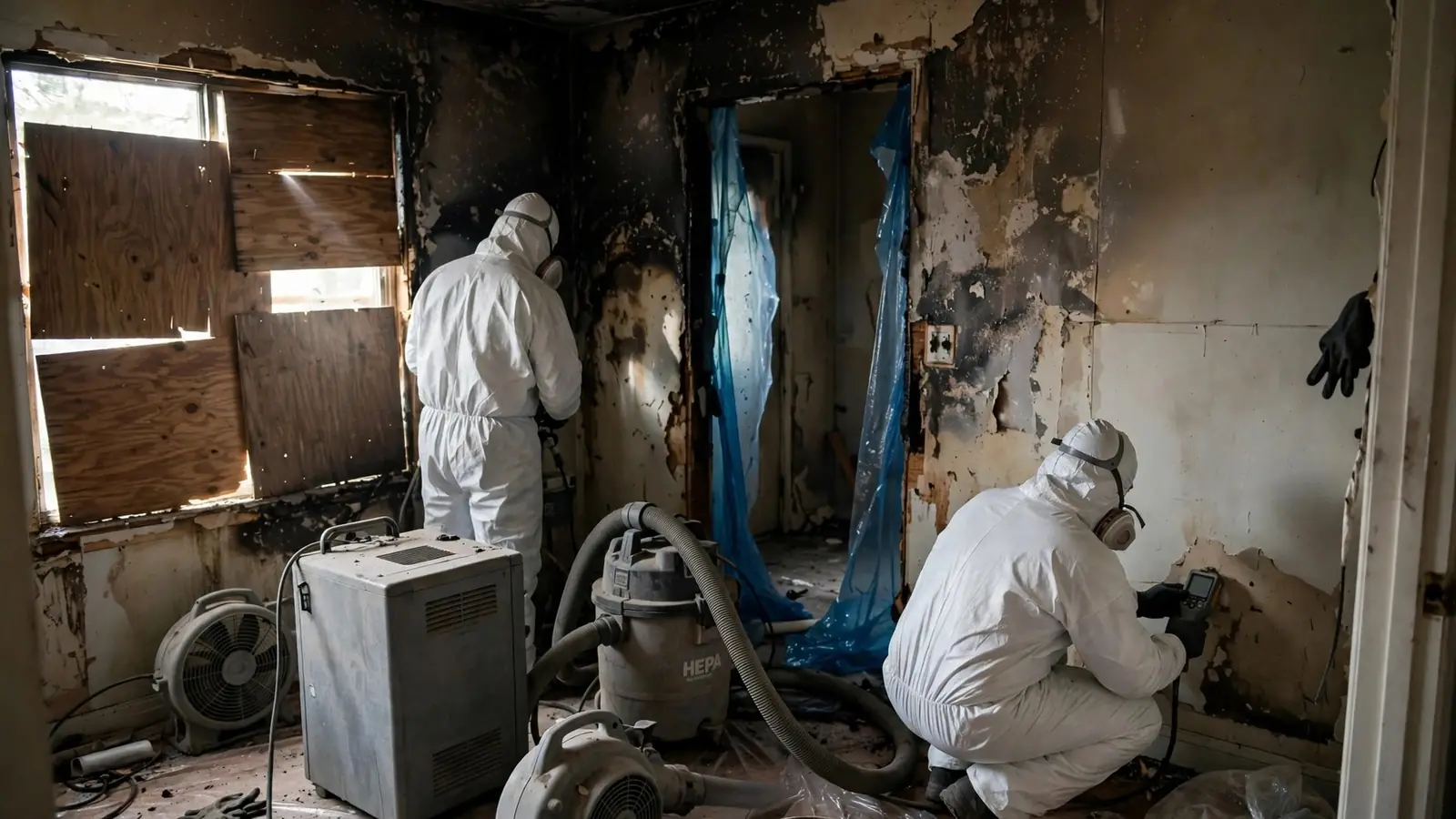
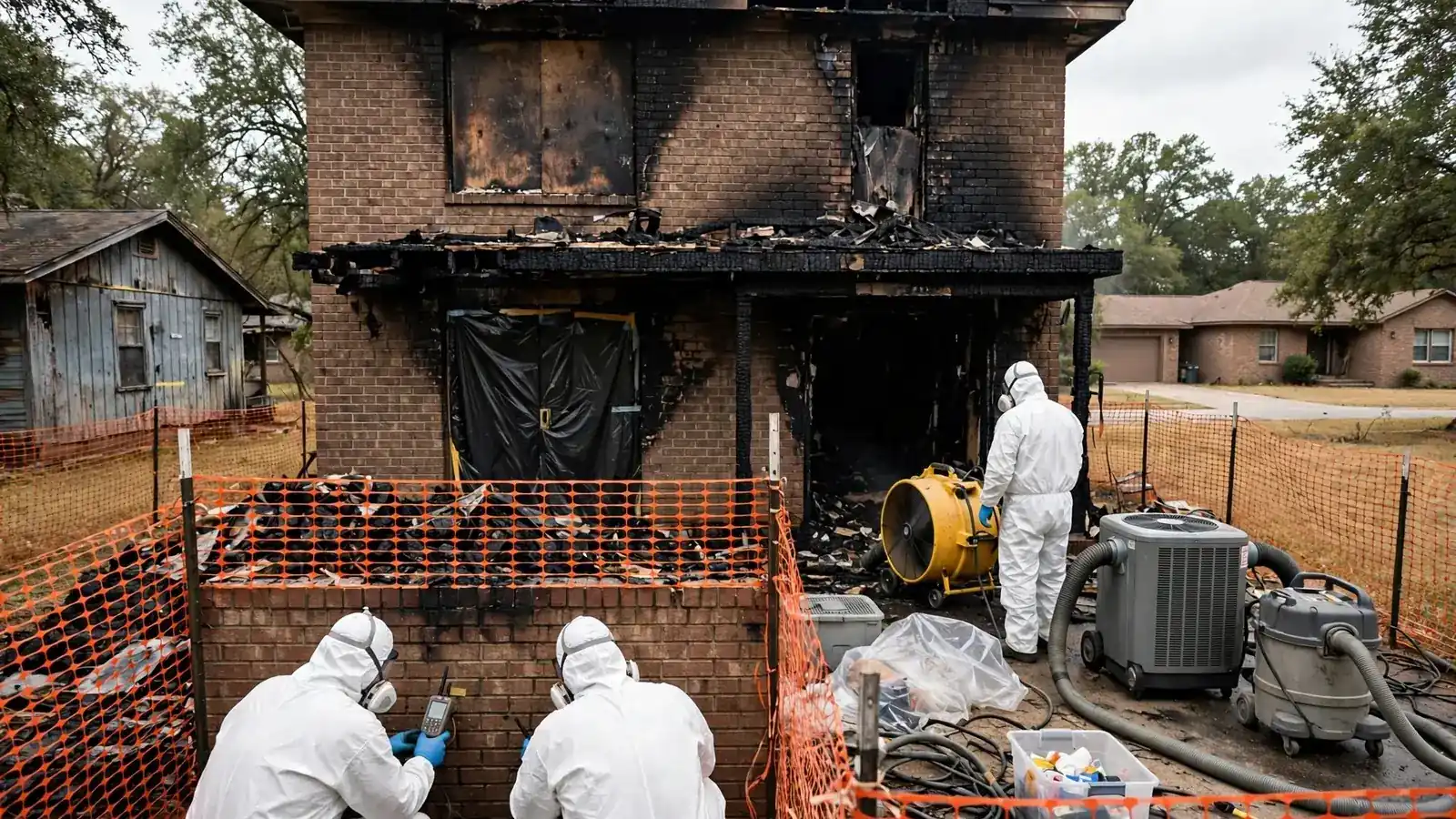
Once a large house is closed in, the contractor can assess smoke, soot and water damage across several floors without new rain adding to it. In multi-story houses, smoke rises through stairwells and water used upstairs comes down through ceilings, so those assessments often start at the top. The Ryan Place page explains how these houses behave after a fire, and our page on water damage from firefighting covers the drying that often follows.
A big house can mean weeks out of your home. Track lodging and meals from the first night and read the Texas Department of Insurance guidance on additional living expense coverage [4].
FAQ
Board-Up and Tarping in Ryan Place: questions
Can stained or leaded glass be saved after a fire?
Often, if the pieces are kept. Ask the crew to bag broken decorative glass so a specialist can repair or match it later.
How are steep roofs tarped safely?
Crews usually work from a lift, ladders or roof jacks rather than walking a steep, fire-damaged roof, and anchor the tarp with battens.
Do I need historic approval for board-up?
Temporary protection is generally treated differently from permanent changes, but permanent exterior repairs in a designated district can require review [3].