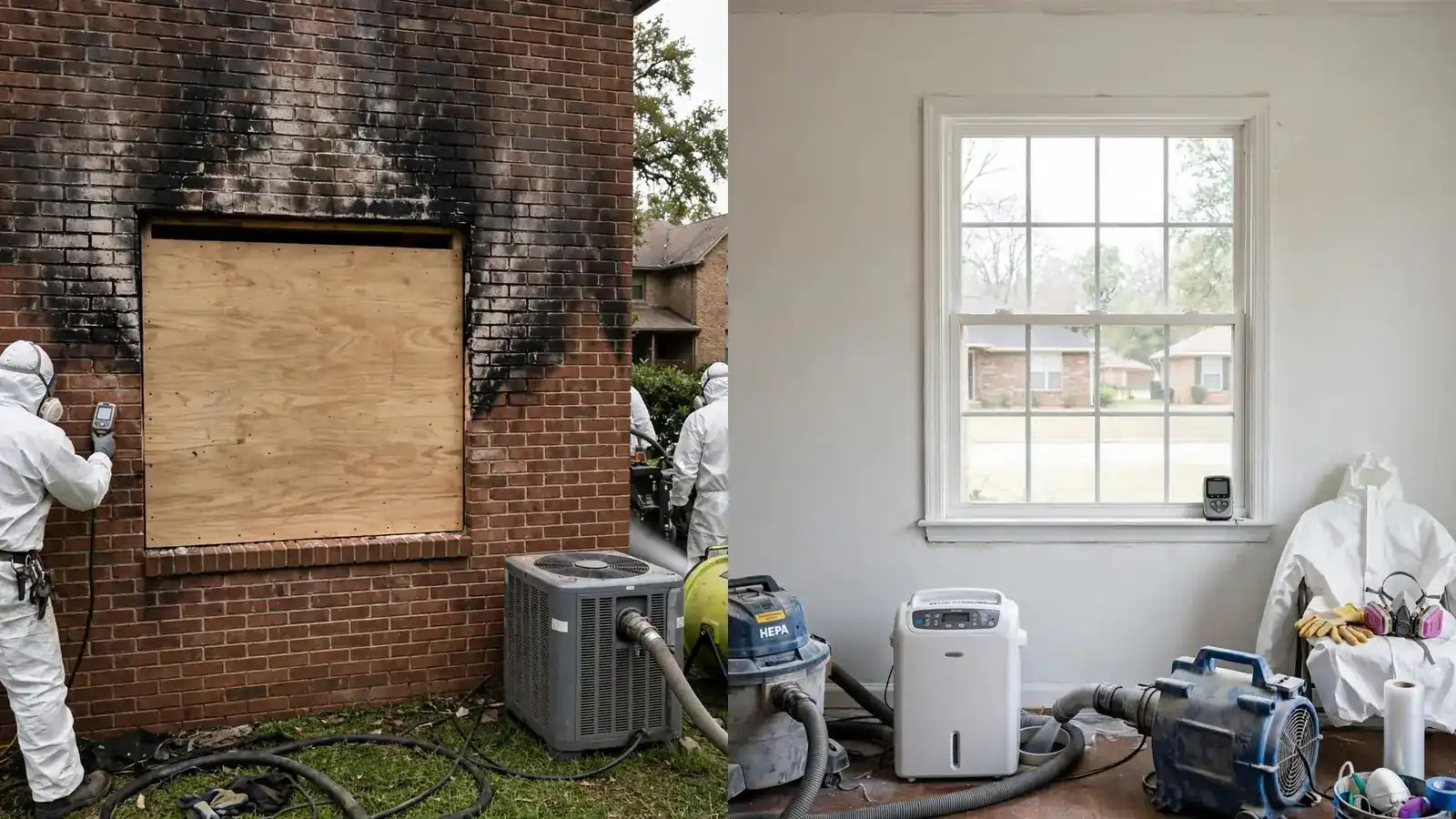
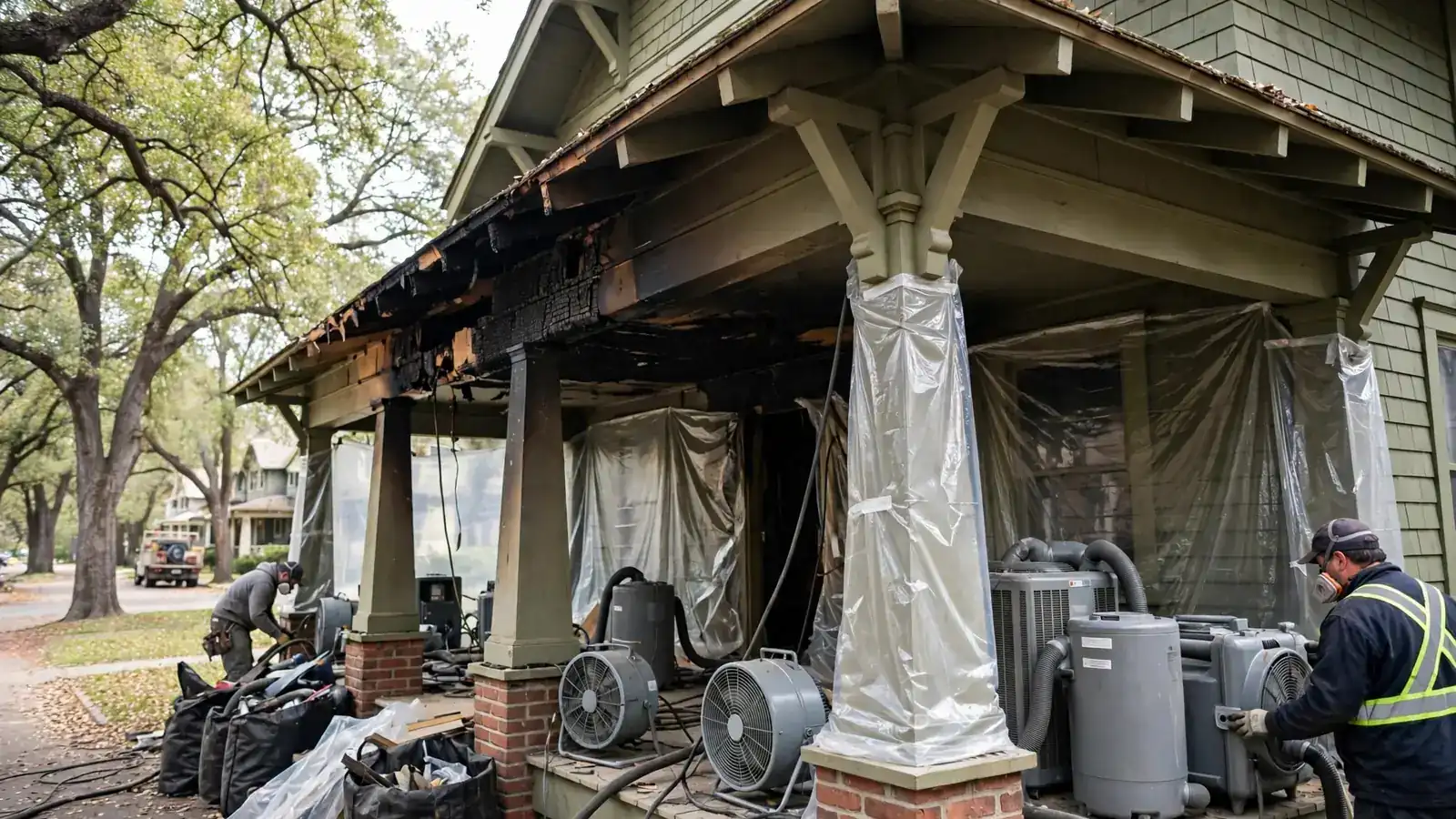
Key facts: Board-Up and Tarping in Fairmount
- The Fairmount–Southside Historic District was listed on the National Register of Historic Places in 1990 [5].
- Fire can weaken roofs and floors, so the U.S. Fire Administration advises caution before anyone climbs onto or walks through a burned structure [1].
- Fairmount is also a City of Fort Worth local historic district, where permanent exterior changes can need review [3].
Why Fairmount houses need careful securing
Most houses in Fairmount went up between 1890 and the late 1930s [6]. They have tall double-hung wood windows, wide porches, wood siding and roofs with several slopes and dormers. When a fire breaks glass or burns through a section of roof, those features are exactly what is exposed, and they are also what makes the house worth restoring.
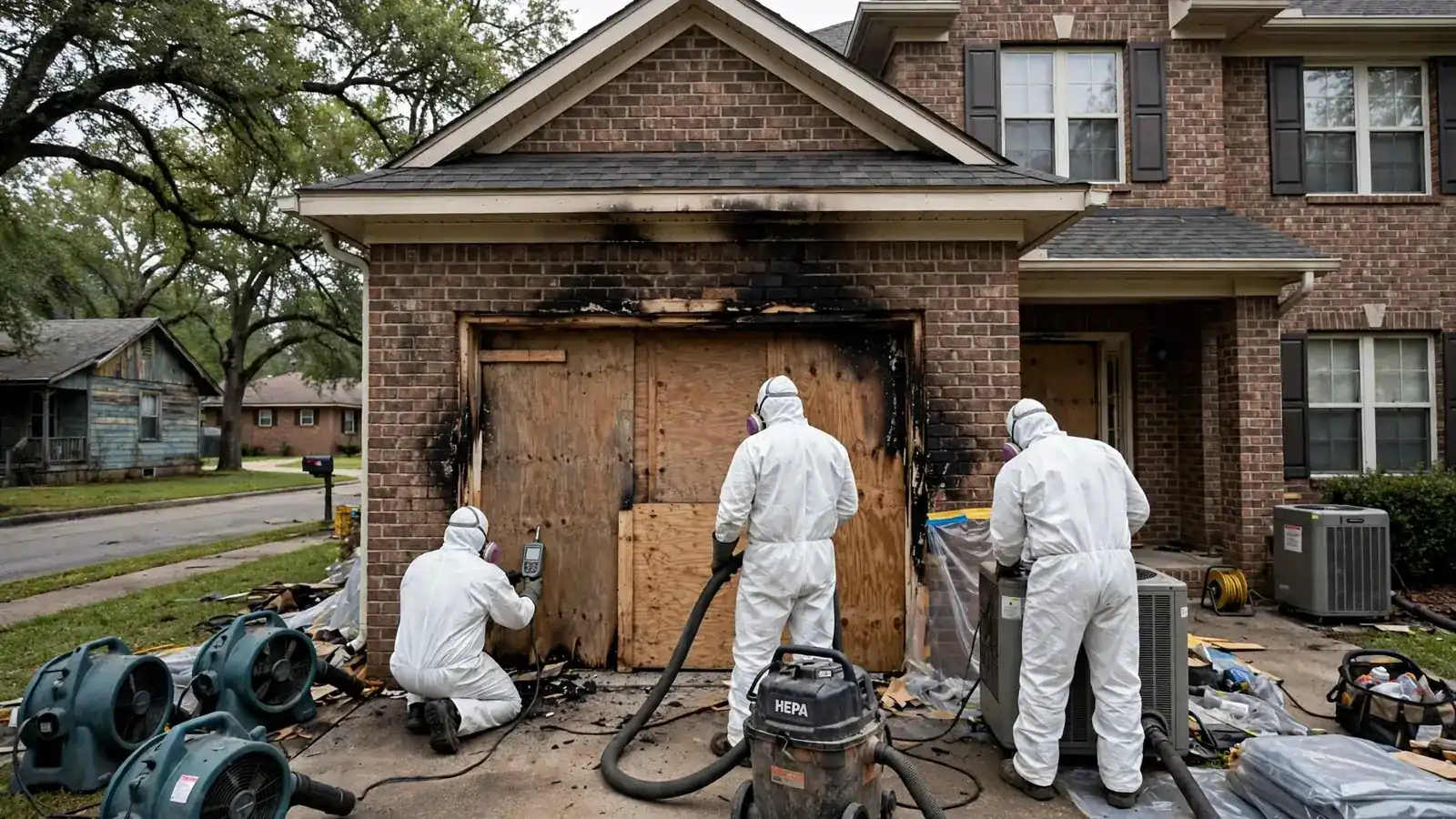
Board-up here is about more than plywood over a hole. Screws driven straight through an original sash or casing leave scars that a later restoration has to patch. A careful crew, the kind our smoke damage cleanup work depends on later, fastens panels to the opening frame or uses bracing that sits inside the casing, so the trim can be repaired rather than replaced.
Tarping the steep and layered roofs of Fairmount
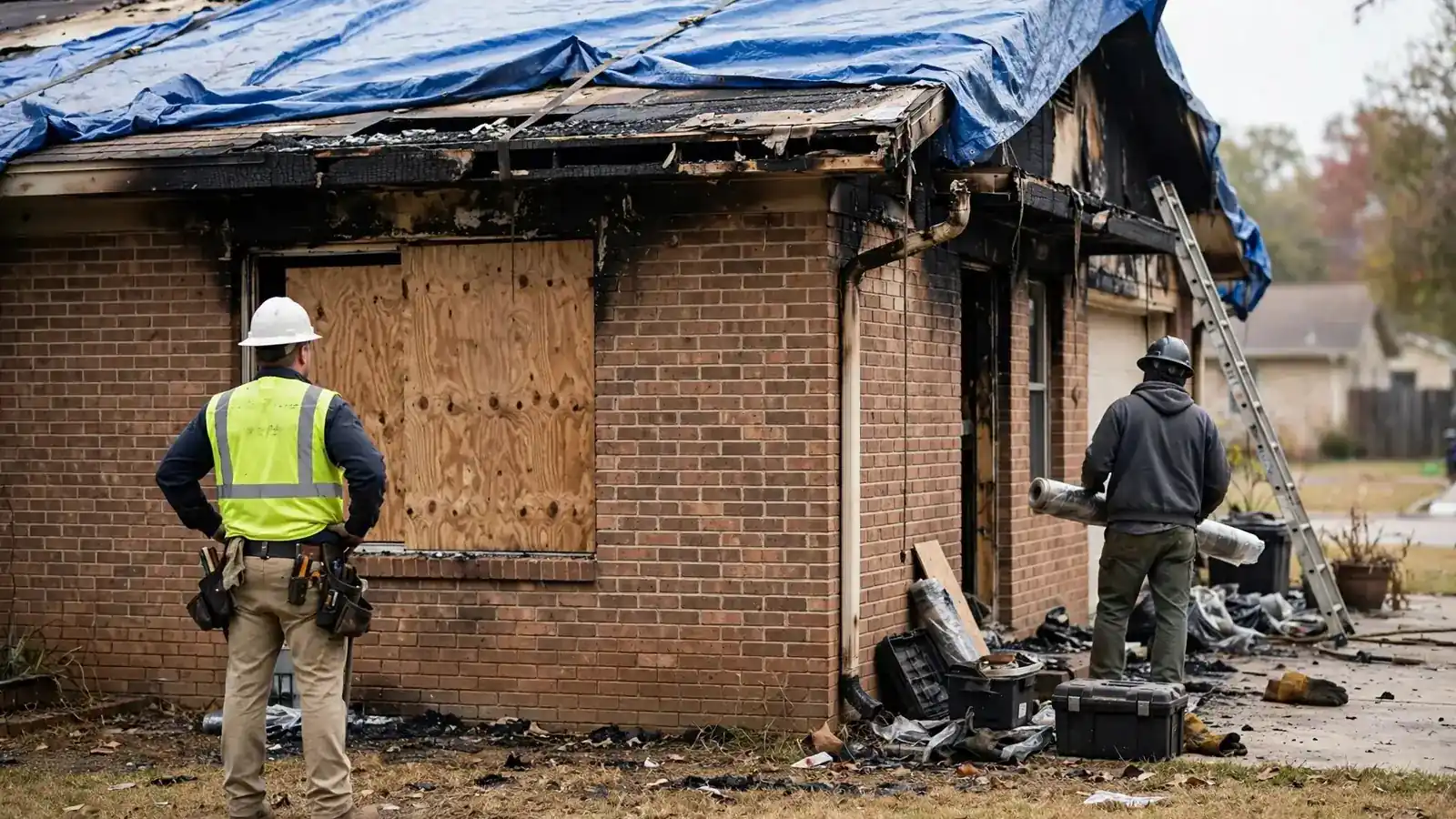
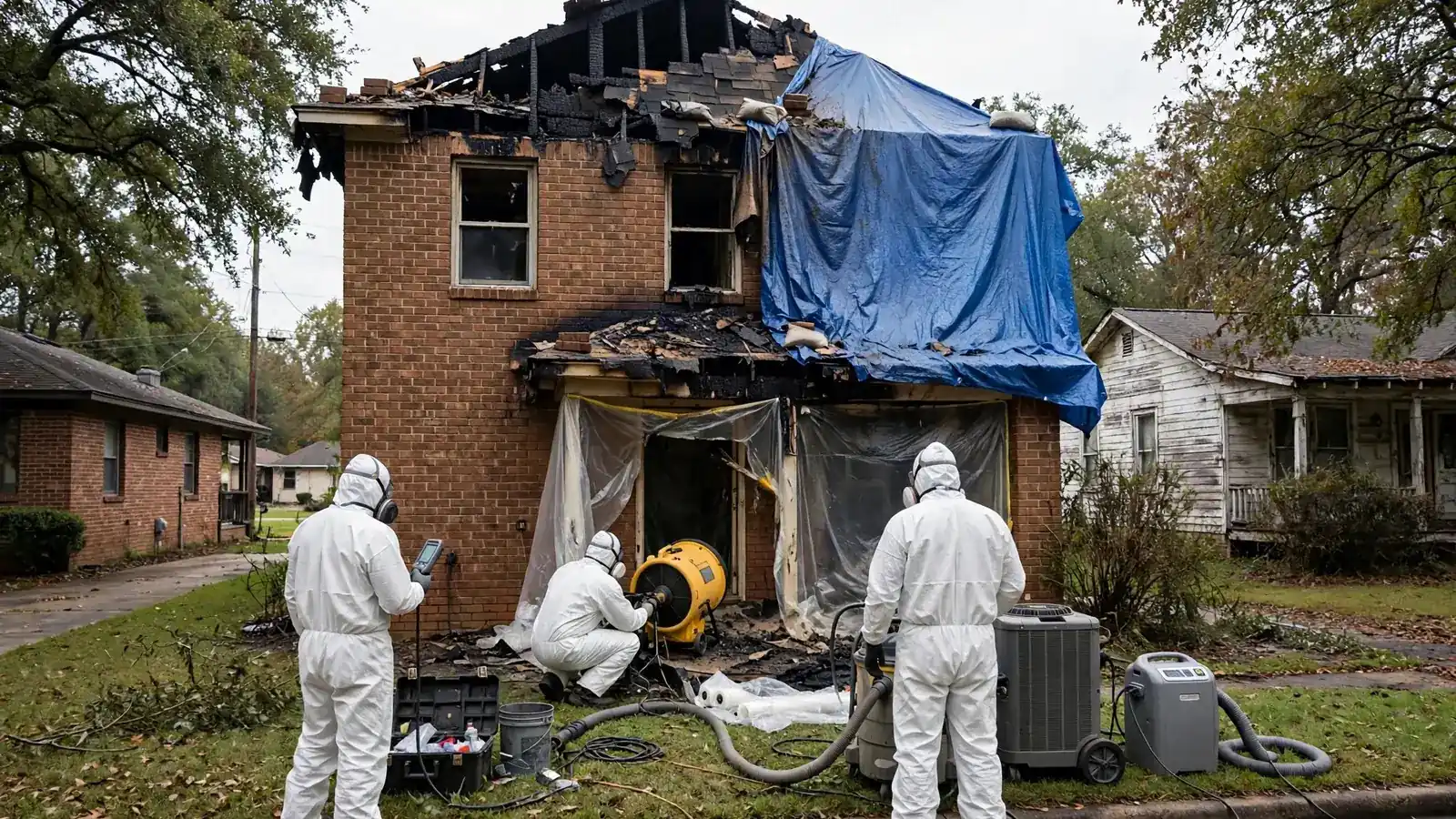
Bungalow and Prairie roofs in the neighborhood often have low pitches over porches and steeper pitches over the main house, with valleys where they meet. A tarp has to cover the damaged area and lap well past it, run over the ridge where possible, and be held down with battens so wind cannot get under it. North Texas storms can bring hard rain and strong gusts on short notice, so the forecast matters when the work is scheduled [2].
Older roof decking may be plank boards rather than plywood, and after a fire some of those boards can be charred or soft. Nobody should stand on a roof that has not been checked, and the U.S. Fire Administration warns that fire-damaged roofs and floors can be weak [1]. A contractor may work from a ladder or lift instead of walking the roof.
How securing a Fairmount house usually goes
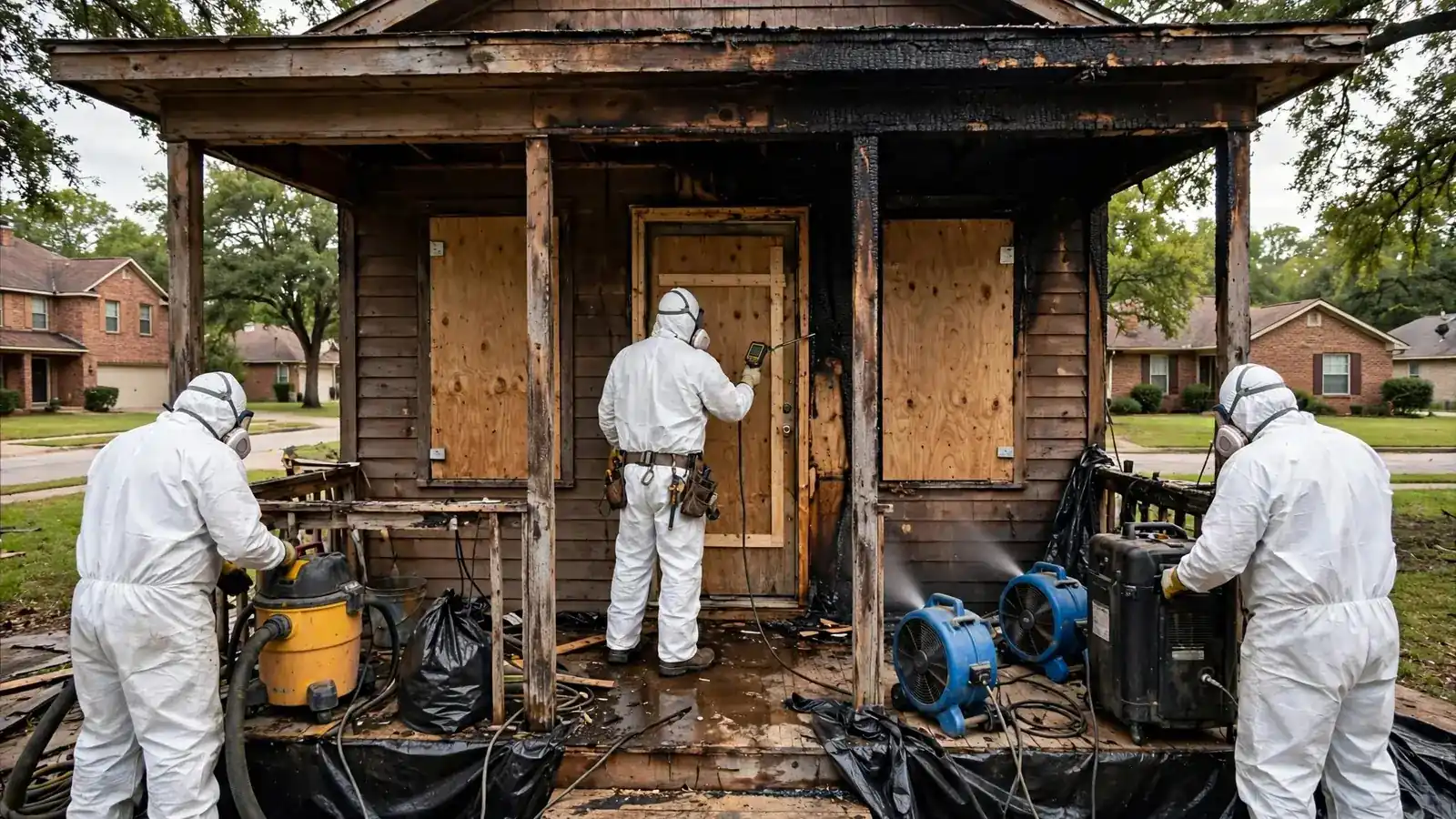
The order below keeps people safe and protects the parts of an old house that are hardest to replace.
- 1
Confirm the house is released
Wait until the fire department has released the property and the utilities have been checked before anyone goes in or onto the roof.
- 2
Photograph each broken Fairmount opening
Take photos of broken windows, doors and roof holes before anything is covered; they support your claim later.
- 3
Cover openings without harming trim
Fasten panels to frames or brace them from inside so original casings and sashes are not drilled through.
- 4
Tarp and batten the roof
Cover damaged roof sections with a tarp that laps well past the hole and is held down along every edge.
Historic rules and temporary work in Fairmount
Temporary protection is not a permanent exterior change, but it still helps to keep it neat and reversible. Fairmount is a local historic district as well as a National Register district, and permanent changes to windows, doors, siding or rooflines can need review by the city [3]. Boarding that protects original elements makes it easier to restore them the way the district expects.
Ask the contractor on your call to keep salvageable pieces such as stained glass panels, porch columns or decorative brackets. Labelled and stored, they can go back on the house. Thrown in a dumpster, they are gone, and matching them later can be slow and difficult.
Details to mention about your Fairmount home
These details help the contractor plan the right materials and crew before arriving.
- Window typeOriginal wood double-hung windows, leaded or stained glass, or later replacements.
- Roof shapeNumber of roof slopes, dormers and porch roofs, and roughly where the fire broke through.
- AccessWhether there is alley access, a detached garage, or only a front walk and narrow side yard.
- Historic statusWhether the house is a contributing building in the historic district, if you know.
Living near a secured house on a Fairmount street
Many Fairmount lots are narrow, with houses close together and cars parked along the street. Plywood, ladders and a debris trailer take up room, so it helps to plan where the crew can park and stage materials. Neighbors appreciate a heads-up, especially on blocks where houses share a driveway or alley.
If you cannot stay in the house, your policy may cover some living expenses while repairs are planned; the Texas Department of Insurance explains how additional living expense coverage generally works [4]. Keep receipts from the first night onward.
After the plywood: what comes next in Fairmount
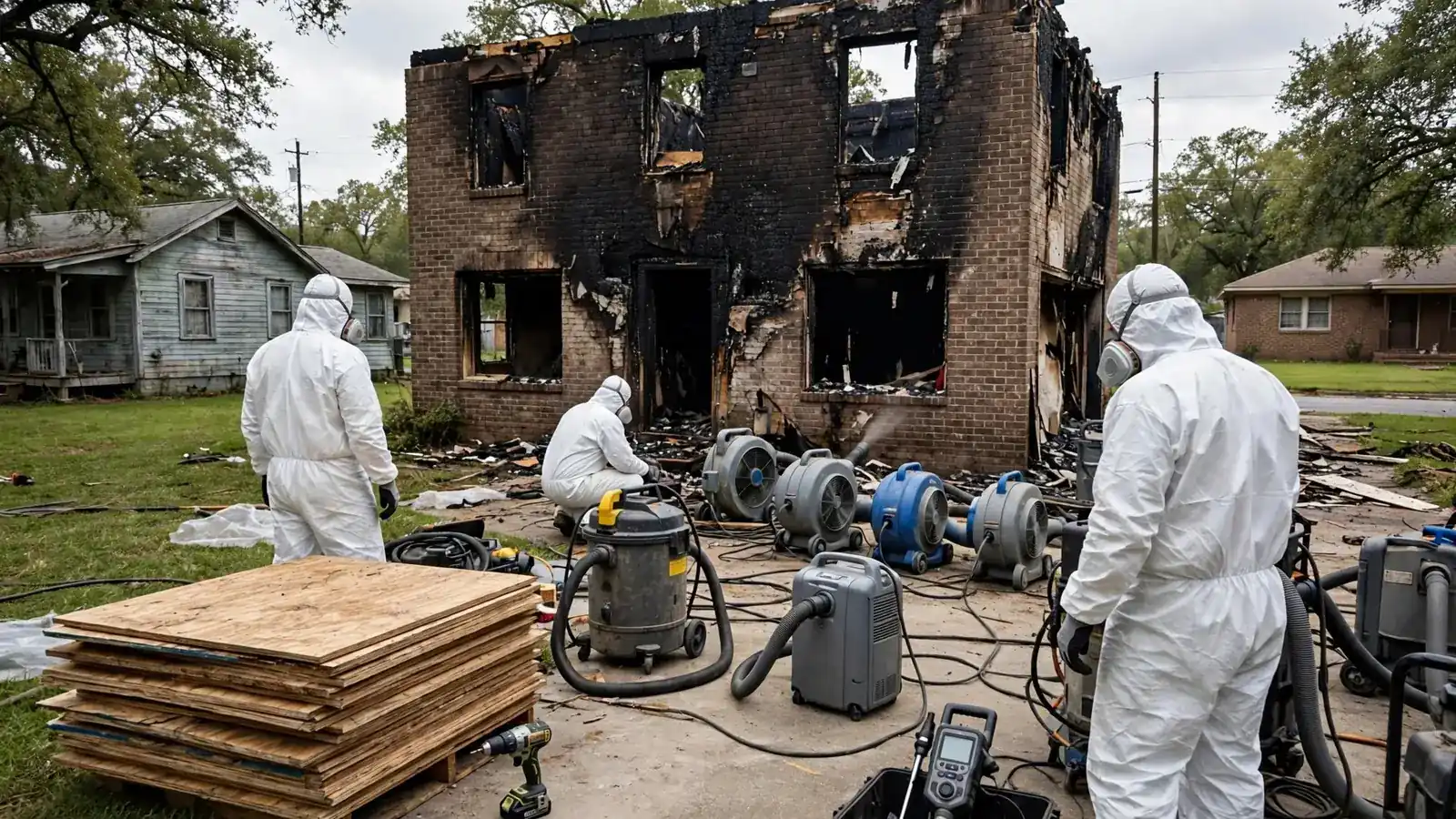
Board-up and tarping buy time. Once the house is closed in, the contractor can assess smoke, soot and water damage room by room without rain or intruders adding to the list. In Fairmount that assessment often reaches the attic and crawl space, because older framing lets damage travel between floors. Our page on Fairmount's housing explains why these houses behave that way.
Check the covers after every storm until permanent repairs start. Tarps loosen, battens shift and water finds small gaps. A quick look from the ground after heavy wind, and a photo for your records, can catch a problem before it soaks a ceiling below.
FAQ
Board-Up and Tarping in Fairmount: questions
Will boarding damage my original Fairmount windows?
It does not have to. Panels can be fastened to the opening frame or braced from the inside so the sash and casing are not drilled through, which keeps them repairable.
Do I need city approval to board up or tarp a historic house?
Temporary protection after a fire is generally treated differently from permanent changes, but permanent exterior repairs in a Fort Worth historic district can need review [3]. Ask the city if you are unsure.
How soon should a burned roof be tarped?
As soon as the house is released and it is safe to work. Rain on an open roof soaks plaster, insulation and floors below, which adds water damage to the fire damage.
Sources and citations
- [1]U.S. Fire Administration: After a fire
- [2]National Weather Service: Dallas/Fort Worth forecast office
- [3]City of Fort Worth: Historic districts
- [4]Texas Department of Insurance: Additional living expenses
- [5]Wikipedia: Fairmount–Southside Historic District
- [6]Texas Historical Commission: Fairmount–Southside Historic District boundary increase nomination