Key facts: Board-Up and Tarping in Park Glen
- Hillwood lists Park Glen as one of its master-planned communities, begun in 1987 [5].
- A City of Fort Worth public improvement district created in 1998 serves more than 4,400 Park Glen homes [6].
- Because fire can weaken roofs and floors, the U.S. Fire Administration cautions against walking on a burned structure before it is checked [1].
What securing a Park Glen house involves
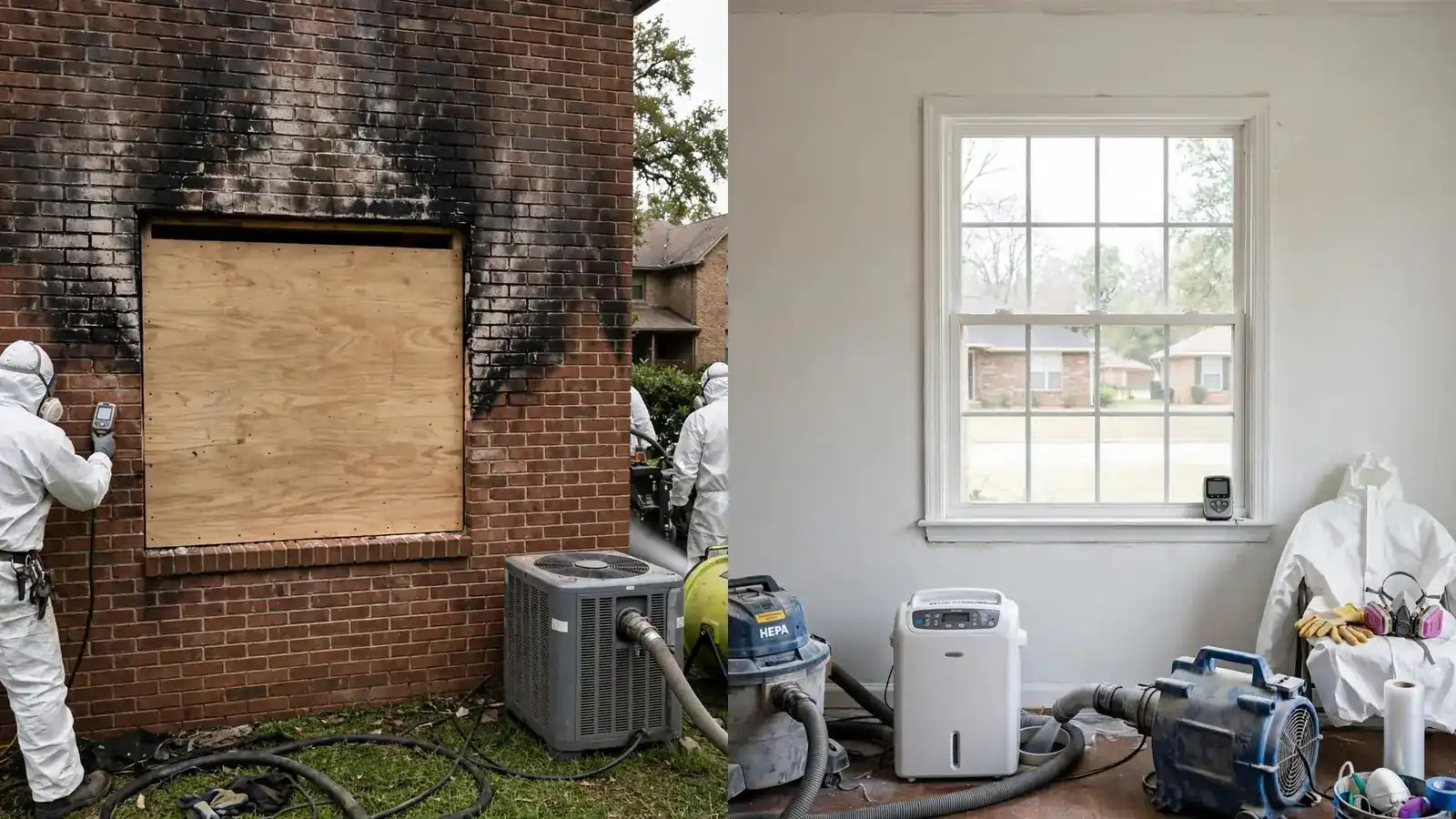
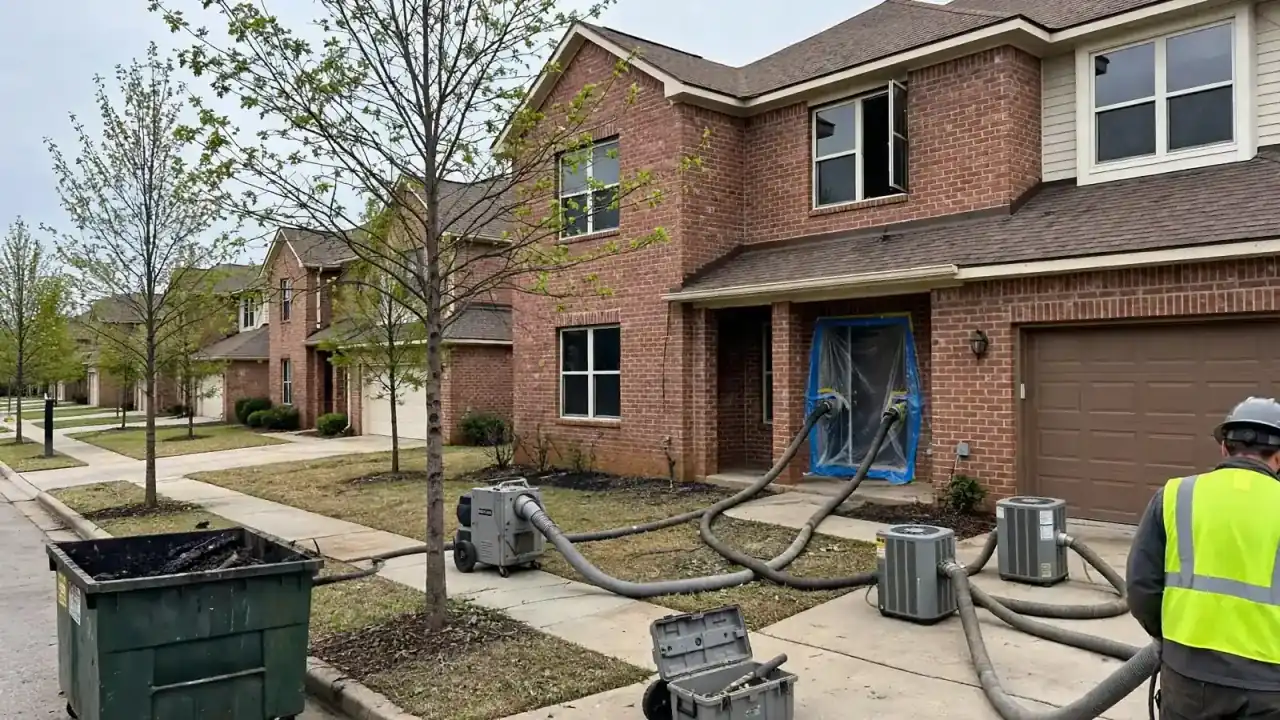
Most Park Glen homes were built from the late 1980s through the 1990s, many of them two-story brick houses with tall entry windows, arched transoms and front-facing garages. When fire breaks glass or burns through the roof, those openings are large and high. Covering a two-story window or a roof over a vaulted living room usually means ladders or a lift rather than work from the ground.
The goal is the same as anywhere: keep rain, wind, animals and people out until the house can be assessed and repaired. A tidy, well-fitted board-up also reassures neighbors on streets where homes sit close together.
Garages and the rooms above them
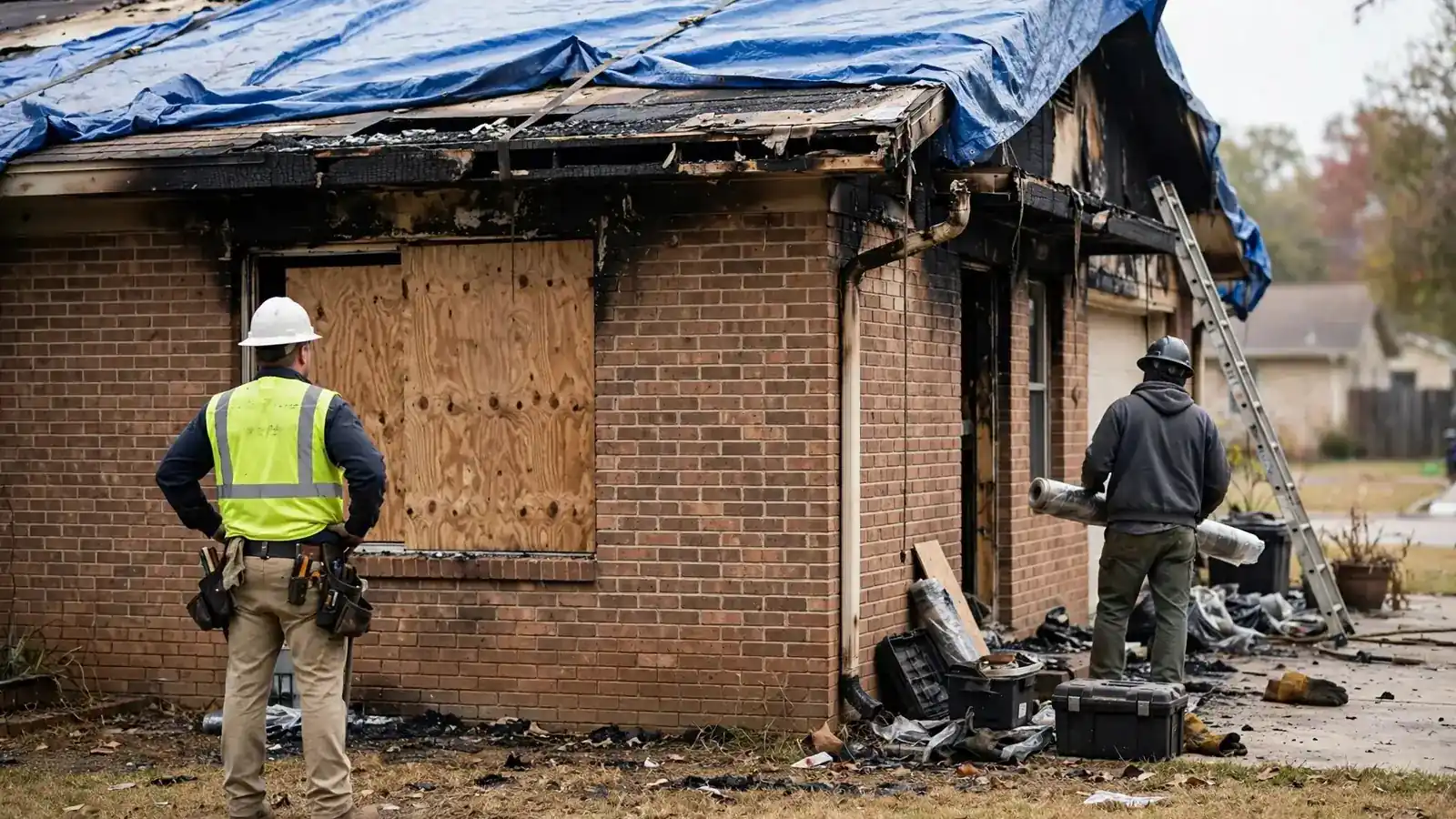
Garage fires are common, and in many Park Glen homes a bedroom or game room sits directly over the garage. A fire there can burn through the garage ceiling into the room above and open the roof. Securing the house may mean boarding the overhead door or a damaged side door as well as covering windows and roof in the room over the garage.
An overhead garage door that has been warped by heat may not close or lock. A panel or brace across the opening keeps the garage, and the door into the house, secure.
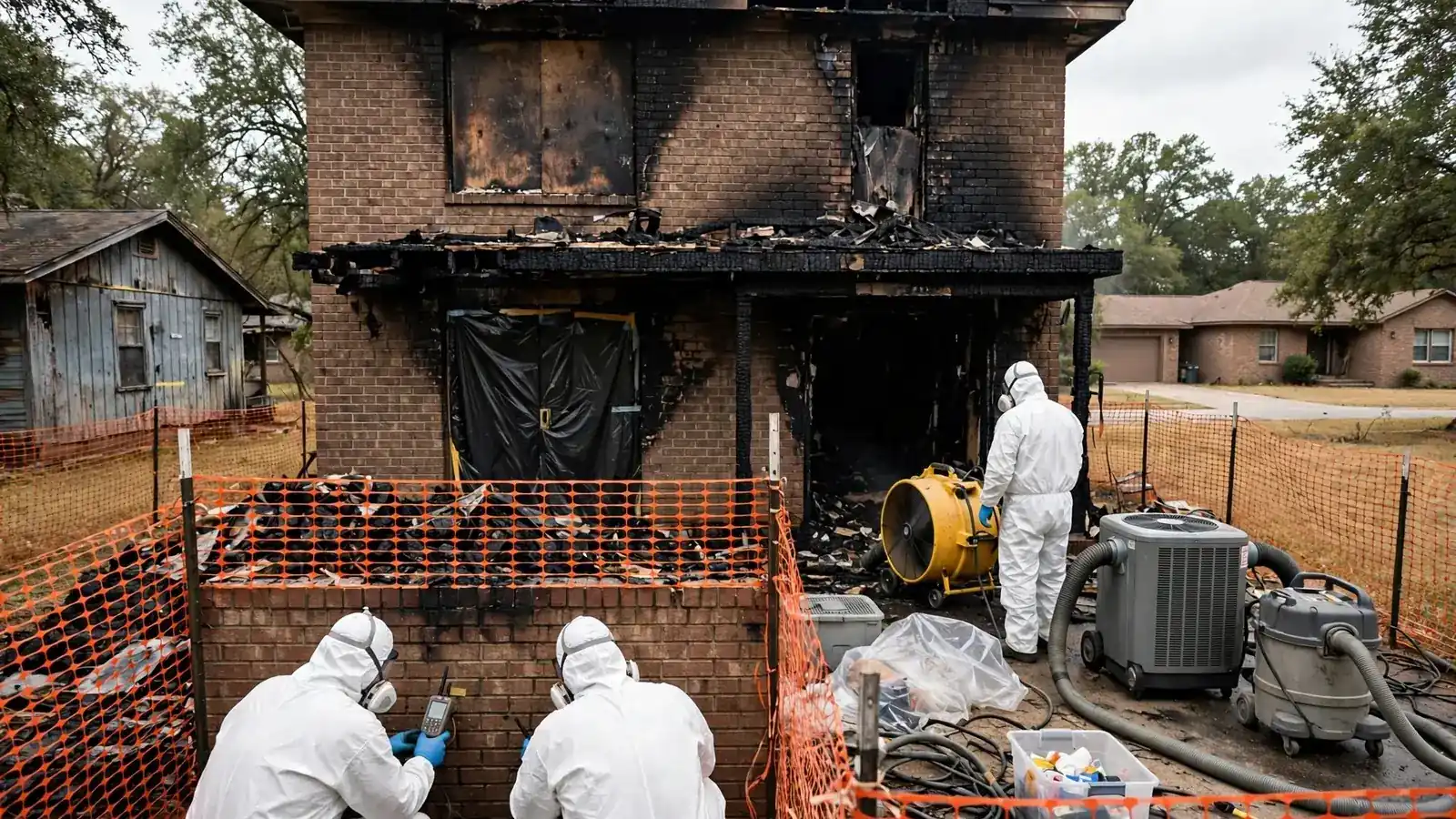
Steps to secure a two-story Park Glen home
A typical order that keeps the crew safe and the house protected.
- 1
Wait for the fire department to release the house
No one goes in or up until the property is released.
- 2
Photograph each elevation and the roof
Front, back, sides and roof from the ground or a safe ladder position.
- 3
Cover ground-floor openings first
Doors and low windows are boarded to block entry right away.
- 4
Tarp upper roofs from a lift or ladder
High roof sections are covered once safe access is set up.
Tall windows, transoms and arched glass
Arched transoms over front doors and tall windows in two-story foyers are typical of Park Glen homes. Plywood can be cut to the shape or fitted to a frame built around the opening. Fastening to the window frame or surrounding brick mold, rather than through decorative trim, makes later repairs simpler.
Large picture windows on the back of the house, facing a yard or greenbelt, are often the first to crack from heat. Boarding them also blocks a common route for weather to get in.
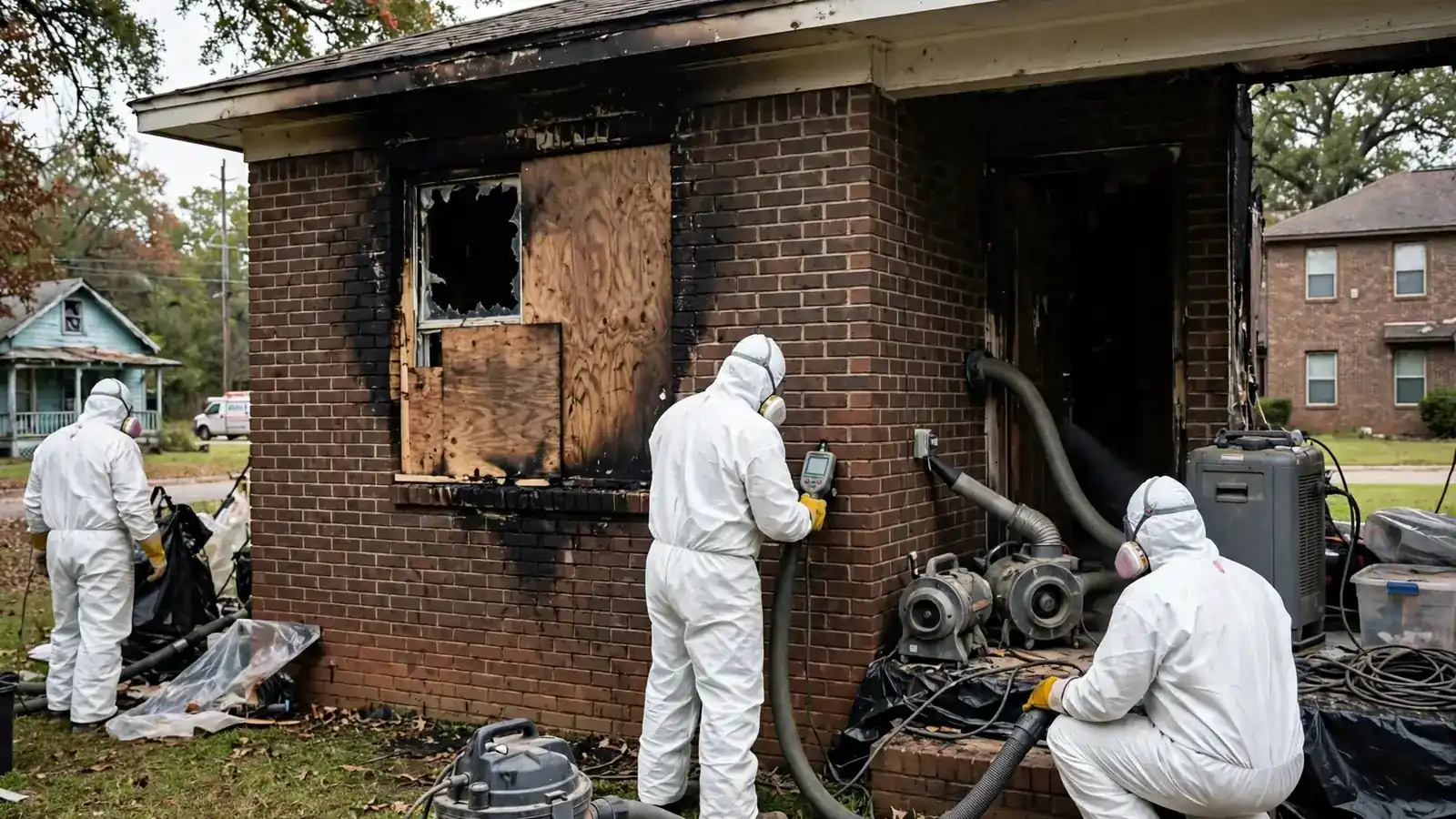
Homeowners association rules and appearance
Many Park Glen streets fall under homeowners association guidelines for exterior appearance. Temporary board-up and tarping after a fire are generally understood as necessary, but keeping them neat and promptly replacing them with permanent repairs helps. If your association has a contact for exterior work, letting them know what happened can head off questions.
Permanent exterior repairs, such as new windows, roofing or brick, may need association approval as well as city permits. The contractor can help you plan those once the house is secure.
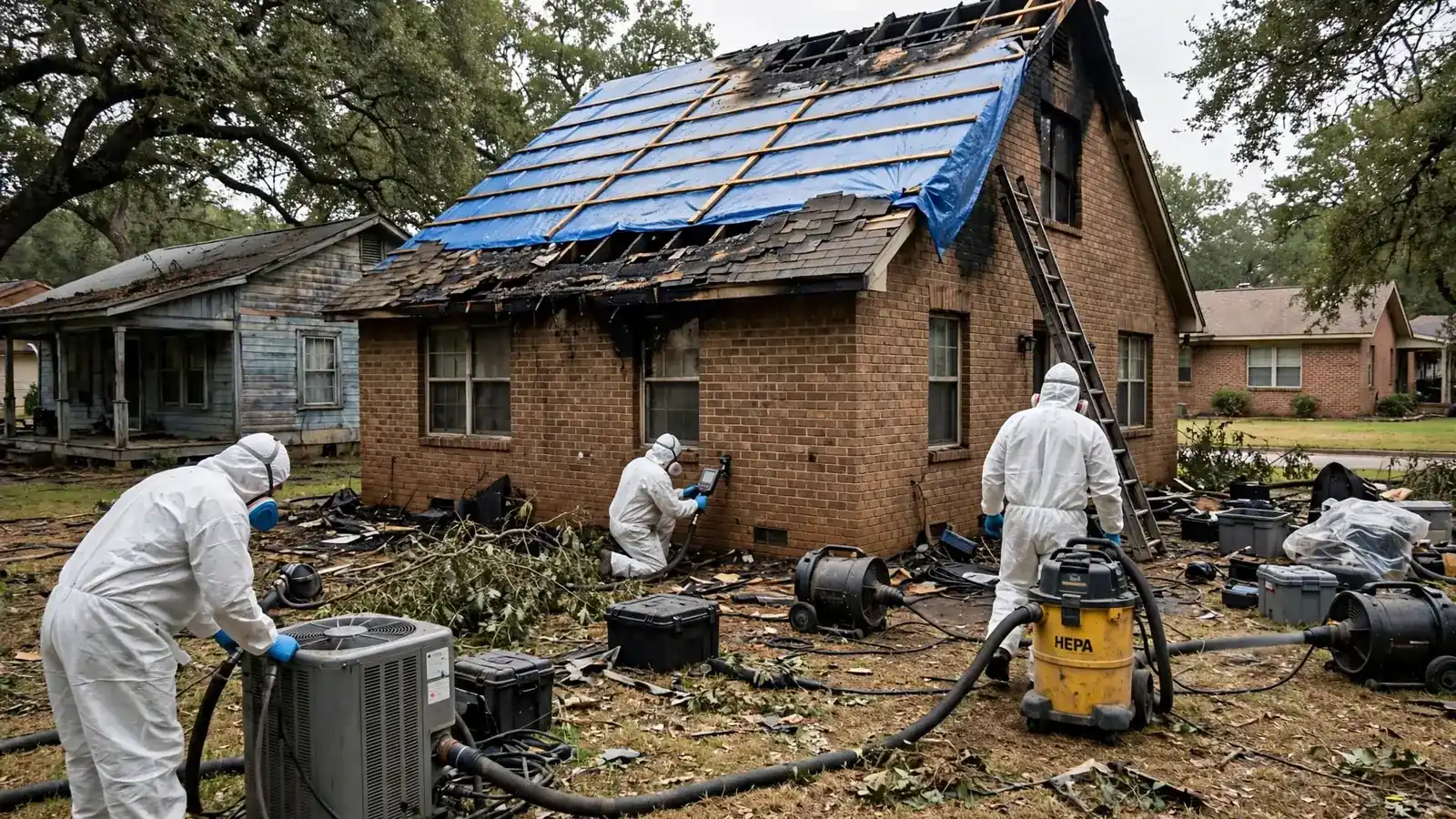
Storm season in north Fort Worth
North Fort Worth sees strong spring thunderstorms, hail and gusty winds. A tarp on a two-story roof catches more wind than one on a low roof, so it must be well anchored with battens along every edge. The National Weather Service office for Dallas–Fort Worth posts forecasts that help in planning roof work [2].
After any storm, look at the tarps from the ground and photograph them. If one has shifted or torn, call to have it fixed before the next rain.
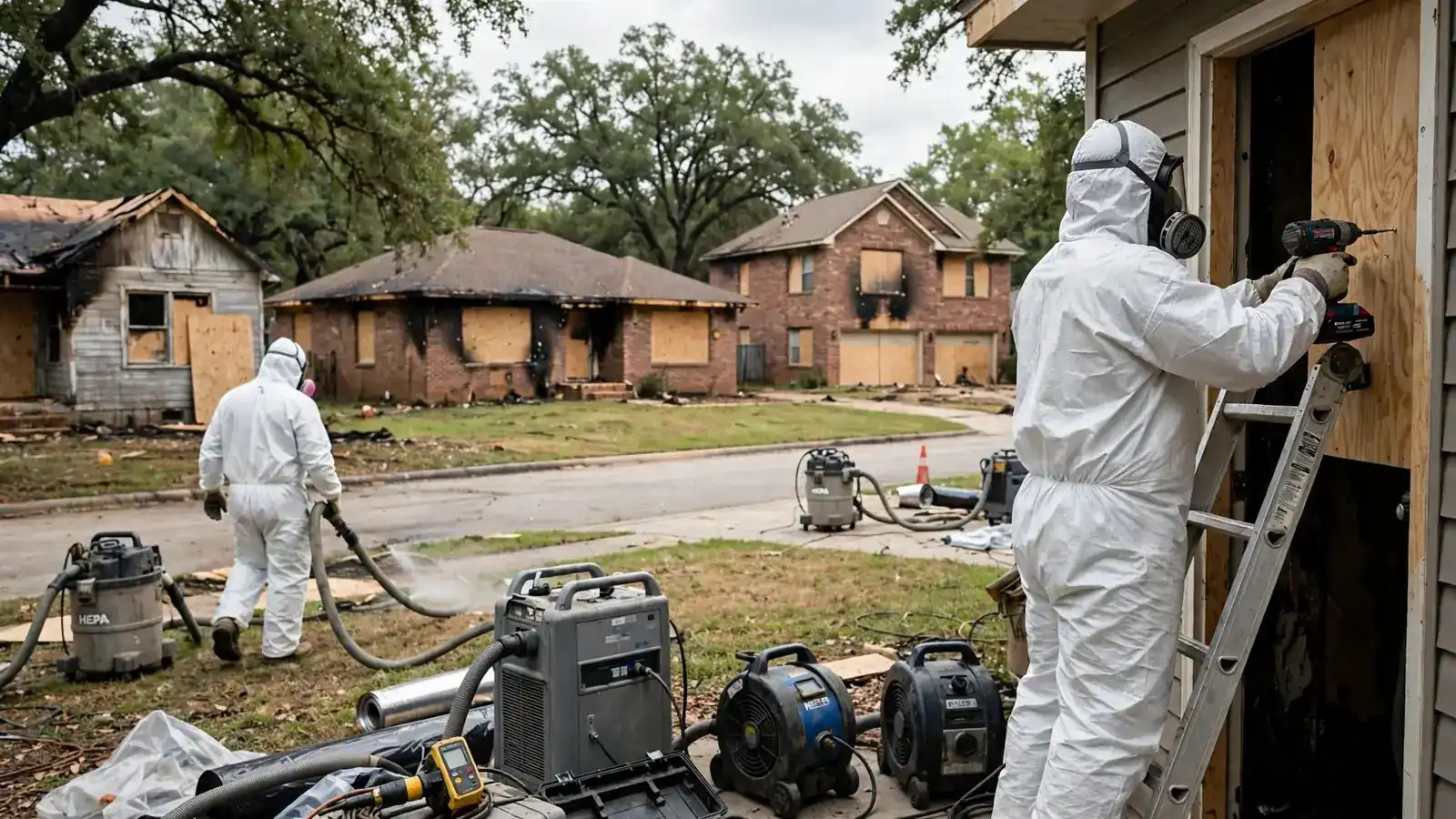
Details that help the crew arrive ready
Share these when you call.
- Number of stories and roof heightTwo-story roofs need lifts or extra ladders.
- Which openings are brokenFront windows, back windows, garage doors or entry doors.
- Whether a room over the garage was involvedThe fire may have reached the upper floor.
- Gate codes or HOA access rulesSome areas have access details the crew needs.
Valuables, vehicles and the garage
If cars were in the garage during the fire, they may be damaged by heat or smoke and should be moved out once it is safe. Vehicle damage is usually handled under auto insurance rather than the home policy. Tools, sporting goods and stored items in the garage should be photographed before anything is moved.
Inside the house, collect important documents, medications and small valuables once the fire department allows it, and note what you removed.
What happens after the house is closed in
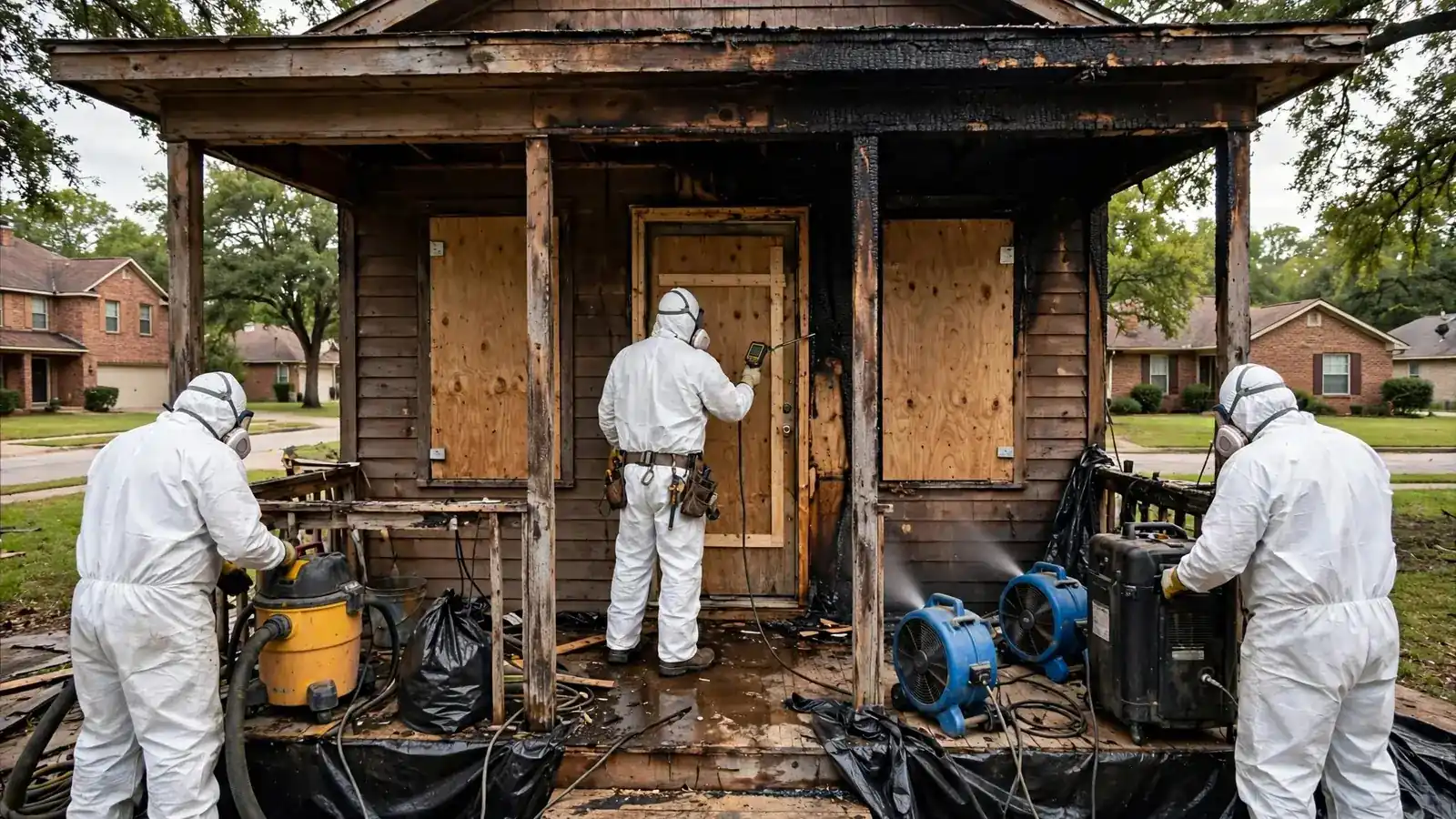
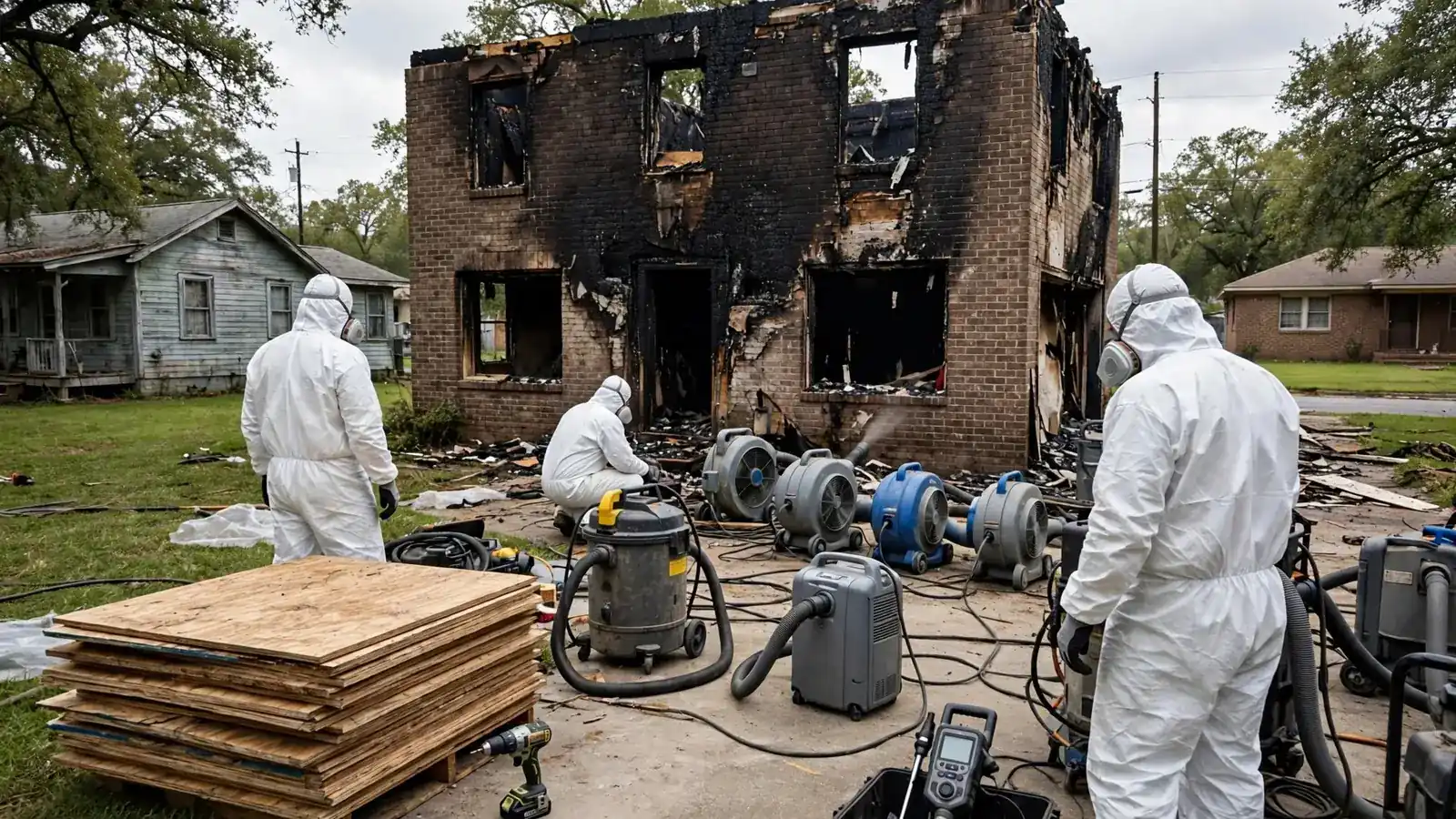
Once the house is secure, the contractor can assess smoke, soot and water damage. In two-story homes, smoke often reaches upstairs rooms and the attic, and water used on an upper floor runs through ceilings below. Our pages on water damage from firefighting and Park Glen homes explain what usually follows.
Families displaced from a large Park Glen home often need a rental for weeks; save every lodging and meal receipt, and see how the Texas Department of Insurance describes additional living expense coverage [4].
FAQ
Board-Up and Tarping in Park Glen: questions
Do I need HOA approval to board up my house?
Temporary protection after a fire is usually accepted, but it is wise to let your association know. Permanent exterior repairs may need approval.
Can my warped garage door be secured?
Yes. A heat-warped overhead door can be braced or covered with a panel so the garage and house stay secure.
How are high two-story roofs tarped safely?
Crews use lifts or ladders set up on solid ground, and only work on the roof after checking that the decking is sound.