Key facts: Firefighting Water Damage in Park Glen
- The EPA says water-damaged materials should be dried within 24 to 48 hours to prevent mold [1].
- Professionals follow the IICRC S500 standard for water damage assessment, extraction and drying [2].
- Engineered flooring and particleboard cabinets, common in 1990s homes, often cannot be dried and kept after soaking [5].
Water coming through the ceiling
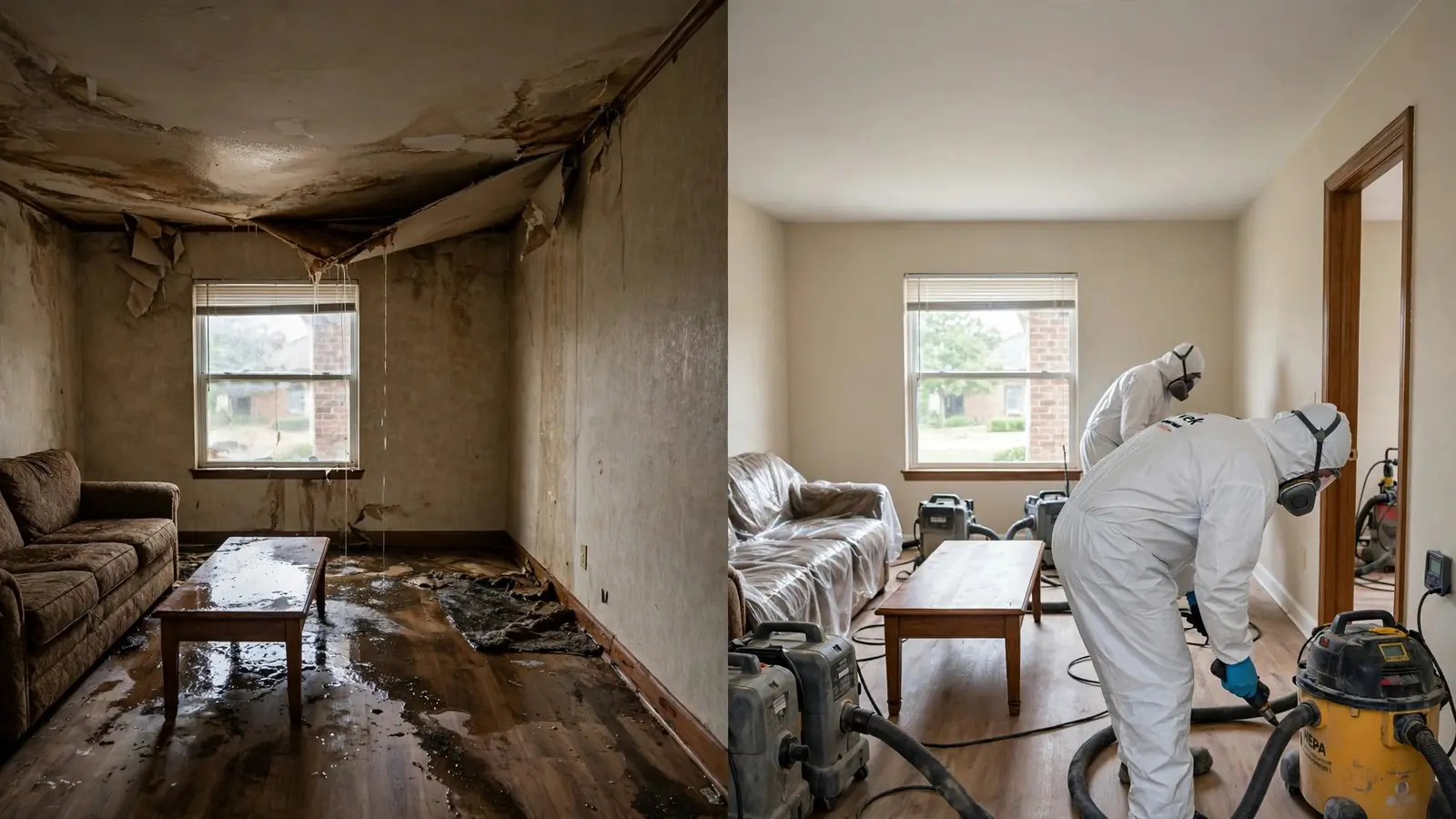
In two-story homes, water sprayed on an upper floor soaks through carpet and subfloor and into the ceiling below. Drywall ceilings can sag and fall when they hold enough water. Light fixtures and ceiling fans may fill with water. Keep people out of rooms where the ceiling is bulging or dripping.
Once the house is released, the contractor will open or remove wet ceiling sections so the space between floors can dry.
Engineered floors and particleboard
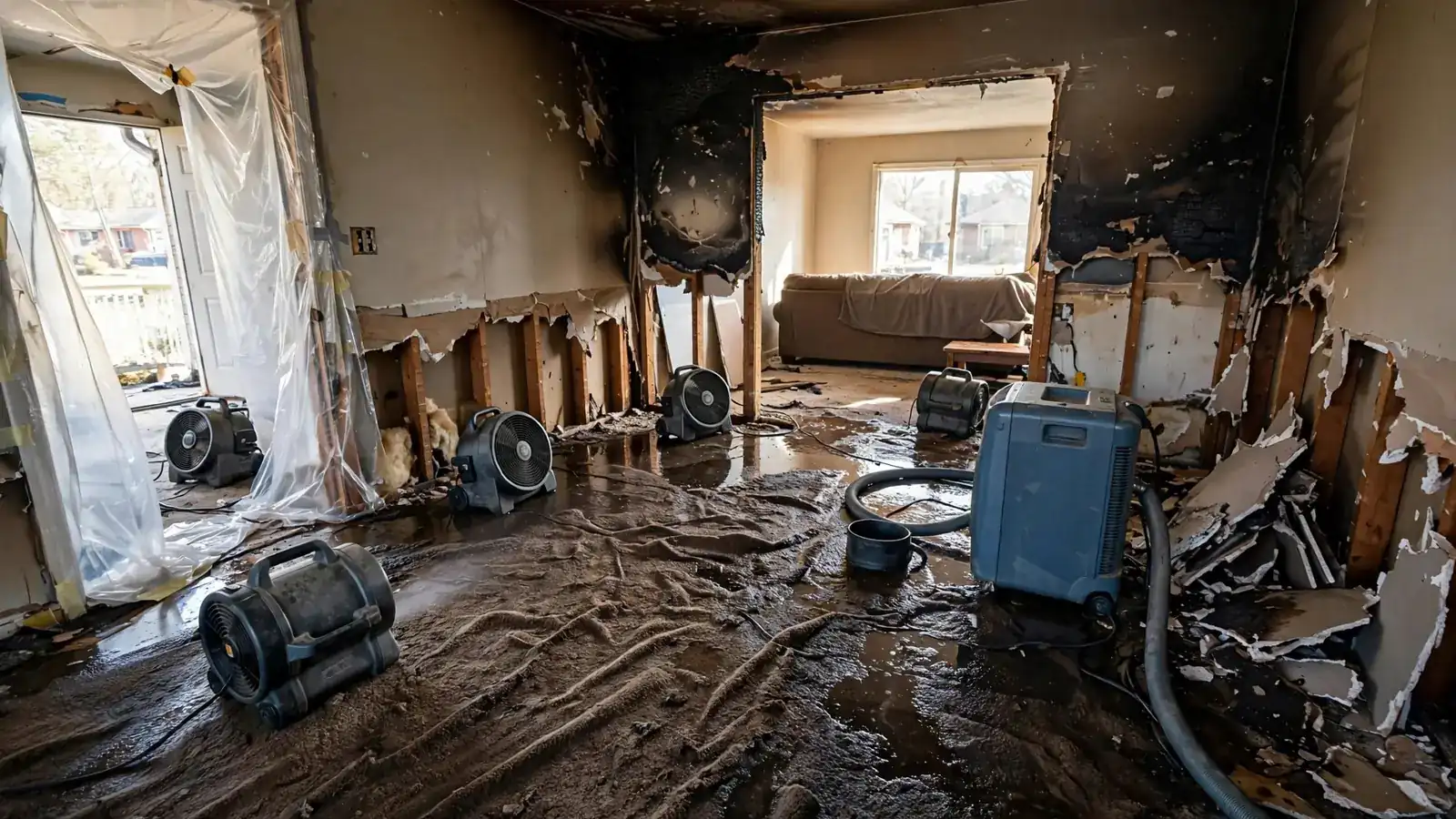
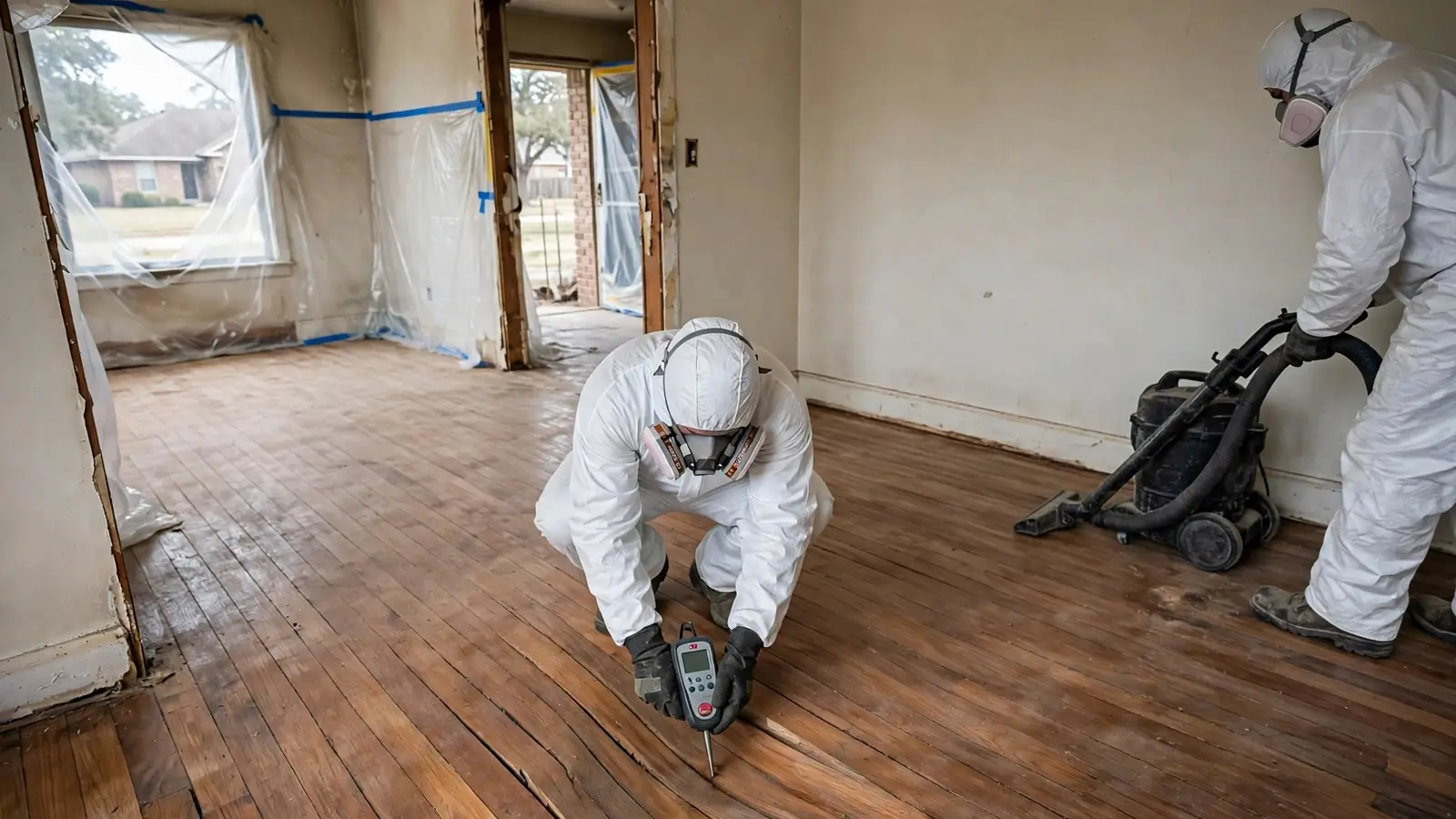
Engineered wood floors have a thin wood layer over a plywood or fiberboard core. They can swell, delaminate or buckle when soaked, and many cannot be dried back to flat. Particleboard cabinet boxes swell and lose strength when wet. These materials often need replacement even after drying.
Tile floors usually survive water, but water can sit under them on the slab and needs to be dried.
Drying a two-story Park Glen home
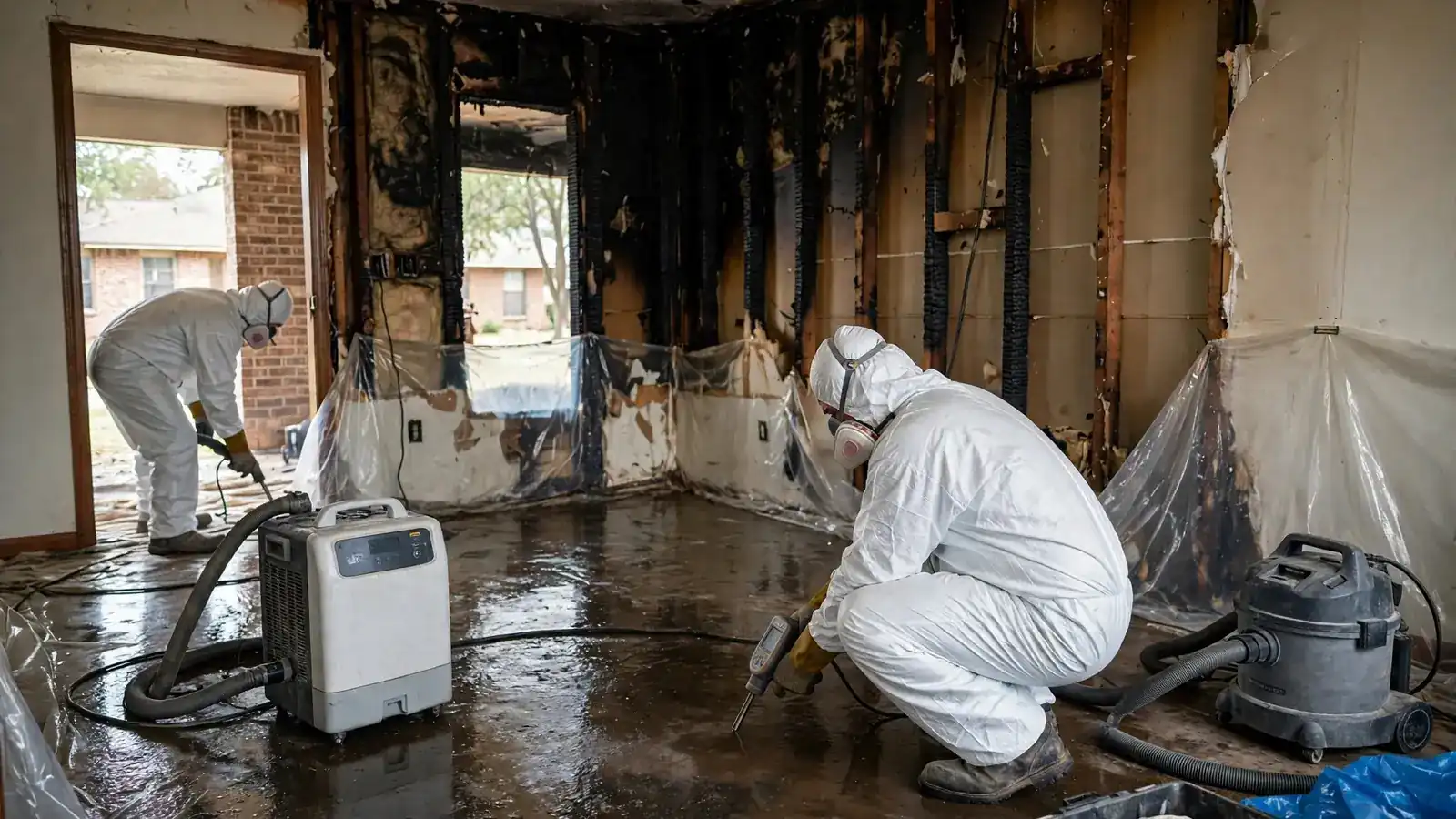
The usual order.
- 1
Extract water from carpets and floors
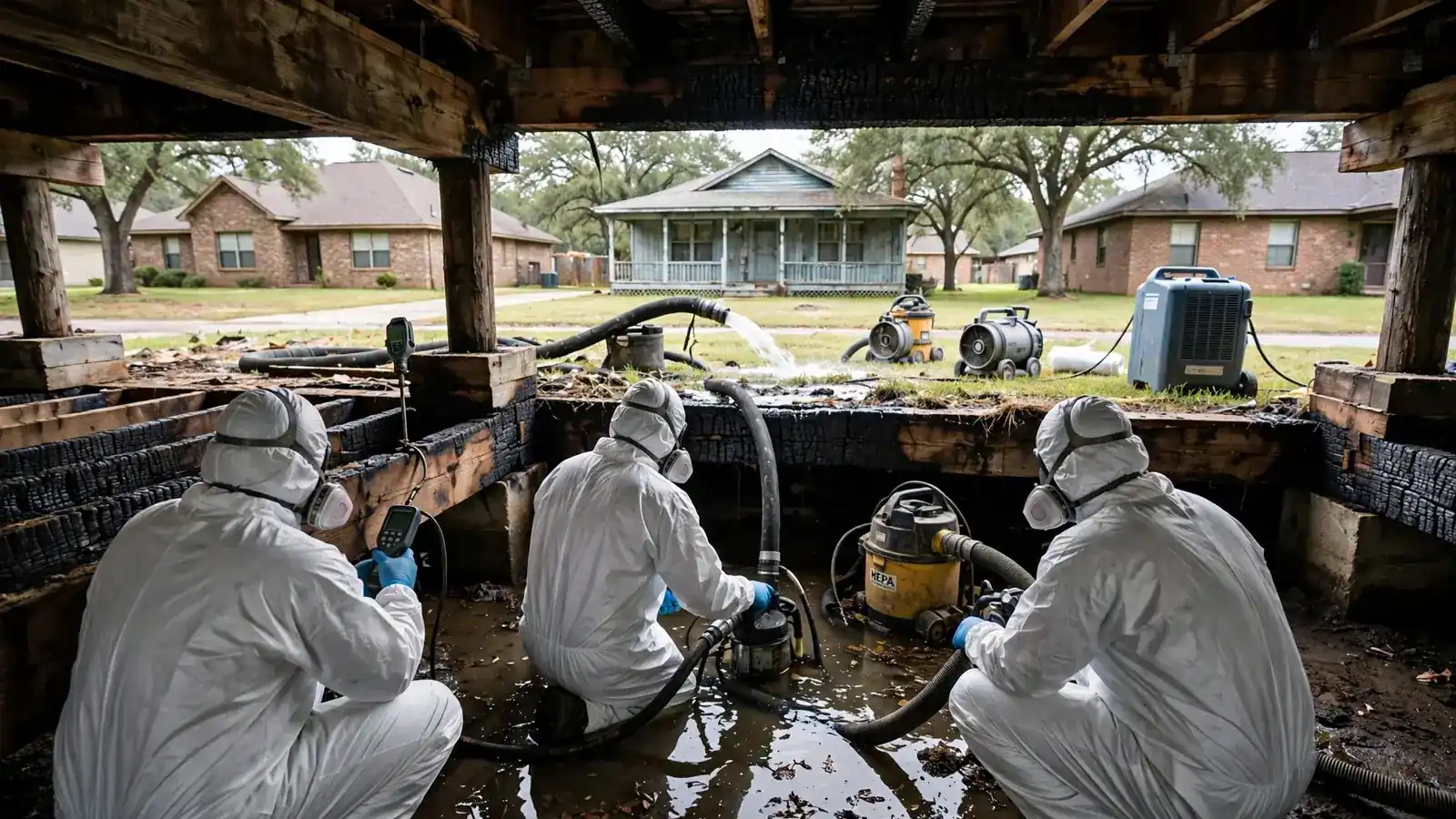
Standing water is removed upstairs and down.
- 2
Open wet ceilings and walls
Sections are removed so cavities can dry.
- 3
Place dehumidifiers and air movers
Equipment is placed on both floors.
- 4
Monitor until materials are dry
Daily readings until normal levels are reached.
Water on a slab foundation
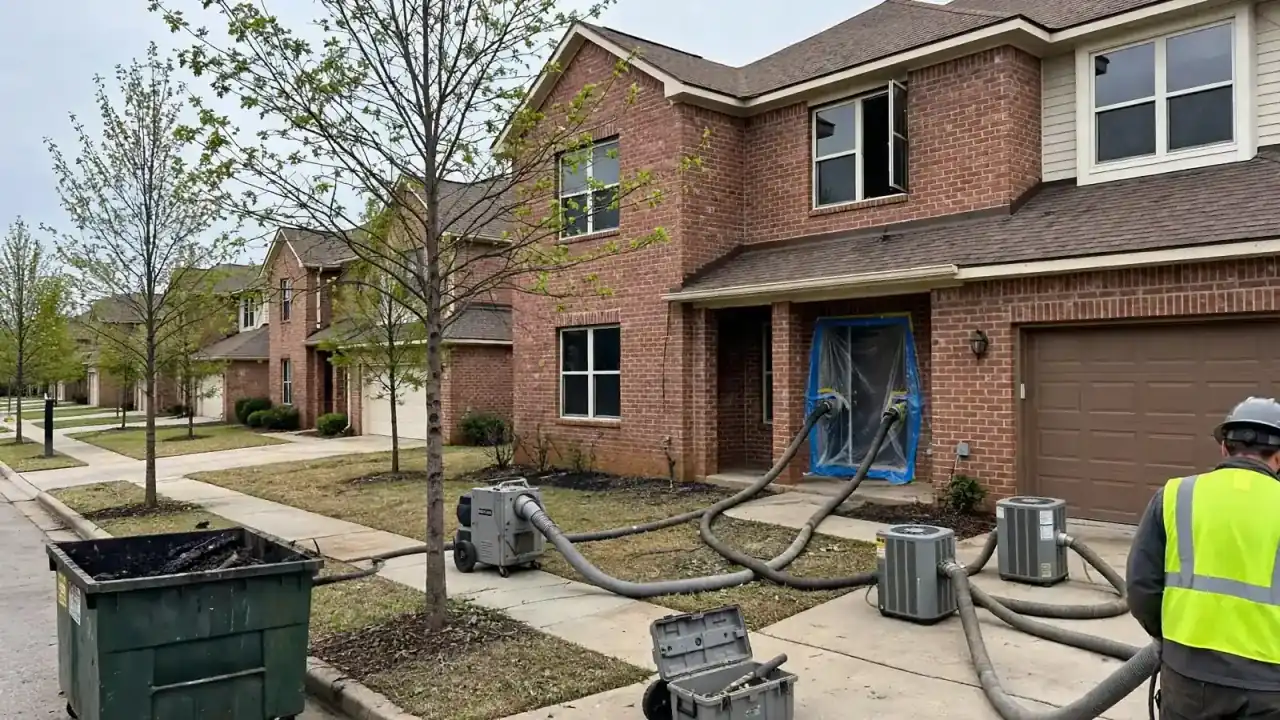
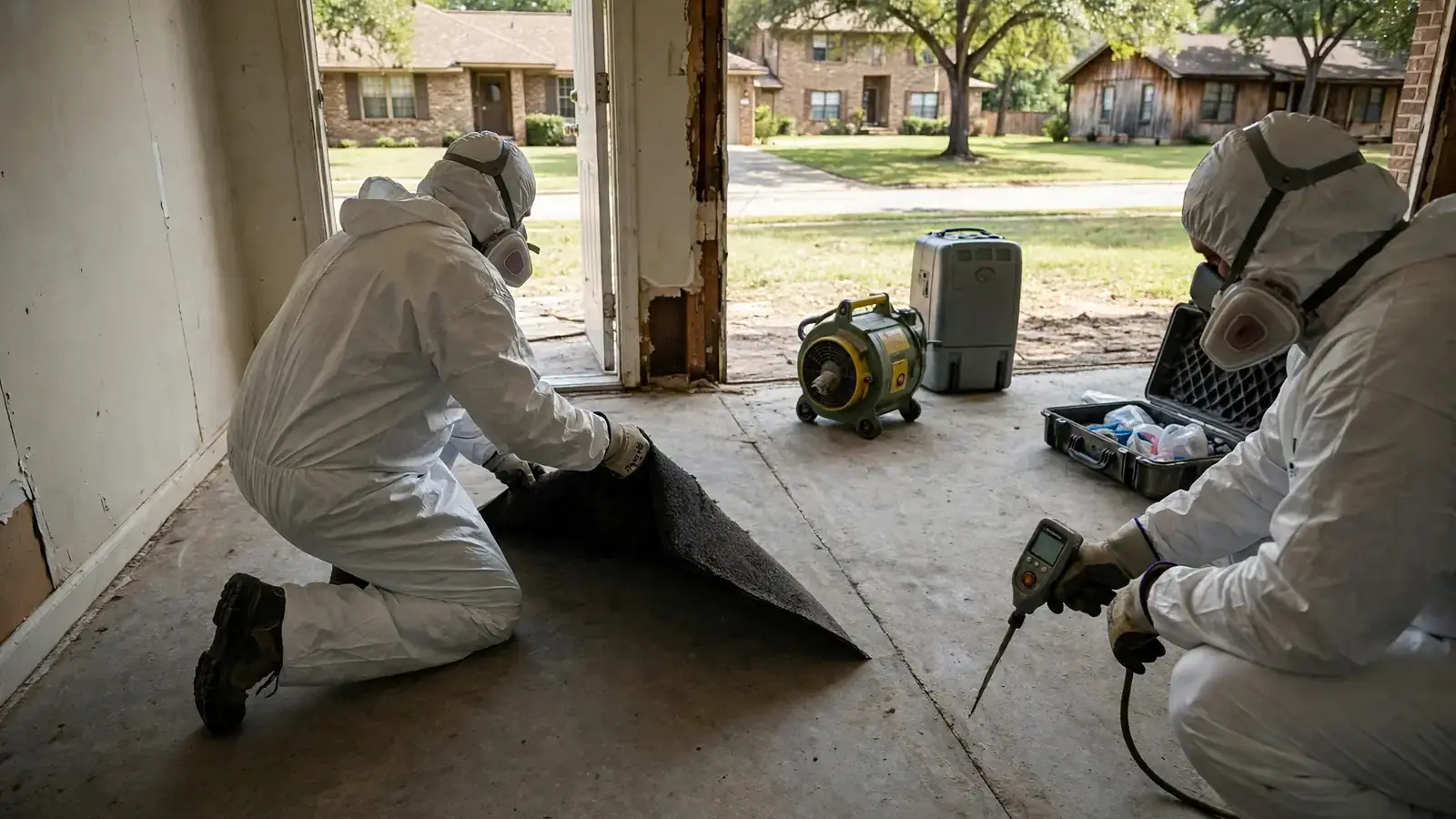
Most Park Glen homes are built on concrete slabs. Water reaching the ground floor spreads under flooring and into the bottom of walls. It can also soak baseboards and the lower edge of drywall. Moisture meters help find where water has traveled.
Carpet pad on a slab can hold water for a long time and is usually removed.
Insulation and wall cavities
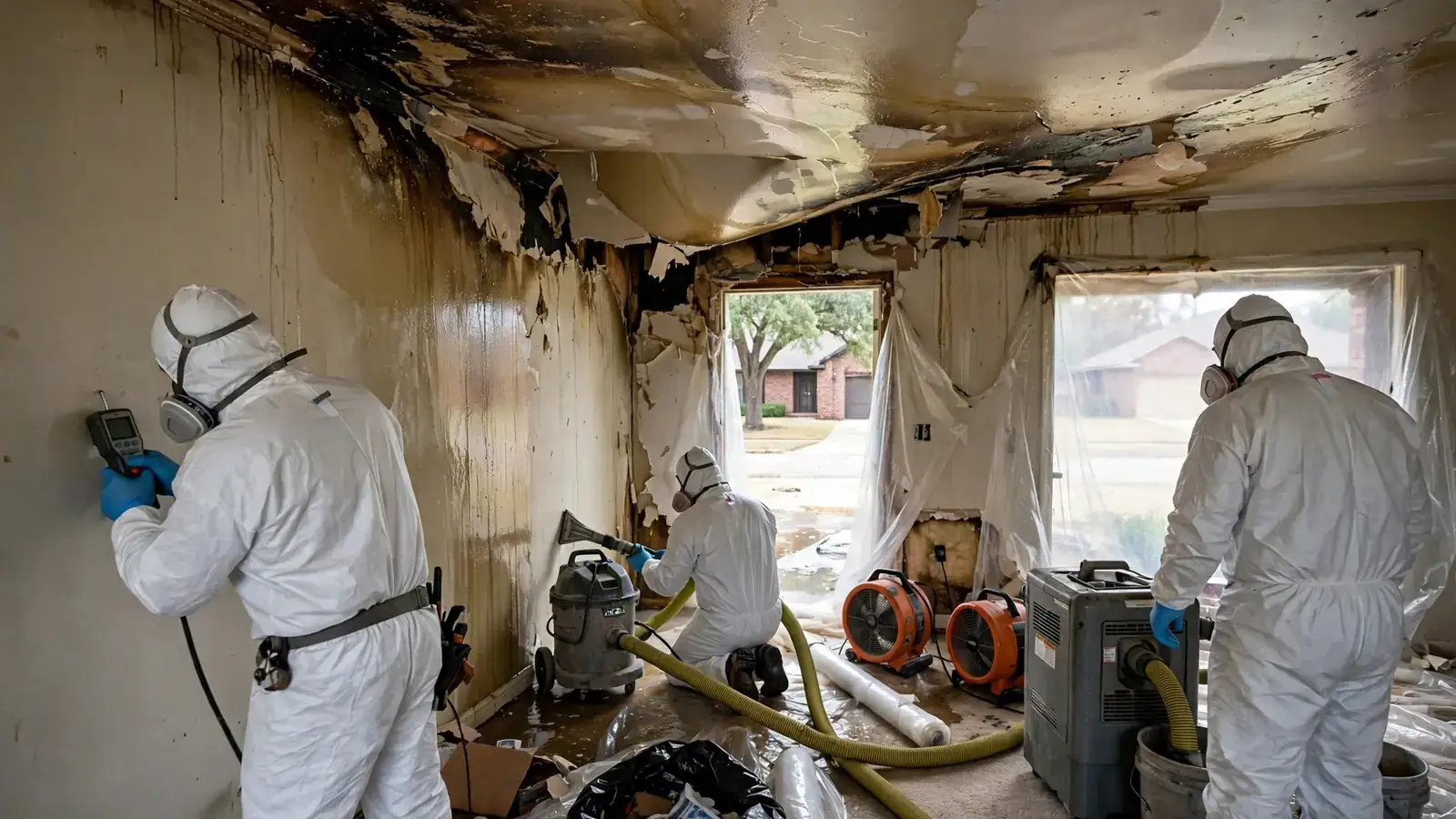
Walls between floors and exterior walls contain insulation that absorbs water. Wet insulation stays wet a long time and holds moisture against framing. It is usually removed from wet areas so the cavity can dry.
Small holes drilled near the bottom of walls can also help air reach wet cavities without removing whole sections of drywall.
Signs water is still present
Look for these after firefighting.
- Sagging or stained ceilingsWater is held above the drywall.
- Buckling floorsEngineered floors swelling from below.
- Swollen cabinet basesParticleboard soaking up water.
- Musty odorDamp materials may be starting to grow mold.
Mold risk and fast drying
Fort Worth's warmth and humidity help mold grow. The EPA advises drying within a day or two [1], so drying should start as soon as possible after the fire. If mold appears, it may need separate cleanup before rebuilding.
Our Park Glen page describes the slab foundations and two-story framing that shape drying in this community.
Contents in wet rooms
Furniture, rugs, electronics and boxes in rooms below the fire may be soaked. Moving them out of wet areas quickly helps. Some can be dried and cleaned; others cannot. Photograph everything before moving it.
The U.S. Fire Administration notes that items not burned can still be ruined by water [3], so contents need their own assessment.
From drying to cleanup and repairs
Once materials are dry, smoke damage cleanup and rebuilding can begin. Rebuilding before drying is complete can trap moisture and cause mold later.
While the house dries, keep hotel and meal receipts; the Texas Department of Insurance describes how additional living expense coverage generally works [4].
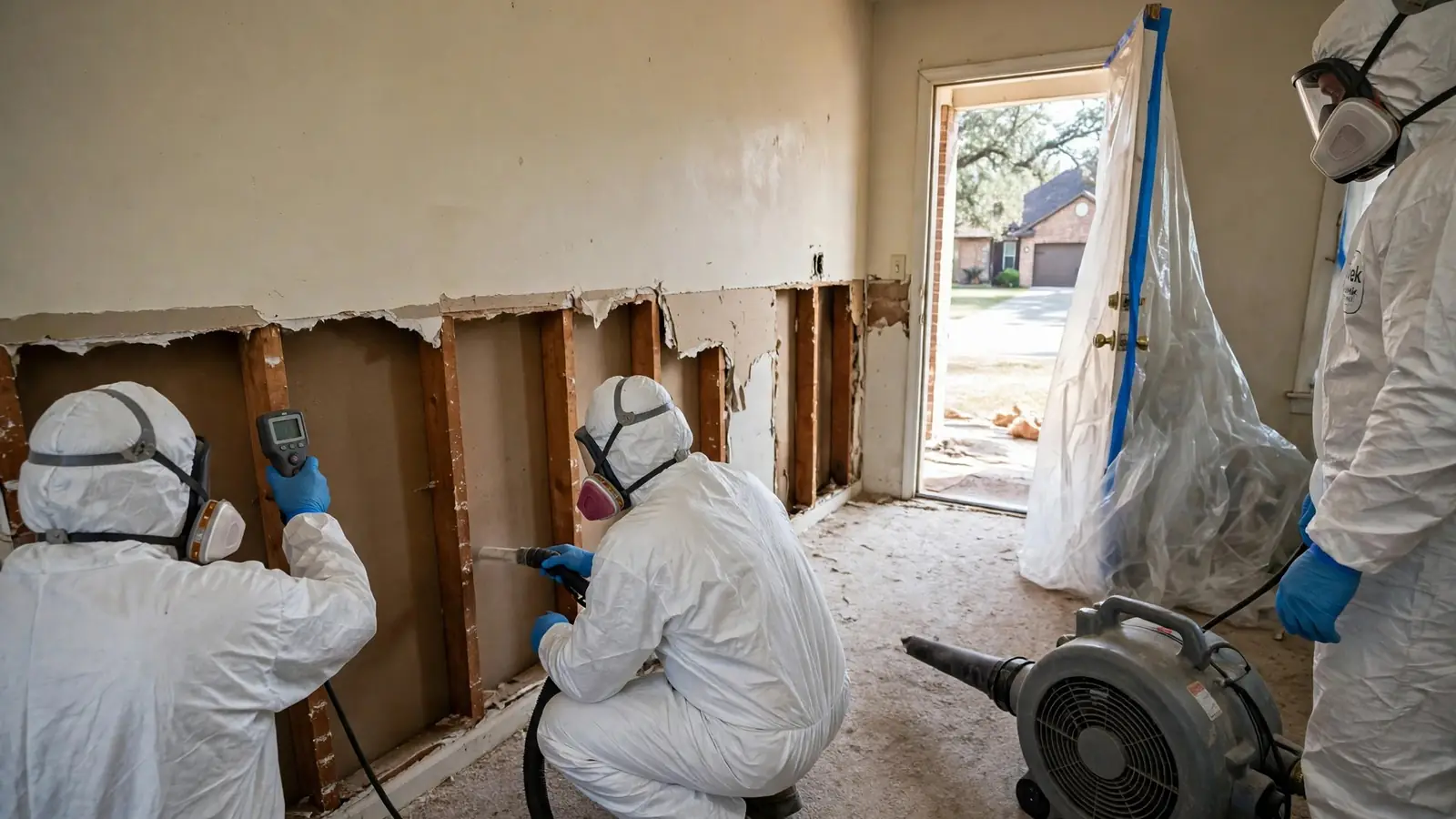
Rooms over the garage and the garage ceiling
If firefighters worked on a room over the garage, water often comes straight through the garage ceiling. That drywall may need to come down, and anything stored on garage shelves below can be soaked. The garage slab usually dries quickly once standing water is pushed out, but the walls and ceiling need drying like any other room.
Cars parked in the garage during the fire should be moved out so the space can be dried and cleaned.
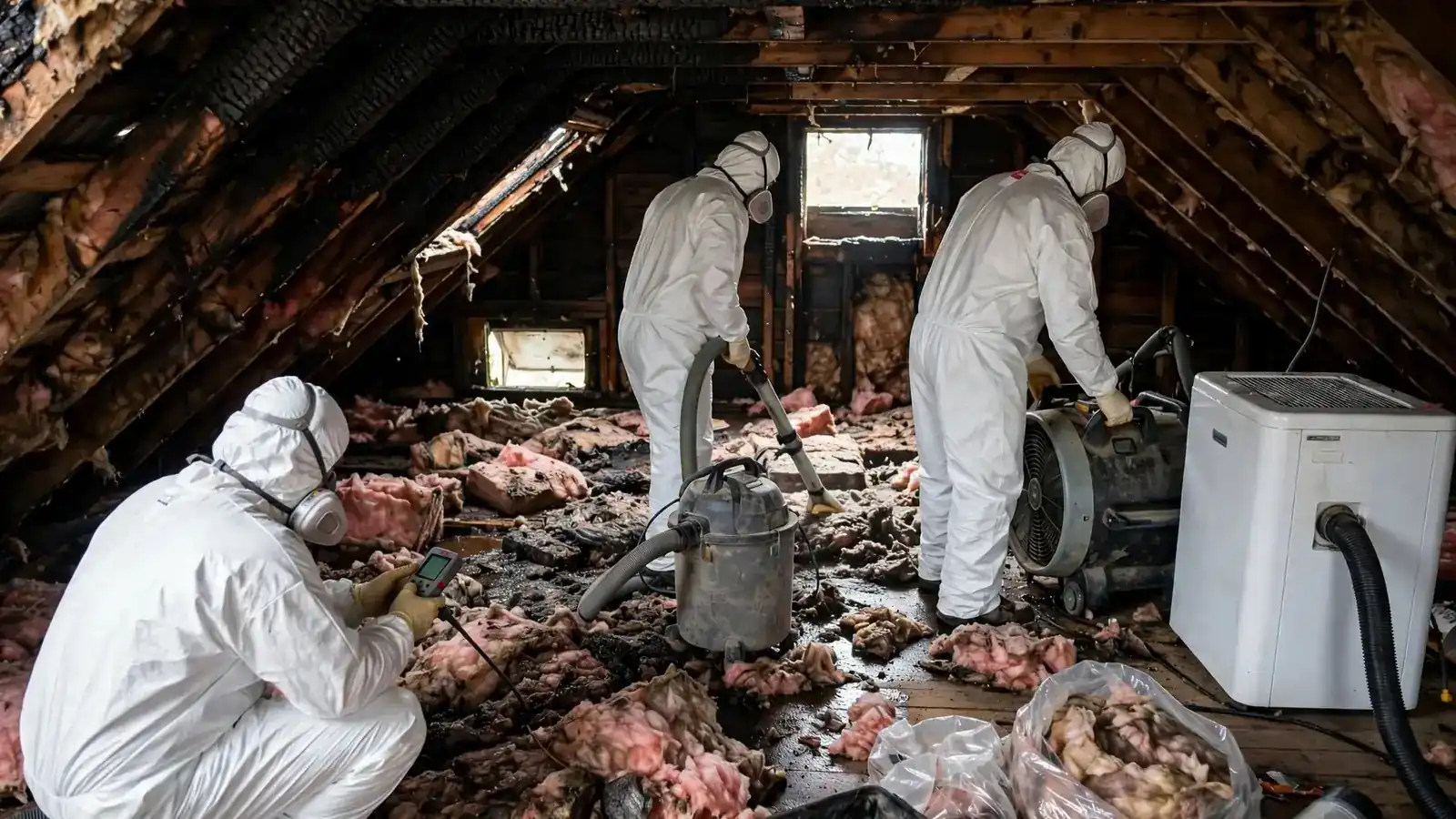
Upstairs carpet and pad
Carpet and pad upstairs absorb a large amount of water before it ever reaches the ceiling below. Pad is usually removed because it dries slowly and can hold contamination from the fire. Carpet may sometimes be dried and cleaned, but if it was soaked with dirty firefighting water it is often replaced.
Removing wet pad also exposes the subfloor so it can dry before new flooring goes down.
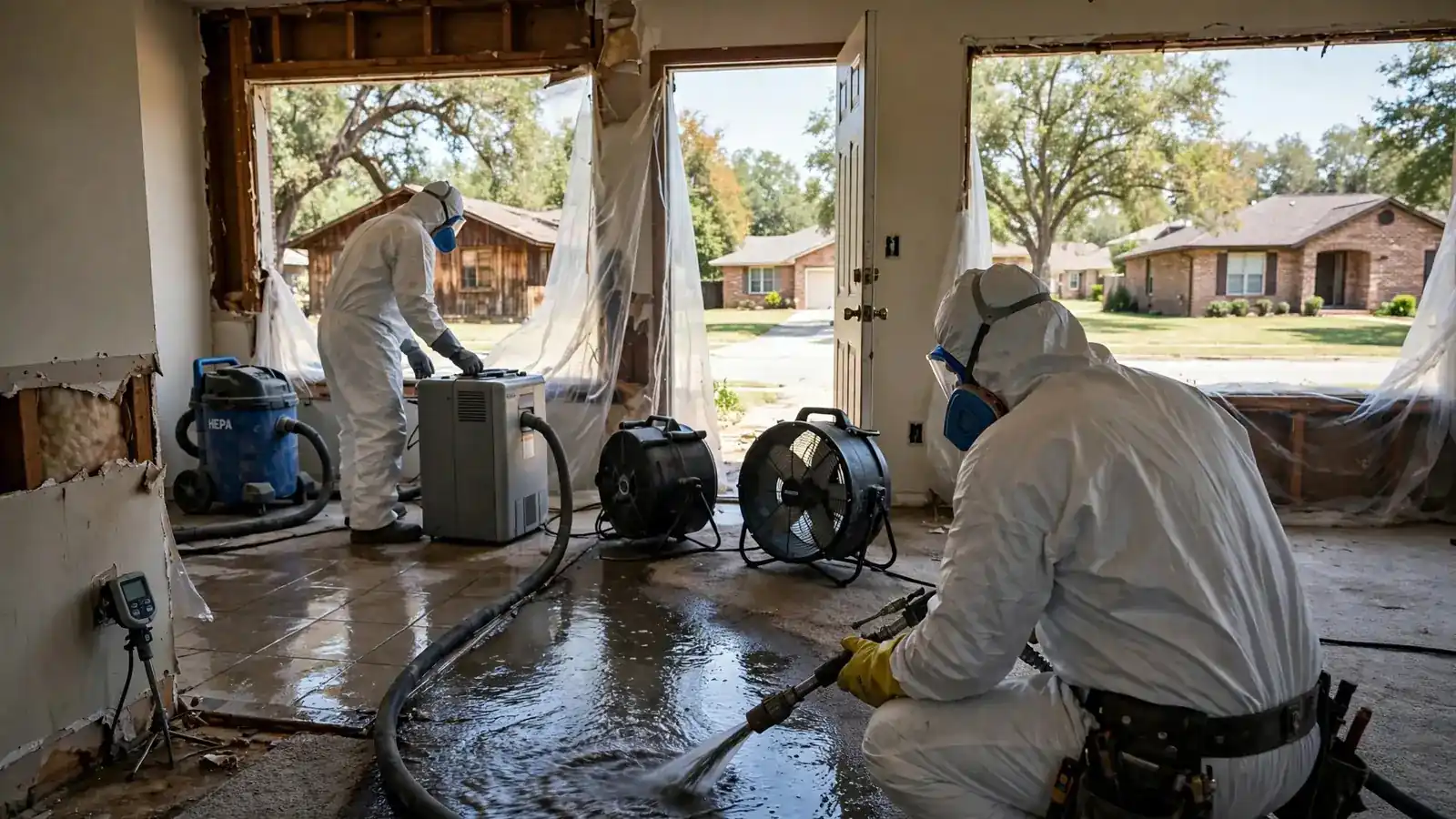
FAQ
Firefighting Water Damage in Park Glen: questions
Why is water coming through my downstairs ceiling?
Water used upstairs soaks through floors and into the ceiling below. The ceiling may need to be opened to dry.
Can engineered floors be saved after water damage?
Sometimes, but many swell or delaminate. The contractor will check and explain.
How long does drying take in a two-story house?
Often several days, depending on how much water was used and what materials absorbed it.