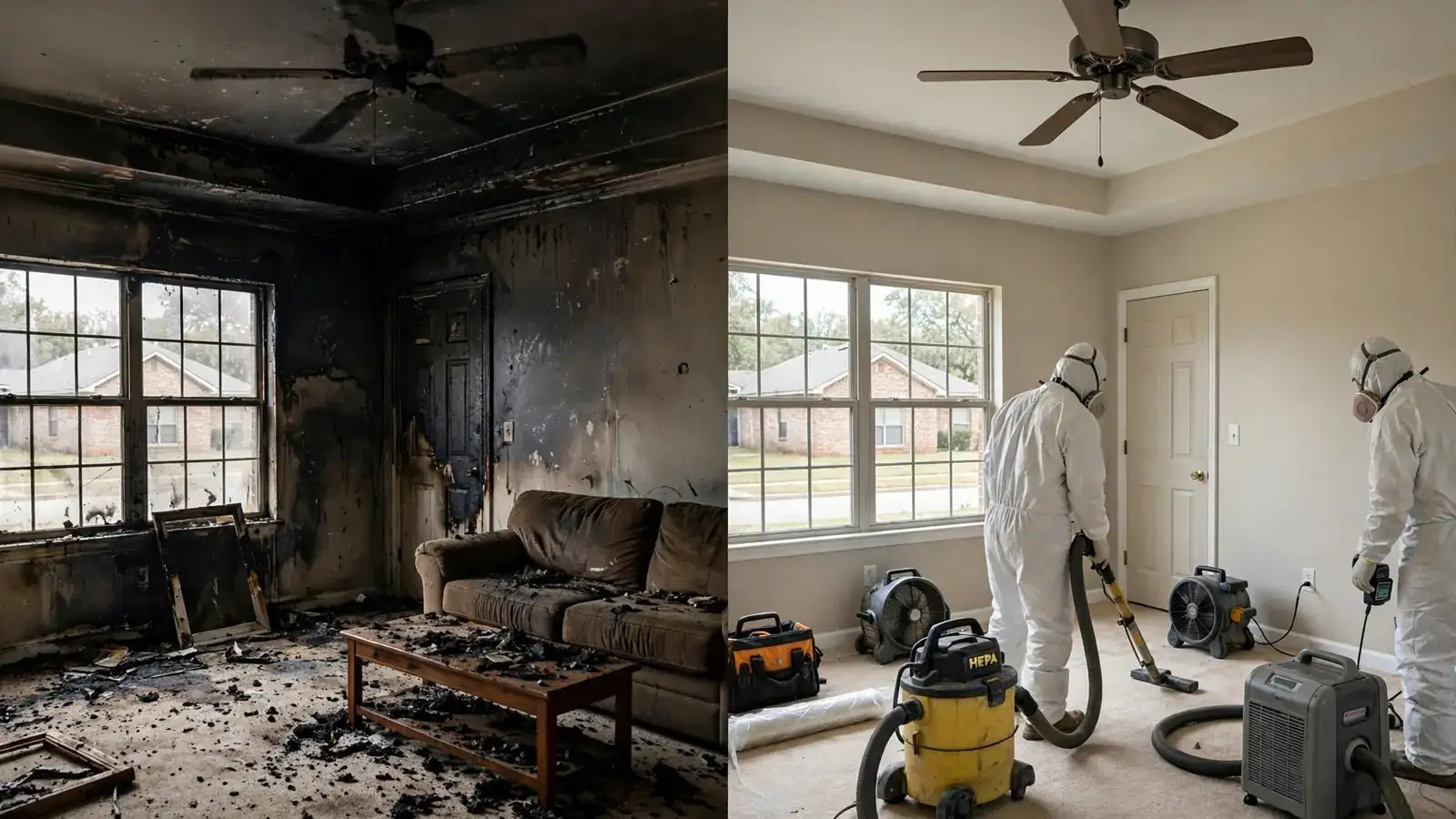

Key facts: Soot Removal in Tanglewood
- Soot may contain substances that make people sick, so the U.S. Fire Administration advises understanding the risk before cleaning [1].
- The IICRC S700 standard explains how professionals choose dry or wet methods for fire residue [2].
- Asbestos may be present in mid-century textured ceilings and floor tile and should be tested before disturbing [4].
Soot along hallways and ceilings
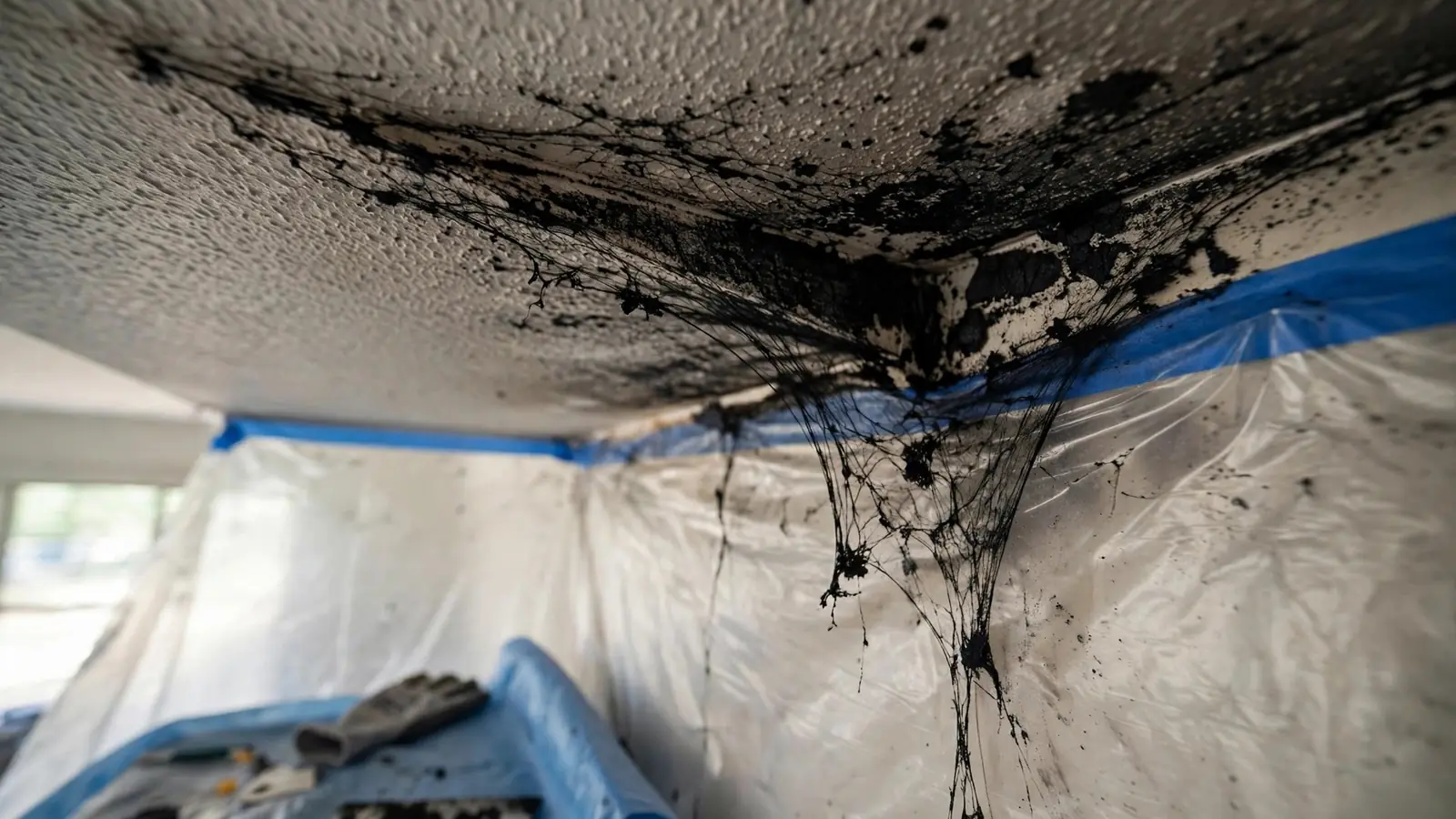
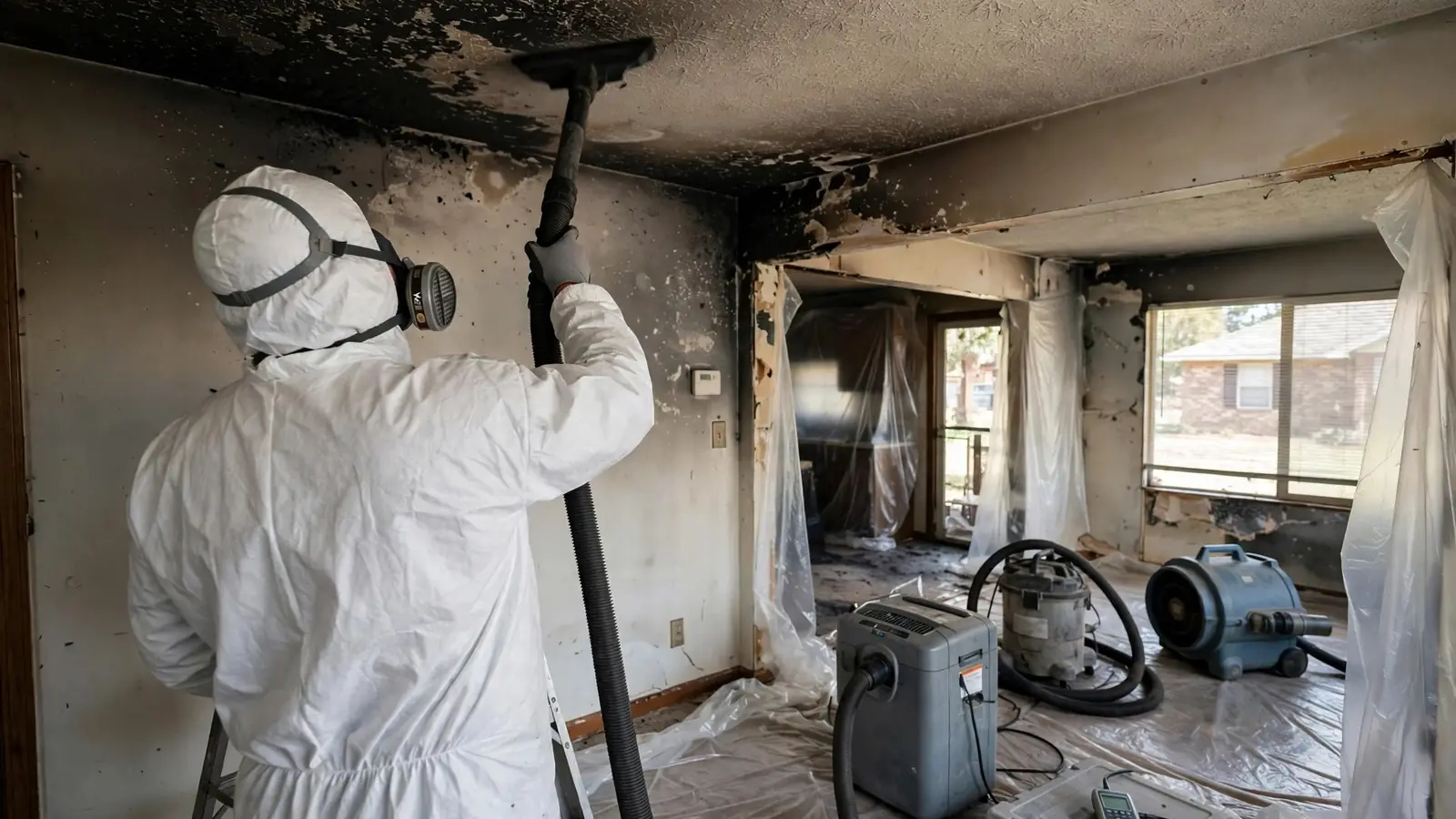
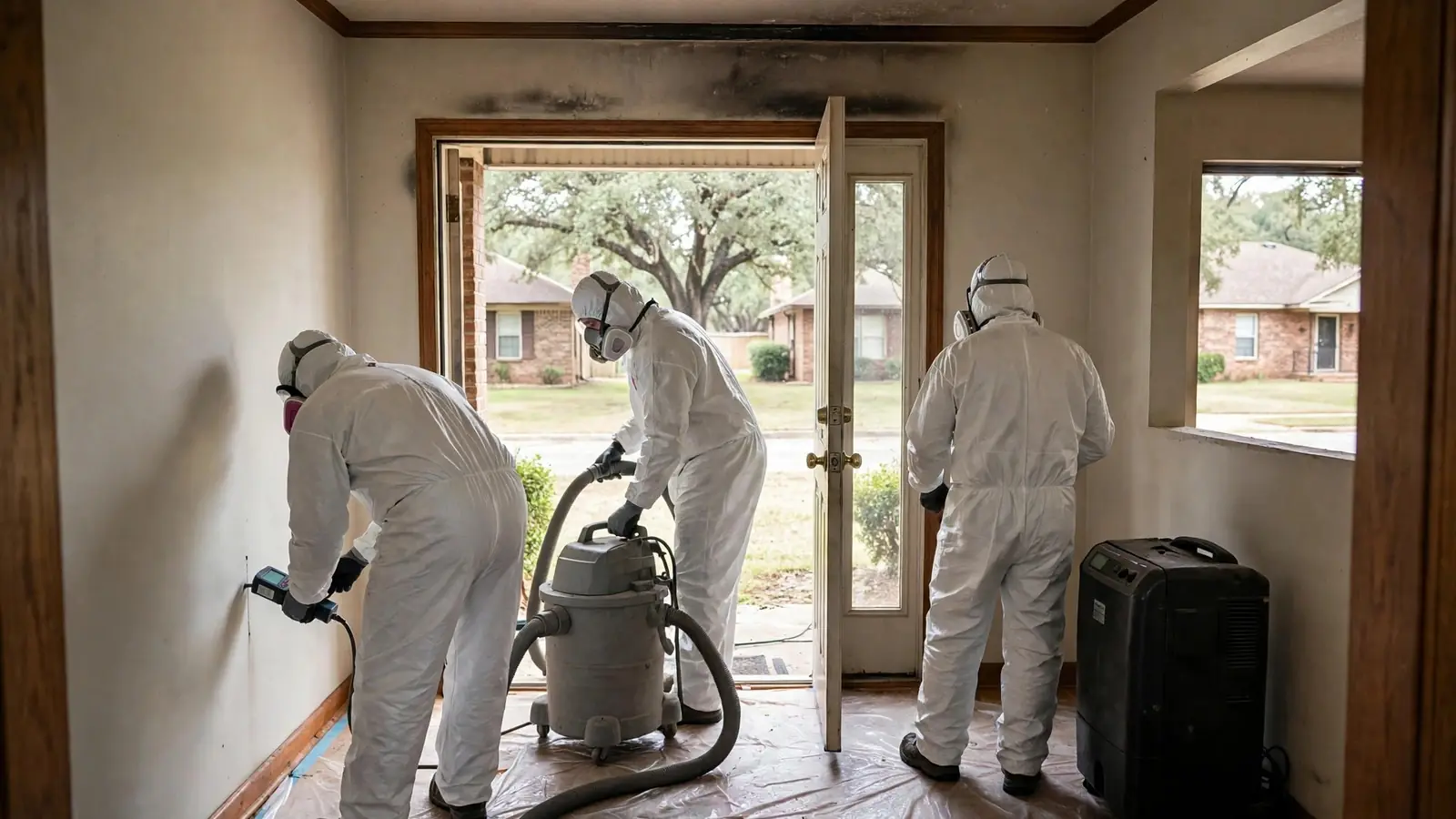
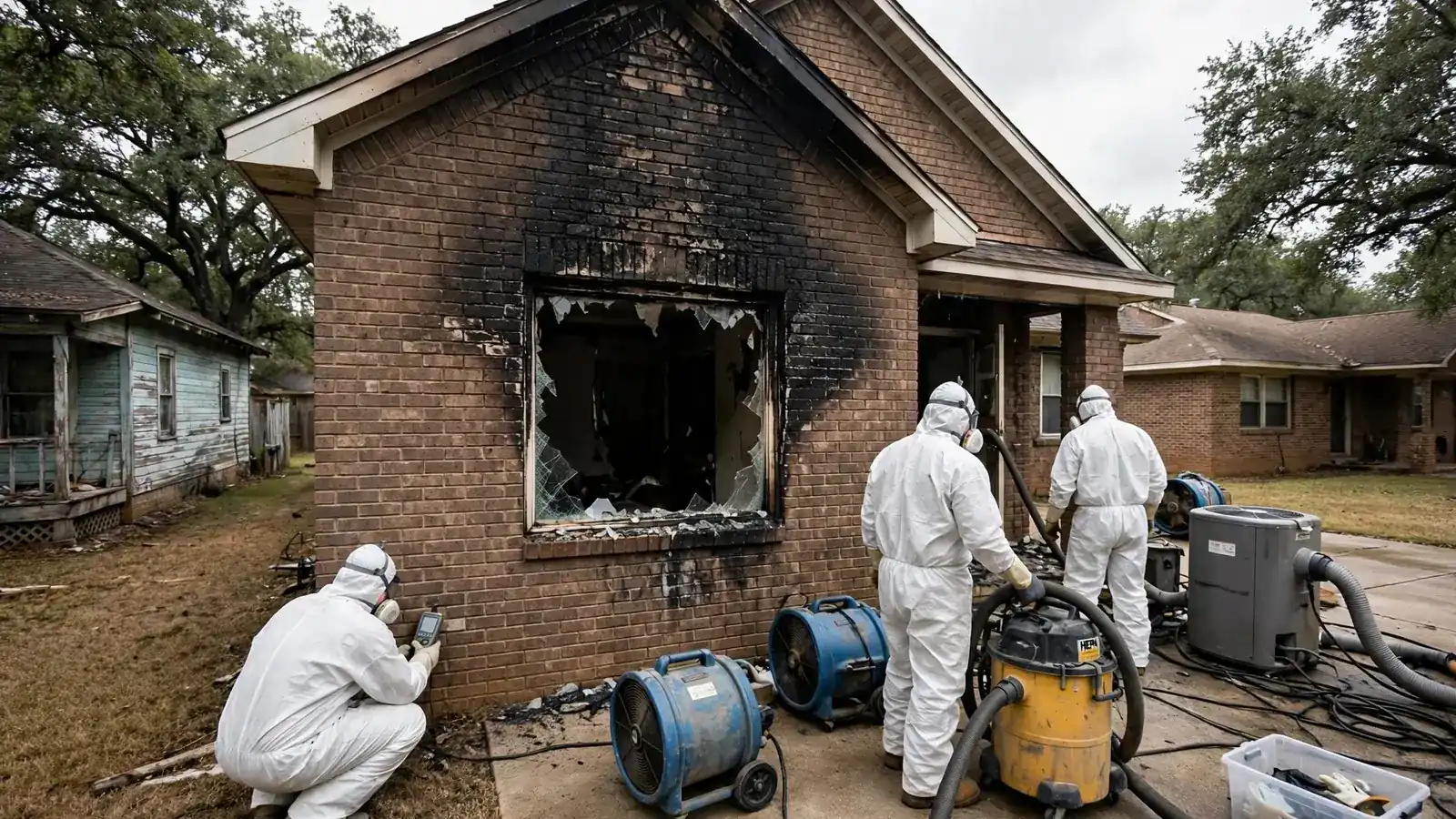
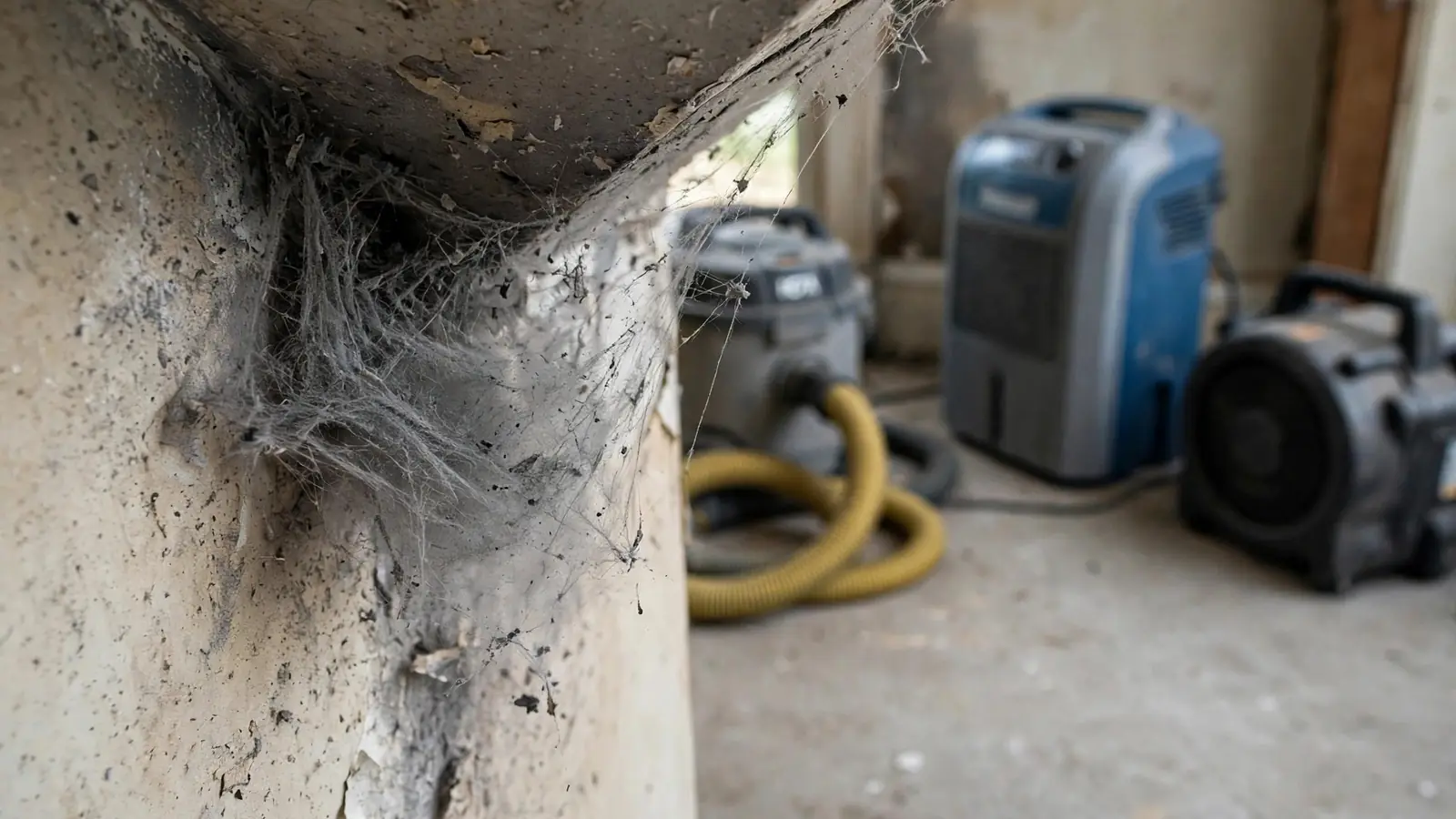
In long ranch houses, soot travels along the hallway and settles on the ceiling and upper walls all the way to the bedrooms. Dark streaks above doorways and around ceiling fixtures show where smoke flowed. Soot webs may hang from ceiling corners.
Dry removal with chemical sponges and HEPA vacuums comes first, from the ceiling down.
Popcorn and textured ceilings in Tanglewood
Many mid-century homes have textured or popcorn ceilings. Texture holds soot and is fragile. Some textures from this period contain asbestos [4], so they should be tested before cleaning goes beyond gentle surface work. Sealing with a stain-blocking primer is often the best option for textured ceilings that stay stained.
Do not scrape or sand a textured ceiling before it has been tested.
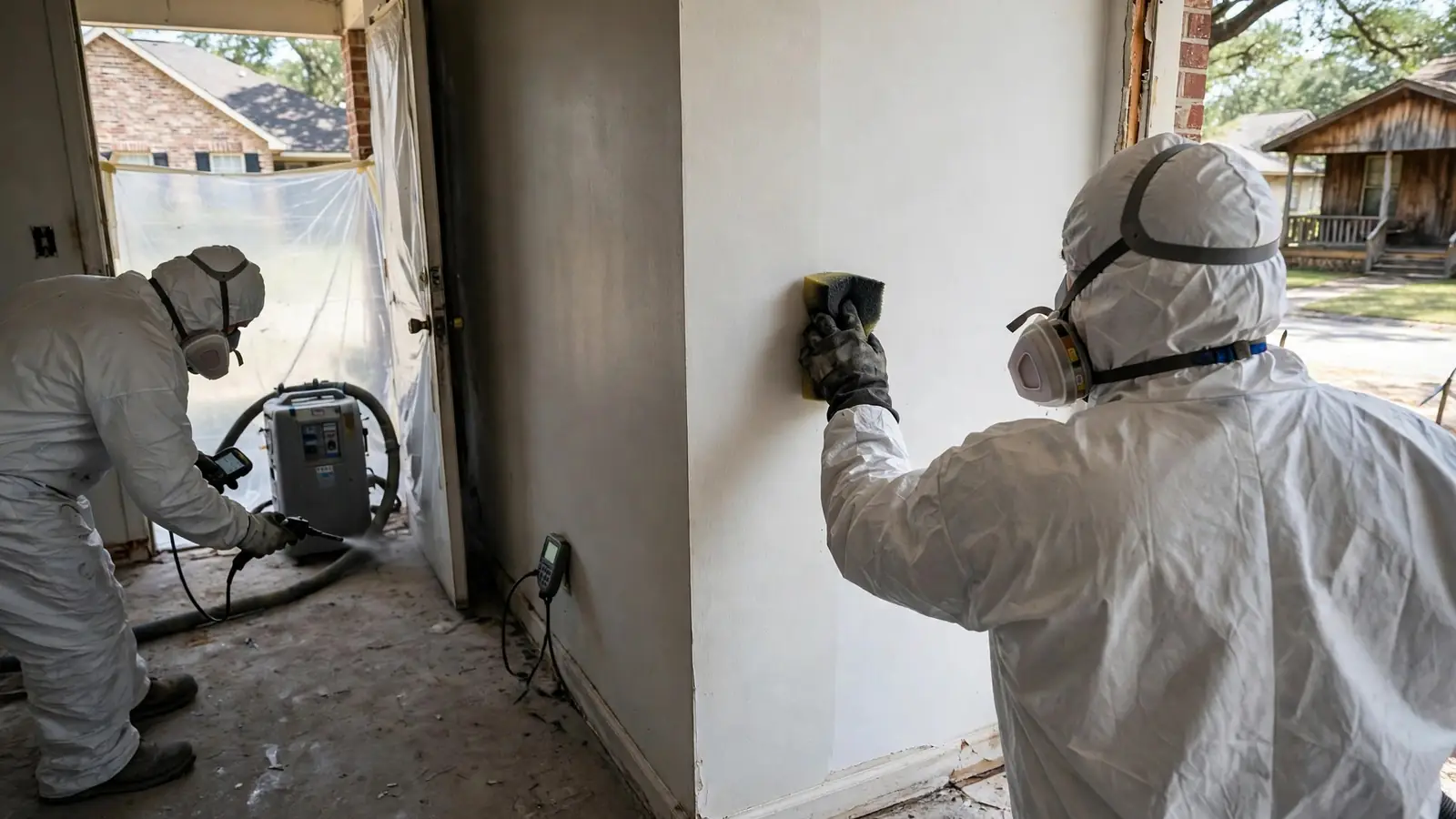
Removing soot in a Tanglewood ranch
The usual sequence.
- 1
Test ceilings and residue
Asbestos testing where needed; wipe tests for soot type.
- 2
Lift loose soot from Tanglewood ceilings
Top-down removal of loose soot.
- 3
Clean paneling and stone by hand
Finish-safe products for wood; masonry cleaners for stone.
- 4
Seal and refinish
Primers on stained surfaces, fresh finish on wood.
Wood paneling and beamed ceilings
Paneled dens and beamed ceilings collect soot in grooves and grain. Cleaning by hand with products safe for the finish lifts most of it. Wood that stays stained may need light sanding and a fresh finish.
Older finishes may contain lead [3], so sanding should be done with lead-safe methods.
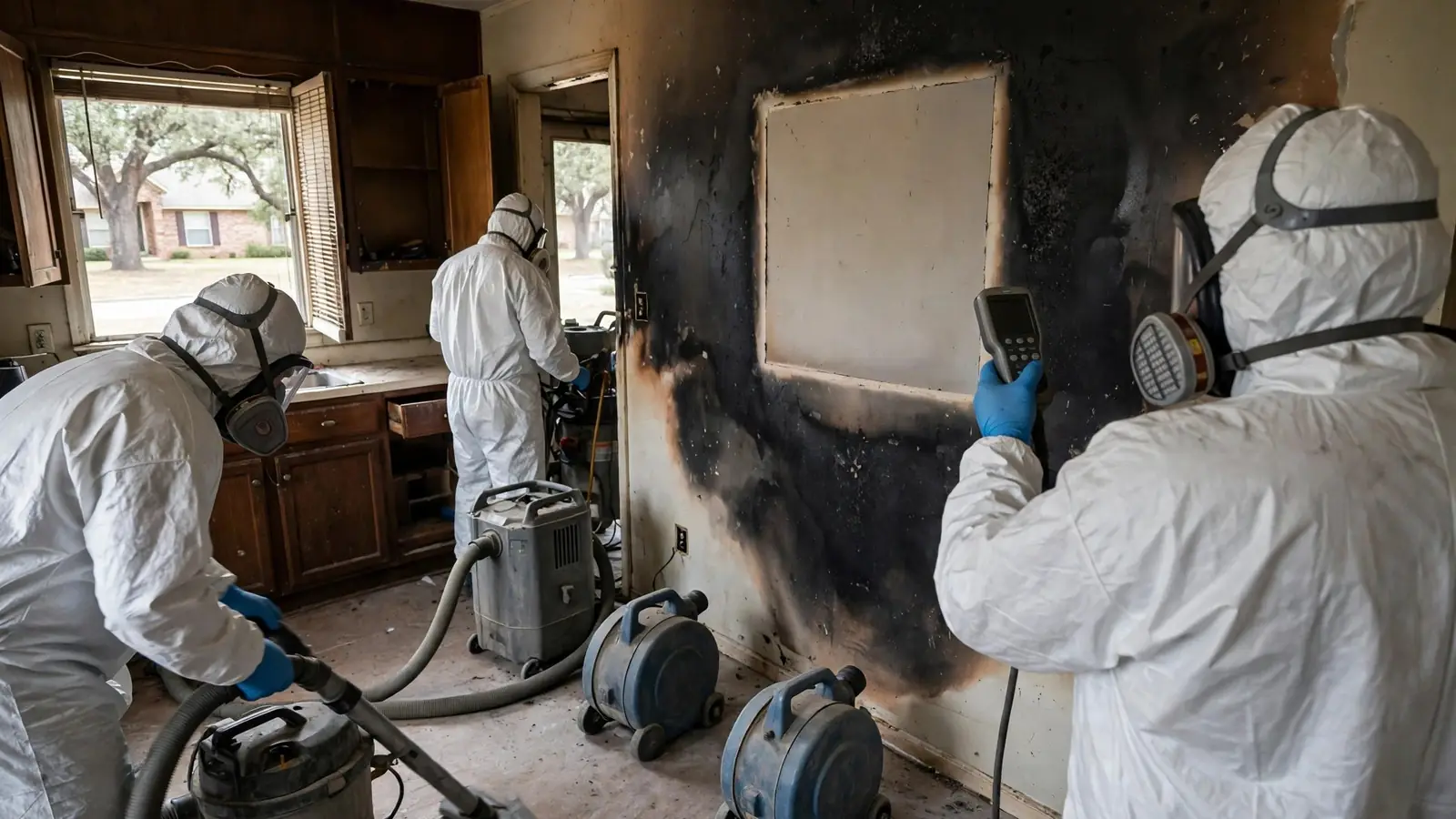
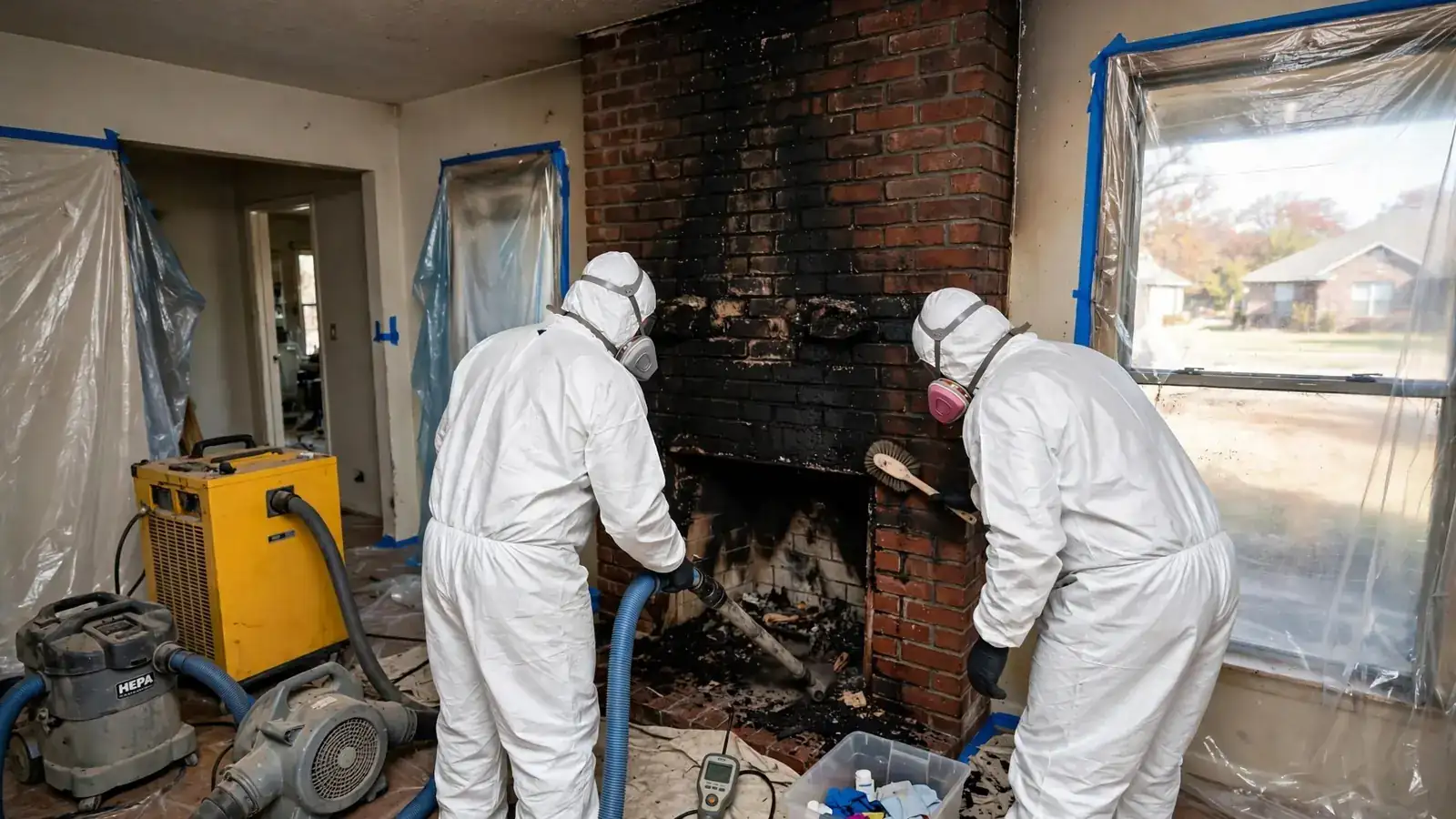
Masonry fireplaces and stone walls
Large stone or brick fireplaces are a feature of many Tanglewood homes. Masonry is porous and holds soot deeply. Specialized cleaners or gentle blasting may be needed, tested first on a hidden area. Stone exterior walls near the fire may also need cleaning.
Mortar joints hold soot too and may need extra attention.
Tanglewood surfaces and soot treatment
Typical materials.
- Terrazzo and stone floorsWashed with suitable cleaners.
- Painted drywall or plasterDry cleaning, washing, sealing.
- Wood panelingHand cleaning and recoating.
- Metal windows and slidersCleaned and dried to avoid corrosion.
Garage soot and the shared wall
A garage fire coats the garage interior with heavy soot and pushes it into the house through the connecting door. The shared wall may hold soot inside its cavity. Cleaning the garage, the shared wall and nearby rooms prevents ongoing staining and odor.
The Tanglewood page explains why attached garages are standard in this neighborhood.
Attic soot over a long house
Soot that rises into the attic spreads along its length. Insulation holding soot is usually replaced, and framing is cleaned or sealed.
Ductwork running through the attic should be cleaned or replaced if it pulled in soot.
When the Tanglewood soot is gone
Remaining smell is handled by smoke odor removal. Painting and refinishing come last.
Photos of each sooty room help the adjuster, and the Texas Department of Insurance explains how additional living expense coverage generally works while you are away [5].
Sliding doors, metal windows and glass walls
Many mid-century homes have aluminum or steel windows and large sliding doors, and rebuilt homes may have whole walls of glass. Soot coats the glass and collects in the tracks. Glass cleans well unless pitted by heat. Metal frames are cleaned and dried promptly to avoid corrosion, and tracks are vacuumed and wiped so doors slide freely.
Window screens trap soot and are often replaced rather than cleaned.
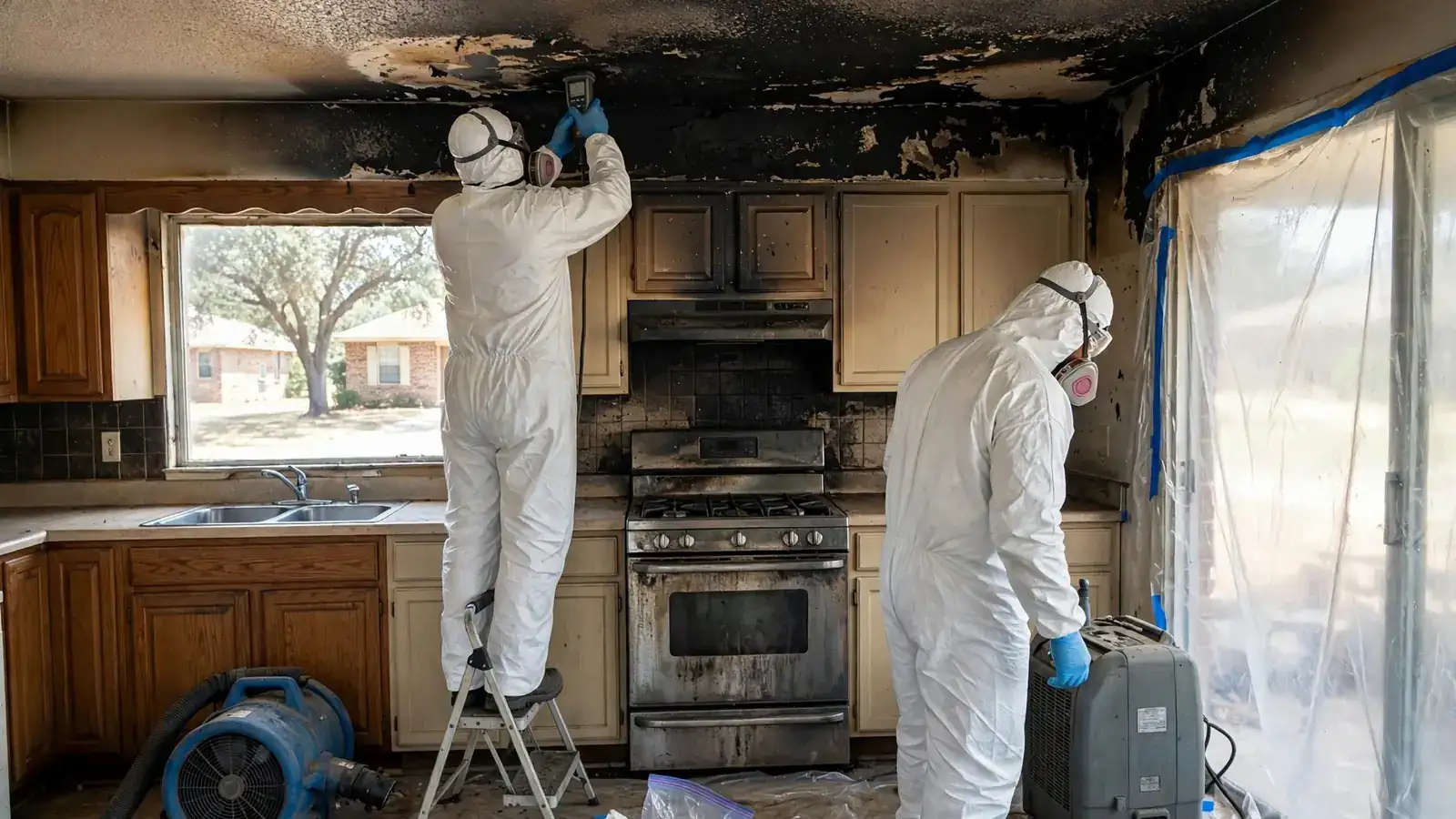
Kitchens and greasy soot
Kitchen fires leave soot mixed with grease. It clings to cabinets, range hoods and ceilings and needs degreasing cleaners. Cabinets are emptied so shelves and interiors can be cleaned. Painted or stained wood cabinets can usually be cleaned and refinished; laminate may discolor from heat.
Small appliances near the fire should be checked before use.
Closets, built-ins and storage
Closets, linen cupboards and built-in storage in a long ranch house collect a thin film of soot that is easy to miss. Opening every door and checking with a dry sponge shows where cleaning is needed. Stored items are taken out, sorted and cleaned before going back.
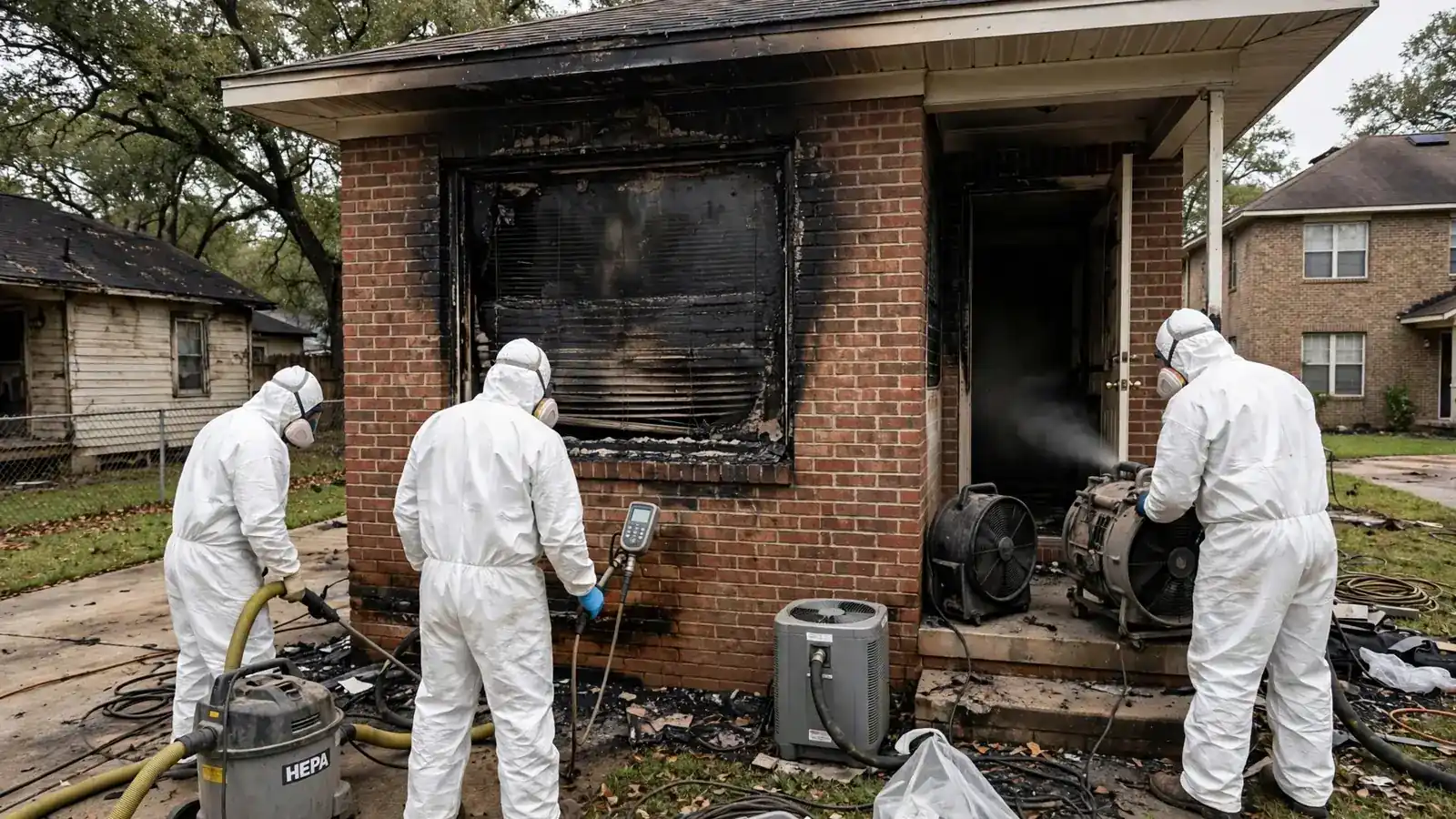
Brick and stone on the outside of the house
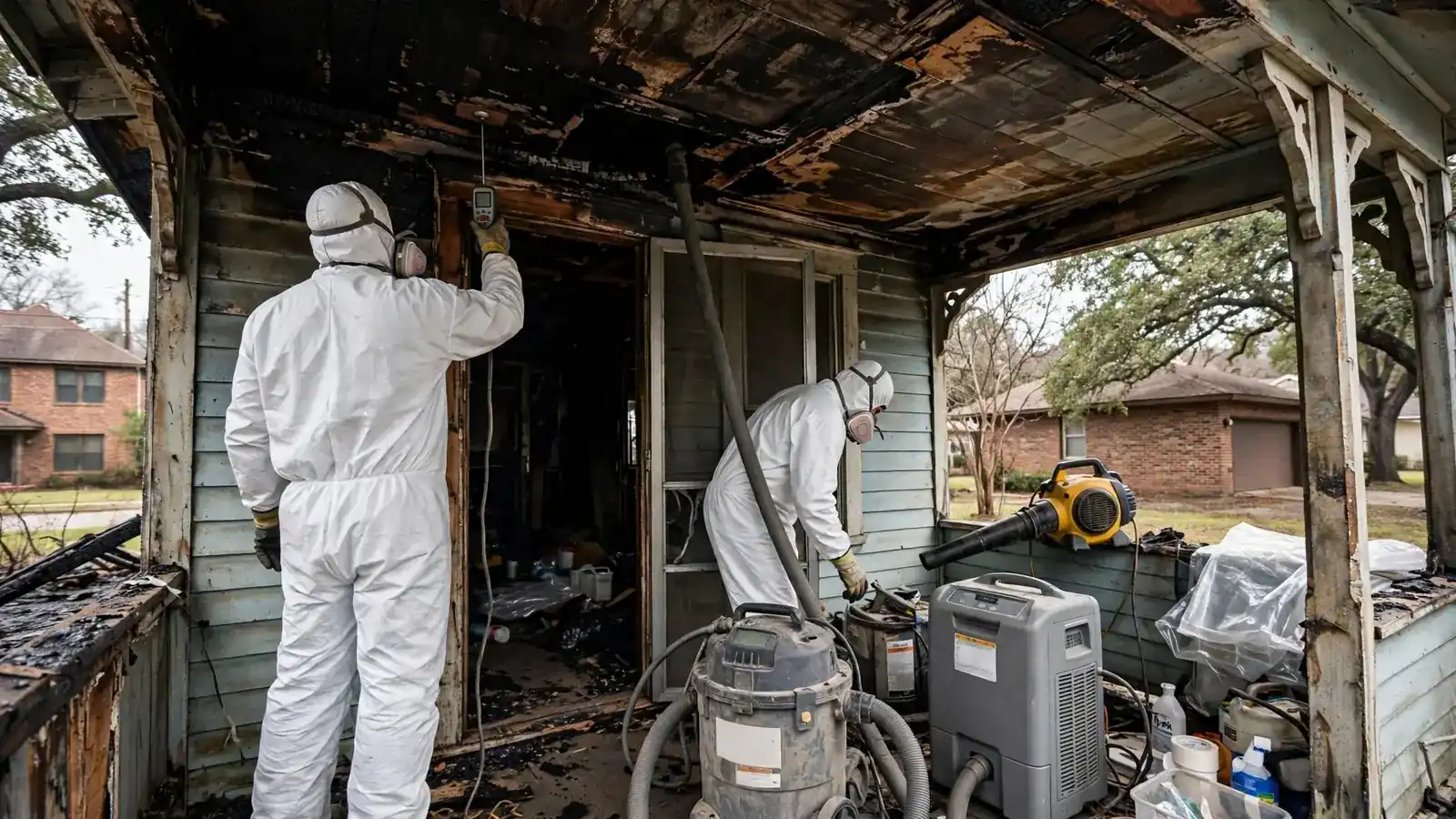
Tanglewood homes were built in brick or stone, and smoke pouring out of windows leaves dark plumes on the masonry above them. Exterior masonry is cleaned with gentle detergents and low-pressure rinsing so the surface is not worn away. Painted wood eaves and fascia are washed and repainted where staining stays.
Testing a small area first shows what will lift the soot without changing the color of the brick or stone.
FAQ
Soot Removal in Tanglewood: questions
Can I clean my popcorn ceiling?
Only gently, and test for asbestos first if it dates from the mid-century period [4]. Sealing is often the best option.
How is soot removed from a stone fireplace?
With specialized masonry cleaners or gentle blasting, tested on a hidden area first.
Will my paneling need replacing?
Usually not. Hand cleaning and a fresh finish coat often restore it.