
Who removes firefighting water from a Fort Worth house?
Call this line at any hour and your call connects to an independent restoration contractor who takes urgent water jobs. They extract standing water, then set up air movers and dehumidifiers. Speed matters because the EPA advises drying wet materials within 24 to 48 hours to limit mold.
Key facts: Emergency Water Extraction
- Calls about firefighting water damage in Fort Worth are answered around the clock.
- For Fort Worth homes, EPA guidance calls for drying soaked materials inside 24 to 48 hours to prevent mold [1].
- Water restoration professionals follow the IICRC S500 standard [2].
- Ceilings and floors soaked by firefighting can be weakened, so stay clear until checked [3].
First moves
Dealing with hose water in the first hour
- 1
Stay out from under wet ceilings
A sagging ceiling can drop at any moment. Keep everyone out of those rooms [3].
- 2
Keep electricity off in wet areas
Do not use outlets, lights or appliances in rooms that got wet until an electrician has checked them.
- 3
Lift what you can off wet floors
If it is safe, raise rugs, papers and small furniture onto blocks or move them to a dry room.
- 4
Photograph the water before extraction
Pictures of standing water, wet walls and stained ceilings show your insurer how much water came in.
- 5
Call so extraction can start
Tell the contractor where water is standing and whether your home has a crawl space.
Why speed matters
Water problems after a fire that need help now
Ceilings bulging or dripping
Water from upstairs or from the roof is held above the ceiling and can bring it down.
Carpet squelching underfoot
Water in carpet and pad spreads into the subfloor and the bottom of walls.
A flooded crawl space
Pier-and-beam homes collect hose water underneath, where it can sit unseen.
Water under tile or laminate
On slab homes, water hides under hard flooring and keeps wetting walls.
A warm, damp smell building
Heat and moisture together set the stage for mold, especially with the power off.
Call and extraction
From your call to pumps running in the house
You will speak with an independent contractor on the call you make. Expect questions about where the fire was, how much water is standing, whether ceilings are sagging, and whether the house sits on a slab or on piers. They may also ask whether power is on, since that affects what equipment can run.
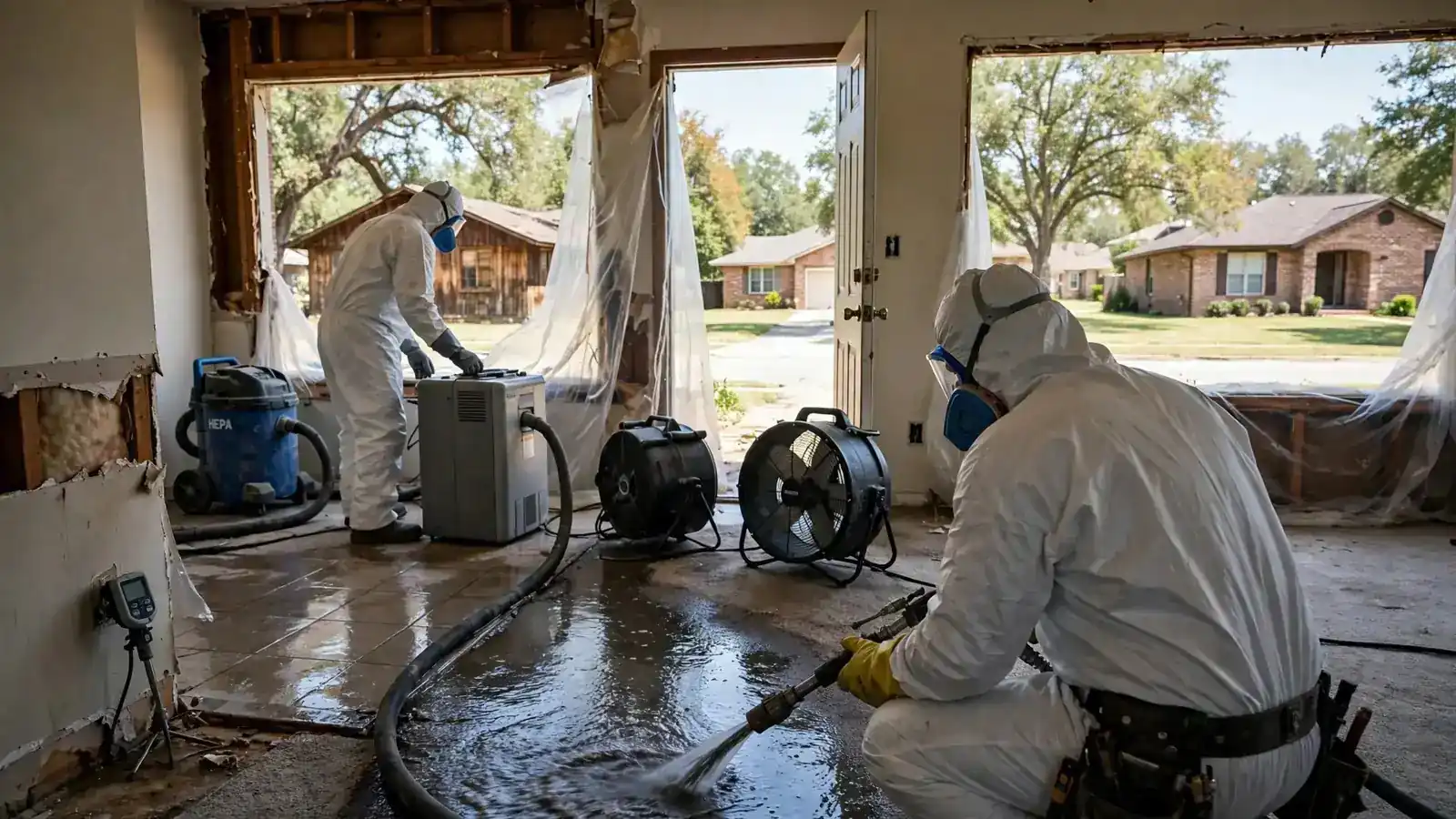
Arrival depends on the time and how many jobs are already running, so ask the contractor what to expect. Once the crew is there, standing water is pumped or extracted with wands, wet carpet pad is often pulled, and moisture meters map where water has spread. Air movers and dehumidifiers go in next.
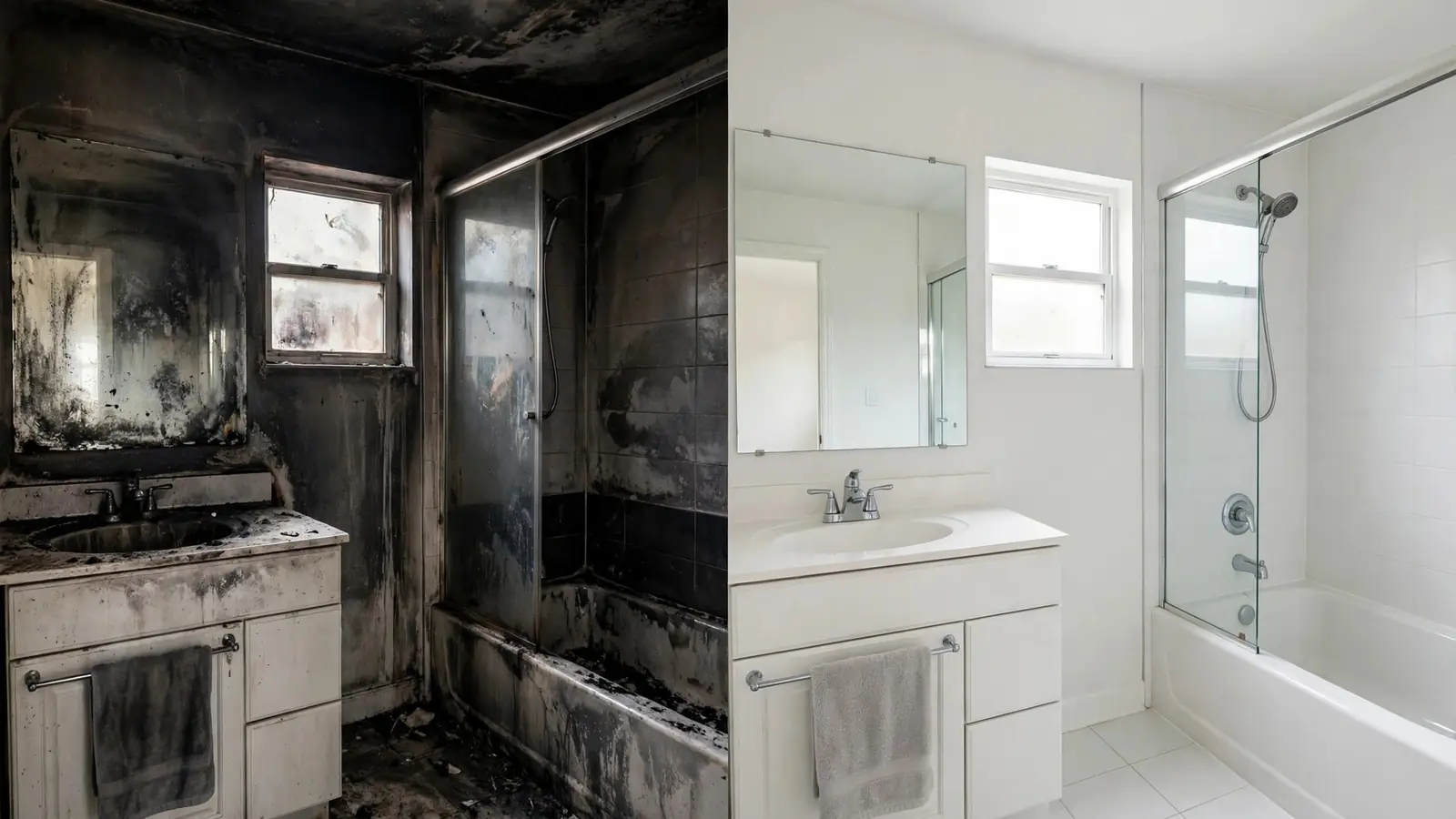
This work follows the IICRC S500 standard for water damage [2]. Drying is checked with readings over several days. Because firefighting water carries residue, cleaning smoke damage usually follows once surfaces are dry.
Local factors
Fort Worth foundations and heat during urgent drying
Older homes in central neighborhoods often sit on pier-and-beam foundations, so hose water drains into the crawl space and can stay there. Pumping it out early protects floor joists and keeps humidity down. The page on hose water in Ryan Place crawl spaces describes this situation.
Most homes built from the 1950s on are on slabs, where water spreads under flooring and into the base of walls. Tile can hide wet areas for weeks. Families on the southwest side can see how this applies in Wedgwood homes after firefighting.
North Texas summers are hot, and a closed house with wet materials and no air conditioning grows humid quickly. The EPA notes that mold can grow if materials stay wet beyond 24 to 48 hours [1]. If the fire knocked out power, ask about generator-powered drying equipment.
Under the house
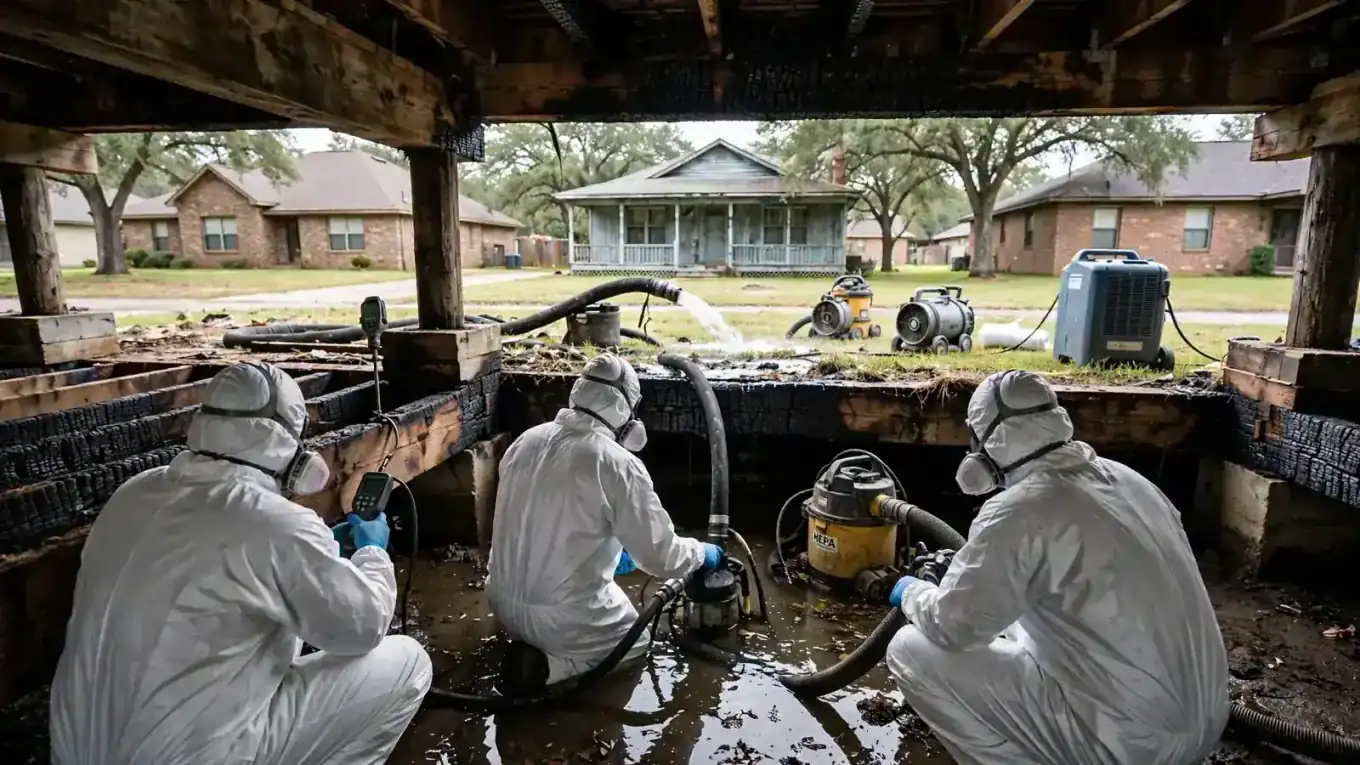
Pumping firefighting water out of crawl spaces
In raised houses, water pours through floor gaps into the crawl space. Crews use pumps to remove it and then dry the space so joists and subfloor are not left sitting over damp soil.
If insulation under the floor is soaked, it is usually removed so the wood can dry.
- Water pumped from below
- Wet insulation pulled
- Joists checked for moisture
- Crawl space dried
Drying
Air movers and dehumidifiers after the fire
Once standing water is gone, air movers push air across wet surfaces while dehumidifiers pull water from the air. The equipment runs day and night for several days.
Readings are taken each day to show progress. The guide to whether you can stay in the house after a fire can help you decide where to sleep meanwhile.
- Air movers along walls
- Dehumidifiers running
- Daily moisture readings
- Equipment left on overnight
Upstairs fires
When the fire was on the second floor and the water came down
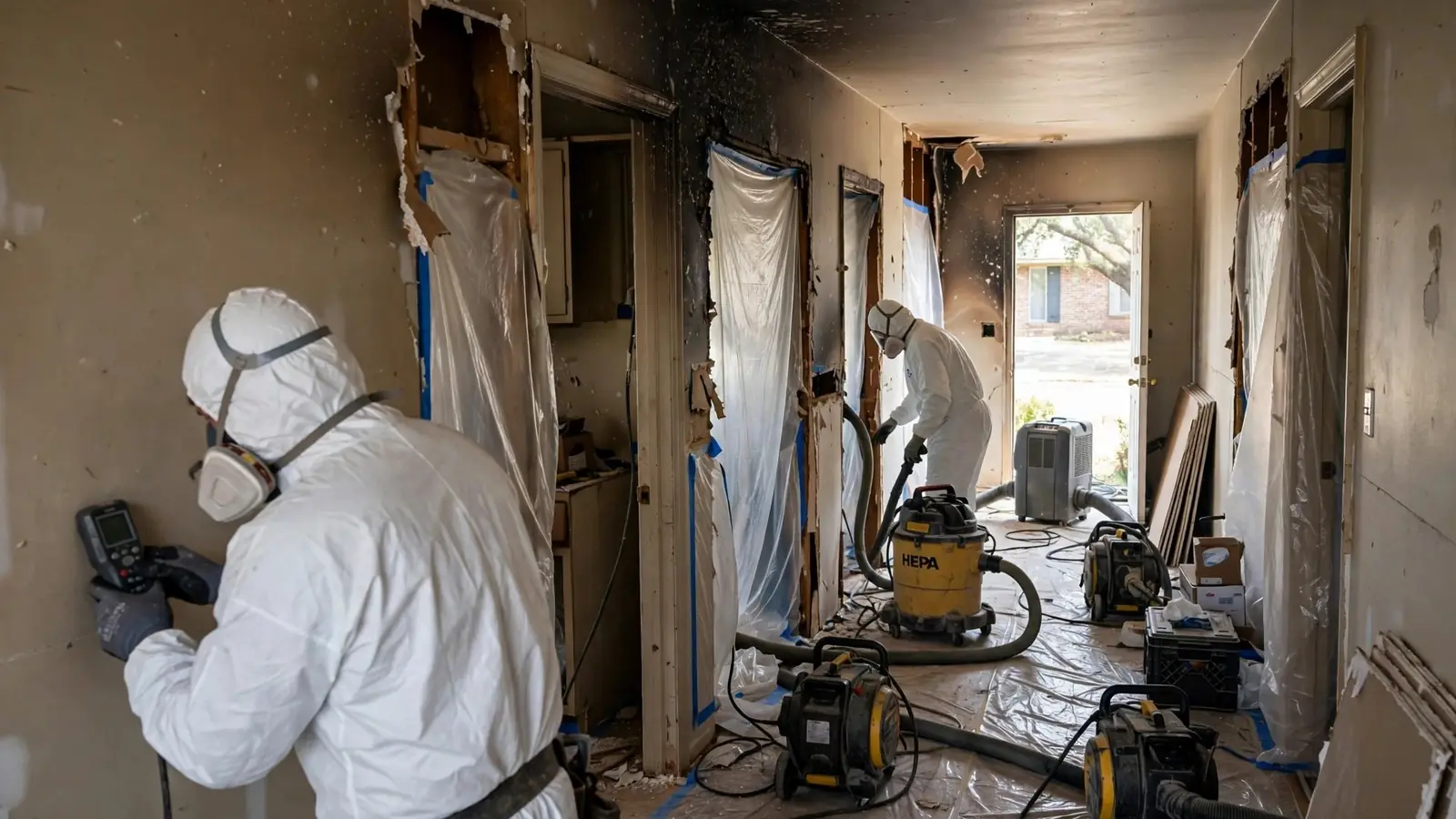
In two-story homes, hose water used upstairs runs through the floor into the ceilings and walls below. Rooms that never saw flames can end up with wet drywall, soaked insulation and water in light fixtures.
Crews often open small holes or remove wet ceiling sections so trapped water can drain and air can reach the cavity. That may look alarming, but it lets the framing dry and lowers the chance of mold. Ask the contractor to show you where they found water with the meter, so you understand why each opening was made.
Your part
Helpful things to do while water extraction is set up
- Move papers and photos to a dry placeWet documents and photographs are easier to save if they are spread out to dry or kept cool.
- Do not plug in drying fans yourselfUsing outlets in wet rooms is risky. Let the crew decide where power can be used.
- Let your insurer know about the waterMention the water damage separately from the fire when you report the claim.
- Keep receipts if you move outTexas guidance explains additional living expenses when a home is unfit to live in [4].
FAQ
Urgent firefighting water questions from Fort Worth
Can someone pump out fire hose water from my house tonight?
In Fort Worth, calls about emergency water extraction are answered 24/7; your own call reaches an independent Fort Worth contractor who talks it through with you.
Is it okay to use a shop vacuum on the water myself?
Only if the power is safe and you are not near outlets or sagging ceilings. Large amounts of water need professional extraction.
Why does my house feel so humid after the fire was put out?
Wet materials release moisture into the air, and without air conditioning the house warms up. That humidity is what dehumidifiers remove.
Does wet drywall from firefighting always have to come out?
Not always. It depends on how long it was wet, how dirty the water was and whether it can be dried in time. The contractor decides with moisture readings.