Who can I call tonight about my burned house in Fort Worth?
You can call this line at any hour, and your call connects to an independent local restoration contractor who takes after-hours fire jobs. They can talk through securing openings, removing firefighting water and slowing smoke damage. Wait for fire department clearance before going back inside, because a burned structure can be weaker than it looks.
Key facts: Emergency Fire Restoration
- Fort Worth fire restoration calls on this line are answered 24/7, including nights and weekends.
- Only re-enter a burned house once the fire department says it is safe, since roofs and floors can be weakened [1].
- For Fort Worth homes, EPA guidance calls for drying soaked materials inside 24 to 48 hours to limit mold growth [3].
- Professional fire and smoke restoration follows the IICRC S700 standard [2].
The first hour
Your first hour after the fire trucks leave
- 1
Get the all-clear before stepping inside
Ask the fire officer at the scene whether the house can be entered. Burned roofs and floors can fail without warning, so stay out until you hear a clear yes [1].
- 2
Count heads and find a place for the night
Make sure every person and pet is out and accounted for. Then arrange somewhere to sleep, because a smoky, wet house is no place to spend the night.
- 3
Leave power and gas alone
Do not flip breakers, light the stove or run the air conditioner. A utility company or electrician should check the systems first, and running the AC pushes smoke through the ducts.
- 4
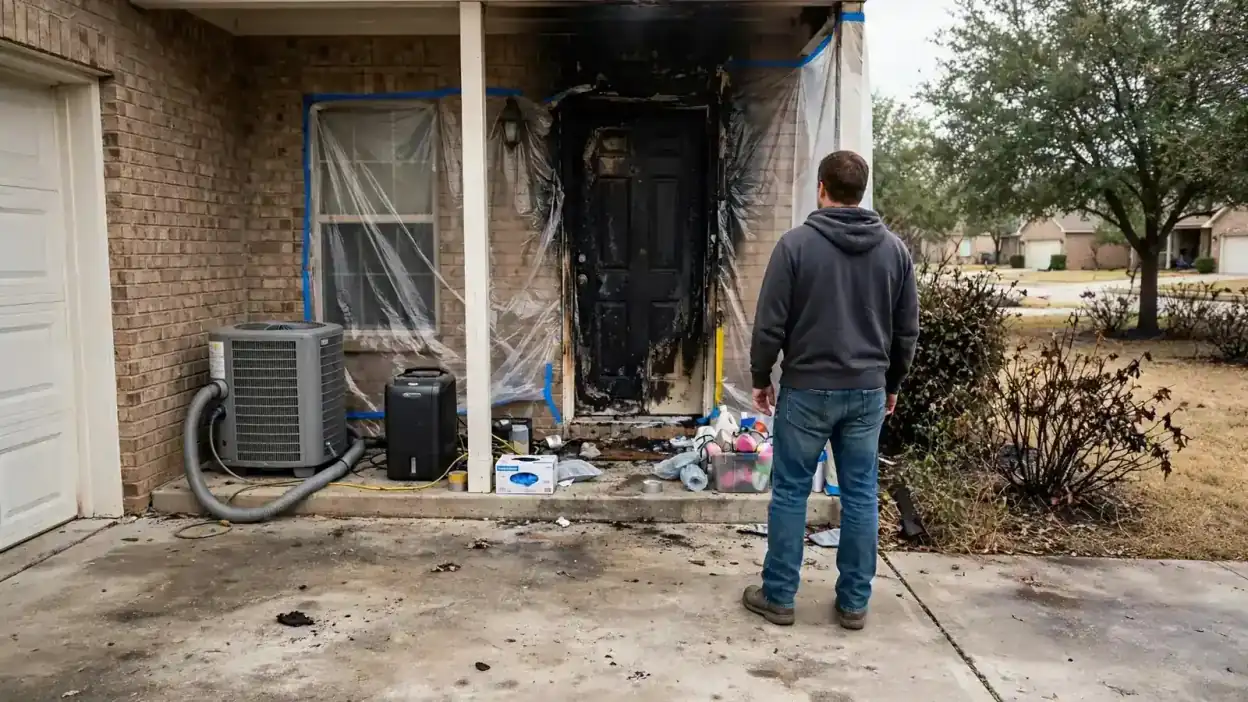
Photograph the damage from outside
Take wide photos and short videos of every side of the house, the roof line and any broken windows. These pictures help your insurer understand the starting condition.
- 5
Call to get openings and water dealt with
Ring this line, describe what you see, and the contractor on the call can talk through covering the openings and pulling out standing water tonight.
Why it cannot wait
Signs your fire damage needs help tonight
A hole in the roof
Fire crews often vent the roof. An open roof lets rain straight into ceilings and insulation, and North Texas storms can arrive fast.
Read moreBroken or forced openings
Windows broken by heat and doors forced by firefighters leave the house open to weather, animals and trespassers.
Read moreWater standing on floors
Hose water sits in carpet, under laminate and in crawl spaces. The longer it stays, the more drywall and subfloor soak it up.
Read moreSoot coating rooms far from the fire
Acidic residue starts working on glass, metal and paint soon after it lands, so heavy soot is a reason to move quickly.
Read moreA strong smoke smell in the whole house
Odor spreading through every room usually means smoke reached the ducts and attic, not just the burned space.
Read more
On the phone
What the emergency call covers and what the crew does first
When you call, the line connects you to an independent restoration contractor, and you speak with them right then. Expect a few plain questions: where the fire started, whether the fire department has released the house, whether the roof or windows are open, and whether water is standing anywhere. Those answers tell the contractor what needs to happen first.
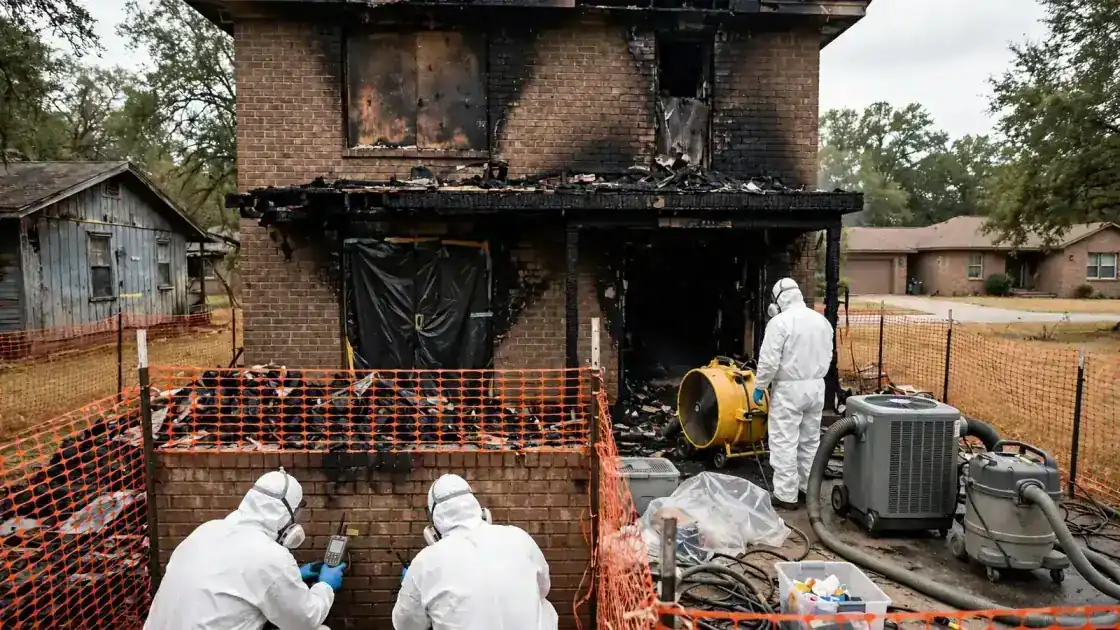
Arrival times depend on the hour, the weather and how many fires are being handled across the city, so ask the contractor directly what to expect. Once a crew is on site, the usual order is to make the structure safe and closed: boarding broken windows and tarping the roof, then extracting water, then setting up drying and air filtration. Cleaning of smoke residue follows once the house is stable.
Professional restorers work to the IICRC S700 standard for fire and smoke damage [2], which calls for assessing the damage before choosing methods. In practice, the first visit is mostly about stopping things from getting worse. The fuller plan for smoke damage cleanup and rebuilding usually comes after the insurer has seen the house.
Fort Worth conditions
How Fort Worth weather and houses raise the stakes after a fire
North Texas weather adds pressure to the first night. Spring thunderstorms bring heavy rain, wind and sometimes hail, and a roof opened by fire crews can take in a lot of water in one storm. The National Weather Service office for the Dallas and Fort Worth area posts local forecasts and alerts [4], and it is worth a look before you decide a tarp can wait until morning.
Summer heat works against you in a different way. With the power off and wet materials inside, a closed house turns warm and humid fast, and the EPA notes that mold can grow when wet materials are not dried within 24 to 48 hours [3]. That is why extracting firefighting water from Fairmount homes and other neighborhoods is treated as part of the urgent work.
Older central neighborhoods have pier-and-beam houses with crawl spaces that collect hose water, while newer homes on slabs hide water under flooring. Many houses across the city have the air handler in the attic, so smoke and water there reach the rest of the house. If your home is in an older area, the page on securing a burned house in Arlington Heights explains what changes for original windows and trim.
Securing the shell
Closing the house to weather and trespass on the first night
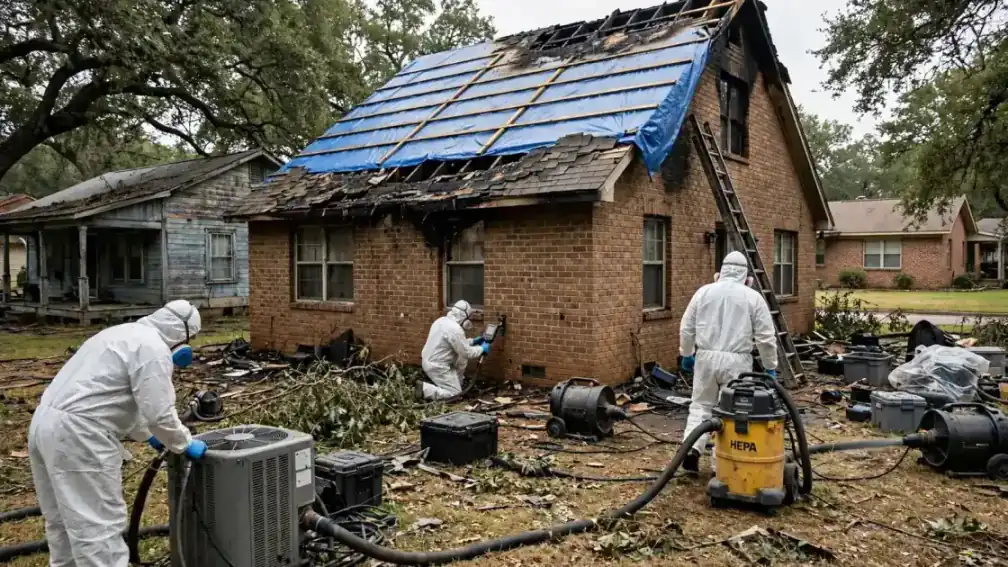
Plywood over broken windows and a fastened tarp over a vented roof are the two jobs most likely to be needed before dawn. They keep rain off the ceilings and stop people from wandering into a dangerous building. Neither is permanent; they hold the house steady until the claim is settled and repairs begin.
If the weather is calm, the crew may cover openings first and come back for drying. If a storm is coming, the tarp usually moves to the top of the list.
- Plywood fastened over broken glass
- Roof tarp secured under battens
- Doors made lockable again
- Photos taken before covering
Water and air
Pulling out hose water and filtering the air inside
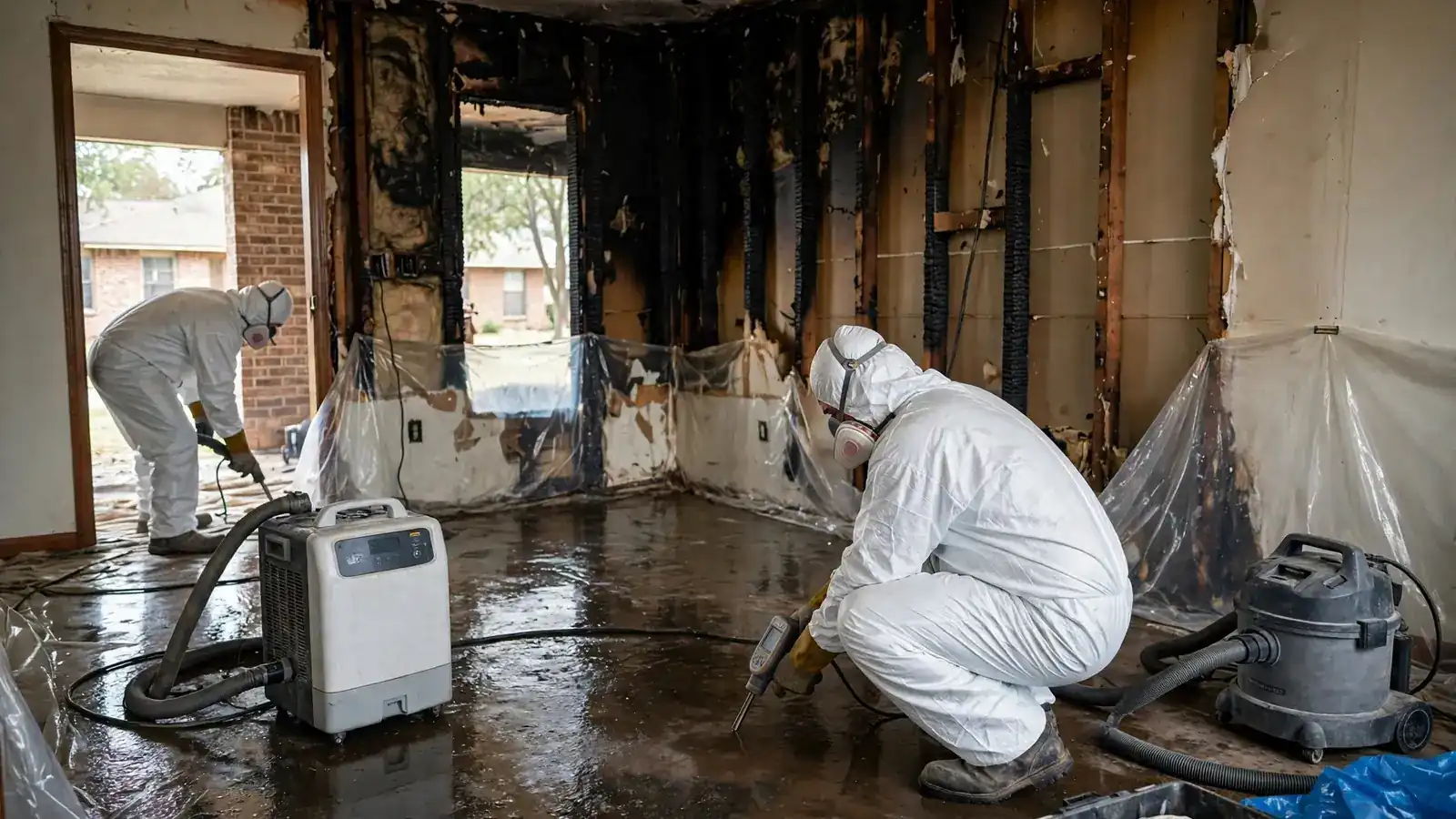
Firefighting water is extracted with pumps and wands, then air movers and dehumidifiers run to dry what remains. Moisture meters show where water has wicked into walls that look dry. At the same time, HEPA air scrubbers can capture fine smoke particles while the house is opened up.
Drying is checked with readings over several days, not judged by touch. The steps after a house fire guide explains how this fits with the rest of the claim.
- Standing water extracted
- Drying equipment set up
- Moisture readings recorded
- Air scrubbers for smoke particles
While you wait
Small things you can do before the crew gets there
- Call your insurance companyReport the fire and ask what your policy says about temporary housing. Texas regulators explain how additional living expenses work [5].
- Keep every receiptHotel stays, meals, clothes and toiletries bought because of the fire may matter for the claim, so put the paper receipts in one envelope.
- Write down what you rememberNote when the fire started, which room it came from and what firefighters did. Details fade quickly after a stressful night.
- Make a short list of urgent itemsMedicine, glasses, phone chargers and identity papers are the things people most often need from a burned house.
FAQ
Late-night fire damage questions from Fort Worth
Is anyone really answering this fire damage line at two in the morning?
Yes. Calls are answered around the clock, and your call connects to an independent local contractor who takes urgent and after-hours fire work and speaks with you on that call.
Should I start cleaning soot off the walls tonight?
No. Wiping soot by hand usually smears it into paint. Focus tonight on safety, covering openings and getting water out. Soot removal is done later with the right tools.
Can the crew cover my roof if it is raining right now?
It depends on lightning, wind and how badly the roof is burned. Ask the contractor on the call. Workers should not be on a weakened roof in dangerous weather, so interior protection may come first.
Do I need to wait for my insurance adjuster before anything is done?
Usually not for steps that stop further damage, such as boarding and tarping. Tell your insurer what is being done and keep photos of the damage before work starts.