Who can come get thick black soot off my walls in Fort Worth tonight?
Call this line, which is answered 24/7, and you will reach an independent contractor who takes urgent soot jobs. Until a crew arrives, do not wipe or brush the soot, because that smears it into paint. Crews start with HEPA vacuuming and dry sponges before any washing.
Key facts: Emergency Soot Removal
- Soot removal calls to this Fort Worth line are answered day and night.
- Soot can contain substances that make people sick, so heavy deposits call for protective gear [1].
- IICRC S700 sets out how professionals choose dry or wet methods for fire residue [2].
- Older ceiling textures may contain asbestos and should be tested before disturbance [4].
Do this first
Protecting surfaces from soot in the first hour
- 1
Keep hands off soot-covered surfaces
Every touch leaves a print that becomes a stain. Do not wipe walls, lampshades or glass.
- 2
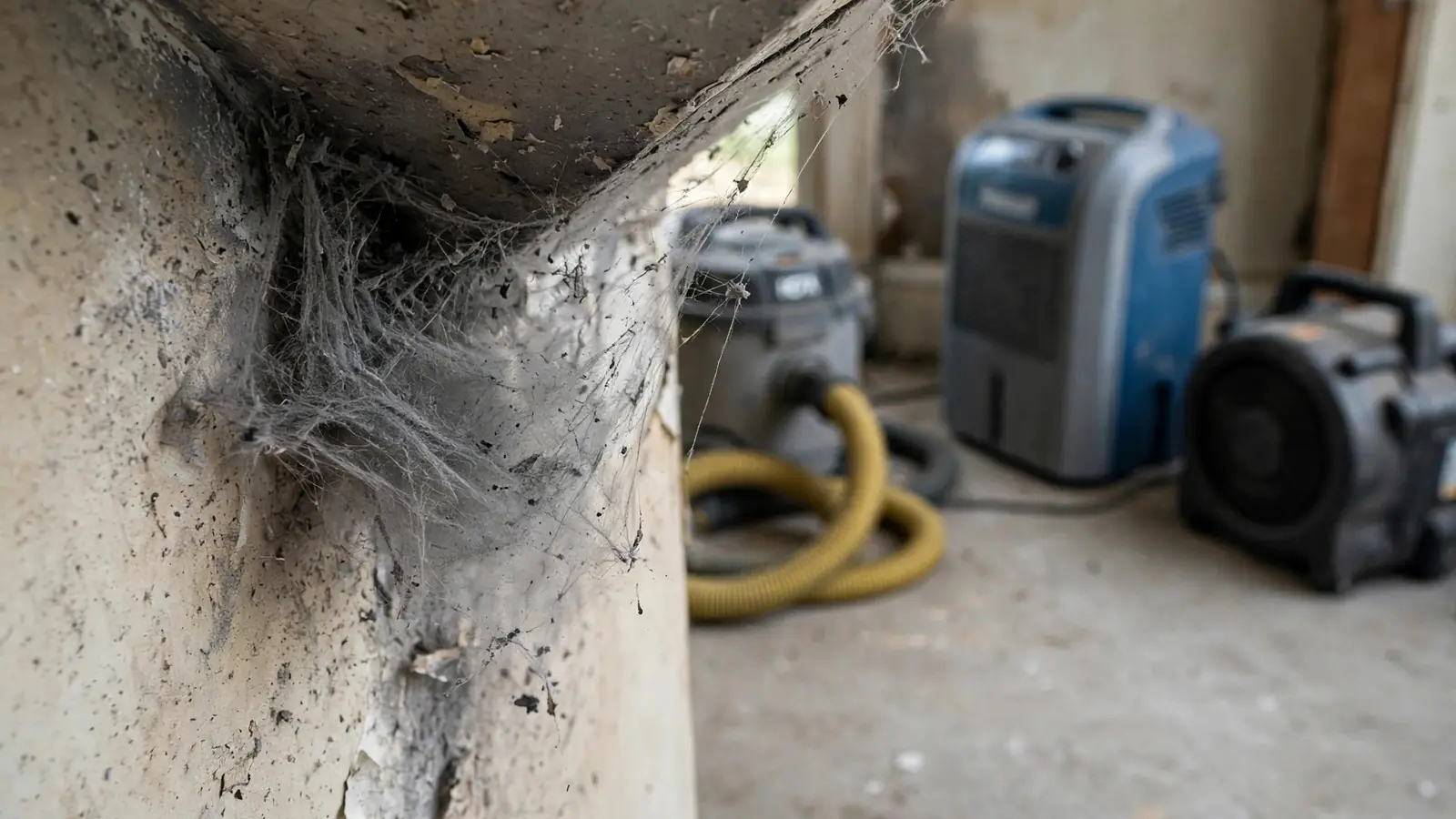
Leave soot webs hanging
Those black strings in corners smear when brushed. They are vacuumed off later without contact.
- 3
Stop foot traffic on sooty floors
Walking through soot grinds it into carpet and grout and tracks it into clean rooms.
- 4
Keep fans and the AC off
Moving air lifts loose soot and spreads it. Let it sit still until it can be vacuumed.
- 5
Call and describe the soot
Say whether it looks dry and powdery or greasy and black. That tells the contractor which methods to plan.
Signs to act on
Soot conditions that call for quick action
Greasy black film that smears
Oily soot from plastics and foam spreads at a touch and needs special cleaning.
Read moreSoot on chrome, brass or glass
Acidic residue begins to etch and tarnish these finishes if left.
Read moreBlack fans around air vents
The duct system carried soot and will spread it if the blower runs.
Read moreSoot on textured ceilings
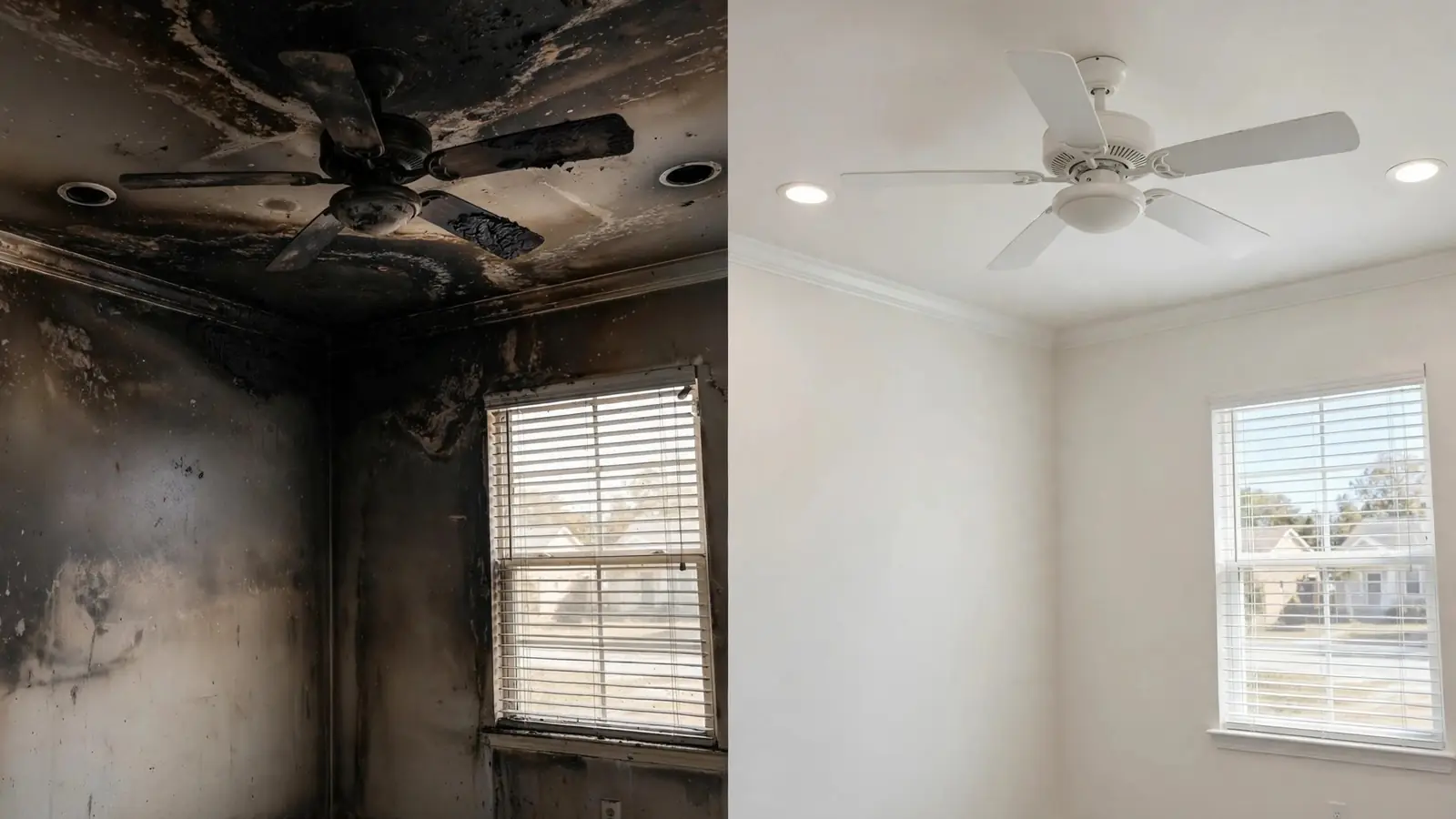
Rough textures trap residue and are easily damaged by the wrong method.
Read more
Call and visit
How an urgent soot job starts once you call
On the call you speak with an independent restoration contractor who handles urgent soot work. They will ask what burned, how large the area is, whether the soot is dry or oily, and what surfaces are affected, such as brick, texture, cabinets or glass. A photo described over the phone helps.
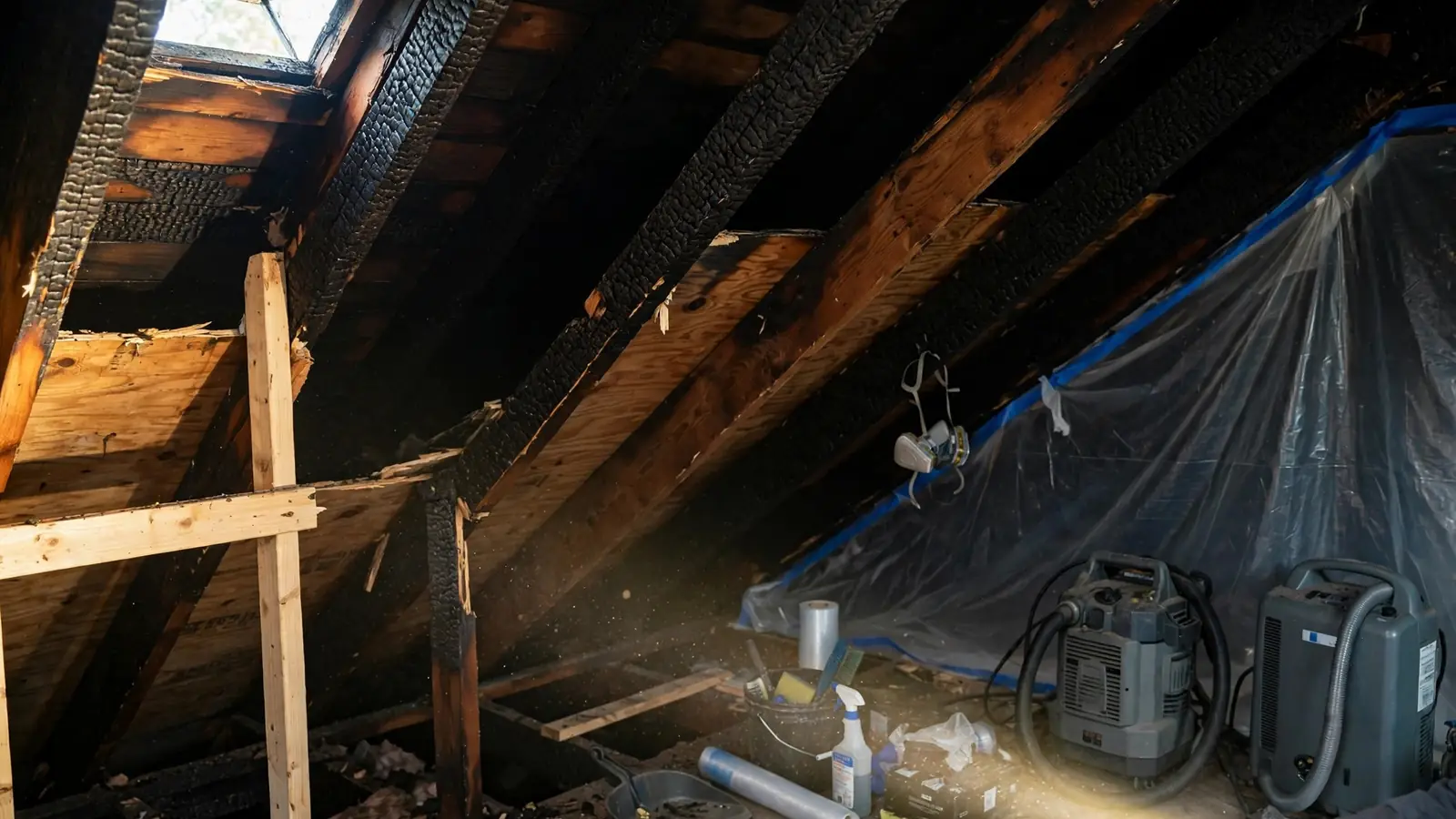
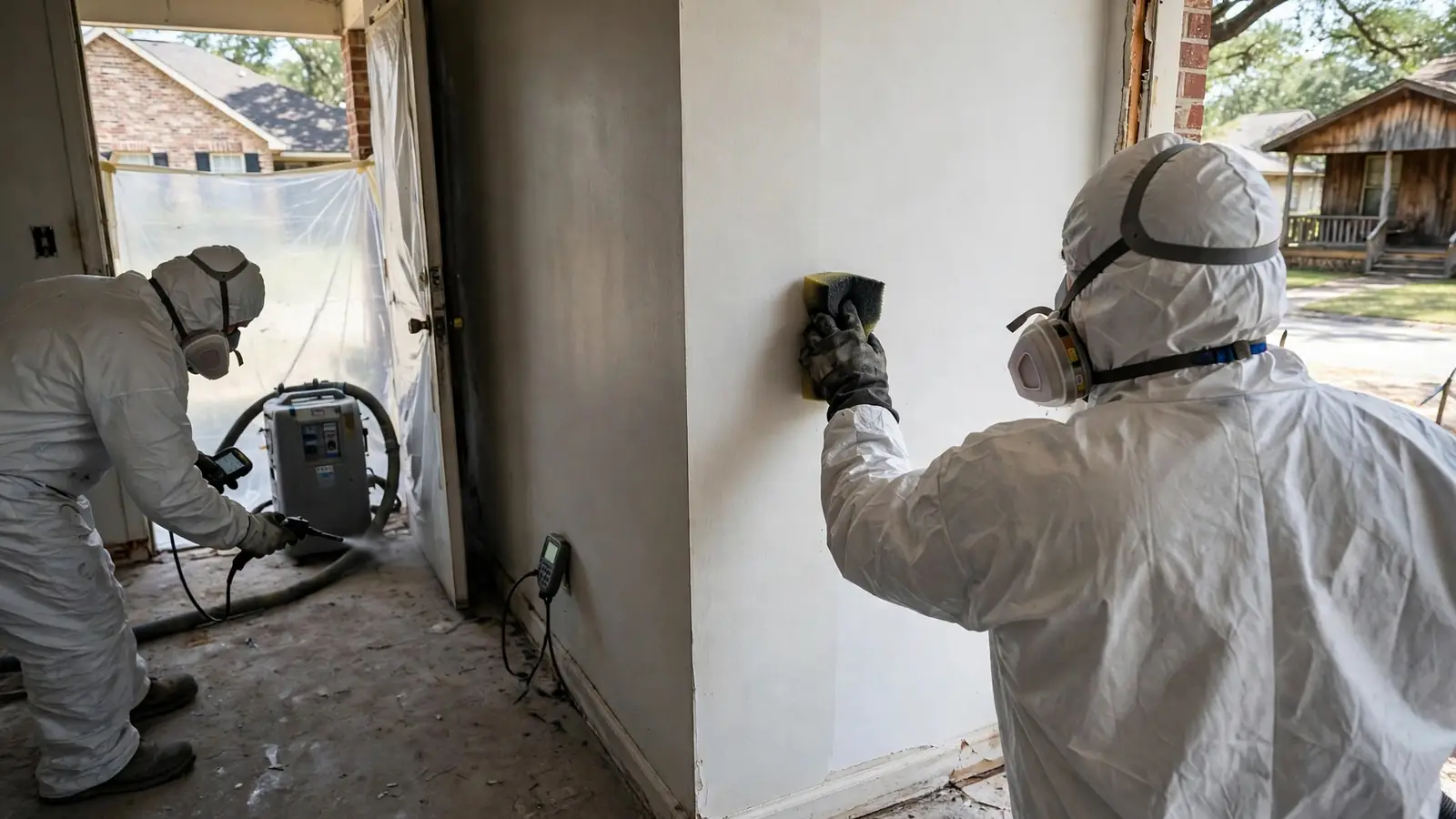
Ask how soon a crew can reach you, since it depends on the hour and the jobs in progress. When the crew arrives, they usually protect clean rooms with plastic, set up air scrubbers and vacuum loose soot with HEPA filtration. Dry chemical sponges come next, each pass on a clean face of the sponge.
The IICRC S700 standard explains how residue is assessed and when wet cleaning follows [2]. Soot rarely travels alone, so urgent smoke damage cleanup is often part of the same visit.
Local factors
Fort Worth houses that make soot harder to remove quickly
Many Fort Worth homes from the middle of the last century combine a brick fireplace wall, a textured ceiling and an attic air handler. Unsealed brick soaks up soot fast, textured ceilings trap it, and the attic system carries it to other rooms. Getting to these early limits how much needs refinishing.
Older homes near downtown often have plaster and old painted trim. Plaster cleans well, but older paint calls for lead precautions [3]. The page on soot removal for Northside homes talks about this type of house.
Newer homes with high, open ceilings collect the heaviest film near the top, which needs ladders or lifts. Summer heat in the attic also releases odor from soot on framing. Homeowners in the north can read about soot cleanup in Park Glen houses.
Dry sponge
Why crews lift soot dry before using water
A dry chemical sponge grabs loose soot without pushing it into the surface. Crews work in one direction and turn to a clean face often, so residue is lifted rather than smeared.
Water too early can dissolve oily soot and drive it into paint and grout. That is the main reason not to start washing tonight.
- One direction strokes
- Fresh sponge face each pass
- No water at first
- Residue tested before washing
Outside too
Soot on exterior brick and eaves after a fire
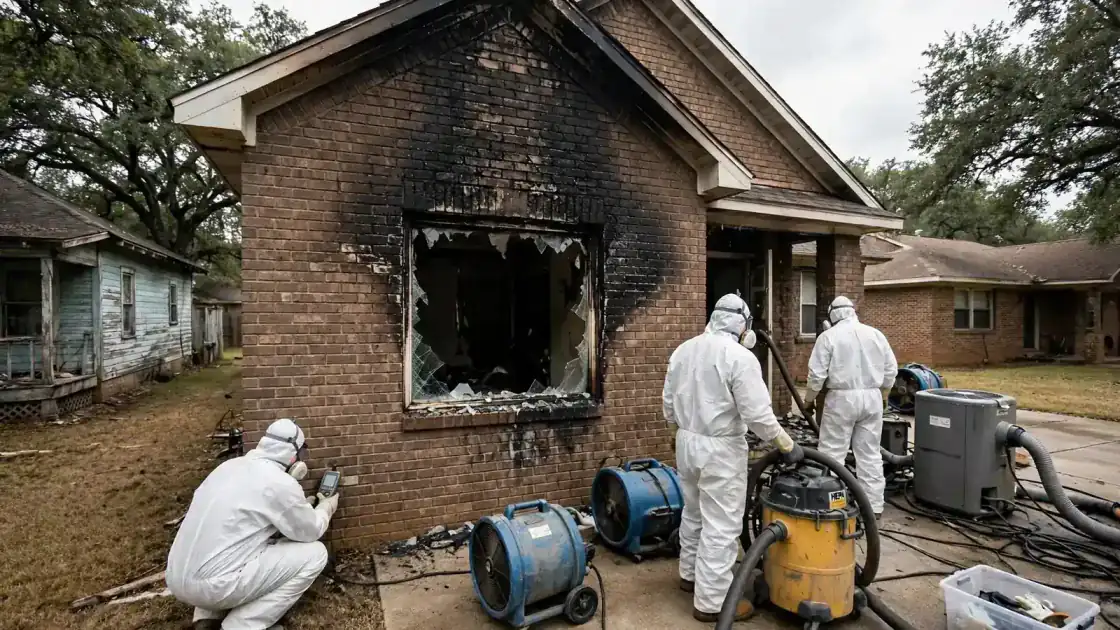
Smoke pouring from windows and vents leaves dark streaks on brick, trim and eaves. Outside soot is less urgent than inside, but it can stain porous brick over time.
Crews usually clean it after the inside is stabilized, using methods suited to the masonry. The guide to the first days after a house fire shows where this fits.
- Streaks above windows
- Brick cleaned after interior
- Methods suited to masonry
- Trim and eaves checked
Timing
How soot changes over the first days after a fire
In the first hours, most soot is still sitting on surfaces and much of it can be lifted dry. Over the following days, acidic residue starts to dull glass, pit polished stone and tarnish metal finishes. Plastics yellow, and porous paint and grout soak in what lands on them.
That is why soot removal is treated as urgent even when the fire itself was small. Early work keeps more items in the clean-and-keep group and fewer in the replace group. If you are unsure how heavy the soot is, describe it on the call and ask what can wait and what should not.
Meanwhile
Safe tasks for you while soot work is arranged
- Photograph soot before it is touchedPictures of walls, ceilings and fixtures show the extent of damage for your claim.
- Remove valuables without wiping themCarry out jewelry, documents and keepsakes in a box, and do not try to clean them.
- Write down affected surfacesNote brick, texture, cabinets and glass that are coated. It speeds up the assessment.
- Keep receipts for a temporary stayIf you need to stay elsewhere, Texas guidance on living expenses explains what to keep [5].
FAQ
Urgent soot questions people in Fort Worth ask
Is it bad to leave soot on my walls overnight?
One night is usually manageable, as long as nobody touches it. The bigger problem is soot left for days or weeks, when acidic residue starts to stain and etch.
Can I vacuum soot with my regular household vacuum?
It is better not to. Household vacuums can blow fine soot back into the room. HEPA-filtered equipment is used for this.
Why are there black strings hanging from my ceiling after the fire?
Those are soot webs, chains of oily residue that form along air currents. They smear if brushed, so leave them for the crew.
Will soot come off my brick fireplace wall?
Often a good deal of it will with the right method, but unsealed brick absorbs soot. Quick work gives the best chance of a clean result.